Structuring Possessory Lien Waivers for Cross Border Injection Tooling Contracts
Structure cross-border injection tooling contracts with separate bailment terms, local movable registry filings, and engraved tags to prevent possessory liens.

Grip
A sixty-thousand-dollar multi-cavity injection mould bolted to a four-hundred-tonne Haitian press in Dongguan or Monterrey creates immediate commercial exposure the moment piece-part production commences. When a billing disagreement emerges over raw polymer resin surcharges or scrap rate allowances, the contract moulder shuts down the hydraulic power pack, closes the security bay, and refuses physical surrender of the tool. Tooling ownership certificates signed under English or Delaware law offer zero mechanical leverage against a factory gate chain.
The factory floor exercises physical custody, relying on local statutory retention principles that treat the mould as collateral for disputed debts.
Retention extinguishes production schedules immediately. Under typical contract manufacturing arrangements, the production purchase agreement and the tooling agreement reside on separate contract schedules. Tooling purchase orders declare the buyer as the sole proprietary owner of the core, cavity inserts, hot runner manifold, and bolster plates once the final twenty percent commissioning invoice settles.
The moulder relies on local commercial codes granting warehouse or manufacturing contractor liens over any customer asset located on the factory premises. A disputed five-cent assembly delta per part transforms into a physical hostage scenario involving a half-ton hardened steel asset.
A contract moulder retains steel when resin billing disputes exceed thirty days regardless of offshore title declarations.
Lex situs governs property interests in movable machinery. Regardless of choice-of-law clauses specifying New York arbitration, courts in the jurisdiction where the tool physically sits apply their own private international law to possessory rights. Article 447 of the Civil Code of the People’s Republic of China grants a contractor the legal right to retain movable property belonging to a debtor if that property came into the contractor’s lawful possession through the same commercial contract, subject to statutory exceptions for unrelated debts.
Mexican commercial courts enforce equivalent retainage rights under Article 340 of the General Law of Negotiable Instruments and Credit Transactions for repairers and fabricators. The factory asserts custody while the supply line starves.
The mould core remains pinned. The press clamp remains idle. Once a supplier invokes statutory retention, legal recovery through local enforcement mechanisms requires lengthy preliminary injunction proceedings.
Moulders exploit this friction by demanding full settlement of disputed finished-goods invoices as a prerequisite for unbolting the tool from the machine platen. The tool sits behind locked roll-up doors while lawyers exchange registered mail across international boundaries.
Production cannot resume because the toolmaker states that unbolting the mould risks internal cooling circuit contamination until the open invoices achieve complete clearance.
Block

Physical Segregation and Steel Demarcation
Asset recovery depends on clear visual and mechanical evidence distinguishing buyer property from plant equipment. Injection moulds constructed from DIN 1.2344 or AISI H13 tool steel arrive as monolithic steel assemblies weighing anywhere from eight hundred kilograms to five tonnes. Without indelible external markers, bailment disputes devolve into evidentiary deadlocks over whether the bolster belongs to the facility or the client.
Deep mechanical engraving directly into the outer clamp plates establishes undeniable provenance during an unannounced bailiff audit.
Identification nameplates secured merely by pop rivets fail press-side environments within six months of thermal cycling. Corrosive vapours from flame-retardant polycarbonate resins, paired with washdowns from mould cleaners, corrode aluminium foil tags. A proper demarcation standard mandates hardened 316 stainless steel tags, three millimetres thick, mechanically recessed into a milled pocket on the operator side of the top clamping plate, fastened with tamper-proof blind screws.
The text must list the asset registration number, the proprietary client entity name, and an explicit statement that the tool is held on temporary bailment.
| Identification Element | Physical Specification | Mounting Method | Legal Evidentiary Purpose | Service Life Expectancy |
|---|---|---|---|---|
| Primary Asset Plate | 316 Stainless Steel, 3 mm thickness, laser engraved 0.5 mm depth | Recessed pocket, M5 tamper-proof security fasteners | Defeats good-faith possession claims by third-party creditors | Exceeds 1,000,000 cycles |
| Core and Cavity Stamps | Direct electro-chemical etch on non-moulding shut-off faces | Direct substrate application prior to vacuum heat treatment | Proves ownership of individual inserts during partial teardown | Permanent tool life |
| Bailment Barcode Plate | Direct 2D Data Matrix code, ISO/IEC 16022 standard | Permanently welded perimeter border on bottom ejector housing | Enables automated digital audit scans without tool dismantling | Exceeds 500,000 cycles |
| Hot Runner Identification | Brass data tag stamped with manifold serial and client code | High-temperature ceramic standoff fasteners on manifold plate | Separates proprietary hot half from generic plant controller | Thermal ceiling 450 °C |
Die sets rarely travel alone. Sub-tier vendors who machine slide cores, fabricate lifters, or apply chemical textures to A-plates introduce secondary possessory claims under local artisan lien statutes. When the primary contract moulder outsources electrical discharge machining of tall ribs to an independent toolroom down the street, that sub-tier shop holds common-law lien rights against the physical steel if the prime contractor defaults on payables.
The buyer finds their mould stranded inside a machining facility with which they possess no direct contractual relationship.
Physical asset demarcation plates recessed into mould clamp plates defeat third-party creditor attachment claims under cross-border execution orders.
Preventing sub-tier lien attachments requires contractual prohibition against unauthorised tooling movements. Tooling agreements must confine the tool to a specific physical bay, identified by street address, building number, and specific press cell. Any transport of cavity blocks, cores, or lifters to outside polishing, nitriding, or texturing shops demands prior written authorization, accompanied by a signed sub-tier waiver acknowledging client ownership and disclaiming retention rights.
Secondary suppliers assert warehouse claims.
A mould that lacks external stainless identity plates belongs to the factory floor under local insolvency audits.


Covenant
Contractual Decoupling and Negative Pledges
Drafting enforceable lien waivers demands complete contractual separation between tooling procurement and parts manufacturing. When both transactions merge into a single master agreement, a dispute over moulded part reject rates automatically infects the legal possession of the mould. Separating the tooling bailment agreement from the production purchase agreement isolates the mould from commercial arguments concerning dimensional tolerances, late deliveries, or polymer resin price indexation.
A freestanding bailment instrument defines the moulder as a mere bailee holding steel solely for manufacturing specified components. The bailee covenants never to create, incur, assume, or permit any mortgage, pledge, security interest, encumbrance, or possessory lien upon the mould. This covenant must explicitly waive statutory rights of detention under the local civil or commercial codes of the host country, naming the specific code articles that govern commercial retainage.
- Express statutory retention waivers cite specific articles of the local civil code governing retainage rights to prevent judicial preservation of default liens.
- Independent title confirmation covenants acknowledge that legal and beneficial title remains with the buyer throughout the manufacturing relationship.
- Cross-liability prohibitions prevent the moulder from asserting possessory liens on tooling to satisfy unpaid invoices arising from component supply or packaging materials.
- Immediate access covenants grant the buyer unconditional physical access to unbolt, rig, and extract the mould within twenty-four hours of written demand.
Title documents prove initial payment. The buyer reinforces the covenant structure by implementing an independent escrow mechanism for tooling milestones. The final tooling payment, typically twenty percent, releases only after the moulder executes a formal bill of sale and delivers a wet-signed lien release certificate.
This documentation confirms that all steel suppliers, heat treatment facilities, hot runner vendors, and external toolrooms have received full payment, extinguishing latent artisan liens before the mould runs production shots.
A tooling bailment agreement lacking express statutory code citations fails to extinguish possessory liens in civil law jurisdictions.
Security deposits also alter the enforcement balance. By requiring the moulder to hold a rolling commercial deposit against mould damage, or by maintaining a letter of credit payable upon unexcused detention of the tool, the buyer creates counter-leverage. The contract must declare that any attempt by the moulder to assert a possessory lien constitutes a material breach, instantly liquidating the security deposit and accelerating immediate repatriation protocols.
The contract line states that the bailee irrevocably waives all rights of detention under Article 447 of the Civil Code, rendering any physical retention an actionable conversion under local law.
Statute

What Preserves Extraterritorial Tool Ownership across Borders?
Cross-border jurisdictional boundaries dissolve contractual protections that lack local perfection. An offshore buyer relying on an exclusive jurisdiction clause pointing to London or Singapore courts finds those orders unenforceable when attempting to extract physical steel from a facility in Guangdong or Querétaro. Local judges prioritize domestic public policy and local possessory laws over foreign arbitral awards, particularly when employment liabilities or local supplier debts threaten factory solvency.
In the People’s Republic of China, perfection of personal property interests involves registration with the Credit Reference Center of the People’s Bank of China under the unified movable property registration system. Filing the tooling bailment contract on this registry establishes public notice of client title. This public filing prevents creditors of the contract moulder from seizing the mould during corporate bankruptcy proceedings.
Without this registration, Chinese bankruptcy administrators presume all equipment inside the factory walls forms part of the debtor’s estate.
| Jurisdiction | Governing Statute | Perfection or Registration Mechanism | Enforceability of Advance Lien Waivers | Repatriation Enforcement Timeline |
|---|---|---|---|---|
| China | Civil Code, Articles 447 through 457 | People’s Bank of China Credit Reference Center movable property registration | Enforceable if clearly drafting explicit waiver of Article 447 retention rights | Three to eight months through local People’s Court preliminary injunction |
| Mexico | Commercial Code; General Law of Negotiable Instruments | Registro Único de Garantías Mobiliarias (RUG) electronic filing | Enforceable, but requires formal notarisation and apostille verification | Two to six months via mercantile executive actions |
| Germany | Bürgerliches Gesetzbuch (BGB) § 273, § 1000; HGB § 369 | Possession transfer agreements (Besitzkonstitut) under § 930 BGB | Fully enforceable under standard commercial freedom of contract rules | Two to six weeks through summary possession proceedings |
| Vietnam | Civil Code 2015, Articles 346 through 356 | National Registry of Secured Transactions (NRAST) under Ministry of Justice | Partially enforceable; local courts frequently protect domestic wages first | Four to twelve months through provincial court execution |
Mexican operations governed by IMMEX maquiladora regimes introduce separate regulatory barriers. Molds imported into Mexico under temporary import permits remain linked to the specific fiscal registry of the importer of record. If the offshore buyer owns the mould but the Mexican contract manufacturer imported the tool under its own IMMEX program, extracting the tool to transfer it to a competing moulder requires a formal virtual customs pedimento transfer.
Unilateral physical extraction without customs clearance triggers catastrophic tax liabilities and criminal smuggling charges.
Local courts respect physical custody. During the insolvency of an assembly plant in Jalisco, unsecured workers’ claims take constitutional precedence over foreign asset titles unless chattel mortgages have been registered with the Registro Público de Comercio. Bailment contracts executed abroad without consular legalization and official translation into Spanish carry zero weight before a local labour conciliation board.
The machinery sits immobilized while labour claims achieve liquidation.
Customs clearance halts without stamped invoices. The intersection of maritime logistics and domestic property law reveals how physical custody can instantly negate paper contracts. A vessel carrying high-tonnage tooling across the Pacific faces immediate maritime liens under the International Convention on Maritime Liens and Mortgages if the forwarding agent defaults on bunker fuel invoices, demonstrating how possessory encumbrances latch onto physical steel regardless of underlying supply chain agreements.
Does advance registration on a national secured transactions registry overcome a provincial court judge’s reluctance to execute an asset extraction order against an employer supporting two hundred local families?
Dispatch
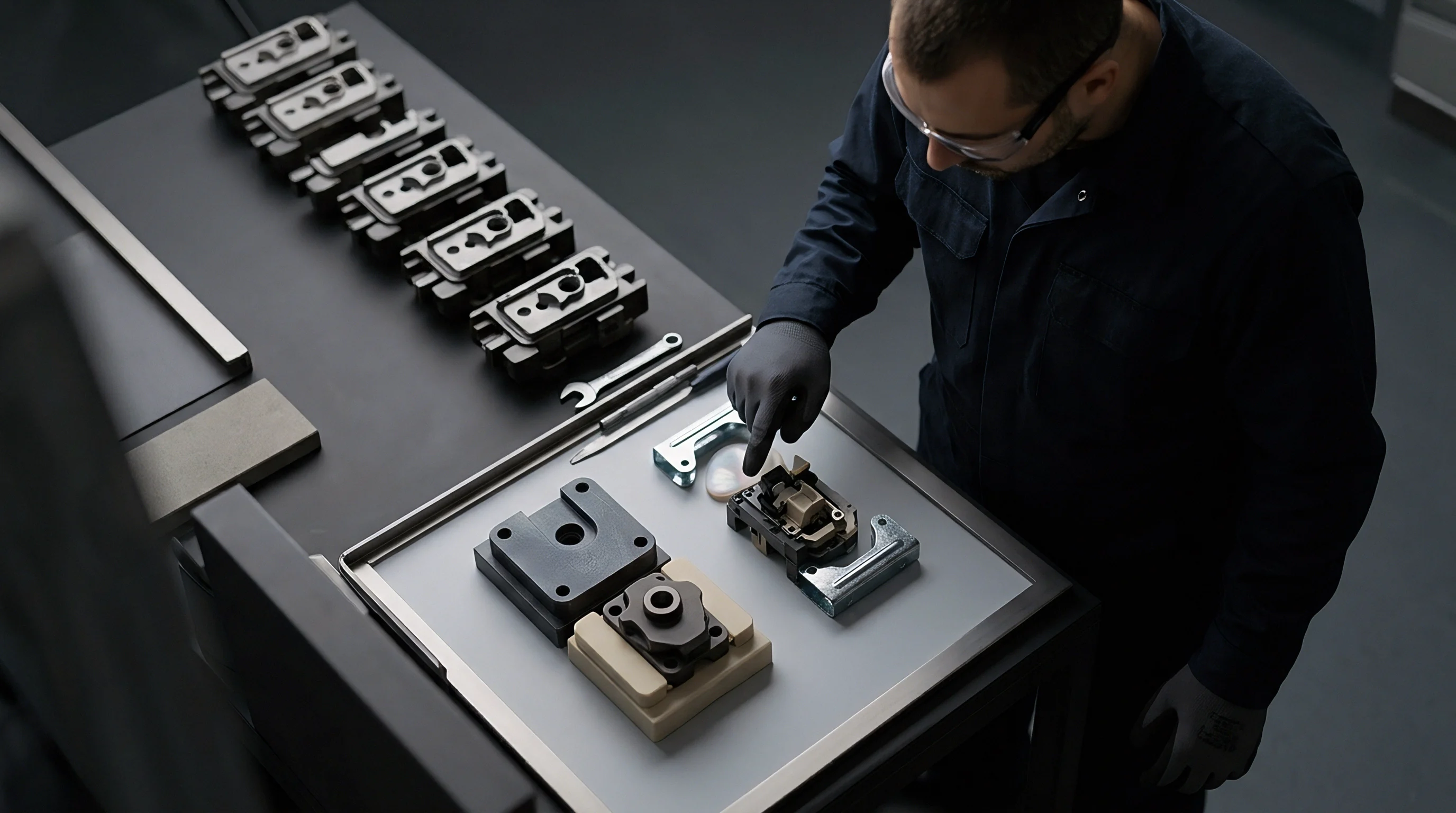
Executing an extraction operation when negotiations collapse requires structured mechanical and logistics choreography. Injection moulds cannot be thrown into the bed of a pickup truck; moving a four-cavity hot runner mould running polyoxymethylene parts demands specialized crane rigging, dedicated eyebolts matching the metric thread pitches of the top clamping plate, slide-locking bars, and proper drain plugs for cooling channels. Attempting extraction without proper rigging hardware results in bent guide pins, sheared parting line locks, or dropped core halves that destroy years of precision tooling investment.
A rigorous tooling agreement mandates that the moulder store all original transport hardware inside a dedicated steel crate adjacent to the press. This crate must contain the certified hoist rings, safety latch straps, water circuit drainage manifolds, hot runner terminal caps, and original wooden shipping boxes for loose slides and core pulls. When extraction day arrives, the buyer’s logistics team must inspect the tool to verify that the shut-off surfaces have received a protective coating of high-tack rust preventative oil before the mould exits the facility doors.
| Operational Cost Item | Physical Scope and Description | Base Cost Assumption (USD) | Contingency Risk Premium (USD) | Total Landed Allocation (USD) |
|---|---|---|---|---|
| Legal Execution and Bailiff Attendance | Court enforcement officer, local bilingual counsel, notary recording | $6,500 | $3,500 | $10,000 |
| Rigging, Unbolting, and Crane Hire | Plant overhead crane operation, heavy rigging crew, flatbed loading | $2,200 | $1,800 | $4,000 |
| Toolroom Inspection and Preservation | Cooling channel purge, anti-corrosion spray, slide lock bar installation | $1,400 | $800 | $2,200 |
| Bonded Transport and Customs Virtual Transfer | Air-ride transport, IMMEX / customs broker export pedimento processing | $3,800 | $2,400 | $6,200 |
| T1 Re-qualification at Secondary Moulder | CMM dimensional verification, first shot resin trials, Cpk capability audit | $5,500 | $3,000 | $8,500 |
| Consolidated Repatriation Capital | Total cost to recover, transport, and re-qualify a disputed 2.5-tonne mould | $19,400 | $11,500 | $30,900 |
Tooling deposits sit in escrow. The financial arithmetic of emergency tool transfers illustrates the actual cost of resolving possessory disputes. As detailed in the budget model, extracting a 2.5-tonne mould running an automotive tier-one structural bracket costs $30,900 in direct administrative, logistics, and re-qualification fees.
This figure assumes a cooperative court bailiff and standard road freight within a five-hundred-kilometre radius. If the contract moulder files counter-claims for inventory amortisation, legal expenses escalate rapidly.
Unpaid resin invoices trigger retention. The secondary moulder bringing up the extracted tool faces significant process hurdles before achieving stable part output. Cavity pressure sensor calibrations differ, platen parallelism on the replacement press may vary by fifty microns, and water manifold cooling capacities fluctuate.
Achieving a stable process capability index (Cpk) exceeding 1.67 across critical dimensions takes between two and four weeks of continuous toolroom adjustments, slide fits, and cycle optimisation.
Bailment agreements separate custody from equity. Production halts cost automotive and medical supply chains tens of thousands of dollars per day in line-down penalties. Establishing a bulletproof possessory lien waiver structure, perfected through local statutory filings and physical asset tagging, protects capital assets from arbitrary commercial detention when supplier relationships break down.
Failing to perfect local lien waivers leaves the buyer facing complete forfeiture of the mould asset, multi-week assembly plant shutdowns, and five-figure emergency legal expenditures to secure the return of proprietary steel.