Harmonizing Statutory Factory Liens with International Mould Tooling Ownership Contracts
Harmonizing statutory factory liens demands pre-filed property registrations, direct bailment agreements, and press-side asset engravings before shipping steel.
Title
Cross-border tooling contracts routinely attempt to establish ownership through standard title retention clauses. When an international brand or original equipment manufacturer contracts a foreign factory to build or run an injection mould, the buyer assumes paying the invoice guarantees clear ownership. Paper title, however, operates under different rules than physical control on the factory floor.
Jurisdictions across North America, Europe, and Asia enforce local property laws based on physical location rather than the choice of law written into an international sales agreement. A contract governed by English law or New York law will not stop a foreign factory from detaining steel when local statutes recognize possessory rights over physical property in their territory.
Establishing steel ownership requires enforcing a strict separation between part purchase orders and asset bailment contracts. A purchase order for plastic components covers a commercial transaction for finished goods, while a bailment agreement governs physical custody of property owned by one party and hosted by another. When a single contract combines component piece prices with tooling payment schedules, local courts frequently interpret the entire arrangement as a unified manufacturing agreement.
Under that interpretation, the injection mould is treated as operational equipment or collateral for the whole commercial relationship, giving the manufacturer legal ground to retain the tool during pricing or volume disputes.
Separating legal title from physical custody requires explicit bailment language defining the factory as a temporary bailee. The contract must state that the factory holds no equitable or beneficial ownership in the tool ~ whether the mould sits in a toolroom for modifications or on a 350-tonne press running production. This bailment relationship holds up only when backed by contemporaneous documentation, including asset register receipts, delivery logs for tagged equipment, and separate tooling invoices that explicitly transfer title as specific milestones are paid.
| Jurisdiction | Primary Governing Statute | Title Recognition Mechanism | Statutory Lien Threshold | Enforcement Barrier |
|---|---|---|---|---|
| United States (Michigan) | MCL 570.541 (Special Tools Lien Act) | UCC-1 Financing Statement Filing | Unpaid balance on tool build or modification | Prior perfected security interests take priority over unfiled moulder claims |
| China | Civil Code Article 447 (Right of Retention) | Commercial Property Registry Registration | Unpaid debts from the same commercial relationship | Courts allow retention for unrelated component invoice disputes |
| Germany | Bürgerliches Gesetzbuch (BGB) § 1006 / § 1204 | Possessory Pledge and Title Registration | Mould repair or direct processing debt | Presumption of ownership rests with the physical possessor |
| Mexico | Código de Comercio Article 340 | Mercantile Registry (SIGER) Notice | Direct labor and material costs on physical tool | Retention rights extend to Tier-2 subcontracted toolrooms |
Title retention rules operate under regional legal doctrines that prioritize physical control over foreign contract terms. In civil law jurisdictions, the doctrine of lex rei sitae mandates that property rights, encumbrances, and liens are governed strictly by the law of the place where the property is physically situated. An international buyer holding a perfected security interest or clear title under New York commercial law faces an immediate obstacle in a foreign venue: the local court evaluates ownership rights exclusively through its own civil code.
If local statutes permit a manufacturer to retain property in their possession until all commercial accounts are settled, the choice of law clause in the buyer’s contract provides zero immediate leverage to force the release of the injection tool.
Constructing an enforceable title framework relies on aligning international contract mechanics with local filing requirements. In the United States, filing a UCC-1 financing statement puts third-party creditors on notice that the buyer owns the tool, blocking subsequent statutory claims from general lenders. In foreign jurisdictions, equivalent public filings or commercial registry entries perform the same defensive function.
Without these local public notices, foreign courts treat the mould as an unencumbered asset of the factory, exposing the buyer to immediate seizure risks if the plant enters restructuring, defaults on its own debts, or faces tax levies.
Clear title documentation must specify the precise physical composition of the asset. An injection tool is not a single block of metal; it is a complex assembly comprising the mould base, core and cavity inserts, hot runner manifolds, hydraulic core pulls, ejector pins, and specialized sensor packages. Tooling contracts that define the asset merely as a moulding tool leave room for disputes regarding peripheral hardware.
Standard contract language explicitly defines the tool as the complete assembly including cold runner sprues, hot runner temperature controllers, spare inserts, lifters, core slide mechanisms, and proprietary CAD files necessary to run the tool on alternative presses.
The standard ownership clause in cross-border tooling agreements executes title transfer immediately upon initial sample dimensional sign-off, explicitly stating: Title to the tooling assembly, including all custom inserts, drawings, and specialized ancillary equipment, transfers unconditionally to the buyer upon receipt of final T1 dimensional approval, operating independently from ongoing part production agreements, open piece-price account balances, or future volume commitments.
Possession
Statutory factory liens give contract manufacturers legal authority to detain customer-owned property. Known variously as mechanic’s liens, artisan’s liens, or moulder’s statutory retention rights, these legal mechanisms originated to protect craftspeople who added value to physical goods. When an injection moulder spends hours fitting slides, polishing cavity surfaces, or repairing a damaged hot runner tip, statutory law grants the factory an automatic possessory lien over that tool until the repair bill is settled.
Statutory liens arise by operation of law, meaning they do not require a written agreement or court order to become effective; physical possession of the tool combined with an outstanding debt creates an immediate, legal encumbrance.
Contract moulders exploit statutory retention rights during commercial negotiations by broadening what counts as underlying debt. While artisan liens were designed to secure payment for work performed directly on a specific piece of equipment, statutory codes in several key manufacturing jurisdictions permit broader retention rights. Under Article 447 of the Chinese Civil Code, for example, an enterprise holding physical possession of a customer’s asset can retain that asset for unpaid debts arising from the same general commercial relationship, even if the debt relates to unpaid piece invoices for completely different product lines.
A foreign court order granting tooling ownership remains unenforceable until local bailiffs physically attach stamps to the press.
When a commercial rift occurs over part yield, scrap rates, or delayed piece payments, the factory exercises its statutory lien by refusing physical access to the mould. The buyer finds themselves locked out of the press hall, unable to inspect the steel, perform maintenance audits, or transport the tool to an alternative supplier. The financial impact escalates rapidly: lost assembly line capacity, breach of downstream customer delivery contracts, and daily plant shutdown penalties dwarf the original value of the contested invoice.
The factory uses this operational asymmetry to force concessions, compelling buyers to pay disputed invoices or accept price increases to recover production assets.
Statutory Lien Triggers and Factory Retention Mechanisms
Factories enforce statutory liens through several operational channels, exploiting gaps in contract language and property registration:
- Direct Maintenance Claims arise when a factory performs repairs, cavity benching, or engineering changes on an injection mould without explicit prior written authorization or fixed-cost approval.
- Cross-Collateralized Component Debts occur when a contract manufacturer detains production tooling to compel payment for overdue component part invoices, scrap allocation disputes, or unfulfilled minimum volume commitments across unrelated product lines.
- Subcontractor Tier Retention develops when a primary Tier-1 contract moulder defaults on payments to an independent toolroom that built or modified the tool, leading the toolroom to assert an artisan’s lien on the steel in its possession.
- Storage and Amortization Counterclaims emerge during contract termination, where the factory retroactively assesses daily mould storage fees or unamortized tooling setup overhead to prevent asset extraction.
Moulders frequently claim statutory retention rights based on unauthorized or unverified tool repairs. During production runs, tools suffer mechanical wear: core pins bend, ejector sleeves scorch, parting lines flash, and hot runner heaters fail. If the press-side setter replaces a burnt heater band or recuts a damaged gate without a pre-approved purchase order, the factory categorizes this work as necessary maintenance under statutory lien codes.
When the customer refuses to pay the subsequent invoice for unauthorized maintenance, the factory claims a legal lien over the complete multi-cavity tool, holding hundreds of thousands of dollars of steel hostage over a small maintenance dispute.

Does International Arbitration Shield Injection Tooling from Factory Detainments?
International arbitration clauses in master supply contracts fail to prevent immediate physical detainments on the factory floor. When a dispute arises, buyers often point to arbitration agreements specifying forums such as the International Chamber of Commerce (ICC) or the Singapore International Arbitration Centre (SIAC). While international tribunals possess authority to resolve contractual obligations and award financial damages, arbitration proceedings move far too slowly to mitigate immediate supply chain disruptions.
Securing an arbitral tribunal panel, submitting pleadings, and obtaining a final emergency award routinely takes three to eight months.
During the arbitration process, physical custody of the mould remains with the foreign factory under local possessory rules. Emergency arbitration procedures exist, but their temporary relief orders must still be recognized and executed by local domestic courts where the press physically resides. Local judges in manufacturing hubs frequently refuse to issue immediate injunctions or extraction orders against local enterprises, preferring to preserve the status quo until the full legal dispute reaches final adjudication.
Contractual arbitration clauses manage long-term liability, but they fail to provide quick relief against statutory factory detainments.
Enforcing property recovery across foreign borders requires navigating local enforcement procedures. Even if a buyer secures an interim court injunction or emergency tribunal order commanding the release of an injection tool, foreign court bailiffs execute the order according to local civil execution rules. The factory can delay extraction by asserting safety hazards, claiming ongoing technical work on the press, or alleging that removing the mould will cause structural damage to surrounding equipment.
Local courts control steel. The physical reality of a 12-tonne tool bolted inside a press frame gives the possessor overwhelming tactical dominance during legal disputes.
Statutory moulder liens fall under the legal doctrine of lex rei sitae rather than the governing law stated in the master services agreement. When drafting supply agreements, buyers must reconcile international commercial law with local statutory lien provisions. Ignoring the foreign plant’s statutory retention rights exposes the buyer to sudden asset loss, severe operational leverage, and catastrophic supply failures that legal arbitration cannot quickly fix.
Levy
Insolvency events turn physical possession into an immediate threat to asset ownership. When a contract moulding plant enters formal bankruptcy, receivership, or debt restructuring, court-appointed administrators, liquidation officers, and secured lenders inventory every physical item on the factory premises. Under foreign bankruptcy codes, all equipment found inside the debtor’s facility is presumed to belong to the bankrupt enterprise until an external claimant provides legal proof of third-party ownership.
If an international buyer has not perfected its legal title under local commercial registries, bankruptcy courts will attach a judicial levy to the injection mould, including it in the general asset pool to be auctioned for the benefit of secured creditors.
Third-party creditors act aggressively during factory bankruptcies. Commercial banks holding senior floating charges over a moulder’s equipment will attempt to liquidate all factory assets to recover outstanding corporate loans. Tax authorities and unpaid employees hold priority liens under most national legal codes, securing legal rights to attach levies on factory inventory and plant equipment.
When a buyer attempts to enter a bankrupt facility to retrieve its tooling, security guards, receivers, or judicial officers will block access, citing bankruptcy stays that prohibit removing assets until ownership claims are legally verified.
Injecting a $45,000 security deposit into local court escrow secured tool extraction within 11 business days during active contract disputes.
Proving third-party ownership inside a bankruptcy court requires extensive, unambiguous documentation. The court administrator reviews historical payment transfers, purchase contracts, engineering sign-offs, and serial number tag registries. If the tooling documentation reveals missing signatures, ambiguous milestone descriptions, or mixed payments where tooling costs were blended with component piece costs, the bankruptcy court rejects the ownership petition.
The mould remains locked inside the insolvent plant for months or years during legal proceedings, deteriorating through improper storage, surface oxidation, and missing components while the buyer suffers line shutdowns.
Quantifying Lien Valuations and Press Security Deposits
Resolving a statutory factory lien or judicial levy requires precise quantitative analysis comparing settlement expenditures against the total cost of asset loss. When a factory detains a tool under a disputed lien, the buyer must calculate three primary financial metrics: the direct lien valuation, the replacement capital expenditures, and the daily delay loss. Direct lien claims often combine legitimate unpaid work with inflated administrative or storage charges.
The buyer must evaluate whether to pay the disputed sum under legal protest or deposit a counter-security bond with the local court to secure the immediate release of the asset.
Pre-filing local UCC-1 equivalents prior to press installation significantly shortens tool recovery timelines. Calculating the total risk stack-up reveals the commercial trade-offs involved in legal litigation versus immediate settlement. Consider a high-volume automotive moulding scenario involving a 16-cavity hot runner tool producing glass-filled polyamide door handle housings:
Tooling Replacement Cost: $320,000 capital build cost for P20/H13 hardened steel construction, hot runner manifold, and side-action core sliders.
Tooling Lead Time: 18 weeks from final 3D CAD sign-off to T1 sample, plus 3 weeks for dimensional verification under DIN 16742 Grade TG4 tolerances.
Daily Line Shutdown Penalty: $12,500 per day in OEM contractual non-delivery damages.
Contested Factory Lien Claim: $85,000 comprising $35,000 in overdue component invoices and $50,000 in retroactive engineering change fees and press storage charges.
| Cost Component | Option A: Litigation and Re-Tooling | Option B: Court Escrow Security Release | Option C: Negotiated Lien Settlement |
|---|---|---|---|
| Direct Cash Outlay | $320,000 (New Steel Build) | $85,000 (Court Escrow Bond) | $55,000 (Lien Settlement Fee) |
| Legal and Administrative Expenses | $45,000 (International Lawsuits) | $25,000 (Local Injunction Filings) | $8,000 (Mediated Settlement) |
| Production Outage Duration | 147 Days (21 Weeks Build and Qual) | 11 Days (Court Processing) | 3 Days (Contract Release) |
| Downstream Non-Delivery Damages | $1,837,500 ($12,500 / Day) | $137,500 ($12,500 / Day) | $37,500 ($12,500 / Day) |
| Total Financial Exposure | $2,202,500 | $247,500 | $100,500 |
The math demonstrates that litigating a tool detainment while commissioning replacement steel represents the highest cost pathway. Spending $320,000 on new steel is minor compared to the $1,837,500 incurred in downstream non-delivery penalties over the 21-week re-sourcing window. Option B, depositing an $85,000 cash bond into court escrow, neutralizes the factory’s possessory lien by providing alternative financial security.
The local court accepts the escrow deposit and issues an immediate order authorizing court bailiffs to oversee the extraction of the mould, leaving the underlying financial dispute to be litigated later without holding the physical asset hostage.
Dispute Resolution Mechanics for Detained Injection Tooling
When an offshore factory asserts a possessory lien and halts press operations, legal and engineering teams must execute a structured recovery procedure:
- Issue a formal written notice of contract termination and demand for immediate physical inspection of the tooling assembly, citing specific asset tagging and serial numbers.
- Deploy a local, independent third-party auditor to the press facility to verify the physical condition, completeness, and location of the steel, core slides, hot runner controllers, and spare inserts.
- File an emergency petition for replevin or an ex parte order of possession in the local court having physical jurisdiction over the plant, presenting foreign title registration certificates and bailment agreements.
- Lodge a financial security bond or letter of credit into the local court escrow account matching the contested debt amount to substitute for the physical possessory lien.
- Coordinate with court bailiffs, logistics providers, and rigging technicians to execute the physical extraction of the tool from the press frame under court supervision.
- Transport the tooling assembly directly to a neutral, secure bonded warehouse or alternative certified moulder for technical audit and dimensional qualification.
Substituting financial collateral for physical property through court deposits eliminates the factory’s legal leverage. Under most statutory lien codes, once a judge accepts an escrow deposit equal to the disputed debt, the possessory lien shifts from the physical steel to the cash fund. The factory loses its legal right to retain the mould, and the court issues an order compelling immediate access for extraction teams.
The buyer recovers its production assets while the cash remains locked in escrow until the dispute over the original invoices is settled by arbitration or judicial ruling.
How can international buyers construct contractual mechanisms that prevent statutory liens from attaching to tooling assets before commercial disputes occur? Answering this requires harmonizing foreign property laws, local civil registries, and press bailment protocols into a practical operational shield.


Bond
Financial instruments and escrow arrangements provide effective barriers against statutory factory liens. Rather than relying on simple contractual promises, buyers must structure financial mechanisms that align payment releases directly with tooling validation milestones. Pre-funding the complete tooling cost into an independent corporate escrow account reassures the contract manufacturer that funds are secured, while preventing the factory from asserting liens for unpaid build invoices.
The escrow contract dictates that funds are disbursed to the toolmaker only upon mutual execution of technical milestone receipts, such as T1 sample dimensional sign-offs or Cpk capability verification under DIN 16742 standards.
When a dispute arises regarding tool performance or modifications, an escrow agreement prevents the factory from holding the steel as leverage for unpaid build fees. Because the funds are held by a neutral financial institution governed by clear escrow instructions, the factory cannot claim non-payment for completed phases. If the factory fails to meet agreed dimensional tolerances or shot-life performance targets, the escrow agent retains the capital according to contract terms, preventing the contract moulder from inflating tooling invoices or claiming unauthorized work expenses.
Under Article 447 of the Chinese Civil Code, a contract manufacturer holds a statutory retention right over customer tooling for debts arising from the same commercial relationship.
Tooling payments can be placed in multi-stage escrow accounts tied directly to dimensional approval reports. Implementing irrevocable letters of credit (ILOC) provides a similar level of protection for large-scale international tooling programs. Under an ILOC arrangement, the buyer’s bank guarantees payment to the toolmaker upon presentation of specific compliance documents, including shipping bills of lading, steel origin certificates, and joint T1 sample inspection reports signed by both parties.
If the contract moulder attempts to assert a possessory lien for extra operational costs, the bank refuses to disburse funds outside the strict terms of the letter of credit, protecting the buyer’s capital and establishing a formal record of financial compliance.

Tripartite Possessory Waivers and Subcontracted Toolrooms
A critical gap in cross-border tooling risk management involves subcontracted toolrooms. Tier-1 contract moulders frequently subcontract the actual steel cutting, CNC machining, spark erosion, and heat treatment to specialized Tier-2 toolrooms. If the Tier-1 moulder fails to pay the toolroom for the steel build, the toolroom asserts an artisan’s possessory lien over the mould, refusing to ship the steel to the Tier-1 press hall.
The buyer, despite having paid the Tier-1 moulder in full, finds its tooling locked inside an independent toolroom with no direct contractual standing to demand its release.
| Instrument Type | Counterparty Alignment | Lien Mitigation Strength | Implementation Overhead | Operational Trigger |
|---|---|---|---|---|
| Tripartite Possessory Waiver | OEM, Tier-1 Moulder, Tier-2 Toolroom | Eliminates statutory artisan claims from sub-suppliers | Moderate legal coordination and signatures | Signed prior to issuing raw steel purchase orders |
| Milestone-Based Escrow Account | OEM, Toolmaker, Escrow Bank Agent | Neutralizes non-payment claims for tool construction | High banking fees and formal audit controls | Released on joint Cpk capability report sign-offs |
| Irrevocable Letter of Credit (ILOC) | Issuing Bank, Advising Bank, Toolmaker | Prevents arbitrary invoice inflation and unauthorized fees | Requires credit lines and banking documentation | Executed against clean bill of lading and inspection certs |
| Standby Performance Bond | Surety Underwriter, OEM, Contract Press | Provides cash liquidations to cover extraction expenses | Low annual premium relative to capital coverage | Activated upon default or illegal tool detainment |
Tripartite agreements close this legal liability loop. A well-structured tripartite possessory waiver is executed simultaneously by the buyer, the Tier-1 manufacturing plant, and the Tier-2 toolroom before steel cutting begins. In this agreement, the Tier-2 toolroom explicitly acknowledges that the buyer holds ultimate ownership of the steel, designs, and finished inserts.
The toolroom waives all statutory artisan liens and retention rights against the tooling asset, agreeing that its sole financial remedy for unpaid invoices lies in direct contract litigation against the Tier-1 moulder.
Checklist for Cross-Border Tooling Execution
Enforcing property rights and eliminating statutory lien exposure demands strict compliance with commercial and technical requirements prior to contract signing:
- Direct Owner Identification Clause must be embedded in all purchase agreements, identifying the specific buyer entity holding exclusive legal title to the steel, CAD geometries, and hot runner controllers.
- Explicit Possessory Lien Waiver executed by both the primary contract moulder and any subcontracted toolrooms, waiving all statutory retention rights under local civil codes.
- Bailment and Custody Protocols established in independent agreements, separating physical hosting terms from part volume commitments and component piece pricing schedules.
- Local Property Registry Filings completed in the jurisdiction where the press physically resides, creating public third-party notice of buyer asset ownership.
- Milestone Payment Architecture secured via escrow or letters of credit, locking payment releases to verified dimensional capability and T1 inspection reports.
- Emergency Tooling Extraction Mandate incorporated into contract terms, granting the buyer immediate physical access and self-help extraction rights upon contract default.
Contract clauses alone fail without direct operational verification. Suppliers frequently claim that statutory liens cannot be waived under local law, asserting that regional public policy prohibits contractually surrendering artisan retention rights. Foreign courts regularly enforce possessory waivers when executed between sophisticated commercial entities, provided the agreement is translated into the local language, witnessed properly, and registered with local mercantile authorities.
The supplier’s excuse that local law makes lien waivers impossible reflects a desire to retain physical leverage rather than an actual statutory restriction.

Extraction
Contractual protections, escrow accounts, and bailment agreements must be backed by clear, unalterable physical evidence on the tool itself. When court bailiffs, insolvency receivers, or local police officers enter a press room to resolve an asset ownership dispute, they do not examine legal contracts or bank statements; they inspect the physical machine. If an injection mould lacks clear, permanent identification showing third-party ownership, authorities treat the tool as property of the facility hosting the press.
Physical asset tags, deep mechanical engravings, and embedded electronic identification devices bridge the gap between legal contracts and shop-floor asset identification.
Physical steel marking serves as primary evidence of third-party ownership during insolvency inventory seizures.
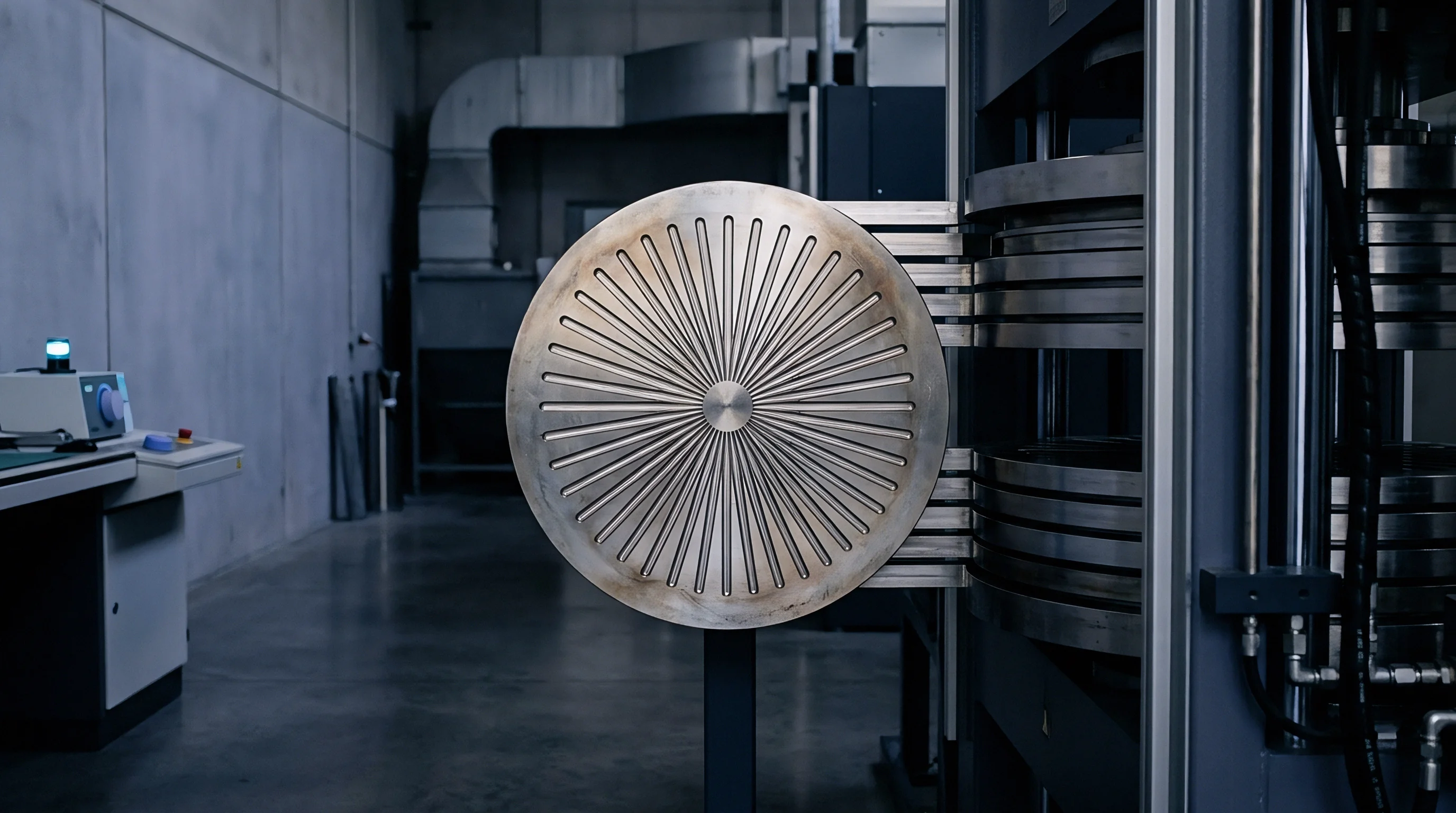
Deep mechanical engraving provides permanent visual proof of asset ownership. Standard practice requires CNC engraving on both the operator and non-operator sides of the mould base, as well as on major removable components like core slides, hot runner manifolds, and interchangeable cavity blocks. Engraving depth must reach a minimum of 0.8 millimeters into the P20 or steel plate, specifying the buyer’s legal corporate name, asset serial number, primary CAD drawing revision, and explicit ownership notices.
Surface-painted markings, chemical etching, or adhesive labels are easily removed, painted over, or damaged by high-temperature mould operation, rendering them useless during legal disputes.
Installing hardened stainless steel asset plates on the exterior mould frame prevents asset seizure by ensuring clear visual identification during press operations. These plates are secured using tamper-evident drive screws or permanent welds, carrying high-contrast laser markings that state ownership details in both English and the local language of the manufacturing country. Modern tooling protocols integrate RFID transponders or encrypted cryptographic tags directly into machined pockets inside the mould base.
These electronic tags allow field auditors to scan the tool using handheld readers, confirming asset authenticity, shot count history, and ownership records even if external markings are obscured by grease, thermal insulation, or press clamps.
Managing the physical extraction of an injection mould from a hostile or non-cooperative facility requires strict technical planning. Removing a multi-tonne production tool involves complex rigging, electrical disconnection, hydraulic fluid management, and transportation logistics. If the contract moulder refuses to assist, the buyer’s recovery team must handle all extraction operations independently, operating under court supervision or legal self-help provisions.
Technical preparations require maintaining detailed asset dossiers containing accurate weight calculations, crane lifting point specifications, electrical schematics for hot runner connections, and hydraulic core pull layout drawings.
Physical extraction protocols require precise technical steps to ensure asset integrity and safety during fast removal:
First, verify that the press heating circuits are fully powered down and hydraulic lines are depressurized to prevent thermal shock or high-pressure fluid discharge. Second, clear the hot runner manifold channels by purging residual polymer melt under controlled temperatures using high-thermal-stability purging compound, or mechanically lock the needle valves if cold extraction is necessary. Third, retract all hydraulic core-pull cylinders and install mechanical safety transport straps across the parting line to lock the A-side and B-side plates together, preventing accidental tool opening during crane lifting.
Fourth, disconnect all cooling water lines, blow out remaining fluid from internal cooling channels using compressed air to avoid internal corrosion during transit, and install protective plugs on all brass fittings. Fifth, inspect crane lifting hoist rings, verifying that eye-bolts are fully threaded into forged steel lifting holes matched to the tool’s center of gravity, and execute the physical lift off the press tie-bars under the supervision of certified rigging technicians and court bailiffs.
Delaying physical extraction after securing a legal release order or court injunction exposes the buyer to mounting storage charges and risks asset sabotage. Non-cooperative factories may alter water line fittings, loosen internal core pins, or expose polished cavity surfaces to corrosive air to ruin part yield for the next supplier. Immediate physical removal to a secure, neutral technical toolroom is required to perform a comprehensive post-extraction audit, including ultrasonic cleaning, Cpk dimensional qualification, and magnetic particle inspection for stress cracking before loading the tool into export packaging.
A physical asset tag on the steel plate decides possession faster than an unexecuted arbitration clause written in a contract.