
Screening Benzophenone Derivatives in Recycled Polyolefin Food Packaging Resins
Screening benzophenone in recycled polyolefin resins requires solvent extraction, GC-MS/MS quantification, and diffusion modeling to prove migration safety.
Screening benzophenone in recycled polyolefin resins requires solvent extraction, GC-MS/MS quantification, and diffusion modeling to prove migration safety.

Standardized mCPBA epoxidation followed by normal phase HPLC cleanly removes oligomeric olefin interferences from MOAH fractions for EU food contact compliance.

Quantify polyolefin saturated oligomers using capillary GC-FID integration calibrated against n-alkanes after silica cleanup to isolate non-polar migrateables.

Non-intentionally added substance quantification requires high-resolution mass spectrometry screening paired with toxicological threshold evaluation for safe compliance.

Preparative TREF combined with high-temperature SEC isolates and quantifies migrating sub-1000 Da polyolefin oligomers to verify food contact safety compliance.

Screening recycled polyolefins via chromatography and toxicological thresholds isolates unlisted migrant degradation products below ten parts per billion.

Decontaminated HDPE migration compliance relies on temperature-dependent Fickian diffusion models parameterized by matrix density and surrogate mass.

Reconciling masterbatch dosages with specific migration limits requires calculating active concentration, accounting for thermal loss, and verifying compliance by testing.

Auditing converter food contact declarations requires cross-referencing batch test reports, simulant conditions, dual-use additives, and NIAS screening data.
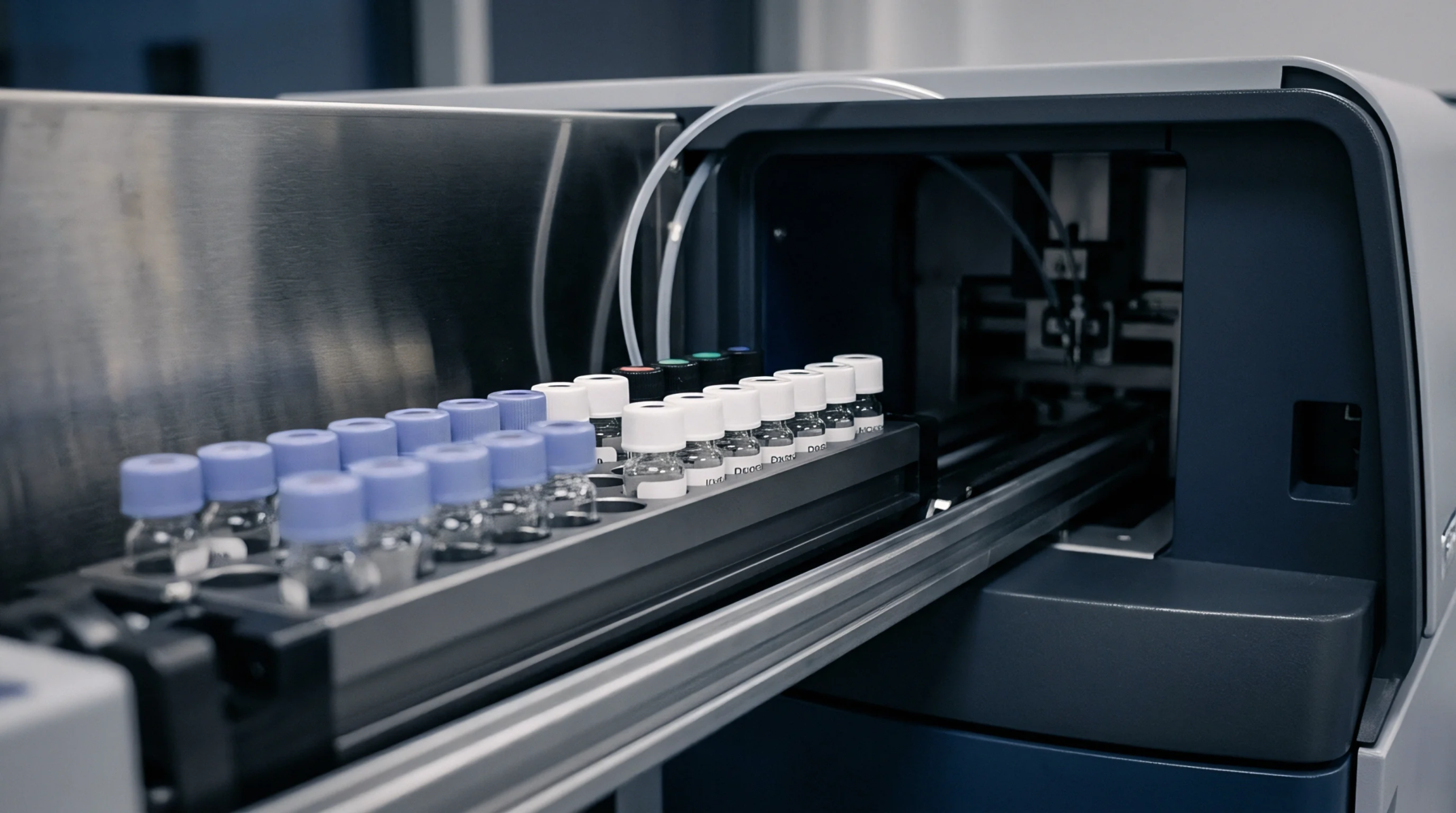
Dynamic matrix correction recalibrates uncharacterized polyolefin migrant peak areas against co-extracted simulant lipids to prevent underreporting migration limits.

Ionization efficiency models eliminate thousand-fold semi-quantitative errors in untargeted packaging screening, ensuring defensible non-intentionally added substance compliance.

Validating post-consumer polyolefin decontamination requires LC-HRMS screening of non-volatile oligomers paired with high-molecular-weight surrogate challenge testing.

Resolve proprietary food packaging data barriers through third-party escrow clearance, functional barrier diffusion modeling, and non-targeted screening.

Compliance files require measuring migration against specific limits, adjusting for dual-use direct food additive allowances, and verifying raw material data.

Dual use additive management demands specific identity flow from resin compounders to food packers to satisfy direct food additive maximum limits.

Polyolefin migration dossiers require dual GC-MS and LC-HRMS non-target screening backed by class-specific surrogate quantification to clear customs audits.

Polyolefin non-intentionally added substances require chromatographic screening, Cramer toxicological tiering, and finished article migration verification.

Analytical identification thresholds for polyolefin NIAS must be set to 10 ppb in simulants to prevent uncharacterized genotoxins from voiding food contact dossiers.

Analytical verification of NIAS in multi-layer barrier films requires high-resolution mass spectrometry screening backed by toxicological threshold classification.

Harmonizing mass balance ledgers with NIAS protocols requires pairing credit attestation documents with batch-specific high-resolution migration screening.

Ultra-trace isomeric mixtures in recycled pyrolysis oil require GC-MS resolution and Cramer Class toxicological screening to defend food-contact compliance.

Non-targeted high-resolution mass spectrometry validates recycled polyolefin food contact compliance by identifying unknown migrants below ten ppb safety limits.

Selecting substitute simulants for recycled polyolefin fatty food verification requires matching swelling kinetics to prevent over-extraction while satisfying EN 1186 rules.

Polyolefin migration compliance requires selecting food simulants based on polarity and fat content while accounting for matrix swelling and thermal limits.

Polyolefin oligomer humps in HDPE mimic mineral oil on LC-GC-FID; compliance requires GCxGC-TOFMS spectral deconvolution and specific migration on Tenax.

Comprehensive multi-dimensional chromatography quantifies non-target polyethylene migrants down to ten parts per billion to secure food contact declarations.
Finite difference diffusion modeling provides legally accepted migration estimates for polyolefin oligomers when parameterized with conservative barrier coefficients.

Semi-quantitative LC-MS screening of bio-based cyclic esters requires probabilistic uncertainty propagation to prevent toxicological misclassification.
LC-MS/MS screening of cyclic ester oligomers in PET packaging ensures NIAS compliance and protects food contact declarations from border enforcement rejections.

High-resolution mass spectrometry screening paired with surrogate semi-quantification establishes food-contact compliance for post-consumer polyolefins.
Expertise is a utility, not a secret. sentiention™ publishes its working knowledge as open reference: intelligence layer covering the materials it sources, the markets it enters, and the reference that serves both.