
Polyolefin Degradation Mechanisms in Food Contact Applications
Polyolefin degradation generates non-intentionally added substances during thermal processing, requiring combined GC-MS and LC-MS screening to verify migration safety.
Polyolefin degradation generates non-intentionally added substances during thermal processing, requiring combined GC-MS and LC-MS screening to verify migration safety.

Pyrolysis co-feeding requires pairing mass balance allocation documents with physical batch-specific migration screening to validate food contact dossiers.

Unreacted organic peroxides in controlled rheology polypropylene cause continuous viscosity drift during storage, requiring active initiator limits in resin purchase contracts.

Selecting food simulants for flexible polyethylene requires matching food lipophilicity to Simulants D1, D2, or substitutes to prevent swelling extraction failures.

Repeated high-shear PP compounding accelerates radical-driven beta-scission, requiring active phosphite and radical scavenger replenishment to preserve melt flow.

Polyethylene safety verification requires screening for non-intentionally added substances via chromatographic mass spectrometry tied to batch declarations.

Bounding relative response factor bias with fifth-percentile empirical safety multipliers prevents underestimating unlisted recyclate migrants in food contact files.

Semi-quantitative risk assessment converts chromatographic peak areas into conservative exposure margins using response factor correction and toxicological thresholds.

Gas chromatography screening identifies volatile odorants, polymer cross-contaminants, and depleted stabilizers to prevent field cracking and scrap losses.

Algorithmic baseline correction in polyethylene NIAS screening requires controlled asymmetric least squares fitting to prevent under-reporting non-target toxicological threshold breaches.

Polyolefin packaging dock acceptance demands lot-specific sampling, simulant migration verification, and full declaration tracing to prevent food contact exposure failures.

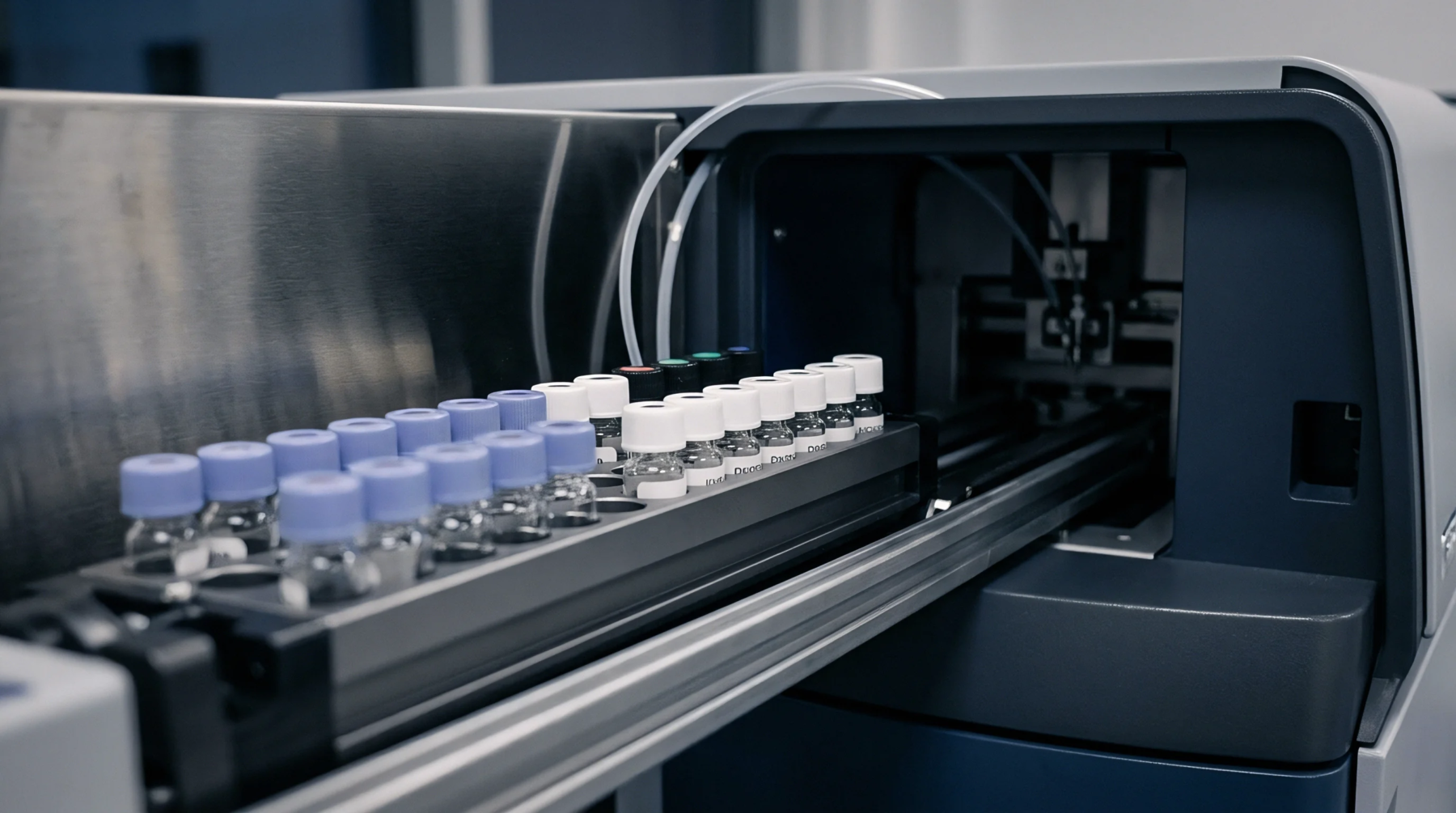
Automated thermal desorption GC-MS enables rapid, solvent-free screening of volatile NIAS in post-consumer resin to enforce incoming lot compliance.

Verify antioxidant migration in HDPE by coupling Piringer kinetic diffusion modelling with Simulant D2 mass spectrometry against toxicological thresholds.
Polyethylene NIAS compliance requires high-resolution mass spectrometry screening calibrated for response factor variance against ten parts per billion boundaries.

Matching standardized food simulants to polyolefin packaging depends on polymer swelling behavior, contact temperature, and food lipophilicity to verify legal migration limits.

Untargeted mass spectrometry screening de-risks recycled polyolefin resins by detecting non-intentionally added substances before food contact batch release.

Auditing Chinese GB polypropylene migration reports demands matching lot paperwork, verifying CMA seals, and confirming simulant parameters under GB 31604.1.

Molded micro-elastomer screening demands simulant testing matched to high surface-to-volume ratios to detect shear-driven degradation and blooming risks.

Mathematical diffusion modeling provides legally accepted migration screening for polyolefins when conservative Piringer parameters exceed real-world release.

Charged aerosol detection method validation requires power-law calibration models and volatile mobile phases to ensure accurate migrant quantification.

High pressure DSC suppresses additive evaporation at elevated oxygen pressures, measuring true antioxidant consumption in volatile polyethylene compounds.

Analytical verification demands testing finished containers against true fill ratios with validated simulants to prove overall and specific limits under law.

Polyolefin liner compliance requires establishing specific migration limits, screening for non-intentionally added substances, and maintaining full dossier traceability.

Accelerated contact testing induces polymer swelling and phase shifts that distort migration rates, demanding multi-temperature kinetic validation.

Auditing food contact declarations lacking simulant exposure parameters requires demanding EN 1186 test conditions, food type assignments, and surface-to-volume proof.
Incomplete migration reports invalidate food-contact packaging compliance; recalculate true exposure from geometry, simulant selection, and detection limits.

Response factors in non-targeted screening vary across four orders of magnitude, creating substantial quantification errors without class-matched calibrants.

Dynamic electrospray matrix suppression conceals non-target migrants in rapid resin audits, requiring mathematical baseline deconvolution to prevent false compliance.

Chromatographic NIAS identification in polyolefins combines GC-MS, LC-HRMS, and TTC thresholds to verify that untargeted migrants remain below 0.010 mg/kg food.
Dynamic post-column infusion calibrates electrospray matrix suppression distributions, aligning extractable quantification across divergent laboratory platforms.
Expertise is a utility, not a secret. sentiention™ publishes its working knowledge as open reference: intelligence layer covering the materials it sources, the markets it enters, and the reference that serves both.