High Pressure Differential Scanning Calorimetry for Volatile Polyethylene Additives
High pressure DSC suppresses additive evaporation at elevated oxygen pressures, measuring true antioxidant consumption in volatile polyethylene compounds.
Cell
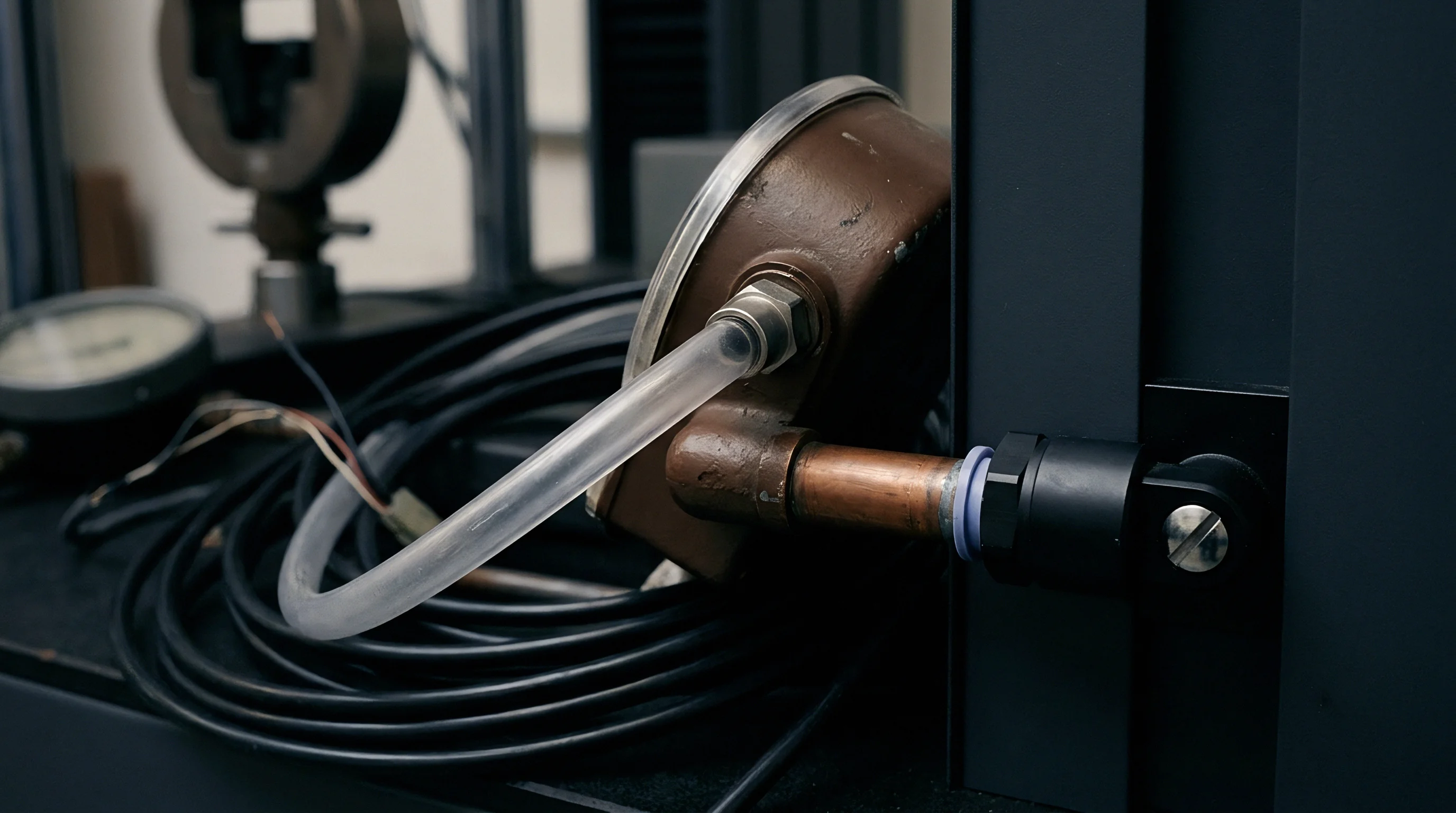
Thermal analysis of stabilized polyethylene in an open pan at atmospheric pressure produces misleading degradation curves whenever low-molecular-weight process stabilizers occupy the matrix. The physical cell of a high-pressure differential scanning calorimeter alters this thermodynamic environment by sealing the sample within a beryllium-copper or high-nickel alloy vessel pressurized up to 5 MPa. The pressure cell suppresses boiling.
By maintaining an elevated hydrostatic head of pure oxygen above the molten polymer specimen, the instrument shifts the liquid-vapor equilibrium of volatile species, forcing secondary antioxidants, hindered phenols, and processing aids to remain dissolved in the hydrocarbon melt throughout the thermal scan.
Calorimetric measurements at ambient pressure confuse physical mass transfer with chemical stabilizer consumption. When a standard differential scanning calorimetry cell runs an oxidation induction time test at 200 degrees Celsius under 0.1 MPa of oxygen, stabilizers possessing high vapor pressures flash into the purge gas stream prior to radical scavenging. High-pressure differential scanning calorimetry suppresses this phase departure.
Pure oxygen accelerates hydroperoxide generation. The elevated gas density increases the chemical activity of the reacting gas, permitting test temperatures between 150 and 170 degrees Celsius where the polymer backbone oxidizes rapidly while the additive package stays stationary within the condensed phase.
Pressurizing the reaction chamber suppresses additive boiling points without altering the primary chemical oxidation kinetics of the polyolefin matrix.
Baseline stability within the pressurized cell depends on gas exchange geometry and thermal convection damping. High gas densities at 3.5 MPa generate buoyant convective plumes inside standard vertical cell architectures, producing baseline noise exceeding forty microwatts if purge velocities remain unchecked. Modern high-pressure vessels decouple the pressurization manifold from the sensor plate, allowing static oxygen immersion or ultra-low laminar bleed rates below twenty milliliters per minute.
The baseline remains stable under load. Micro-machined constantan or chromel heat-flux sensors monitor the sample pan and reference disk, recording heat flow differences with a resolution of 0.1 microwatts under severe hyperbaric conditions.
Dense gas cushions the additive phase, keeping volatile molecules anchored in the melt while surface oxidation proceeds.

Volatilization
Polyethylene compounding incorporates functional additives spanning wide ranges of molecular weight, polarity, and vapor pressure. Low molecular weight phosphites flash off. In pipe and rotomoulding grades, secondary phosphite stabilizers such as tris(2,4-di-tert-butylphenyl) phosphite, CAS 31570-04-4, operate alongside primary hindered phenols like octadecyl 3-(3,5-di-tert-butyl-4-hydroxyphenyl)propionate, CAS 2082-79-3.
When exposed to melt temperatures exceeding 190 degrees Celsius under atmospheric gas flow, these chemistries volatilize before quenching peroxy radicals. The Clausius-Clapeyron relation governs this behavior, dictating that an increase in ambient cell pressure from 0.1 MPa to 3.5 MPa raises the effective boiling point of the additive by seventy to one hundred and twenty kelvins.
| Chemical Name | Molecular Weight (g/mol) | Atmospheric Boiling Point (°C) | Mass Loss at 200°C, 0.1 MPa (%) | Mass Loss at 150°C, 3.5 MPa (%) |
|---|---|---|---|---|
| Tris(2,4-di-tert-butylphenyl) phosphite | 646.9 | 380.0 | 14.8 | 0.3 |
| Octadecyl 3-(3,5-di-tert-butyl-4-hydroxyphenyl)propionate | 530.9 | 425.0 | 8.6 | 0.2 |
| Butylated hydroxytoluene | 220.4 | 265.0 | 98.2 | 1.4 |
| Pentaerythritol tetrakis(3-(3,5-di-tert-butyl-4-hydroxyphenyl)propionate) | 1177.6 | 710.0 | 0.7 | 0.1 |
| Erucamide | 337.6 | 358.0 | 42.1 | 0.8 |
The rate of stabilizer loss from a ten-milligram polyethylene specimen is a function of interfacial surface area, matrix diffusion coefficients, and purge velocity across the sample pan. Standard pans allow total additive escape. In an open aluminum pan exposed to an atmospheric nitrogen purge followed by oxygen switching, volatile phosphites deplete from the outer fifty micrometers of the melt pool within six minutes.
The instrument subsequently records an abrupt exothermic oxidation exotherm, reflecting local stabilizer starvation rather than bulk chemical depletion.
Pentaerythritol tetrakis(3-(3,5-di-tert-butyl-4-hydroxyphenyl)propionate) exhibits less than one percent mass loss at 200 degrees Celsius under 3.5 megapascals of pure oxygen.
Additive loss mechanisms inside unpressurized thermal analysis systems follow distinct physical trajectories depending on compound solubility and boiling metrics.
- Direct flash vaporization occurs when low-molecular-weight phenolic inhibitors reach their saturation vapor pressure below the instrument testing temperature, stripping the stabilizer from the pan within seconds of gas introduction.
- Boundary-layer carrier-gas stripping pulls vaporized phosphites and functional slip agents away from the specimen melt surface through continuous forced convection inside high-flow sweep cells.
- Diffusive migration depletion drives additive movement from the core of the molten polymer pellet toward the depleted surface interface, creating a steep stabilizer concentration gradient throughout the pan depth.
- Thermally induced sublimation vaporizes crystalline additives directly from unmolten powder agglomerates during the initial nitrogen heating ramp prior to polymer melting.
The compounder insists that standard ambient thermal curves reflect true in-service additive consumption regardless of molecular weight.
Isotherm
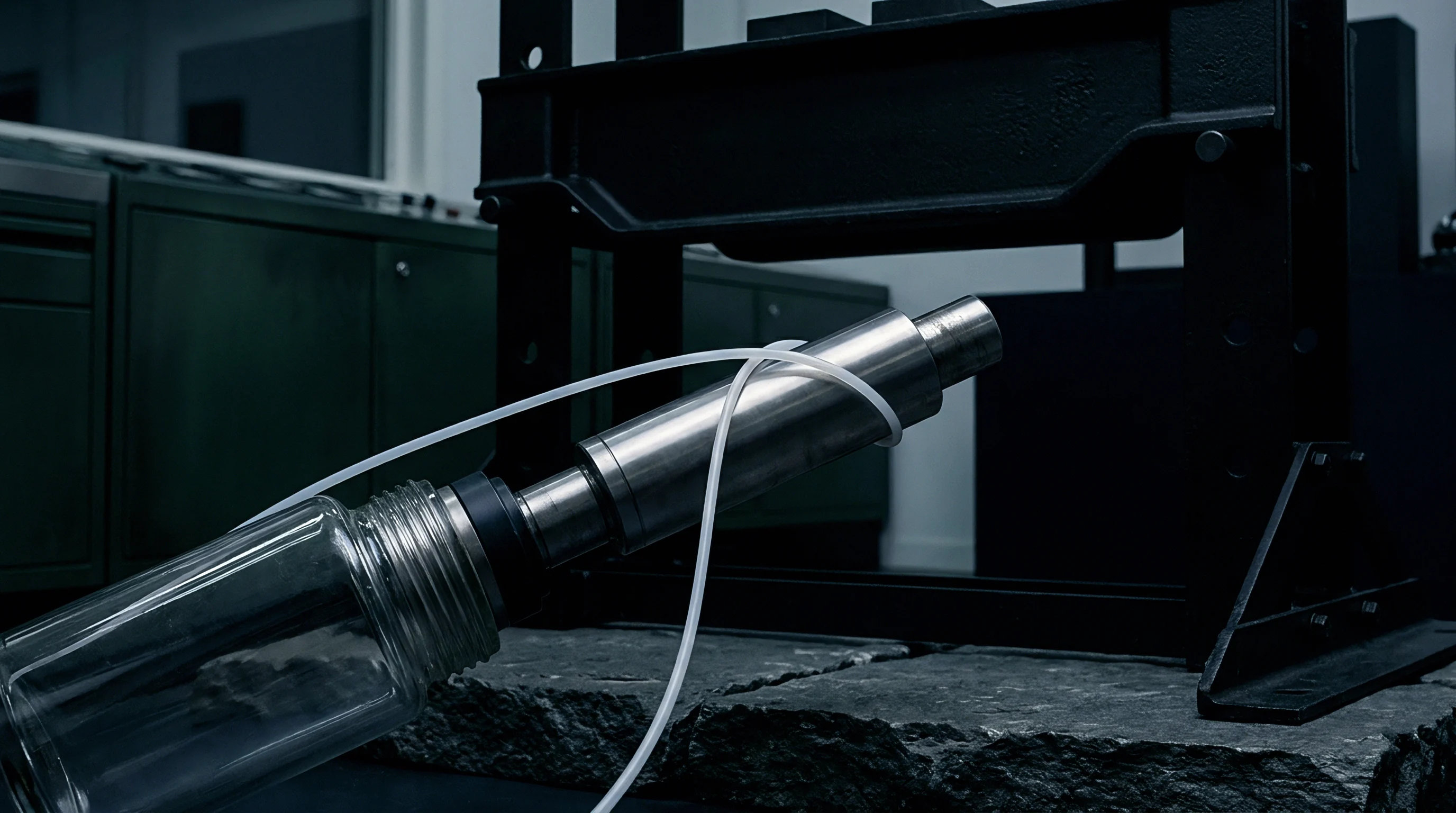
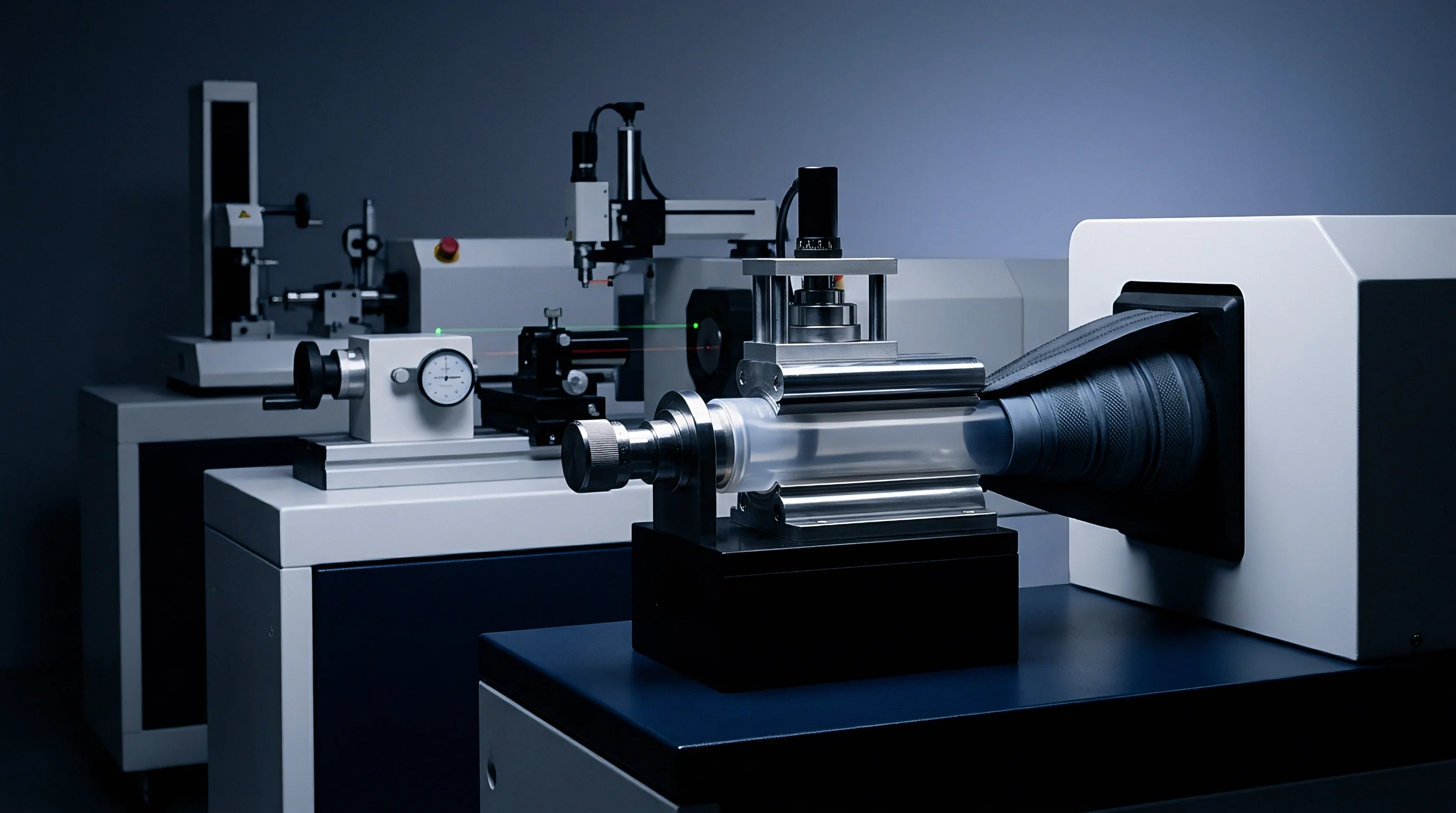
Execution of high-pressure oxidation induction time testing operates under standard ASTM D5885, separating chemical stabilization efficiency from physical vaporization. Testing at ambient pressure misleads converters. The protocol maintains an isothermal plateau, typically 150 degrees Celsius, while exposing the specimen to 3.5 MPa of industrial-grade oxygen.
Lowering the test temperature from the 200 degrees Celsius mandated by ambient ASTM D3895 to 150 degrees Celsius reduces the vapor pressure of volatile additives by more than two orders of magnitude, locking the stabilizer molecules inside the molten polyethylene matrix.

Is Standard Ambient Testing Biased by Evaporation?
Ambient testing penalizes formulations stabilized with low-molecular-weight organophosphites or semi-volatile hindered amine light stabilizers. Evaporation creates an apparent induction drop. In an ASTM D3895 ambient test at 200 degrees Celsius, a rotomoulding linear low-density polyethylene grade containing 1200 parts per million of a volatile phosphite might yield an oxidation induction time of eighteen minutes.
The identical resin tested under ASTM D5885 conditions at 150 degrees Celsius and 3.5 MPa yields an induction time exceeding one hundred and forty minutes. High pressure oxygen accelerates hydroperoxide decomposition kinetics while the suppression of vaporization allows the phosphite to perform its primary function: reducing hydroperoxides to stable alcohols and terminating chain propagation.
| Test Parameter | ASTM D3895 (Ambient OIT) | ASTM D5885 (High-Pressure OIT) | Method Deviation Consequence |
|---|---|---|---|
| System Pressure | 0.10 MPa (Ambient) | 3.45 to 3.50 MPa | Suppresses volatile additive boiling points |
| Isothermal Temperature | 200.0 ± 0.1°C | 150.0 ± 0.1°C | Mitigates non-oxidative thermal decomposition |
| Oxygen Purity | ≥ 99.5% | ≥ 99.5% | Maintains consistent gas fugacity |
| Purge Flow Rate | 50 ± 5 mL/min | Static or ≤ 20 mL/min | Eliminates convective surface mass loss |
| Sample Pan Configuration | Open aluminum | Open or screened aluminum | Maintains oxygen access without splatter |
| Primary Failure Mechanism | Volatilization plus oxidation | True chemical auto-oxidation | Differentiates additive loss from matrix consumption |
| Test parameters follow published ASTM standards; deviations in gas flow velocity void cross-laboratory reproducibility. | |||
Conducting a high-pressure oxidation measurement demands a sequential procedure to prevent premature oxidative attack or explosive auto-ignition during thermal equilibration.
- The operator places five milligrams of sliced polyethylene into an open aluminum pan, positioning it precisely on the constantan sensor disk alongside an empty reference pan.
- The technician seals the pressure vessel clamps and purges the internal chamber with hydrocarbon-free nitrogen at ambient pressure for five minutes to displace atmospheric air.
- The control system initiates heating at twenty kelvins per minute under a slow nitrogen bleed, bringing the cell from ambient temperature to the target test plateau of 150 degrees Celsius.
- The furnace controller holds the specimen at 150 degrees Celsius for two minutes to achieve complete polymer melting and thermal equilibrium across the sample pan geometry.
- The operator isolates the nitrogen supply line and pressurizes the reaction chamber with pure oxygen gas to 3.45 MPa over a controlled sixty-second duration.
- The data acquisition software monitors sample heat flow continuously until the exothermic auto-oxidation inflection point produces a steep deviation from the baseline.
Whether the elevated oxygen fugacity alters the secondary propagation pathway of sterically hindered nitroxyl radicals remains unresolved across high-density polyethylene copolymers.


Dispute
Discrepancies between resin manufacturer certificates of analysis and incoming verification data ignite frequent commercial disputes between compounding mills and pipe extruders. Incoming inspection catches lot volatility variations. A compounder formulating a PE100 high-density polyethylene pressure pipe grade often substitutes a cheaper, volatile secondary antioxidant package to lower additive masterbatch costs by twelve dollars per tonne.
When the resin converter tests the incoming lot against standard ambient ASTM D3895 specifications, the material fails the standard twenty-minute threshold. The compounder counters by insisting the resin meets the ASTM D5885 high-pressure threshold, arguing that the pipe service environment never experiences 200 degrees Celsius and that ambient testing artificially penalizes the volatile additive package.
Will Autoclave Pressure Distort Polyethylene Crystallization Baselines?
Gas phase pressure alters equilibrium constants. Hydrostatic pressures of 3.5 MPa exert a small thermodynamic shift on the melting temperature and lamellar crystallization behavior of high-density polyethylene, raising the melting peak by approximately two kelvins. This thermodynamic elevation remains completely distinct from oxidative degradation.
The baseline transition in an ASTM D5885 scan stems entirely from oxygen chemisorption and radical proliferation. Unstabilized melt degrades along the screw. Converters evaluating bimodal gas-phase pipe resins cannot dismiss high-pressure baseline shifts as physical artifacts; the inflection point signifies unambiguous chemical consumption of the primary phenolic stabilizer.
Referencing ASTM D5885 instead of ASTM D3895 binds the resin supplier to high-pressure oxygen induction testing that prevents false degradation readings from additive evaporation.
Procurement teams protect raw material consistency by structuring purchase agreements around multi-tier antioxidant qualification metrics that eliminate ambiguity.
- Dual-method specification parity mandates that every raw material lot carry both ASTM D3895 ambient metrics and ASTM D5885 high-pressure values on the final certificate of analysis.
- Solvent-extraction gas chromatography confirmation quantifies individual additive concentration levels in parts per million, verifying that high-pressure induction times reflect proper formulation rather than over-stabilization with volatile sacrificial phenols.
- Minimum induction threshold guarantees establish contractually binding limits of one hundred minutes under ASTM D5885 at 150 degrees Celsius, rejecting shipments exhibiting lower values regardless of ambient test results.
- Controlled pan geometry verification prohibits the use of deep-well or covered pans in ambient testing, preventing suppliers from artificially suppressing evaporation during standard factory release testing.
Specifying ASTM D5885 with a minimum acceptance limit of one hundred minutes under 3.5 megapascals strips the compounder of the right to substitute lower-molecular-weight process stabilizers.
Penalty
Selecting the incorrect thermal verification protocol generates catastrophic financial consequences across multi-year asset lifecycles. Field failures multiply under thermal fatigue. In municipal water distribution systems and mining tailing transport pipelines, polyethylene pressure pipes specified for fifty-year operational lives crack prematurely when formulated with volatile processing packages that evaporated during extrusion.
Volatile stabilizers leave the melt rapidly. When high-pressure differential scanning calorimetry is omitted from incoming quality control, resin converters accept resin lots possessing inadequate long-term thermal reserves.
Volatile antioxidant loss in an open test cell masquerades as chemical consumption, deceiving incoming resin acceptance.
The landed pellet invoice stays fixed. Scrap rates escalate during profile extrusion. A pipe extrusion facility running two thousand kilograms per hour of high-density polyethylene loses thirty-two thousand dollars in rejected product when line stabilization fails mid-shift due to volatile additive burn-off in the barrel degas zone.
If the incoming quality lab relies solely on ASTM D3895 ambient testing, the lab will fail acceptable resin lots stabilized with high-performance low-boiling phosphites, stranding railcars on the siding while incurring five hundred dollars per day in demurrage costs per car.
| Application Sector | Resin Grade Designation | Unverified Volatile Additive Failure Mode | Direct Scrapping or Replacement Cost per Unit | Commercial Dispute Vector |
|---|---|---|---|---|
| PE100 Gas Distribution Pipe | Bimodal HDPE (MFR 0.25 g/10 min at 5 kg, 190°C) | Slow crack growth acceleration along fusion joints | $4,800 per excavated joint repair | Breach of ISO 4437 long-term hydrostatic design strength |
| Geomembrane Liners | LLDPE / HDPE Copolymer (Density 0.940 g/cm³) | Premature embrittlement and stress cracking under leachate | $12.50 per square meter plus environmental remediation | Rejection under GRI-GM13 high-pressure testing audit |
| Automotive Fuel Tanks | Multi-layer blow molding HDPE | Pinch-off fatigue cracking from localized thermal degradation | $950 per fuel tank module recall | OEM warranty claim and batch recall penalties |
| Intermediate Bulk Containers | UV-stabilized HDPE (MFR 2.0 g/10 min at 2.16 kg, 190°C) | Corner cracking under combined environmental stress and stacking load | $160 per damaged container frame | DOT UN hazardous transport certification revocation |
Assume a converter processes ten thousand tonnes of polyethylene annually at a raw material cost of 1,350 dollars per delivered tonne. Operating without high-pressure calorimetry forces the plant to reject up to four percent of compliant polymer shipments due to false-negative ambient test readings, or converse, accept two percent of under-stabilized resin that oxidizes during processing. The arithmetic leaves no room for methodological compromise.
The compounding-hall team that verifies stabilizer permanence under elevated oxygen pressure eliminates the gap between datasheet promises and field survival.
Accepting ambient oxidation data for volatile formulations transfers the entire financial burden of environmental stress cracking directly to the resin converter.