
The Lot Loaded into the Container against the Sample Tested
Verify bulk container lots against test certificates using statistical ISO 2859-1 sampling and simulant migration screening before releasing payment.
Verify bulk container lots against test certificates using statistical ISO 2859-1 sampling and simulant migration screening before releasing payment.
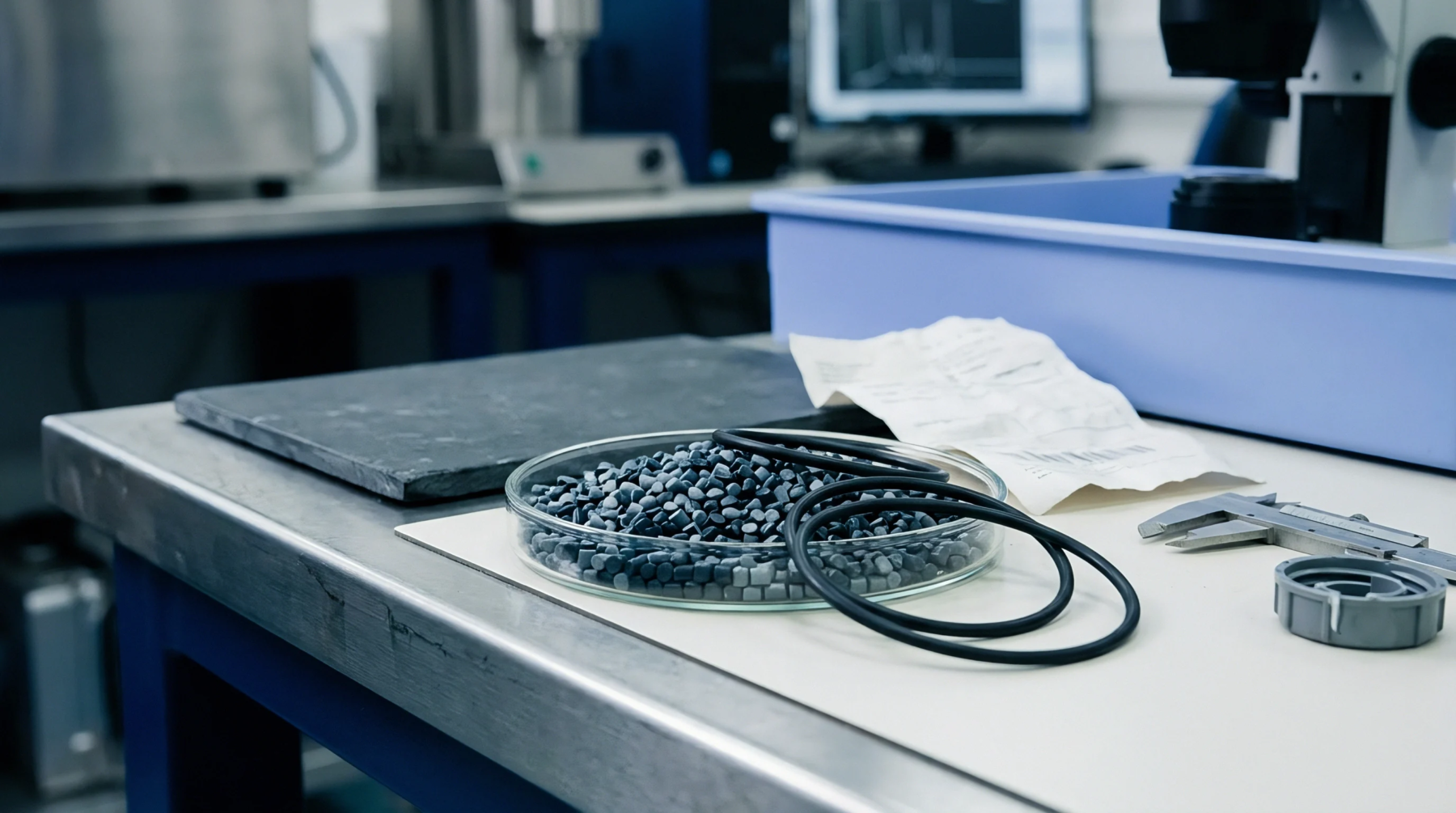
Mass spectrometry NIAS risk analysis quantifies unknown contaminants in recovered polypropylene using TTC thresholds to defend food-contact compliance dossiers.

High-resolution mass spectrometry non-target screening identifies toxicologically uncharacterized polyolefin migrants down to sub-10 ppb compliance thresholds.

Mandatory upstream disclosure of dual-use additive identities and migration potential enables downstream food packers to verify total food additive compliance.

Ionization efficiency matrix corrections convert high-resolution mass spectrometry peak areas into accurate migrant concentrations, preventing false compliant packaging declarations.

Auditing converter additive disclosures against container migration limits requires screening recipe dosages against diffusion kinetics and analytical test results.
Dual-use additives migrating from plastic packaging into food must satisfy both packaging specific migration limits and direct food additive maximum levels.

Migration values in ethanol or isooctane simulants overestimate low-density polyolefin release by up to three hundred percent while underreporting polar NIAS transfer into emulsified foods.

Converters resolve masterbatch secrecy through third party compliance trusts and standardized specific migration testing protocols.

Analytical screening of additive degradation products in rigid packaging demands hyphenated mass spectrometry matched against finished container migration testing.

Analytical screening of HDPE consignments requires solvent extractions, GC-MS profiling, and diffusion modeling to verify food contact compliance before release.

A migration number without its simulant and temperature is invalid; exposure medium and thermal regime dictate diffusion and verify regulatory compliance.

Polyolefin slip kinetics depend on additive supersaturation, where migrating fatty acid amides form nanometer-scale boundary layers to balance friction and seal integrity.

Screening polymeric minor assembly additives requires precise cryo-milling, solvent extraction, and mass spectrometry to confirm regulatory compliance limits.

Verifying food contact reports against resin specifications requires matching batch numbers, validating simulants, and recalculating surface contact ratios.

Validating food contact safety in bulk packaging relies on matching simulant test parameters to geometry and auditing chemical declarations for every additive.

Polyolefin migration compliance requires selecting food simulants based on polarity and fat content while accounting for matrix swelling and thermal limits.
Co-extracted polymer matrix components suppress electrospray ionization signals, requiring isotopologue compensation to prevent false migration compliance.

Secondary amides eliminate seal jaw smoking and hot tack decay in polyolefin film sealing by maintaining low volatility at elevated operating temperatures.

Primary erucamide melts under hot bar sealing platens, increasing viscous drag and tooling varnish; secondary amides preserve boundary slip and seal integrity.

Reconciling masterbatch dosages with specific migration limits requires calculating active concentration, accounting for thermal loss, and verifying compliance by testing.

Analytical screening validates supplier disclosures by identifying degradation products and non-intentionally added substances before market placement.

Hot runner temperature differentials across mold cavities cause localized additive degradation and uneven migration rates that compromise food contact release.

Extracting lipophilic simulants requires size-exclusion cleanup to prevent mass spectrometry matrix suppression during dual-use additive migration quantification.
Emulsion structure suppresses fat-contact migration, rendering neat oil simulants excessively aggressive and alcoholic simulants unreliably unconservative.

Converters must secure precise masterbatch additive identities, specific limits, and dual-use statuses to verify food contact migration compliance legally.

Select erucamide for thermal stability and predictable migration, balancing inorganic antiblock surface adsorption to maintain stable film friction below 0.25.

Primary amides partition toward high-free-volume polyolefin plies, requiring chromatography and friction verification to prevent costly converting failures.

Predict boundary slip in contaminated PCR by pairing ATR FTIR carbonyl tracking with Fickian diffusion models that adjust for polar oligomer adsorption traps.
Polyolefin migration compliance demands simulant-specific exposure verification and mass-spectrometric screening for unlisted oligomeric hydrocarbons.
Expertise is a utility, not a secret. sentiention™ publishes its working knowledge as open reference: intelligence layer covering the materials it sources, the markets it enters, and the reference that serves both.