Analytical Screen Isolation Methods for Polymeric Matrix Additives in Minor Assemblies
Screening polymeric minor assembly additives requires precise cryo-milling, solvent extraction, and mass spectrometry to confirm regulatory compliance limits.

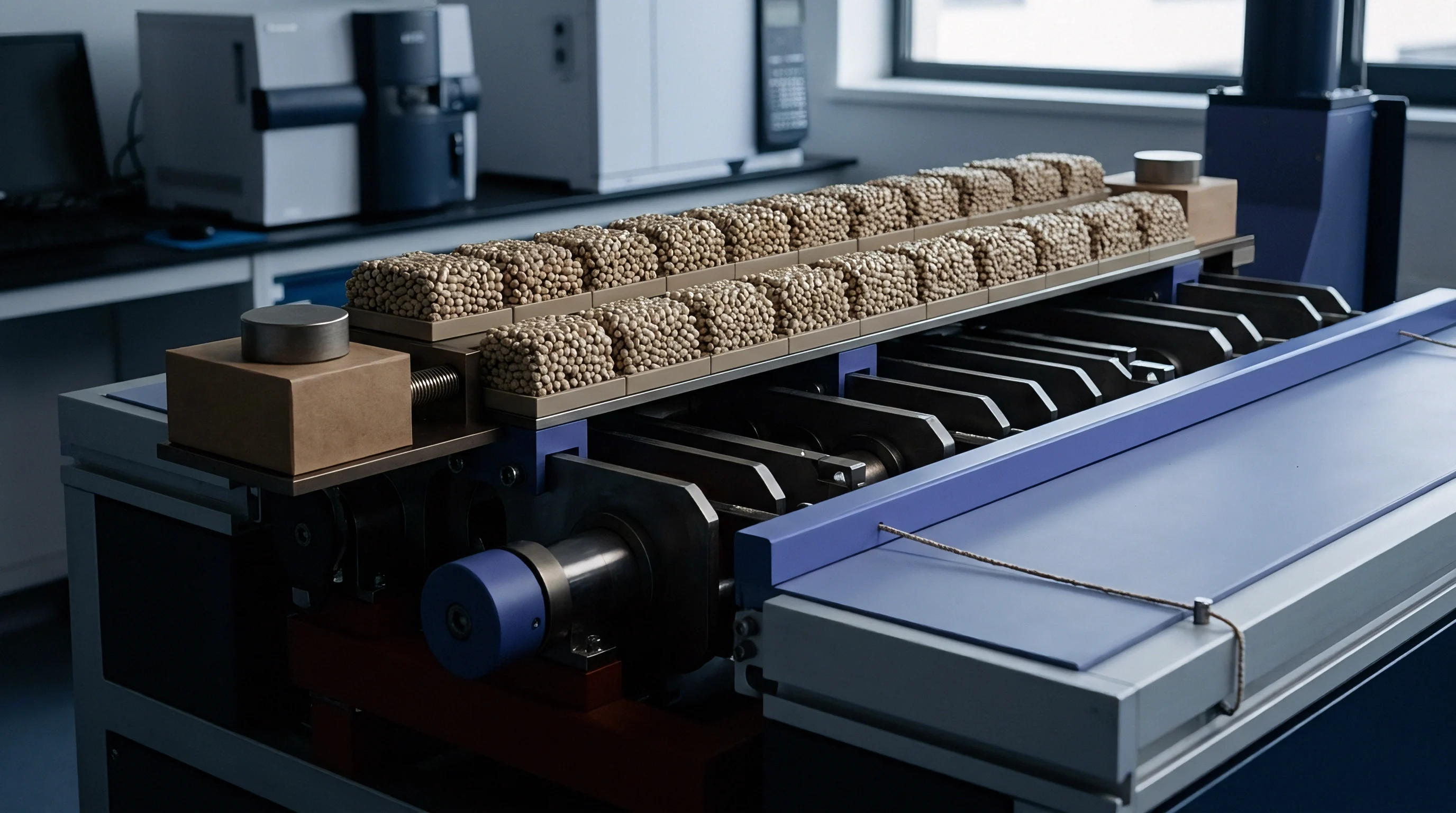
Sieve
Analytical screening of minor assemblies in complex manufacturing streams presents distinct physical challenges. Small molded gaskets, elastomeric O-rings, sub-gram electrical connectors, and micro-fluidic seals contain functional additives designed to stabilize the polymer during processing and end-use exposure. Extracting phenolic antioxidants, organophosphite stabilizers, fatty acid amides, and phthalate plasticizers from parts weighing under five hundred milligrams demands complete destruction of the polymer matrix without degrading volatile target compounds.
Mechanical size reduction forms the foundation of any quantitative isolation workflow.
Particle size uniformity directly governs extraction kinetics across the sample mass.
Cryogenic comminution reduces molded components to fine powder while keeping matrix temperatures below the decomposition thresholds of sensitive additives. Room-temperature grinding produces localized shear heating above one hundred degrees Celsius, driving the rapid degradation of phosphite processing stabilizers like Irgafos 168 into oxidized phosphate species. Submerging minor subcomponents in liquid nitrogen at minus one hundred ninety-six degrees Celsius embrittles elastomeric and thermoplastic matrices alike.
Impact milling at cryogenic temperatures yields particles with consistent surface-to-volume ratios, permitting uniform solvent penetration during subsequent liquid extraction stages.
Cryogenic grinding at minus one hundred ninety-six degrees Celsius prevents the thermal destruction of Irganox 1010 during mechanical reduction down to two hundred micrometers.

Cryogenic Milling and Mechanical Particle Reduction
Direct solvent contact with unground molded parts results in incomplete additive recovery because diffusion through dense semi-crystalline or crosslinked networks is slow. Standardized protocols specify milling subcomponents until the entire mass passes through a designated mesh boundary. For minor assemblies fabricated from fluoroelastomers or polyamides, achieving a mean particle diameter between one hundred fifty and three hundred micrometers maximizes extraction efficiency while preserving chemical integrity.
| Polymeric Substrate | Milling Condition | Target Particle Size | Thermal Degradation Limit | Primary Additive Targets |
|---|---|---|---|---|
| Fluorocarbon Elastomer (FKM) | Liquid Nitrogen Cryo-Mill | 180 to 250 µm | 120 °C | Bisphenol AF, Organophosphonium Salts |
| Polyamide 66 (PA66) | Impact Mortar at -196 °C | 150 to 200 µm | 140 °C | Irganox 1098, Copper Iodide Complexes |
| Polypropylene Copolymer (PP) | Rotary Knife Mill with CO2 | 250 to 300 µm | 90 °C | Irgafos 168, Erucamide, Calcium Stearate |
| Polyurethane Seal (TPU) | Cryogenic Pin Mill | 200 to 280 µm | 105 °C | Tinuvin 328, DEHP Plasticizers |
Maintaining cryogenic temperatures throughout milling prevents the thermal breakdown of sensitive target compounds.
Sample Homogeneity for Micro-Scale Subcomponents
Testing individual subcomponents weighing less than fifty milligrams introduces severe sampling variance if single parts are processed in isolation. Composite sampling strategies combine multiple identical assemblies from the same manufacturing lot to accumulate a total sample mass of at least two grams prior to milling. Splitting the milled powder using a rotary sample divider ensures that analytical aliquots accurately reflect the mean additive concentration across the production batch.
Finely divided polymer particles extract far more rapidly in organic media than whole molded beads because increased surface area governs solvent penetration.

Dissolution
Total matrix breakdown isolates internal additives far more completely than simple surface leaching or low-temperature soaking. Solvent selection depends on the solubility parameter of the base resin relative to the target additive compounds. Dissolving the polymer completely in a high-boiling solvent, followed by selective precipitation of the high molecular weight polymer chains using a non-solvent, liberates trapped additives into a clean liquid phase suitable for chromatographic analysis.
Entrained additive molecules remain locked within the dense polymer matrix until complete dissolution occurs.

Solvent Selection and Dissolution Precipitation Isolation
Tetrahydrofuran dissolves amorphous polyolefins, polycarbonates, and flexible polyvinyl chloride assemblies within sixty minutes at fifty degrees Celsius. Once the resin forms a homogeneous solution, adding cold methanol dropwise causes the hydrophobic polymer backbone to coagulate into a dense precipitate. Low molecular weight additives remain fully dissolved in the methanol-tetrahydrofuran supernatant.
Centrifugation at four thousand revolutions per minute separates the coagulated polymer, leaving a clear liquid fraction ready for instrumental concentration.
EN 13130-1 specifies a forty-eight hour conditioning period at twenty-three degrees Celsius prior to solvent contact to prevent moisture-induced variance in additive extraction yields.

Microwave Assisted and Pressurized Fluid Extraction
Crosslinked elastomers and engineering thermoplastics resist complete solvent dissolution at ambient pressures. Pressurized liquid extraction uses organic solvents at elevated temperatures and pressures up to fifteen megapascals to force solvent molecules into the polymer matrix without exceeding the boiling point of the liquid phase. Microwave-assisted extraction rapidly heats the solvent-sample mixture using dielectric coupling, accelerating the desorption of hindered amine light stabilizers from polyamide and polyoxymethylene subcomponents.
Higher surface area in milled samples significantly accelerates dissolution kinetics under pressurized conditions.
- Weigh two hundred milligrams of milled polymer powder into a fluoropolymer microwave digestion vessel.
- Dispense ten milliliters of tetrahydrofuran into the vessel to dissolve the polymer matrix at sixty degrees Celsius over fifteen minutes.
- Add twenty milliliters of cold methanol dropwise while stirring to precipitate high molecular weight polymer chains.
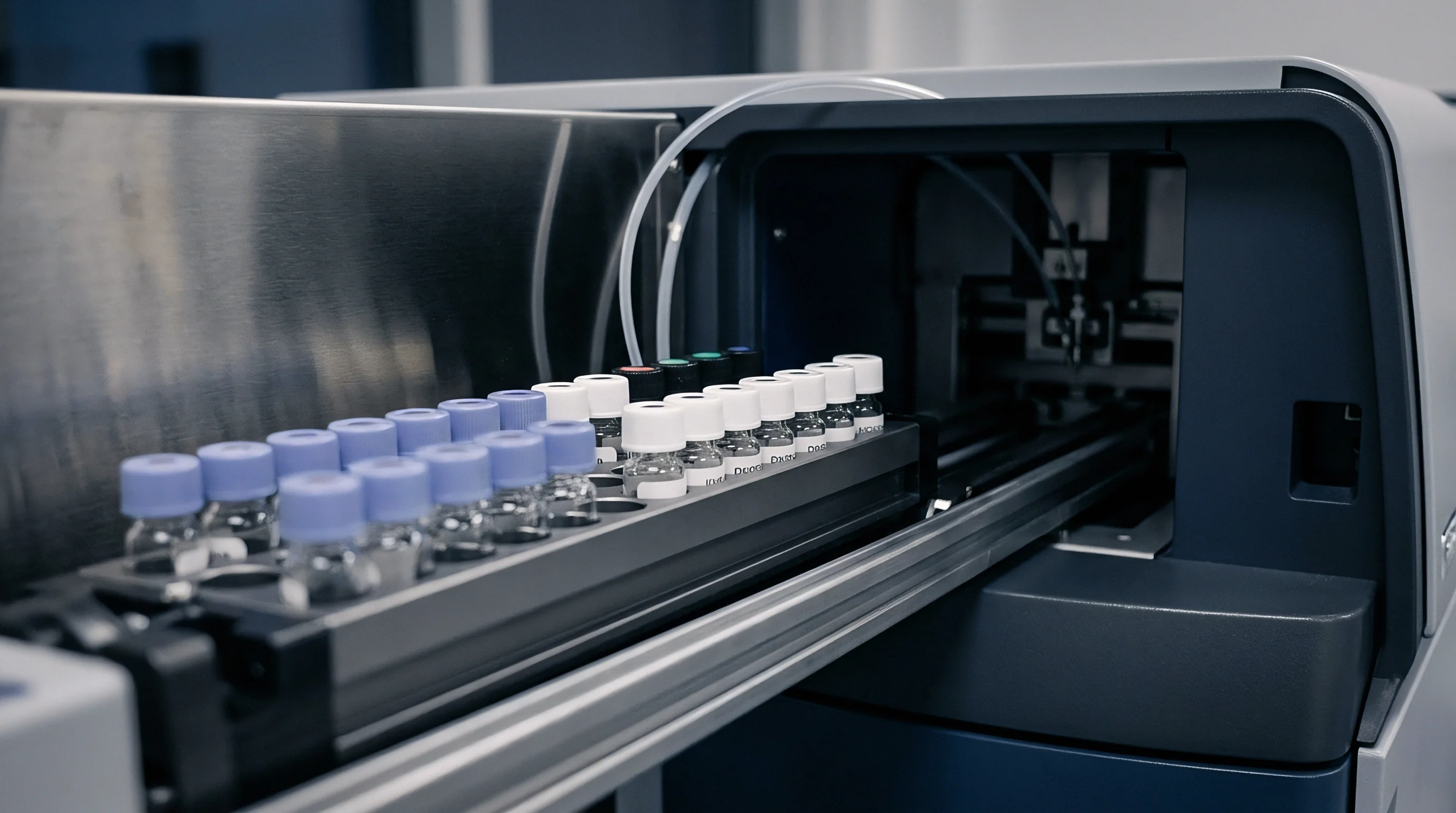
- Filter the liquid supernatant through a zero point two micrometer PTFE syringe membrane into a glass autosampler vial.
Low additive recovery can stem entirely from irreversible thermal binding within the crosslinked polymer gel during molding.


Chromatography
Instrumental separation converts complex liquid extracts into distinct spectral signals corresponding to individual additive chemical structures. High-performance liquid chromatography coupled with ultra-violet absorbance detection quantifies non-volatile antioxidants like Irganox 1010 and light stabilizers such as Tinuvin 770. Gas chromatography combined with mass spectrometry resolves volatile processing aids, slip agents, and residual monomers.
Ultra-high-performance liquid chromatography paired with electrospray ionization tandem mass spectrometry achieves detection limits below ten parts per billion for trace migration studies.
Organic solvents also solubilize low molecular weight matrix oligomers alongside target additives.
Resolving non-polar additives requires tailored organic eluent profiles during chromatographic separation.

Instrumental Separation and Mass Spectrometry Isolation
Reversed-phase liquid chromatography employs C18 stationary phases with gradient elution profiling to resolve compounds spanning a wide range of polarities. Mobile phase programs transition from high water fractions containing ammonium formate buffer to pure acetonitrile or isopropanol over twenty minutes. Triple quadrupole mass spectrometers operating in multiple reaction monitoring mode isolate specific precursor-to-product ion transitions, eliminating matrix interferences from co-extracted low molecular weight oligomers.
A high mass resolution spectrometer resolves isobaric non-intentionally added substances that co-elute with primary hindered amine light stabilizers.
What Mass Spectrometry Thresholds Detect Non-Intentionally Added Additives?
Non-intentionally added substances arise from additive degradation during melt processing, reaction side-products, or raw material impurities. High-resolution time-of-flight mass spectrometry screens for unknown compounds by calculating exact molecular masses with mass errors below two parts per million. Thresholds setting signal-to-noise ratios at ten-to-one define the limit of quantification for unknown degradation products, enabling risk assessors to evaluate potential toxicity against threshold of toxicological concern benchmarks.
Multi-point calibration curves confirm linear detector response across expected concentration ranges.

Worked Isolation Calculation for Antioxidant Content in Elastomeric Seals
Consider a quality audit on a batch of fluorocarbon elastomeric O-rings used in a medical minor assembly. The total assembly weight is zero point four grams. A composite sample of five O-rings totaling two point zero grams undergoes cryogenic milling.
A two hundred milligram aliquot of milled powder is extracted using ten milliliters of dichloromethane under microwave heating. The extract is concentrated down to one milliliter, diluted ten-fold with acetonitrile, and injected into an LC-MS system.
The instrument calibration curve for Irganox 1010 demonstrates linear response between zero point one and ten micrograms per milliliter, governed by the linear equation y equals twelve thousand five hundred x plus forty. Chromatographic peak integration of the sample extract yields a peak area of forty-three thousand seven hundred ninety counts. Applying the calibration equation yields:
Concentration in injected vial equals forty-three thousand seven hundred ninety minus forty, divided by twelve thousand five hundred, which equals three point five0 microgram per milliliter.
Accounting for the ten-fold dilution gives a concentrated extract value of thirty-five micrograms per milliliter. Multiplied by the one milliliter final extract volume, the total extracted mass of Irganox 1010 equals thirty-five micrograms from the two hundred milligram polymer aliquot. Dividing thirty-five micrograms by two hundred milligrams yields a final additive concentration of one hundred seventy-five milligrams per kilogram, or zero point zero one seven five percent by weight.
| Additive Class | Analytical Method | Stationary / Mobile Phase | Quantification Limit | Target Ion Mass-to-Charge |
|---|---|---|---|---|
| Hindered Phenol Antioxidant | UHPLC-ESI-MS/MS | C18 / Water-Acetonitrile Gradient | 0.05 mg/kg | m/z 1177.8 – |
| Organophosphite Stabilizer | HPLC-UV (272 nm) | C8 / Isocratic Methanol | 0.50 mg/kg | UV Absorbance at 272 nm |
| Fatty Acid Erucamide Slip Agent | GC-FID / GC-MS | DB-5MS / Helium Gas Phase | 1.00 mg/kg | m/z 337.3 + |
| Phthalate Plasticizer (DEHP) | GC-MS (EI Mode) | HP-5MS / Temperature Programmed | 0.10 mg/kg | m/z 149.0 Quantifier Fragment |
Whether structural isomers of oxidized trisnonylphenyl phosphite can be fully separated without high-resolution tandem mass spectrometry remains an active debate among testing laboratories.

Discrepancy
Analytical results obtained from finished minor assemblies frequently deviate from raw material resin declarations provided by upstream chemical synthesizers. Thermal stress during high-shear injection molding causes partial consumption of primary antioxidants, producing unlisted degradation products. Processing aids like erucamide migrate rapidly to component surfaces, concentrating in outer boundary layers while depleting internal core matrices.
Chemical transformation during manufacturing invalidates compliance files that rely solely on raw material safety data sheets.
Generic raw material datasheets fail to reflect batch-to-batch compositional variation introduced during processing.
Declarative Gaps between Bulk Resin and Molded Assemblies
Raw resin compliance documentation reflects the composition of virgin polymer pellets before compounding and thermal processing. High temperatures inside injection molding barrels break down phosphite stabilizers into dialkyl phosphates and phenolic fragments. A declaration listing Irgafos 168 at two thousand parts per million may hide the fact that sixty percent of the stabilizer converted into oxidized forms during component molding, reducing residual thermal protection in the final product.
Laboratory test reports apply strictly to the specific batch analyzed and carry no legal validity for subsequent molding runs using recycled regrind.

Non-Intentionally Added Substances in Micro-Components
Impurities in lower-tier masterbatches introduce unaccounted chemicals into minor assemblies. Secondary plasticizers, oligomeric degradation products, and catalyst residues enter production streams when molders switch resin grades without re-qualifying tooling. Analytical screening isolation workflows detect these unlisted substances, protecting downstream brands from regulatory non-compliance.
Analytical test reports apply strictly to the specific lot evaluated rather than entire production runs.
- Over-declaration of primary antioxidants occurs when raw resin datasheets list additives that volatilize completely during high-shear injection molding of micro-connectors.
- Omission of processing aids leaves slip agents like erucamide unlisted on component declarations despite high migration into surrounding housings.
- Thermal degradation product masking hides toxic degradation fragments behind broad low-resolution chromatogram peaks during routine screening.
- Sub-tier resin substitution introduces unapproved phthalate plasticizers into elastomeric seals without updating the assembly compliance file.
ISO 17025 clause 7.8.2 mandates that test reports state the exact sample receipt condition and preparation sequence, invalidating compliance assertions that rely on raw material supplier brochures.


Obligation
Placing products on regulated markets creates legal responsibility for every individual component within an assembly, regardless of physical size. Under European Regulation EC 1935/2004 and Regulation EU 10/2011, minor assemblies contacting food or medical media must demonstrate compliance through specific migration testing and complete chemical traceability. REACH regulation mandates disclosure whenever a Substance of Very High Concern exceeds zero point one percent by weight in any individual article, enforcing strict monitoring across subcomponent supply chains.
Customs authorities require complete analytical test dossiers before clearing imported subcomponents.
Unverified subcomponents risk immediate market rejection and regulatory enforcement action.
Regulatory Compliance Frameworks for Subcomponent Additives
Customs authorities and market surveillance inspectors verify additive compliance by demanding analytical test dossiers backed by accredited laboratory reports. Reliance on general supplier guarantees without batch-specific laboratory screening exposes importers to immediate product seizures and mandatory market withdrawals. Chemical screening data establishes verifiable proof that restricted plasticizers, flame retardants, and heavy metals stay below statutory limits under actual usage conditions.
| Regulation / Standard | Restricted Additive Target | Specific Migration or Concentration Limit | Simulant / Testing Condition | Non-Compliance Commercial Penalty |
|---|---|---|---|---|
| EU 10/2011 Annex I | Dibutyl Phthalate (DBP) | 0.30 mg/kg Specific Migration Limit | 3% Acetic Acid, 10 Days at 40 °C | Immediate Market Recall and Product Destruction |
| REACH Annex XVII | Tris(2-chloroethyl) phosphate | 0.10% by weight concentration limit | Total Solvent Dissolution Extraction | Import Blockade and Regulatory Administrative Fines |
| RoHS 3 Directive | Diisobutyl Phthalate (DIBP) | 1000 mg/kg homogenous material limit | Pyrolysis Gas Chromatography MS | Customs Seizure and Supply Contract Termination |
| FDA 21 CFR 177.2600 | Rubber Extractives (Total) | 20 mg/sq inch extraction limit | Distilled Water Reflux for 7 Hours | Import Alert and Public Warning Letter Issuance |
Commercial supply contracts attempt to allocate regulatory liability across tiers of component manufacturers.
Incorporating recycled resins introduces unmapped additive species and unexpected degradation products.

Auditing Procedures for Supply Chain Compliance Dossiers
Auditing a technical compliance file requires cross-referencing finished component batch numbers against corresponding analytical isolation reports. Control protocols require periodic laboratory testing for high-risk elastomeric and plastic subcomponents. Establishing verifiable laboratory screening data protects market access and shields brand owners from joint-liability enforcement actions.
- Batch verification testing confirms additive concentration levels before micro-assemblies enter production lines.
- Supplier declaration tracing matches raw material batch numbers against finished subcomponent analytical reports.
- Migration risk scoring ranks small subcomponents by surface-area-to-volume ratio in sensitive contact applications.
- Dossier archiving protocols maintain full analytical screening data for ten years to satisfy customs audit demands.
Failure to verify minor assembly additive concentrations leads to immediate port detentions, mandatory recall actions, and direct financial forfeitures under national market surveillance rules.