Predicting Long-Term Boundary Layer Slip Transport in Contaminated Post-Consumer Recycled Polyolefin Packaging Formulations
Predict boundary slip in contaminated PCR by pairing ATR FTIR carbonyl tracking with Fickian diffusion models that adjust for polar oligomer adsorption traps.
Shear
Melt transport through packaging film extrusion dies establishes the initial concentration profile of low molecular weight additives across the molten polyolefin velocity profile. Primary amides such as erucamide and oleamide remain completely dissolved within the polyolefin matrix at melt temperatures between 190 °C and 230 °C. The high shear field inside the die land forces low-viscosity fraction species and dissolved additives toward the high-shear region adjacent to the die wall. Extrusion processing conditions set the initial radial distribution of slip additives before the blown film or cast sheet cools below its crystallization temperature.
Interfacial Velocity Gradients during Melt Processing
Extrusion through narrow die gaps creates steep velocity transitions between the core polymer flow and the stationary metal boundary. At apparent shear rates exceeding 400 s^-1, post-consumer polyolefin matrices containing degraded, low-molecular-weight polyolefin fractions exhibit non-linear velocity profiles. High local shear stress promotes premature wall slip inside the die, altering melt temperature profiles across the boundary layer.
Shear rates set initial distribution. The local thermal history dictates how much amide additive remains homogeneously dispersed versus how much migrates to the interfacial layer prior to crystalline solidification.
Wall Slip Mechanisms in Recycled Polyolefin Melts
Polymer chains containing degraded, short-chain fractions exhibit reduced entanglements near boundary tooling surfaces. When processing post-consumer high-density polyethylene or linear low-density polyethylene blends, recycled fractions alter the critical shear stress required for the onset of melt fracture and wall slip. Wall slip alters boundary temperature.
The presence of oxidized oligomers shifts the capillary rheology curve, causing premature interfacial debonding at the die metal surface during high-throughput film blowing.
Primary erucamide solubility in post-consumer high density polyethylene drops below 400 parts per million at standard storage conditions of 23 °C.
Failing to evaluate melt boundary velocity profiles during recyclate film compounding results in unstable bubble formation, leading to severe gauge variation and rejected roll stock at conversion facilities.
Migration
Solid-state transport of primary fatty amides relies on thermal activation energy to move additive molecules through the amorphous polymer network. Once a flexible packaging film cools below its crystallization point, the solubility of erucamide drops drastically from over 5,000 parts per million in the melt to less than 400 parts per million in the solid matrix. This thermodynamic supersaturation creates a chemical potential gradient that drives slip amides out of the bulk polymer and toward the film surface.
Fickian Diffusion Kinetics in Semi Crystalline Matrices
Transport rates through solid polyolefin films follow concentration gradients governed by mass transfer equations where the diffusion coefficient depends on matrix density. In semi-crystalline polyolefins, diffusion occurs exclusively through the amorphous phase, as crystalline lamellae act as impermeable physical barriers. Bulk diffusion dictates long-term performance.
The effective diffusion coefficient scales with the volume fraction of the amorphous phase and inversely with crystallite tortuosity, requiring precise density measurements per ISO 1183 to predict long-term flux.
- Crystalline Tortuosity increases the path length for migrating amide molecules, slowing arrival at the surface layer in high-density formulations.
- Amorphous Free Volume dictates molecular mobility, where higher branch density in low-density polyolefins accelerates additive transport.
- Thermal Activation Energy governs the rate of migration according to Arrhenius relationships, making storage temperature the primary kinetic variable.
- Amide Partitioning Threshold defines the maximum surface accumulation achievable before phase equilibrium halts further mass transfer.

Temperature Dependence of Boundary Layer Transport
Thermal energy shifts the rate at which dissolved amides move toward the outer film surface. At elevated temperatures between 35 °C and 50 °C, amorphous chain mobility increases, accelerating diffusion coefficients by up to an order of magnitude. Temperature accelerates phase rejection.
However, elevated temperatures simultaneously increase the thermodynamic equilibrium solubility of the additive within the amorphous bulk phase, which can reduce the driving force for blooming if storage conditions approach the additive melting point.
The precise mechanism governing how cyclic relative humidity alters the desorption rate of secondary amides from crystalline polyolefin boundaries remains an open experimental question.

Contamination
Post-consumer polyolefin streams carry polar functional groups generated by mechanical recycling, photo-oxidation, and residual adhesive compounds. Carboxylic acids, ketones, alcohols, and ester residues alter the internal polarity of recycled high-density polyethylene and polypropylene blends. These polar sites create energetic interactions with migrating slip additives, fundamentally changing boundary layer transport behavior compared to virgin resin grades.
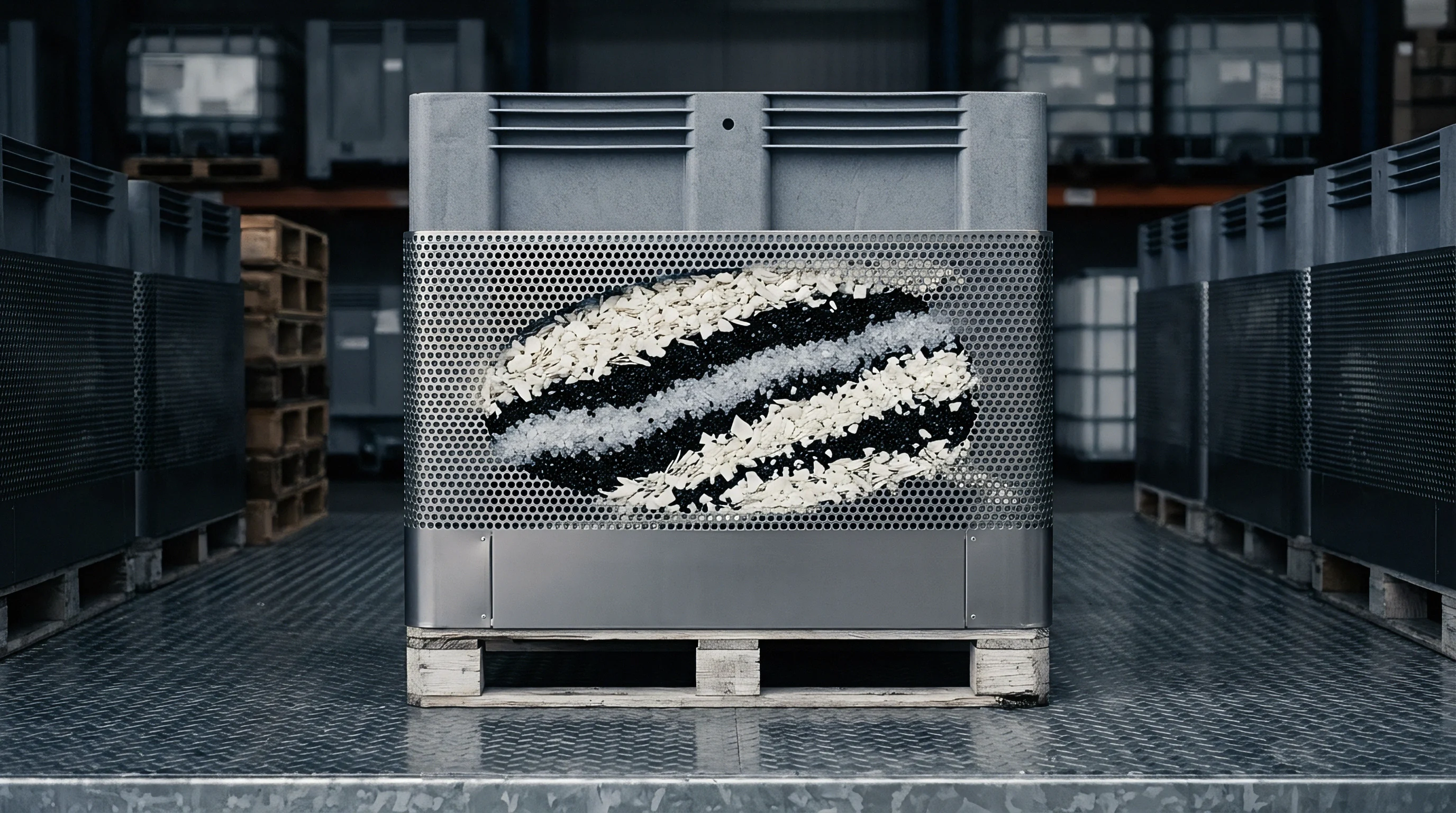
How Do Residual Esters Inhibit Amide Blooming Kinetics?
Polar carbonyl sites on trace ester chains form non-covalent hydrogen bonds with primary amide molecules in the amorphous matrix. When post-consumer resins contain residual polyethylene terephthalate or ethylene vinyl acetate, the functionalized contaminant species act as molecular sinks. Contaminants consume free amide molecules.
The active slip additive binds to these polar traps, reducing the concentration of mobile amides available to diffuse to the packaging surface.
Polar Traps and Adsorption Equilibria
Degraded wax fractions and oxidized low molecular weight species create localized energy wells that bind active slip molecules. The binding energy between primary fatty amides and oxidized polyolefin chains exceeds the thermal energy available at room temperature, immobilizing a substantial fraction of the additive package. Polar traps destroy surface migration.
Consequently, higher initial let-down ratios of slip masterbatch become necessary to saturate internal trap sites before any boundary layer transport occurs.
Compliance with EN 15344 for recycled polyethylene requires documentation of batch contamination thresholds that alter additive migration kinetics.
| Contaminant Class | Typical Weight Percent | Interaction Mechanism | Impact on Surface Amide Flux | Static CoF Shift |
|---|---|---|---|---|
| Oxidized Wax Oligomers | 0.15 – 0.80% | Hydrogen bonding with amide carbonyls | Reduction by 35% to 55% | +0.12 to +0.25 |
| Residual PET Particles | 0.05 – 0.30% | Interfacial polar adsorption | Reduction by 20% to 40% | +0.08 to +0.18 |
| Ethylene Vinyl Acetate | 0.20 – 1.50% | Dipole-dipole entrapment in matrix | Reduction by 45% to 70% | +0.15 to +0.35 |
| Decomposed Antioxidants | 0.02 – 0.10% | Steric hindrance in amorphous channels | Reduction by 10% to 20% | +0.04 to +0.10 |
| Data derived from ATR-FTIR surface spectrum integration and ISO 8295 friction testing after 14 days aging at 23 °C and 50% relative humidity. | ||||
- Oxidized Oligomeric Waxes bind primary amides through carbonyl interactions, lowering active diffusible concentrations.
- Residual Polyethylene Terephthalate flakes form polar phase boundaries that adsorb migrating additive molecules permanently.
- Decomposed Hindered Phenols alter local amorphous free volume, creating physical barriers to long-range molecular transport.
- Ethylene Vinyl Acetate Residues increase matrix polarity, raising the intrinsic thermodynamic solubility of amides and preventing surface bloom.
Recyclate vendors frequently assert that elevated film friction values stem entirely from storage warehouse temperature swings rather than residual polar species trapping the additive package inside the bulk matrix.

Dynamics
Predicting long-term surface friction requires continuous mass balance calculations accounting for bulk depletion, phase crystallization, and boundary layer thickness accumulation. As amides diffuse out of the film core, they assemble into a semi-crystalline surface layer ranging from 2 to 10 nanometers in thickness. This surface layer governs both static and kinetic coefficients of friction during high-speed converting and packaging operations.

Predictive Modeling for Coefficient of Friction Decay
Mathematical models link surface additive concentration directly to static and kinetic values measured during film unwinding tests. The time required to achieve a target dynamic coefficient of friction below 0.20 follows a non-linear decay curve governed by the initial dosage, diffusion coefficient, and contaminant trap density. Surface polarity changes everything.
Static friction spikes without warnings.

Boundary Surface Equilibrium and Crystalline Blooming
Surplus amide molecules reaching the polyolefin-air interface undergo localized phase separation, forming thin crystalline domain layers that lower surface energy. The equilibrium surface concentration depends on the balance between surface crystallization rates and mechanical attrition during roll winding. Excess blooming leads to optical haze, print adhesion failure, and heat seal contamination, while insufficient blooming causes film stalling on packaging machinery.
Consider a mathematical transport calculation for a 50-micron packaging film containing 50 percent post-consumer high density polyethylene and 50 percent virgin linear low density polyethylene loaded with 1,000 parts per million erucamide. Assume standard storage at 23 °C with an initial un-contaminated diffusion coefficient of 1.2 x 10^-10 cm^2/s. Under pristine conditions, surface concentration reaches equilibrium within 14 days, yielding a dynamic coefficient of friction of 0.15.
When 0.6 weight percent polar carboxylic contaminants exist in the recyclate fraction, competitive adsorption reduces the effective transport coefficient to 3.8 x 10^-11 cm^2/s. The effective surface flux drops by 68 percent, delaying friction stabilization beyond 45 days and elevating the equilibrium dynamic friction coefficient to 0.38.
Higher film crystallinity delays surface equilibrium by restricting amide migration through amorphous channels.
Elevated storage temperatures deplete surface slip layers by re-dissolving crystalline amide blooming deposits back into the amorphous polyolefin phase.

Measurement
Quantifying surface additive accumulation and internal migration profile variations demands targeted physical and spectroscopic analytical techniques. Standard melt flow index tests fail to capture boundary transport anomalies. Laboratory evaluation requires direct surface characterization combined with solvent extraction protocols to differentiate between bulk additive concentration and active boundary layer thickness.
Spectroscopic Quantification of Surface Amide Density
Infrared radiation penetrating the outer 1.5 microns of a polyolefin film yields absorption bands proportional to functional group density. Attenuated Total Reflectance Fourier Transform Infrared Spectroscopy (ATR-FTIR) isolates the carbonyl stretching vibration of primary amides at approximately 1640 cm^-1. Carbonyl absorbance tracks surface coverage.
Normalizing this peak against the polyolefin methylene bending peak at 1463 cm^-1 provides a quantitative index of surface slip accumulation.

Accelerated Aging Protocols for Friction Stability
Conditioning test samples inside environmental chambers at elevated temperatures accelerates additive diffusion, enabling multi-month friction predictions within shortened laboratory timeframes. Aging samples at 40 °C for 72 hours simulates ambient transport kinetics equivalent to 30 days at 23 °C. Melt filtration misses soluble species. Measuring static and dynamic coefficients of friction per ISO 8295 before and after thermal conditioning reveals whether contaminant trapping will degrade long-term performance.
- Extract surface additives from film samples using a ten-second solvent wash with high-purity ambient isopropanol.
- Evaporate solvent extract under dry nitrogen flow and re-dissolve residues in precise volumes of chloroform.
- Inject prepared solutions into a gas chromatograph equipped with a flame ionization detector to measure total fatty amide mass.
- Compare surface amide concentration against total bulk concentration obtained via high-temperature xylene digestion.
| Test Method | Standard Reference | Target Parameter | Detection Limit | Analytical Sensitivity |
|---|---|---|---|---|
| ATR-FTIR Spectroscopy | ASTM E1252 | Surface carbonyl absorbance ratio (1640/1463 cm^-1) | 50 nm layer thickness | High for surface species |
| Friction Testing | ISO 8295 / ASTM D1894 | Static and kinetic coefficient of friction | 0.01 CoF units | Direct functional measure |
| Solvent Extraction GC-FID | ASTM D5830 | Total bulk vs surface additive mass balance | 10 ppm concentration | High absolute precision |
| Contact Angle Goniometry | ASTM D7334 | Polar component of surface free energy | 0.5 mN/m surface energy | Sensitive to monolayer shifts |
Inserting ISO 8295 section 8.3 into purchase agreements forces compounders to guarantee dynamic friction coefficients below 0.20 after twenty-one days of storage under standard 23 °C laboratory conditions.

Formulation
Stabilizing boundary transport kinetics in post-consumer polyolefin films relies on engineered additive packages that overcome matrix contamination traps. Single-component slip packages designed for virgin resins show severe performance degradation in recyclate blends. Compounding practices must combine rapid-blooming short-chain additives with stable long-chain amides or non-migrating siloxane technologies to ensure predictable friction profiles throughout packaging shelf life.

Hybrid Amide Systems and Non Migrating Additives
Combining high-mobility short-chain amides with high-molecular-weight secondary amides establishes immediate slip while preserving long-term surface stability. Oleamide diffuses rapidly to provide immediate low friction upon film extrusion, while erucamide migrates slowly to sustain performance over months of storage. Secondary amides extend thermal stability.
Recycled resins shift boundary dynamics. Standard datasheets omit transport kinetics. Film tension reveals friction failures.
When polar contaminant levels exceed 1.0 weight percent, ultra-high molecular weight siloxane additives offer a non-migrating boundary solution that remains unaffected by matrix polarity traps.
Commercial Economics of Additive Stabilization in Recyclate
Raw material costs for slip masterbatches represent a minor fraction of total film compounding expenditure but dictate converting line yield. Adding 2,000 parts per million of standard erucamide increases resin cost by approximately 8 to 12 Euros per tonne. Switching to a customized hybrid amide package tailored for 50 percent post-consumer content increases additive expenditure to 22 Euros per tonne.
Contaminants suppress surface migration. This small premium prevents conversion downtime, roll blocking, and customer rejections that far exceed the initial material investment.
Contaminated recyclate feeds consume up to forty percent of added primary amides through non-reversible interfacial adsorption.
Optimizing the ratio between erucamide and secondary amides compensates for polar contaminant traps, ensuring stable surface friction without inducing additive bloom hazing or heat seal degradation on automated converting lines.