
Capillary Rheometry Correlation with Molecular Weight Loss in Recycled Bio Polyester Blends
Capillary rheometry tracks bio polyester molecular weight loss by isolating true shear viscosity and entrance pressure drops across processing shear rates.
Capillary rheometry tracks bio polyester molecular weight loss by isolating true shear viscosity and entrance pressure drops across processing shear rates.

Cross border compostable resin disputes require port of entry MFR and combustion ion chromatography testing to isolate transit scission from fluorinated additives.

Competitive carboxylic acid dissociation in non aqueous dissolution requires modeling homoconjugation and ion pairing to prevent interfacial gel stalling.
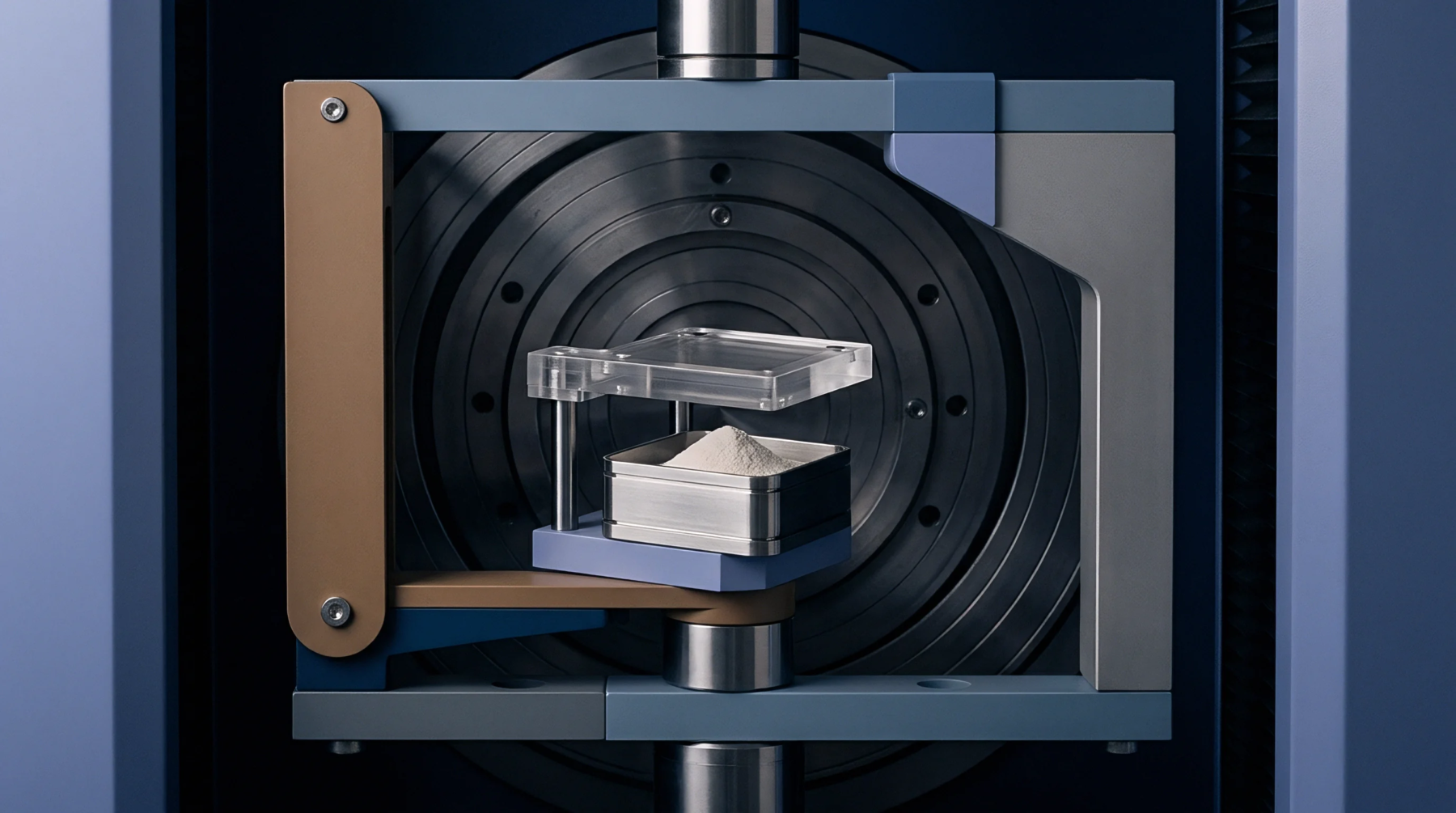
Accurate contaminant diffusion modeling in recycled polymers replaces spherical radius assumptions with shape specific three dimensional finite element boundary formulations.

Entrapped organic volatiles lower solid state polymerization equilibrium intrinsic viscosity limits by generating reactive acid groups and shifting esterification thermodynamics

Dynamic nitrogen purge gradients accelerate high-temperature transesterification by lowering interfacial ethylene glycol partial pressure and suppressing degradation.

Dynamic mass balance optimization matches additive letdown to real-time spectral contamination levels, reducing masterbatch costs and stabilizing melt quality.

Feed throat near-infrared calibration resolves recycled polyethylene density and polypropylene contamination before pellets reach the extruder melting zone.

In-line slit rheometry paired with spectroscopic letdown control dynamically counters recyclate viscosity shifts and prevents costly masterbatch over-dosing.

Matching carrier melt flow rate within twenty percent of the recycled matrix prevents masterbatch pinning and surface defects in high density polyethylene.

Masterbatch let-down rates for post-consumer polyethylene compounds require mass-balance adjustments offsetting baseline additives, ash, and carrier viscosity.

Verify High Load Melt Index across both 190 C and 220 C to identify thermal activation shifts that cause parison instability in regrind polyethylene compounds.

Flow rate ratio analysis of high-load over standard melt index isolates bimodal resin molecular distribution shifts to prevent extrusion failures before silo unloading.

Select polyethylene melt flow test loads based on expected viscosity, using 2.16 kg for standard resins and 21.6 kg for high molecular weight grades.

Verify post-consumer polyolefin melt flow using dual-load plastometry to expose degraded chains, gel content, and off-spec lots before charging production silos.
Expertise is a utility, not a secret. sentiention™ publishes its working knowledge as open reference: intelligence layer covering the materials it sources, the markets it enters, and the reference that serves both.