Capillary Rheometry Correlation with Molecular Weight Loss in Recycled Bio Polyester Blends
Capillary rheometry tracks bio polyester molecular weight loss by isolating true shear viscosity and entrance pressure drops across processing shear rates.


Bore
Incoming inspection of post-industrial and post-consumer bio polyester lots exposes immediate discrepancies between single-point melt flow rates and high-shear processing realities. Poly(lactic acid), poly(butylene adipate-co-terephthalate), and poly(butylene succinate) blends frequently arrive with datasheets quoting a single melt flow index measured at 190 degrees Celsius under a 2.16 kilogram weight according to ASTM D1238 or ISO 1133. That single value fails to capture the molecular weight loss caused by consecutive thermal cycles and residual moisture.
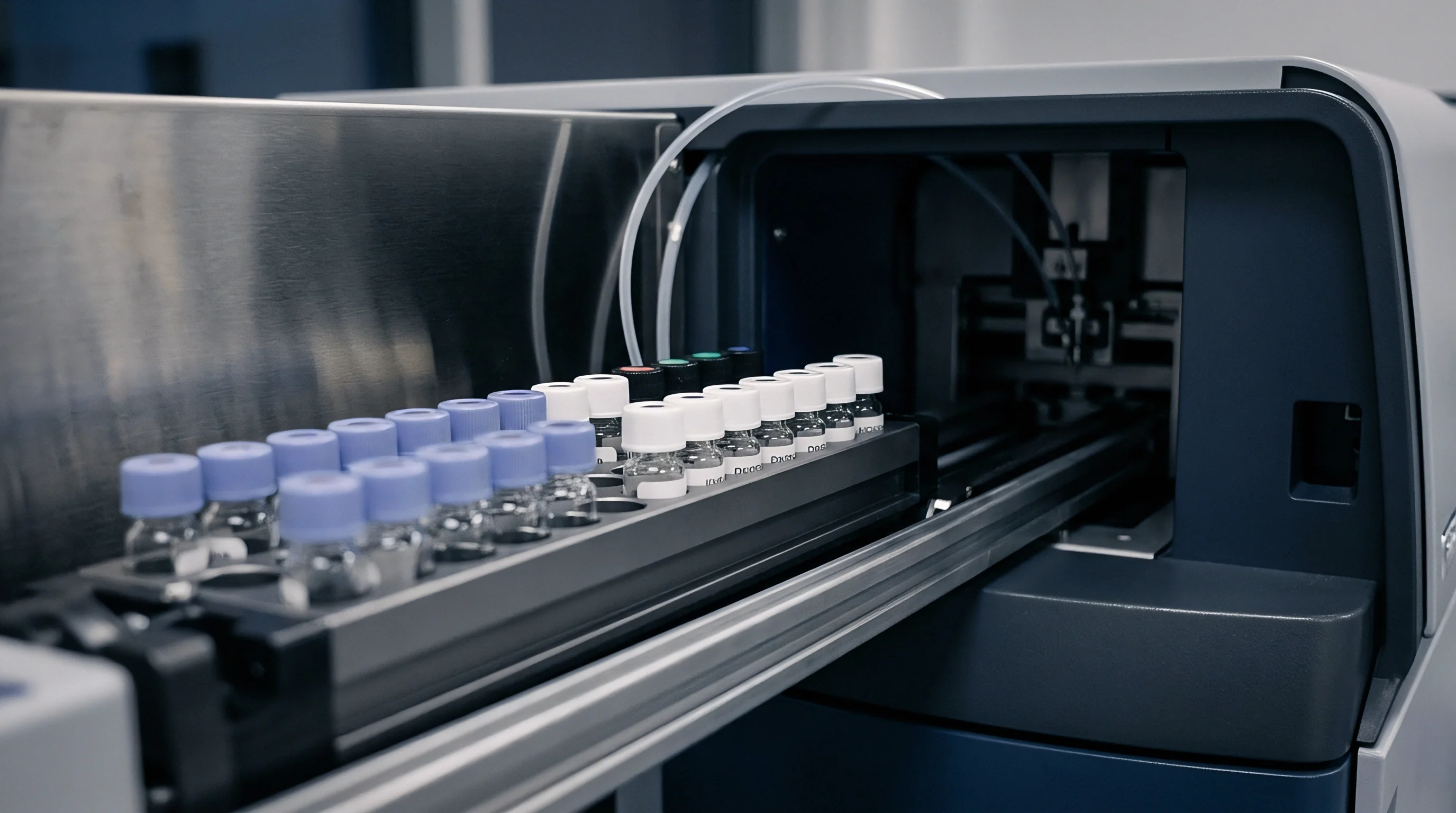
A twin-bore capillary rheometer isolates shear viscosity under processing conditions between 100 reciprocal seconds and 10,000 reciprocal seconds. Die geometry dictates wall shear. High shear rates mask backbone scission.
The capillary barrel provides an enclosed environment where barrel transit time, temperature profiles, and shear strain recreate the pressure fields of an injection moulding runner or an extrusion die land.
Melt flow index testers run at wall shear rates rarely exceeding 15 reciprocal seconds. At these low shearing stresses, long-chain branching, crosslinking gel residues, and high-molecular-weight fractions disproportionately dominate the flow resistance. Injection moulding, blown film production, and thermoforming feed material through tooling at shear rates ranging from 500 to 8,000 reciprocal seconds.
Uncorrected data obscures true melt yield. Capillary rheometry maps the non-Newtonian pseudo-plastic behavior across this operational spectrum. The rate of shear thinning in recycled aliphatic and aliphatic-aromatic co-polyester blends depends directly on the weight-average molecular weight and the broadness of the molecular weight distribution.
Chain scission shifts the onset of the shear-thinning regime toward higher shear rates while flattening the power-law slope.
A sixty-second extension of residence time inside an unvented 210-degree capillary barrel reduces the apparent viscosity of recycled poly(lactic acid) blends by eighteen percent at 1,000 reciprocal seconds.
Thermal stability inside the rheometer test cell serves as a direct proxy for molecular integrity. Degradation during the five-to-ten-minute preheating and testing cycle shows up as an immediate decay in piston drive pressure over time at a fixed piston speed. Polyesters undergo chain cleavage through both thermal degradation and hydrolysis.
Moisture accelerates ester cleavage. When the water content exceeds 50 parts per million in poly(lactic acid) or 100 parts per million in poly(butylene succinate), the high heat inside the barrel triggers rapid autolytic transesterification and ester bond hydrolysis. Capillary rheometers equipped with dual barrels allow the technician to test the identical blend through a zero-length orifice die and a capillary die of 20:1 or 30:1 length-to-diameter ratio concurrently, tracking real-time pressure drops alongside continuous molecular degradation.
Melt fracture marks molecular decay. Virgin bio polyesters show characteristic stick-slip instability or gross melt fracture at defined critical wall shear stress values, typically between 0.10 and 0.25 megapascals. Recycled bio polyester blends display erratic sharkskin behavior at substantially lower critical shear stresses.
The presence of lower-molecular-weight oligomers generated during previous extrusion cycles lowers melt cohesion at the die exit. Sourcing desks that accept pellets based strictly on nominal melt index datasheets experience persistent tool fouling, uneven cooling shrinkage, and gate blush in multi-cavity injection tools.


Correction
Raw pressure measurements taken at the capillary barrel base misstate the actual shear stress operating on the polymer melt. The total measured pressure drop comprises the entrance pressure drop across the convergent die entrance, the steady-state frictional pressure drop through the capillary bore, and the exit pressure drop at the die release. Evaluating bio polyesters without standard corrections produces systemic errors in calculated apparent viscosity.
The Bagley correction method strips out the entrance and exit pressure losses by employing at least two dies with identical diameters but different lengths. Using a flat die with a length-to-diameter ratio of zero alongside dies of length-to-diameter ratios of 10, 20, and 30 isolates the excess entrance pressure drop directly without extrapolation guesswork.

Where Does Entrance Pressure Drop Skew Measurements?
Piston advance forces the viscoelastic bio polyester melt from a large reservoir diameter of 9.55 millimeters into a capillary bore of 1.0 millimeter. Recycled blends containing poly(butylene adipate-co-terephthalate) dispersed within a rigid poly(lactic acid) continuous phase show high entrance pressure losses caused by extensional flow and elastic energy storage. Entrance pressure drops register melt elasticity.
As chains break during successive mechanical recycling passes, chain entanglement density falls. This loss reduces the extensional viscosity and dampens the vortex circulation at the entrance of the capillary die. The entrance pressure drop consequently drops across all shear rates.
Tracking this entrance pressure drop offers a fast rheological method to gauge changes in the relaxation spectrum and the weight-average molecular weight of the bio polyester blend without running gel permeation chromatography.
The Rabinowitsch-Weissenberg correction accounts for the non-parabolic velocity profile of pseudoplastic melts. Virgin and recycled bio polyester blends exhibit non-Newtonian pseudoplasticity where local shear viscosity drops with increasing shear rate. Calculating the true wall shear rate involves taking the apparent shear rate and multiplying it by the factor three plus the power-law slope derivative divided by four.
Recycled blends show distinct shifts in this power-law index. Chain extenders restore entrance resistance.
| Material Grade Composition | L/D Ratio Array | Bagley Entrance Pressure (MPa) | Power-Law Index n | True Shear Stress at 1000 1/s (kPa) |
|---|---|---|---|---|
| Virgin PLA/PBAT (80/20) Film Grade | 0, 10, 20, 30 | 3.82 | 0.34 | 84.6 |
| Once-Recycled PLA/PBAT (80/20) | 0, 10, 20, 30 | 2.95 | 0.41 | 68.2 |
| Thrice-Recycled PLA/PBAT (80/20) | 0, 10, 20, 30 | 1.74 | 0.52 | 46.9 |
| Thrice-Recycled PLA/PBAT + 0.5% ADR | 0, 10, 20, 30 | 3.45 | 0.36 | 79.1 |
| Recycled PBS/PLA (70/30) Injection Grade | 0, 10, 20, 30 | 2.10 | 0.48 | 52.4 |
The data demonstrates that thermal degradation drives the power-law index toward unity, shifting the melt toward Newtonian flow behavior. The loss of high-molecular-weight fractions reduces chain entanglements, making the fluid less shear-thinning. An engineer who relies on uncorrected apparent shear rates underestimates the true wall shear stress inside tooling.
Shorter chains slip past obstacles. Incorporating multifunctional epoxy chain extenders, such as Joncryl ADR additives, rebuilds long-chain branching, which returns the Bagley entrance pressure drop and the power-law index toward virgin base values.
Wall slip constitutes another failure mode in capillary measurements of recycled bio polyesters. Low-viscosity degradation products, residual lubricants, and plasticizers migrate to the die wall under high shear fields. Using the Mooney method with three capillary dies of identical length-to-diameter ratio but differing capillary radii (0.5 mm, 1.0 mm, and 1.5 mm) detects the presence of wall slip.
If wall slip remains unquantified, the recorded pressure drop reflects interfacial lubrication rather than bulk melt deformation. Thin dies show excessive apparent shear rates under slip conditions.


Scaling
Bridging the output of high-pressure capillary rheometry to macromolecular chain dimensions requires rigorous scaling equations. Polymer physics demonstrates that the zero-shear viscosity of linear flexible polymers scales with the weight-average molecular weight raised to the power of 3.4 once the molecular weight exceeds the entanglement molecular weight. For neat poly(lactic acid), the entanglement molecular weight sits near 9,000 grams per mole.
For poly(butylene succinate), it sits near 6,500 grams per mole. Recycled blend lots maintain average molecular weights between 40,000 and 150,000 grams per mole, placing them squarely in the entangled regime where the 3.4 exponent governs zero-shear viscosity.

Why Do Standard Melt Flow Values Deceive?
Single-point testing cannot isolate the zero-shear plateau. Bio polyesters in capillary rheometers enter the shear-thinning regime at shear rates well below 50 reciprocal seconds. To extract the zero-shear viscosity from capillary data, you must fit the shear stress and shear rate curve to constitutive viscosity models.
The Carreau-Yasuda model and the Cross model serve as the primary mathematical vehicles for this extrapolation:
- Carreau-Yasuda model fitting incorporates parameters for zero-shear viscosity, infinite-shear viscosity, relaxation time, transition width, and the power-law slope, capturing the curvature between the Newtonian plateau and the shear-thinning regime.
- Cross model parameter extraction yields zero-shear viscosity and a characteristic shear rate corresponding to the midpoint of the transition zone, which directly tracks the longest macromolecular relaxation time.
- Cox-Merz empirical transformation matches oscillatory complex viscosity curves to capillary steady-shear viscosity curves across equivalent angular frequencies and shear rates, though phase separation in bio-blends disrupts strict convergence.
Extracted zero-shear viscosity values feed directly into the Berry-Fox relationship. The formula states that zero-shear viscosity equals a temperature-dependent frictional friction coefficient multiplied by the weight-average molecular weight raised to the 3.4 power. When mechanical shredding, washing, drying, and remelting cleave ester backbones, the weight-average molecular weight drops.
If the weight-average molecular weight drops by twenty percent, the zero-shear viscosity declines by approximately fifty-three percent according to this power scaling. This high sensitivity makes melt viscosity a far more precise operational indicator of chain degradation than mechanical tensile testing, where tensile strength remains flat until molecular weight falls below a critical threshold.
ASTM D3835 specifies the standardized capillary rheometry procedure for verifying shear-thinning behavior, entrance losses, and thermal degradation kinetics in thermally sensitive polyester melts.
Gel permeation chromatography provides number-average molecular weight, weight-average molecular weight, and polydispersity through size-exclusion separation in chloroform or hexafluoroisopropanol. Running gel permeation chromatography requires toxic solvents, extensive filtration, twenty-four-hour dissolution periods, and costly equipment calibration. Capillary rheometry delivers equivalent sensitivity to chain scission in twenty minutes directly on the plant floor.
Gel permeation chromatography remains essential for calibrating the empirical rheological scaling coefficients. Once a baseline Mark-Houwink-Sakurada relationship and Berry-Fox curve are calibrated for a specific blend morphology, capillary rheometry tracks molecular degradation in production lots accurately.
| Degradation State Lot | Weight-Average Mw (g/mol) | Polydispersity Index Mw/Mn | Zero-Shear Viscosity at 190 C (Pa s) | Shear Viscosity at 1000 1/s (Pa s) |
|---|---|---|---|---|
| Virgin Feedstock A0 | 148,000 | 1.82 | 4,120 | 84.6 |
| Reprocessed Cycle 1 R1 | 124,000 | 2.15 | 2,210 | 68.2 |
| Reprocessed Cycle 2 R2 | 101,000 | 2.48 | 1,150 | 54.1 |
| Reprocessed Cycle 3 R3 | 78,000 | 2.89 | 490 | 41.3 |
| Hydrolyzed Scrap H1 | 54,000 | 3.42 | 145 | 21.8 |
The correlation between zero-shear viscosity and weight-average molecular weight remains robust until phase morphology breaks down. Transesterification rearranges copolymer blocks. In poly(lactic acid) and poly(butylene adipate-co-terephthalate) blends, high temperatures and residual transesterification catalysts induce block shuffling at the interface.
This chemical reorganization creates block copolymers in situ, altering interfacial tension, domain size, and droplet coalescence. The resulting morphology shift alters viscosity independently from chain cleavage, leaving an open scientific question regarding how to separate interface modification from core molecular loss in complex commercial multi-phase compounds.

Drift
Rheological drift inside the testing barrel reflects the practical operating window of the polymer on the factory floor. Bio polyesters exhibit an unforgiving degradation response to residence time at processing temperatures. A typical capillary test run sweeping eight shear rates takes between ten and twenty minutes.
During this period, the material residing in the upper zones of the barrel experiences prolonged thermal soaking before entering the die bore. If thermal degradation occurs during the sweep, the viscosities recorded at the end of the test represent a degraded material compared to the initial points. Thermal degradation drops barrel pressure.
An operator identifies this artifact by running an isothermal time-sweep test at a single low shear rate, such as 100 reciprocal seconds, over thirty minutes. The rate of viscosity reduction under steady shear and isothermal conditions quantifies the thermal stability coefficient of the lot. For a prime virgin poly(lactic acid) compound dried to below 50 parts per million water, viscosity decay at 190 degrees Celsius remains under 0.2 percent per minute.
For recycled agricultural film regrind containing trace pesticide salts and moisture, viscosity decay frequently exceeds 2.5 percent per minute. Hydrolysis cleaves ester bonds instantly.
A polymer melt that loses more than five percent of its wall shear stress across a ten-minute barrel soak will experience continuous melt flow shifts across injection cycles.
Moisture control separates valid incoming qualification from procedural error. Bio polyesters absorb atmospheric moisture rapidly. A container of poly(butylene succinate) pellets opened at 60 percent ambient relative humidity absorbs 300 parts per million of water within twelve minutes.
Testing damp pellets in a capillary barrel causes instantaneous hydrolytic scission. The resulting viscosity drop reflects poor sample handling rather than degraded incoming pellet quality. Incoming testing mandates vacuum drying at 60 to 80 degrees Celsius for four to eight hours until moisture levels measure below 0.005 percent by weight via Karl Fischer coulometric titration.
- Pellet drying verification confirms that moisture content does not exceed 50 parts per million, eliminating water-induced cleavage inside the capillary test chamber.
- Barrel cleaning protocol strips residual degraded polymer films from the barrel wall using brass brushes, copper gauze, and solvent flushes to prevent cross-contamination.
- Sample charge and packing eliminates trapped air pockets by tamping the pellets down sequentially with a calibrated rod, preventing premature oxidation and compression voids.
- Thermal preheating stabilization maintains the sample without shear for exactly five minutes, ensuring temperature equilibrium across the polymer melt pool.
- Shear rate sequence execution drives the piston through programmed speeds from lowest to highest, or performs multi-point pressure measurements to verify steady-state flow.
Contaminants commonly found in recycled post-consumer bio streams further distort capillary readings. Thermally stable mineral fillers, such as calcium carbonate or talc added as slip agents, increase apparent viscosity while increasing shear thinning. Conversely, residual polyolefin packaging films, such as linear low-density polyethylene contaminating post-consumer compostable bags, form immiscible slip layers at the capillary wall.
Polyolefin contamination causes significant under-reporting of true bio polyester viscosity. When challenged with lot variations, compound suppliers routinely defend low high-shear viscosity readings by asserting that standard batch-to-batch molecular weight fluctuations fall within normal compounding tolerances.
Threshold
Commercial resin supply contracts must translate rheological measurements into clear acceptance and rejection criteria. Relying on nominal trade names or certificates of analysis quoting broad melt index ranges leaves the buyer vulnerable to off-spec shipments. An operational lot qualification sheet specifies a capillary viscosity acceptance band at two operational shear rates: one at a low shear rate of 100 reciprocal seconds to capture molecular weight and zero-shear behavior, and one at a processing shear rate of 2,000 reciprocal seconds to predict mould fillability.
A buyer purchasing 50 tonnes of recycled poly(lactic acid) blend for injection moulding defines clear numerical boundaries. The virgin reference material displays a true shear viscosity of 180 pascal-seconds at 1,000 reciprocal seconds and 190 degrees Celsius. Based on molecular weight tracking, a ten percent loss in weight-average molecular weight drops this value to 145 pascal-seconds.
A fifteen percent loss drops the value to 125 pascal-seconds, where mechanical parts fail drop-impact testing due to insufficient chain entanglement. The technical purchase agreement fixes the minimum viscosity threshold at 140 pascal-seconds at 1,000 reciprocal seconds, with a maximum allowable lot variance of plus or minus eight percent across three samples drawn from the top, middle, and bottom of each delivery container. Recycled lots exhibit broader polydispersity.
Verification workflows govern incoming bulk deliveries before unloading into plant silos. Technicians draw composite samples according to ISO 11648 sampling procedures. If the capillary test reveals a Bagley entrance pressure drop below 2.0 megapascals or a true viscosity below 140 pascal-seconds at 1,000 reciprocal seconds, the receiving dock halts silo transfer.
Dry gas purging stops hydrolytic loss. The material is sequestered pending gel permeation chromatography arbitration. Viscosity tracks chain length directly.
Purchase contracts that incorporate strict capillary viscosity thresholds eliminate ambiguity during commercial disputes. Standard quality clauses that stipulate conformity to ASTM D3835 at a specified shear rate and temperature supersede generic merchantability terms, giving procurement teams the legal right to reject off-spec recycled bio polyester lots without bearing freight and handling penalties.