Temperature Dependent Viscosity Variations in High Load Melt Index Characterization for Regrind Polyethylene Compounds
Verify High Load Melt Index across both 190 C and 220 C to identify thermal activation shifts that cause parison instability in regrind polyethylene compounds.


Flaw
Incoming inspection of high-density polyethylene blow-moulding regrind regularly falls apart over a single unstated parameter. A certificate of analysis quotes a High Load Melt Index of 7.2 grams per 10 minutes under ASTM D1238 Condition 190/21.6, yet the factory extruders surge, backpressure fluctuates by three megapascals, and parisons sag unevenly across shifts. The disconnect stems directly from evaluating non-Newtonian post-consumer recyclate at a single thermal reference point.
Polyethylene regrind contains blended molecular weight distributions, crosslinked fractions, and unpredictable low-molecular-weight tails resulting from multiple heat cycles. Characterizing this heterogeneous matrix strictly at 190 degrees Celsius masks non-linear shifts in flow activation energy that emerge when barrel zones operate between 180 and 230 degrees Celsius.
Standard quality declarations treat the polymer as an idealized virgin homopolymer. Processors buying regrind fractions pay virgin-adjacent prices while absorbing extreme processing variability. Rheological sensitivity changes when recycled fractions undergo thermo-oxidative chain extension alongside chain scission.
Measuring viscosity response across an operational temperature window exposes these hidden discrepancies before resin enters production silos.
A certificate of analysis recording melt flow rate without multi-temperature verification leaves extrusion stability entirely unhedged.
The standard melt indexer operates as an extrusion plastometer with fixed capillary geometry. At low shear rates, around one to ten reciprocal seconds under a 2.16-kilogram piston load, the melt indexer reflects zero-shear viscosity plateaus. High Load Melt Index testing imposes a 21.6-kilogram static weight, driving apparent shear rates in the capillary die past one hundred reciprocal seconds.
At these elevated shear rates, long-chain branching, gel particles, and crosslinked networks generate severe shear-thinning and pronounced elastic effects. The shear response couples directly to melt temperature. When thermal energy increases, macromolecular relaxation times decrease, altering the power-law index of the regrind compound.


Kinetics
Thermal sensitivity in molten polyethylene compounds follows an activated rate process governed by the Arrhenius-Eyring relationship at temperatures significantly above the glass transition. Virgin high-density polyethylene resin exhibiting a linear architecture typically yields an activation energy of flow between 25 and 30 kilojoules per mole. When contaminated by low-density polyethylene post-consumer film fractions, or when extended heat histories introduce crosslinking alongside long-chain branching, this activation energy climbs toward 40 to 50 kilojoules per mole.
Elevated activation energy means that small temperature fluctuations across the barrel induce severe, disproportionate swings in melt viscosity.

Activation Energy Shifts in Recycled Matrices
Mechanical recycling subjects the polyolefin backbone to repetitive mechanical shear and localized overheating. Chain scission produces short, low-viscosity fragments that depress zero-shear viscosity, while radical recombination forms branched macromolecular structures that elevate shear sensitivity. The Arrhenius relationship defines the temperature shift factor:
aT = exp((Ea / R) ((1 / T) – (1 / T0)))
Here, Ea represents the flow activation energy, R is the universal gas constant (8.314 joules per mole-Kelvin), T is the absolute melt temperature, and T0 is the reference temperature, standardized at 463.15 Kelvin (190 degrees Celsius). A virgin blow-moulding grade with an activation energy of 27 kilojoules per mole experiences a shift factor of approximately 0.77 when melt temperature increases from 190 to 220 degrees Celsius. A degraded regrind lot containing branched gels exhibiting an activation energy of 44 kilojoules per mole displays a shift factor of 0.65 across that identical thirty-degree span.
The regrind compound thins twice as rapidly under temperature variation. Extrusion operators attempting to balance parison drop times continuously chase temperature settings, unaware that the compound’s constitutive properties deviate entirely from virgin baseline charts.
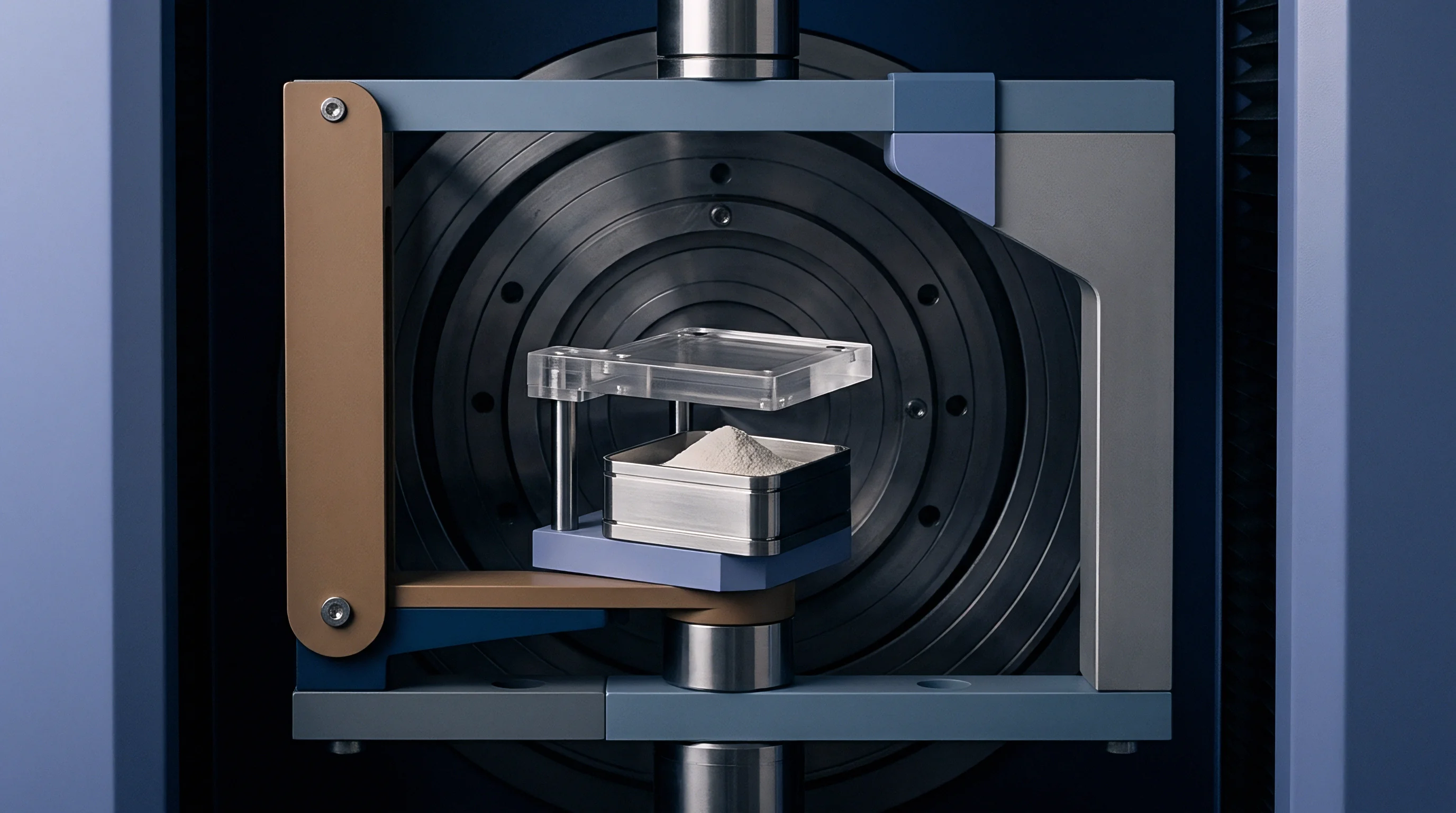
Capillary Geometry and Dissipation Effects
High Load Melt Index characterization introduces significant mechanical work into the test fluid. ASTM D1238 Condition 190/21.6 and ISO 1133-1 Procedure A specify an extrusion die having an internal diameter of 2.095 millimeters and a length of 8.000 millimeters, creating a length-to-diameter ratio of 3.82. Forcing high-molecular-weight polyethylene through this short constriction under a 21.6-kilogram load generates wall shear stresses exceeding one hundred kilopascals.
Viscous dissipation generates localized heat within the entry convergence and along the capillary wall. Melt temperature inside the capillary core exceeds the barrel setpoint by several degrees Celsius. In regrind compounds containing particulate contamination, calcium carbonate masterbatch residues, or carbon black agglomerates, wall slip and dissipative heating distort apparent viscosity calculations.
The entrance pressure drop across a low aspect-ratio die represents a substantial fraction of total extrusion pressure. Without applying the formal Bagley correction via multi-length die configurations, standard plastometer measurements lump entrance elasticity together with steady shear viscosity. In regrind high-density polyethylene, elasticity varies unpredictably due to thermal degradation histories.
Measuring melt output strictly by mass collection over timed intervals ignores the true viscous dissipation profile of the compound.

Evidence
Establishing the true rheological profile of regrind polyethylene requires structured multi-temperature testing across the practical extrusion envelope. Testing lots at 190, 210, and 230 degrees Celsius under both standard 2.16-kilogram loads and 21.6-kilogram high loads exposes degradation signatures and resin blending that remain invisible in single-point datasheets. The resulting Flow Rate Ratio provides a direct window into broad molecular distributions and branching variations.
Comparative Plastometer Characterization Bands
Data obtained across systematically evaluated resin lots illustrates the divergence between clean virgin streams and degraded regrind mixtures. The table below compiles characterization figures measured strictly in accordance with ISO 1133-1 Procedure A and ASTM D1238 parameters, detailing output rates and derived flow activation energies.
| Resin Designation | MFR 190/2.16 (g/10 min) | HLMI 190/21.6 (g/10 min) | FRR (HLMI/MFR) 190 C | HLMI 210/21.6 (g/10 min) | HLMI 230/21.6 (g/10 min) | Calculated Ea (kJ/mol) |
|---|---|---|---|---|---|---|
| Virgin HDPE Blow-Moulding Base | 0.32 | 9.6 | 30.0 | 12.8 | 17.1 | 26.8 |
| Industrial Regrind Clean Stream | 0.38 | 12.4 | 32.6 | 17.1 | 23.5 | 29.5 |
| Post-Consumer HDPE Drum Regrind | 0.45 | 18.9 | 42.0 | 27.8 | 40.1 | 34.9 |
| Mixed Post-Consumer Regrind Blend | 0.78 | 31.2 | 40.0 | 49.5 | 76.8 | 41.6 |
| Severely Degraded Reprocessed Pellet | 1.15 | 54.3 | 47.2 | 91.2 | 148.6 | 46.5 |
| Testing completed using tungsten carbide dies (internal diameter 2.095 mm, length 8.000 mm); preheat time 360 seconds; charging mass 6.0 to 8.0 grams depending on bulk density. | ||||||
The clean industrial regrind exhibits activation energy figures aligned closely with virgin feedstock, indicating minimal structural alteration. The post-consumer drum blend and the reprocessed pellet display extreme divergence. The flow activation energy climbs from 26.8 kilojoules per mole in the virgin resin to 46.5 kilojoules per mole in the reprocessed pellet.
As the temperature rises from 190 to 230 degrees Celsius, the virgin resin’s high load output increases by a factor of 1.78, while the reprocessed compound’s output increases by a factor of 2.74. An extrusion line operating with this reprocessed lot will experience severe parison drain if barrel zones fluctuate even modestly.
ISO 1133-1 Procedure A requires strict five-minute thermal equilibrium windows to prevent melt-chamber degradation artifacts.

Can Thermal History Explain Viscosity Instability?
Thermal stability inside the plastometer barrel dictates the reliability of regrind characterization. Virgin polymers contain primary phenolic antioxidants and secondary phosphite stabilizers designed to arrest alkyl and peroxy radicals during compounding. Post-consumer regrind compounds arrive with these antioxidant packages heavily depleted.
Retaining the polymer melt inside the testing barrel for six minutes at 230 degrees Celsius exposes the unprotected chains to rapid thermo-oxidative decomposition.
Crosslinking reactions frequently dominate during prolonged dwell times in the test chamber. When linear chains crosslink, high-molecular-weight fractions inflate, dropping the High Load Melt Index over successive cutting intervals. In contrast, if catalyst residues or high shear fields induce beta-scission, the melt output increases systematically between the third and sixth minutes of the test stroke.
Single-point indices compress this dynamic into an averaged number, obscuring the physical instability that will wreck continuous pipe or blow-moulding lines.

Triage
Material acceptance cannot rely on standard supplier spec sheets. Incoming inspection cells must separate stable lots from structurally damaged compounds using disciplined, tiered laboratory screening. When testing incoming railcars, bulk bags, or octabins, a laboratory executes a systematic progression across distinct test gates.
- Pre-test drying verification confirms residual surface moisture sits below 0.05 percent by weight using Karl Fischer titration or loss-on-drying balances at 105 degrees Celsius, eliminating vapor-induced voiding inside the plastometer capillary.
- Standard single-point baseline establishes ASTM D1238 Condition 190/2.16 flow rate to classify the lot against basic trade nomenclature.
- High-load stress evaluation measures output under Condition 190/21.6 to compute the initial Flow Rate Ratio, flagging crosslinked fractions or broad polydispersity indices.
- Elevated thermal sweep executes Condition 230/21.6 measurements after an identical six-minute barrel dwell time to calculate the effective activation energy of flow across the processing window.
- Time-to-cut stability audit monitors mass output variations across three consecutive two-minute cuts at 210 degrees Celsius under 21.6 kilograms to quantify degradation kinetics directly within the melt chamber.
A variation exceeding fifteen percent between consecutive mass cuts during the fifth step signals active chemical instability. In such scenarios, the compounding additive package has expired, leaving the polyolefin chains susceptible to crosslinking or cleavage inside standard extruder barrels.
| Screening Parameter | Target Range | Rejection Limit | Operational Risk |
|---|---|---|---|
| Flow Activation Energy (Ea) | 26 to 32 kJ/mol | Above 38 kJ/mol | Extreme temperature sensitivity and parison sag |
| Flow Rate Ratio (21.6 kg / 2.16 kg) | 28 to 35 | Above 45 | Elevated die swell, melt fracture, surface haze |
| Plastometer Dwell Drift (6 min vs 12 min) | Under 5 percent | Above 12 percent | Thermal degradation, gelation in extruder dead zones |
| Apparent Shear Viscosity at 100 1/s | 1200 to 1500 Pa·s | Under 1000 Pa·s | Insufficient parison strength, blow-out during expansion |
The rejection limits marked above represent real operational boundaries. Passing a lot that registers an activation energy of 40 kilojoules per mole forces processing technicians to narrow thermal process windows down to two degrees Celsius. Industrial tooling rarely sustains such fine tolerances across wide die faces.


Dock
Commercial exposure in post-consumer resin sourcing concentrates at the receiving bay. Processors negotiate pricing per metric ton, assuming regrind drops into production lines alongside virgin feedstocks with predictable let-down ratios. When a lot fails due to thermal viscosity shifts, losses multiply far beyond the invoice price of the resin.

Worked Cost Model of Viscosity-Induced Tool Downtime
The operational cost of unverified regrind compounds emerges from downtime, purged tooling, and discarded blow-moulded containers. To evaluate this exposure, consider an industrial blow-moulding cell producing twenty-liter high-density polyethylene containers from a fifty-ton lot of recycled compound. The manufacturing baseline involves the following parameters:
- Resin procurement cost sits at 1,150 dollars per metric ton for certified regrind compound versus 1,550 dollars per metric ton for virgin fractional-melt blow-moulding grades.
- Extrusion line throughput averages 450 kilograms per hour, delivering approximately 450 finished containers per hour at an average part weight of 950 grams with trimmed flash.
- Machine operating burden carries a fixed allocation of 185 dollars per hour, encompassing machine depreciation, power draw, labor, and plant overhead.
- Flash re-extrusion penalty incurs an internal reprocessing cost of 0.12 dollars per kilogram to regrind, store, and reintroduce trimmed pinch-off material.
When an unverified lot arrives with an uncharacterized flow activation energy of 42 kilojoules per mole, standard 200-degree-Celsius barrel settings cause severe parison length drift. Parisons extend past the mould base, shifting bottom-weld pinch thicknesses and triggering wall-thinning defects. The production cell experiences an immediate scrap rate escalation from a standard 3.0 percent baseline to 14.5 percent across the initial twenty-four hours of processing.
Correcting the defect requires line shutdown, thorough barrel purging using low-melt-index virgin flush, and continuous manual die gap adjustments. Over a three-day operational trial consuming 32.4 tons of resin, total downtime accumulates to 14 machine hours. Purge waste consumes 1,200 kilograms of virgin purge material valued at 2.20 dollars per kilogram.
Scrap containers generate 4,700 kilograms of off-spec parts that must be down-cycled into non-critical drainage profiles at a commercial loss of 0.45 dollars per kilogram relative to purchase value.
The total financial deficit incurred across the trial reaches the following total:
Machine downtime burden: 14 hours 185 dollars = 2,590 dollars
Scrap part devaluation: 4,700 kg 0.45 dollars = 2,115 dollars
Virgin purge compound: 1,200 kg 2.20 dollars = 2,640 dollars
Excess flash re-granulation labor: 4,700 kg 0.12 dollars = 564 dollars
The direct loss of 7,909 dollars distributed across the 32.4 tons processed adds 244 dollars per ton to the effective material cost. The calculated saving of 400 dollars per ton achieved by selecting regrind over virgin resin evaporates by more than sixty percent, without accounting for potential delivery penalties on delayed finished goods.

Drafting Enforceable Quality Specifications
Procurement agreements must eliminate standard language accepting generic certificate-of-analysis statements based solely on ASTM D1238 Condition 190/2.16. Purchasing documentation requires explicit contractual terms governing non-Newtonian flow consistency. A rigorous purchase specification incorporates three non-negotiable clauses:
- Multi-temperature rate compliance stipulates that High Load Melt Index must be verified at both 190 and 220 degrees Celsius under 21.6 kilograms, with the calculated activation energy of flow guaranteed between 25.0 and 32.0 kilojoules per mole.
- Flow rate ratio boundary mandates that the quotient of HLMI (190/21.6) to standard MFR (190/2.16) must remain within the range of 28.0 to 36.0, rejecting any lot exhibiting ratios outside this spread.
- Thermal dwell stability guarantee states that the mass extrusion rate under Condition 210/21.6 measured after twelve minutes of barrel residence shall not deviate by more than 8.0 percent from the baseline rate measured after five minutes of residence.
Suppliers unable or unwilling to execute multi-point rheological verification routinely plead that standard laboratory turnarounds cannot sustain extended thermal testing cycles across continuous pelletizing lines. Processors accepting that defense assume the compounder’s technical risks directly upon their own balance sheets.