Modeling Fickian Contaminant Diffusion Resistance across Varied Recycled Polymer Particle Shapes
Accurate contaminant diffusion modeling in recycled polymers replaces spherical radius assumptions with shape specific three dimensional finite element boundary formulations.

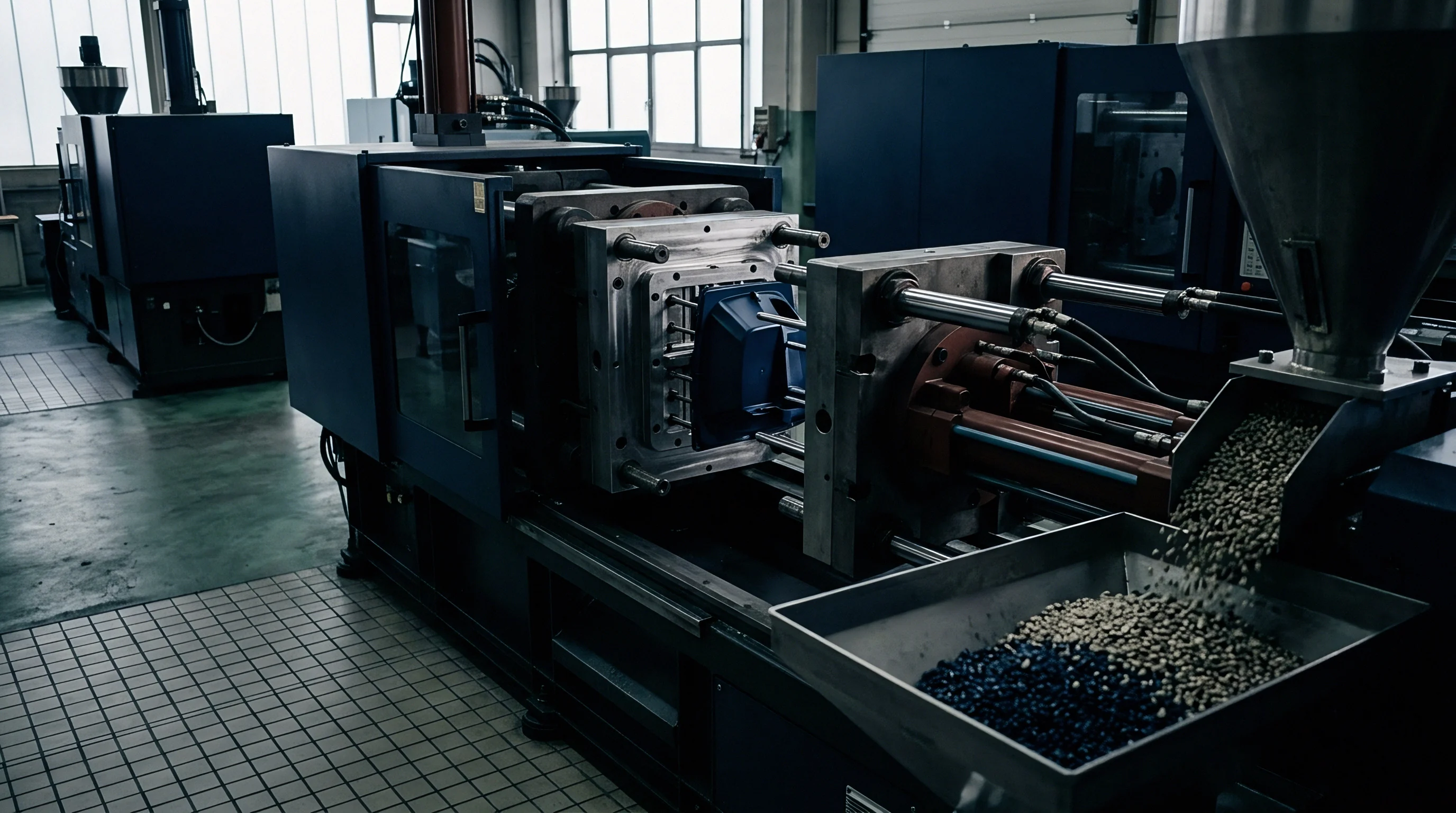
Geometry
Mass transfer calculations for post-consumer polymer decontamination resolve second-order partial differential equations governing migrant transport through solid polymer matrices. Transient diffusion inside a isotropic solid particle follows second Fickian law, with local concentration shifting over time proportional to the divergence of the concentration gradient. Classical decontamination models routinely map particle dimensions to an equivalent sphere based on equal volume or equal surface area.
That simplification introduces systematic errors when applied to shredded post-consumer flakes, thin thermoformed rigid regrind, or hot-die face cut pellets, because diffusional path length and surface flux vary drastically across non-spherical shapes.
Formulating the three-dimensional transport equation in rectangular coordinates captures direction-dependent boundaries across flat flakes. For an anisotropic or isotropic flake with thickness 2L, width 2W, and length 2H, mass transport proceeds simultaneously along all principal coordinate axes. When flake width and length exceed thickness by a factor greater than five, one-dimensional heat and mass transfer approximations become mathematically viable.
Yet real recycled post-consumer flake populations carry ragged edges, non-uniform wall profiles, and curved corners from mechanical granulation. These physical attributes collapse simple one-dimensional boundary conditions and require geometric shape factors to correct calculated decontamination times.

Governing Differential Equations for Mass Transport
Unsteady-state mass transfer within a solid resin particle assuming constant diffusion coefficient D obeys the spatial boundary value formulation expressed in vector differential form. Setting initial contaminant concentration to C0 throughout the particle volume and defining an instantaneous surface concentration Cs driven by vacuum devolatilization or inert gas sweeping yields specific analytical solutions for basic regular solids. For spherical geometry of radius R, the analytical expansion relies on infinite series of exponential decay functions linked to spatial eigenvalues.
For rectangular slabs, the analytical solution splits into a product of three independent one-dimensional slab solutions along each orthogonal axis.
Discrepancies quickly emerge when selecting an equivalent spherical diameter deq for non-spherical recycled particles. Calculating deq via equal volume overstates the effective surface area exposed to devolatilization, yielding overly optimistic predictions of decontamination efficiency. Defining deq via equal specific surface area per unit volume underestimates the maximum diffusion path length from the deep core to the outer boundary, leaving residual surrogate contaminants in thick particle centers.
Decontamination kinetics depend directly on the shortest physical dimension rather than the overall particle mass, meaning thin flakes clean significantly faster than spherical pellets of equivalent total volume.

Shape Factors and Surface Area to Volume Ratios
Quantifying mass transfer resistance across varied particle geometries requires applying dimensionless shape factors (Ψ) that scale the effective diffusion length. The shape factor modifies the characteristic length Lc, defined as particle volume V divided by total external surface area A. For a perfect sphere, Lc equals one-third of the radius R. For a thin flat flake of uniform thickness 2L where edge area contributes marginally to total surface, Lc approaches half the thickness L. Comparing these characteristic dimensions demonstrates that a flake with thickness equal to a sphere’s diameter possesses a higher surface-area-to-volume ratio, facilitating faster transient devolatilization under identical thermal conditions.
- Spherical Approximation Bias underestimates the time needed to extract deep migrants from flat flake cores by overstating mass transfer across flake edges.
- Edge Effect Neglect ignores localized two-dimensional corner flux concentration, creating errors in mathematical predictions for low aspect ratio regrind.
- Curvature Variations alter local boundary concentration gradients along distorted post-consumer thermoform scrap profiles during industrial vacuum drying.
- Thickness Non-uniformity causes localized residual contaminant pockets in thick structural ribs while thin flake walls achieve full decontamination.
Calculating diffusional time constants (τ = Lc2 / D) highlights the sensitivity of process residence time to geometric variations. Doubling particle wall thickness increases required devolatilization time by a factor of four due to the quadratic relationship between diffusion distance and time in Fickian systems. In industrial continuous reactors operating at fixed residence times, wide distributions in particle thickness lead directly to bimodal residual contaminant profiles in outgoing resin batches.
Recycled PET flake geometry displays high aspect ratio variance that shifts mass transfer rates across batch heating steps.
| Particle Geometry | Surface Area to Volume Ratio | Equivalent Radius Formulation | Mass Transfer Biot Number Range | Relative Diffusion Time Scale Ratio |
|---|---|---|---|---|
| Monodisperse Sphere | 3 / R | R | 1.0 to 10.0 | 1.00 |
| Perfect Cylinder | 2 / R + 2 / H | (1.5 R^2 H)^(1/3) | 0.8 to 8.5 | 0.75 |
| Flat Disc Flake | 1 / L + 2 / R | (1.5 R^2 L)^(1/3) | 0.2 to 3.0 | 0.28 |
| Irregular Flake Regrind | 1.2 / L_avg | 0.85 (V / 4.189)^(1/3) | 0.1 to 4.5 | 0.35 |
| Extruded Elliptical Pellet | 2.4 / R_eff | (a b c)^(1/3) | 0.5 to 7.0 | 0.62 |
Formulating rigorous diffusion models for industrial recycled streams requires integrating measured particle dimension distributions into the mass transfer equations rather than relying on uniform average metrics. Particle aspect ratio distributions alter the slope of fractional mass extraction curves over processing time. Flakes with high aspect ratios lose volatile migrants rapidly during early process stages, whereas compact chunks govern the final tail of the extraction curve, setting the minimum reactor residence time necessary to clear regulatory contamination limits.
Whether dynamic particle breakup during high-shear solid-state conveying permanently alters the local surface-area-to-volume ratio fast enough to invalidate static geometric shape factors remains an open analytical question.


Grain
Physical sorting and classification of post-consumer recyclate populations reveal substantial morphological variability between mechanical recycling facilities. Granulator knife wear, screen mesh sizes, and polymer toughness drive the physical dimensions of produced flake streams. Polyethylene terephthalate bottle scrap yields thin, sharp-edged curved flakes with aspect ratios ranging from four to fifteen.
High-density polyethylene milk jugs produce thicker, fibrous-edged regrind particles with high surface roughness. These structural differences alter bulk density, bed void fraction, and interstitial gas flow velocity through devolatilization vessel beds.
Particle classification performed via mechanical sieve stacks establishes mass fractions across defined size bins. Standard laboratory sieving isolates nominal planar dimensions but frequently fails to separate particles by thickness. A wide, thin flake passes through a coarse mesh on its narrow edge despite possessing a large surface area.
Optical image analysis combining two-dimensional projection area with laser line displacement measurements delivers true volumetric and thickness profiles across sorted lots. Capturing thickness distributions is the fundamental prerequisite for constructing accurate population-balance mass transfer models.

Particle Morphology Distribution and Sieve Analysis
Size distribution data collected across post-consumer packaging streams show log-normal or bimodal geometric profiles. Fine particles generated during grinding accumulate near bottom collection pans, carrying high specific surface areas that absorb ambient volatile organics rapidly during storage. Coarse fraction particles contain thick wall sections from bottle neck finishes or thermoform flanges.
These heavy wall fractions dictate the slowest mass transfer kinetics during thermal devolatilization.
- Collect a ten-kilogram representative composite sample from incoming recyclate gaylords using a multi-level sampling spear.
- Pass the sample through a mechanical sieve shaker with mesh sizes from 1.0 mm to 8.0 mm for fifteen minutes.
- Measure the dimensional thickness and aspect ratio of fifty randomly selected particles per sieve fraction using optical microscopy.
- Weigh each sieve fraction to establish the cumulative mass distribution curve for mathematical model inputs.
- Calculate the mass-weighted average geometric shape factor across the batch population.
Integrating cumulative mass fraction curves into transient mass transport equations converts single-particle diffusion calculations into reactor-scale bulk extraction predictions. Homogenous spherical assumptions fail to capture the long extraction tails observed when processing real flake mixtures containing heavy neck-ring fractions. Removing coarse fractions prior to thermal devolatilization accelerates overall batch processing throughput by eliminating the longest diffusion path lengths from the feedstock stream.

Morphological Flaws and Micro Structural Diffusion Pathways
Mechanical shredding imparts micro-cracks, surface fibrillations, and localized shear bands into recycled polymer particles. Microstructural damage alters local mass transport properties by creating preferential void networks. Gas molecules diffuse through open micro-cracks several orders of magnitude faster than through the dense bulk polymer matrix.
This structural damage effectively reduces the continuous diffusion path length inside damaged regrind flakes.
Conversely, thermal processing and mechanical orientation during initial container manufacturing align polymer crystallites, creating anisotropic diffusion behavior. In oriented polyethylene terephthalate bottle walls, diffusion perpendicular to the biaxially oriented surface proceeds slower than diffusion parallel to the surface edges. Granulation exposes unoriented inner cut edges, allowing volatile contaminants to migrate laterally along oriented crystalline lamellae.
Advanced mass transport models incorporate structural anisotropy tensors to adjust directional diffusion coefficients based on original processing thermal histories.
Downstream melt homogenization can dissipate residual concentration gradients, but wide particle thickness spreads still compromise solid-state decontamination efficiency in upstream drying steps.


Kinetics
Mass transfer rate calculations depend heavily on temperature-dependent diffusion coefficients (D) described by Arrhenius relationships. The temperature sensitivity of migrant molecules inside a polymer matrix is governed by activation energy Ea and pre-exponential factor D0. Operating devolatilization reactors at elevated temperatures increases polymer chain mobility, expanding free volume and accelerating contaminant transport out of the particle.
The diffusion coefficient of surrogate contaminants like toluene or limonene in polyolefins increases by up to two orders of magnitude when elevating temperatures from ambient levels to near polymer melting points.
Contaminant concentration levels inside the polymer matrix also influence diffusion rates. At elevated concentrations, organic solvents act as plasticizers, softening polymer chain segments and increasing local free volume. Plasticization creates concentration-dependent diffusion behavior (D(C)), where diffusion rates drop sharply as contaminant concentrations fall during devolatilization.
Near the end of decontamination cycles, low residual contaminant levels enforce true concentration-independent Fickian kinetics, making final cleaning stages the slowest phase of the decontamination cycle.

Arrhenius Temperature Dependence and Surrogate Properties
Determining activation energy for specific contaminant-polymer pairs requires isothermal extraction experiments conducted across defined temperature intervals. Measuring migrant mass loss over time using gas chromatography mass spectrometry allows calculation of effective diffusion coefficients at each temperature plateau. Plotting natural logarithms of diffusion coefficients against inverse absolute temperature yields linear slopes proportional to activation energy.
High activation energy values indicate strong temperature dependence, meaning small thermal fluctuations inside decontamination reactors cause significant shifts in residual contamination levels.
Surrogate molecules chosen for regulatory validation reflect different molecular weights, polarities, and volatility ranges. Small volatile compounds like toluene display high diffusion coefficients and low activation energies in high-density polyethylene. Large non-volatile surrogates such as benzophenone or fatty acid methyl esters possess larger molecular diameters, resulting in lower diffusion rates and higher activation energies.
Decontamination processing conditions designed to remove light surrogates frequently fail to extract heavy, high-molecular-weight contaminants within standard reactor residence times.
An effective diffusion coefficient of 1.4 x 10^-12 cm2/s for toluene in post-consumer HDPE at 190 C drops by a factor of three when flake thickness increases from 1.2 mm to 2.8 mm.

Which Shape Factor Best Predicts Devolatilization Rate in Non-Spherical Flakes?
Selecting an appropriate shape factor requires evaluating mass transfer performance across geometric extremes. The volumetric shape factor fails for thin structures because it scales with particle volume without accounting for surface area expansion. The surface area shape factor captures boundary exposure but oversimplifies internal core distance.
Defining a modified aspect ratio shape factor that combines minimum wall thickness with planar projection perimeter yields the highest statistical correlation with experimental devolatilization data for post-consumer rigid packaging regrind.
| Polymer Matrix | Surrogate Contaminant | Temperature Range (C) | Pre-exponential Factor D0 (cm2/s) | Activation Energy Ea (kJ/mol) | Effective Diffusion Coefficient at 160 C (cm2/s) |
|---|---|---|---|---|---|
| HDPE (Density 0.955 g/cm3) | Toluene | 100 to 180 | 1.2 x 10^-1 | 68.4 | 6.4 x 10^-10 |
| HDPE (Density 0.955 g/cm3) | Benzophenone | 100 to 180 | 4.5 x 10^-2 | 82.1 | 5.8 x 10^-12 |
| PET (Amorphous) | Limonene | 140 to 210 | 8.8 x 10^-3 | 95.6 | 2.4 x 10^-14 |
| PET (Semi-crystalline 40%) | Chlorobenzene | 140 to 210 | 3.1 x 10^-2 | 108.2 | 2.8 x 10^-15 |
| PP (Homopolymer) | Phenylcyclohexane | 110 to 170 | 2.6 x 10^-1 | 74.3 | 2.9 x 10^-10 |
| Data established via dynamic thermal desorption GC-MS per ASTM F1370 testing standards under zero mass boundary conditions. | |||||
Boundary layer mass transfer resistance (kc) at the surface of recycled particles interacts with internal diffusional resistance to determine overall decontamination rates. Expressing this relationship through the mass transfer Biot number (Bim = kc L / D) identifies the rate-limiting step. When Biot numbers exceed one hundred, internal solid-state diffusion completely controls mass transfer, rendering gas-phase sweeping velocities or vacuum depth secondary.
When Biot numbers drop below one, surface evaporation limits decontamination, making carrier gas flow rate or vacuum level the dominant process variable.
When operating devolatilization units near the glass transition temperature, increasing thermal energy yields greater gains in contaminant removal rate than extending vacuum exposure time.


Mesh
Numerical solutions using finite element analysis (FEA) or finite difference methods (FDM) resolve complex three-dimensional Fickian transport problems where analytical formulas fail. Spatial domain discretization splits complex particle geometries into unstructured tetrahedral or structured hexahedral mesh elements. Resolving steep concentration gradients near particle surfaces demands non-uniform mesh refinement, placing fine element distributions along outer boundaries while coarsening elements toward the interior core.
Translating three-dimensional laser scans of real recycled flakes directly into finite element domains reveals local diffusion phenomena hidden by idealized geometries. Sharp internal corners act as mass transfer sinks, where outward flux occurs simultaneously through intersecting plane faces. Conversely, thick structural gussets and handle regions in post-consumer blow-molded container fragments represent mass transfer bottlenecks, retaining surrogate contaminants long after surrounding thin walls reach full purity.

Finite Element Discretization of Irregular Geometries
Formulating transient mass transfer problems within finite element solvers requires applying Galerkin weighted residual methods to spatial differential equations. Time integration uses implicit backward Euler schemes to maintain numerical stability across large physical time steps. System matrices update continuously when integrating concentration-dependent diffusion coefficients or non-isothermal temperature profiles across heating cycles.
Grid convergence testing verifies that spatial mesh density does not introduce artificial numerical diffusion. Refining element density until calculated total mass flux changes by less than 0.05 percent between successive mesh iterations establishes numerical independence. Ultra-thin flake domains present challenges, where high aspect ratios force element skewness, causing solver convergence failures.
Local coordinate transformations and prismatic boundary layer elements resolve high aspect ratio geometries without compromising numerical accuracy.

Computational Tortuosity and Mass Transfer Error Bounds
Calculating mass transfer through semi-crystalline polymer structures requires accounting for crystalline regions that act as impermeable barriers to migrating molecules. Contaminants diffuse exclusively through the amorphous phase, navigating around crystalline lamellae. Numerical models capture this effect using tortuosity factors (τcryst), scaling the effective diffusion coefficient by amorphous volume fraction raised to a geometric constraint exponent.
Assuming equivalent spherical radius for thin regrind flakes underestimates devolatilization time because diffusional resistance is governed by the narrowest physical dimension rather than bulk particle volume.
- Boundary Layer Refinement ensures accurate capture of high concentration gradients near the particle surface where mass transfer rates peak.
- Aspect Ratio Geometry Mesh Control prevents element distortion in ultra-thin flake domains that causes numerical instability during transient solvers.
- Convergence Tolerance Limits confirm that mass balance conservation holds within less than one tenth of a percent across all time steps.
- 3D Volumetric Mesh Interpolation translates raw optical scan point clouds directly into finite element domains without smoothing real edge defects.
Comparing 1D equivalent models against full 3D numerical discretizations highlights significant predictive divergence across varied aspect ratios. For standard bottle flakes with aspect ratios above eight, 1D slab formulations yield accurate results with minimal computational cost. For heavy regrind particles with low aspect ratios between one and three, 1D slab models over-predict devolatilization rates by up to thirty-five percent, creating significant compliance risks when setting industrial reactor operating parameters.
Underestimating diffusional resistance through oversimplified geometric modeling results in under-processed resin batches that fail migration limits and force entire production lots into landfill disposal.


Compliance
Demonstrating suitability of recycled polymers for food-contact packaging requires executing formal challenge tests supervised by regulatory agencies like the US Food and Drug Administration or the European Food Safety Authority. Challenge protocols involve intentionally spiking virgin polymer or post-consumer flakes with high concentrations of surrogate chemicals representing volatile, non-volatile, polar, and non-polar contaminant classes. Spiked feedstock undergoes commercial decontamination processing to measure surrogate reduction percentages achieved by the technology.
Mathematical diffusion models serve as recognized alternatives or additions to physical challenge testing. Validated numerical models predict final contaminant concentrations in recycled resin based on input contamination levels, particle geometry distributions, and reactor processing parameters. Regulatory acceptance of modeling outputs depends entirely on using worst-case assumptions, including upper-bound particle thickness values and lower-bound diffusion coefficients.

Regulatory Challenge Test Protocols and Surrogate Selection
Standard challenge test formulations spike post-consumer flake batches with surrogates like toluene, chlorobenzene, phenylcyclohexane, benzophenone, and methyl stearate at concentration levels between 100 mg/kg and 1000 mg/kg per compound. The spiked material undergoes a holding period to allow surrogates to absorb deeply into the polymer matrix, reproducing severe post-consumer contamination scenarios. Evaluating residual surrogate content post-decontamination via gas chromatography defines the decontamination efficiency percentage (Edecont).
Surrogate removal calculations depend heavily on initial spatial distribution within challenge test particles. Surface-adsorbed surrogates clear rapidly during thermal processing, producing falsely optimistic decontamination efficiency figures. Achieving uniform bulk absorption throughout particle cores prior to testing ensures that challenge test results accurately reflect internal diffusion resistance rather than surface evaporation kinetics.
US FDA compliance guidelines for post-consumer recycled polyolefins mandate surrogate contaminant reduction below 220 ppb under a worst case 100 percent food contact assumption.

Migration Modeling and Decontamination Efficiency Thresholds
Evaluating consumer exposure risk requires linking residual contaminant levels in recycled packaging walls to potential migration into food products during shelf life. Migration calculations apply conservative Fickian models assuming infinite sink conditions in the food contact layer. The US FDA Threshold of Regulation sets a migration exposure limit of 0.5 parts per billion in dietary intake, translating to maximum allowable residual surrogate concentrations (Cmax) inside finished bottle walls based on packaging surface area and wall thickness.
- Surrogate Spiking Verification Reports document initial contaminant concentration levels before exposure to decontamination steps.
- Particle Size Distribution Certificates prove that challenge test flake dimensions match or exceed the thickness of commercial feedstock inputs.
- Thermal History Logs verify continuous residence time and temperature profile compliance across the entire devolatilization reactor vessel.
- Gas Chromatography Residual Assay Results detail surrogate removal percentages against health-based regulatory thresholds.
Calculated maximum allowable contaminant thresholds dictate required decontamination efficiency for specific applications. For high-density polyethylene milk bottles containing 100 percent recycled content, decontamination technology must achieve surrogate removal efficiencies exceeding 99.5 percent for volatile compounds and 98.0 percent for non-volatile compounds. Oversized particles that escape uniform thermal treatment during decontamination lower overall batch efficiency, causing final molded containers to exceed threshold limits during compliance verification audits.
Incorporating EFSA Scientific Opinion Section 3.2 compliance clauses into resin supply contracts shifts legal liability for migrant exceedances back to the recycler if particle thickness distributions exceed agreed specification bounds.


Audit
Balancing thermal decontamination economics against particle size reduction costs reveals significant processing trade-offs for plastic recyclers. Fine grinding increases surface area and accelerates Fickian extraction, reducing required residence time inside expensive high-vacuum reactor vessels. Mechanical size reduction consumes significant electrical energy, increases fine powder waste generation, and lowers polymer bulk density, which reduces total mass throughput capacity in downstream extruders.
Calculating the total decontamination cost per metric tonne requires combining size reduction power consumption, thermal energy inputs during drying or vacuum devolatilization, and capital amortizations for reactor vessels. Operating continuous vacuum reactors at 160 C to decontaminate coarse 6 mm regrind requires long residence times around four hours, driving up vessel volume requirements. Pre-grinding feedstock to 2 mm fine flakes drops required residence time to under forty-five minutes, but increases mechanical grinding costs by forty dollars per tonne while raising dust explosion mitigation obligations.

Energy Economics of Particle Size Reduction versus Reactor Residence Time
Electrical power requirements for mechanical granulators scale non-linearly as target screen size decreases. Granulating rigid high-density polyethylene containers to 8 mm coarse flakes consumes approximately 35 kWh/tonne. Milling the same material down to 1.5 mm micro-flakes consumes over 120 kWh/tonne due to screen blinding and internal friction heat losses.
The increased electrical energy cost must be balanced against thermal energy savings realized inside the devolatilization reactor.
Thermal energy input to heat polyolefin flakes from ambient temperatures to 150 C decontamination thresholds requires roughly 75 kWh/tonne based on polymer specific heat capacities (Cp ≈ 2.1 kJ/kg·K). Operating thermal decontamination units under high vacuum (less than 1 mbar) adds continuous electrical loads for vacuum pump skid operation. Optimizing processing economics requires identifying the critical particle thickness that minimizes combined mechanical grinding energy and thermal vacuum residence costs.
| Processing Route | Average Particle Thickness (mm) | Reactor Residence Time (hr) | Thermal Energy Input (kWh/tonne) | Shredding Cost ($/tonne) | Total Decontamination Cost ($/tonne) |
|---|---|---|---|---|---|
| Coarse Regrind Shredding | 3.5 | 4.5 | 112.0 | 18.50 | 142.00 |
| Standard Flake Granulation | 1.8 | 1.5 | 78.5 | 32.00 | 108.50 |
| Fine Micro-Flake Milling | 0.8 | 0.4 | 62.0 | 75.00 | 135.00 |
| Hot Die-Face Pelletization | 2.2 | 2.0 | 95.0 | 55.00 | 148.00 |
| Strand Pelletization | 2.8 | 3.0 | 105.0 | 48.00 | 152.00 |
Commercial Valuation and Landed Cost Arithmetic
Pricing structures for post-consumer recycled resins incorporate purity guarantees linked to regulatory compliance dossiers. Clean recyclate certified for direct food contact commands market price premiums of 200 to 450 dollars per metric tonne over standard non-food grade recyclate. Failing to meet surrogate removal limits due to particle size distributions converts high-value food-grade candidates into low-value secondary application resins, destroying batch profit margins.
Evaluating landed cost economics requires factoring in yield losses resulting from fine powder generation during aggressive particle size reduction. Fine particles under 0.5 mm melt prematurely on reactor walls, causing severe fouling and thermal degradation that forces operational shutdowns. Maintaining strict control over particle size distributions through double-deck screening protects process economics, ensuring consistent Fickian mass transfer kinetics while preserving resin value across commercial scale recycling operations.
Establishing rigorous shape-factor boundary criteria within numerical diffusion models enables recyclers to optimize vessel sizing and energy consumption while guaranteeing compliance with global food-contact safety standards.