Toxicological Evaluation of Non Intentionally Added Substances in PCR Packaging
Toxicological evaluation of NIAS in PCR packaging combines non-target mass spectrometry, Cramer classification, and simulant migration testing against EU limits.


Sieve
Post-consumer plastic resin recycling introduces chemical complexity through thermal processing, prior container contact, and cross-stream contamination. When post-consumer recycled polyolefins and polyethylene terephthalate undergo mechanical re-refining, thermal energy and mechanical shear alter the polymer matrix. These operations generate non-intentionally added substances, commonly referred to as NIAS.
These contaminants comprise thermal degradation products, side-reaction compounds, residual solvents, environmental pollutants, and degradation products from antioxidants or processing aids. Evaluating these trace compounds demands systematic chemical characterization to prevent public health exposure and comply with food-contact safety standards across international jurisdictions.
Recycled flake feeds exhibit structural variability. Unlike virgin resins manufactured under tightly controlled polymerization conditions, post-consumer recycled streams consolidate containers exposed to diverse storage environments, chemical fillings, and consumer handling. A single batch of recycled high-density polyethylene may contain residues from detergent bottles, automotive fluids, and cosmetics alongside food-grade packaging.
Thermal history alters polymer degradation kinetics. High temperatures during re-extrusion induce chain scission, oxidation, and cross-linking, yielding volatile and semi-volatile compounds that transfer into packaged food matrices upon contact.

Decontamination Failure and Thermal Scission Pathways
Mechanical re-extrusion subjects recycled polymers to elevated thermal shear, initiating free-radical reactions that break hydrocarbon backbones into shorter fragments. In recycled polyethylene terephthalate, thermal cleavage of ester bonds produces vinyl esters, benzoic acid derivatives, and mono-hydroxyethyl terephthalate. In recycled polypropylene and polyethylene, thermo-mechanical degradation pathways yield linear saturated and unsaturated hydrocarbons, alkylbenzenes, oxidized aldehydes, ketones, and carboxylic acids.
These volatile species possess low molecular weight and elevated diffusion coefficients, accelerating their rate of transfer through the packaging wall into food matrices.
Decontamination processing units utilize elevated temperature and deep vacuum to strip volatile contaminants from polymer flakes. Efficiency varies directly with molecular weight, vapor pressure, and chemical polarity. While low-boiling compounds like limonene or residual solvents evaporate efficiently during vacuum degassing, higher molecular weight species remain trapped within the amorphous regions of the polymer.
Structural additives like hinder amine light stabilizers and phenolic antioxidants decompose into secondary degradation products during successive melt cycles. These breakdown products represent a major class of non-intentionally added substances that routine target analysis frequently misses.

Input Stream Cross Contamination Mechanics
Non-food post-consumer containers entering the recycling flake feed carry residual agrochemicals, industrial solvents, and cosmetic fragrances. Cross-stream contamination occurs when optical sorting systems fail to completely segregate non-food packaging from food-grade inputs. Sorters operating at industrial speeds achieve high accuracy, yet three to five percent of sorted fractions often consist of non-food containers.
Solvents and fragrance chemicals migrate into the polymer matrix during the initial lifecycle of the package, absorbing deeply into the sidewalls through sorption processes.
Printing inks, lacquers, and adhesives applied to the exterior of original packaging present an additional contamination vector during mechanical recycling. Photoinitiators such as 2-isopropylthioxanthone and 4-methylbenzophenone, along with primary aromatic amines derived from azo-pigment breakdown, diffuse into the recycled resin melt during wash and pelletization processes. Washing solutions remove surface-bound adhesives, but solvent-based adhesives and cross-linked polyurethane laminates break down into monomeric aromatic amines and glycol ethers under warm alkaline wash conditions.
Thermal degradation of recycled polyethylene terephthalate at processing temperatures above two hundred eighty degrees Celsius generates cyclic oligomers that migrate into aqueous food simulants.
Polymerization side-products, particularly cyclic oligomers, constitute another major category of non-intentionally added substances in recycled plastics. During original polymer synthesis and subsequent mechanical reprocessing, incomplete ring-opening or back-biting reactions form cyclic monomers, dimers, trimers, and higher oligomers. Recycled polyethylene terephthalate contains cyclic PET oligomers ranging from cyclic dimers to hexamers, with the cyclic trimer being the most abundant.
Recycled polyolefins contain olefinic oligomer fractions known as mineral oil saturated hydrocarbons and mineral oil aromatic hydrocarbons. Chemical pathways for primary NIAS genesis in recycled polymers are categorized by input source and degradation mechanism:
- Polymer Scission Compounds originate from thermal and oxidative degradation of the base polymer during melt re-extrusion, forming aldehydes, alkanes, alkenes, and carboxylic acids.
- Additive Transformation Products result from the breakdown of primary antioxidants, light stabilizers, and slip agents, producing compounds such as 2,4-di-tert-butylphenol and oxidized trisnonylphenyl phosphite derivatives.
- Consumer Misuse Contaminants arise from prior storage of household chemicals, automotive fluids, or pesticides within the original container, leaving absorbed organic residues.
- Printing and Adhesive Residues stem from non-deinked labels, lacquers, and laminating adhesives, contributing photoinitiators, plasticizers, and primary aromatic amines.
- Reaction Intermediates and Oligomers consist of unreacted monomers, side-reaction byproducts, and cyclic oligomeric fractions inherent to the polymerization process and thermal history.
Reclaimer representatives frequently claim that input feedstock sorting algorithms automatically eliminate non-food fractions down to trace levels below toxicological significance.

Flask
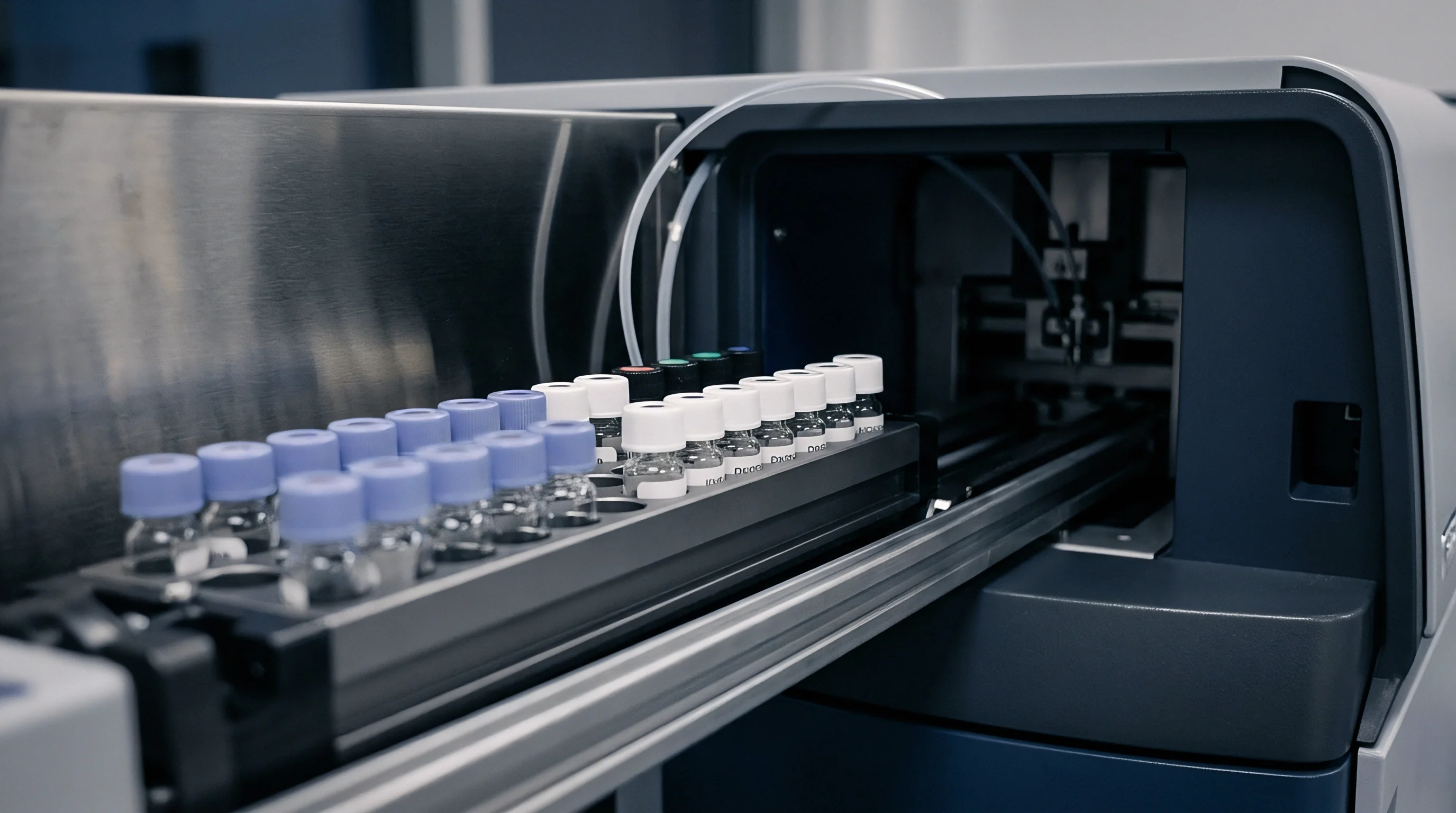
Analytical detection of untargeted substances demands extraction procedures capable of isolating polar, non-polar, volatile, and non-volatile chemical species. Because non-intentionally added substances are not predefined, target analytical methods using specific reference standards are inadequate for comprehensive safety evaluation. Laboratory protocols employ non-target screening workflows combining solvent extractions, gas chromatography, and liquid chromatography coupled to high-resolution mass spectrometry.
Method sensitivity must meet a detection threshold corresponding to 0.01 milligrams per kilogram of food, which represents the generic threshold for uncharacterized substances in food contact materials.
Sample preparation dictates the analytical window. Polymers undergo liquid-liquid extraction, solvent dissolution-precipitation, or total immersion migration testing depending on whether the evaluation targets total substance content or actual migrant levels. Solvent selection dictates extraction efficiency; dichloromethane, hexane, and ethanol penetrate the polymer matrix to varying degrees, inducing swelling without dissolving the polymer backbone completely.
Headspace solid-phase microextraction captures volatile organic compounds, while liquid-solid solvent extractions target semi-volatile and non-volatile constituents.

Gas and Liquid Chromatography Screening Paradigms
Volatile organic compounds vaporize into the gas phase under thermal desorbers, passing through non-polar capillary columns for electron ionization spectrometry. Gas chromatography coupled with mass spectrometry, utilizing electron ionization at seventy electronvolts, provides standardized mass spectra suitable for searching comprehensive commercial libraries such as NIST or Wiley. Semi-volatile compounds, including fatty acid esters, phthalate plasticizers, and antioxidant degradation products, separate efficiently on capillary columns coated with five percent phenyl methylpolysiloxane, enabling tentative identification via library match scores above eighty percent.
Non-volatile species and polar oligomers decompose under high gas chromatography injection port temperatures, requiring liquid chromatography separation. Electrospray ionization and atmospheric pressure chemical ionization coupled with quadrupole time-of-flight mass spectrometry yield high-resolution accurate mass data. Electrospray ionization operates in both positive and negative modes to capture protonated adducts, sodium adducts, and deprotonated molecular ions.
High-resolution mass spectrometry measures exact masses with mass errors below two parts per million, allowing determination of elemental formulas through isotopic pattern distribution analysis.
Gas chromatography coupled with mass spectrometry identifies volatile non intentionally added substances down to a detection limit of ten parts per billion in ten percent ethanol simulant.

Quantitation Thresholds and Internal Standardization
Analytical laboratories establish reporting limits by spiking matrix blanks with deuterated reference compounds across specified mass ranges. Matrix interferences obscure trace analytical peaks. Without pure authentic standards for every identified compound, quantitation relies on internal standard equivalence, where peak areas of detected substances are quantified relative to the signal response of a surrogate standard such as d10-phenanthrene or d14-p-terphenyl.
Response factors between target analytes and surrogate standards vary by up to an order of magnitude, introducing quantitative uncertainty into the exposure estimate.
Screening workflows follow a systematic step-by-step laboratory sequence to isolate, detect, and tentatively identify unknown peaks within recycled polymer extracts:
- Mill polymer pellets or packaging samples under liquid nitrogen freezing conditions to produce a fine powder with high surface area.
- Perform solvent extraction using dichloromethane for polyolefins or mixture of hexafluoroisopropanol and chloroform for polyester materials at controlled temperatures.
- Filter the solvent extract through a 0.22-micrometer polytetrafluoroethylene membrane to remove suspended micro-particles and undissolved polymer fines.
- Inject the extract into a gas chromatograph coupled to a single quadrupole or time-of-flight mass spectrometer operating in full scan mode from 30 to 1000 mass-to-charge units.
- Inject the extract into a liquid chromatograph coupled to a high-resolution quadrupole time-of-flight mass spectrometer using tandem mass spectrometry fragmentation.
- Deconvolve overlapping chromatographic peaks using automated peak picking algorithms to isolate pure component mass spectra from background noise.
- Match deconvoluted spectra against reference spectral libraries and calculate accurate elemental formulas for unaligned spectral features using mass defect analysis.
Identification confidence follows established structural classification scales. Level 1 confirmation requires matching retention time, accurate mass, and tandem mass spectrometry fragmentation patterns with an authentic chemical standard. Level 2 identification assigns a probable structure using library spectrum matches or diagnostic fragment analysis.
Level 3 designates a candidate structure or chemical class based on accurate mass and fragment ion data. Level 4 identifies elemental formulas, while Level 5 records exact mass features without formula assignment. Analytical evaluation methods for NIAS identification are compared below:
| Technique | Target Compound Class | Ionization / Detection | Typical Detection Limit | Primary Limitation |
|---|---|---|---|---|
| Methods calibrated using deuterated internal standards; matrix detection limits verified using 10% ethanol and 3% acetic acid migration extracts per EN 13130 guidelines. | ||||
Analytical standards confirm tentative mass spectra. The analytical community continues to debate whether non-target liquid chromatography screening can ever achieve full quantitative recovery for highly polar, non-chromatophoric oligomers without universal response factors.


Hazard
Toxicological characterization of non-target chemical structures relies on computational toxicology and exposure thresholds when reference standards remain unavailable. When a non-intentionally added substance is identified at concentrations above the screening threshold, toxicologists evaluate its hazard potential to determine safe migration limits. The toxicological threshold depends directly on structural alerts, genotoxicity predictions, and systemic toxicity data.
Substances exhibiting structural features associated with DNA reactivity require strict concentration limits, whereas compounds lacking structural alerts are evaluated using exposure-based prioritization frameworks.
Computational quantitative structure-activity relationship models evaluate molecular structures for toxicological endpoints including mutagenicity, carcinogenicity, teratogenicity, and skin sensitization. Software systems search chemical structures against databases of functional groups known to cause DNA damage, such as aromatic nitro groups, alkylating agents, epoxides, aliphatic halides, and unfunctionalized aromatic amines. Structural evaluation determines baseline toxicological risk.
If a substance contains a genotoxic structural alert, safety management protocols mandate empirical testing or require migration concentrations below 0.00015 milligrams per kilogram of food, corresponding to the threshold of toxicological concern for DNA-reactive carcinogens.

Cramer Decision Tree and TTC Application
Chemical structures lacking specific toxicological data undergo classification based on functional group reactivity and metabolic fate predictions. The Cramer decision tree categorizes substances into three distinct toxicological classes. Cramer Class I includes simple structures with efficient metabolic protection pathways and low oral toxicity, such as linear aliphatic hydrocarbons and common fatty acids.
Cramer Class II contains intermediate structures containing functional groups moderately less benign than Class I but lacking features indicative of high toxicity. Cramer Class III comprises complex structures, heterocycles, organophosphates, and compounds containing functional groups that suggest significant systemic toxicity or lack metabolic detoxifying pathways.
The Threshold of Toxicological Concern concept establishes human exposure thresholds below which adverse health effects are highly improbable. Integrating dietary exposure models with Cramer classification yields corresponding specific migration thresholds for food contact packaging. Human exposure calculations assume a standard adult body weight of 60 kilograms consuming 1 kilogram of food packaged in the evaluation material daily.
Conservative thresholds protect human consumer health. The threshold values and equivalent food concentrations across Cramer classes are defined in the following table:
| Cramer Structural Class | Human Exposure Threshold (µg/person/day) | Body Weight Dose (µg/kg bw/day) | Equivalent Food SML (mg/kg food) | Representative Chemical Families |
|---|---|---|---|---|

Does Cramer Class III Designation Trigger Mandatory Toxicity Testing?
Exceeding the threshold of ninety micrograms per person per day forces safety assessors to perform empirical genotoxicity bioassays or isolate the substance for identification. When chromatographic peaks belonging to Cramer Class III compounds exceed 0.09 milligrams per kilogram in food or food simulants, screening data alone is insufficient to demonstrate compliance. Toxicologists perform in vitro bioassays to rule out mutagenic and clastogenic potential.
Standard bioassay batteries include the bacterial reverse mutation test, commonly known as the Ames test under OECD Test Guideline 471, alongside the in vitro mammalian cell micronucleus test under OECD Test Guideline 487.
Structural alerts indicating potential genotoxicity automatically override standard exposure thresholds and trigger mandatory mutagenicity bioassays.
A positive result in any in vitro genotoxicity assay invalidates the threshold of toxicological concern approach for that substance. Under these conditions, the packaging material cannot be cleared for food contact applications unless the substance concentration is reduced below the genotoxic threshold of 0.00015 milligrams per kilogram of food, or comprehensive long-term animal toxicity studies establish a specific refined safe exposure level. Toxicological decision parameters for NIAS hazard evaluation require a systematic review of structural attributes:
- Genotoxicity Alert Screening determines whether the chemical structure contains functional groups associated with direct DNA interaction or chromosomal damage.
- Metabolic Clearance Profiling assesses the likelihood of metabolic detoxification via Phase I functionalization and Phase II conjugation reactions in human hepatocytes.
- Organohalogen Content Verification identifies halogenated organic compounds that resist environmental breakdown and accumulate in human adipose tissue.
- Substance Accumulation Potential measures the octanol-water partition coefficient to predict bioaccumulation tendency in living biological systems.
- Exposure Margin Assessment calculates the ratio between the toxicological point of departure derived from animal studies and estimated human dietary intake.
Unidentified chromatographic peaks displaying mutagenic structural alerts automatically receive the most conservative toxicological threshold regardless of peak area.


Margin
Empirical migration measurement quantifies the chemical mass transferring from recycled packaging into food simulants under controlled temperature and time regimes. Regulation (EU) No 10/2011 mandates specific food simulants to represent distinct food categories. Simulant selection governs extraction energy levels.
Testing protocols replace actual foodstuffs with standardized solvents that simulate aqueous, acidic, alcoholic, and lipophilic properties. Migration levels measured in simulants must remain below both the Overall Migration Limit of 10 milligrams per square decimeter of packaging surface area and any Specific Migration Limits assigned to individual substances.
Simulant D2, composed of refined vegetable oil, soybean oil, or 95 percent ethanol, represents fatty food matrices. Polyolefin matrices exhibit rapid chemical diffusion. Unmodified polyolefins absorb non-polar fatty simulants, causing swelling that artificially accelerates substance migration rates during elevated temperature testing.
Simulant E, utilizing modified polyphenylene oxide, commercially known as Tenax, simulates dry food contact, capturing volatile and semi-volatile migrants via gas-phase sorption without swelling the polymer backbone.

Food Simulant Selection and Contact Exposure Regimes
Standardized testing protocols mandate specific solvent mixtures to mimic the lipophilic, aqueous, or acidic properties of actual food products. Simulant A consists of 10 percent ethanol in water for aqueous foods, while Simulant B uses 3 percent acetic acid to evaluate acidic foods with pH values below 4.5. Testing conditions are selected to simulate worst-case realistic contact scenarios.
Ambient storage for extended durations is evaluated using ten days at 40 degrees Celsius, whereas hot-fill processes require exposure for two hours at 70 degrees Celsius or two hours at 100 degrees Celsius.
Surface-to-volume ratio assumptions govern compliance calculations. European default compliance modeling assumes a conventional packaging ratio of six square decimeters of plastic packaging contacting one kilogram of food. Small-format packaging, such as single-serve condiment sachets or small beverage caps, possesses a significantly higher surface-to-volume ratio, reaching up to twenty square decimeters per kilogram of food.
Evaluating small packages under standard conventional ratios underestimates actual consumer substance exposure by more than three-fold.
Non compliance with Regulation EU 10 2011 specific migration limits invalidates downstream packaging declarations and halts customs clearance at destination ports.
Mathematical Diffusion Modeling in Polyolefin Matrices
Predictive migration calculations utilize molecular weight and polymer matrix density parameters to estimate chemical transfer rates without physical lab contact. Fickian diffusion equations model migrant movement from polymer matrices into contact foods over time. Calculations rely on estimated diffusion coefficients derived from polymer-specific parameters, such as the AP-value proposed by Piringer.
Polyolefins like low-density polyethylene possess high diffusion coefficients due to elevated chain mobility, whereas rigid polymers like recycled polyethylene terephthalate exhibit diffusion rates up to four orders of magnitude slower at identical temperatures.
Mathematical models overestimate real migration rates. Regulatory authorities accept mathematical diffusion modeling as a screening tool when models utilize validated conservative diffusion parameters. If mathematical modeling predicts that a non-intentionally added substance remains below its target migration threshold, physical testing is legally bypassed in specific jurisdictions.
However, when diffusion calculations predict an exceedance of specific migration limits, physical migration testing in actual food simulants remains mandatory to determine compliance. Food contact simulants and migration evaluation conditions are structured as follows:
| Simulant Matrix | Simulant Composition | Represented Food Category | Standard Migration Test Conditions | Evaluation Endpoint |
|---|---|---|---|---|
Mismatched migration simulants or understated packaging surface ratios invalidate safety declarations and expose brand owners to mandatory product withdrawals across destination markets.


Proof
Regulatory compliance files for recycled food contact materials require unbroken documentation linking raw flake processing conditions to finished article migration reports. Under Regulation (EU) 2022/1616, processes producing recycled plastic for food contact must demonstrate decontamination capability via official authorization or challenge test validation. Declarations explicitly cover finished packaging articles.
Quality assurance dossiers assemble raw material trace data, recycling technology registration codes, challenge test audit results, and analytical screening reports for non-intentionally added substances into a legally binding verification dossier.
Super clean processes remove volatile impurities. Recycling process numbers validate supply authenticity. Recycling plant operations utilize challenge tests to prove that decontamination stages remove chemical impurities to safe levels.
Surrogate contaminants representing volatile non-polar, volatile polar, non-volatile non-polar, and non-volatile polar chemical classes, such as toluene, chlorobenzene, phenylcyclohexane, and benzophenone, are intentionally spiked into post-consumer resin flakes at high concentrations up to 1000 milligrams per kilogram prior to decontamination processing. Challenge tests quantify decontamination cleaning efficiency.

Declaration of Compliance Verification Requirements
Downstream converters verify that official declarations explicitly state authorized recycling process numbers and applicable operational restrictions. A valid Declaration of Compliance issued under Regulation (EU) No 10/2011 and Regulation (EU) 2022/1616 must explicitly trace the functional barrier effectiveness, maximum allowed post-consumer recycled content percentage, and specific food contact limitations. A declaration omitting non-intentionally added substance evaluation data or relying on outdated virgin resin datasheets fails legal audit requirements during food safety authority inspections.
United States food contact regulation operates via FDA No Objection Letters issued under the Threshold of Regulation process or 21 CFR 177.1520 specifications. Reclaimers submit challenge test data demonstrating that their recycling process reduces surrogate contaminants below calculated dietary concentration thresholds, typically 0.5 parts per billion in the daily diet. The resulting No Objection Letter defines specific conditions of use, restricting recycled content percentages, target food types, and maximum thermal exposure limits during food filling and storage.

Challenge Test Validation and Decontamination Standards
Super-clean recycling technologies prove decontamination efficiency by spiking input resin with volatile and non-volatile surrogate markers prior to wash and vacuum extrusion steps. Decontamination efficiency calculations compare residual surrogate concentrations in output pellets against initial spiked flake levels. To obtain regulatory authorization, decontamination units must achieve surrogate removal efficiencies exceeding 99.9 percent for volatile surrogates and 98 percent for non-volatile organic markers.
Commercial contracts between resin reclaimers, packaging converters, and fast-moving consumer goods brand owners allocate financial exposure for non-compliant batches. Quality control protocols enforce lot-by-lot testing frequencies for volatile organic compounds using automated headspace gas chromatography. If routine lot testing reveals unassigned chromatographic peaks exceeding agreed baseline thresholds, production runs are quarantined pending comprehensive mass spectrometry screening and toxicological evaluation.
Supply contracts incorporating Article 5 compliance warranties under Regulation EC 1935 2004 shift financial liability for non compliant batch rejections directly onto the resin reclaimer.