The Common Plastic Resins and What Each One Is For
Polymer grade selection fixes mechanical properties, tool shrinkage, cycle time, compliance limits, and final landed part cost across production runs.
Silo

Discrepancies between Technical Datasheets and Delivered Polymer Shipments
Receiving dock inspections frequently reveal that commercial resin lots deviate from published datasheets. A datasheet represents ideal laboratory conditions ~ properties measured on injection-molded test bars molded from prime virgin resin under optimized parameters. Physical shipments arriving in octabins or railcars carry thermal history variations, shifts in pellet size distribution, and lot-to-lot MFR fluctuations from commercial extrusion.
Density dictates stiffness. A variance of just 0.003 grams per cubic centimeter changes part weight, sink mark depth, and mold shrinkage across a run. Relying solely on single-point datasheet values leaves buyers exposed to unexpected tooling tweaks and dimensional rejections.
Buying resin effectively requires understanding how raw material synthesis dictates actual performance. Molecular weight distribution, branching architecture, and copolymer content govern how resin flows in the barrel and holds up in service. When a spec lists a standard trade name without tight melt index and density windows, compounders can deliver any lot falling inside that grade’s broad commercial definition.
The financial impact lands squarely on the molder when processing windows shrink or cycle times creep up.
Inspect every incoming shipment. Ocean containers expose bulk resin to severe thermal cycling, forming condensate that wets pellets before they reach the hopper. Depending on polymer chemistry, resins absorb ambient moisture or carry surface wetness, causing hydrolytic degradation in the barrel or splay on molded surfaces.
Setting up an incoming quality verification check prevents tool damage and scrap buildup.
Pellet geometry drives feed consistency in the injection screw. Irregular pellets, long tails, and excessive fines alter hopper bulk density, leading to feed zone bridging and melt pressure fluctuations. Establishing receiving acceptance limits for bulk density, pellet count per gram, and dust content protects operations from process instability.

Polyethylene Structural Variations and Operational Applications
Polyethylene is the highest-volume thermoplastic family globally, built on a simple repeating ethylene monomer unit. Shifts in synthesis pressure, catalyst choice, and comonomer selection create three main structural categories: Low-Density Polyethylene, Linear Low-Density Polyethylene, and High-Density Polyethylene. Each variant carries a specific molecular architecture that dictates mechanical performance, optical clarity, and chemical resistance.
Low-Density Polyethylene contains long and short-chain branching formed through high-pressure free-radical polymerization. This branched layout stops chains from packing tightly, yielding a density between 0.915 and 0.935 grams per cubic centimeter. Long-chain branches provide high melt strength and strong strain hardening under extension, making LDPE the standard choice for blown film, squeeze bottles, and flexible tubing.
It processes easily from 160 to 210 degrees Celsius, though modest tensile strength and low flexural modulus restrict its use in structural, load-bearing parts.
Linear Low-Density Polyethylene is produced via transition metal catalysis at lower pressures, copolymerizing ethylene with alpha-olefins such as hexene, octene, orbutene. The result is a linear backbone with short, uniform side branches and no long-chain branching. Removing long branches reduces strain hardening while boosting tensile yield strength, puncture resistance, and elongation at break relative to standard LDPE.
LLDPE dominates stretch film, heavy-duty shipping sacks, rotomolded tanks, and packaging liners where tear resistance drives material selection.
High-Density Polyethylene shows minimal chain branching, allowing chains to pack into a dense crystalline matrix. Density spans from 0.941 to 0.965 grams per cubic centimeter, bringing corresponding gains in yield strength, flexural modulus, hardness, and barrier performance. Izod impact resistance stays strong down to cold temperatures, though susceptibility to environmental stress cracking requires careful grade choices.
Typical applications include blow-molded milk jugs, industrial drums, pressure pipe, chemical containers, and molded crates or pallets.
| Resin Type | Density (g/cm³) | MFR Test Condition | Standard MFR Range (g/10min) | Flexural Modulus (MPa) | Tensile Yield Strength (MPa) | HDT @ 0.45 MPa (°C) |
|---|---|---|---|---|---|---|
| Low-Density Polyethylene (LDPE) | 0.918 – 0.925 | 190°C / 2.16 kg | 0.3 – 20.0 | 180 – 300 | 9 – 15 | 40 – 50 |
| Linear Low-Density Polyethylene (LLDPE) | 0.918 – 0.935 | 190°C / 2.16 kg | 0.5 – 50.0 | 300 – 650 | 12 – 20 | 45 – 60 |
| High-Density Polyethylene (HDPE) | 0.941 – 0.965 | 190°C / 2.16 kg | 0.05 – 30.0 | 1000 – 1500 | 22 – 32 | 65 – 82 |
| Polypropylene Homopolymer (hPP) | 0.900 – 0.910 | 230°C / 2.16 kg | 0.5 – 100.0 | 1300 – 1800 | 30 – 40 | 85 – 105 |
| Polypropylene Random Copolymer (rPP) | 0.895 – 0.905 | 230°C / 2.16 kg | 1.5 – 40.0 | 800 – 1200 | 23 – 30 | 70 – 90 |
| Polypropylene Impact Copolymer (iPP) | 0.895 – 0.910 | 230°C / 2.16 kg | 0.5 – 80.0 | 1000 – 1400 | 22 – 28 | 80 – 100 |

Polypropylene Chemistry and Grade Selection Criteria
Polypropylene carries a methyl side group attached to every second carbon along its backbone. That spatial arrangement creates stereoregular structures that dictate physical behavior. Commercial resins rely almost exclusively on isotactic configurations, with all methyl groups positioned on the same side of the polymer chain to drive fast crystallization and high thermal stability.
Polypropylene Homopolymer uses only propylene monomer units, forming a rigid, highly crystalline polymer melting near 165 degrees Celsius. Homopolymer grades provide higher flexural modulus, tensile yield strength, and surface hardness than polyethylene. However, an elevated glass transition temperature limits cold-temperature impact resistance, leading to brittle failure below zero degrees Celsius.
Common uses include living hinges, food containers, auto interior trim, appliances, and carpet fiber.
Polypropylene Random Copolymer incorporates small amounts of ethylene ~ typically 1 to 7 percent by weight ~ randomly placed along the backbone. This ethylene disrupts chain regularity, lowering overall crystallinity and dropping the melting point to roughly 140 degrees Celsius. The change improves optical clarity and impact strength while keeping the resin flexible.
Random copolymers are widely used in medical devices, clear housewares, food packaging, and heat-sealable films where clarity matters more than maximum stiffness.
Polypropylene Impact Copolymer, or block copolymer, is a two-phase material produced in a multi-reactor setup. A polypropylene homopolymer matrix holds a dispersed ethylene-propylene rubber phase within its structure. This rubber phase acts as an impact modifier that stops cracks from propagating under high-strain loads.
Impact copolymers keep high flexural modulus while maintaining impact strength down to minus 30 degrees Celsius. Applications include industrial totes, battery casings, car bumpers, and outdoor furniture.
ISO 1133 testing at 190 degrees Celsius under a 2.16 kilogram load establishes the melt flow rate baseline for incoming linear low-density polyethylene shipments.
Melt flow rate selection forces a trade-off between processability and mechanical performance. High-MFR resins have shorter polymer chains, dropping viscosity so thin-walled cavities fill under lower injection pressures. But shorter chains lower entanglement density, causing sharp drops in environmental stress crack resistance, impact strength, and creep resistance.
Low-MFR resins require heavier equipment, higher barrel temperatures, and elevated injection pressures, yet provide superior mechanical strength and creep resistance under load.
Density shifts directly alter part shrinkage during cooling. Semi-crystalline polymers with high density contract significantly as amorphous chains fold into crystalline lamellae. Mold designers must scale cavity dimensions to match the exact density and crystallinity of the specified grade.
Swapping a 0.960 g/cm³ HDPE into tooling designed for a 0.950 g/cm³ resin yields undersized parts and post-molding warp.
When receiving octabins on arrival, visual inspection combines with melt flow rate verification to protect production schedules. Unpacking the shipment immediately and sampling from the top, middle, and bottom of bulk containers ensures batch uniformity and uncovers post-blending segregation. Small physical tests performed prior to material transfer eliminate the financial loss associated with conveying off-spec resin into central storage silos.

Verification Procedures for Incoming Polyolefin Freight
Verifying material conformance requires systematic sampling before unloading railcars or octabins. Relying strictly on paper certificates of analysis from resin distributors carries risk, since mislabeled lots or contamination can easily occur in transit. An incoming inspection program focuses on physical attributes that flag lot variations or contamination.
- Bulk Density Variance signals shifts in pellet size, irregular shapes, or dust that disrupt hopper feed consistency and screw recovery during molding.
- Melt Flow Index Deviation reveals blending errors, prior thermal degradation, or cross-contamination between different molecular weight lots.
- Density Gradient Testing uncovers unexpected shifts in copolymer ratio or crystallinity, directly affecting shrinkage, final dimensions, and stiffness.
- Color and Clarity Evaluation flags thermal oxidation, gels, or particulate contamination that compromise appearance and optical performance.
- Moisture Content Measurement identifies water absorption or container leaks that cause splay defects and structural weak points during molding.
MFR variances outside specified control limits are sometimes attributed to laboratory testing temperature differentials, though minor equipment calibration drifts rarely explain a twenty percent viscosity shift on the receiving dock.

Melt

Rheological Properties of Amorphous and Semi-Crystalline Resins
Processing thermoplastics requires knowing how polymer rheology responds to shear, pressure, and temperature gradients inside the barrel. Viscosity changes continuously with shear rate, melt temperature, and molecular weight distribution. Thermoplastics fall into two primary thermodynamic categories ~ amorphous and semi-crystalline ~ each exhibiting distinct melt behavior and thermal dynamics.
Amorphous polymers consist of randomly ordered, entangled chains with no long-range crystalline order. When heated, they soften gradually from a rigid glass into a rubbery melt across a broad temperature range around their glass transition temperature. They show low volumetric shrinkage upon cooling, minimal anisotropy, and strong dimensional stability.
Key amorphous engineering resins include Polyvinyl Chloride, Polystyrene, Acrylonitrile Butadiene Styrene, and Polycarbonate.
Semi-crystalline resins feature organized crystalline domains, or crystallites, embedded within an amorphous matrix. These polymers show a sharp melting point where crystalline regions collapse abruptly into a low-viscosity liquid. As they cool, semi-crystalline materials release latent heat of crystallization and undergo substantial volumetric shrinkage.
This crystallization behavior leads to higher mold shrinkage, risk of warpage, and anisotropic properties aligned with flow direction. Main semi-crystalline engineering resins include Polyethylene Terephthalate, specific Polyvinyl Chloride formulations, and Polyamides.
Shear rate directly alters melt viscosity. Most commercial polymer melts display non-Newtonian pseudoplastic behavior, where viscosity drops as shear rate increases. High shear forces align entangled chains along the flow path, reducing internal friction in runners and mold gates.
Process engineers use this shear-thinning effect by tuning injection speeds to fill complex mold geometries without overheating the barrel and degrading the resin.

Engineering Resin Performance Profiles
Polyethylene Terephthalate is a semi-crystalline polyester valued for gas barrier performance, high tensile strength, and clarity when properly processed. Intrinsic viscosity, measured in deciliters per gram via solution testing, is the primary metric for selecting PET grades. Bottle grades run between 0.72 and 0.84 dL/g, while industrial fibers and heavy strapping require IV values above 0.90 dL/g.
PET demands aggressive desiccant drying below 0.005 percent moisture at 160 degrees Celsius before processing; moisture at processing temperatures triggers rapid hydrolytic cleavage, snapping ester bonds and severely dropping molecular weight.
Polyvinyl Chloride adapts widely through plasticization, producing everything from rigid pipe to flexible tubing. Rigid PVC formulations use high molecular weight resins rated by K-values between 65 and 70. These compounds offer chemical resistance, inherent flame retardancy, and flexural modulus above 3000 MPa, but have narrow thermal processing windows.
Thermal breakdown releases hydrochloric acid gas, accelerating degradation and pitting tool surfaces. Flexible PVC uses phthalate or non-phthalate plasticizers to lower the glass transition temperature, improving elongation and impact flexibility at the expense of tensile strength and extraction resistance.
Polystyrene is a high-volume amorphous polymer supplied as General Purpose Polystyrene or High Impact Polystyrene. GPPS gives high transparency, stiffness, and low cost, but is brittle, with notched Izod impact values under 20 J/m. HIPS incorporates 5 to 15 percent polybutadiene rubber through graft polymerization, forming rubber domains that absorb impact energy and stop crack growth.
HIPS trades off transparency and tensile strength to achieve impact strength over 100 J/m, making it suitable for appliance housings, toys, and packaging.
Acrylonitrile Butadiene Styrene is a terpolymer balanced for toughness, dimensional stability, and chemical resistance. Acrylonitrile contributes chemical resistance and thermal stability; butadiene adds impact resistance and low-temperature ductility; styrene provides gloss, stiffness, and melt flow. Adjusting the monomer ratios yields specific grades for high-heat automotive instrument panels, flame-retardant electronics housings, or high-gloss plated plumbing fixtures.
Polyamides (nylons) fill structural applications thanks to strong hydrogen bonding between amide groups. Nylon 6 and Nylon 66 are the most common variants, with yield strengths over 80 MPa and continuous service ratings up to 120 degrees Celsius. Nylon absorbs atmospheric moisture up to several percent at equilibrium, which plasticizes the matrix.
This water absorption increases impact resistance and elongation, but drops flexural modulus, yield strength, and dimensional control. Adding 30 to 50 percent short glass fibers minimizes moisture-driven movement, raising the heat deflection temperature under 1.8 MPa from 65 degrees Celsius to over 200 degrees Celsius.
| Polymer Chemistry | Thermodynamic State | Standard Processing Temp (°C) | Tensile Strength at Yield (MPa) | Flexural Modulus (MPa) | Notched Izod Impact (kJ/m²) | Mold Shrinkage Rate (%) |
|---|---|---|---|---|---|---|
| Polyethylene Terephthalate (PET) | Semi-Crystalline | 260 – 290 | 55 – 80 | 2800 – 3500 | 2.0 – 4.0 | 1.2 – 2.0 |
| Unplasticized Polyvinyl Chloride (uPVC) | Amorphous | 170 – 205 | 45 – 65 | 2700 – 3400 | 3.0 – 5.0 | 0.2 – 0.5 |
| General Purpose Polystyrene (GPPS) | Amorphous | 180 – 240 | 35 – 55 | 3000 – 3400 | 1.5 – 2.5 | 0.3 – 0.6 |
| High Impact Polystyrene (HIPS) | Amorphous | 180 – 250 | 20 – 35 | 1800 – 2500 | 6.0 – 12.0 | 0.4 – 0.7 |
| Acrylonitrile Butadiene Styrene (ABS) | Amorphous | 220 – 260 | 35 – 55 | 1900 – 2700 | 10.0 – 25.0 | 0.4 – 0.8 |
| Polyamide 6 (PA6, Dry As Molded) | Semi-Crystalline | 230 – 270 | 70 – 90 | 2800 – 3400 | 4.0 – 8.0 | 1.0 – 1.8 |
| Polyamide 66 (PA66, 30% Glass Filled) | Semi-Crystalline | 270 – 300 | 150 – 190 | 8000 – 9500 | 10.0 – 15.0 | 0.3 – 0.8 |
ASTM D883 definitions bound resin classification, preventing compounders from labeling off-spec post-industrial trim as virgin prime material.

Which Polyolefin Chemistry Prevents Environmental Stress Cracking?
Environmental stress cracking causes a large share of field failures in load-bearing polyolefin parts. It occurs when a component under stress is exposed to a surface-active agent like detergents, oils, or surfactants. Mechanical stress alone isn’t enough to yield the material, and the chemical doesn’t attack the backbone directly.
Instead, micro-crazes form at stress concentrations, followed by slow crack growth through amorphous regions between crystalline lamellae.
High-density polyethylene with high molecular weight and bimodal molecular weight distribution resists environmental stress cracking effectively. Bimodal synthesis produces a high fraction of ultra-long chains in a second reactor. These long molecules form tie molecules that bridge multiple crystalline lamellae, pinning the crystalline structure together and resisting craze growth under load.
Low-MFR grades below 0.2 g/10min, tested under ASTM D1693 condition B in 10 percent Igepal solution, endure thousands of hours without cracking.
Bimodal HDPE formulations sustain continuous hydrostatic pressure tests far exceeding unimodal equivalents of identical overall density. The presence of hexene or octene co-monomers localized within the high molecular weight fraction concentrates short-chain branches on tie molecules, disrupting local crystallization and anchoring the amorphous tie points even tighter. Specifying a bimodal grade shields critical components from sudden catastrophic failure when exposed to household chemicals, automotive fluids, or industrial detergents.
Selection Parameters for Load-Bearing Polymeric Parts
Designing parts for long-term mechanical load requires looking beyond published ambient tensile tables. Single-point yield strength data fails to capture time-dependent creep, impact transition behavior, or thermal softening under stress.
- Creep Modulus Under Continuous Load governs long-term dimensional stability, accounting for viscoelastic relaxation that permanently deforms structural housings.
- Notched Izod and Charpy Impact Curves define brittle-to-ductile transition temperatures, showing if a part will shatter under cold impact loading.
- Heat Deflection Temperature Under 1.8 MPa Stress establishes load limits at elevated temperatures, preventing warpage in engine bays or electronics enclosures.
- Apparent Viscosity Curves Across Shear Rates confirm whether a mold fills without excessive internal shear stress that leads to distortion.
- Hydrolytic and Environmental Chemical Compatibility tracks property retention when parts contact moisture, solvents, or aggressive fluids in service.
Temperature directly changes melt viscosity. As melt temperature rises, thermal agitation expands free volume between chains, lowering viscosity and required injection pressure. But overheating resin in the barrel causes thermal-oxidative degradation ~ scissoring polymer backbones, creating volatiles, and weakening the finished part.
Pinpointing where degradation shifts from minor chain scission to catastrophic mechanical failure remains a challenge on the shop floor, since visual checks miss subtle drops in molecular weight ~ especially in dark compounds.


Batch
Compound Modifications, Fillers, and Functional Additives
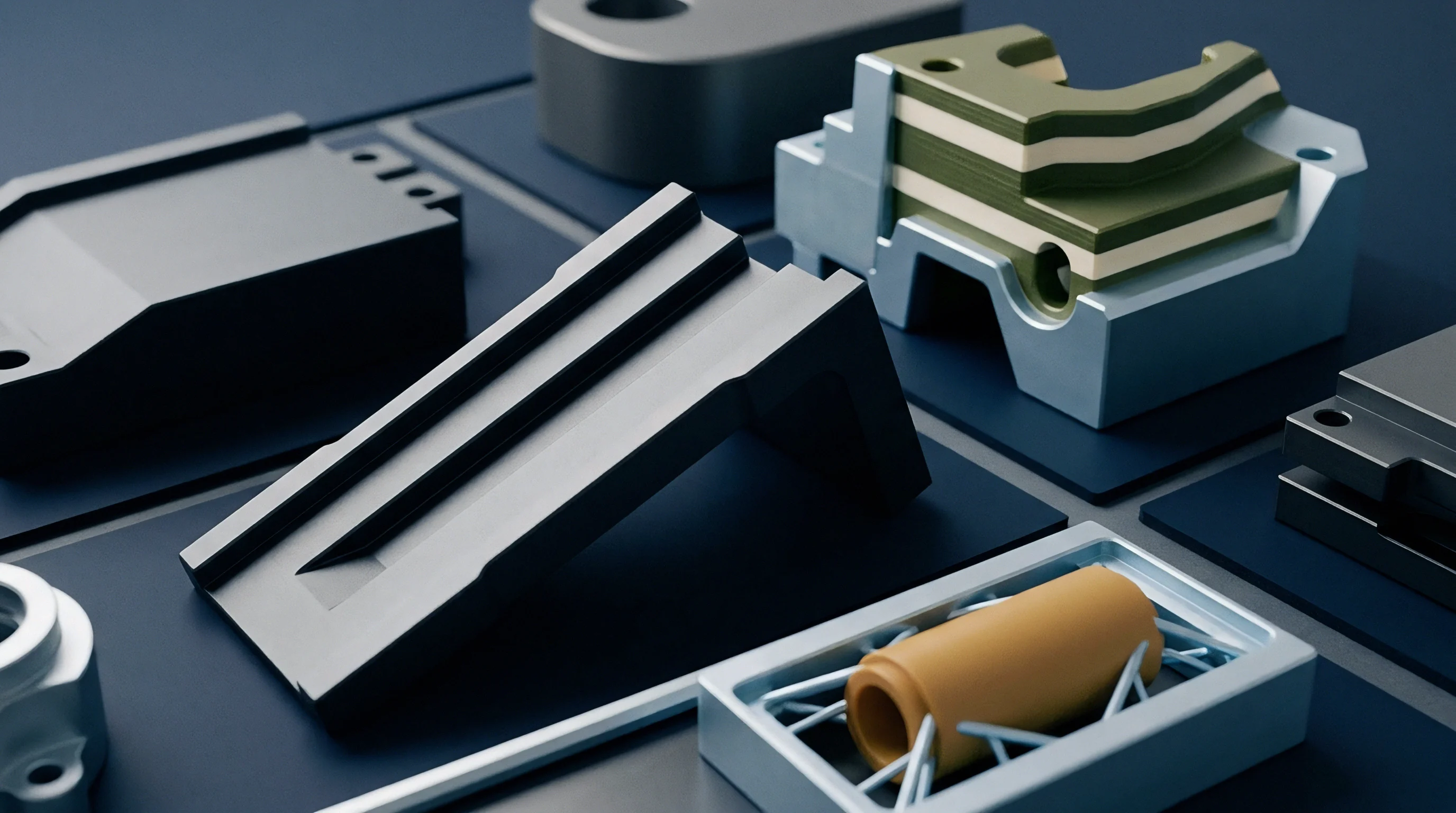
Unfilled base resins rarely meet demanding engineering specs on their own. Formulators blend functional additives, mineral fillers, glass fibers, and process aids into the matrix during twin-screw compounding. While these additions alter mechanical strength, thermal performance, flame resistance, and durability, they also bring processing trade-offs and higher density.
Calcium carbonate is an economical particulate mineral filler that boosts flexural modulus and thermal conductivity while cutting mold shrinkage. Loadings from 10 to 40 percent by weight increase density and part weight while reducing impact strength and elongation at break. The particles also act as nucleating agents during cooling, speeding up crystallization in polypropylene and shortening cycle times.
Talc has a platy, high-aspect-ratio structure that provides directional reinforcement. Adding 20 to 40 percent talc to polypropylene raises flexural modulus and heat deflection temperature enough for PP to replace costlier engineering resins under the hood. However, high talc loadings raise melt viscosity, accelerate barrel wear, and hurt scratch resistance if dispersion is uneven.
Glass fiber reinforcement strengthens parts by transferring stress from the polymer matrix to high-modulus fibers. Short fibers (around 3 millimeters before compounding) boost tensile strength, flexural modulus, and fatigue resistance in nylons, polyesters, and polypropylene. Fiber alignment during filling introduces strong mechanical anisotropy ~ strength and modulus peak parallel to flow, while transverse properties stay lower.
High glass loadings lower impact absorption and accelerate wear on gates and runner turns.
Primary antioxidants (hindered phenols) scavenge free radicals generated during hot melt processing. Secondary antioxidants (phosphite esters) break down hydroperoxides before they trigger auto-catalytic degradation. Hindered amine light stabilizers (HALS) protect outdoor parts by neutralizing radicals formed under UV exposure, stopping surface chalking, micro-cracking, and fading.
Adding glass fiber reinforcement raises heat deflection temperature while decreasing unnotched impact resistance across semi-crystalline polymers.

Degradation Kinetics and Regrind Integration Limits
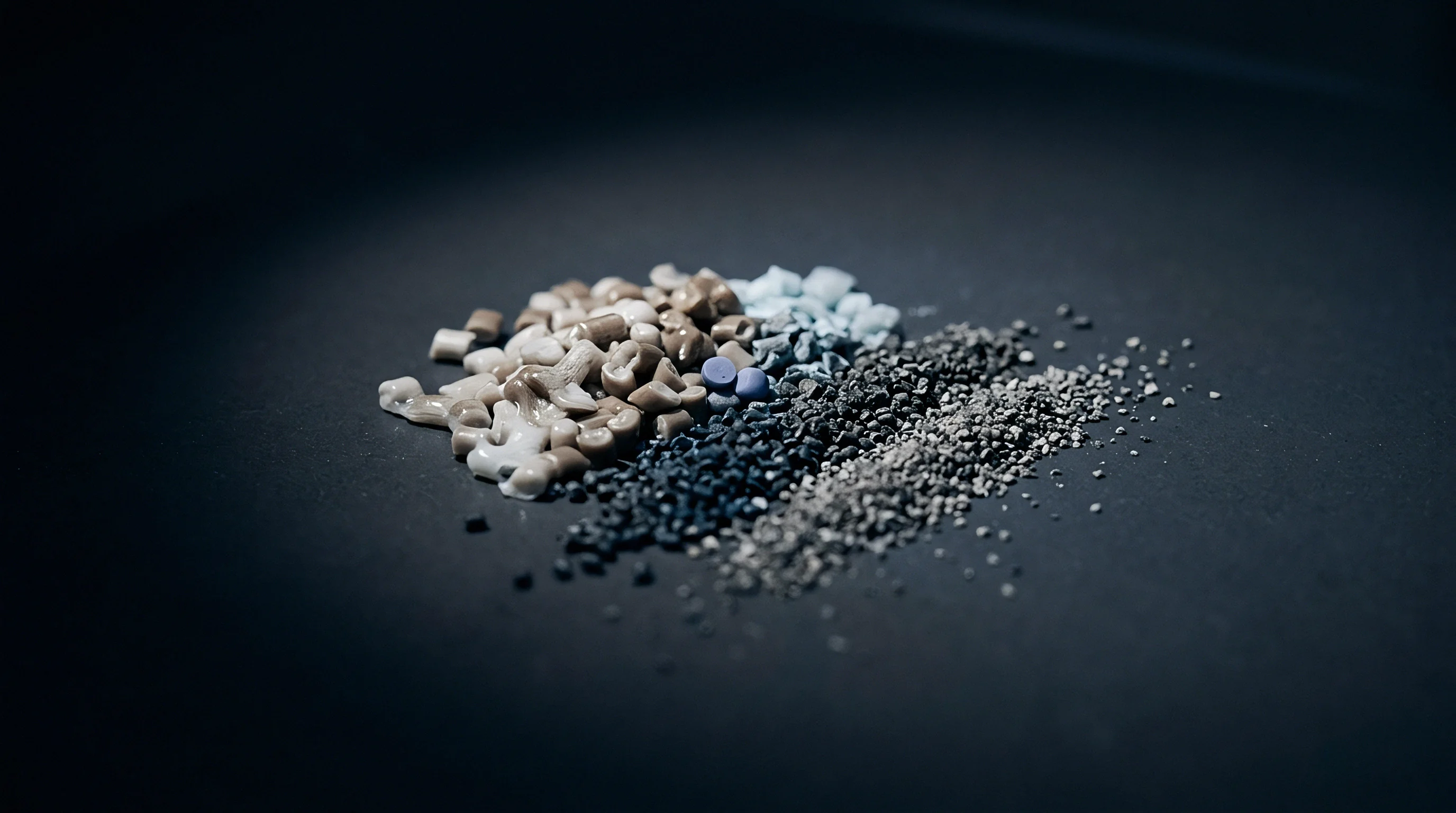
Processing exposes polymer chains to high temperatures, mechanical shear, and oxygen. Repeated heat cycles trigger chain scission, cross-linking, or thermo-oxidative breakdown, altering molecular weight distribution and physical properties. Blending sprues, runners, and scrap parts back into virgin resin is standard practice to cut costs, but requires tight limits to keep parts within spec.
Chain scission lowers average molecular weight, causing a noticeable increase in melt flow rate. Blends with high regrind percentages lose melt strength, exhibit poorer impact resistance, and become more notch sensitive. Conversely, polymers prone to thermal cross-linking ~ like polyethylene processed too hot ~ show dropping MFR values, gel formation, and melt fracture during extrusion.
Izod impact strength drops by up to 14 percent when regrind levels exceed typical limits. Managing regrind content demands controlled blending ratios, typically capped between 15 and 20 percent by weight, paired with continuous melt flow index tracking. Combining regrind across multiple processing generations degrades primary antioxidant packages, leaving the final part vulnerable to rapid thermo-oxidative degradation during its service life.
Contamination in regrind loops presents serious structural risks. Mixing incompatible resins ~ like contaminating polypropylene with trace polyethylene ~ creates immiscible phases with poor interfacial adhesion. Under load, micro-delamination occurs, leading to sudden brittle failure well below expected yield strength.
Clean granulators, dedicated gaylords, and strict segregation protocols protect mechanical integrity.
Compounding Validation Procedure for Recycled and Filled Blends
Validating modified compounds requires verifying physical properties across consecutive production lots. The following sequence establishes thermal stability, additive dispersion, and mechanical properties before full production sign-off.
- Measure melt flow rate for the virgin base resin, pure regrind stock, and target blend ratios at standard loads and temperatures.
- Run capillary rheometry across shear rates from 100 to 10,000 inverse seconds to build processing viscosity curves.
- Mold ISO test specimens using specified barrel temperatures, injection speeds, and mold surface temperatures.
- Condition molded bars at 23 degrees Celsius and 50 percent relative humidity for 48 hours to standardize post-molding crystallization.
- Run tensile tests per ISO 527 for elastic modulus, yield stress, and strain at break.
- Perform notched Izod impact testing per ISO 180 at room and sub-zero temperatures to locate brittle transition points.
- Determine filler or glass loading via thermogravimetric ash content analysis.
- Measure thermal degradation thresholds with differential scanning calorimetry, recording oxidation induction times under pure oxygen.
Fillers alter part weight. Adding inorganic fillers raises compound density, meaning the mold cavity takes in more mass per shot. Cost calculations based strictly on price per kilogram mislead buyers when denser compounds yield fewer parts per tonne than unfilled resin.
An unverified 30 percent glass-filled nylon lot with poor fiber coupling agents led to field failures in industrial valve housings, forcing a complete product recall and inventory replacement.


Freight

Feedstock Economics and Monomer Pricing Mechanisms
Pellet prices track upstream petrochemical feedstocks, energy balances, regional cracker configurations, and trade flows. Thermoplastics derive directly from refined crude oil or natural gas liquids. Knowing monomer economics helps buyers handle contract price negotiations, forecast variances, and evaluate material substitutions.
Ethylene and propylene rely on high-temperature steam cracking of ethane or naphtha. North American and Middle Eastern crackers run mostly on light ethane extracted from natural gas liquids, yielding cheap ethylene. European and Asian crackers depend heavily on crude-derived naphtha, producing ethylene alongside co-products like propylene, butadiene, and aromatics.
When crude oil rises relative to natural gas, naphtha crackers face cost pressure, shifting regional pricing balance.
Contract resin pricing ties directly to monthly monomer settlements on industry indexes. Purchase orders often use a formula combining benchmark monomer price with an agreed conversion adder. Spot prices fluctuate with regional supply-demand shifts, unexpected cracker outages, shipping container availability, and tariffs.
Buyers need to track feedstock trends to tell whether vendor price hikes stem from true cost increases or margin expansion.
Harmonized Tariff Schedule codes dictate import duties. Polyethylene falls under code 3901, polypropylene under 3902, and polyesters under 3907. Country-of-origin rules, anti-dumping duties, and trade actions quickly shift landed economics.
A cheap FOB quote from an overseas supplier can turn expensive once ocean freight, customs clearance, duties, and drayage hit the final invoice.
Part Economics and Commercial Specification Clauses
Comparing resin costs strictly on price per kilogram overlooks the operational factors driving actual part cost. Converting pellets into finished parts involves machine amortization, power, labor, tool wear, and scrap. Paying more for a higher-grade resin with optimized melt flow and faster crystallization can lower overall part cost by shortening cycles and reducing scrap.
Thinner walls save material while cutting mold cooling time. Cooling accounts for up to 70 percent of injection molding cycle time and scales exponentially with wall thickness. Specifying a higher-modulus resin allows designers to trim wall thickness without losing part stiffness, saving cycle time and reducing part weight.
Scrap inflates part costs rapidly. High-cavitation molds running tight-tolerance parts need consistent resin viscosity. Lot-to-lot MFR swings force operators to adjust process settings mid-run, causing short shots, flash, or off-spec dimensions.
The expense of scrap, lost press time, and sorting labor quickly wipes out small savings from buying cheap, off-spec resin.
| Resin Option | Base Price ($/kg) | Compound Density (g/cm³) | Part Weight (g) | Cycle Time (sec) | Estimated Scrap Rate (%) | Effective Landed Cost Per 1,000 Good Parts ($) |
|---|---|---|---|---|---|---|
| Prime Polypropylene Homopolymer (20 MFR) | 1.45 | 0.905 | 45.0 | 18.5 | 1.5 | 82.50 |
| Off-Spec Polypropylene Lot (Variable MFR) | 1.25 | 0.910 | 45.2 | 21.0 | 8.0 | 88.10 |
| 20% Talc-Filled Polypropylene Compound | 1.60 | 1.040 | 51.7 | 14.2 | 2.0 | 101.20 |
| Prime HDPE (High Stiffness Grade) | 1.55 | 0.960 | 47.7 | 17.0 | 1.0 | 91.40 |
| Prime ABS (High Heat Automotive Grade) | 2.60 | 1.050 | 52.2 | 22.0 | 2.5 | 168.90 |
Container freight rates and feedstock monomer spikes alter landed part costs far faster than minor cycle time optimizations on the injection mold floor.
Structuring supply agreements to tie pellet prices to monthly monomer indices, while setting explicit quality windows, protects production operations against lot-to-lot substitution.
Turning resin purchases into solid supply contracts requires clear terms governing lot acceptance, defect thresholds, and claims handling. Contracts should spell out test methods, sample sizes, and independent lab arbitration for property disputes.
The contract clause must specify: “Each delivered resin lot shall strictly conform to the agreed technical specification bounds for Melt Flow Rate (ISO 1133) within a tolerance of plus or minus ten percent, and Density (ISO 1183) within plus or minus 0.002 g/cm3; non-conforming shipments are subject to immediate rejection at seller expense, including drayage and silo purging fees.”