Contractual Liability Boundaries for Undisclosed Post-Industrial Polymer Additions in Branded Engineering Resins
Undisclosed post-industrial polymer additions breach express resin specifications when melt stability and impact properties diverge from prime baselines.


Reclamation
Polymer compounders regularly stretch prime resin with internal edge trim, sprues, and off-spec molding scrap to cut costs. But in branded engineering thermoplastics like polyamide 66, polybutylene terephthalate, and polycarbonate blends, adding post-industrial polymers shifts the material’s molecular baseline. Primary resin producers synthesize polymers under strict kinetics, producing consistent molecular weight distributions and predictable end-group stoichiometry.
When reprocessed post-industrial feeds enter the compounding throat, they bring in resin that has already been through at least one full melt cycle. That earlier heat history triggers thermal-oxidative degradation, hydroperoxide formation, and chain scission before the material ever sees an injection molding machine.
The difference between internal closed-loop recycle and external post-industrial streams comes down to material history and purity. Internal loops use unpigmented sprues and edge trim from the same production run, so their thermal history is known and contamination is minimal. External post-industrial feeds come from secondary reprocessors, post-molding trim, or scrap gathered from multiple plants.
They bring unpredictable moisture levels, conflicting additive packages, mold releases, and foreign polymers. Thermal stability drops fast. Pelletizing this scrap subjects the polymer to high shear in single- or twin-screw extruders, driving thermo-mechanical chain breakdown that lowers average molecular weight and broadens the polydispersity index.

Feedstock Dynamics in Compounding Operations
High-volume compounding operations rely on twin-screw extruders fed simultaneously with base resin, glass fiber, flame retardants, and regrind via gravimetric loss-in-weight feeders. The drive to use post-industrial scrap is purely economic, rooted in the price gap between virgin resin and reprocessed flake. Prime polyamide 66 neat polymer commands a steep premium over reprocessed flake recovered from airbag scrap or textile trim.
Blending ten to twenty-five percent reprocessed flake into a branded engineering grade lowers raw material costs while keeping density and glass content right on the datasheet targets.
Pellet blending happens downstream of the reactor, where mechanical mixing conceals chemical differences. But gravimetric feeders set up for virgin pellets struggle with the shifting bulk density of reprocessed flake, which ranges from thin film fragments to thick edge-trim chunks. These geometry variations cause feeding surges in the barrel.
The resulting melt stream ends up uneven, with pockets of high post-industrial content alongside virgin resin. Bulk melt flow rate tests average these zones out, masking the instability underneath. On the molding floor, especially in high-cavitation precision tooling, those variations translate to shot-to-shot weight shifts, inconsistent part shrinkage, and localized structural weak spots.
Repetitive extrusion passes strip primary phenolic antioxidants from the melt before pellets reach the molding hopper.
Additive depletion makes this physical degradation worse. Prime engineering resins come with balanced stabilizer packages ~ primary hindered phenols, secondary phosphites, and internal lubricants tailored to specific processing windows. Reprocessed scrap enters with its antioxidants largely consumed.
During re-extrusion, the active stabilizers in the virgin polymer sacrifice themselves to protect the degrading post-industrial fraction. The finished pellet lot leaves the factory with depleted thermal reserves. When a molder runs complex parts at standard temperatures, the melt lacks the antioxidant protection needed to prevent further oxidative scission during barrel residence time.

Thermal History and End Group Chemistry
Chain-end chemistry dictates long-term thermal and hydrolytic stability in condensation polymers. Polyamides and polyesters depend on a precise balance of amine, carboxyl, and hydroxyl end groups established during reactor synthesis. Processing polyamide 66 with even trace moisture triggers hydrolytic cleavage of amide bonds, forming excess carboxylic acid and amine ends.
Further heating during repelletization drives decarboxylation and deamination. These side reactions disrupt the end-group stoichiometry, limiting solid-state polymerization potential and leaving the polymer far more vulnerable to thermo-oxidative failure in high-temperature applications.
Melt viscosity drops under continuous shear, making cumulative thermal history obvious in dynamic rheological profiles. A standard single-point Melt Flow Rate test run under low shear might fall within datasheet tolerances, but dynamic testing reveals the actual structural damage. Polyamide 66 containing reprocessed flake shows aggressive shear-thinning and lower zero-shear viscosity.
Thermo-mechanical degradation broadens the molecular weight distribution or renders it bimodal. Short chain fragments from scission act like internal plasticizers, pushing up low-shear flow rates, while cross-linked high-molecular-weight micro-gels boost melt elasticity and die swell.
Uncontrolled post-industrial additions alter the structural integrity of engineering compounds through clear physical and chemical indicators across processing stages:
- Antioxidant Depletion Kinetics Primary hindered phenols are consumed rapidly during secondary extrusion, leaving the matrix undefended during downstream molding operations.
- End Group Stoichiometric Unbalance Shifts in carboxyl-to-amine ratios accelerate hydrolytic cleavage when the molded component faces heat and ambient humidity.
- Heterogeneous Micro-Gel Generation Localized cross-linking forms insoluble gel particles that act as internal stress risers in finished parts.
- Volatile Degradation Byproduct Accumulation Low molecular weight oligomers and breakdown products off-gas in the mold, causing splay and micro-voids in component walls.
Internal runner recovery remains within normal industry tolerances for prime compound equivalents.


Plaque
Standard physical test bars cut from production lots provide the baseline data needed to identify undisclosed recycle content. Uncovering post-industrial material in branded resins requires a multi-technique analytical approach. Datasheet test parameters like tensile strength or nominal melt flow rate lack the resolution to catch low-to-moderate recycle levels.
In fact, a compounder can tweak glass fiber loading or add low-molecular-weight lubricants to push degraded polymer back inside published spec windows. Positive identification relies instead on spotting the chemical and microstructural fingerprints left by prior thermal passes and secondary contamination.
Differential Scanning Calorimetry provides vital diagnostic data by tracking phase transitions against temperature. In heat-stabilized semi-crystalline polymers like polyamide 66 or polybutylene terephthalate, DSC runs uncover subtle thermal anomalies. Virgin resin shows a single, sharp melting endotherm reflecting uniform lamellar thickness.
Blends with post-industrial content routinely exhibit broadened melting peaks, shoulder peaks, or secondary crystallization exotherms on cooling ~ signatures of degraded chains with compromised crystallization behavior or foreign polymer contamination.

Analytical Fingerprints in Differential Scanning Calorimetry
Oxidation Induction Time (OIT) testing via DSC measures remaining active antioxidants in a resin batch. The sample sits at elevated temperature under nitrogen before the atmosphere switches to pure oxygen. The elapsed time between oxygen exposure and thermo-oxidative breakdown correlates directly with stabilizer reserves.
Virgin, heat-stabilized engineering grades routinely exceed forty minutes at 200 °C. Lots containing post-industrial scrap show sharp drops in OIT, often falling below ten minutes under identical conditions because earlier processing consumed the stabilizers.
Differential scanning calorimetry at a heating rate of 10 °C per minute under nitrogen flow reveals secondary oxidation peaks when post-industrial fractions exceed 5 percent by weight.
Size Exclusion Chromatography (or Gel Permeation Chromatography) separates polymer molecules by hydrodynamic volume in solution. High-temperature SEC using hexafluoroisopropanol or trichlorobenzene yields complete molecular weight distributions, including number-average molecular weight, weight-average molecular weight, and polydispersity index. Virgin resins show narrow, monomodal distributions.
Post-industrial additions broaden this curve, creating a low-molecular-weight tail from chain scission alongside a high-molecular-weight shoulder from cross-linking.
Solution viscometry offers definitive verification for condensation polymers like polyamides and polyesters. Intrinsic or relative viscosity reflects the weight-average molecular weight of the unbranched chains. ISO 307 outlines viscosity testing for polyamides in 96 percent sulfuric acid.
A drop in relative viscosity from 2.75 in prime polyamide 66 down to 2.42 in a delivered lot points directly to chain degradation from reprocessed material. The test strips out filler effects, as glass fibers and minerals are filtered out before capillary testing.

Molecular Weight Distribution and Gel Chromatography
Micro-FTIR spectroscopy with focal plane array detectors maps chemical composition across polished plaque specimens, pinpointing microscopic foreign polymer inclusions typical of recycled streams. Bulk melt tests miss these localized contaminants. In polybutylene terephthalate compounds, micro-FTIR mapping frequently uncovers tiny domains of polypropylene or polyethylene terephthalate from mixed industrial scrap.
Even twenty-micrometer polyolefin specs create immiscible boundaries in the matrix, wrecking interfacial adhesion and triggering fatigue failure under cyclic loads.
The following testing protocol isolates chemical and physical anomalies in suspect resin lots:
- Extract representative pellet samples from top, middle, and bottom sections of sealed shipping containers per ISO 5824 sampling guidelines.
- Measure baseline Melt Mass-Flow Rate according to ISO 1133-1 at standard temperature and load parameters, followed by a second test at extended dwell times to assess thermal stability.
- Perform Differential Scanning Calorimetry heating and cooling scans from 30 °C to 300 °C at 10 °C per minute under nitrogen purge per ISO 11357-3 to document melting peak morphology.
- Determine Oxidation Induction Time via isothermal Differential Scanning Calorimetry at 200 °C under oxygen flow in accordance with ISO 11357-6.
- Dissolve neat polymer matrix in appropriate solvent, filter glass fiber reinforcement, and conduct relative viscosity measurements per ISO 307 or ISO 1628.
- Execute high-temperature Size Exclusion Chromatography to determine complete molecular weight distribution curves and polydispersity index values.
The table below summarizes analytical property shifts observed when undisclosed post-industrial polymer fractions enter prime engineering resin compounds:
| Test Parameter | Standard Method | 100% Virgin Prime Specification | 15% Post-Industrial Addition Lot | Analytical Deviation |
|---|---|---|---|---|
| Melt Mass-Flow Rate (275 °C / 5.0 kg) | ISO 1133-1 | 18.5 g/10 min (± 2.0) | 31.2 g/10 min | +68.6% (Melt thinning) |
| Relative Viscosity (96% H2SO4) | ISO 307 | 2.78 (± 0.04) | 2.41 | -13.3% (Chain scission) |
| Oxidation Induction Time (200 °C, O2) | ISO 11357-6 | 45.2 minutes | 8.4 minutes | -81.4% (Antioxidant loss) |
| Weight-Average Molecular Weight (Mw) | ISO 16014-4 | 42,500 g/mol | 33,100 g/mol | -22.1% (Molecular shift) |
| Polydispersity Index (Mw/Mn) | ISO 16014-4 | 2.15 | 3.45 | +60.5% (Broadened MWD) |
| Tensile Strain at Break (23 °C) | ISO 527-2 | 3.8% (GF30 grade) | 2.1% | -44.7% (Embrittlement) |
| Data determined on polyamide 66 with 30% glass fiber reinforcement; matrix isolated via solvent extraction for viscometry and chromatography. | ||||
Commercial laboratories continue to debate whether trace elastomer contaminants in recycled streams alter crystallite nucleation rates enough to invalidate standard thermal baseline calibration curves.


Degradation
Premature structural failure under load traces directly to degraded polymer chains and depleted stabilizers. When engineering resins with undisclosed post-industrial content enter service in demanding automotive, structural, or industrial parts, performance drops long before the design end-of-life. Short chains lack the entanglements needed to distribute stress across amorphous zones between crystals.
As a result, properties tied directly to molecular weight ~ notched impact resistance, high-strain elongation, fatigue life, and environmental stress cracking ~ suffer heavy losses.
Notch sensitivity worsens at low temperatures. Impact failure in semi-crystalline resins happens as cracks nucleate and spread through amorphous domains. In prime resin, long chains form a dense network of tie molecules linking crystal lamellae, absorbing impact energy through yielding and plastic deformation.
Reprocessed scrap introduces low-molecular-weight scission products that thin out these tie molecules. Under fast impact, such as standard Charpy or Izod tests per ISO 179 or ISO 180, the material shifts abruptly from ductile energy absorption to brittle fracture at far lower loads.

Impact Loss and Notch Sensitivity Mechanisms
The thermal history of post-industrial scrap also degrades interfacial shear strength between glass fibers and the polymer matrix. Glass fibers depend on organofunctional silane sizing to bond covalently with the polymer. During secondary extrusion passes, this sizing breaks down thermally and strips mechanically.
When the degraded resin is compounded into a glass-reinforced grade, the polymer matrix no longer wets the fibers cleanly. Micro-voids form along the fiber interface, creating stress concentrators under flexural or tensile loading. While tensile modulus and yield strength can look deceptively stable on basic test reports, ultimate strain at break drops off drastically as the fiber-matrix bond fails.
Elongation at break drops precipitously long before changes in ultimate tensile strength register on standard testing frames.
Creep under sustained load poses a major threat to structural parts specified in engineering resins. Creep occurs as polymer chains gradually slip past each other under stress below the yield point. Recycled additions accelerate creep because shorter chains and oligomers act like plasticizers, increasing chain mobility and interchain slip.
Parts intended for long-term load bearing ~ snap-fits, structural brackets, or pressurized housings ~ suffer fast stress relaxation and dimensional failure when molded from lots containing undisclosed scrap.

Long Term Hydrolytic Cleavage in Polyamides
Environmental Stress Cracking (ESC) is another key failure mode accelerated by undisclosed material changes. ESC occurs when a stressed part contacts an aggressive chemical agent. In polycarbonate and PC/ABS blends, post-industrial additions introduce internal stress through altered mold shrinkage while weakening the molecular network.
When exposed to industrial solvents, lubricants, or cleaning agents, degraded material develops micro-voids and stress cracks at loads well below design thresholds. Cracking happens without visible swelling or obvious chemical attack, leading to sudden, catastrophic failure.
Long-term heat aging studies show that resin containing post-industrial content degrades rapidly under continuous heat exposure. Depleted primary antioxidants leave the polymer matrix open to thermo-oxidative attack. Oxygen diffuses into amorphous regions, attacking tertiary carbons and generating free radicals that drive chain scission.
Within a few hundred hours at standard under-hood temperatures, mechanical retention curves for tensile strength and impact resistance drop well below certified virgin baselines.
Mechanical degradation metrics for a 30% glass-fiber-reinforced polybutylene terephthalate compound track predictable drop-offs as post-industrial content increases:
| Property Metric | Test Standard | 0% PIR (Virgin Prime) | 10% PIR Content | 25% PIR Content | 40% PIR Content |
|---|---|---|---|---|---|
| Charpy Notched Impact (23 °C) | ISO 179-1/1eA | 10.2 kJ/m² | 8.4 kJ/m² | 6.1 kJ/m² | 4.3 kJ/m² |
| Charpy Notched Impact (-30 °C) | ISO 179-1/1eA | 8.8 kJ/m² | 6.9 kJ/m² | 4.7 kJ/m² | 3.1 kJ/m² |
| Tensile Elongation at Break | ISO 527-2 | 3.4% | 2.8% | 1.9% | 1.3% |
| Flexural Strength | ISO 178 | 225 MPa | 210 MPa | 182 MPa | 155 MPa |
| Heat Deflection Temp (1.80 MPa) | ISO 75-2 | 210 °C | 205 °C | 194 °C | 181 °C |
| Retention of Impact after 1000h @ 150 °C | ISO 188 / ISO 179 | 88% | 64% | 39% | 18% |
Unstabilized reprocessed chains crack at sharp internal corners when part geometry generates localized stress concentrations during cold impact exposure.


Discrepancy
Gaps between manufacturer spec sheets and silo deliveries widen when compounding lines run unsegregated scrap streams. Relying solely on paper compliance creates immediate exposure. Certificates of Analysis from distributors or toll compounders often reflect routine QC on composite samples or recycle historical qualification data.
Standard COAs report only basic parameters ~ ash-test glass content, bulk density, and single-point melt flow. These basic metrics easily clear incoming checks while masking severe structural damage in the polymer matrix.
Visual pellet inspection offers a quick first line of defense during receiving. Virgin engineering resins feature uniform geometry, consistent color, and clean surfaces from controlled strand cutting or underwater pelletizing. Lots diluted with post-industrial scrap show clear physical anomalies.
Color variation across a single gaylord or bulk container signals inconsistent thermal history and pigment contamination. Reprocessed pellets often vary in length, exhibit surface roughness, contain micro-voids, or carry high dust and fines. Embedded black specks ~ carbonized particles in natural or translucent pellets ~ confirm severe overheating during secondary processing.

Compounding Hall Audits and Pellets Visual Screening
Color drift flags thermal history, but catching it in bulk requires stratified sampling. Incoming inspection protocols should follow statistical sampling plans like ISO 2859-1 to capture variance within and between lots. Sampling only from the top hatch of a gaylord misses reprocessed material that has settled during transit.
Pulling samples from multiple depths and testing density and melt flow on each uncovers hidden inconsistency. If melt flow varies by more than fifteen percent between top and bottom samples in a single container, the lot holds unblended, heterogeneous material typical of scrap additions.
Compliance with ISO 1043 polymer designation markings fails to protect a buyer when compounders omit sub-tier material source declarations.
Compounding hall audits expose practices that certificates hide. On site, engineers trace material flow directly from receiving hoppers to feed throats. Unmetered granulators beside extruders, unlabelled gaylords of scrap, or manual blending stations point straight to non-prime feed usage.
Reviewing feeder calibration logs reveals if gravimetric feeders for virgin resin are dialed down while secondary feeders meter scrap flake into the melt under broad compound descriptions.

Certificate Accuracy versus Incoming Inspection Data
Mismatches between documentation and actual chemistry thrive on ambiguous terminology. Standard technical datasheets identify materials using generic ISO 1043 nomenclature, such as PA66-GF30. That label indicates polyamide 66 with thirty percent glass fiber by weight, but places no restriction on where the resin matrix comes from.
Unless the purchase order explicitly specifies one hundred percent virgin, reactor-synthesized polymer, a compounder can argue that reprocessed scrap satisfies the literal definition of PA66-GF30 ~ leaving the buyer with the burden of chemical proof.
Heat-stabilized polyamide 66 containing undisclosed regrind causes a 14 percent drop in Izod impact resistance.


Breach
Material non-conformity in commercial resin shipments quickly becomes a complex legal matter under standard sales contracts. Delivering pellets with undisclosed post-industrial content under a prime brand designation triggers disputes governed by contract terms, statutory warranties, and commercial codes. Where liability falls depends heavily on whether the buyer specified explicit chemical and physical purity standards or relied on generic grade names and trade definitions.
Under UCC Section 2-313 and CISG Article 35, a seller creates an express warranty whenever a product description, sample, or technical specification forms part of the basis of the bargain. If a purchase order specifies a branded grade ~ like a prime heat-stabilized resin ~ delivering a compound cut with post-industrial scrap breaches that warranty. The material fails to match the physical identity promised by the brand name, which carries an implied guarantee of virgin origin and consistent thermal history.

Which Express Warranty Clauses Survive Undisclosed Compound Variations?
Implied warranties of merchantability (UCC Section 2-314) and fitness for a particular purpose (UCC Section 2-315) offer additional legal protection when explicit purity terms are missing. Merchantability requires suppliers to deliver goods that pass without objection in the trade and suit their ordinary purpose. In precision engineering, resin with undisclosed scrap fails this test if high batch variation causes excessive molding scrap or field failures.
Non-conforming material voids purchase obligations. Furthermore, if the supplier knew the end-use application and the buyer relied on their expertise to select the resin, undisclosed additions breach the warranty of fitness.
Latent defects extend claim windows. Supplier terms often try to limit liability with strict procedural rules, requiring buyers to inspect shipments and report non-conformities within ten to thirty days. Undisclosed post-industrial additions are latent defects that simple receiving checks cannot spot.
Because proving secondary polymer content requires techniques like DSC or solution viscometry, courts regularly set aside short notice deadlines, allowing buyers to pursue claims when hidden degradation shows up during molding or in field service.

Latent Defects and Inspection Notice Windows
Limitation of remedy clauses pose major hurdles to recovering downstream costs. Compounder sales agreements routinely limit seller liability to the purchase price of the resin lot while disclaiming consequential and incidental damages. If a ten-ton shipment costing forty thousand dollars leads to five hundred thousand dollars in scrap, tool damage, and recall expense, legal battles pivot on UCC Section 2-719(2).
When replacing the resin fails of its essential purpose ~ because of repeated non-conforming shipments or severe field liabilities ~ courts can invalidate the limitation, exposing the seller to full consequential damages.
Resin purchasing agreements enforce rigorous liability protection through precise specification controls:
- Explicit Feedstock Origin Warranties Strictly prohibit undisclosed post-industrial scrap, defining acceptable material solely as reactor-synthesized virgin polymer.
- Analytical Verification Thresholds Set strict limits for changes in relative viscosity, melt flow ratios, and Oxidation Induction Times to justify instant batch rejection.
- Extended Latent Defect Discovery Windows Extend filing deadlines for hidden chemical non-conformities to twelve months from delivery, overriding short standard notice clauses.
- Consequential Damage Carve-Outs for Intentional Substitution Remove liability caps if a compounder knowingly substitutes secondary scrap for specified prime grades.
Standard purchase orders incorporating ISO 1043 classification terms without explicit chemical purity exclusions allow compounders to defend ten percent post-industrial additions as acceptable trade usage.


Remedy
Financial recovery for non-conforming resin shipments requires accounting for both direct material costs and downstream production losses. Damages from undisclosed scrap go far beyond refunding the resin invoice. Once non-conforming material enters a molding plant, it generates fully burdened losses across the entire operation.
Calculating total damages requires capturing raw material variance, lost press capacity, tool wear, sorting labor, and supply chain disruptions.
Direct damages start with material replacement, return freight, customs duties, purge compound, and disposal fees for scrapped parts. Machine downtime represents another major cost category. Press rates are calculated on a fully burdened hourly basis that includes power, direct labor, plant overhead, and margin.
When degraded resin causes short shots, splay, flash, or extended cycle times, presses run inefficiently or shut down entirely, creating unrecoverable capacity losses across the floor.
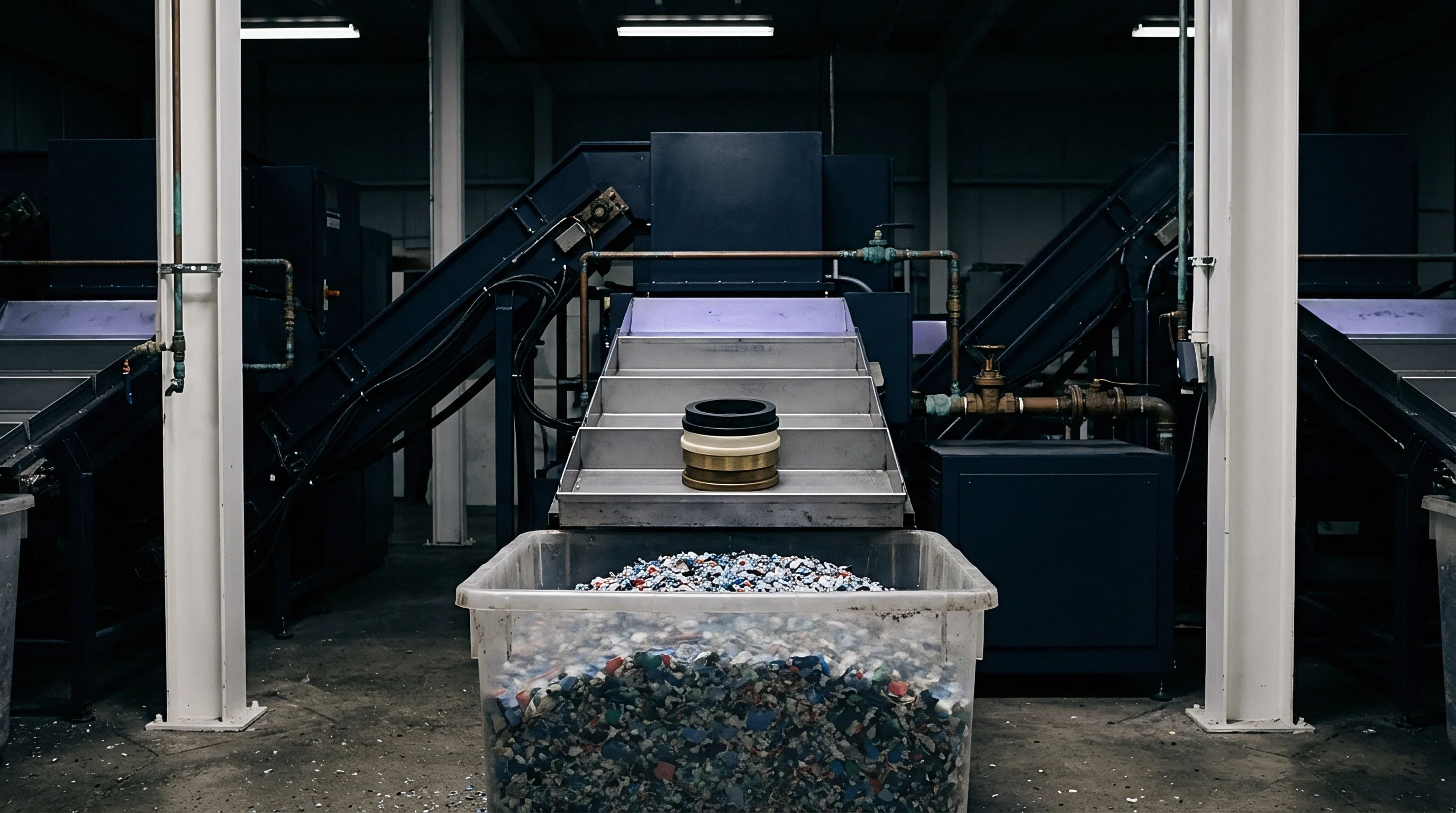
Landed Cost Arithmetic and Scrap Allocation
Tooling damage from reprocessed resin creates substantial additional liability. Scrap streams carrying corrosive breakdown products, degraded flame retardants, or metallic micro-contaminants cause rapid pitting and abrasion on mold cavities, core pins, and hot runner nozzles. Repairing hardened steel tooling requires costly bench work, laser welding, re-polishing, and complete dimensional re-qualification.
These repair costs, along with lost press capacity during tool downtime, form actionable heads of damage in commercial disputes.
Downstream product recalls represent the worst-case scenario when bad parts reach assembly lines. If structural automotive, medical, or industrial components fail in service because of undisclosed scrap, liabilities cascade down the supply chain ~ encompassing field labor, replacement logistics, administrative expenses, and legal defense. With definitive analytical proof linking field failure to undisclosed post-industrial resin, component manufacturers can transfer these recall liabilities back to the compounder through indemnification claims.

Commercial Negotiation and Dispute Resolution Frameworks
The economic impact model below details damage categories incurred when a single twenty-two-metric-ton container of engineering resin containing undisclosed post-industrial additions enters production:
| Cost Category | Physical Basis / Operational Parameter | Unit Financial Metric | Total Financial Claim |
|---|---|---|---|
| Direct Material Cost | 22,000 kg resin lot invoice price | $4.20 per kg delivered | $92,400 |
| Scrapped Molded Parts | 142,000 molded components scrap | $1.85 per component burdened | $262,700 |
| Unplanned Press Downtime | 120 operating hours lost on 500-ton press | $145.00 per machine hour | $17,400 |
| Tooling Damage Repair | Hot runner system corroded by degradation products | Toolroom repair invoice | $28,500 |
| Analytical Laboratory Fees | FTIR, DSC, SEC, Viscometry lot verification | Contract laboratory invoice | $14,200 |
| Purge and Disposal Fees | High-temperature purge compound & regulated disposal | Disposal contractor rate | $6,800 |
| Administrative and Legal Fees | Dispute management and claim preparation | Internal and legal billing | $22,000 |
| Total Claim Value | Fully burdened commercial damage assessment | Consolidated financial claim | $444,000 |
Commercial buyers who establish empirical testing protocols before silo unloading retain maximum leverage during price adjustment negotiations and product replacement claims.