
Border Rejection Notifications Read as Supplier Screening Data
Border rejection notifications provide empirical chemical failure data to screen foreign packaging suppliers, update lot sampling rates, and enforce contract indemnities.
Border rejection notifications provide empirical chemical failure data to screen foreign packaging suppliers, update lot sampling rates, and enforce contract indemnities.

High-resolution mass spectrometry screening quantifies unknown polyolefin oligomers using class-matched surrogate standards and conservative response factor multipliers.

Verify bulk plastic packaging against pre-production certificates using lot-specific AQL dock sampling, ATR-FTIR screening, and full DoC dossier traceability.

Groundwork for identifying non-intentionally added photoinitiators in polyolefins requires high-resolution mass spectrometry and toxicological screening.

Polyolefin oligomer screening couples GC-FID envelope quantitation with diffusion modeling to clear POSH fractions against the 1.8 mg/kg food threshold.

Ionization efficiency matrix corrections convert high-resolution mass spectrometry peak areas into accurate migrant concentrations, preventing false compliant packaging declarations.

Non-intentionally added substance mass spectrometry protocols require combined GC-HRMS and LC-HRMS screening below 10 ppb to verify recycled polyolefin food safety.

Establishing non-target screening limits requires dividing toxicological thresholds by lower-bound relative response factors to ensure reliable detection.
Computational prediction of LC-ESI relative response factors reduces semi-quantification errors for uncharacterized food contact migrants.

Cramer structural classification sets exposure thresholds for unlisted packaging migrants, turning molecular features into defensible specific migration limits.

Migration values in ethanol or isooctane simulants overestimate low-density polyolefin release by up to three hundred percent while underreporting polar NIAS transfer into emulsified foods.

Recycled polyolefin food contact compliance demands targeted screening for photoinitiators to prevent set-off contaminants from exceeding specific migration limits.

Semi-quantitative response factors for unknown polymer migrants require response factor distribution analysis and empirical safety multipliers to prevent toxicological underestimation.

Machine learning models correct electrospray response factors for polymeric migrants, preventing gross underestimation of NIAS concentrations in food contact compliance filings.

Screening unknown volatile migrants demands thermal liberation, high-resolution spectral deconvolution, worst-case mass balance, and toxicological hazard assignment against threshold limits.

Polyolefin oligomer screening requires coupled LC-GC-FID quantification of POSH and POAH fractions below ten parts per billion using matched food simulants.

Statistical uncertainty factors for polymer screening convert standard response factor variance into lower tolerance bounds that prevent non-target false negatives.

Non-target screening of polyolefin food contact oligomers requires dual GC-APCI and LC-HRMS analysis to resolve saturated aliphatic species below 1000 Da.
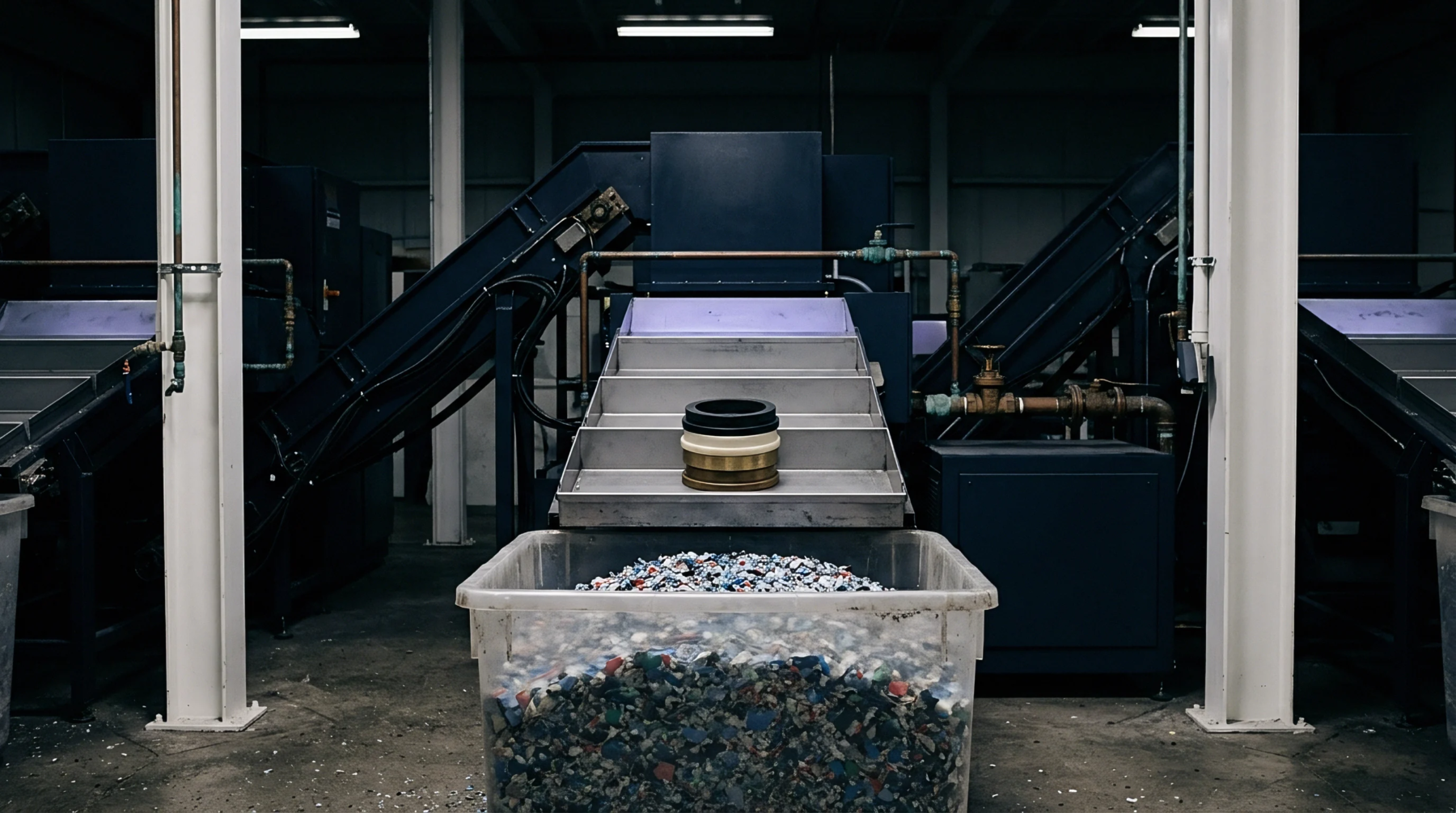
Post-consumer resin dossiers require dual GC-HRMS and LC-HRMS screening with response-factor modeling to establish NIAS toxicological thresholds below 10 ppb.

Polyolefin oligomer humps in HDPE mimic mineral oil on LC-GC-FID; compliance requires GCxGC-TOFMS spectral deconvolution and specific migration on Tenax.

Polyolefin migration compliance requires selecting food simulants based on polarity and fat content while accounting for matrix swelling and thermal limits.

Analytical verification of NIAS in multi-layer barrier films requires high-resolution mass spectrometry screening backed by toxicological threshold classification.

Compliance files require measuring migration against specific limits, adjusting for dual-use direct food additive allowances, and verifying raw material data.
Reconciling masterbatch dosages with specific migration limits requires calculating active concentration, accounting for thermal loss, and verifying compliance by testing.
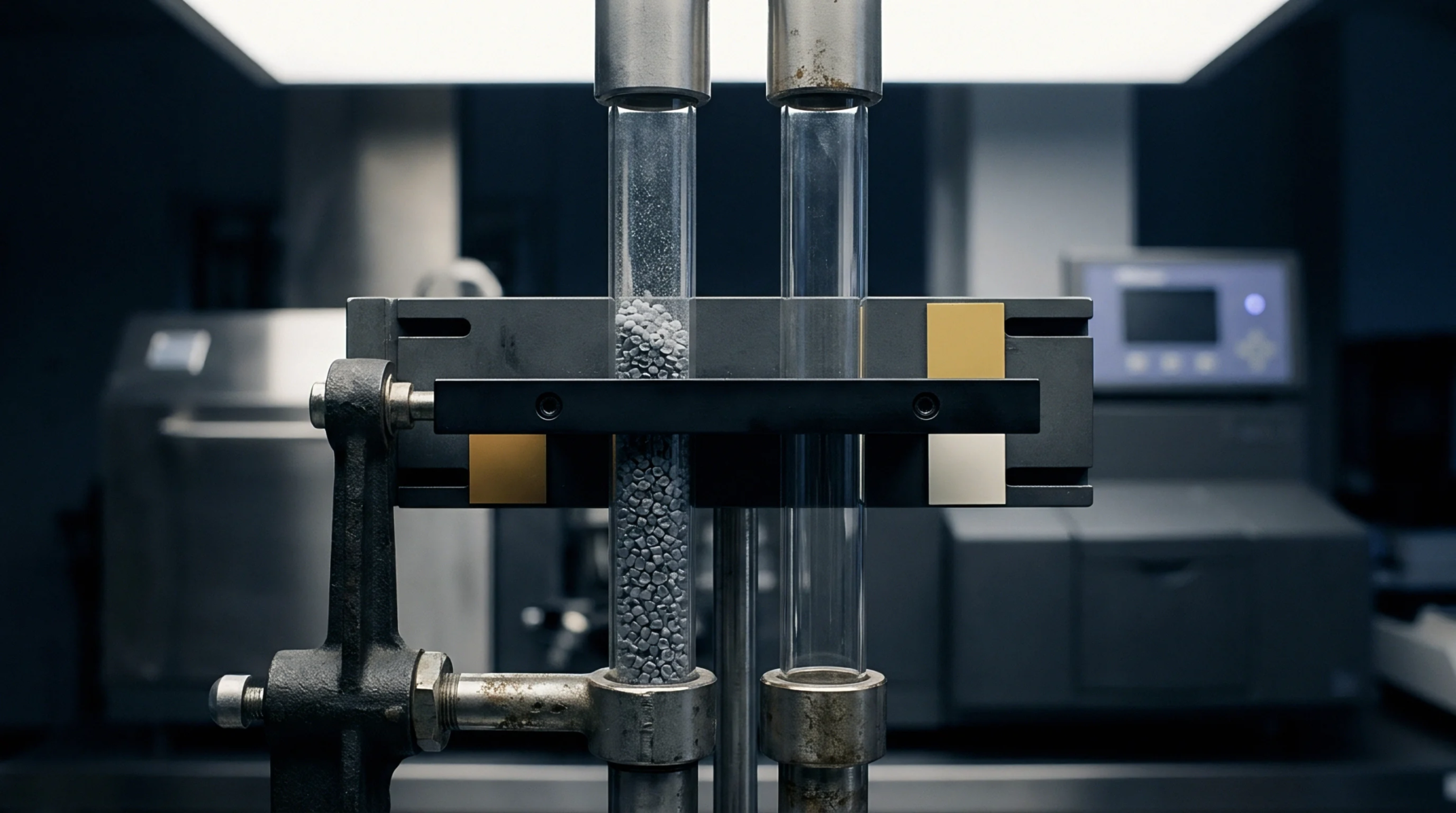
Screening recycled polyolefins via chromatography and toxicological thresholds isolates unlisted migrant degradation products below ten parts per billion.

Preparative TREF combined with high-temperature SEC isolates and quantifies migrating sub-1000 Da polyolefin oligomers to verify food contact safety compliance.

Uncertainty propagation in non-target screening requires combining recovery bias, mass drift, and response factor variance into expanded concentration bounds.

Quantify polyolefin saturated oligomers using capillary GC-FID integration calibrated against n-alkanes after silica cleanup to isolate non-polar migrateables.

Standardized mCPBA epoxidation followed by normal phase HPLC cleanly removes oligomeric olefin interferences from MOAH fractions for EU food contact compliance.

Validating GC-MS workflows for postconsumer polyolefin migrants requires matrix-matched calibration, accurate mass deconvolution, and response-factor adjusted screening.
Expertise is a utility, not a secret. sentiention™ publishes its working knowledge as open reference: intelligence layer covering the materials it sources, the markets it enters, and the reference that serves both.