Meaning
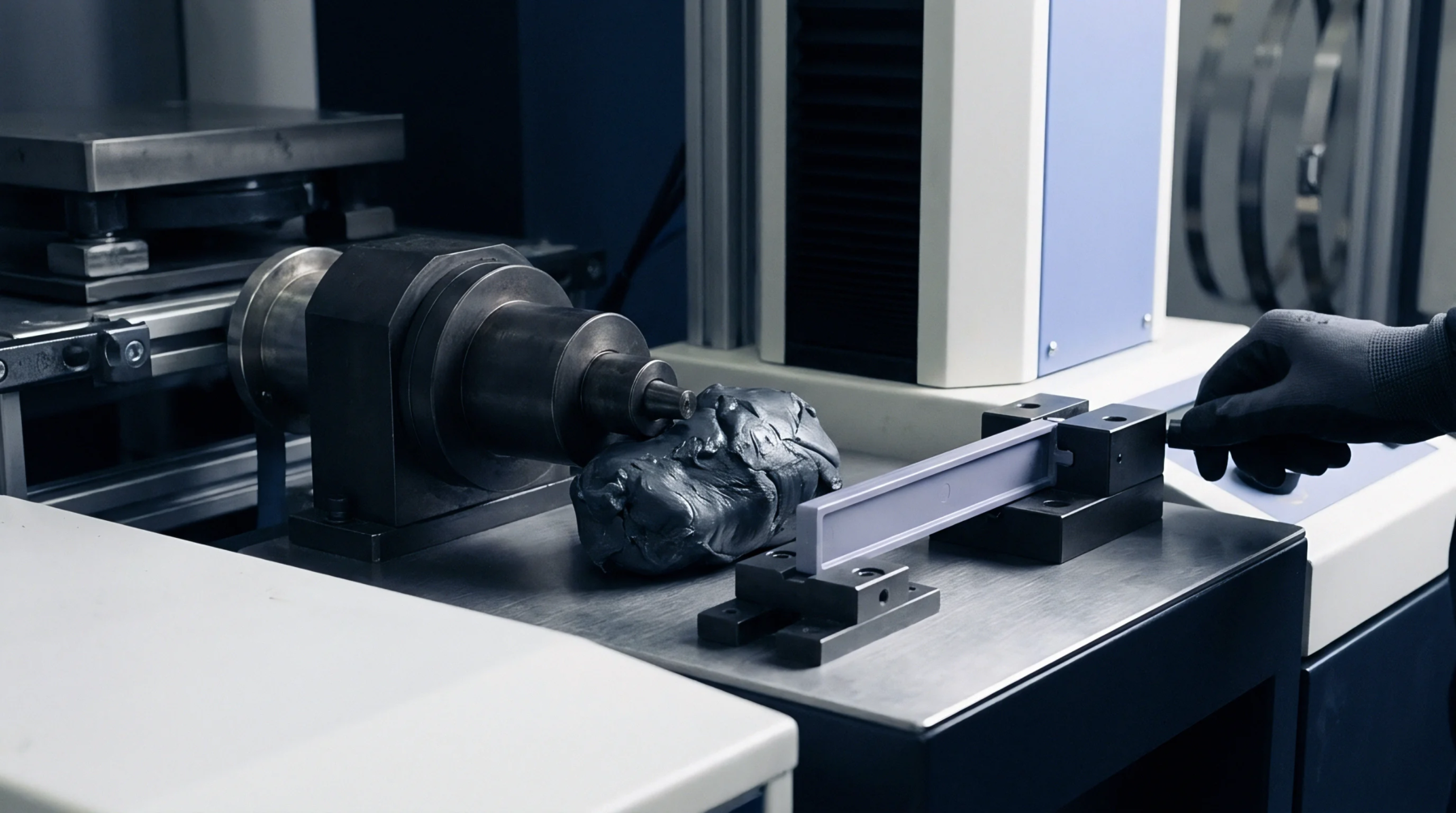
Analytical techniques that apply an oscillating force to a polymer sample while varying temperature and frequency determine the viscoelastic properties of the material. Dynamic mechanical thermal analysis measures the storage modulus, loss modulus, and damping factor across a wide temperature range. It is used to identify molecular transitions, such as the glass transition temperature, that are difficult to detect using standard differential scanning calorimetry, helping engineers predict how the material will behave under dynamic mechanical loads.
By measuring these properties, researchers can optimize the chemical structure of the polymer for specific applications, such as low-temperature toughness or high-temperature stability. This testing provides a detailed picture of polymer behavior than static mechanical tests.
Material Properties
Storage modulus represents the elastic behavior of the polymer, while the loss modulus represents its viscous behavior. The ratio of these two values, known as the loss factor or tan delta, shows the ability of the material to dissipate energy as heat. This dissipation is a critical factor when designing dampening components for automotive or industrial applications.
Testing Method
Rectangular or cylindrical specimens are clamped in a heated chamber and subjected to bending, tension, or compression. The frequency and amplitude of the oscillation are controlled precisely to ensure that the polymer remains within its linear viscoelastic region. If the applied strain is too high, the polymer structure can be damaged, leading to erroneous modulus values.
Process Optimization
Molders utilize these results to understand the effect of processing conditions on the mechanical properties of the finished part. For example, high shear during injection molding can orient the polymer chains, leading to anisotropic mechanical properties that are easily detected by this analysis. Understanding these effects helps in optimizing gate locations and injection speeds to minimize molded-in stress.