
Bio-Based Polyester Oligomer Identification in Food Contact Simulants
Identifying bio-based polyester oligomers requires high-resolution LC-MS screening, surrogate calibration factors, and simulant-specific recovery validation.
Identifying bio-based polyester oligomers requires high-resolution LC-MS screening, surrogate calibration factors, and simulant-specific recovery validation.

Branched polyolefin oligomers exhibit non-Fickian partition in fatty simulants due to plasticization, rendering linear Piringer migration estimates invalid.

High-temperature capillary gas chromatography separates polyolefin hydrocarbon oligomers up to C50 using deactivated thin-film silphenylene columns and PTV.
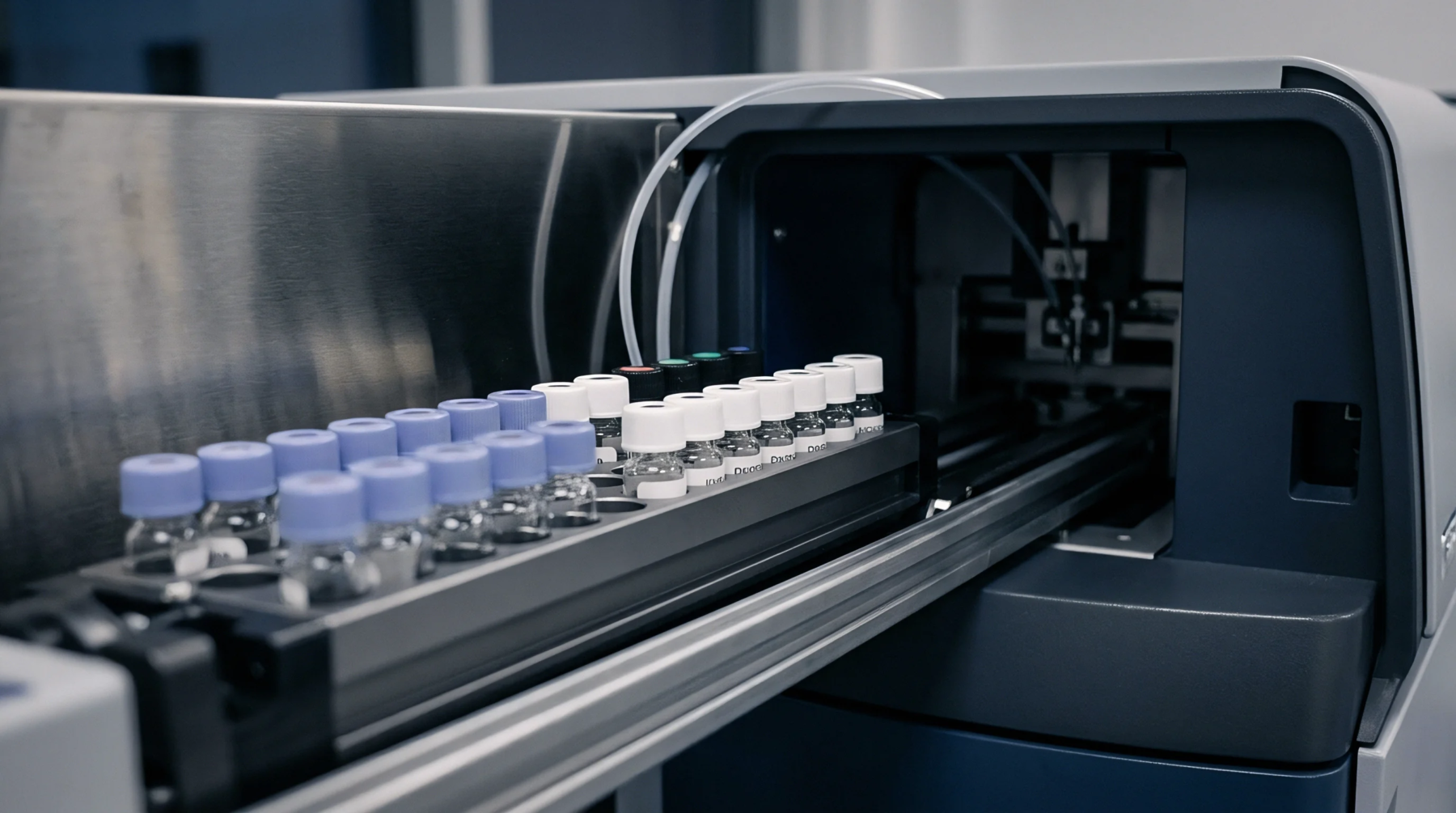
Polyolefin oligomers accumulating across closed-loop recycling cycles require structural separation and toxicological screening against Threshold of Toxicological Concern limits.

Calibrating thermal desorption heating blocks and sizing sorbent beds prevents volatile breakthrough and false low readings in recycled PBT quality control.

Quantifying NIAS across multi-layer film batches demands high-resolution mass spectrometry screening and structural toxicity threshold limits.

Matrix interference corrections in thermal desorption GC-MS isolate native polyamide volatiles from test artifacts, preventing invalid lot rejections.

Verify cyclic oligomer migration in high-temperature polyamides by high-resolution LC-MS/QTOF against Article 19 NIAS thresholds before issuing declarations.

Polyethylene terephthalate NIAS verification requires multi-platform chromatographic screening down to 0.01 mg/kg backed by toxicological threshold alignment.

Resolving sub-five-percent reprocessed resin requires combining size-exclusion molecular weight tailing with high-pressure oxidation induction times.

Toxicological evaluation of NIAS in PCR packaging combines non-target mass spectrometry, Cramer classification, and simulant migration testing against EU limits.

Quantify electrospray matrix effects using post-extraction spikes and stable isotope internal standards to prevent false migration compliance declarations.

Screening recycled polyolefins for non-intentionally added substances pairs high-resolution mass spectrometry with toxicological thresholds below ten parts per billion.

Optimize continuous reactors by matching rotor surface renewal frequency to boundary layer diffusion limits rather than extending residence time.

Fickian core diffusion coupled with boundary desorption governs high-temperature volatile mass loss, demanding resin limits below 0.10% condensable content.

Micro-scale thermal volatile analysis identifies trace polymer contaminants and degradation pathways to prevent costly batch failures and regulatory non-compliance.

Solid state polycondensation of PEF stalls when water vapor pressure exceeds five Pascals or carboxyl end groups drop below forty equivalents per tonne.
Matrix ion suppression masks unknown oligomeric migrants in fatty simulants, inflating true quantification limits and invalidating conformity declarations.
Expertise is a utility, not a secret. sentiention™ publishes its working knowledge as open reference: intelligence layer covering the materials it sources, the markets it enters, and the reference that serves both.