Analytical Identification Protocols for Cyclic Oligomers in High Temperature Polyamide Leachates
Verify cyclic oligomer migration in high-temperature polyamides by high-resolution LC-MS/QTOF against Article 19 NIAS thresholds before issuing declarations.
Bath
Thermal exposure during industrial dishwashing and culinary frying drives low-molecular-weight fractions out of polyamide engineering plastics into food simulants. Injection-molded articles manufactured from polyphthalamides and high-temperature nylon resins withstand continuous working environments above one hundred twenty degrees Celsius, yet aqueous and fatty contact media leach unreacted cyclic condensation species during service. The extraction kinetics accelerate rapidly as the test medium approaches the boiling point of water or the smoke point of vegetable oils.
Analytical identification begins with controlled laboratory contact designed to simulate severe culinary use. Contact conditions govern the release rate of cyclic monomers, dimers, and higher macrocycles. Selecting inappropriate simulants or contact geometries produces non-representative extraction profiles that misstate market compliance.
Leachates generated during repeated immersion tests show cyclic oligomer accumulation on the third cycle that frequently exceeds concentrations observed in initial extractions.

High Temperature Contact Mechanics
Test condition OM4 under EN 1186 specifies one hour at one hundred degrees Celsius, while OM5 extends exposure to two hours at one hundred twenty-one degrees. Pressurized autoclaves maintain liquid-phase contact when testing at temperatures exceeding the normal atmospheric boiling point of aqueous simulants. During exposure to simulant B, which consists of three percent acetic acid in water, acidic hydrolysis can attack amorphous polymer boundaries.
The baseline drifts. This chemical interaction swells the polymer matrix, increasing the diffusion coefficient of embedded cyclic oligomers.
Simulant D2, consisting of purified olive oil or standardized vegetable oil, models hot fatty food contact up to one hundred seventy-five degrees Celsius. At these elevated thermal regimes, linear oligomers and cyclic species migrate across the phase boundary into the lipophilic phase. Solvent absorption plasticizes the polymer surface.
This plasticization reduces the glass transition temperature of the contact layer, mobilizing macrocyclic species that remain locked within the crystalline domains under ambient storage conditions.

Extraction in Ethanol and Acetic Acid
Polymer plaques submerged in ninety-five percent aqueous alcohol exhibit pronounced swelling of amorphous inter-spherulitic domains. Ethanol penetrates the polyamide matrix rapidly. The solvating power of ethanol towards semi-aromatic cyclic structures provides an accelerated substitute for fatty food simulants under specific European testing conventions.
Extraction protocols balancing ethanol-water mixtures require strict volume-to-surface-area control, typically maintaining six square decimeters of contact area per kilogram of food simulant.
A ten-day exposure at sixty degrees Celsius in fifty percent ethanol serves as a standard qualification benchmark for dairy-contact machinery parts. The resulting leachate contains a complex mixture of linear oligomers with terminal amine or carboxyl functionalities, alongside non-polar cyclic species lacking reactive end groups. Distinguishing these classes requires subsequent solvent exchange and chromatographic separation.
The compounder explained that cyclic oligomers represent intrinsic thermodynamic condensation byproducts that cannot be washed away during compounding without degrading polymer viscosity.


Ring
Polycondensation of terephthalic acid with aliphatic diamines yields unreacted linear chains alongside stable closed geometries. Ring-chain equilibrium theories predict that macrocyclization occurs spontaneously during polycondensation, establishing a stationary distribution of closed rings determined by chain flexibility and conformational entropy. In high-temperature semi-aromatic grades such as PA6T, PA9T, and PA46, steric constraints imposed by rigid aromatic rings favor the formation of discrete cyclic oligomeric species over extended linear fractions.
Linear oligomers possess acidic or basic terminal groups that facilitate chemical derivatization and retention on ion-exchange resins. Closed cyclic structures exhibit neutral polarity, rendering them unreactive toward common end-group titrations. Their ring conformation confers enhanced thermal stability, preventing degradation during high-temperature injection molding cycles.
A validated migration value of 1.4 milligrams per kilogram into three percent acetic acid at one hundred degrees Celsius rests on a twenty-four-plaque inter-laboratory study and would shift upward if injection molding barrel temperatures exceed three hundred thirty degrees Celsius.

Macrocyclic Distribution across Aromatic Polyamides
Commercial polyphthalamide grades incorporate rigid phenyl groups that bias intramolecular end-biting reactions toward small cyclics. In PA6T synthesis, reaction of hexamethylenediamine with terephthalic acid generates the cyclic dimer as the dominant thermodynamic sink. This cyclic dimer, with a monoisotopic neutral mass of 452.24 Daltons, displays low solubility in water and moderate solubility in organic solvents.
The thermodynamic preference for closed cyclic rings over linear oligomers mirrors the geometric packing challenges seen in high-performance aerospace composite curing, where ring-chain equilibria govern resin shrinkage. In food-contact high-temperature polyamides, this same thermodynamic equilibrium determines which low-molecular-weight fractions remain trapped in the matrix and which leach into hot contact fluids. Macrocyclic species partition into migrating simulants based on molecular volume and lipophilicity.
- Cyclic Monomer Strain destabilizes single-unit rings in aromatic polyamides, causing their concentration in mature polymers to remain below five milligrams per kilogram.
- Cyclic Dimer Predominance establishes this two-unit closed structure as the primary leachate constituent across PA6T and PA6I formulations. The species exhibits high crystalline melting points.
- Cyclic Trimer Solubility allows three-unit macrocycles to dissolve readily in fatty food simulants during frying applications. Detection requires low-polarity chromatographic retention.
- Linear Chain Hydrolysis generates polar dicarboxylic and diamine fragments under prolonged acidic exposure. These fragments elute earlier than closed structures during liquid chromatography.

Toxicological Thresholds for Cyclic Oligomers
Safety evaluation under the Cramer classification scheme places unfunctionalized polyamide oligomers into Class III, assigning a conservative human exposure threshold of ninety micrograms per person per day. Toxicological concerns stem from bioaccumulation potential and hepatic metabolism of macrocyclic amides. The absence of authentic reference standards for every cyclic ring size impedes direct toxicological testing.
Linear oligomers undergo enzymatic cleavage through standard peptidase pathways, whereas cyclic amides resist rapid enzymatic hydrolysis due to the absence of free terminal residues. Toxicological assessments rely on read-across data from monomeric building blocks such as hexamethylenediamine and terephthalic acid. Where genotoxicity data remain absent, European authorities impose an analytical screening limit of ten micrograms per kilogram of food simulant.
| Polymer Chemistry | Dominant Cyclic Species | Monoisotopic Mass (Da) | Migration into 3% Acetic Acid (100C, 2h) | Migration into Olive Oil (175C, 1h) |
|---|---|---|---|---|
| PA6T/6I | Cyclic Dimer | 452.24 | 1.4 mg/kg | 3.8 mg/kg |
| PA9T | Cyclic Dimer | 536.34 | 0.6 mg/kg | 2.1 mg/kg |
| PA46 | Cyclic Trimer | 426.30 | 4.2 mg/kg | 1.1 mg/kg |
| PA66/6T | Cyclic Dimer | 410.29 | 2.8 mg/kg | 2.9 mg/kg |
Consider a worked construction evaluating cyclic oligomer migration from a high-temperature polyamide kitchen spatula contacting hot culinary oils. Assume a surface area of two square decimeters contacting two hundred grams of oil at one hundred seventy-five degrees Celsius for thirty minutes. Assume an injection-molded PA6T component containing zero point eight weight percent total extractable cyclic oligomers, dominated by the cyclic dimer at mass-to-charge ratio 453.25 and cyclic trimer at 679.37.
Assume three successive contact cycles in olive oil per the repeated-use testing directive of Regulation EU 10/2011.
The first extraction cycle yields three point eight milligrams of cyclic dimer per kilogram of oil. The second cycle yields two point nine milligrams per kilogram. The third cycle stabilizes at two point four milligrams per kilogram.
Because compliance for repeated-use articles depends strictly on the level measured in the third test, the operational migration value for this article stands at two point four milligrams per kilogram. This level exceeds the ninety microgram per person daily intake threshold when applying standard exposure assumptions of one kilogram of food consumption per day. A recurring industry estimate states that cyclic oligomers account for eighty-five percent of all non-intentionally added substances migrating from aromatic polyamides.
Analytical laboratories cannot fully defend this eighty-five percent figure because untargeted screening recoveries vary widely between mobile phase configurations and instrument platforms. A prudent buyer treats the number as an unverified approximation, demanding compound-specific semi-quantification for every chromatographic peak exceeding ten micrograms per kilogram rather than relying on assumed category proportions. Whether repeated thermal cycling in culinary oils at two hundred degrees Celsius hydrolyzes cyclic dimers faster than newly cleaved linear chains reconstitute into secondary rings remains an open question in polymer degradation science.


Column
Chromatographic separation of polar cyclic species demands reversed-phase stationary phases capable of resolving structural isomers without peak distortion. Octadecylsilane columns with high carbon loading provide adequate retention for aliphatic fragments, while phenyl-hexyl and pentafluorophenyl chemistries offer enhanced selectivity for semi-aromatic polyphthalamide oligomers through pi-pi interactions. Mobile phase selection dictates ionization efficiency during downstream mass spectrometric detection.
Gradient elution schemes balancing acidified water and organic modifiers resolve homologous series of cyclic amides differing by single monomeric subunits. Peak shapes deteriorate rapidly. Without adequate column temperature control, macrocyclic species exhibit broad, tailing peaks caused by slow conformational interconversion on the stationary phase surface.
Maintaining column compartments between forty and fifty degrees Celsius sharpens elution profiles.

Liquid Chromatography Coupled to High Resolution Mass Spectrometry
Electrospray ionization in positive mode generates intense protonated molecules alongside sodium adducts for polyamide oligomer series. Quadrupole time-of-flight instruments deliver mass resolving power exceeding thirty thousand full width at half maximum, allowing baseline separation of isobaric contaminants. Accurate mass measurement below three parts per million confirms elemental composition.
Adducts complicate spectral interpretation.
Tandem mass spectrometry fragments protonated cyclic oligomers through collision-induced dissociation. Collision energy ramping between twenty and sixty electronvolts cleaves the amide backbone, generating characteristic product ion series. Cyclic structures require two simultaneous bond cleavages to release fragment ions, producing distinctive fragmentation patterns that differentiate them from linear analogues containing terminal carboxylic or amine groups.
Isomers elute closely together.
- Condition the sample plaques in an environmental chamber at twenty-three degrees Celsius and fifty percent relative humidity for forty-eight hours.
- Perform extraction in food simulant using dedicated stainless steel migration cells fitted with inert fluoropolymer seals.
- Evaporate simulant aliquots to dryness under a gentle stream of high-purity nitrogen at forty degrees Celsius.
- Reconstitute residue in mobile phase consisting of eighty percent water and twenty percent acetonitrile containing zero point one percent formic acid.
- Inject five microliters onto column using an autosampler maintained at ten degrees Celsius to prevent evaporative loss.
| Method Parameter | Analytical Setting | Mobile Phase Gradient | Target Detection Limit |
|---|---|---|---|
| Stationary Phase | C18 Phenyl-Hexyl (100 x 2.1 mm, 1.8 um) | Water / Acetonitrile (0.1% Formic Acid) | 0.005 mg/kg |
| Ionization Source | Electrospray Positive (ESI+) | 10% to 95% Organic over 18 min | 0.002 mg/kg |
| Mass Analyzer | Q-TOF High Resolution | Isocratic Hold at 95% for 4 min | 0.001 mg/kg |
| Capillary Voltage | 3.5 kV at 320C Gas Temperature | Re-equilibration at 10% for 3 min | 0.005 mg/kg |
| Analytical limits calibrated against polyamide cyclic dimer reference solutions. | |||
Are High Resolution Mass Spectra Sufficient?
Accurate mass measurement below three parts per million confirms elemental composition while leaving isomeric connectivity ambiguous. Polyphthalamides synthesized from mixed isomers, such as terephthalic and isophthalic acids, generate cyclic oligomers with identical elemental formulas and identical accurate masses. Mass accuracy remains central.
A cyclic dimer incorporating two terephthalate units possesses the exact mass of an isomer containing one terephthalate and one isophthalate unit.
Differentiating these structural configurations requires diagnostic ion mobility spectrometry or retention time alignment against custom-synthesized authentic standards. Ion mobility drift times separate structural isomers based on their collision cross-section in an inert buffer gas. When standards remain unavailable, semi-quantification against surrogate cyclic caprolactam oligomers introduces response-factor errors up to three hundred percent due to differing electrospray ionization efficiencies.
Misidentifying a cyclic trimer as an aliphatic amine additive invalidates the toxicological risk assessment and triggers immediate quarantine of the affected production volume.


Attestation
A declaration of conformity issued under Regulation EU 10/2011 requires defensible underlying analytical records for every non-listed substance detected above ten parts per billion. Cyclic oligomers classify as non-intentionally added substances because polymer manufacturers add neither monomers nor catalysts with the specific intent of creating unreacted ring structures. Importers hold civil liability.
The legal responsibility for demonstrating safety rests on the entity placing the finished article on the market.
Declarations that cite only positive-list compliance for starting monomers fail legal scrutiny during administrative audits. The verification dossier must contain comprehensive untargeted screening data obtained from finished converted parts rather than raw resin granules. Conversion processes introduce thermal degradation products that alter the oligomeric fingerprint.
Annex IV of Regulation EU 10/2011 mandates that the declaration of conformity confirm the compliance of non-intentionally added substances evaluated in accordance with Article 19.

Supporting Documentation for Non Intentionally Added Substances
Auditors reviewing food-contact dossiers trace the chain of identity from raw resin granules through post-molding qualification reports. Raw material suppliers frequently provide generic statements asserting that all used monomers appear in Union lists, omitting disclosure of oligomer content generated during polymerization. This omission creates documentation voids that compromise the downstream supply chain.
The technical dossier must compile analytical spectra, instrument calibration records, and toxicological justification memos for every detected cyclic species. If untargeted screening identifies unknown chromatographic peaks exceeding ten parts per billion, structure elucidation protocols must follow. Quantitative estimations relying on flame ionization detection or total ion current chromatograms require explicit uncertainty disclosures.
- Resin Specification Dossier contains monomer purity data, known additive formulations, and baseline cyclic oligomer concentrations recorded by the resin synthesizer.
- Chromatographic Screening Evidence incorporates high-resolution mass spectrometry reports documenting non-targeted extraction yields across designated food simulants.
- Toxicological Safety Evaluation provides formal Cramer classification assignments and threshold-of-toxicological-concern calculations for every resolved cyclic macrocycle.
- Batch Traceability Records link specific molding lots to certified raw material consignments, preventing untested production variations from entering commercial channels.
Will Migration Exceed Specific Migration Limits?
Toxicological thresholds established by the European Food Safety Authority assign a default limit of five milligrams per kilogram of food for the total sum of polyamide oligomers, provided genotoxicity is excluded. This limit of 5.0 milligrams per kilogram for the total oligomer fraction rests on a 2019 European Food Safety Authority opinion evaluating ninety-day oral toxicity studies in rodents; it would fall to 0.05 milligrams per kilogram if genotoxicity assays revealed bacterial reverse mutation activity. In high-temperature food service applications, cumulative migration of cyclic dimers and trimers routinely approaches this regulatory threshold.
Thermal abuse during dry-heating or deep-frying accelerates polymer degradation, releasing additional linear fragments that add to the analytical sum. When specific migration exceeds regulatory thresholds, downstream brands face product recalls and mandatory public notification under the European Rapid Alert System for Food and Feed. Inserting standard purchase clause 14.3 shifts the financial burden of third-party liquid chromatography confirmation directly onto the masterbatch compounder whenever uncharacterized non-intentionally added substances appear above the analytical reporting limit.
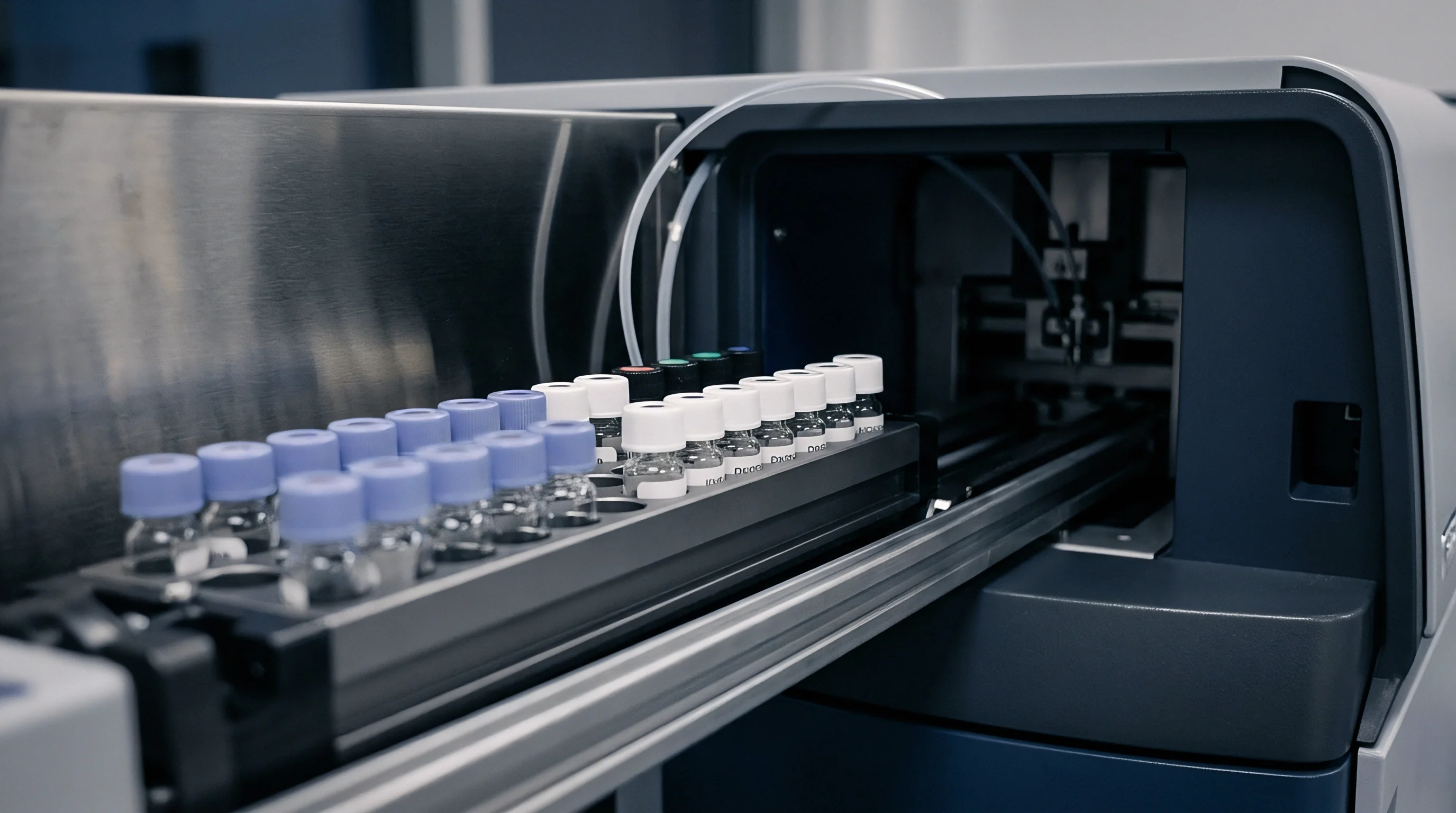

Tariff
Customs authorities classify composite articles and culinary tools under Harmonized System Chapter 39 based on resin formulation and physical form. Import tariffs vary significantly depending on whether border agents categorize an article as a standard plastic utensil or an engineered composite component. When customs inspections identify non-compliant migration documentation, entry refusal halts shipment clearance.
Port health authorities collaborate with customs agencies to intercept kitchenware lacking complete analytical dossiers. Consignments undergo targeted sampling at arrival ports. If laboratory analysis uncovers unlisted cyclic oligomers migrating above toxicological concern thresholds, customs officials deny entry and order cargo destruction.

Commercial Exposure and Customs Scrutiny
Import consignments lacking analytical verification files face immediate border detention when random port testing detects oligomeric migration. Port authorities reject undocumented cargo. Demurrage penalties accrue daily while containers sit uncleared on the dock.
Warehouse storage fees escalate. The financial damage of border rejections routinely outstrips the landed value of the underlying plastic components.
Supply chains sourcing private-label kitchen utensils bear full warranty indemnification risks toward retail partners. Large retailers require vendor indemnity agreements that shift administrative fines, recall logistics, and product disposal expenses onto the importer. Without verified high-resolution mass spectrometry dossiers proving cyclic oligomer safety, buyers remain defenseless against retailer chargebacks following regulatory market withdrawals.
Commercial contracts that tie final payment milestones to accredited laboratory leachate verification reduce dispute incidence during international customs clearance.

Supply Contract Allocation of Testing Costs
Master purchase agreements assign responsibility for non-intentionally added substance characterization through specific indemnification covenants. The high cost of liquid chromatography coupled with quadrupole time-of-flight mass spectrometry, typically exceeding one thousand five hundred dollars per sample, necessitates clear contractual cost-sharing arrangements. Sophisticated buyers require suppliers to fund full untargeted screening dossiers before releasing initial production tooling payments.
Supply agreements specify re-testing intervals triggered by resin batch changes or tooling modifications. Any adjustment to injection molding temperatures, cycle times, or screw speeds alters the residual cyclic oligomer concentration in finished parts. Good testing protects capital.
Clear documentation that identifies every migrating compound clears customs lines faster than expensive re-testing ordered at the pier.