Non Isothermal Rheological Degradation Analysis in Twin Screw Extrusion Processing
Controlling twin screw extruder shear energy density and peak melt temperature prevents non-isothermal chain scission and protects part mechanical performance.


Shear
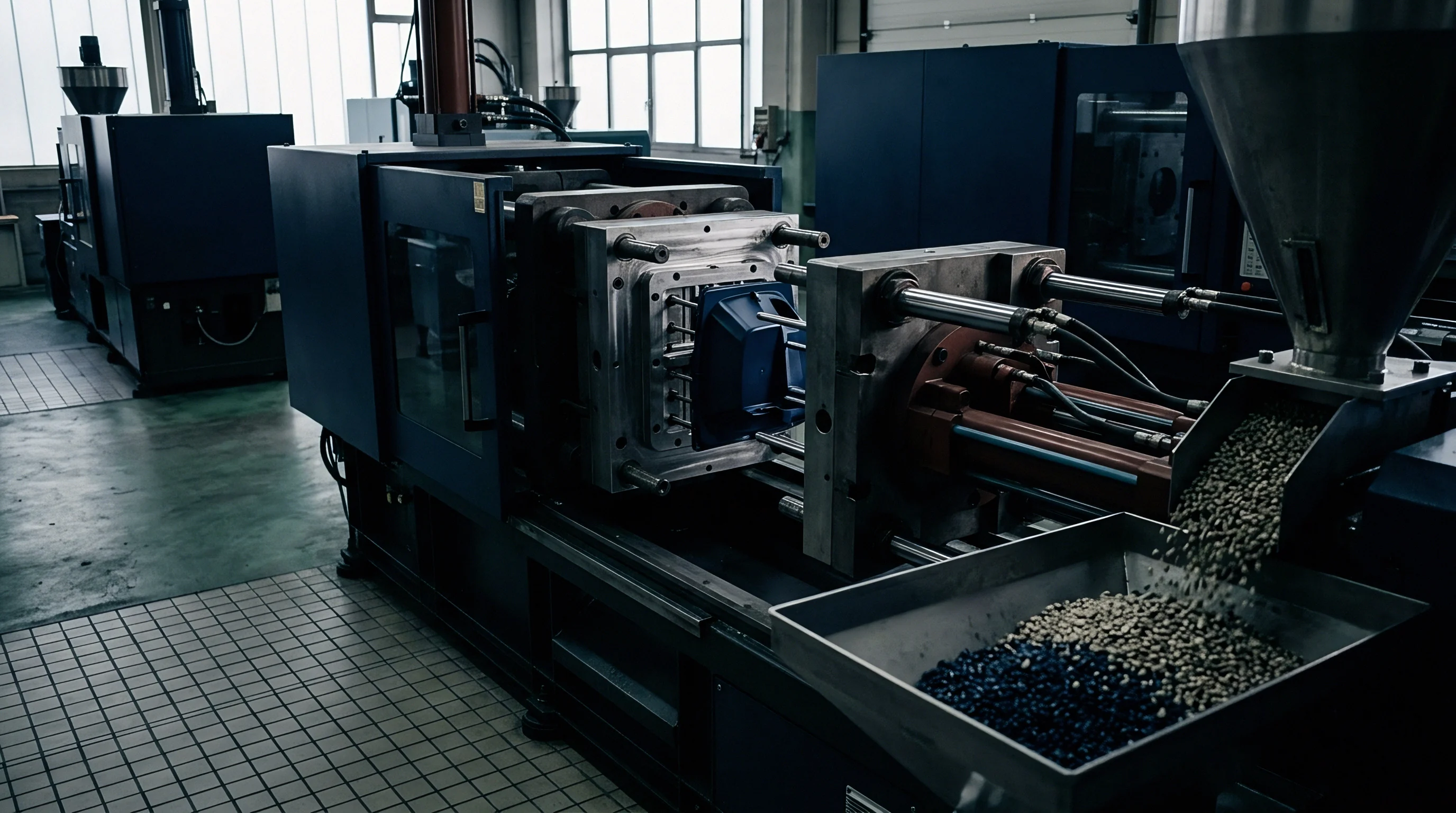
Viscous Dissipation and Dynamic Temperature Profiles in Co-Rotating Twin Screw Processing
Extrusion compounding across co-rotating intermeshing twin screw extruders subjects polymer melts to steep thermal and mechanical gradients. Modern high-speed compounding operates at screw speeds between 400 rpm and 1200 rpm, generating localized shear rates within kneading blocks exceeding 10,000 s⁻¹. Under these kinetic conditions, viscous dissipation generates internal heat faster than heat conduction transfers energy outward through barrel cooling jackets.
Barrel wall temperature sensors routinely register stable setpoints while core melt temperatures elevate 20 °C to 50 °C above nominal settings.
Viscous heating drives the process.
Non-isothermal conditions originate in tight clearance regions, specifically the flight tips, intermeshing zone gaps, and high-angle kneading elements. Thermomechanical history accumulating in these mixing zones determines the structural integrity of processed resins. Polymer chains experience mechanical stress that weakens covalent bonds along the main chain, while simultaneous localized thermal spikes supply the activation energy required for rapid chain scission or crosslinking.
Thermal sensors lag true melt conditions.
Evaluating thermomechanical degradation demands tracking both local energy input and heat transport dynamics. Conventional melt thermocouples extending into the flow channel measure spatial averages, obscuring core thermal boundary layers. Infra-red sensor arrays and fast-response immersion thermocouples demonstrate that peak thermal energy concentrates within the flow core immediately downstream of restrictive kneading sections.
The severity of non-isothermal degradation maps directly to these thermal peaks rather than the average discharge temperature recorded at the extruder head.
Polypropylene extrusion at a shear rate of 8,500 s⁻¹ under a barrel setpoint of 210 °C yields an internal core melt temperature of 244 °C measured by immersion thermocouple array.
Material degradation under combined thermal and shear fields manifests through distinct physical changes in processed compounds:
- Melt flow rate escalation indicates predominant chain scission in linear polyolefins, elevating the MFR measured under ISO 1133 conditions from 2.0 g/10 min to over 8.0 g/10 min at 230 °C under a 2.16 kg load.
- Shortened relaxation time spectra reflect the selective loss of high molecular weight tails, reducing dynamic viscosity at low shear rates while flattening the pseudoplastic shear-thinning slope.
- Discoloration and volatile generation signal oxidative degradation caused by dissolved oxygen trapped in pellet feed beds reacting within high-temperature dissipation zones.
- Crosslinked gel formation occurs in branched polymers like low-density polyethylene when radical recombination dominates over chain cleavage under starved-feeding conditions.
High screw speed elevates peak temperature.
Processing heat balance relies on balancing mechanical energy dissipation against conductive wall removal, meaning barrel length to diameter ratio determines whether a material stabilization package survives the primary melting zone.

Kinetics

Constitutive Equations for Coupled Thermal and Mechanochemical Degradation
Mathematical modeling of non-isothermal degradation requires coupling mass, momentum, and energy conservation equations with constitutive rheological models that include degradation kinetic terms. Rheological properties change continuously as polymer chains undergo molecular weight redistribution. The zero-shear viscosity scales with weight-average molecular weight according to a power-law relationship with an exponent typically near 3.4.
As thermal and shear stresses cleave the polymer backbone, zero-shear viscosity decays exponentially with residence time.
The modified Carreau-Yasuda model incorporates temperature dependence through an Arrhenius shift factor and molecular weight dependence through a degradation progress variable. The constitutive response captures non-Newtonian shear thinning alongside fluid elasticity changes:
η(γ̇, T, M_w) = a_T(T) · η_0(M_w) · ^((n-1)/a)
Local thermal spikes accelerate chain scission.
In this dynamic equation, the relaxation time λ and zero-shear viscosity η_0 scale directly with the current weight-average molecular weight M_w, which decreases as a function of temperature T, localized shear rate γ̇, and residence time t. Thermal degradation kinetics follow Arrhenius kinetic rate laws, whereas shear-induced mechanochemical degradation scales with the Specific Mechanical Energy input. Combining thermal energy activation with mechanical energy density creates a total degradation kinetic rate constant:
k_deg = A_t · exp(-E_a / (R · T)) + A_m · (τ : dD/dt)^m
Where A_t represents the thermal pre-exponential factor, E_a is activation energy, τ is the stress tensor, and dD/dt is the rate of deformation tensor. The mechanical contribution becomes dominant once local shear stresses exceed critical shear stress thresholds characteristic of the specific polymer architecture.
| Polymer Family | Activation Energy E_a (kJ/mol) | Critical Shear Stress τ_c (kPa) | Zero-Shear Viscosity Exponent | Primary Degradation Mechanism |
|---|---|---|---|---|
| Polypropylene Homopolymer | 88.5 | 42.0 | 3.41 | Beta-scission via thermal oxidation |
| Polyethylene Terephthalate | 145.0 | 65.0 | 3.50 | Hydrolytic and thermal cleavage |
| High Density Polyethylene | 102.0 | 55.0 | 3.45 | Simultaneous scission and branching |
| Polyamide 66 | 120.0 | 38.0 | 3.38 | Post-condensation and thermo-oxidative scission |
Extruder torque reveals average molecular weight.
Predictive simulations coupling computational fluid dynamics with non-isothermal rheological kinetics reveal that over 70 percent of molecular weight reduction occurs within kneading sections comprising less than 15 percent of total screw length. Non-isothermal energy accumulation within these functional elements creates steep viscosity drops that decrease compounding efficiency downstream.
A high degradation activation energy indicates elevated sensitivity to peak melt temperature relative to total energy input.
Resin suppliers frequently claim that melt index increases during compounding remain within standard lot variation, despite downstream part field failures proving that severe high-molecular-weight tail loss occurred during compounding.


Die
Inline Viscometry and Real-Time Degradation Diagnostics
Monitoring rheological health at the extruder discharge requires downstream measurement instrumentation capable of operating under continuous pressure and variable temperature fields. Inline slit-die viscometers and online bypass capillary rheometers provide real-time pressure drop data across calibrated flow channels. By positioning three pressure transducers along a rectangular slit die of known dimensions, the wall shear stress and shear rate are calculated directly without sample extraction.
Pressure drops downstream signal lower viscosity.
Temperature non-uniformities distort pressure drop profiles along the die channel. Dissipative heating within slit channels alters local fluid viscosity near the boundary walls, requiring a modified Weissenberg-Rabinowitsch correction that accounts for thermal wall slip and temperature-dependent viscosity variations. Modern rheological analysis software converts raw pressure readings into temperature-corrected shear viscosity curves in real time.
ISO 11443 slit die capillary viscometry requires dynamic pressure correction when channel entrance pressure losses exceed eight percent of total measured pressure drop.
Implementing effective inline degradation monitoring relies on establishing precise control limits for rheological parameters during compound production:
- Apparent shear viscosity deviation must not exceed minus 12 percent from baseline grade qualification targets at a shear rate of 1,000 s⁻¹ under ISO 11443 testing protocols.
- Storage modulus to loss modulus crossover frequency measured via dynamic oscillatory rheology under ASTM D4440 must remain within a 15 percent frequency window relative to incoming virgin resin.
- Pressure drop ratio across die zones tracked by digital transducers should hold constant within plus or minus 0.25 MPa during steady-state feeding.
- Melt elasticity index derived from die swell measurements using laser sensors must not drop below 80 percent of certified virgin pellet values.
Continuous monitoring enables compounders to reject degraded material before pelletization or direct shaping occurs. Dynamic rheological tracking converts offline laboratory batch testing into an automated inline quality assurance framework.
Supply agreements incorporating ASTM D3835 standardized rheological testing specify that shipments demonstrating a melt viscosity drop exceeding 15 percent at target processing shear rates shall be rejected prior to silo discharge.


Screw
Geometry Optimization for Thermal Management and Shear Control
Screw element design directly governs residence time distribution, fluid strain history, and viscous energy dissipation rates. Co-rotating twin screw configurations utilize conveying elements, kneading blocks, and neutral or reverse elements to balance melting, mixing, and pumping functions. Neutral kneading blocks with 90-degree stagger angles generate maximum distributive and dispersive mixing but impart substantial mechanical shear energy, raising localized melt temperatures.
Residence time determines degradation depth.
Forward conveying kneading blocks with 30-degree or 45-degree stagger angles facilitate downstream transport while imparting lower shear energy densities. Integrating left-handed reverse conveying elements creates localized fill-fraction zones, ensuring full channel saturation for efficient devolatilization and heat transfer through barrel walls. Excessive fill length behind restrictive elements increases local residence time, compounding non-isothermal degradation effects.

Which Screw Profile Minimizes Thermal Degradation?
Mitigating thermal-mechanical breakdown requires balancing mixing quality against specific mechanical energy input. Profiling screw configurations with distributed kneading elements separated by short conveying sections prevents thermal accumulation. Segmenting high-shear zones gives the conductive barrel cooling system time to pull heat out of the melt before the fluid enters subsequent mixing zones.
Verification of thermal degradation profiles across extruder length requires executing a standardized step-by-step physical sampling procedure during compounding operations:
- Operate the twin screw extruder at nominal operating speed, torque, and feed rate until barrel wall thermal equilibrium is maintained for a minimum of 30 minutes.
- Initiate a rapid emergency stop, halting screw rotation and material forward conveyance within two seconds.
- Activate high-capacity barrel cooling zones to solidify the melt inventory inside the screw channels, preventing post-stop thermal degradation.
- Disassemble the barrel sections sequentially, exposing the filled screw shafts from die inlet backward to the main feed throat.
- Extract polymer melt samples at 50 mm intervals along the entire length of both screw shafts, recording exact axial position relative to screw element configuration.
- Package samples immediately in inert nitrogen sealed containers to prevent ambient thermal-oxidative degradation during cooling.
- Perform high-pressure liquid chromatography and differential scanning calorimetry per ISO 11357-2 to measure molecular weight distribution shifts and oxidation induction times across all extracted samples.
Barrel setpoints convey partial truth.
Quantifying energy efficiency alongside material breakdown relies on calculating Specific Mechanical Energy (SME) input across variable element geometries. High SME values correlate directly with accelerated chain scission in shear-sensitive thermoplastics.
| Screw Element Profile Configuration | Average SME Input (kWh/kg) | Peak Core Melt Temp (°C) | MFR Change Relative to Feed (%) | Retained Mw Index (%) |
|---|---|---|---|---|
| Aggressive Dispersive (90° Kneading Blocks) | 0.38 | 262 | + 310 | 64 |
| Balanced Mix (45° Forward Kneading) | 0.26 | 238 | + 85 | 88 |
| Low Shear Distributive (TME/SME Elements) | 0.18 | 221 | + 18 | 96 |
| High Restrictive (Reverse Kneading Block Set) | 0.44 | 278 | + 450 | 52 |
Optimal screw geometry maintains mixing efficiency while restricting peak melt temperatures below the critical degradation threshold of the specific resin chemistry.
Determining the exact point where viscous dissipation transforms from a beneficial melting mechanism into an uncontrollable destructive degradation agent remains an ongoing challenge in processing engineering.

Duty

Financial, Warranty, and Structural Consequences of Resin Degradation
Non-isothermal rheological degradation directly impacts the commercial valuation of compounded pellets and finished structural components. Thermomechanical chain breakdown alters mechanical performance parameters specified on resin datasheets, including tensile strength at yield, notched Izod impact resistance, and long-term environmental stress crack resistance. A polymer degraded during primary extrusion processing leaves the factory carrying latent mechanical deficiencies that manifest months later during component service life.
Polymer degradation alters final part performance.
When high molecular weight polymer chains are cleaved within high-shear kneading zones, the yield strength of the matrix decreases while ductility drops dramatically under dynamic loading. Parts molded from thermally degraded resins pass initial dimensional inspections but suffer catastrophic premature ductile-to-brittle failure under long-term mechanical stress. The financial liability created by field failures far exceeds the cost savings achieved by pushing extruder throughput beyond thermomechanical operating limits.
Melt elasticity drops as chains rupture.
Compounding halls operating under tight margin constraints frequently increase screw speeds to maximize hourly output in kilograms per hour. Elevated throughput increases local viscous dissipation, shifting the melt flow rate outside specified quality control limits. Material scrap rates elevate downstream during injection molding or blow molding operations, as unstable melt strength causes wall thickness variations and flash formation.
A 20 percent decrease in weight-average molecular weight reduces the long-term hydrostatic strength of pressure pipe compounds below ISO 9080 minimum required strength classifications.
MFR drift shifts processing windows.
Material specifications missing clear rheological degradation boundaries leave purchasing organizations vulnerable to lot-to-lot performance swings. Standard commercial purchase contracts that rely solely on single-point melt flow rate measurements fail to catch alterations in molecular weight distribution. Comprehensive sourcing specifications mandate dynamic rheological frequency sweeps, gel permeation chromatography limits, and strict thermal processing history declarations.
Selecting an aggressive screw configuration to boost hourly throughput without modeling non-isothermal viscous heating leads directly to degraded resin shipments, systemic mold-filling variations, higher scrap rates at the conversion facility, and catastrophic part failures under long-term structural load.