Injection Mould Cavitation Selection Guidelines for Volatile Product Demand
Mitigate volatile part demand by selecting lower cavitation modular tools across standard press tonnages to avoid idle capital and startup scrap penalties.
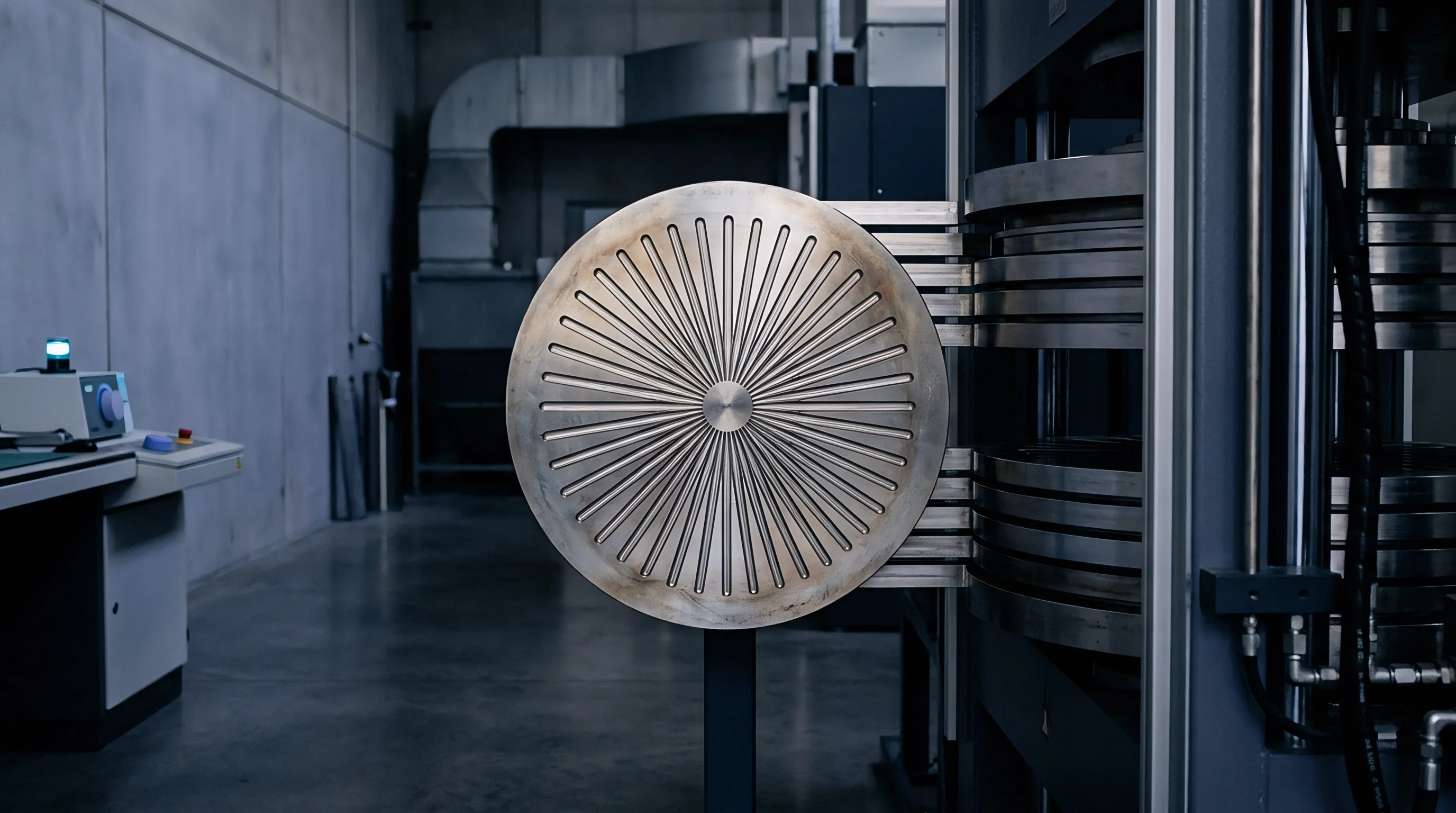

Platen
Volatile demand breaks standard cavitation formulas. The standard calculation divides annual unit volume by operational hours and cycle speed, yielding a static cavity count. When volume swings by forty percent month over month, that static figure commits capital to steel that sits cold during downturns or starves assembly lines during surges.
Determining the cavity count for unstable consumption requires sizing the mould against peak batch requirements rather than annualized smoothing.
Clamp tonnage defines the upper limit of the physical mould layout. A tool designer calculates projected part area, adds the cold or hot runner distribution surface, and multiplies by the material-specific cavity pressure. Polypropylene components require twenty to forty megapascals of cavity pressure depending on wall thickness and flow length.
Polycarbonate or glass-filled polyamides frequently demand sixty to one hundred megapascals to prevent short shots and pack out structural ribs.
Press availability governs whether a high-cavity tool can run at all. Sourcing groups often commit to a thirty-two cavity tool to hit an aggressive piece price. They discover late that the supplier owns only two four-hundred-tonne presses capable of holding that platen size.
When those machines book solid with automotive runs, the thirty-two cavity tool waits idle. Specifying smaller, duplicated tools spreads tonnage across standard two-hundred-tonne presses that exist in every merchant moulding plant.
A production quote calculated on an eighty percent press utilization factor fails immediately when monthly order quantities oscillate beyond thirty percent of nominal forecast.
Running a single high-cavity mould intermittently introduces severe thermal inefficiency. Injection moulds require thermal equilibrium across the cores, cavities, and manifold before holding dimensional tolerances under DIN 16742. Purging, heating, bringing a tool to temperature, and stabilizing part dimensions burns resin and machine hours.
Starting and stopping a thirty-two cavity tool three times a month generates scrap lots that destroy the calculated piece-price savings of high cavitation.
Clamp force must balance across the parting line to prevent flash on peripheral impressions. High cavity counts spread parts toward platen tie bars where platen deflection reaches maximum deflection values. When volatile volume forces frequent press setup changes, technicians alter clamp tonnage to fit available machinery.
Uneven tie-bar elongation on older toggle presses degrades parting line shutoffs, causing flashing on outer cavities while center cavities experience sink.
What remains open is whether unpredictable demand spikes justify paying higher piece prices on lower-cavity tools across the entire product lifecycle.
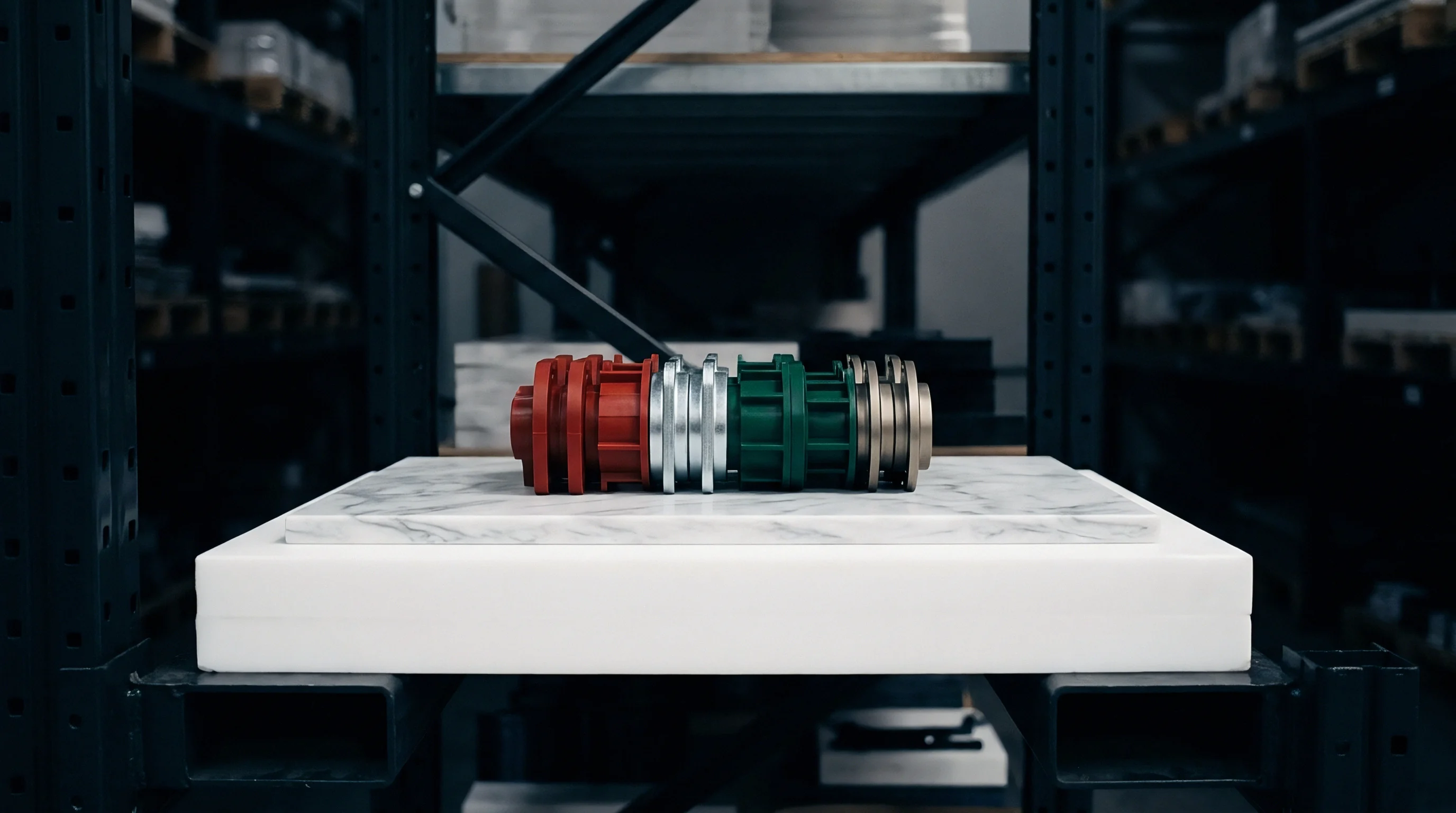

Manifold

Runner Geometries across Discontinuous Runs
Runner choice dictates how a tool behaves during production restarts. Cold runner systems eject the entire distribution tree with every shot. This approach simplifies tool restarts after idle periods because cured resin leaves the mould during ejection.
The penalty sits in regrind accumulation. When demand drops and production runs shrink to five thousand shots, cold runner scrap represents up to thirty percent of gross material consumption.
Hot runner manifolds eliminate runner scrap but demand continuous thermal management. Valve-gated systems isolate individual gates, allowing operators to shut off unused drops when running lower volumes. Pneumatic or hydraulic valve pins seat directly into the gate orifice, preventing drool and vestige defects.
Running a balanced eight-cavity hot runner system with four cavities blanked off alters the thermal profile of the manifold block, causing localized material degradation in dead legs.
Family tooling offers another pathway for variable assembly sets. Moulding mating housings in a single shot guarantees matched production counts. The rheological challenge centers on fill balance.
When parts carry unequal shot weights or wall thicknesses, balancing shear rates requires artificial runner throttling. Melt temperature shifts then push the fill pattern out of balance, shorting the thick part or flashing the thin one.
| System Architecture | Startup Purge Waste | Tool Cost Index | Cavity Deactivation Capability | Maintenance Demands |
|---|---|---|---|---|
| Cold Runner Two-Plate | Under 1.5 kg | 1.00 | Manual runner blocking via core pin alteration | Minimal plate stripping |
| Cold Runner Three-Plate | Under 3.0 kg | 1.35 | Restricted runner gate shutoffs | High plate bush alignment checks |
| Hot Runner Open Tip | 5.0 to 12.0 kg | 1.85 | Zero isolation without thermal distortion | Frequent tip seal replacement |
| Hot Runner Valve Gate | 2.0 to 5.0 kg | 2.40 | Individual mechanical pin isolation per drop | Cylinder packings and pin timing adjustment |

Modular Insert Strategies
Interchangeable cavity blocks permit scalable capital expenditure. The toolmaker cuts a standardized master mould base containing manifold circuitry, water cooling connections, and ejection plates. Machinists then wire-EDM independent cavity and core pockets.
As product demand climbs, procurement authorizes machining four additional inserts instead of financing an entirely new mould base.
Alignment keys maintain positional repeatability across insert swaps. Thermal expansion rates between standard P20 tool steel bases and hardened H13 or premium 1.2343 ESR inserts must match. Mismatched thermal expansion coefficients induce insert binding at operating temperatures of one hundred forty degrees Celsius.
Pockets require taper locks with ground clearances between 0.005 and 0.010 millimeters to maintain parting line integrity under clamp load.
Standard cooling water jumpers connect through the outer plates. Quick-disconnect couplings speed changeovers between configurations. Internal cooling channels within inserts demand uniform distance from cavity walls, holding twelve to fifteen millimeters from moulding surfaces.
Uneven cooling across swapped cavity inserts distorts crystallization rates in semi-crystalline resins like polyoxymethylene, shifting final shrinkage across lots.
Mould inserts require dedicated storage protocols during idle quarters. Toolrooms coat cavity surfaces with moisture-displacing rust inhibitors before boxing them in climate-controlled cabinets. A scratched parting line land on a stored insert causes flash across an entire quadrant when returned to service.
The baseline rule remains that tools running irregular schedules require harder steels than tools cycling without interruption.


Cadence
Process Window Drift across Production Gaps
Viscosity varies between resin deliveries. When demand drops, a tool sits cold for eight weeks between purchase orders. The subsequent production run utilizes a fresh lot of raw material.
Polymer manufacturers publish melt flow rate tolerances that swing by plus or minus twenty percent within specification. A tool tuned for high flow hesitates on lower flow lots, requiring process setters to adjust barrel temperatures or injection velocity profiles.
Multi-cavity balance degrades when material viscosity fluctuates. Natural rheological imbalance occurs even in geometrically balanced runner layouts due to shear heating on melt channels. Outer cavities fill later than center cavities.
When run continuously, the tool reaches a steady heat state that masks minor flow variances. Restarting a sixteen-cavity tool after three weeks of downtime exposes these variations through inconsistent part weight distribution across impressions.
Under DIN 16742 tolerance group TG4, cavity-to-cavity shrinkage variation increases by fifteen percent when tools cycle below three shifts per calendar week.
Cavity pressure transducers identify filling disparities immediately. Piezoelectric sensors mounted behind ejector pins reveal peak cavity pressure variations across shots. Stable high-volume production typically maintains peak pressure variations within two percent.
Discontinuous runs on high-cavity tools produce variations exceeding eight percent during the first twelve hours of startup, driving critical part dimensions outside drawing tolerances.
Part ejection cycles introduce mechanical wear when tools experience thermal cycling. Expansion and contraction cycles loosen slide retainers and wear horn pins. Lifters designed for five-degree release angles bind when platen guides experience thermal gradients from cold cooling circuits.
Consistent production keeps components expanded evenly, whereas intermittent operations accelerate mechanical fatigue across mechanical guiding elements.
- Gate seal verification confirms the precise pack time required to freeze polymer at the gate, preventing reverse melt flow into the runner when holding pressure decays.
- Cooling water flow monitoring guarantees turbulent flow within circuits, requiring Reynolds numbers above four thousand to extract heat evenly across all cavities.
- Cushion distance tracking monitors whether the screw maintains three to five millimeters of forward melt reservoir at the end of holding pressure, exposing check-ring slippage.
- Dynamic pressure profiling measures the exact switchover point from velocity-controlled filling to pressure-controlled packing, containing flash risk on peripheral cavities.
Moulders frequently state that modern closed-loop electric presses eliminate dimensional variation across intermittent production campaigns, ignoring how ambient factory temperatures, resin moisture content, and tool steel thermal lag alter in-cavity pressure profiles.

Exposure
Tooling capital represents sunk financial liability until product invoices absorb the outlay. Sourcing a sixty-four cavity hot runner tool commits two hundred thousand dollars to fixed assets before validating market demand. If product adoption plateaus at twenty percent of forecast, that tool never pays down its capital amortization.
The amortized tooling component of piece price skyrockets when production tallies fail to amortize the initial steel investment.
Small-footprint modular tools split this exposure. Sourcing two independent eight-cavity moulds rather than one sixteen-cavity mould requires slightly higher aggregate capital, approximately twenty-five percent more across both bases. The setup provides operational insulation.
One tool runs continuously to satisfy base demand, while the second mould activates during demand peaks. If demand collapses, the buyer avoids holding an oversized asset that burdens machine hour rates.
| Tooling Strategy | Initial Capital | Piece Price at 20k/Month | Piece Price at 100k/Month | Breakeven Volume |
|---|---|---|---|---|
| Single 4-Cavity Cold Runner | $28,000 | $0.42 | $0.41 | 68,000 units |
| Single 16-Cavity Hot Runner | $92,000 | $0.36 | $0.19 | 280,000 units |
| Dual 8-Cavity Hot Runner | $118,000 | $0.38 | $0.21 | 340,000 units |
| Single 32-Cavity Hot Runner | $175,000 | $0.48 | $0.14 | 460,000 units |
Press hourly rates scale directly with clamping force. Running a thirty-two cavity mould on a four-hundred-tonne press costs roughly one hundred ten dollars per hour in machine time. Running an eight-cavity mould on a one-hundred-fifty-tonne press costs fifty-five dollars per hour.
If a volatile market demands an emergency run of eight thousand parts, the large press incurs substantial setup fees and high hourly burn rates for a run completed in two shifts.
Secondary processing costs mirror cavitation errors. Degating, robotic part removal, and conveyor sorting systems require capital matched to tool layout. End-of-arm tooling for a thirty-two cavity mould costs three times that of an eight-cavity gripper.
Storing, maintaining, and reprogramming high-cavity automation fixtures during demand pauses ties up warehouse footprint and toolroom labor.
Overestimating cavitation for volatile products forces parts onto high-tonnage machinery that inflates short-run setup surcharges beyond the theoretical component savings.
Scrap amortization compounds commercial risk. Purging a manifold on a large press consumes twenty kilograms of engineering polymer during startup. Across short production bursts, purge scrap represents eight to ten percent of total material charges.
When sourcing teams fail to anticipate these short production cadences, unit economics degrade rapidly, resulting in disputes between moulder and buyer regarding unbilled machine setup and purge scrap invoices.
Surplus
Tooling redundancy provides capacity protection without building unmanageable multi-cavity moulds. Manufacturing duplicate four-cavity or eight-cavity tools hedges operational risk across geographical regions. A buyer can position one tool at a domestic supplier for rapid turnaround and place a duplicate tool in an offshore plant for baseline volume.
When shipping delays or border tariffs disrupt trade routes, production shifts between suppliers without re-qualifying single-source tooling.
The strategic framework for volatile component cavitation balances four primary criteria:
- Demand variance ratio establishes the spread between minimum and maximum monthly run requirements, setting the boundary between static multi-cavity tooling and flexible modular configurations.
- Toolroom maintenance turnaround dictates the financial penalty of emergency cavity repair, determining whether multi-tool redundancy pays off.
- Press capacity availability identifies whether the moulder possesses multiple machines capable of running the chosen tool size, ensuring production schedules survive machine downtime.
- Material residency tolerance determines maximum allowable cycle delays in the barrel, preventing polymer degradation when running oversized tools at slow cycle rates.
Supply agreements must explicitly resolve commercial obligations surrounding intermittent production schedules. Moulders build pricing models assuming sustained run hours. Contracts must formalize minimum run lot sizes, maximum machine setup costs per restart, and resin obsolescence allowances when designs alter between sporadic orders.
Without written terms addressing run frequencies, suppliers re-quote parts or demand machine-reservation retainers.
Ownership titles must confirm tool portability across suppliers. When volatile demand exposes a moulder who cannot maintain delivery schedules, transferring a multi-cavity tool requires matching platen patterns, ejector bar locations, and hydraulic core-pull circuits at the destination facility. Lower-cavity tools in standard mould bases transfer smoothly between suppliers, whereas oversized custom tools limit transfer options to rare manufacturing operations with matching press envelopes.
Purchase contracts establish clear boundaries by specifying: The supplier warrants that the tool base, inserts, and hot runner manifold remain customer property, with production rights revocable upon fifteen days notice without payment of unamortized press fees.