Quantifying Polyolefin Extruder Devolatilization Efficiencies against Polar Surrogates
Polyolefin devolatilization of polar surrogates requires deep vacuum levels under 10 mbar, high surface renewal rates, and accurate challenge validation dossiers.

Vent
Vacuum Devolatilization Dynamics in Twin-Screw Extruders
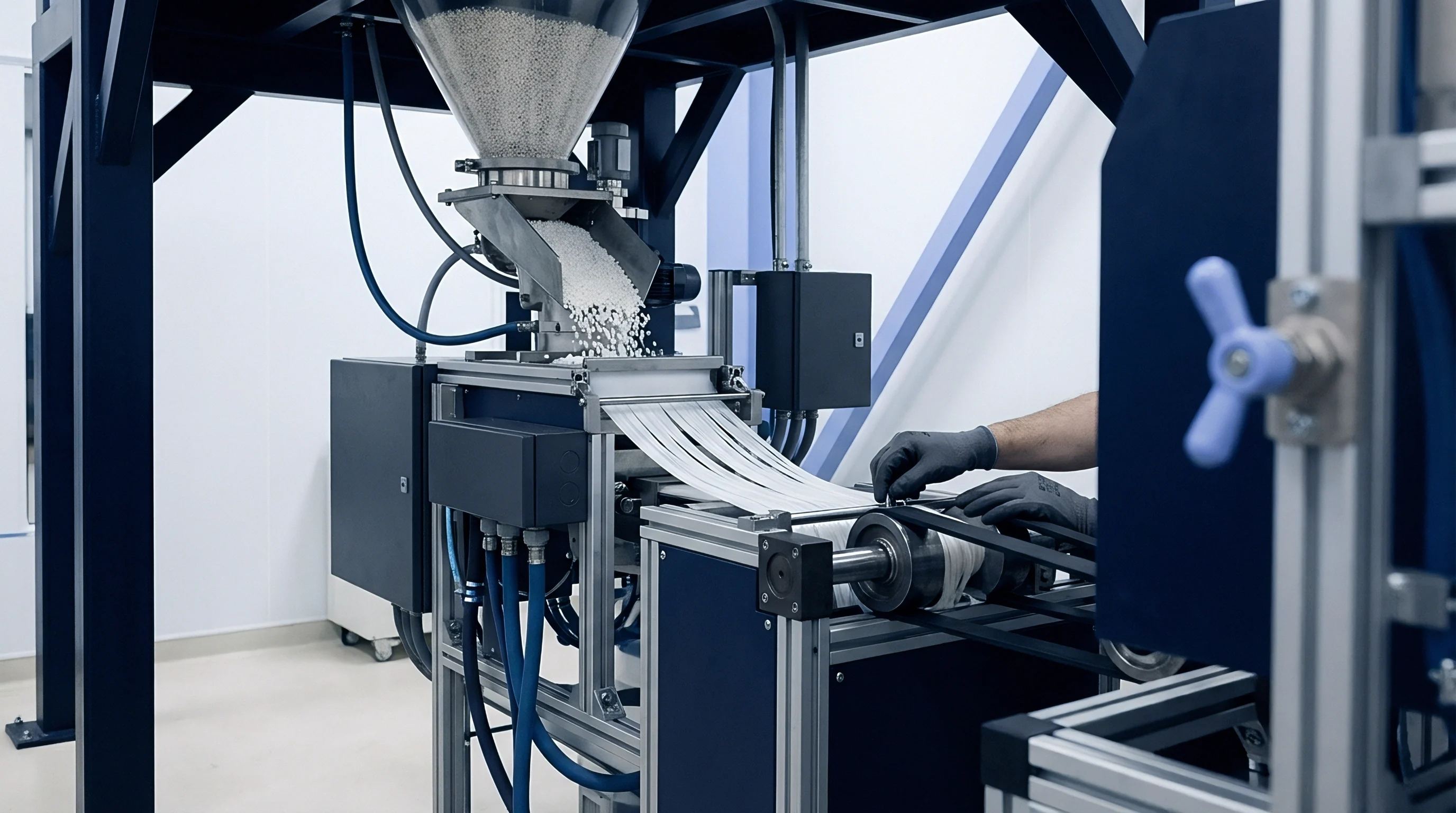
Extruder barrel architecture dictates the rate at which volatile contaminants cross the boundary layer from the polyolefin melt into the vapor phase. In co-rotating twin-screw extruders operating at screw speeds between 300 rpm and 600 rpm, the molten polymer undergoes continuous planar surface renewal. Melt seals formed by reverse-conveying element blocks separate high-pressure conveying zones from low-pressure vacuum ports.
The local absolute pressure inside the devolatilization dome must fall within 5 mbar to 30 mbar to generate a sufficient driving force for phase change. When processing post-consumer polyolefins containing polar surrogates, the partial pressure of volatile organics within the melt films dictates maximum achievable removal prior to discharge.
Polymer melt temperature exerts a dual effect on volatilization efficiency. Elevated barrel temperatures ranging from 220 degrees Celsius to 260 degrees Celsius reduce melt viscosity, increase molecular diffusivity, and elevate surrogate vapor pressure. Thermal energy inputs above the polymer degradation threshold trigger chain scission, generating secondary low-molecular-weight non-intentionally added substances.
Barrel heating zones must balance viscosity reduction against thermal oxidation risks. Multi-stage extraction protocols distribute vacuum ports along the extruder length, enabling incremental removal of volatile fractions without starving the screw channels.
| Vacuum Level (mbar) | Melt Temp (°C) | Isopropyl Alcohol Residual (mg/kg) | Methyl Ethyl Ketone Residual (mg/kg) | Decontamination Efficiency (%) |
|---|---|---|---|---|
| 50 | 210 | 84.2 | 62.1 | 91.5 |
| 20 | 210 | 31.4 | 22.8 | 96.8 |
| 10 | 230 | 8.6 | 5.2 | 99.1 |
| 5 | 250 | 1.2 | 0.8 | 99.9 |
Phase separation inside the barrel relies on thin film geometry created by screw wiping action. Screw elements with narrow flight clearances push melt pools across the barrel wall, exposing fresh material to the vacuum environment during every rotation. High surface renewal frequency minimizes the diffusion path length for entrapped polar compounds.
Short residence times in the vent zone, typically ranging from 1.5 seconds to 4 seconds, necessitate rapid gas-liquid interfacial transport. If the vacuum pump speed drops or atmospheric air leaks into the dome, partial pressures increase immediately, collapsing the concentration gradient across the liquid interface.
Melt Pool Gas Expansion Mechanics
Superheating dissolved volatiles causes nucleation and bubble growth within the polymer melt. Bubbles expand rapidly as local hydrostatic pressure drops beneath the vapor pressure of the surrogate liquid. Nucleated bubbles travel through the liquid matrix toward the free surface where film rupture releases the vapor into the vacuum port.
High melt strength prevents premature bubble coalescence, while low melt viscosity speeds up bubble rise velocity. Insufficient vacuum depth causes unruptured bubbles to re-dissolve into the polymer melt upon re-entering high-pressure conveying sections downstream of the extraction port.
Foam formation in the extraction zone presents severe processing challenges. Excessive gas generation causes melt entrainment into the vacuum ductwork, fouling condenser lines and clogging liquid ring pumps. Feed screw side-stuffers or dynamic vent valves stabilize the melt pool by restraining polymer solids while allowing volatile gases to exit freely.
Controlling specific mechanical energy input prevents local hotspotting, preserving continuous melt flow under deep vacuum conditions.
Operating an extruder with compromised vacuum seals or inadequate temperature profiles leaves residual polar contaminants in the final resin, causing sensory failures, organoleptic defects, and migration threshold breaches during regulatory food-contact testing.

Kinetics

Thermodynamics of Polar Surrogates in Non-Polar Matrices
Mass transport mechanisms governing contaminant removal rely on thermodynamic equilibrium parameters between the polymer matrix and the vapor phase. Non-polar polyolefins such as high-density polyethylene and polypropylene exhibit low thermodynamic compatibility with polar surrogates. Isopropyl alcohol, methyl ethyl ketone, and acetic acid demonstrate high activity coefficients in polyolefin melts, driving them toward the surface.
Polar molecules form localized hydrogen-bonded clusters within non-polar matrix structures, altering expected diffusion rates across concentration gradients. The Henry law constant measures solubility limits, governing maximum achievable mass transfer rates at specified system pressures.
Diffusion coefficients for small polar molecules in molten polyolefins typically span 1E-5 square centimeters per second to 1E-6 square centimeters per second at 230 degrees Celsius. Molecular size, shape, and polarity dictate matrix mobility. Small polar molecules experience steric resistance while traversing polymer chain entanglements.
Temperature dependencies obey Arrhenius equations, where activation energy values reflect the energy required to create free-volume pockets for molecular hops within the liquid polymer structure.
The Flory-Huggins interaction parameter dictates thermodynamic driving forces for phase separation during devolatilization of polar compounds from polyolefin melts.
Flory-Huggins interaction parameters quantify phase behavior between polyolefin chains and polar surrogates. Positive interaction parameter values indicate thermodynamic unfavorable mixing, increasing surrogate volatility relative to non-polar hydrocarbons of equivalent molecular weight. This thermodynamic penalty accelerates volatilization once the surrogate reaches the surface boundary layer.
Diffusion through the bulk liquid polymer remains the rate-limiting transport step throughout continuous devolatilization processes.
Boundary Layer Mass Transfer Dynamics
Liquid phase mass transfer coefficients govern surrogate transport across the interface between bulk melt and vapor space. Boundary layer resistance depends heavily on local fluid dynamics, shear rates, and surface renewal rates inside the screw channels. Mathematical models express mass transfer flux as the product of the liquid mass transfer coefficient, interfacial surface area, and concentration difference between bulk melt and equilibrium vapor interface.
Higher screw rotational speeds increase shear rates, thinning the liquid boundary layer and lowering transfer resistance.
Interfacial transport phenomena change rapidly when polar surrogates reach high concentrations. Marangoni convection effects, driven by surface tension gradients across the melt surface, generate micro-scale turbulence that aids mass transport. Polyolefin melts with high polydispersity indices show non-uniform boundary layer behavior due to localized molecular weight distribution variations.
Analytical models must account for non-isothermal conditions inside the melt pool, where evaporative cooling lowers surface temperatures and reduces local vapor pressures.
Determining the exact point where internal mass diffusion limits process throughput remains an open analytical challenge for high-speed recycling lines processing heavily contaminated polyolefins.
Challenge
EFSA and FDA Surrogate Challenge Testing Frameworks
Validation of recycling processes for direct food-contact application requires rigorous challenge testing protocols. Model contaminants representing various chemical classes are artificially incorporated into post-consumer polyolefin flakes at specified target concentrations, typically 1000 mg/kg per surrogate substance. European Food Safety Authority guidelines and United States Food and Drug Administration protocols specify surrogate suites to evaluate decontamination performance.
Chemical polarity, volatility, and molecular weight dictate surrogate selection, ensuring challenge testing covers real-world post-consumer waste contaminants.
Decontamination efficiency evaluation relies on logarithmic reduction calculations comparing surrogate concentrations before and after extrusion processing. Regulators require a minimum 3-log reduction, corresponding to a 99.9 percent elimination efficiency, for processes intended for 100 percent recycled food-contact materials. Lower decontamination efficiencies cap the allowable blend ratio of recycled resin with virgin polyolefins.
Precise gas chromatography combined with mass spectrometry measures residual surrogate quantities in processed pellets down to sub-milligram-per-kilogram limits.
Polar surrogates challenge extrusion processes differently than non-polar compounds. Isopropyl alcohol serves as a high-volatility polar surrogate, testing fast surface evaporation mechanics. Acetic acid models reactive polar compounds with high hydrogen bonding capability.
Methyl salicylate represents high-molecular-weight polar compounds with low volatility, testing deep-diffusion capability within dense melt pools. Limonene acts as a semi-volatile non-polar model substance for organoleptic fragrance contaminants.
How Do Polar Surrogates Resist Devolatilization?
Strong polar interactions between surrogate molecules create energy barriers that slow down vapor extraction. Acetic acid and short-chain alcohols form dimeric complexes or hydrogen-bonded networks within free-volume gaps of polyolefin chains. These associations increase effective molecular weight and reduce vapor pressure compared to non-polar surrogates of similar molar mass.
Extrusion processes optimized exclusively for non-polar hydrocarbons like toluene frequently fail to remove polar species down to compliant thresholds.
| Surrogate Name | Polarity Type | Molecular Weight (g/mol) | Boiling Point (°C) | Target Log Reduction |
|---|---|---|---|---|
| Isopropyl Alcohol | Polar / Volatile | 60.1 | 82.6 | > 3.0 |
| Methyl Ethyl Ketone | Polar / Volatile | 72.1 | 79.6 | > 3.0 |
| Acetic Acid | Polar / Protic | 60.0 | 117.9 | > 3.0 |
| Methyl Salicylate | Polar / Low Volatility | 152.1 | 222.0 | > 2.5 |
| Toluene | Non-Polar / Volatile | 92.1 | 110.6 | > 3.0 |
| Limonene | Non-Polar / Semi-Volatile | 136.2 | 176.0 | > 3.0 |
Spiking techniques significantly affect challenge test validity. Surface coating techniques apply surrogate solutions onto polyolefin flake surfaces prior to extrusion. High-temperature diffusion soaking drives surrogates deep into the polymer matrix over extended heating cycles.
Surface-coated flakes yield unrealistically high devolatilization efficiencies because volatile compounds evaporate instantly upon entering the melt zone. Deeply diffused surrogates accurately replicate real post-consumer contamination by forcing transport to obey bulk liquid diffusion kinetics.
European Food Safety Authority challenge protocols mandate minimum three-log decontamination factors for post-consumer polyolefin processes targeting direct food-contact packaging applications.
Quantifying surrogate loss requires strict analytical quality controls throughout handling, storage, and processing operations. Volatile surrogates evaporate rapidly from open storage containers or hopper feeds prior to entering the extruder barrel. Control samples taken immediately before the extruder feed throat establish true baseline concentrations.
Analytical recovery rates must exceed 85 percent to validate chromatographic test results, ensuring compliance files withstand regulatory review.
- Inadequate matrix diffusion soaking leaves challenge surrogates on flake surfaces, producing artificially elevated extraction efficiency figures.
- Premature volatilization in hopper zones reduces feed throat concentration, creating false compliant downstream analytical readings.
- Condensate reflux in vacuum ports drops liquid surrogate back into the polymer melt stream near barrel exit zones.
- Thermal degradation of surrogates produces unrecorded breakdown products, misrepresenting true extraction efficiency metrics.
Solid phase swelling prior to extrusion alters melt diffusion behavior during processing.
Mass
Residence Time and Specific Energy Input Calculations
Quantifying mass transport efficiency requires precise tracking of polymer residence time distributions within active extraction zones. Residence time distribution profiles determined by tracer injection experiments reveal mean residence time and axial mixing characteristics. Narrow distributions ensure uniform thermal and vacuum exposure for every polymer element.
Wide distributions result in short-circuiting, where a fraction of the polymer passes through the vacuum zone too quickly for complete surrogate removal.
Specific mechanical energy input calculates the energy delivered to the polymer matrix by the extruder drive motor per unit throughput mass. Energy inputs typically range from 0.18 kWh/kg to 0.28 kWh/kg for polyolefin devolatilization processes. Higher energy input increases melt temperature and surface renewal rates, accelerating surrogate transport.
Excessive energy input degrades polymer molecular weight, increasing specific migration of low-molecular-weight oligomers into food simulants.
Consider a twin-screw recycling line processing post-consumer high-density polyethylene at a rate of 1000 kg/h with an initial isopropyl alcohol surrogate concentration of 950 mg/kg. Process parameters maintain a melt temperature of 230 degrees Celsius under an absolute vacuum pressure of 10 mbar across a vent zone with a 2.5-second residence time. Downstream solvent extraction followed by gas chromatography-mass spectrometry measures a residual isopropyl alcohol concentration of 4.75 mg/kg in the extruded pellets.
The total devolatilization efficiency calculation follows the standard mass balance equation:
Efficiency Percentage = ((Initial Concentration – Final Concentration) / Initial Concentration) 100
Efficiency Percentage = ((950 – 4.75) / 950) 100 = 99.5 percent
This result achieves a 2.3-log reduction factor. Achieving a 3.0-log reduction required for direct food contact requires reducing the residual concentration to 0.95 mg/kg or lower. Reaching this target requires introducing entraining stripping agents or increasing vacuum depth to 5 mbar.
Specific mechanical energy input controls boundary layer renewal rates, directly dictating residual surrogate extraction efficiency in continuous twin-screw extruders.
Injection of volatile stripping agents enhances devolatilization of difficult polar surrogates. Water, nitrogen, or carbon dioxide injected into the polymer melt prior to the vacuum zone acts as an entraining fluid. Superheated water flashes into steam under vacuum, creating massive interfacial area through micro-foaming.
Steam bubbles sweep dissolved polar surrogates out of the melt matrix by dramatically reducing surrogate partial pressure within the vapor phase. Nitrogen injection provides similar partial pressure reduction without risking hydrolysis of moisture-sensitive polymer additives.
- Inject deionized stripping water into high-pressure conveying zone at 0.5 percent to 1.5 percent weight ratio relative to polymer mass flow rate.
- Disperse water injection through high-shear kneading block elements to generate micro-droplets within molten polyolefin.
- Decompress melt mixture into primary vacuum zone maintained between 10 mbar and 20 mbar absolute pressure.
- Flash evaporate stripping fluid to extract dissolved polar surrogates via bubble nucleation and growth mechanics.
- Apply secondary high-vacuum extraction port at 5 mbar absolute pressure downstream to remove residual moisture and traces of surrogate.
Process machinery vendors often argue that high screw speeds solve all devolatilization limitations, ignoring thermal degradation constraints caused by excessive melt shear.

Conformity
Compliance Dossier Requirements and Migration Modeling
Placing recycled polyolefins into food-contact markets requires a rigorous compliance dossier proving conformity with legal safety limits. European Union Regulation (EU) 10/2011 and FDA 21 CFR 177.1520 mandate strict specific migration limits for residual substances in packaging materials. Specific migration limits for polar surrogates or residual decontamination products range from 0.05 mg/kg food simulant up to 5.0 mg/kg food simulant depending on chemical toxicity classifications.
The overall migration limit sets an absolute ceiling of 60 mg/kg food matrix or 10 mg/dm² packaging surface area.
Mathematical migration modeling provides conservative estimates of chemical transfer from polyolefin packaging into food matrices. The Piringer migration model uses polymer-specific diffusion parameters, migrant molecular weight, and storage temperature to calculate migration values. Non-polar polyolefins exhibit high diffusion rates compared to polar polymers like polyethylene terephthalate.
High diffusion rates force mathematical models to predict elevated migration, often overestimating real migration levels measured through laboratory immersion testing.
| Food Simulant Type | Simulant Composition | Test Contact Time (Days) | Test Temperature (°C) | Detection Limit (mg/kg) |
|---|---|---|---|---|
| Simulant A | 10% Ethanol (v/v) | 10 | 40 | 0.01 |
| Simulant B | 3% Acetic Acid (w/v) | 10 | 40 | 0.01 |
| Simulant D2 | Vegetable Oil / Isooctane | 10 | 40 | 0.05 |
| Simulant E | Tenax (Poly(2,6-diphenyl-p-phenylene oxide)) | 10 | 60 | 0.01 |
Empirical migration testing validates compliance when mathematical modeling yields boundary breaches. Testing involves exposing resin samples or finished articles to standardized food simulants under defined contact conditions. Ethanol 10 percent simulates aqueous foods, acetic acid 3 percent tests acidic environments, vegetable oil or substitute solvents like isooctane evaluate fatty food contact, and Tenax tests dry food application.
Non-intentionally added substances screening using high-resolution mass spectrometry ensures devolatilization processes do not introduce secondary thermal degradation products.
Declarations of Conformity must cover the specific resin batch produced, detailing feed material sources, challenge test validation references, operational devolatilization constraints, and intended food contact applications. Upstream recycling processes without accredited quality assurance schemes fail to meet Good Manufacturing Practice requirements established under Regulation (EC) 2023/2006. Audits verify that production extruders operate within validated processing windows established during challenge test campaigns.
Standard compliance files require inclusion of raw challenge testing analytical data, mass balance calculations, specific migration test reports, and non-intentionally added substances screening profiles for every commercial resin line.
- Challenge test validation report demonstrating minimum required log-reduction efficiencies against accredited polar and non-polar surrogate panels.
- Batch traceability documentation tracking post-consumer input streams back to sorting facility origin data.
- Good manufacturing practice certification confirming compliance with operational standards and equipment maintenance routines.
- Specific migration test certificates issued by ISO 17025 accredited laboratories using official food simulants and analytical methods.
Supply contracts for recycled polyolefins must contain a clause specifying that resin batches failing to meet validated extruder operating thresholds forfeit food-contact compliance status and automatically revert to non-food industrial grade classification.