Quantifying Interfacial Tension and Micro-Phase Separation in Cross-Border Recyclate Additive Masterbatches
Quantifying interfacial tension via oscillatory rheology identifies micro-phase separation risk in cross-border recyclate masterbatches before transit degradation.


Morphology
Capillary rheometry at 190 degrees Celsius under an apparent shear rate of 100 reciprocal seconds yields an apparent viscosity of 820 Pascal-seconds for post-consumer low-density polyethylene, while the polypropylene phase within the same recycled carrier registers 1,240 Pascal-seconds. The viscosity ratio of 1.51 forces dispersed domains into elongated fibrils during melt processing inside the masterbatch production extruder. The Palierne emulsion model calculates the interfacial tension between recycled polyolefin matrices and dispersed functional phases by assessing the storage modulus plateau in the terminal low-frequency zone between 0.01 and 0.1 radians per second.
Masterbatch carrier systems derived from mixed post-consumer packaging streams contain baseline contamination levels of unseparated polypropylene fractions reaching twelve weight percent. Phase stability governs physical dispersion.
Quantification of interfacial tension across immiscible recycled polyolefin matrices relies on oscillatory frequency sweeps executed within the linear viscoelastic region at strain amplitudes below two percent. When assessing an uncompatibilized recycled polyethylene and polypropylene system at 200 degrees Celsius, dynamic mechanical analysis reveals an interfacial tension ranging between 4.8 and 5.4 millinewtons per meter. The introduction of maleic anhydride grafted ethylene-octene block copolymer at five weight percent reduces this value to 1.1 millinewtons per meter.
This reduction prevents droplet coalescence during cooling cycles. Lower interfacial tension suppresses Rayleigh instabilities during post-extrusion pelletization, preventing premature droplet detachment and phase coarsening before downstream conversion.
| Polymer Pair System | Compatibilizer Chemistries | Viscosity Ratio | Interfacial Tension (mN/m) | Domain Diameter (microns) |
|---|---|---|---|---|
| rLDPE / rPP (80/20) | Uncompatibilized Baseline | 1.51 | 5.2 | 4.8 |
| rLDPE / rPP (80/20) | PE-g-MAH (1.2 wt% graft) | 1.38 | 2.1 | 1.6 |
| rLDPE / rPP (80/20) | OBC Ethylene-Octene | 1.22 | 1.1 | 0.7 |
| rHDPE / rPP (70/30) | SEBS-g-MAH (0.9 wt% graft) | 1.15 | 0.9 | 0.5 |
| rHDPE / rPP (70/30) | Uncompatibilized Baseline | 1.64 | 5.8 | 5.9 |
Micro-phase separation kinetics accelerate when masterbatch pellets endure fluctuating thermal cycles during international maritime transit. Temperature logs inside dry shipping containers routinely show sustained thermal peaks of 62 degrees Celsius in equatorial shipping lanes. At these temperatures, additive concentrates containing secondary ester lubricants and long-chain alkyl phosphite processing stabilizers experience localized phase migration toward pellet boundary layers.
Differential scanning calorimetry confirms that enthalpy relaxation peaks shift upward by 3.2 Joules per gram after thirty days of transit exposure at 55 degrees Celsius. This shift reflects segmental reorganization of amorphous chains adjacent to phase boundaries.
Interfacial tension values exceeding 3.5 millinewtons per meter under ISO 6721-10 oscillatory testing produce domain sizes larger than three microns in finished injection mouldings.
The quantification procedure requires dynamic temperature ramps conducted on parallel-plate geometries using nitrogen atmospheres to prevent oxidative chain branching during measurement. Storage modulus curves plotted against angular frequency permit the deconvolution of matrix contribution from interfacial relaxation mechanisms through the Choi-Schowalter formulation. When the relaxation time of the dispersed droplet phase exceeds the characteristic transit cooling window, residual thermal stresses induce matrix voiding along interface perimeters.
The morphological stability of the additive masterbatch depends upon immobilizing dispersed additive micelles within the cross-linked or highly tangled boundary layers before cross-border cargo transfer begins.

Droplet
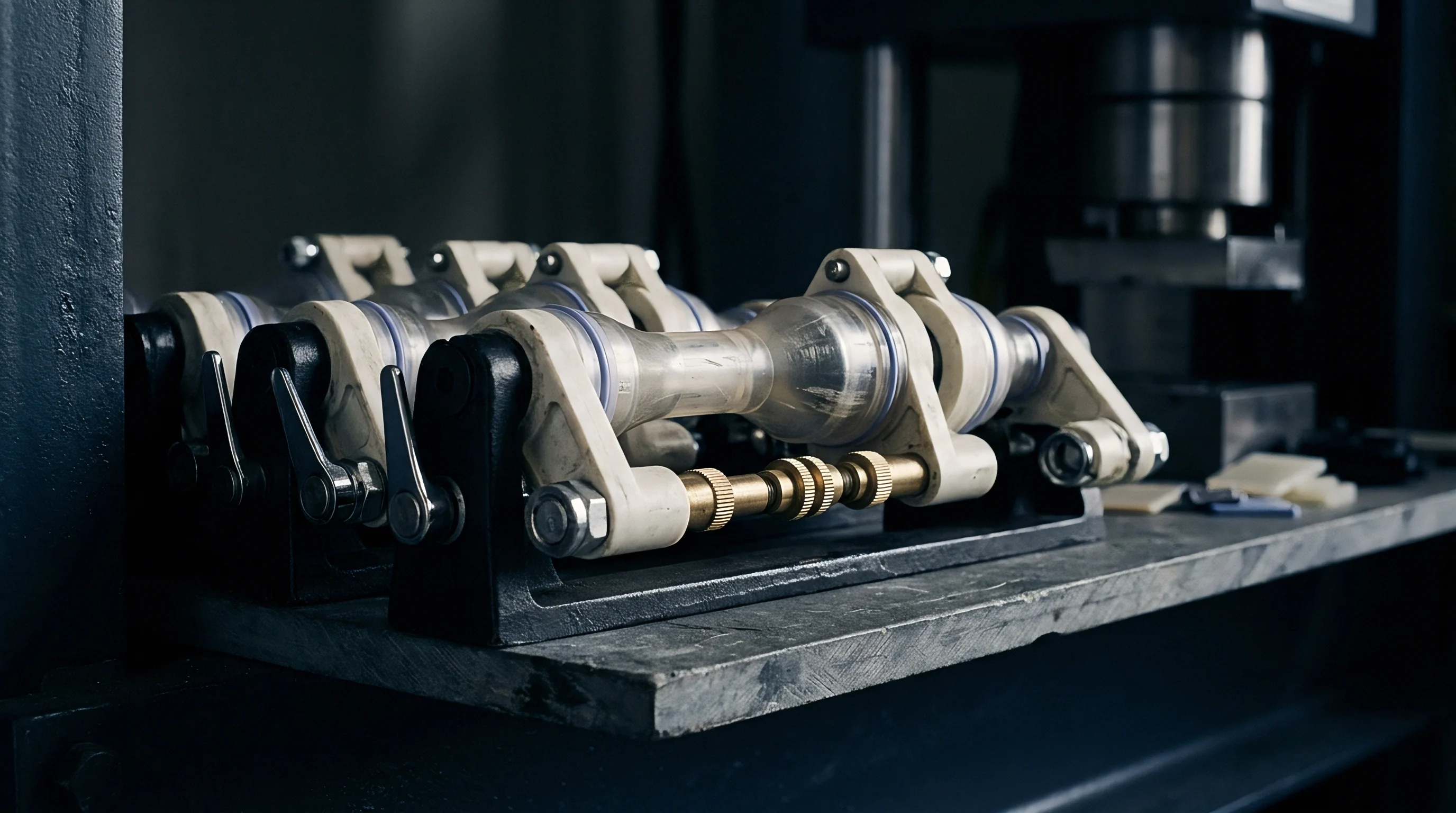
Scanning electron microscopy of cryo-fractured masterbatch pellets reveals spherical dispersed phases whose volumetric diameter correlates directly with the processing Capillary number. The critical Capillary number necessary to fracture an additive-rich droplet within a high-viscosity recycled polyethylene continuous phase approximates 0.45 under pure shear flow. Twin screws supply high shear.
When compounding lines process masterbatch formulations containing recycled polypropylene carriers, viscous dissipation spikes locally, altering the viscosity ratio across the screw profile. If the local Capillary number falls below the critical threshold, additive-rich masterbatch inclusions survive as discrete macro-domains measuring eight to twelve microns in cross section.

Does Rheological Inversion Distort Particle Dispersion?
Viscosity inversions occur when the lower-melting recycled fraction undergoes complete melting ahead of the primary carrier matrix during the plastification sequence. In masterbatches containing thirty weight percent carbon black dispersed in post-consumer polyolefin matrices, the filler partitions into the low-viscosity fraction within the melting zone. Phase stability hinges upon whether the compatibilizer migrates to the boundary before high-shear mixing zones terminate.
Viscosity ratios control phase inversion.
| Apparent Viscosity Ratio | Capillary Number | Breakup Mechanism | Dispersity Index | Additive Retention (%) |
|---|---|---|---|---|
| 0.12 | 0.82 | Tip Streaming | 1.18 | 96.4 |
| 0.55 | 0.64 | Thread Rupture | 1.24 | 98.1 |
| 1.05 | 0.48 | Rayleigh Wave Breakup | 1.35 | 94.7 |
| 1.85 | 0.31 | Incomplete Elongation | 2.10 | 88.2 |
| 3.40 | 0.18 | Coalescent Agglomeration | 3.45 | 76.5 |
Breakup dynamics follow the Taylor droplet deformation theory, modified for non-Newtonian viscoelastic behavior via the insertion of matrix elasticity parameters. When the Deborah number of the dispersed phase exceeds 0.5, elasticity resists hydrodynamic drag, suppressing droplet cleavage and forcing domain enlargement. The resulting phase distribution degrades mechanical performance during subsequent let-down stages.
- Interfacial Pinning Failure occurs when block copolymer compatibilizers desorb from the boundary wall under excessive barrel temperatures, initiating rapid droplet coalescence that increases domain diameters beyond five microns.
- Steric Barrier Collapse triggers additive agglomeration within post-consumer fractions when molecular weight distributions broaden beyond an index of 6.5, creating localized phase purges.
- Matrix Void Formation arises at the polar interface between inorganic flame retardants and non-polar recyclate matrices during rapid quenching, which induces localized micro-fissuring.
- Secondary Emulsification Degradation generates uneven pigment distribution during single-screw let-down operations because the initial masterbatch dispersion lacked sufficient interfacial shear history.
Failure to constrain domain sizes below two microns inside the masterbatch pellet creates stress concentration points during downstream injection molding, generating premature brittle failure under standard drop impact tests.
Shear
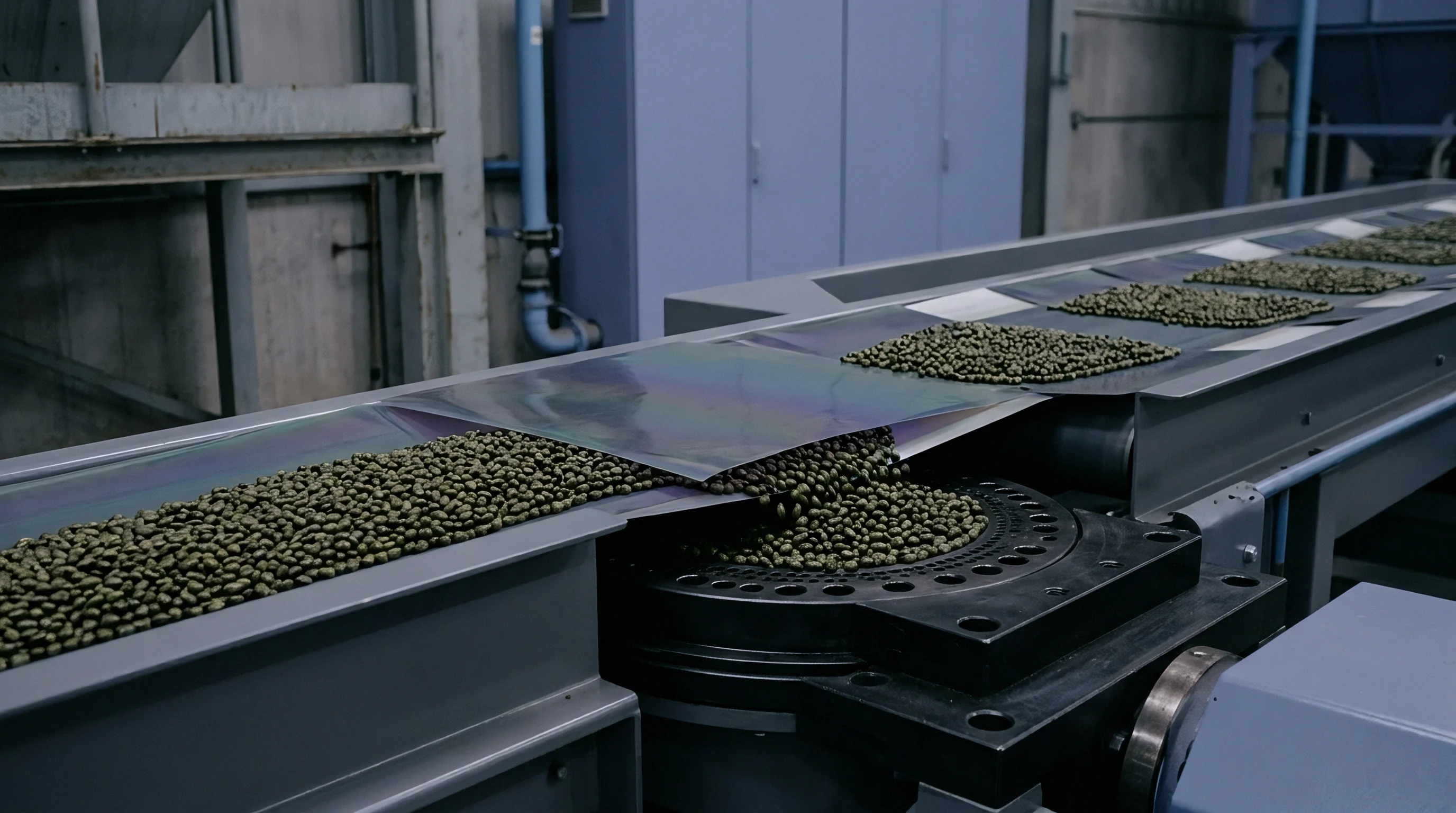
Compounding extruders operating with co-rotating twin screws generate localized shear rates reaching 2,500 reciprocal seconds within kneading blocks, dictating the thermodynamic dispersion limit of additive packages. A compounding calculation demonstrates this behavior across a 24-tonne masterbatch production run using post-industrial polyolefin feedstocks. Assume a specific mechanical energy input of 0.28 kilowatt-hours per kilogram, a barrel temperature setting of 210 degrees Celsius, and a target let-down additive concentration of forty percent functional masterbatch.
The calculated shear stress within the dispersive mixing elements generates an interfacial area increase of 420 square meters per kilogram of polymer mass. Screw speed alters particle size.
Thermal stability profiles change as shear energy converts to frictional heat inside tight-clearance screw flights. The local melt temperature inside kneading blocks often exceeds setpoint temperatures by twenty-five to thirty-five degrees Celsius. At 245 degrees Celsius, secondary phenolic antioxidants undergo thermal depletion, shifting the oxidation induction time from seventy-five minutes down to nineteen minutes under ASTM D3895 evaluation at 200 degrees Celsius with oxygen purge.
This consumption of protective additive chemistry permits free-radical generation at phase boundaries, promoting localized cross-linking of the recycled polyethylene phase. Viscosity mismatches widen immediately.
ASTM D3895 oxidation induction times dropping below twenty minutes at 200 degrees Celsius confirm thermal stabilizer consumption within the masterbatch carrier during compounding.
Calculations evaluating droplet breakup inside the compounding barrel assume equilibrium conditions that rarely exist during continuous commercial operation. Feeding fluctuations of four percent in post-consumer pellet density produce transient imbalances in specific mechanical energy, shifting the local viscosity ratio along the screw length. The resulting additive masterbatch carries a broad morphology spectrum where core sections contain sub-micron droplets while outer pellet surfaces retain broad five-micron domains.
Coalescence accelerates inside stagnant zones.
Pellet surface cooling in water-bath pelletizers locks this heterogeneous domain architecture into place within three seconds of die exit. Cryogenic transmission electron microscopy indicates that localized micro-phase separation reaches completion within thirty seconds of thermal quenching. The internal morphology remains frozen until the converter re-melts the material during final component production, releasing accumulated phase separation stresses.
The compounding plant attributes structural delamination in field parts to thermal variations across client injection moulding barrels rather than accepting responsibility for wide droplet distribution generated in the masterbatch extruder.

Loading
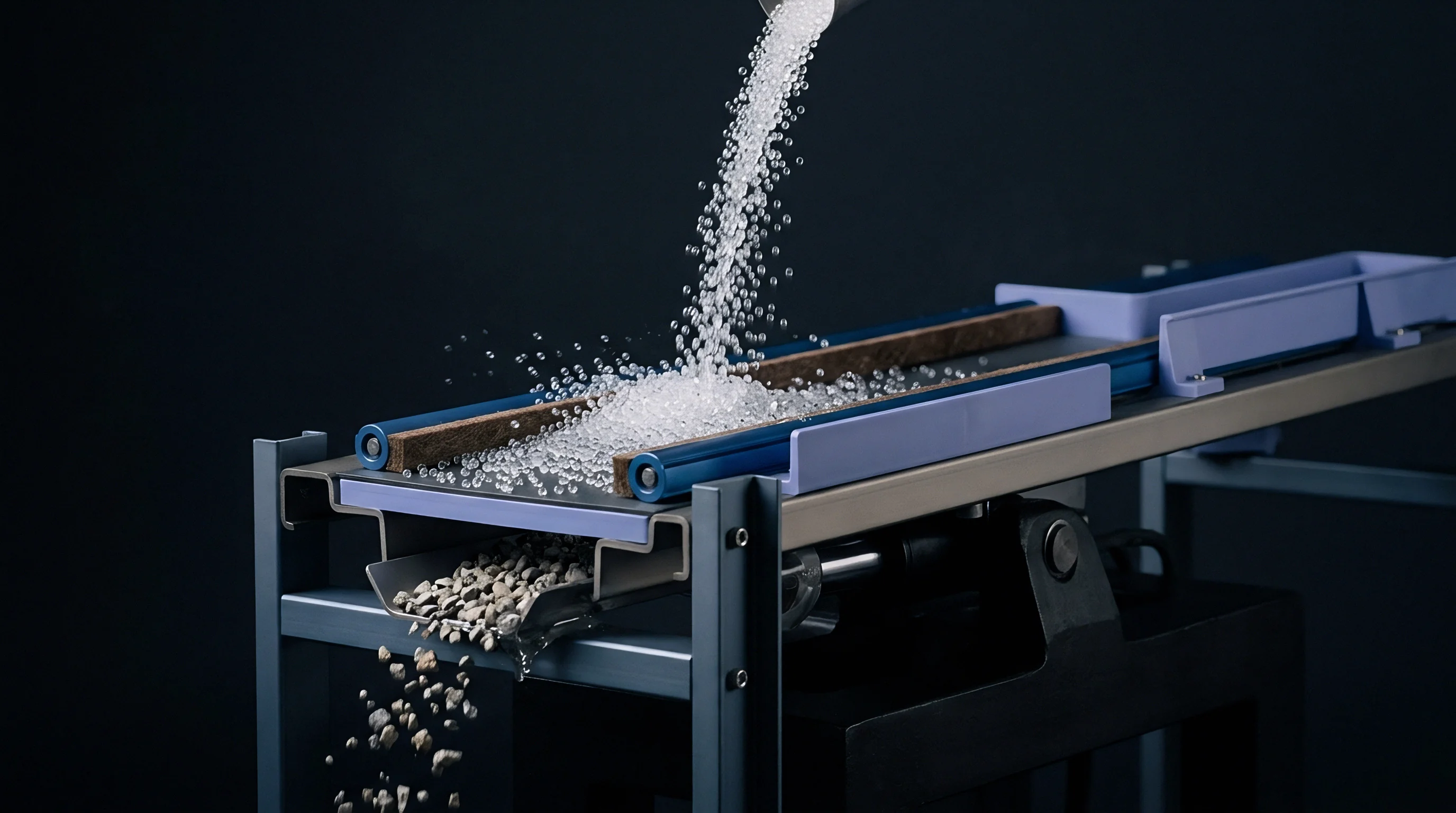
Functional additive concentrations within recycled masterbatches range from twenty to sixty weight percent, creating extreme challenges for interfacial stabilization. When processing mineral fillers like talc or calcium carbonate surface-treated with stearic acid, the polar filler surface competes with the maleic anhydride compatibilizer for hydrogen bonding sites. Uncompatibilized domains initiate premature fracture.
Energy dispersive X-ray spectroscopy combined with focused ion beam milling reveals that forty-five percent of the graft copolymer migrates away from the polymer-polymer interface, preferentially adsorbing onto inorganic particles. This migration starves the polyolefin boundary zone, causing interfacial tension to rise from 1.2 to 3.8 millinewtons per meter.

Do Cross-Border Customs Regimes Penalize Functional Additives?
Cross-border classifications turn upon whether an additive masterbatch is declared under chemical preparation classifications or basic polymer classifications carrying distinct tariff and environmental penalties. Under the Harmonized System, formulations containing over fifty percent mineral or functional additives risk classification under HS code 3812.39 as prepared additives, rather than under HS code 3901 or 3902 as modified primary forms. This customs classification reclassification triggers supplemental documentation requirements regarding volatile organic content and carrier purity under regional chemical control frameworks.
Tariffs hinge on carrier chemistry.
| Carrier Base Matrix | Additive Functional Type | Loading Ratio (wt%) | Compatibilizer Chemistries | Retention Index After 45 Days |
|---|---|---|---|---|
| rPP Copolymer (MFI 12) | Hindered Amine Light Stabilizer | 20 | PP-g-MAH (0.8% graft) | 0.94 |
| rHDPE Homopolymer (MFI 8) | Micronized Talc Filler | 40 | PE-g-MAH (1.1% graft) | 0.72 |
| rLDPE Film Grade (MFI 2) | Carbon Black Pigment | 35 | OBC Ethylene-Octene | 0.91 |
| Mixed rPO Packaging (MFI 5) | Intumescent Flame Retardant | 50 | SEBS-g-MAH (1.0% graft) | 0.64 |
| rPP Homopolymer (MFI 25) | Slip and Antiblock Additive | 15 | Uncompatibilized Baseline | 0.48 |
Cross-border customs inspections often hold containerized shipments at maritime ports of entry for periods extending from twelve to forty-five days. When containers sit on unshaded terminal tarmac under ambient temperatures exceeding 40 degrees Celsius, masterbatches compounded with low-crystallinity recycled polyolefin carriers undergo physical aging. Secondary crystallization within the continuous phase forces migratory additives to phase-separate and crystallize at the pellet boundary.
This surface blooming causes severe caking in shipping gaylords, impeding gravimetric feeding into processing equipment. Border delays degrade stabilizer packages.
- The inspector draws five representative 500-gram samples from distinct depths within shipping gaylords, following ISO 868 sampling protocols to identify moisture accumulation and localized pellet caking.
- The testing technician runs ash content determinations according to ISO 3451-1 at 600 degrees Celsius to verify inorganic additive loading against the nominal specification limits.
- The laboratory performs differential scanning calorimetry across a thermal cycle from minus 50 to 220 degrees Celsius under ISO 11357-3 to quantify polypropylene contamination within polyethylene carrier matrices.
- The rheologist conducts frequency sweep tests at 190 degrees Celsius on an oscillatory rheometer to assess the low-frequency storage modulus plateau, confirming interfacial compatibilizer retention.
- The quality manager cross-checks measured values against the master specification threshold before issuing release approval or declaring shipment non-conformance.
Phase migration during maritime transit proceeds without visual signs on the container exterior, appearing only as feeding instabilities when the material enters compounding hoppers.

Allowance
Procurement contracts for cross-border recyclate masterbatches establish commercial tolerances around carrier purity, interfacial compatibilizer retention, and maximum permissible phase separation metrics. A recycled carrier specified with a nominal ten percent polypropylene contamination level frequently arrives with lots testing between eight and eighteen percent under differential scanning calorimetry melting enthalpy integration. Impact strength falls forty percent.
This six-percent drift alters the continuous phase viscosity, destabilizing the additive dispersion during customer manufacturing operations. The delivered cost of the masterbatch must account for the downstream scrap yield generated by uncompatibilized phase separation.
Consider an operational model evaluating a 100-tonne purchase order of flame-retardant masterbatch compounded with post-consumer polyolefin carriers, priced at 2,450 dollars per tonne landed duty-paid. If thermal transit degradation increases average droplet sizes from 1.2 to 4.5 microns, the finished injection molder experiences a part reject rate rise from 1.5 to 6.2 percent due to structural surface blistering. Across 100 tonnes of masterbatch converted at a ten percent let-down ratio into 1,000 tonnes of molded components, this 4.7 percent reject increase wastes 47 tonnes of compound valued at 1,850 dollars per finished tonne.
The physical cost of phase instability totals 86,950 dollars, completely eliminating the raw material price savings gained by purchasing recycled masterbatch over prime alternatives.
Contractual protections require explicit operational metrics rather than commercial guarantees of fitness for purpose. Sourcing agreements must specify acceptable phase domain sizes verified by scanning electron microscopy under ISO 18553 procedures, establishing financial penalties for every micron of domain enlargement beyond target baselines. Sourcing agreements that omit quantitative droplet size thresholds leave buyers without recourse when phase-separated masterbatches degrade finished mechanical performance.
Contract specifications designating ISO 11357-3 melting enthalpy ratios for carrier purity limit allowable foreign polymer contamination to five weight percent of total mass.
Settlement mechanisms for cross-border contamination disputes rely upon verified analytical records retained under controlled sample retention protocols. Independent testing facilities assess retention samples using gel permeation chromatography to determine molecular weight reductions caused by chain scission in transit. If testing reveals that high-temperature container dwell reduced the weight-average molecular weight below 85,000 grams per mole, the supplier bears the financial cost of shipping repatriation and customs duties.
These technical metrics protect the buyer against degraded polymer stocks delivered under prime certifications.
Standard material warranty clauses stipulate that interfacial domain dimensions exceeding 2.5 microns under ISO 18553 microscopic analysis constitute immediate lot rejection without requiring demonstration of finished component structural failure.