Quantifying Photoinitiator Set-off Migration in Polyolefin Reel Winding Operations
Quantifying photoinitiator set-off requires single-side cell extraction to isolate tension-driven surface contact transfer from bulk polymer migration.


Nip
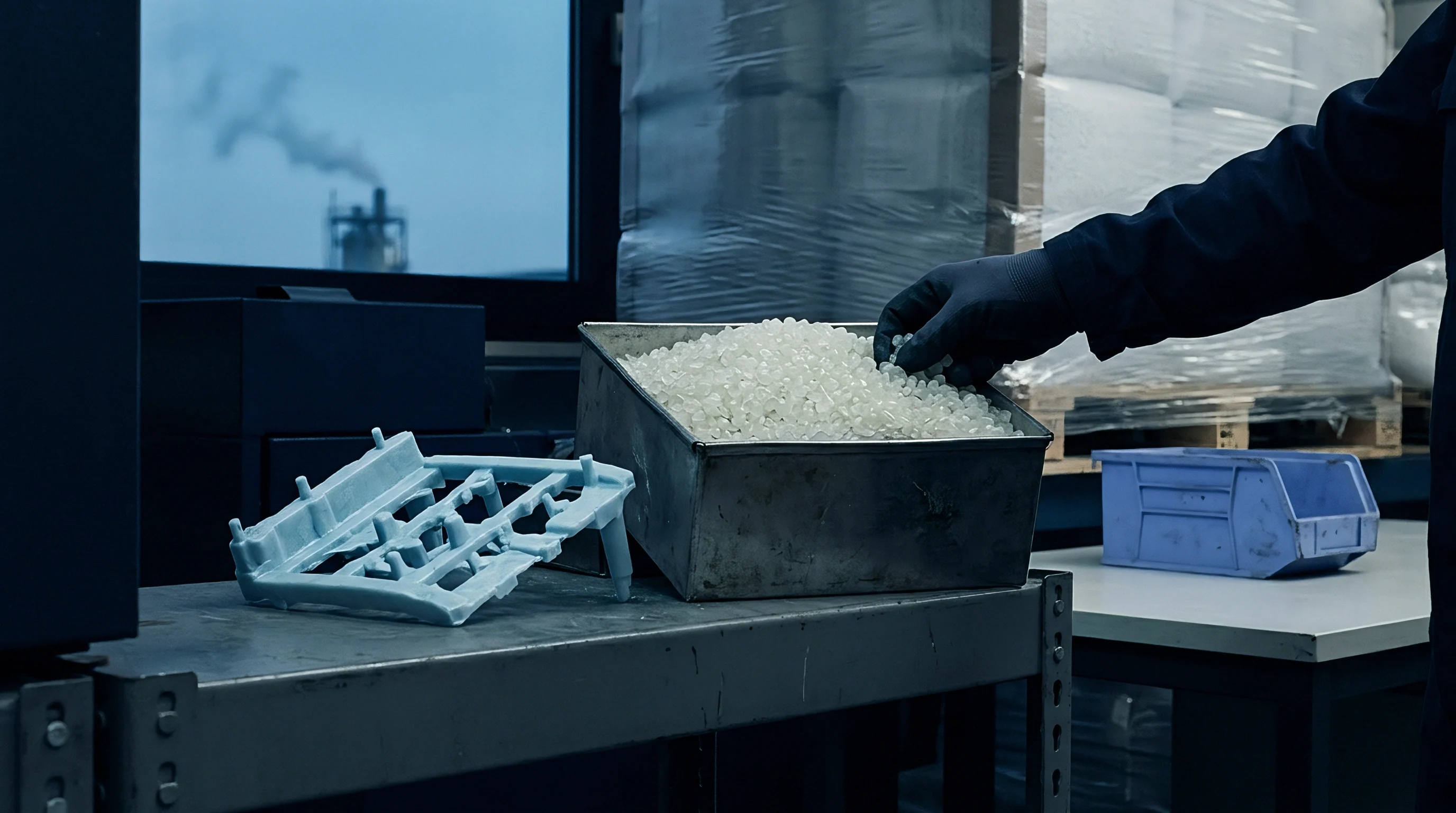
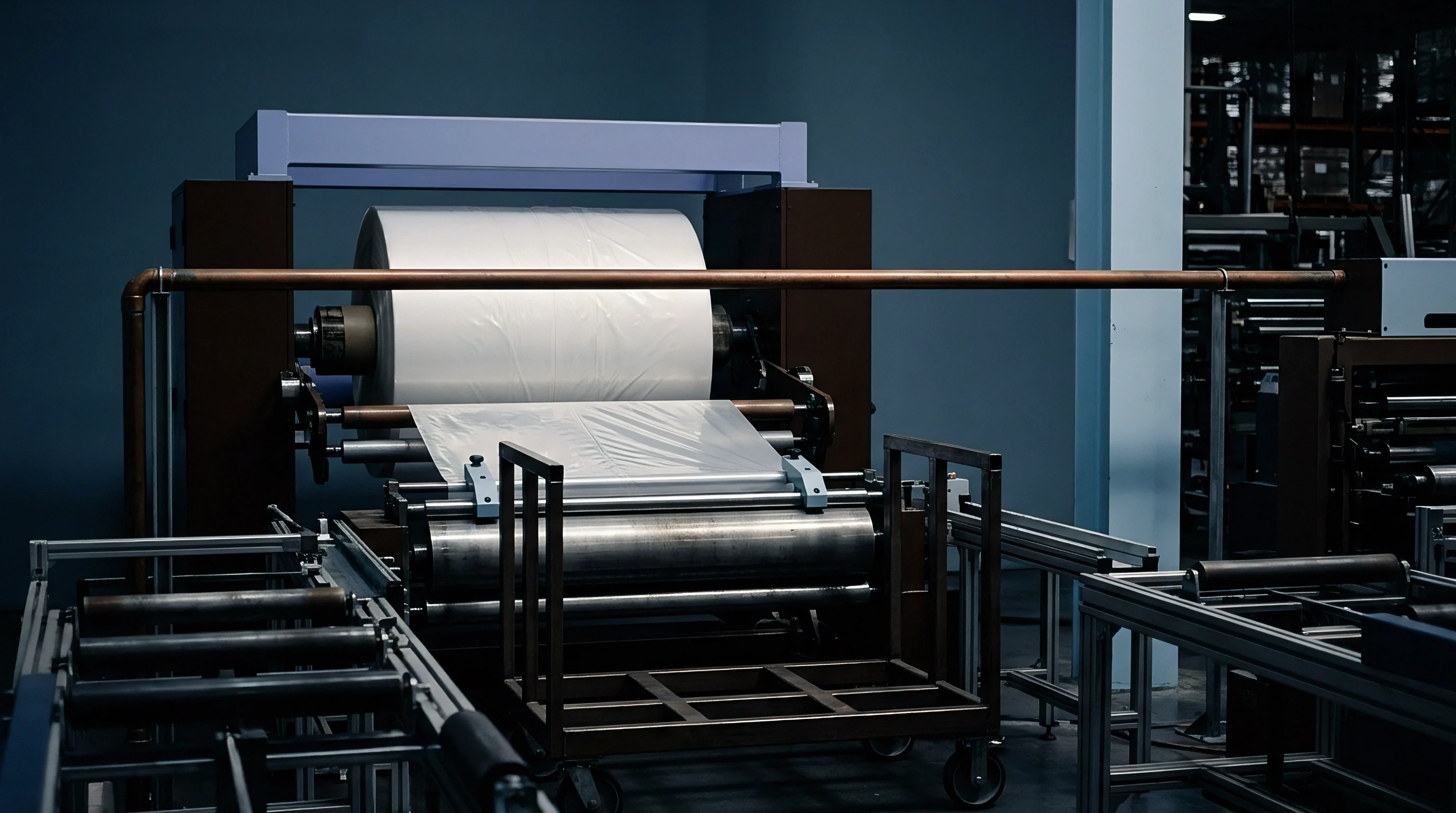
Winding tension calibrated to 180 N/m creates radial pressures exceeding 1.4 MPa near the core of a 1200 mm reel, forcing printed exterior ink films directly against the unprinted sealant layer. The outer surface of biaxially oriented polypropylene (BOPP) or cast polyethylene (PE) carries high-energy corona discharge treatments, typically 38 to 44 dynes/cm, applied during printing to anchor ultraviolet-curable inks. When rolled under mechanical tension, this receptive, polar interface faces the opposite, untreated food-contact side of the adjacent film wrap.
Low molecular weight components in the ink layer cross this boundary instantly upon contact.
Set-off occurs before the cured web leaves the conversion line. Photoinitiators such as 2-hydroxy-2-methylpropiophenone and benzophenone possess low molecular masses, below 300 Da, alongside high vapor pressures and low octanol-water partition coefficients. These physical traits grant them rapid mobility into polyolefin structures under mechanical load.
When reels wind tightly, the distance between the printed surface and the unprinted food-contact face drops to zero, accelerating boundary-layer diffusion across real micro-roughness peaks.
Winding tension profiles determine whether migration stays localized or penetrates deep into inner windings. A constant torque winding program concentrates radial stress at the core, while a tapering tension profile distributes load toward the reel perimeter. Hakiel non-linear elastic winding models show that inner wraps bear continuous compressive forces during standard four-week warehouse holds.
Under these loads, semi-crystalline polyolefin chains undergo localized deformation, creating free volume that absorbs migrant molecules.
| Reel Position | Radial Stress (kPa) | Interfacial Contact Area (%) | Transferred Benzophenone (mg/dm²) | Transferred Omnirad 907 (mg/dm²) |
|---|---|---|---|---|
| Core (Inner 5%) | 1200 to 1450 | 82 to 91 | 0.48 | 0.14 |
| Mid-Body (40% to 60%) | 450 to 650 | 54 to 68 | 0.21 | 0.06 |
| Perimeter (Outer 10%) | 80 to 140 | 22 to 34 | 0.04 | 0.01 |
Film surface topography dictates the true area of intimate contact. Atomic force microscopy reveals that polyolefin films with anti-block silicate additives maintain discrete asperities, preventing total planar contact with the ink layer. Smooth films without particulate spacers collapse across their full surface area under reel tension.
Incomplete ultraviolet cross-linking leaves free photoinitiator species dissolved in the liquid monomer matrix of the ink, accelerating transfer into the virgin polyolefin matrix.
A reel wound tighter at the core always transfers its ink chemistry to the sealant side.

Kinetics
Mass transport from an ink film across the contact interface into adjacent polyolefin follows Fickian diffusion driven by concentration gradients and chemical affinity. Polyolefins behave as sink materials for organic lipophilic migrants. Uncured photoinitiator molecules display high solubility in the amorphous regions of low-density polyethylene (LDPE) and polypropylene.
The crystalline fractions remain impenetrable, forcing diffusing migrants into winding tortuous pathways between polymer lamellae.

What Driving Forces Govern Penetration Depth?
Temperature during winding and storage determines the diffusion coefficient according to Arrhenius behavior. Reels leaving the curing station retain residual thermal energy from ultraviolet lamps, raising wound reel internal temperatures to 45 degrees Celsius. Under these conditions, the diffusion coefficient (D) of 4-methylbenzophenone in low-density polyethylene rises by an order of magnitude compared to ambient laboratory conditions.
The migrant moves rapidly across the reel interface into the bulk polyolefin substrate.
Mechanical pressure alters the polymer partition coefficient, shifting the equilibrium distribution toward the contact face. As compressive stress increases, the free volume inside amorphous polyolefin pockets contracts, yet the localized chemical potential of the photoinitiator in the ink layer increases under compression. This differential forces the migrant across the boundary into the packaging film.
Storage duration converts this early transfer into permanent contamination throughout the thickness of the film.
- Diffusion coefficient escalation occurs when process heat remains trapped inside dense reel wraps for extended durations.
- Partition equilibrium shifting drives organic migrants across the physical interface until chemical potentials match.
- Polymer chain relaxation under sustained radial load creates micro-voids that accommodate incoming aromatic molecules.
- Solvent vehicle swelling opens the polyolefin skin, accelerating penetration of liquid ink remnants into the food-contact layer.
Mathematical modeling through the Piringer equation estimates migration rates when experimental parameters are defined. The polymer-specific parameter Ap reflects polymer chain mobility, set to 11.5 for low-density polyethylene and 13.0 for polypropylene homopolymers. The relative molecular mass of the photoinitiator sets its diffusion rate.
A photoinitiator with a molecular mass of 220 Da migrates three times faster than a modern polymeric alternative exceeding 1000 Da.
Storage temperatures above 30 degrees Celsius double the diffusion rate of benzophenone derivatives through cast polyolefin films within forty-eight hours.
Direct contact transfer dominates during the first seventy-two hours of reel winding. Gas-phase transport across microscopic air gaps between film layers contributes a secondary route for volatile initiators like methyl o-benzoylbenzoate. Even where surface asperities prevent physical contact, vaporized compounds condense onto the receptive corona-treated back side of the adjacent film wrap.
The question remains whether sub-ambient warehouse chilling can arrest this transfer without inducing condensation defects across the polymer web.
Extraction
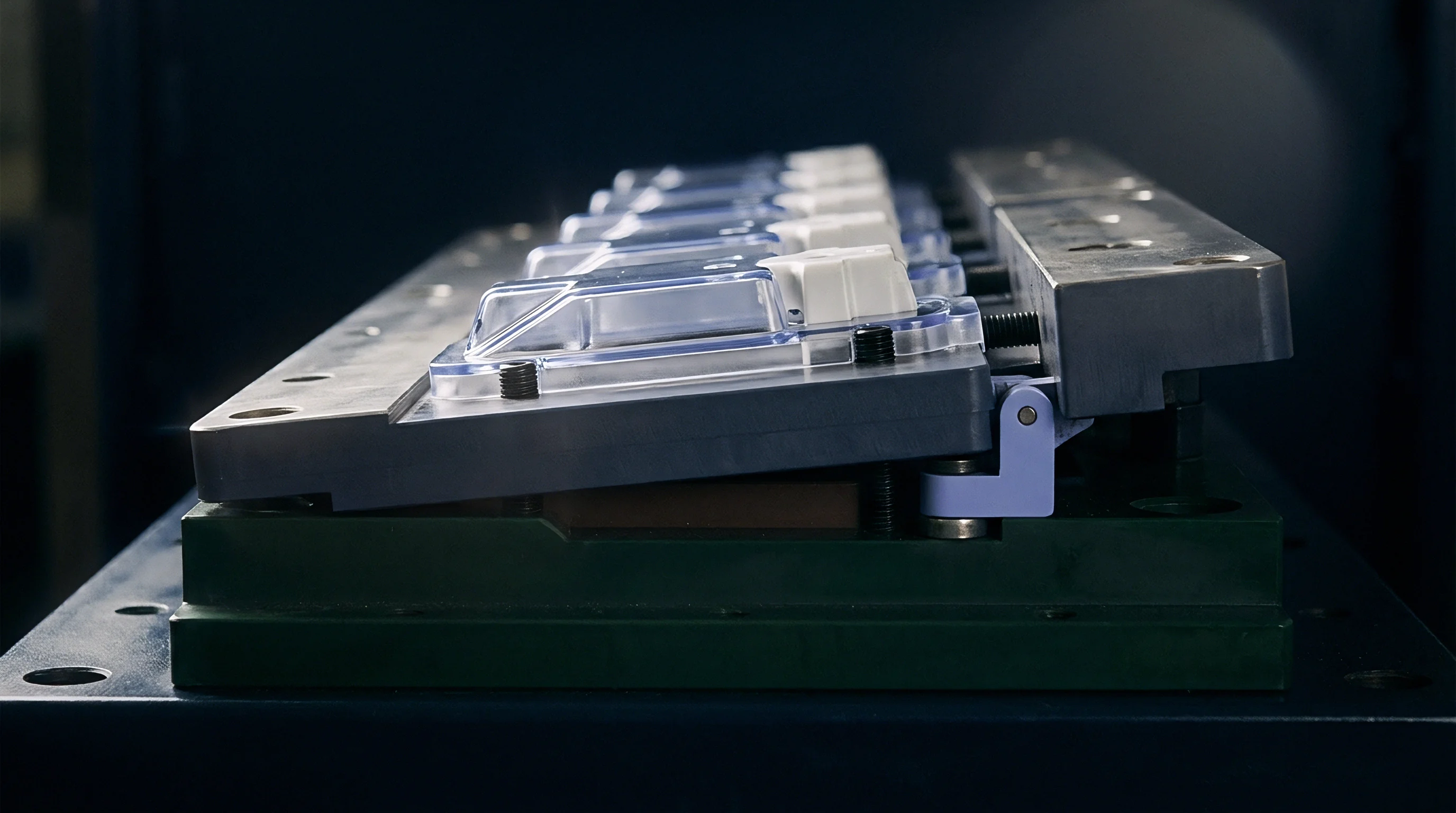
Quantification of set-off requires testing protocols that separate surface transfer from migrant permeation through the bulk film. Standard total-immersion testing fails this requirement because it exposes both the printed face and the food-contact face to liquid simulants, inflating the calculated migration value. Analysts employ single-side migration cells, such as the EN 1186 type B cell or customized stainless-steel migration cells, exposing exclusively the food-contact surface to food simulants.

Analytical Isolation of Interfacial Residues
Solvent swabbing of the inner surface provides rapid screening for surface-bound set-off prior to simulant testing. Acetonitrile or ethanol extracts the transferred compounds without dissolving the underlying polyolefin film, provided exposure times remain under sixty seconds. Prolonged solvent contact extracts internal slip agents, erucamide, and oligomers from the polyolefin core, creating chromatographic interference during quantitative mass spectrometry.
High-performance liquid chromatography coupled with triple quadrupole mass spectrometry (HPLC-MS/MS) serves as the primary analytical tool for non-volatile and thermally labile photoinitiators. Gas chromatography with mass spectrometry (GC-MS) isolates volatile initiators, including 1-hydroxycyclohexyl phenyl ketone. Limits of quantification must fall below 0.005 mg/kg food simulant to verify compliance with European non-listed substance thresholds.
| Substance Name | CAS Number | Specific Migration Limit (mg/kg) | Simulant Exposure (10d, 40°C) | Analytical Method |
|---|---|---|---|---|
| Benzophenone | 119-61-9 | 0.60 | Tenax (Simulant E) | GC-MS |
| 4-Methylbenzophenone | 134-84-9 | 0.01 (Detection Limit) | 95% Ethanol | GC-MS |
| Omnirad 907 (2-Methyl-4′-(methylthio)-2-morpholinopropiophenone) | 71868-10-5 | 0.01 (Detection Limit) | Isooctane | HPLC-MS/MS |
| Omnirad ITX (Isopropylthioxanthone) | 5495-84-1 | 0.01 (Detection Limit) | Vegetable Oil (Simulant D2) | HPLC-MS/MS |
| Omnirad 369 (2-Benzyl-2-(dimethylamino)-4′-morpholinobutyrophenone) | 119313-12-1 | 0.01 (Detection Limit) | 95% Ethanol | HPLC-MS/MS |
| Values referenced against European Commission Regulation 10/2011 and Swiss Ordinance on Materials and Articles in Contact with Food (SR 817.023.21). | ||||
Simulant selection governs test outcome. Modified polyphenylene oxide, commercialized as Tenax or Simulant E, evaluates dry food contact and direct set-off migration without altering the mechanical structure of the polyolefin. Liquid fatty food simulants, including vegetable oil and ninety-five percent ethanol, extract lipophilic photoinitiators aggressively.
Ethanol causes polyolefin swelling, exaggerating migrant uptake beyond true consumer pack scenarios. Solvents must not swell the film during verification.
Testing thirty square decimeters of film inside a single-side migration cell with Tenax for ten days at forty degrees Celsius establishes the definitive set-off baseline under Commission Regulation 10/2011.
Laboratories frequently report clean migration certificates by washing films prior to analysis or employing broad extraction sweeps that dilute specific signals. Ink suppliers regularly insist that cross-linking during printing consumed all reactive initiators, leaving zero residual chemistry available to cross the winding interface.

Assay
Screening across commercial reel conversion demands clear separation between intentional ingredients and non-intentionally added substances (NIAS). Photoinitiators undergo fragmentation during ultraviolet irradiation, producing secondary decomposition products. Benzophenone generates benzhydrol and related aromatic degradation fragments; Omnirad 907 cleaves into toxic morpholine derivatives and sulfur-bearing aldehydes.
These cleavage fragments possess lower molecular weights than parent compounds, migrating across reel windings with elevated speed.

Are Barrier Coatings Effective against Low Molecular Weight Initiators?
Thin vacuum-metallized aluminum or silicon oxide coatings reduce permeation rates but offer zero protection against reel set-off. In a wound reel, the exterior ink layer presses against the unmetallized, untreated polyolefin sealing face. The protective barrier layer sits behind the contact zone, leaving the immediate food-contact skin fully vulnerable to contamination.
Functional barriers must sit on the inner contact surface to prevent migration into the contained foodstuff.
Compliance evaluation requires rigorous verification against regulatory limits. European Union Regulation 10/2011 restricts authorized plastic additives, while printing inks fall under national frameworks and industry guidelines. The Swiss Ordinance SR 817.023.21 lists evaluated ink components with toxicological evaluations.
Substances lacking specific toxicological listing remain subject to an absolute migration threshold of 0.01 mg/kg.
- Parent photoinitiators require targeted multi-analyte liquid chromatography screening to quantify unreacted chemical species.
- Photolysis degradation fragments demand high-resolution mass spectrometry screening against non-target libraries to identify volatile aromatic cleavage products.
- Polyolefin oligomers must be differentiated from ink components during gas chromatography to prevent false-positive quantification.
- Functional barrier placement requires validation to confirm that barrier skins isolate the food matrix rather than trap set-off migrants.
Article 3 of Framework Regulation (EC) 1935/2004 dictates that materials must not transfer their constituents to food in quantities that endanger human health or bring about an unacceptable change in food composition. In practical supply contracts, converters must incorporate strict compliance clauses stating that reel winding protocols conform to Regulation (EC) 2023/2006 on Good Manufacturing Practice, guaranteeing that finished reels display zero measurable ink transfer onto food-contact surfaces below 0.01 mg/kg.

Recourse
Discovery of photoinitiator contamination on food-contact surfaces invalidates declarations of conformity and halts product distribution. When routine border inspections or retailer audits identify photoinitiators like 4-methylbenzophenone on primary packaging webs, regulators issue public Rapid Alert System for Food and Feed (RASFF) notifications. The designated importer of record carries strict financial liability for product recalls, inventory impoundment, and hazardous waste destruction.
Remediation costs scale exponentially once converted film reaches contract packaging lines. A single 40-tonne delivery of contaminated BOPP laminate generates over 250,000 euros in direct material losses, accompanied by production line decontamination charges and third-party testing fees. Brand owners face civil litigation and brand damage if contaminated films package high-fat foods like infant formula, butter, or chocolate, where lipophilic photoinitiators extract directly into the foodstuff.
Under Article 16 of Regulation (EC) 1935/2004, packaging declarations lacking lot-specific migration testing collapse during customs audits.
Converters that fail to control reel winding tension profiles face immediate warranty repudiation from their downstream packaging partners. Commercial agreements transfer all recall and destruction expenses back to the converting plant when analytical assays detect photoinitiators on inner sealant faces. Complete container rejections at customs checkpoints force importers to absorb freight returns, terminal demurrage fees, and full invoice forfeitures.