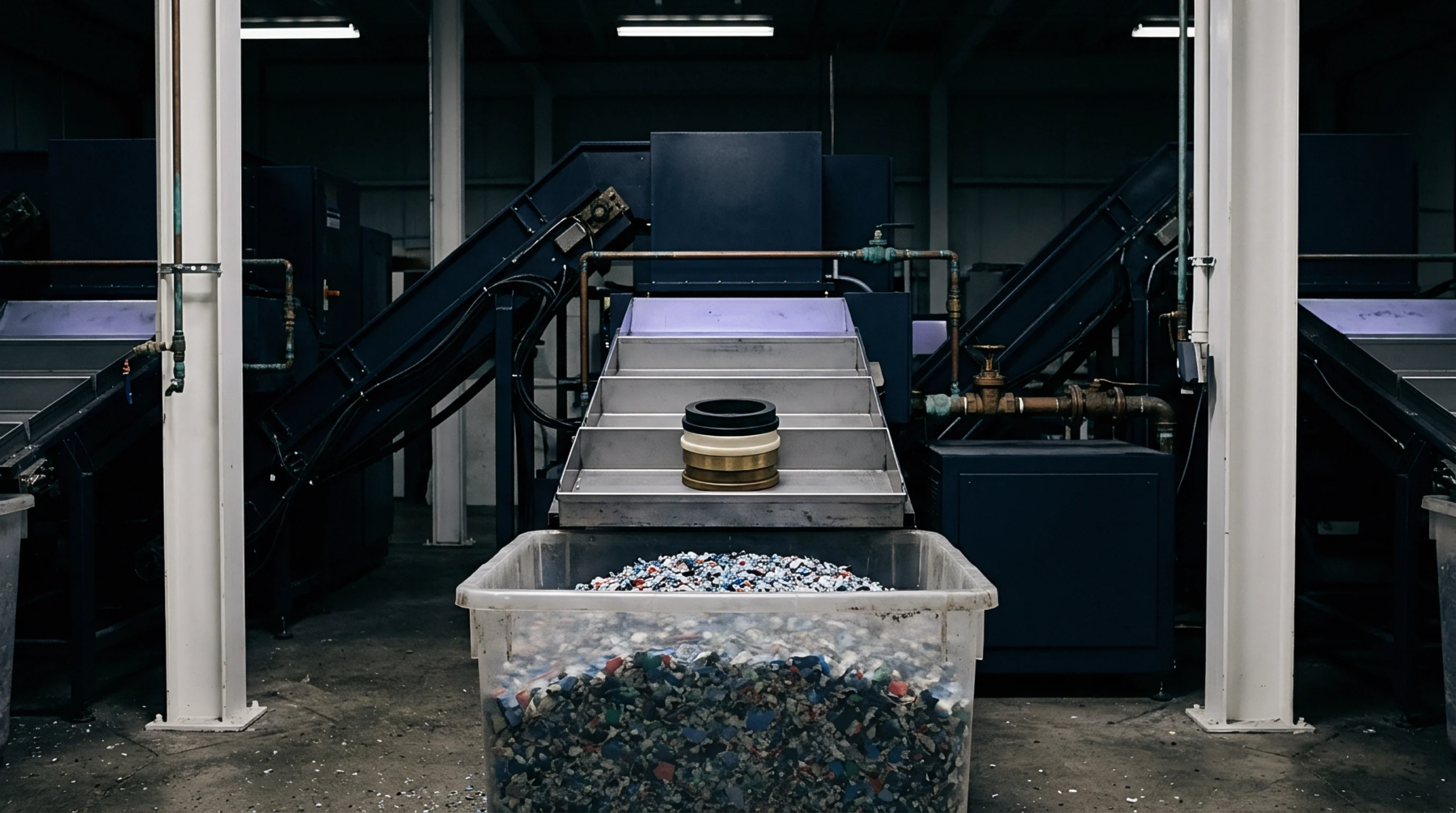
Extrudate Swell and Crosslinked Gel Formation in High Shear Reprocessing Lines
High-shear reprocessing triggers mechanochemical crosslinking in polyethylenes, generating infusible microgels and swelling that ruin downstream film stability.
Continuous melting, mixing, and pumping machines comprising two parallel intermeshing or non-intermeshing screws housed within a figure-eight barrel process polymer formulations with tight residence time control. Operating primarily in a co-rotating, fully intermeshing configuration, the twin screw extruder dominates plastics compounding, additive masterbatch production, devolatilization, and direct reactive extrusion. The positive displacement action of the intermeshing screws wipes material forward continuously, eliminating stagnant melt zones and preventing the degradation typical of single-screw configurations.
Its application boundaries end where stable high-pressure delivery through restrictive dies is required, where single-screw melt pumps are frequently installed downstream to isolate compounding dynamics from shaping pressures.
Co-rotating shafts turn in the same direction, passing resin through a series of modular barrel sections dedicated to feeding, melting, liquid injection, mixing, venting, and pressure discharge. Screws are assembled from individual modular elements, including forward conveying screws, neutral kneading blocks, reverse kneading blocks, and left-handed flow-restricting elements, slid over splined high-torque shafts. Segmented barrel design allows targeted temperature profiling across consecutive process zones, ensuring cold solids conveyance near the feed hopper and elevated heating in downstream homogenization stages.
Intermeshing flights create a self-wiping action where each screw continually cleans residue from the flights of the adjacent screw, preventing resin stagnancy.
Virgin polymers are metered into the machine alongside precise ratios of pigments, flame retardants, or mineral fillers using gravimetric loss-in-weight feeders. The twin screw extruder excels at dispersing micro-scale fillers and immiscible polymer blends due to the precise shear regimes created by customized screw layouts. Downstream side-feeders introduce fragile glass fibres directly into the already-molten polymer, minimizing abrasive screw wear and preserving fibre length for superior mechanical properties in the final composite.
Volatile monomers, moisture, and chemical reaction by-products are drawn off through atmospheric or high-vacuum vent ports positioned along the downstream barrel segments. Compounded strands emerge from multi-hole strand dies, pass through water cooling baths, and enter rotary pelletizers to yield uniform granulate for subsequent injection moulding.
Starve-fed operation characterizes these machines, meaning output rates depend strictly on external gravimetric feeder settings rather than screw speed. Running the machine at high screw speeds with low feeder throughput causes rapid melt temperature escalation via viscous shear dissipation, destroying heat-sensitive matrices like polyoxymethylene or polylactic acid. Low head pressure capability represents an inherent limitation, as high discharge pressures cause melt backflow across screw tips, driving up barrel temperatures and destabilizing throughput.
Screw and barrel wear from processing abrasive additives alters flight clearances, destroying self-wiping capabilities and causing material degradation. A twin screw extruder functions as a precise continuous mixer rather than a dedicated high-pressure die pumping device.
High-shear reprocessing triggers mechanochemical crosslinking in polyethylenes, generating infusible microgels and swelling that ruin downstream film stability.
Expertise is a utility, not a secret. sentiention™ publishes its working knowledge as open reference: intelligence layer covering the materials it sources, the markets it enters, and the reference that serves both.