
Mass Spectrometry Quantification of Non Intentionally Added Photoinitiators in Recyclate
Mass spectrometry quantification of photoinitiators in recyclate requires matrix-matched LC-MS/MS and GC-MS to verify migration limits under EU 10/2011.
Mass spectrometry quantification of photoinitiators in recyclate requires matrix-matched LC-MS/MS and GC-MS to verify migration limits under EU 10/2011.

High resolution mass spectrometry resolves trace pyrolysis oil poisons in mass balance polyethylene before contaminated resin ruins extrusion tooling.

High-resolution mass spectrometry and GC×GC-ToF-MS resolve POSH from MOSH humps, preventing false petroleum rejections through diagnostic fragment and biomarker analysis.

High-resolution mass spectrometry elucidates migrating cyclic adhesive oligomers in recycled laminates to verify structural safety against toxicological limits.

Non-targeted screening uses high-resolution mass spectrometry and analytical evaluation thresholds to isolate and assess unassigned migrating plastic additives.

Relative response factor calibration requires surrogate class matching and safety buffers to prevent tenfold underestimation of food contact migrants.

Decontamination efficiency validation and non-target mass spectrometry quantify NIAS limits to secure food-contact declarations for recycled PET.

Accurate HRMS oligomer quantification in recycled polyolefins requires class-matched surrogate calibrants to achieve the 10 ppb food contact threshold.

Calibrating analytical evaluation thresholds for genotoxic benzophenone photolysis in recycled polyethylene requires setting LC-HRMS screening limits to 0.05 ppb.

Chromatographic screening couples cryogenic extraction, orthogonal GC and LC separation, and high-resolution MS to quantify NIAS against toxicological limits.

Mass spectrometry screening quantifies non-intentionally added polyolefin migrants, converting raw chemical spectra into defensible food contact compliance dossiers.

Harmonized HRMS quantification in recycled plastics requires matrix-matched standard addition and conservative response factor bands to bound screening uncertainty.

Quantifying NIAS in chemically recycled polyolefins requires high-resolution mass spectrometry screening against TTC thresholds and verified migration data per batch.

High-resolution screening identifies unlisted food contact migrants to clear non-intentionally added substances below ten micrograms per kilogram.

Assigning non-intentionally added substances to Cramer tiers determines analytical screening limits, where Class III migrants require migration caps under 90 ppb.

Uncertainty propagation in non-target screening requires combining recovery bias, mass drift, and response factor variance into expanded concentration bounds.

Non-intentionally added substance quantification requires high-resolution mass spectrometry screening paired with toxicological threshold evaluation for safe compliance.

High resolution mass spectrometry quantifies recycled packaging contaminants through matrix-matched response factors and structural threshold exposure modeling.

Ionization efficiency models eliminate thousand-fold semi-quantitative errors in untargeted packaging screening, ensuring defensible non-intentionally added substance compliance.

Polyolefin migration dossiers require dual GC-MS and LC-HRMS non-target screening backed by class-specific surrogate quantification to clear customs audits.

Automated baseline correction with airPLS and spectral deconvolution resolves coeluting NIAS peaks in polymers down to the 10 ppb toxicological threshold.
Non-targeted high-resolution mass spectrometry validates recycled polyolefin food contact compliance by identifying unknown migrants below ten ppb safety limits.

Comprehensive multi-dimensional chromatography quantifies non-target polyethylene migrants down to ten parts per billion to secure food contact declarations.
LC-MS/MS screening of cyclic ester oligomers in PET packaging ensures NIAS compliance and protects food contact declarations from border enforcement rejections.

HRMS decontamination audits require response factor bias corrections to prevent underestimating non-target migrants against food-contact safety thresholds.
High-resolution mass spectrometry screening paired with surrogate semi-quantification establishes food-contact compliance for post-consumer polyolefins.
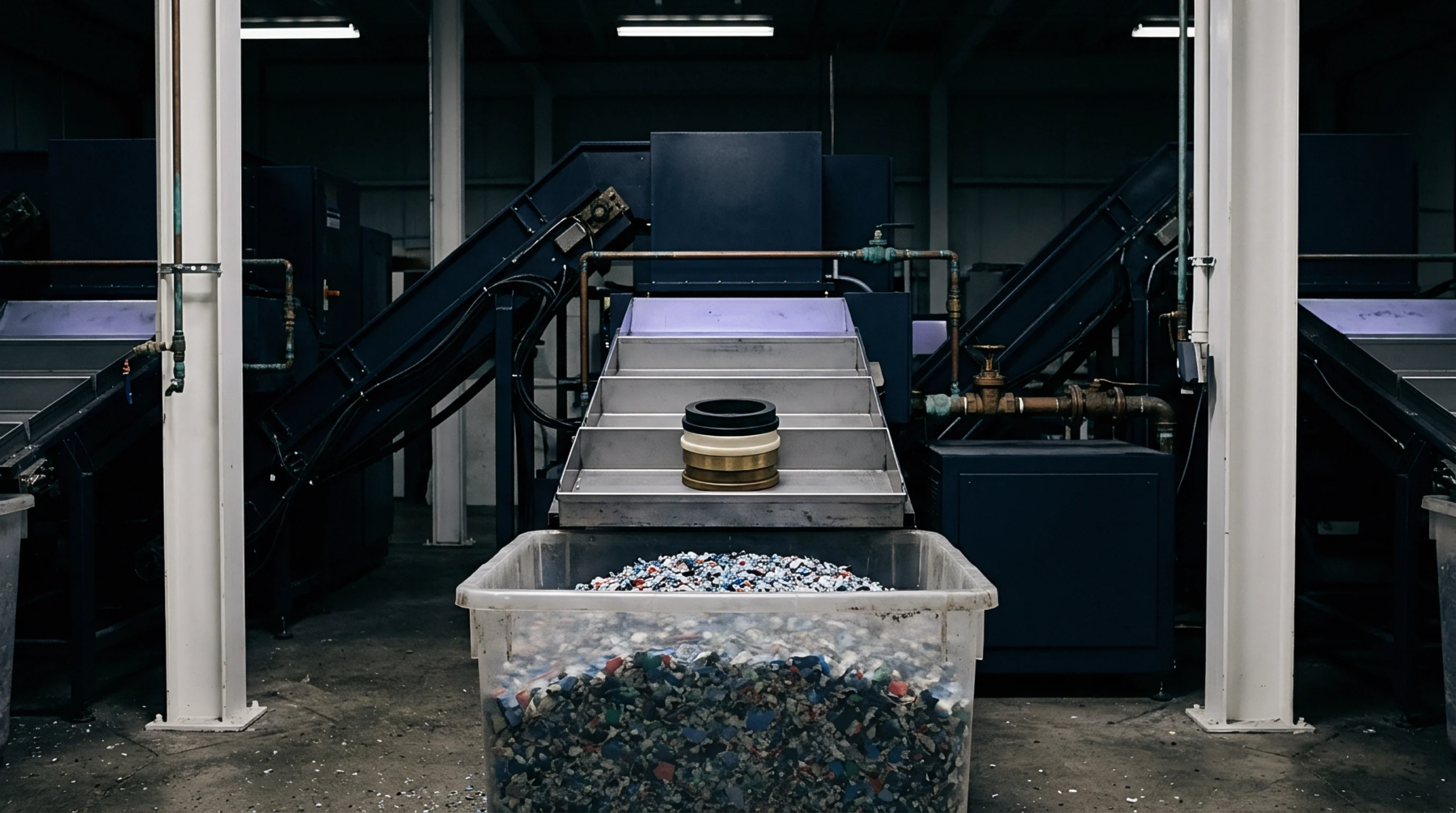
Post-consumer resin dossiers require dual GC-HRMS and LC-HRMS screening with response-factor modeling to establish NIAS toxicological thresholds below 10 ppb.

Polyolefin scrap contaminant baseline screening relies on rapid spectroscopic triage, solvent extraction, and GC-MS profiling to verify food contact safety.

Non-target screening of polyolefin food contact oligomers requires dual GC-APCI and LC-HRMS analysis to resolve saturated aliphatic species below 1000 Da.

Untargeted screening by GC-MS and LC-HRMS combined with Threshold of Toxicological Concern metrics establishes legal food-contact safety for recycled polyolefins.
Expertise is a utility, not a secret. sentiention™ publishes its working knowledge as open reference: intelligence layer covering the materials it sources, the markets it enters, and the reference that serves both.