Meaning
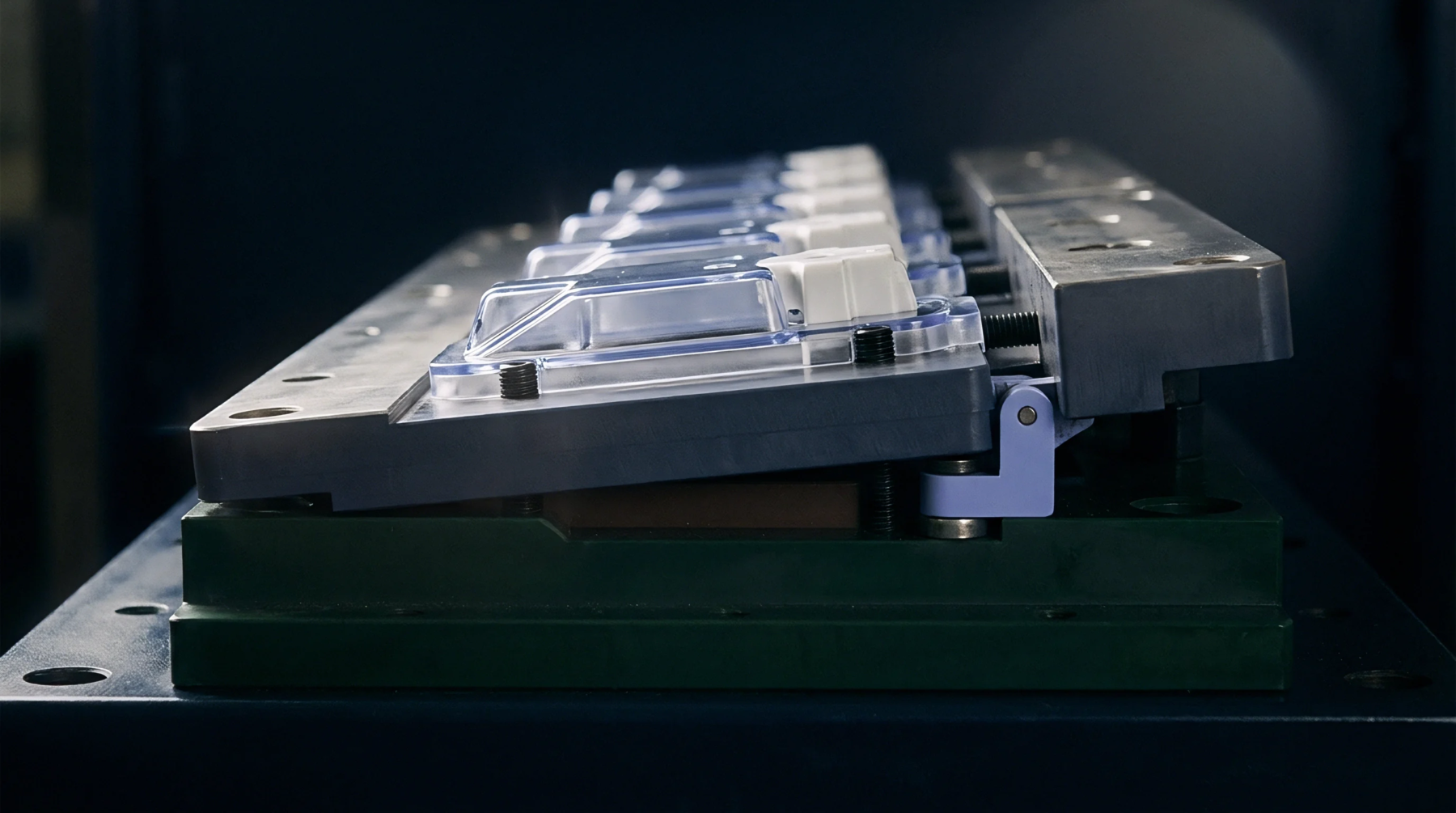
Elastic bending of slender mold steel components occurs when unsymmetrical melt fronts create uneven hydraulic forces during cavity filling. Occurrence of core deflection results in wall thickness variation, dimensional out-of-roundness, and localized structural weakness in deep drawn moulded parts. Bending ceases once pack pressure equalizes throughout the cavity or when the advancing flow front anchors the unsupported core tip.
Part drawings specify allowable wall variation, which moulding processes must maintain despite dynamic pressure shifts during injection. Deep container moulds frequently exhibit wall thinning on the side opposite the gate due to uncompensated core displacement.
Pressure Imbalance
Melt front arrival timing governs the magnitude of lateral forces acting on internal cores. Unequal flow path lengths cause molten polymer to reach one side of a tall core pin earlier than the opposite side. Differential pressure pushes the steel pin off center before cavity packing stabilizes the geometry.
Wall Uniformity
Nominal wall dimensions drift when internal core components bend during high velocity fill phases. Thinner sections cool faster and restrict flow, aggravating internal stress concentrations within the finished part. Resin shrinkage variations around the circumference lead to post-moulding warpage and assembly fit errors.
Tool Alignment
Support pillars and interlocking core pins mitigate hydraulic displacement under peak packing pressures. Steels with high elastic modulus resist flexure under heavy melt loads during high speed injection. Tool designers incorporate core side locks to hold tight tolerances across long draw moulding cycles.