Shear Thinning Index Sensitivity across Bimodal High Density Polyethylene Grades
Shear thinning index sensitivity across bimodal HDPE grades dictates processability, die swell, and pressure drop during high-throughput extrusion


Structure
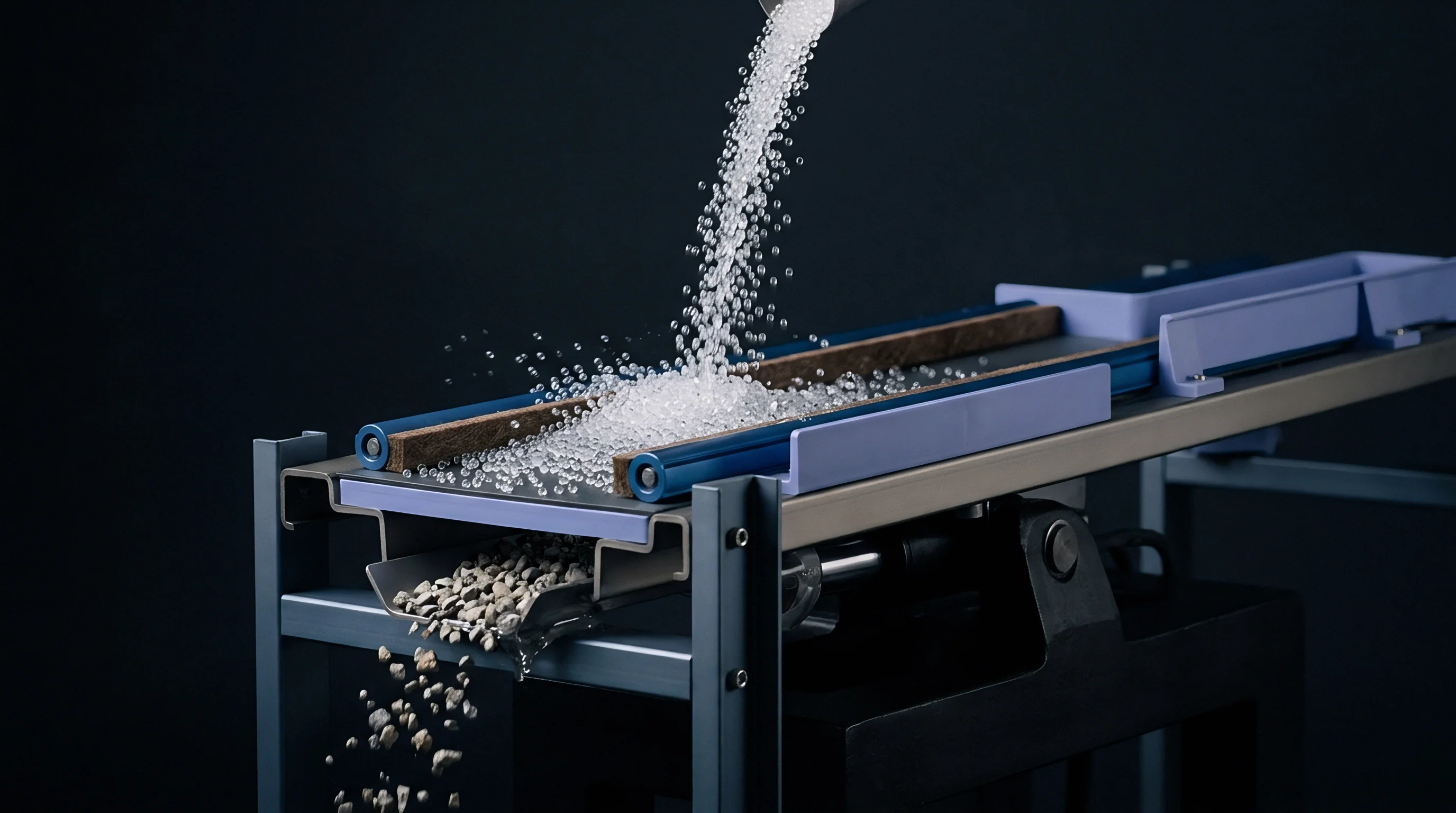
Bimodal Molecular Weight Architecture and Pseudoplastic Non-Linearity
Polymer chains inside dual-reactor high density polyethylene exhibit extreme bimodal molecular weight distributions designed to balance melt strength against low-shear processing resistance. Synthesized across twin gas-phase or slurry reactors operating in series, these resins combine a low molecular weight homopolymer matrix with a high molecular weight copolymer fraction carrying short-chain 1-hexene or 1-butene branches. The high molecular weight tail provides mechanical toughness, environmental stress crack resistance, and creep performance.
The low molecular weight component acts as an internal lubricant during melt processing, reducing apparent viscosity when exposed to intense shear stresses inside extrusion screws and die channels.
Shear thinning sensitivity measures how rapidly non-Newtonian polymer melt decreases in viscosity as applied shear rate escalates. Rheologists define this non-linear behavior through the Power-Law index or Carreau-Yasuda parameters fitted to dynamic mechanical frequency sweeps. In bimodal systems, the broad molecular weight distribution creates an exceptionally wide viscoelastic transition zone.
At low shear rates, long polymer chains remain entangled, maintaining high zero-shear viscosity. As shear rate increases past the initial cross-over frequency, polymer chains uncoil and orient along the flow direction. This structural transition lowers shear resistance dramatically compared to unimodal grades of equivalent overall density.
Broad molecular weight distributions increase pseudoplastic shear response without compromising zero-shear melt strength.
Low melt indices increase head pressure.
Quantitative evaluation of shear thinning sensitivity relies on comparing viscosity values across multi-decade shear rate regimes. Capillary rheometry conducted at 190 degrees Celsius isolates the melt response from low shear conditions of ten reciprocal seconds up to production rates exceeding five thousand reciprocal seconds. Dual-reactor architectures show sharp viscosity drops across this processing window.
A steep reduction in viscosity at high shear rates allows processors to extrude dense polymer matrices through tight die gaps without exceeding motor torque or pressure head safety limits.

Structural Dynamics Driving Shear Response
Non-Newtonian pseudoplasticity in dual-reactor polyethylenes stems directly from molecular topology and chain entanglements:
- High molecular weight tail length controls non-linear relaxation behavior during high-shear entry into die land areas.
- Comonomer incorporation ratio inside the upper molecular mass fraction determines chain disentanglement resistance under steady shear deformation.
- Zero-shear melt viscosity reflects total chain length accumulation while remaining blind to short-chain branching distribution across the two reactor phases.
The allocation of comonomer exclusively into the high molecular weight reactor stage alters the entangling density of the polymer melt. Under deformation, these long copolymer chains bear the majority of applied hydrodynamic stress. Because these long chains orient preferentially along stream lines, shear thinning sensitivity scales non-linearly with the weight fraction of the high-mass tail.
Small changes in reactor conditions that alter the balance between low-mass matrix and high-mass tail produce disproportionate shifts in processing behavior downstream.
What fundamental molecular mass threshold governs the sharp transition between predictable shear thinning behavior and unrecoverable viscoelastic melt imbalance across twin-reactor slurry polymerization lines?


Die

Flow Behavior and Viscous Dissipation inside Extrusion Passages
Extrudate emerging from narrow tooling experiences spatial velocity gradients that stretch polymer chains out of their equilibrium configurations. Inside smooth land areas of blown film dies, pipe dies, and accumulator heads, local shear rates routinely span four orders of magnitude. The apparent viscosity of a bimodal grade drops by up to two orders of magnitude between the screw metering zone and the die entrance land.
This pseudoplastic response governs total pressure drop, mechanical power draw, and internal thermal generation via viscous dissipation.
| Grade Class | MFR 2.16 kg (g/10 min) | HLMI 21.6 kg (g/10 min) | Flow Rate Ratio (FRR) | Capillary STI Index (100 to 1000 s⁻¹) | Die Swell Ratio (190 °C) |
|---|---|---|---|---|---|
| PE 100 Pressure Pipe | 0.08 | 8.5 | 106 | 4.82 | 1.38 |
| High-Speed Blown Film | 0.05 | 9.5 | 190 | 6.45 | 1.52 |
| Large Blow Molding (200L) | 0.02 | 2.4 | 120 | 5.15 | 1.45 |
| Small Container Blow Molding | 0.15 | 14.0 | 93 | 3.95 | 1.28 |
Shear rate dictates apparent viscosity.
Viscous dissipation scales with the product of melt viscosity and the square of local shear rate. High shear thinning sensitivity mitigates excessive temperature rise in high-speed extrusion lines by dropping local viscosity precisely where shear rates reach their maximum near die walls. If a bimodal resin lacks adequate shear thinning responsiveness, mechanical energy transforms into thermal energy, elevating melt temperature beyond target limits and inducing thermal degradation.
Bimodal high-speed film grades operating with a flow rate ratio of 190 exhibit a capillary shear thinning index of 6.45 between 100 and 1000 reciprocal seconds at 190 degrees Celsius.
Extrudate swell, or die swell, occurs as polymer chains recover their coiled spatial shapes upon exiting constrained die orifices. High molecular weight fractions store elastic energy during high-shear transit. Higher shear thinning sensitivity generally correlates with broader molecular weight distribution, which increases elastic memory and die swell ratios.
Tool designers accommodate this viscoelastic recovery by machining relief land angles and modifying die land length-to-gap ratios.
Processing high-density bimodal resins requires setting die land length-to-gap ratios proportional to the high-load melt flow ratio of the incoming lot.


Sampling

Incoming Inspection and Rheometric Verification Limits
Receiving inspection standard protocols relying solely on melt flow rate tests under standard 2.16 kilogram loading fail to detect major variations in bimodal resin performance. Standard Melt Flow Rate (MFR) measurements sample only low-shear flow conditions near two to ten reciprocal seconds. A lot conforming strictly to a single-point 2.16 kilogram specification can harbor broad variations in high molecular weight tail distribution, altering processing shear response at commercial production speeds.

Are Dual-Reactor Bimodal Resins Susceptible to High-Shear Viscosity Drift?
Dual-reactor polymerization lines experience subtle drift in catalyst efficiency or hydrogen split ratios between reactors. This operational variation shifts the ratio of high-to-low molecular weight polymer without noticeably altering the low-load melt index. High Load Melt Index (HLMI) measured under 21.6 kilogram weights provides a higher shear data point, yielding the Flow Rate Ratio (FRR = HLMI / MFR).
While FRR serves as a useful incoming screening index, full verification requires high-pressure capillary rheometry or dynamic shear spectrum measurements across rotational rheometers.
Standard melt index misses elasticity.
| Test Method | Standard Reference | Deformation Regime | Shear Rate Window (s⁻¹) | Defect Detection Sensitivity |
|---|---|---|---|---|
| Standard Melt Index (MFR) | ISO 1133-1 Condition D | Low Shear Capillary | 1 to 10 | Monitors average molecular mass only |
| High Load Melt Index (HLMI) | ISO 1133-1 Condition G | Moderate Shear Capillary | 50 to 200 | Detects global shift in HMW mass fraction |
| Rotational Dynamic Frequency Sweep | ISO 6721-10 | Oscillatory Shear | 0.01 to 500 | Resolves cross-over modulus and zero-shear viscosity |
| High-Pressure Capillary Rheometry | ISO 11443 | High Shear Transient Flow | 10 to 10,000 | Quantifies true shear thinning and die wall slip |
Pellet uniformity governs bulk density.
Uncertainties in capillary rheometry data arise primarily from barrel wall temperature gradients and uncorrected entrance pressure drops. When evaluating vendor Certificate of Analysis claims, buyers verify whether reported apparent viscosity values include Bagley and Rabinowitsch corrections. Without Rabinowitsch correction, calculated non-Newtonian shear rates underestimate true wall shear rates by fifteen to thirty percent depending on the power-law index of the specific grade.
Contractual specifications referencing ISO 11443 high-shear capillary viscosity at 1000 reciprocal seconds protect buyers against undetected lot-to-lot processing speed drops.
Capillary tests reveal lot drift.
Incoming inspection procedures verify resin uniformity before pneumatic transfer into storage silos:
- Collect six incremental pellet grab samples across the top, middle, and discharge valve of the container car.
- Vacuum dry the combined polymer lot at 80 degrees Celsius for four hours to eliminate surface condensation.
- Load the capillary barrel at 190 degrees Celsius and allow five minutes of isothermal melt soaking.
- Perform an apparent shear rate sweep from ten to five thousand reciprocal seconds using a tungsten carbide capillary die.
- Calculate the ratio of dynamic viscosities at one hundred and one thousand reciprocal seconds to determine lot index drift.
Suppliers frequently defend high-shear flow variation by claiming that standard single-point melt index testing remains the only contractually binding release metric under published product datasheets.

Surge

Melt Instabilities and Shear-Induced Defect Mechanisms
Flow destabilization occurs when shear stresses at die exit passages exceed critical viscoelastic limits. In bimodal HDPE processing, high shear thinning sensitivity extends the stable processing window, delaying the onset of melt fracture. When extruding grades with deficient shear thinning responsiveness, local wall shear stress reaches critical thresholds prematurely, causing surface distortion known as sharkskin melt fracture.
As line speeds increase further, periodic slip-stick oscillations generate gross melt fracture, rendering extruded profiles unusable.
Uncontrolled shear causes surface fracture.
Surface melt fracture initiates when wall shear stress exceeds 0.30 MPa during high-throughput bimodal extrusion.
Processing failures tied directly to improper shear thinning sensitivity manifest across multiple tooling geometries:
- Gross melt fracture initiates when shear stress at the die wall exceeds three hundred kilopascals during high-speed film line acceleration.
- Parison sag deformation occurs in large-part blow molding when low-shear yield viscosity drops below specified structural resistance limits in accumulator heads.
- Gauge variation banding emerges across continuous extrusion profiles when local shear thinning rates fluctuate across circumferential heater control zones.
- Thermal dissipation spiking causes polymer chain scission inside high-shear screw flight gaps when low shear thinning rates generate excessive melt temperatures.
Melt strength prevents sagging.
Parison sag in blow molding represents a competing viscoelastic challenge. While high shear thinning sensitivity lowers extrusion head pressure during parison ejection, the material must immediately recover high low-shear viscosity upon exiting the die land. If the high molecular weight tail relaxes too rapidly, gravity stretches the molten hollow tube before the mold closes, causing uneven wall thickness distributions across finished hollow containers.
Viscous heating raises barrel temperatures.
Selecting a bimodal resin with inadequate shear thinning sensitivity forces operators to elevate barrel temperature profiles to reduce head pressure, which increases cooling cycle times, induces severe thermal scission, and triples scrap generation rates.


Margin

Commercial Conversion Economics and Energy Intensity
Polymer grade selection establishes fixed boundaries for energy efficiency and part cycle times. Motor power required to drive an extrusion screw correlates directly with melt viscosity inside the transition and metering zones. High shear thinning sensitivity lowers apparent viscosity under screw flight shear rates, reducing specific energy consumption measured in kilowatt-hours per kilogram of processed resin.
High pressure drops strain drives.
Consider a 40-tonne commercial production run of corrugated HDPE drainage pipe extruded on a seventy-five millimeter single-screw extruder operating at three hundred kilograms per hour. Switching from a standard unimodal pipe grade to an engineered bimodal pipe grade with elevated shear thinning sensitivity drops melt head pressure from twenty-eight megapascals to twenty-one megapascals at identical mass flow rates. Lower head pressure reduces melt temperature at the die exit by twelve degrees Celsius due to decreased viscous heating, allowing downstream cooling tanks to solidify the pipe profile faster.
| Operational Parameter | Unimodal HDPE Baseline | Standard Bimodal HDPE | High-STI Bimodal HDPE |
|---|---|---|---|
| Extruder Mass Throughput (kg/hr) | 260 | 310 | 350 |
| Specific Energy Consumption (kWh/kg) | 0.38 | 0.31 | 0.26 |
| Melt Head Pressure (MPa) | 29.5 | 24.0 | 20.5 |
| Die Exit Melt Temperature (°C) | 218 | 206 | 194 |
| Scrap Rate from Wall Instability (%) | 4.2 | 1.8 | 0.4 |
| Landed Processing Cost (USD/tonne) | 1,420 | 1,360 | 1,305 |
Freight tariffs modify landed costs.
In high-volume manufacturing, small shifts in throughput alter conversion margins. Elevated shear thinning responsiveness permits faster line speeds without exceeding motor current limits or causing die wall fracture. Higher throughput spreads fixed plant overhead across greater product tonnage, lowering conversion cost per kilogram.
Polymer chains relax under heat.
Quality qualification dossiers require precise rheological parameters to protect conversion economics:
- High-shear viscosity parameters state apparent viscosity across a four-point shear rate sweep measured under ISO 11443 test guidelines.
- Batch tolerance boundaries define maximum allowable flow rate ratio deviation to plus or minus six percent from baseline lot certificates.
- Extrudate swell allowances establish acceptable die swell ratios between one point two and one point four under standard capillary entry angles.
- Thermal stability guarantees mandate oxidation induction times exceeding thirty minutes at two hundred degrees Celsius under pure oxygen test conditions.
Purchase specifications incorporating ISO 11443 capillary melt viscosity tolerances bound supplier lot variations, transferring liability for lost throughput directly back to the resin distributor when high-shear viscosity drifts beyond baseline caps.


Dossier

Procurement Specification Drafting and Technical Verification
Securing resin performance requires translating rheological science into binding commercial purchase orders. Relying on basic marketing datasheets exposes buyers to subtle resin modifications made by primary producers optimizing their own reactor economics. A comprehensive procurement dossier specifies molecular architecture controls alongside standard physical property targets like density and single-point melt index.
Yield stress resists static deformation.
Technical purchase contracts define acceptable limits for Flow Rate Ratio, dynamic cross-over frequency, and high-shear apparent viscosity. Specifying these parameters forces compounders and primary producers to supply consistent molecular weight distributions lot after lot. Incoming verification testing then validates shipped material against these contractual baselines before unloading into main silo systems.
Short chain branches alter density.
When drafting technical annexes for bimodal high density polyethylene contracts, buyers require raw high-pressure capillary rheometer curves spanning ten to ten thousand reciprocal seconds at target processing temperatures. Standardizing test methods, reference temperatures, and die geometry configurations ensures imported lots match factory qualifications perfectly. Enforcing strict incoming rheometric verification protects converters against unexpected die swell, thermal degradation spikes, line speed drops, and premature field failures in high-stress end-use applications.