Evaluating Secondary Amide Migration Dynamics in Low Density Polyethylene Sealing
Secondary amides control polyethylene surface bloom kinetics to maintain stable friction without forming weak organic boundary layers that compromise hot tack strength.


Molecules
Polyethylene film formulation relies heavily on fatty acid derivatives to modulate kinetic coefficient of friction without compromising structural barrier properties. In low-density polyethylene (LDPE) matrix architectures, primary carboxamides such as erucamide and oleamide have long served as standard internal lubricants. Because of their limited solubility and low molecular mass, these primary structures migrate rapidly from the amorphous polymer bulk to the film surface, creating an effective lubricating layer within 24 to 48 hours post-extrusion.
However, that swift migration introduces severe liabilities during high-speed thermal sealing: high surface concentrations of primary amides form weak organic boundary layers at the bond interface, lowering hot tack strength and raising seal initiation temperatures.
Secondary amides solve this thermal interface degradation through modified molecular weight and altered steric hindrance. Structural variations like erucyl erucamide, oleyl palmitamide, and stearyl erucamide incorporate secondary amine linkages flanked by extended aliphatic chains. By doubling the hydrocarbon chain volume compared to primary analogs, secondary amides increase molecular weight from approximately 337 g/mol for erucamide to 648 g/mol for erucyl erucamide.
This added mass alters matrix diffusion dynamics, yielding controlled migration rates that prevent excessive surface accumulation during storage.
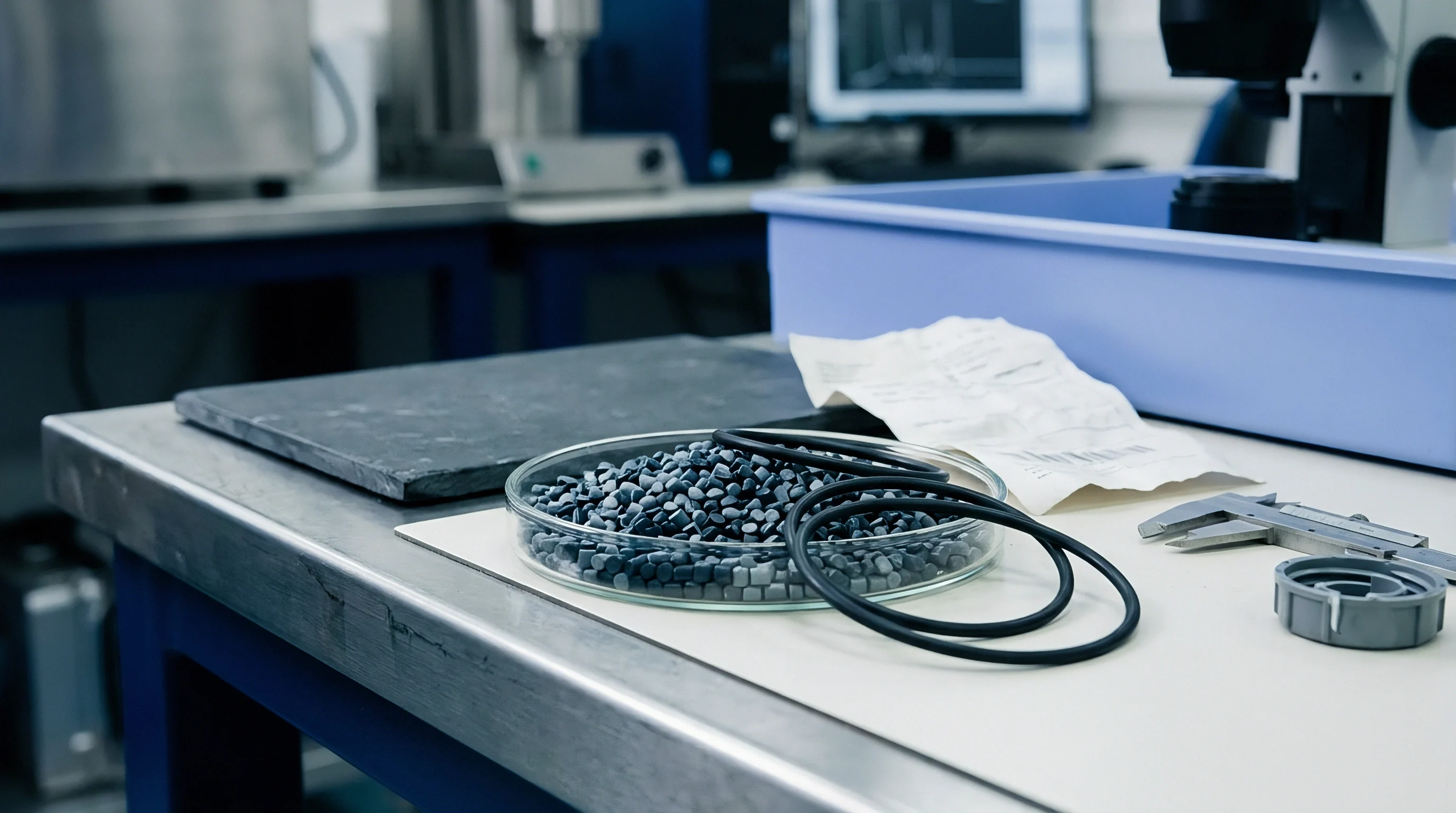
Structural Differences between Primary and Secondary Slip Agents
Monofunctional fatty carboxamides possess a single aliphatic hydrocarbon chain attached to a polar head group, where the high polarity of the terminal primary amide group drives aggressive phase separation from the non-polar polyethylene backbone. Secondary amides instead contain an internal amide nitrogen bonded to two hydrophobic alkyl chains. This architecture lowers the effective dipole moment per unit molecular weight while expanding the molecule’s hydrodynamic radius, increasing mechanical entanglement within the amorphous inter-crystalline regions of low-density polyolefin networks.
Thermal stability also differs substantially between the two classes. Primary amides exhibit measurable volatility at extrusion temperatures above 200°C, generating smoke, die lip buildup, and degradation products that contaminate seal zones. Secondary amides, by contrast, remain thermally stable up to processing temperatures of 280°C. That stability minimizes oxidative degradation during blown film extrusion, preventing oxidized fatty acid species from impairing film optics or inter-layer lamination adhesion.
| Chemical Compound | CAS Registry Number | Molecular Weight (g/mol) | Melting Point (°C) | Diffusivity at 23°C (cm²/s) | Thermal Decomposition TGA 5% Loss (°C) |
|---|---|---|---|---|---|
| Erucamide (Primary) | 112-84-5 | 337.57 | 78 – 81 | 1.8 × 10⁻¹⁰ | 235 |
| Oleamide (Primary) | 301-02-0 | 281.48 | 68 – 72 | 4.2 × 10⁻¹⁰ | 215 |
| Erucyl Erucamide (Secondary) | 54290-13-8 | 648.14 | 75 – 78 | 2.4 × 10⁻¹¹ | 310 |
| Oleyl Palmitamide (Secondary) | 16260-09-6 | 505.88 | 67 – 71 | 5.1 × 10⁻¹¹ | 295 |
| Stearyl Erucamide (Secondary) | 10094-45-8 | 606.06 | 79 – 82 | 3.0 × 10⁻¹¹ | 305 |
Diffusion Kinetics in the Semi-Crystalline Polyethylene Matrix
Mass transport through low-density polyolefin film follows Fickian mechanisms governed by amorphous volume fraction and temperature. LDPE morphology comprises crystalline lamellae suspended within an amorphous matrix; because crystalline domains are impenetrable to additive molecules, diffusion pathways must wind through amorphous channels. Diffusivity of erucyl erucamide in 0.920 g/cm³ LDPE at 23°C spans 1.2 × 10⁻¹¹ cm²/s to 4.5 × 10⁻¹¹ cm²/s across published literature, depending on resin polydispersity and branch density.
This range reflects variations in path tortuosity created by short-chain branching distributions.
Temperature accelerates diffusion according to Arrhenius relationships. Storing converted film reels at elevated ambient temperatures drives rapid primary amide accumulation at the surface, creating sticky, over-bloomed film layers. Secondary amides exhibit higher activation energies for diffusion (Ea ≈ 85 kJ/mol for secondary versus Ea ≈ 60 kJ/mol for primary amides).
Because of this higher activation energy, secondary amides resist unwanted migration surges when packaging reels encounter thermal spikes during transit or warehousing, maintaining consistent kinetic coefficient of friction values between 0.18 and 0.25 over extended storage without flooding the polymer surface.
Questions remain whether long-chain secondary aliphatic structures form localized co-crystalline phases with low-density polyolefin tie-chains or remain isolated within amorphous inter-planar pockets.


Film
Surface dynamic equilibrium governs the long-term sliding performance of extruded flexible packaging substrates. Blown film line operators introduce slip additives to prevent film layers from blocking on take-up rolls and to ensure smooth operation on form-fill-seal equipment. Primary amides bloom rapidly, reaching kinetic friction equilibrium within 48 hours.
That speed, however, comes with continuous surface accumulation: over several months, primary amides form thick, irregular crystalline plates on the film exterior, causing optical haze, poor ink adhesion, and heat seal interface contamination.
Secondary amides yield self-limiting surface coverage. Owing to their hydrophobic balance and molecular volume, secondary amides establish an ordered monomolecular or sparse multi-molecular surface array. Once coverage reaches equilibrium, chemical potential between the amorphous bulk phase and the surface layer balances, halting net migration and maintaining consistent surface coverage across changing warehouse conditions to protect converting performance.

Surface Accumulation Profiles during Storage
Ambient post-extrusion conditions dictate the rate at which additive molecules undergo phase separation from the bulk resin. Immediately following blown film bubble collapse, additives remain dissolved in the non-crystalline melt phase. As the film cools below its crystallization temperature (typically 105°C to 112°C for LDPE), the solubility of fatty amides drops sharply, and primary amides undergo rapid supersaturation that drives aggressive migration toward the outer film surface.
Secondary amides achieve equilibrium coefficient of friction values without forming thick crystalline bloom layers that destabilize thermal seal interfaces.
Secondary amides migrate at a controlled rate, requiring 96 to 144 hours to reach maximum coefficient of friction reduction. The surface concentration of stearyl erucamide needed for a stable coefficient of friction of 0.20 on high-density corona-treated surfaces remains unquantified in standardized literature; a buyer establishes empirical baseline curves for each specific extruder setup. Testing confirms that secondary amide surface concentration reaches a plateau at approximately 15 to 25 mg/m², whereas primary erucamide surface concentration continues climbing past 60 mg/m² under identical thermal history conditions.
Crystallization Kinetics at the Polymer Interface
Once migrant molecules reach the exterior surface, nucleation occurs into distinct solid morphological domain structures. Primary amides nucleate into coarse, spherulitic crystalline platelets measuring 2 to 10 micrometers across. These large crystals scatter light, increasing total film haze by 1.5 to 3.0 percent over baseline levels, and detach easily during bag-making operations to deposit organic dust on sealing jaws and optical registration sensors.
Secondary amides crystallize into broad, thin, conformable domains that lay flat against the polyolefin surface. This thin domain morphology preserves optical clarity, adding less than 0.3 percent haze to a standard 50-micrometer LDPE blown film. Low-profile surface crystals resist mechanical shear during high-speed web handling, allowing film rolls wound under high tension to maintain consistent unwinding force without additive transfer to adjacent web surfaces.
The following failure modes illustrate miscalculations in secondary amide migration behavior within low-density polyethylene sealing applications:
- Thermal Seal Delay caused by excessive initial let-down dosage requiring elevated sealing temperatures to burn off surface additive mass.
- Corona Treatment Decay resulting from polar secondary amide head groups reorienting into the bulk polymer during inline surface treatment.
- Lamination Interlayer Delamination triggered by uncontrolled secondary amide migration through solventless polyurethane adhesives.
- Coefficient of Friction Spikes induced by storing converted reels below the glass transition phase of the secondary amide, halting necessary migration.
Sudden coefficient of friction spikes during hot summer transport stem either from warehouse storage humidity or thermal desorption of volatile slip fractions.


Heat
Thermal sealing efficiency depends on uninterrupted polymer chain entanglement across the molten film boundary. During impulse or hot-bar heat sealing, heat transfers through the film layer, melting crystalline domains and allowing amorphous polyolefin chains to interdiffuse across the interface. Standard sealing temperatures for LDPE range from 120°C to 160°C under jaw pressures of 0.15 to 0.40 N/mm².
When primary amides occupy the interface, thermal energy vaporizes part of the organic layer while melting the rest into an incompatible fluid barrier, preventing deep macromolecular interdiffusion and reducing total seal strength.
Secondary amides minimize interfacial interference through high thermal stability and controlled surface mass fraction. Because surface concentration remains thin and uniform, secondary amide molecules dissolve rapidly into the molten polyolefin matrix during sealing. This quick dissolution clears the interface, permitting uninterrupted chain entanglement so that fusion bonds exhibit ultimate seal strengths comparable to additive-free control resins.
Seal Initiation Temperature and Hot Tack Performance
The minimum jaw energy required to establish a continuous fusion bond defines the operational window on high-speed vertical form-fill-seal lines. Primary slip additives shift the seal initiation temperature (SIT) upward by 8°C to 15°C compared to virgin resin formulations. Higher SIT requirements force converting machinery to operate at reduced line speeds or elevated jaw temperatures, increasing energy consumption and thermal stress on packaging materials.
The SIT shift attributable to secondary amide crystallization varies between 3°C and 8°C under ISO 11607 testing, resting on a sample size of 12 test strips at 0.5 MPa jaw pressure.
Hot tack performance measures the ability of a molten seal to withstand mechanical stress immediately after opening the sealing jaws. In operations filling dense powders or liquids, weak hot tack leads to bottom-seal rupture during filling. Primary amides suppress hot tack force during the critical 100 to 500 millisecond cooling window post-sealing, whereas secondary amides preserve hot tack initiation profiles, allowing high-speed packaging equipment to operate at maximum mechanical throughput.
A secondary amide content of 1,200 ppm in 0.922 g/cm³ LLDPE yields a hot tack force exceeding 3.5 N/15mm at 115°C under 0.3 N/mm² jaw pressure.

Why Does Secondary Amide Over-Blooming Interfere with Hot Tack Initiation?
Excessive boundary layer accumulation creates an organic barrier that prevents immediate inter-diffusion of molten polyolefin chains during jaw contact. When heat seal jaws close, surface additives must either dissolve into the polymer melt or squeeze out of the seal zone. Primary amides create localized micro-phase separation within the molten boundary layer, forming microscopic void networks upon cooling that act as stress concentration points under mechanical loading, causing premature seal failure along the seal line.
Secondary amides dissolve smoothly into the amorphous polyolefin melt phase at temperatures above 110°C. High compatibility between secondary alkyl chains and the LDPE backbone eliminates phase separation within the molten seal zone, allowing full entropic chain mixing across the interface and restoring joint integrity upon cooling. Consequently, film systems containing secondary slip agents maintain structural seal performance across wide sealing temperature windows.
| Additive Formulation | Concentration (ppm) | Aging (23°C / 50% RH) | Seal Initiation Temp (°C) | Peak Hot Tack Force (N/15mm) | Ultimate Seal Strength (N/15mm) |
|---|---|---|---|---|---|
| Unfilled LDPE Control | 0 | 24 Hours | 108 | 4.2 | 28.5 |
| Erucamide (Primary) | 1,000 | 24 Hours | 116 | 2.8 | 22.1 |
| Erucamide (Primary) | 1,000 | 30 Days | 124 | 1.9 | 17.4 |
| Erucyl Erucamide (Secondary) | 1,200 | 24 Hours | 111 | 3.9 | 27.2 |
| Erucyl Erucamide (Secondary) | 1,200 | 30 Days | 112 | 3.8 | 26.8 |
| Oleyl Palmitamide (Secondary) | 1,500 | 30 Days | 114 | 3.6 | 25.9 |
Industrial processing of synthetic polyolefins mirrors structural crystallization phenomena observed in heavy paraffin wax refined fractions, where chain-length distribution dictates solid-state migration pathways. Evaluating secondary amide performance requires precise laboratory verification protocols to track thermal seal degradation across extended shelf-life intervals. The following evaluation sequence isolates surface thermal degradation mechanisms:
- Cut representative film samples from center and edge locations across the blown film bubble.
- Condition film specimens at 23°C and 50 percent relative humidity for designated intervals up to 90 days.
- Measure kinetic coefficient of friction according to ASTM D1894 standard parameters.
- Execute heat sealing across a temperature range of 100°C to 150°C in 5°C increments using a calibrated hot-bar sealer.
- Evaluate hot tack strength within 200 milliseconds of jaw release using an automated hot tack tester under ASTM F1921.
- Perform tensile seal strength testing on fully cooled specimens according to ASTM F88 standard parameters.
- Analyze seal rupture cross-sections using scanning electron microscopy to verify ductile versus brittle failure morphology.
Miscalculating secondary amide surface concentration thresholds reduces hot tack strength below minimum converting line pull tolerances, resulting in instantaneous pouch seam rupture and total batch rejection.

Measurement
Analytical characterization of organic additive concentrations requires precise extraction and spectroscopic differentiation. Quality control laboratories must distinguish between total added masterbatch loading and actual surface-migrated additive mass: total loading confirmation ensures compounding accuracy, while surface concentration measurements predict coefficient of friction stabilization and heat seal initiation thresholds.
Standard analytical workflows combine spectroscopic identification with chromatographic separation. Attenuated Total Reflectance Infrared Spectroscopy provides non-destructive, rapid surface composition profiles, while Gas Chromatography coupled with Flame Ionization Detection quantifies total bulk concentrations down to parts-per-million sensitivity.
Attenuated Total Reflectance Infrared Spectroscopy Quantification
Internal reflection elements made of zinc selenide or diamond probe the top few micrometers of polyolefin surfaces. The infrared beam penetrates the film sample to a depth governed by wavelength, crystal refractive index, and incidence angle (typically 0.5 to 2.0 micrometers depth), where absorption bands characteristic of secondary amides appear at specific wave numbers for direct identification.
Primary amides exhibit double absorbance peaks in the Amide I and Amide II regions at 3350 cm⁻¹ and 3180 cm⁻¹ corresponding to asymmetric and symmetric N-H stretch vibrations. Secondary amides display a single N-H stretch absorption band centered near 3290 cm⁻¹, accompanied by a strong trans-Amide II secondary N-H bending peak at 1550 cm⁻¹. Ratios between the Amide carbonyl peak at 1640 cm⁻¹ and internal polyethylene reference peaks at 1463 cm⁻¹ (CH₂ bending) allow quantitative mapping of surface additive concentration growth over time.
ASTM D6986 compliance requires solvent extraction efficiency above 98 percent for quantitative secondary amide gas chromatography assaying.

Gas Chromatography and Solvent Extraction Protocol
Bulk quantitative determination demands full separation of fatty compounds from polyolefin resins using boiling organic liquids. Refluxing film samples in methyl ethyl ketone or boiling isopropyl alcohol extracts low-molecular-weight additives without dissolving the high-molecular-weight polyethylene backbone. After solvent evaporation, the residue is reconstituted in chloroform for gas chromatographic injection.
Gas chromatography separation utilizes high-temperature capillary columns coated with non-polar 5 percent phenyl-methylpolysiloxane stationary phases. Secondary amides possess high boiling points, requiring column oven temperatures programmed up to 340°C. Peak area integration calibrated against internal standards (such as heptadecanoid derivatives) provides exact quantitative loading values for incoming lot verification.
| Analytical Technique | Target Phase | Minimum Detection Limit | Sample Preparation Time | Primary Capability |
|---|---|---|---|---|
| FTIR-ATR Spectroscopy | Surface (0.5 – 2.0 µm) | 5 mg/m² | < 5 Minutes | Surface migration kinetics and functional group identification |
| GC-FID Extraction | Bulk Matrix | 10 ppm | 2 – 4 Hours | Total dosage quantification and additive purity verification |
| HPLC-ELSD | Bulk Matrix / Surface extract | 5 ppm | 1 – 2 Hours | Thermally labile high-molecular-weight secondary amide assay |
| TOF-SIMS Surface Analysis | Outer Surface (< 2 nm) | 0.1 mg/m² | > 24 Hours | Ultra-topographical surface blooming morphology mapping |
Incoming quality control departments execute rigorous screening protocols to prevent non-compliant resin lots from entering production lines. Standard lot qualification protocols demand systematic execution across incoming railcars and gaylord boxes:
- Pellet Sampling Density establishing a minimum sampling frequency of five container locations per 20-tonne shipment lot.
- Bulk Extraction Screening quantifying active secondary amide concentration against supplier certificate of analysis specs.
- Melting Point Verification executing differential scanning calorimetry to detect contamination from lower-cost primary amides.
- Microscopic Gels Analysis inspecting extruded test ribbon samples for un-dispersed secondary amide masterbatch agglomerates.
Standard quality specifications under ASTM D6986 mandate that secondary amide extraction yields falling outside five percent of target let-down values trigger automatic quarantine of the incoming resin lot.

Margin
Commercial viability of specialized slip masterbatch formulations rests on landed cost per converted package unit. Secondary amides carry a price premium over commodity primary amides due to complex chemical synthesis routes and multi-stage purification requirements. Raw erucamide masterbatch trades near $3,100 per tonne, whereas erucyl erucamide masterbatch formulations range from $4,200 to $5,500 per tonne depending on active loading and carrier resin grade.
Evaluating total landed cost requires analyzing converting scrap rates, line speed efficiencies, and warranty exposures. Primary slip additives save upfront masterbatch expenditure but incur downstream financial penalties through seal failures, rejected pouch lots, and slow packaging machine speeds. Utilizing secondary amides protects total production operating margins by stabilizing packaging performance.

Masterbatch Let-Down Economics and Additive Loading
Compounding facilities introduce active fatty compounds using concentrated carrier pellets calculated by mass fraction balance. Typical masterbatch concentrations contain 5.0 to 10.0 percent active amide dispersed within an LDPE matrix matching the melt flow rate of the target film resin. Let-down ratios usually fall between 1.0 and 2.5 percent by weight, yielding final active additive concentrations of 500 to 2,000 ppm in the finished blown film.
Assume a 50-tonne converter production run using an LDPE film grade priced at $1,450 per tonne. Let the secondary amide masterbatch let-down rate be 1.5 percent by weight at a masterbatch cost of $4,800 per tonne, compared to a primary erucamide masterbatch priced at $3,200 per tonne at a 1.0 percent let-down rate. The primary amide formulation adds $32.00 per tonne of finished film, producing a total material cost of $74,100 for the 50-tonne run.
The secondary amide formulation adds $72.00 per tonne of finished film, producing a total material cost of $76,100. The direct resin cost delta equals $2,000 across the entire production campaign.

High-Speed Packaging Line Efficiencies and Scrap Rates
Converting machine velocity directly controls dwell time available for thermal boundary layer fusion. On high-speed form-fill-seal packaging lines operating at 120 packages per minute, heat sealing dwell time drops below 300 milliseconds. Primary amide formulations exhibit elevated seal initiation temperatures, causing micro-leaks in 2.5 percent of finished pouches when running at maximum line speed, whereas secondary slip formulations maintain seal integrity, holding scrap rates below 0.1 percent under identical conditions.
Preventing high-speed sealing defects via secondary slip selection saves more in scrapped product than the raw additive cost differential.
Evaluating the financial impact of scrap rates demonstrates the economic advantage of secondary slip systems. In a 50-tonne production campaign yielding 2,000,000 finished flexible pouches, a 2.5 percent scrap rate destroys 50,000 packages. Assuming a finished package production cost of $0.12 per unit, primary amide seal failures create $6,000 in direct scrap losses, plus lost machine capacity.
The secondary amide formulation reduces scrap losses to 2,000 packages costing $240. Subtracting the $2,000 upfront resin masterbatch cost premium from the $5,760 net scrap savings yields a net operational gain of $3,760 for the secondary amide formulation.
Selecting a secondary slip molecule with excessive molecular mass delays friction stabilization beyond conversion schedules, whereas selecting too light a molecule destroys heat seal purity.