Optimizing Crystallization Kinetics and Nucleation Strategies for PHA Injection Molding
Heterogeneous nucleation using boron nitride combined with mold temperatures of 100 °C accelerates PHA crystallization, cutting cycle times by over fifty percent.

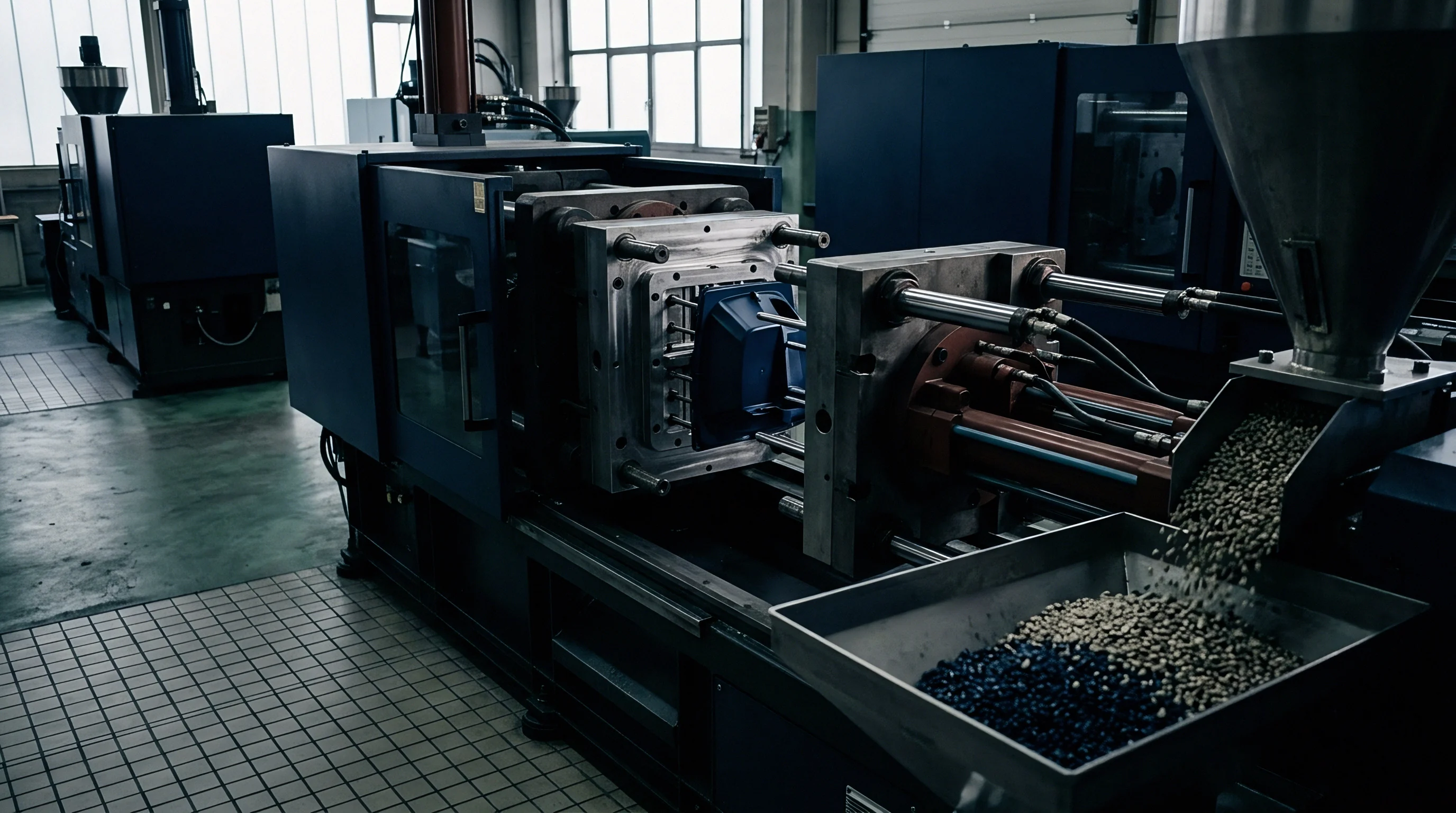
Morphology
Differential scanning calorimetry traces of un-nucleated poly(3-hydroxybutyrate) reveal an exceptionally slow crystallization rate during melt cooling. Unmodified polyhydroxyalkanoates exhibit a low primary nucleation density combined with restricted spherulite growth rates. Melt processing of pure homopolymer resins creates macroscopic spherulites that often exceed one hundred micrometers in diameter.
These large crystalline domain sizes introduce distinct interspherulitic boundaries. Impurities, low molecular weight fractions, and amorphous chains concentrate within these boundaries, initiating microcracks under low mechanical strain.
Secondary crystallization continues at ambient storage conditions over extended timeframes. Polymer chains within the remaining amorphous regions rearrange slowly into ordered structures because the glass transition temperature of poly(3-hydroxybutyrate) rests near 4 °C. P3HB melts at 178 °C. Ambient storage induces continuous embrittlement as room temperature provides sufficient thermal energy for secondary crystal perfection. Tensile elongation at break drops from over fifteen percent immediately after molding to under three percent after fourteen days of aging.
Differential scanning calorimetry at 10 °C per minute cooling confirms that an un-nucleated PHBV resin achieves peak crystallization at 72 °C, whereas a 0.8% boron nitride formulation shifts peak crystallization upward to 118 °C.
Polyhydroxyalkanoate Crystal Nucleation Barriers
Chain folding in homopolymer P3HB encounters substantial thermodynamic resistance between the glass transition temperature of 4 °C and the melting point of 178 °C. High chain rigidity suppresses the spontaneous formation of critical nuclei above 120 °C. Cooling rate governs density. The maximum rate of bulk crystallization occurs within a narrow temperature window between 80 °C and 100 °C. When processing machinery chills the melt rapidly through this optimum window down to cold tool surfaces, the resin freezes into an amorphous state before crystallization completes.
Copolymerization alters these crystallization kinetics by disrupting chain symmetry. Incorporating hydroxyvalerate units into poly(3-hydroxybutyrate-co-3-hydroxyvalerate) lowers both the melting enthalpy and the equilibrium melting temperature. At an 8% hydroxyvalerate inclusion level, the melting point drops to approximately 158 °C, which expands the processing window.
The presence of bulky ethyl side chains from the hydroxyvalerate monomer slows down the radial growth rate of spherulites. Secondary crystallization causes brittleness.

Isothermal Crystallization Half Times across Copolymers
Incorporation of hydroxyvalerate units into the polyester backbone alters chain regularity and depresses the equilibrium melting point. Isothermal crystallization tests quantify this effect by measuring the time required to reach fifty percent ultimate crystallinity at specified hold temperatures. Data gathered under ISO 11357-3 procedures demonstrates how copolymer architecture modifies the kinetic energy barrier of primary nucleation.
| Resin Grade Designation | Monomer Ratio (mol %) | Melting Peak Tm (°C) | Glass Transition Tg (°C) | Isothermal Hold Temp (°C) | Half Crystallization Time t1/2 (s) |
|---|---|---|---|---|---|
| P3HB Homopolymer | 100% 3HB | 178 | 4 | 90 | 185 |
| PHBV Copolymer Low-HV | 8% 3HV / 92% 3HB | 158 | 1 | 90 | 310 |
| PHBV Copolymer Med-HV | 12% 3HV / 88% 3HB | 145 | -2 | 85 | 480 |
| P34HB Copolymer | 10% 4HB / 90% 3HB | 162 | -8 | 85 | 240 |
Longer half-crystallization times in medium-hydroxyvalerate resins increase total cycle times on standard injection molding equipment. A half-crystallization time of eight minutes at 85 °C forces parts to remain inside the cavity for extended durations to build sufficient green strength for ejection. Rapid processing demands heterogenous additives that bypass the high activation energy of homogeneous primary nucleation.
Failure to induce rapid spherulite growth before tool ejection produces soft, tacky parts that deform under ejector pin pressure and suffer severe post-molding shrinkage over seventy-two hours.
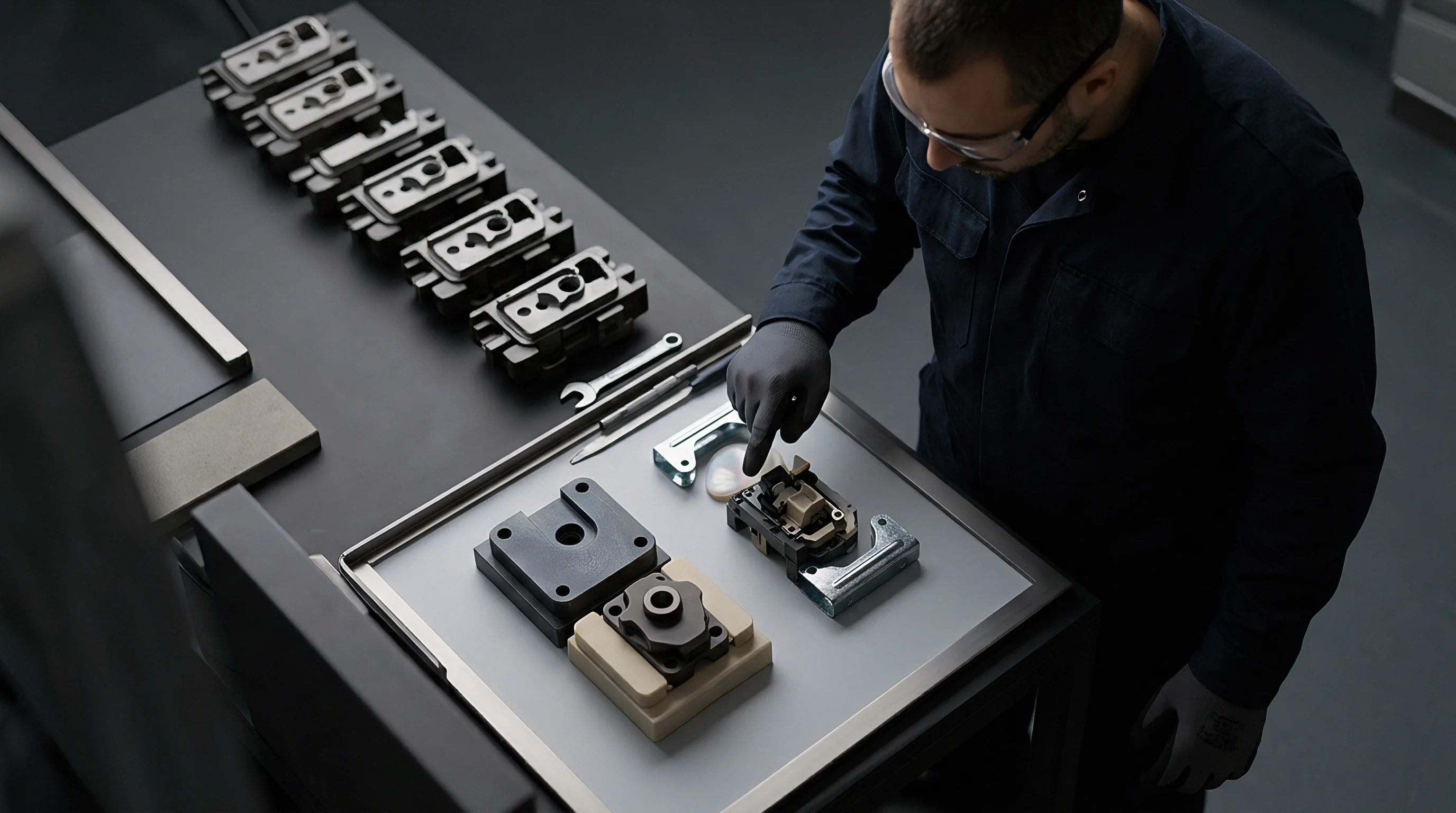

Nucleant
Insoluble mineral additives act as heterogeneous seeds that lower the activation energy barrier for primary phase transformation. Particulate surfaces provide epitaxially matched sites where random coil polymer chains quickly align into ordered lamellae. Introducing an effective nucleating agent increases the peak crystallization temperature during non-isothermal cooling by thirty to forty degrees Celsius.
This shift allows domain growth to begin immediately upon melt entry into the cavity.
Boron nitride acts rapidly. Micronized boron nitride particles possessing a hexagonal crystal lattice exhibit near-perfect lattice parameter matching with the orthorhombic unit cell of poly(3-hydroxybutyrate). Adding 0.5% to 1.0% by weight of sub-micron boron nitride transforms the crystallization mechanism.
The nucleation density jumps by five orders of magnitude. Spherulite diameter drops from one hundred micrometers down to under five micrometers, eliminating distinct interspherulitic weakness.

Heterogeneous Nucleating Additives and Lattice Matching
Hexagonal boron nitride features crystal unit cell dimensions that closely mirror the crystallographic planes of polyhydroxybutyrate. Other inorganic minerals deliver varying degrees of nucleation activity depending on their surface chemistry, aspect ratio, and particle size distribution. Talc performs as a moderate nucleating agent when ground to a d50 particle size below 1.5 micrometers.
High purity micro-talc promotes crystallization at loading rates between 1.0% and 3.0%, although its efficiency remains below that of synthetic boron nitride.
Organic nucleating agents present an alternative route by dissolving into the melt during compounding and crystallizing prior to the polymer matrix during cooling. Uracil, cyanuric acid, and aromatic carboxylic acid salts phase-separate into highly dispersed micro-needles as the melt drops below 140 °C. These organic needles generate dense epitaxial growth fronts. Cyanuric acid loadings at 0.8% achieve crystallization half-times under twenty seconds at 100 °C, matching the speed of boron nitride while maintaining clarity in thin-walled mold sections.
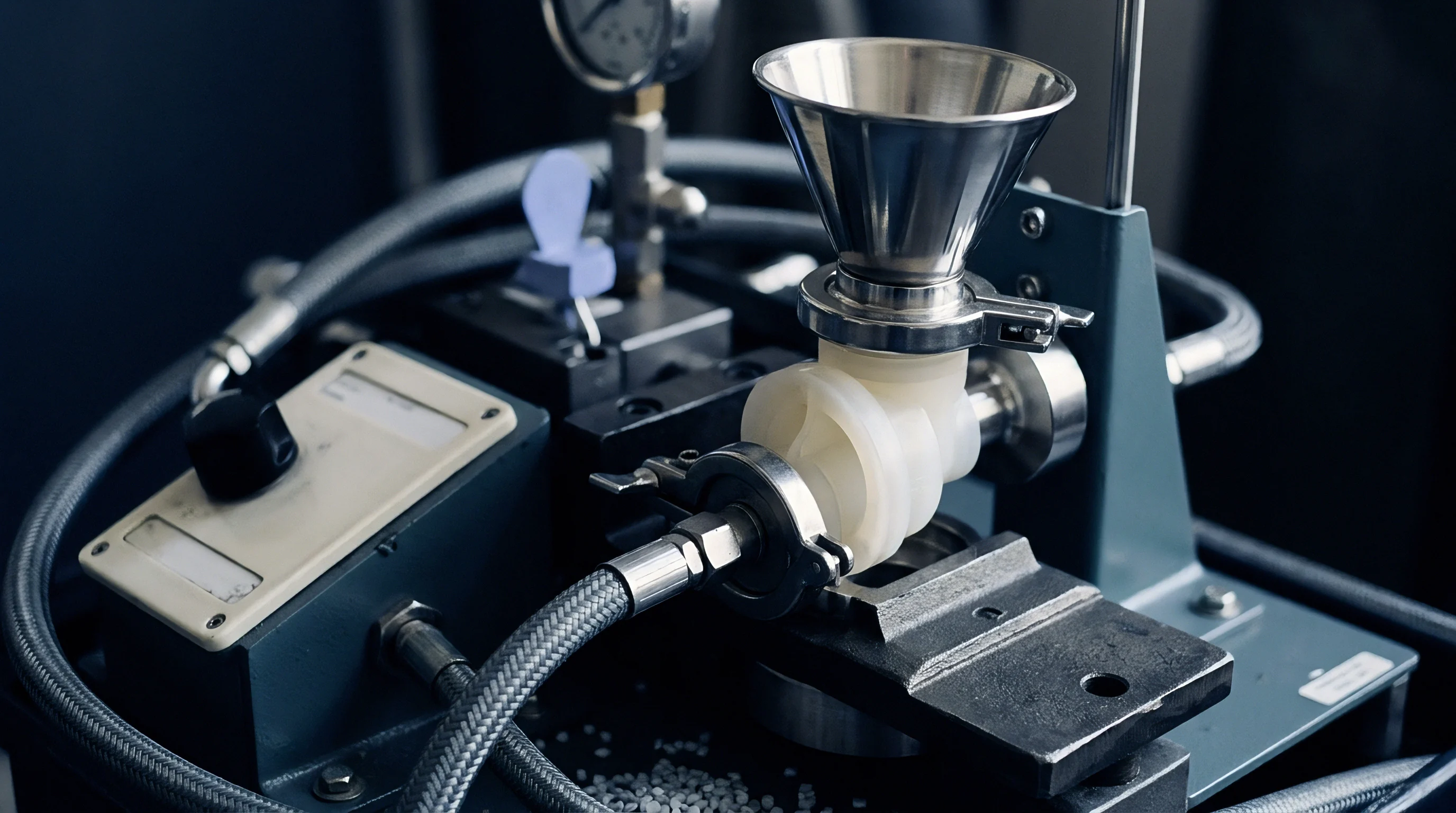
Masterbatch Let down and Dispersion Limits
Feeding concentrated particulate additives directly into an injection molding barrel without adequate twin-screw pre-compounding generates dense inorganic agglomerates. Particle clusters fail to separate under the low shear stress profiles of standard single-screw injection units. Agglomerates create stress concentrators.
Large mineral clusters reduce total available surface area for nucleation, causing wide variations in local crystallization kinetics across the part volume.
- Agglomerate Seeding occurs when clustered nucleant particles create localized zones of rapid crystallization surrounded by un-nucleated polymer matrix, inducing differential shrinkage and severe warpage.
- Pinpoint Embrittlement arises from inorganic clusters exceeding five micrometers in diameter, which act as mechanical notch sites that trigger premature brittle fracture under impact loads.
- Thermal Exotherm Delay manifests when poor let-down dispersion leaves core sections devoid of seeds, causing interior melt zones to remain molten long after skin layers freeze.
- Phase Separation develops when low-molecular-weight organic nucleants migrate to the part surface during slow cooling steps, producing white surface bloom and fouling tool vents.
Optimal masterbatch compounding utilizes co-rotating twin-screw extruders operating with high-shear kneader blocks to break mineral aggregates down to primary particle sizes. Carrier resins within the masterbatch must match the melt flow rate of the base polyhydroxyalkanoate matrix. Mismatched carrier viscosities impede distributive mixing, leaving striations of un-nucleated material within the molded part.
Material compounders frequently attribute part warping in bio-polyesters to batch moisture variations rather than acknowledging particle size agglomeration within their masterbatch let-down streams.

Mold
Tooling surface temperature dictates the kinetic rate at which semi-crystalline polyesters transform from amorphous melts into rigid solids. Mold temperature dictates cycle speed. Standard polyolefin tooling setups running chilled water at 15 °C to 20 °C cause failure when applied to polyhydroxyalkanoates.
Cold mold faces quench the exterior polymer skin below its glass transition temperature instantly, freezing chains in a disordered, non-crystalline arrangement. Cold molds trap amorphous phases.
Operating mold surfaces within an elevated temperature window of 90 °C to 110 °C accelerates crystallization kinetics. High mold temperatures maintain the core and surface of the part within the optimum growth window for poly(3-hydroxybutyrate). Maintaining tool surfaces at 100 °C maximizes spherulitic growth velocity, enabling full polymer crystallization before tool opening.
Parts eject as rigid, dimensional stable solids without requiring extended hold times.
A molding tool operated below the polymer glass transition temperature produces flexible parts upon ejection that slowly harden into brittle components over subsequent weeks.

Thermal Management and Tool Temperature Zones
Water circulating units set below 60 °C chill the polyhydroxybutyrate melt directly into a glassy state before significant crystallization occurs. Thermally managed tool designs utilize oil heaters or pressurized water systems capable of maintaining stable cavity temperatures up to 120 °C. Uniform heating across both mold halves prevents asymmetric thermal contraction and minimizes part post-warp.
Core elements and thin ribs demand independent cooling and heating circuits. Deep core pins tend to hold thermal energy, elevating local steel temperatures past 125 °C where spherulite growth rates slow due to low thermal driving force. Balancing water flow channels ensures that all cavity faces stay within the critical 95 °C to 105 °C range.
Thermal imaging audits confirm uniform steel surface temperatures across multi-cavity layouts.
Ejection Dynamics and Post Molding Crystallization
Mechanical ejection forces applied to incomplete crystalline structures trigger physical stress whitening and pin penetration. Un-nucleated or improperly chilled PHA compounds exhibit low modulus at tool opening, causing ejector pins to punch through soft part walls. Fully nucleated compounds running in optimized hot tools achieve heat deflection temperatures above 110 °C under 0.45 MPa load prior to mold opening (ISO 75-2).
Part density stabilizes after ejection. Post-molding shrinkage continues at a diminished rate when parts cool from tool temperature to ambient conditions. Mold shrink allowances for nucleated polyhydroxyalkanoate grades must accommodate an initial linear shrinkage of 1.2% to 1.8%, plus an additional 0.2% secondary shrinkage occurring over forty-eight hours post-molding.
A tool running cold yields fast cooling but leaves the resin unsolidified, while a tool running hot extends the window for crystalline growth until the part releases cleanly without pin deformation.

Degradation
Thermal exposure above the melting point initiates rapid random chain scission via a six-membered cyclic transition state. Intramolecular cis-elimination cleaves ester linkages in the polymer backbone, producing crotonic acid and oligomers with carboxylic acid and alkenyl end groups. Viscosity drops sharply under heat.
This pyrolytic pathway operates independently of ambient moisture levels, distinguishing polyhydroxyalkanoates from synthetic polyesters like polyethylene terephthalate.
Thermal degradation accelerates exponentially as melt temperatures exceed 180 °C. The weight-average molecular weight of poly(3-hydroxybutyrate) drops by fifty percent within five minutes at 190 °C. Thermal scission reduces molecular weight. Loss of chain length degrades melt strength, causing material to drool through nozzle tips, flash across parting lines, and lose mechanical impact resistance in finished parts.
Resin specifications invoking ASTM D1238 test conditions of 190 °C under a 2.16 kg load assign an automatic rejection threshold for melt flow increases exceeding twenty percent after four minutes of barrel residence time.

Thermal Scission Mechanics at Mold Entry
Shear rates exceeding 5000 inverse seconds inside runner channels generate localized viscous dissipation that drives melt temperatures past critical thresholds. High shear stress in small gates cleaves polymer chains mechanically while adding thermal energy to the melt stream. Gate geometry demands generous cross-sectional areas to minimize frictional heating.
Full-round runners and cashew gates with large land diameters preserve molecular weight during high-speed cavity filling.
Hot runner designs require precise multi-zone temperature control and smooth flow passages without dead spots. Stagnant melt pockets inside manifold corners heat-degrade completely over extended production runs, discharging black degraded specks into molded parts. Valve gate systems reduce shear heating compared to thermal sprue gates, preventing localized thermal scission at the part entrance point.
Can Barrel Residence Time Overcome Nucleation Efficiency?
Prolonged soak times inside the heating cylinder break down long polymer chains, generating low molecular weight species that suppress crystal growth rate. As molecular weight falls, the melt flow rate rises drastically, altering cavity pressure distribution during the pack phase. The following data highlights the sensitivity of PHBV resins to barrel hold times under ISO 1133 test parameters.
| Residence Time (min) | MFI at 175 °C (g/10 min) | Mw Retention at 175 °C (%) | MFI at 190 °C (g/10 min) | Mw Retention at 190 °C (%) |
|---|---|---|---|---|
| 2.0 | 12.1 | 98.5 | 18.4 | 92.1 |
| 4.0 | 13.8 | 95.2 | 29.6 | 78.4 |
| 6.0 | 17.2 | 89.6 | 48.1 | 58.2 |
| 8.0 | 23.5 | 81.0 | 82.4 | 39.5 |
Managing thermal scission requires strict control over processing parameters and barrel sizing to keep residence times short.
- Size injection unit shot capacity so that each cycle utilizes between forty percent and seventy percent of total barrel volume, avoiding long heat exposure.
- Set flat or inverted barrel temperature profiles starting at 170 °C under the hopper and dropping to 160 °C at the front zone to minimize time spent above peak melting point.
- Maintain screw backpressure below 3.0 MPa to limit frictional shear generation during plasticization.
- Purge the injection cylinder immediately with high-density polyethylene if production stops for longer than three minutes.
Whether long-chain branching agents can fully offset thermal molecular weight loss without compromising the marine biodegradability rating of the finished compound remains an open operational question.

Amortization
Conversion costs in plastic processing scale directly with machine occupancy time per mold cycle. Cooling time dominates cycle cost. Un-nucleated polyhydroxyalkanoate compounds demand long cooling phases to reach sufficient stiffness for ejection, occupying press capacity for forty to sixty seconds per part.
Introducing high-efficiency nucleation strategies shortens the required hold phase, driving down unit manufacturing cost.
Scrap recovery limitations compound financial risks in bio-based polyester processing. Regrind cannot be added back into primary production streams in high percentages because thermal history degrades molecular weight rapidly. Contaminated or thermally degraded sprues represent a permanent material loss rather than a reusable feedstock asset.
Unnucleated resins waste press capacity. Maximizing first-pass yield through robust nucleation becomes essential for commercial viability.
Polyhydroxyalkanoate thermal degradation occurs primarily through non-radical intramolecular elimination without requiring environmental oxygen or moisture.

Cycle Time Economics in Bio Based Molding
Extending cooling times from fifteen seconds to forty-five seconds to accommodate slow crystallizing polymers triples the direct machine overhead charged to every part. Machine rates for fully automated 200-tonne injection presses run between 65 and 90 dollars per hour depending on region and auxiliary equipment setup. Cycle time dictates machine margin.
Reducing cycle duration by thirty seconds through nucleant optimization shifts manufacturing economics substantially. The reduction in press time offsets the raw material price premium paid for specialized nucleating additives and masterbatch compounding steps.

Worked Analysis of Nucleated Part Production
Consider a 40-tonne production run of polyhydroxybutyrate-co-valerate processing on a 200-tonne electric injection press with an hourly rate of 85 dollars. The part geometry yields a shot weight of 120 grams across a four-cavity mold.
Base Un-nucleated Case: The raw compound costs 4.20 dollars per kilogram. Processing requires a cooling phase of 36 seconds, yielding a total cycle time of 50 seconds. The machine produces 288 parts per hour.
Machine conversion cost equals 0.295 dollars per part. Scrap rate due to ejector pin deformation and warpage reaches 4.5%. Total unit cost, including lost material scrap, equals 0.442 dollars per good part.
Optimized Nucleated Case: The compound includes 0.8% boron nitride masterbatch, elevating material cost to 4.55 dollars per kilogram. Nucleation allows mold temperatures of 100 °C with a cooling phase of 10 seconds, yielding a total cycle time of 22 seconds. The press produces 654 parts per hour.
Machine conversion cost drops to 0.130 dollars per part. Scrap rate decreases to 0.8% due to high green strength at ejection. Total unit cost equals 0.271 dollars per good part.
Net operational savings across the 40-tonne production lot amount to 56,330 dollars, proving that higher initial resin prices yield lower finished part production costs when nucleation accelerates crystallization kinetics.
- Resin Melt Index Limits specified in raw material purchase agreements must mandate maximum allowable MFI drift across four minutes of thermal hold.
- Nucleant Masterbatch Certification must require sub-micron particle sizing verified by laser diffraction analysis to prevent agglomerate defects.
- Isothermal Exotherm Specifications require peak crystallization to complete within thirty seconds at 100 °C under standardized DSC test protocols.
- Recyclate Content Restrictions cap regrind re-introduction at ten percent by weight to prevent cumulative thermal molecular weight degradation.
Purchase specifications invoking ISO 11357 crystallization peak temperatures above 115 °C at 10 °C per minute cooling rates bind resin suppliers to delivering fully nucleated compounds that hold cycle times below twenty-five seconds.