Managing Rheological Instability in Post Consumer Polyolefin Blends under Shear
Managing PCR polyolefin shear instability requires capillary rheometry qualification, peroxide phase-tuning, and PPA die-lubrication to control scrap.


Phase
Post-consumer polyolefin streams from municipal waste contain structural heterogeneity that destabilizes melt flow during high-shear conversion. Polypropylene and high-density polyethylene remain mixed in recycled feedstocks because density-float separation cannot isolate polymers with overlapping density windows between 0.900 g/cm³ and 0.960 g/cm³. At low shear rates, such as in gravity settling or bench capillary tests, these immiscible polymers sit in stable droplet-matrix dispersions.
Processing machinery, however, forces the melt through shear rates from 1,000 s⁻¹ to 10,000 s⁻¹, shifting interfacial tension and distorting droplet geometry.
Shear fields stretch dispersed phase domains into long fibrillar structures along flow streamlines. These droplets extend into threads once the capillary number passes the critical threshold set by the viscosity ratio between the polypropylene and polyethylene phases. When the minor component exceeds thirty percent of blend volume, high shear triggers phase inversion: a polypropylene matrix with dispersed polyethylene droplets reorganizes into a continuous polyethylene matrix carrying suspended polypropylene islands.
This morphological shift causes sharp viscosity drops in rheological testing, leading to pressure spikes at the extruder die and uneven mold filling in injection tooling.
A shift in dispersed polymer domain shape under shear changes melt pressure before heat transport reaches equilibrium.
Thermal shear introduces competing degradation mechanisms that compound phase instability in recycled polyolefins. Polypropylene chains undergo thermo-mechanical scission at tertiary carbon sites under shear stresses above 50 kPa, shortening the primary backbone, lowering molecular weight, and dropping high-shear viscosity. High-density polyethylene behaves differently in the same shear fields.
Residual active catalysts and mechanically generated peroxide radicals induce long-chain branching and cross-linking, causing the polyethylene fraction to thicken as shear increases while the polypropylene fraction rapidly thins.
Running inconsistent post-consumer polyolefin lots without active shear stabilization creates structural defects in molded parts. Uncontrolled phase inversion under processing shear leaves localized weak points where domain boundaries delaminate under impact.
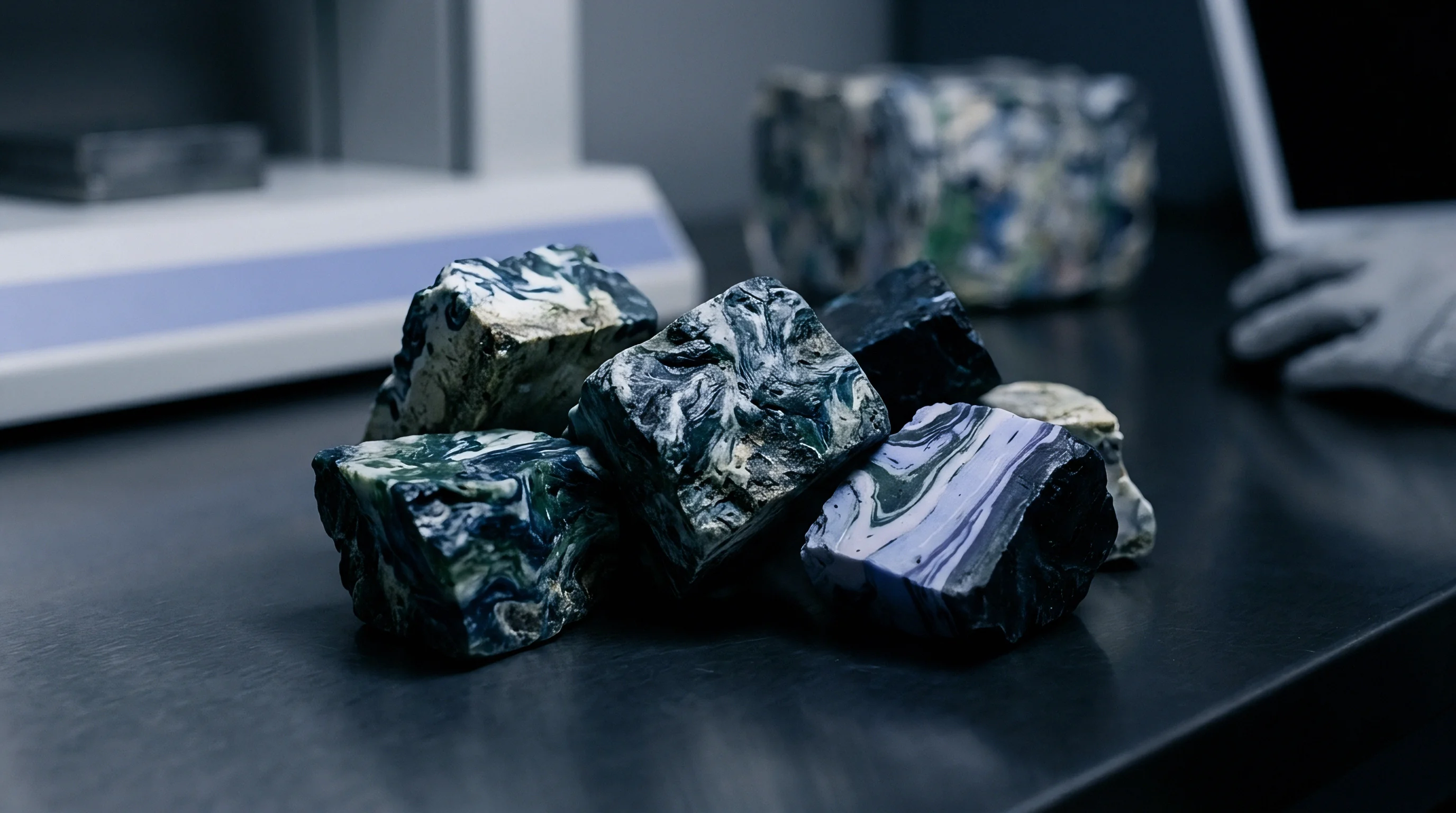
Morphological Failure Modes under Processing Shear
Shear fields break down internal blend structures across several stages of extrusion and injection molding.
- Interfacial Delamination occurs when shear stress exceeds the weak adhesion strength between un-compatibilized polypropylene and polyethylene domains, forming micro-voids along flow lines.
- Phase Inversion Instability arises when minor phase droplets coalesce into continuous channels under shear, causing rapid viscosity jumps and erratic barrel pressures.
- Shear-Induced Chain Scission breaks tertiary carbon bonds in polypropylene fractions, generating low molecular weight species that bleed to the part surface.
- Viscoelastic Divergence occurs as polyethylene fractions cross-link while polypropylene fractions degrade, widening the relaxation time spectrum across the melt front.
Ignoring phase morphology dynamics during high-shear processing turns target resin lots into high-scrap production runs, cutting mechanical impact performance by forty percent compared to low-shear lab plaques.

Capillary
Standard resin purchasing QC relies heavily on single-point Melt Flow Rate measurements performed to ISO 1133 or ASTM D1238 standards. Tests under Condition M at 230 °C with a 2.16 kg load evaluate melt behavior at low effective shear rates between 1 s⁻¹ and 10 s⁻¹. Yet production extruders, runner networks, and thin-wall injection gates operate at shear rates between 500 s⁻¹ and 15,000 s⁻¹.
Single-point, low-shear index testing cannot predict high-shear flow resistance in mixed post-consumer polyolefin feeds.
High-shear capillary rheometry per ISO 11443 or ASTM D3835 exposes non-Newtonian flow behaviors hidden by standard melt indexers. Polyolefin blends with identical low-shear melt flow rates of 2.0 g/10 min can diverge by over three hundred percent in apparent viscosity when tested at 5,000 s⁻¹ in a capillary die. Breakdown of the empirical Cox-Merz rule ~ which equates dynamic viscosity at specific angular frequencies to steady-shear viscosity at equivalent shear rates ~ serves as primary evidence of blend incompatibility.
While dynamic oscillatory data aligns with capillary measurements in homogeneous virgin resins, structural phase shifts under continuous shear cause severe negative deviations from Cox-Merz predictions in recycled polyolefin blends.
Cole-Cole plots, which chart imaginary against real viscosity from frequency sweep testing, help diagnose the structural state of recycled polyolefin lots. Homogeneous resins plot as smooth parabolic arcs. In contrast, recycled blends of polyethylene and polypropylene produce pronounced upturns at high real viscosity values, reflecting long relaxation times driven by interfacial tension between immiscible phases.
Combining high-shear capillary measurements with Bagley end-pressure and Weissenberg-Rabinowitsch wall shear rate corrections quantifies both wall slip and extensional viscosity during tool entry flow.
| Resin Blend Composition | MFR (230 °C / 2.16 kg) | Apparent Viscosity at 1,000 s⁻¹ (210 °C) | Apparent Viscosity at 5,000 s⁻¹ (210 °C) | Power-Law Shear Thinning Index n |
|---|---|---|---|---|
| 100% Virgin PP Homopolymer | 2.1 | 145 | 42 | 0.35 |
| 80/20 PCR PP/HDPE Unmodified | 2.3 | 185 | 31 | 0.22 |
| 60/40 PCR PP/HDPE Unmodified | 1.9 | 210 | 26 | 0.18 |
| 80/20 PCR PP/HDPE + 3% SEBS | 1.8 | 195 | 48 | 0.38 |
| 60/40 PCR PP/HDPE + 0.1% Peroxide | 4.5 | 110 | 35 | 0.32 |
An ISO 11443 capillary sweep at 210 °C and 5,000 s⁻¹ captures shear-induced viscosity drops that single-point ISO 1133 melt flow indexers miss.
Capillary rheograms establish the power-law shear thinning exponent, n, derived from the relationship between shear stress and shear rate. Lower n values mark aggressive shear-thinning behavior. Unmodified post-consumer polyolefin blends frequently fall below 0.25, making melt flow highly sensitive to slight shifts in processing speed.
As a result, injection molding tools can flash at higher injection speeds and produce short shots if velocity drops marginally, leaving little operating window to buffer thermal or mechanical fluctuations.
How much of the phase domain breakdown generated under high capillary shear can be reversed through thermal annealing in the runner system prior to cavity entry?
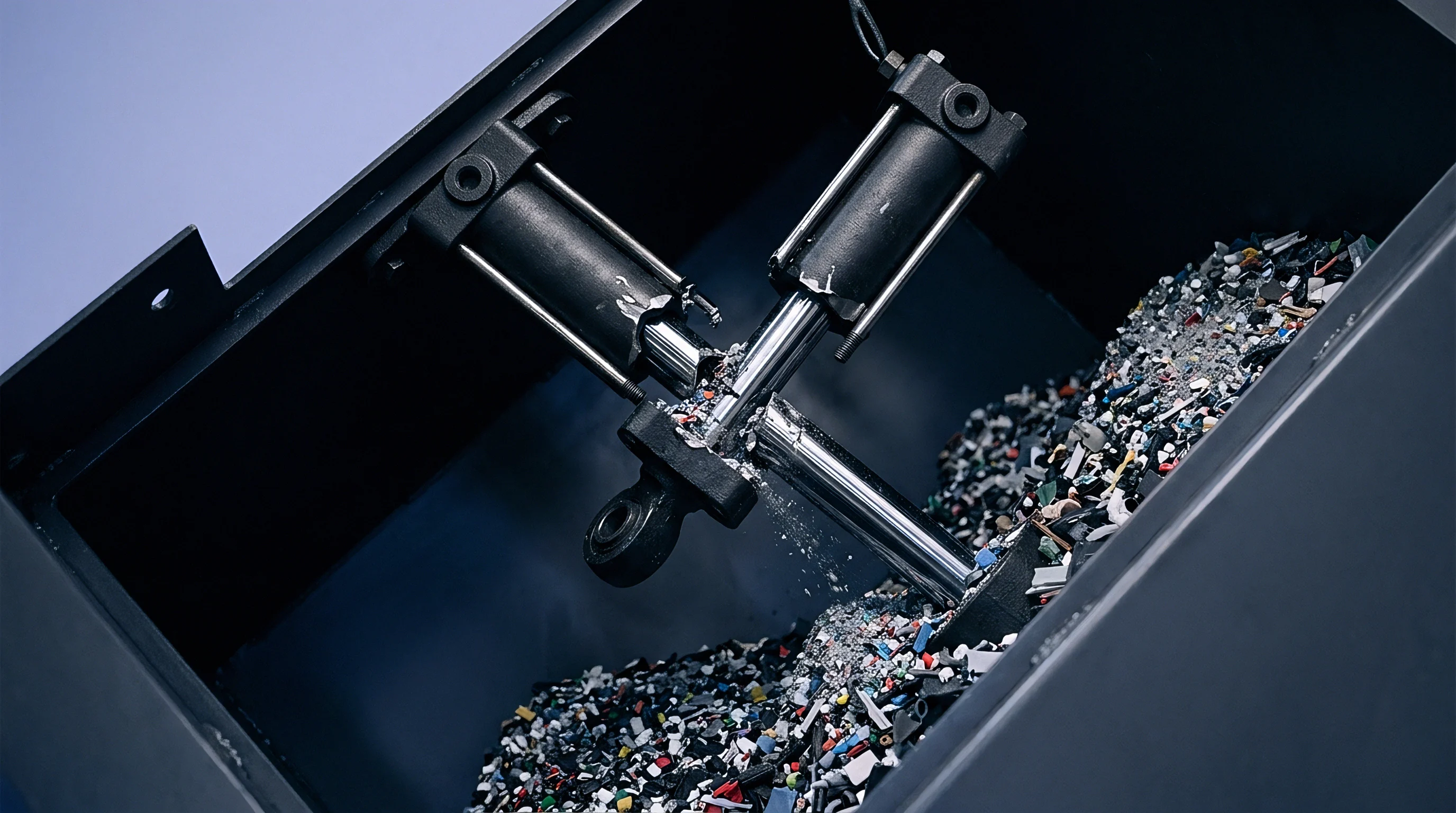

Strand
How Does Peroxide Dosing Control Polyolefin Shear Thinning?
Controlling rheological instability in post-consumer polyolefin feeds requires active chemical modification during reactive twin-screw compounding. Organic peroxides, such as 2,5-dimethyl-2,5-di(tert-butylperoxy)hexane, generate free radicals that alter polymer architecture under shear. Added to polypropylene-rich recycled streams at 0.02% to 0.10% by weight, these peroxides induce controlled beta-scission, clipping high-molecular-weight polypropylene chains to narrow the molecular weight distribution and lower melt elasticity without causing severe degradation.
Polyethylene-rich recycled fractions require the opposite chemical treatment to maintain melt strength during high-shear extrusion. Free radicals in high-density polyethylene promote chain combination over scission. Adding co-agents like triallyl isocyanurate or trimethylolpropane trimethacrylate alongside low peroxide doses encourages controlled long-chain branching.
This branching raises zero-shear viscosity to prevent strand sag during blow molding and profile extrusion, while preserving flowability under high processing shear rates. Twin-screw extruders with downstream side-feeders permit precise multi-stage dosing along the barrel length.
| Additive Class | Chemical Basis | Dosage Band (wt%) | Target Rheological Mechanism | Processing Outcome |
|---|---|---|---|---|
| Viscosity Modifiers | Dialkyl Organic Peroxide | 0.02 – 0.10 | Controlled PP beta-scission | Reduces MWD, lowers high-shear viscosity |
| Branching Co-agents | Triallyl Isocyanurate (TAIC) | 0.10 – 0.50 | PE radical cross-linking | Increases melt strength and extensional viscosity |
| Polymer Processing Aids | Fluoroelastomer / Organosilicone | 0.02 – 0.08 | Die wall coating deposition | Eliminates wall slip and melt fracture |
| Block Compatibilizers | Maleated SEBS / POE | 2.00 – 5.00 | Interfacial tension reduction | Stabilizes domain size under shear fields |
Compatibilization prevents phase separation under intense extruder shear. Maleic anhydride-grafted styrene-ethylene-butylene-styrene block copolymers position themselves at the interface of the polypropylene and polyethylene phases. The hydrophobic polyolefin segments interlock with the matrix while functionalized blocks engage polar impurities or secondary phases.
This interfacial pinning shrinks domain sizes from 10 microns down to under 1 micron, suppressing shear-induced droplet coalescence and maintaining stable complex viscosity curves under dynamic shear.
Fluoropolymer processing aids address high-shear boundary instabilities at metal die interfaces. These additives migrate to the metal surface during processing to form a low-surface-energy lubricant layer. This fluoropolymer coating shifts plug flow into a smooth velocity profile, moving the critical shear rate threshold for melt fracture in recycled HDPE extrusion from 1,000 s⁻¹ to over 4,000 s⁻¹.
- Feed raw post-consumer polyolefin pellets into the primary hopper of a co-rotating twin-screw extruder with a minimum length-to-diameter ratio of 40:1.
- Inject organic peroxide diluted in a liquid carrier at barrel zone four, past the primary melting zone, to initiate controlled chain modification under uniform shear.
- Introduce functionalized block copolymer compatibilizers through a secondary side-feeder at barrel zone six to stabilize phase morphology before high-pressure pumping.
- Dose fluoropolymer processing aid masterbatch at barrel zone eight to ensure complete dispersion without thermal degradation before the melt metering pump.
- Apply continuous vacuum degassing at barrel zone ten operating at absolute pressures below 50 mbar to extract volatile decomposition byproducts.
Rheological variance in delivered post-consumer lots stems from unannounced shifts in municipal collection feedstocks rather than improper thermal history during secondary compounding.
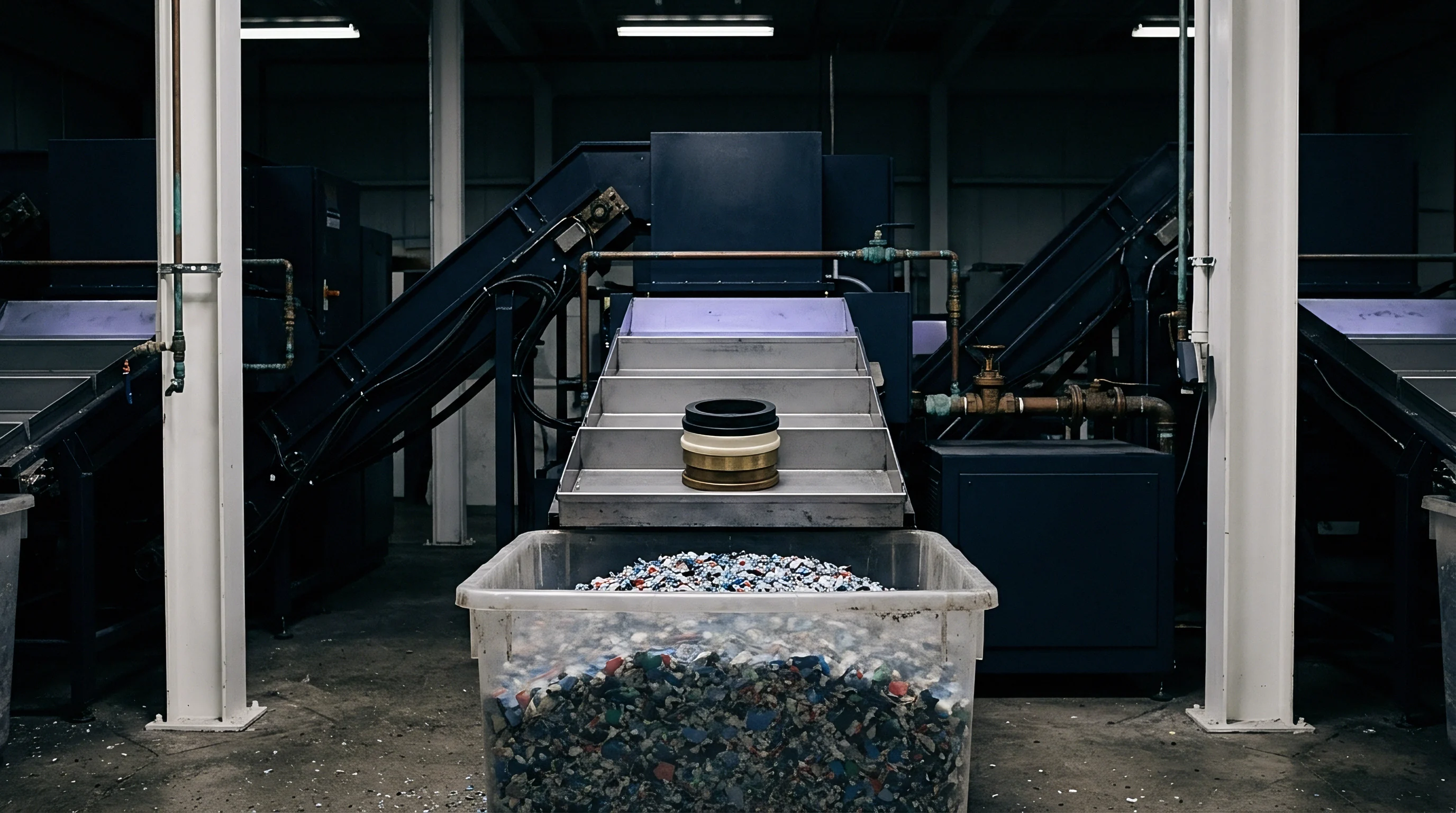
Die
Tooling geometry governs the peak shear stress experienced by recycled polyolefin melts. High wall shear stress forces polymer chains to disentangle from the stationary layer along the die wall, initiating wall slip. Melt fracture ~ or sharkskin ~ manifests on extruded profiles once exit wall shear stress surpasses 0.14 MPa for polyethylene or 0.22 MPa for polypropylene blends, occurring as the outer layer of the extrudate accelerates abruptly upon exiting the land, exceeding its surface tensile limit.
Tooling for post-consumer polyolefin blends requires longer die lands to relax orientation stresses created in high-shear entry regions. Increasing the land length-to-gap ratio from 10:1 to 25:1 extends residence time under uniform shear. Transition geometry into the die land benefits from streamlined conical entries with half-angles below 15 degrees.
Sharp contraction angles promote secondary circulating flow vortices in phase-separated blends, causing periodic pressure surges and strand diameter variation.
Setting entry half-angles below 15 degrees prevents circulating secondary flows in phase-separated polyolefin melts.
Hot-runner systems in injection tools demand precise gate shear rate calculations when processing post-consumer polyolefin lots. Gate shear rate scales directly with volumetric throughput and gate radius. Pinpoint and edge gates running above 20,000 s⁻¹ cause severe shear heating in recycled resins.
Localized temperature spikes up to 25 °C within gate channels degrade heat-sensitive additives, breakdown polypropylene fractions, and drop melt viscosity. This shear-induced thermal degradation disrupts mold packing, causing sink marks and dimensional warping in finished parts.
Adjusting tooling parameters and machine settings helps manage rheological instability during high-shear processing.
- Die Land Lengthening extends stress relaxation time, reducing exit swell and suppressing shear-induced melt fracture.
- Gate Radius Expansion lowers localized shear stress, preventing thermal degradation and jetting in injection cavities.
- Extrusion Temperature Profiling optimizes barrel heat settings to maintain melt viscosity within stable pumpability limits.
- Screw Shear Profile Reduction uses low-intensity mixing elements to limit mechanical scission in sensitive post-consumer fractions.
Purchase contracts for post-consumer polyolefin lots should define high-shear viscosity boundaries measured under ISO 11443 at 210 °C and 2,000 s⁻¹, specifying a maximum allowable deviation of plus or minus ten percent from target values.

Margin
Rheological instability directly impacts conversion margins through scrap, extended cycle times, and part rejections. Uncontrolled viscosity drops under shear cause tool flash, forcing manual trimming and damaging parting lines, while high-shear viscosity swings lead to cavity short shots. A scrap rate jump from two percent to eight percent on a high-speed container line erodes the entire price discount gained by buying recycled polyolefins instead of virgin resin.
Compounding economics balance feedstock discounts against the additive costs needed for rheological stability. Virgin polypropylene commands a premium over raw recycled flake, but un-stabilized flake requires additives to run cleanly under high shear. Incorporating maleated block copolymer compatibilizers at a three percent loading adds noticeable cost per tonne to the formulation, alongside additional costs for fluoropolymer processing aids.
| Operational Metric | Virgin Grade Baseline | Unstabilized PCR Blend | Chemically Stabilized PCR Blend |
|---|---|---|---|
| Raw Resin Cost per Tonne | $1,450 | $980 | $1,120 |
| Additive Package Cost per Tonne | $0 | $15 | $145 |
| Scrap and Rejection Rate (%) | 1.2% | 8.5% | 2.1% |
| Average Molding Cycle Time (s) | 18.5 | 22.0 | 19.2 |
| Landed Good-Part Cost per Tonne | $1,780 | $1,710 | $1,640 |
Calculating landed cost per good part requires accounting for energy penalties linked to rheological instability. Higher extrusion temperatures used to force unstable, high-viscosity recycled lots through narrow dies raise electrical power consumption per kilogram processed. Die buildup ~ or plate-out ~ from degraded low-molecular-weight species adds unexpected downtime, pulling down overall equipment effectiveness metrics.
Technical specifications that omit high-shear rheological metrics leave buyers exposed to off-spec shipments. Standard datasheets miss these high-shear anomalies, making incoming inspection protocols built around capillary testing necessary to catch unstable resin lots before they reach storage silos.