Managing Possessory Lien Risks during Foreign Supplier Factory Insolvency
Mitigate possessory lien risks by registering tool title under local bailment laws, stamping steel asset tags, and decoupling piece-part debts from ownership.

Clamp
Physical Mould Possession and Insolvency Lien Triggers
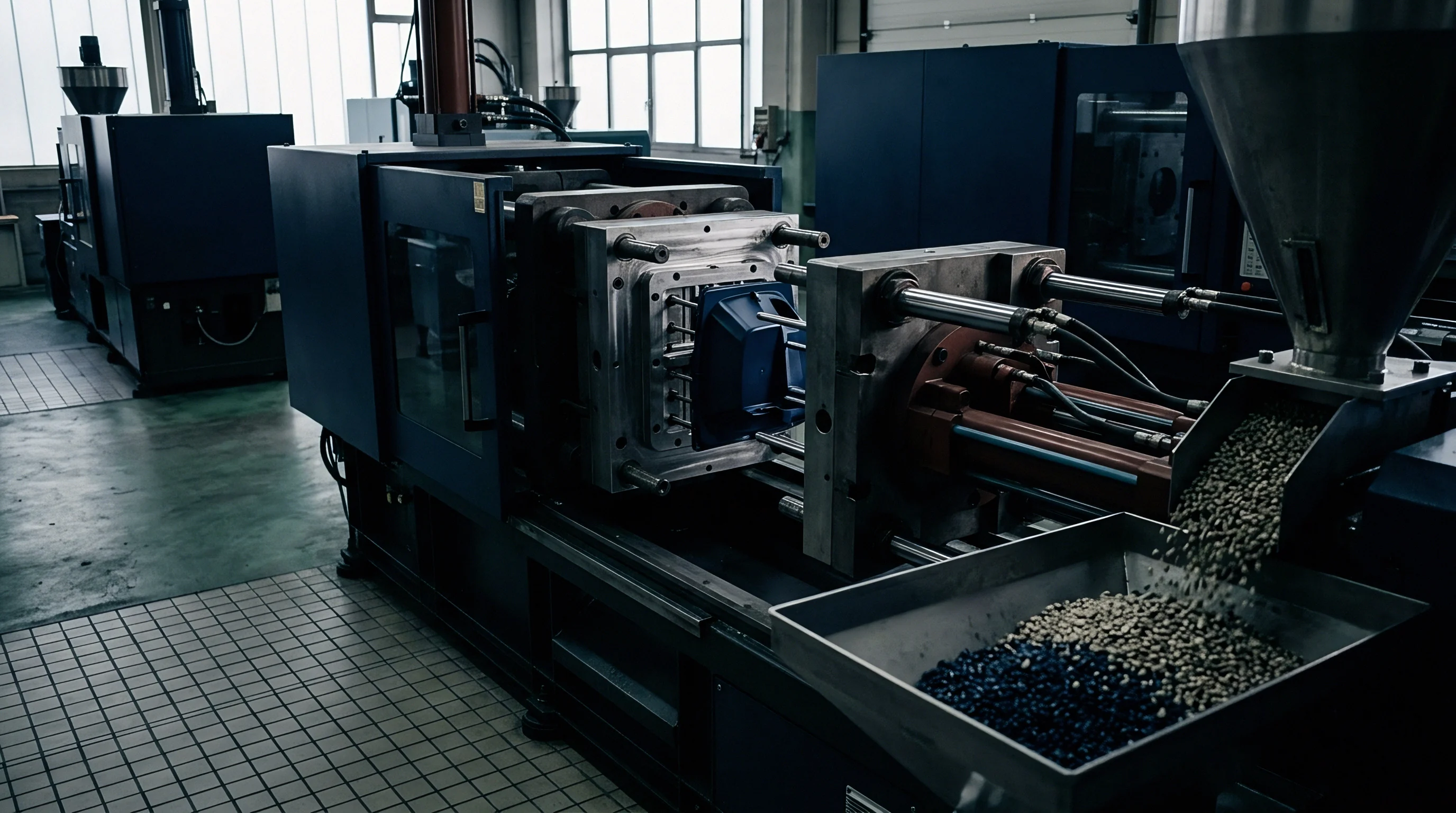
When a foreign contract manufacturer fails, the physical steel mounted in an injection press or sitting on a storage rack becomes an immediate point of conflict. Liquidators, local creditors, and plant workers often lock down every piece of equipment on the premises under statutory possessory liens ~ mechanisms that allow a creditor to keep physical custody of property until related debts are paid. In moulding and stamping operations, vendors frequently assert these liens over customer-owned tooling to force settlement of unpaid piece-part invoices, modification bills, or maintenance fees.
Holding the tool gives the failing plant immense leverage. Once the gates shut and insolvency administrators step in, pulling a multi-tonne injection tool out requires fast, clear proof of unencumbered title, physical identification, and documentation that no statutory debt attaches to the steel.
How retention plays out depends on whether the primary supplier or a subcontractor fails. A primary manufacturer might outsource tool construction to an independent toolroom or subcontract moulding runs to a tier-two plant. If the primary contractor leaves those sub-tier invoices unpaid, the secondary facility can assert a possessory lien over the customer’s tool ~ even if the buyer has fully paid its purchase orders with the main contractor.
Across civil law jurisdictions in Eastern Europe, East Asia, and Latin America, statutory retention rights trigger automatically when services performed directly on the asset go unpaid. If a toolroom modifies a cavity or replaces a hot runner system without receiving payment, local law usually gives that shop direct authority to hold the steel until the debt is settled.
Process engineering records provide the first line of defense against invalid retention claims. Asset registers should track every tool by serial number, cavity count, hot runner manifold identifier, and steel dimensions. As insolvency looms, piece-part payment records must be kept completely separate from tooling ownership documents.
Blending component purchase orders with tooling development contracts muddies legal title, giving liquidators room to lump customer tools into the vendor’s insolvency estate or treat them as collateral for general plant debts.
Executing a standalone tooling bailment agreement separates customer steel from general factory debt, keeping foreign bankruptcy administrators from dragging production assets into the liquidation pool.
Contracts need to state exactly when title transfers before production starts. Standard terms that delay ownership until tooling costs are fully amortized over part volumes leave buyers vulnerable early on. If a vendor goes under after delivering only twenty thousand units of a two-hundred-thousand-unit order, the unamortized balance gives bankruptcy administrators an opening to claim partial ownership or place a lien on the mould.
Protecting against this risk requires title to vest immediately upon T1 sample approval. Inserting a standard clause ~ ”Title to the tooling described in Schedule A vests unconditionally in Buyer upon written approval of initial sample inspection reports, independent of piece-part invoice settlements” ~ severs the connection between part payments and asset ownership, neutralizing general insolvency retention claims.
Paperwork
Perfection of Title and Jurisdictional Statutory Regimes
Legal ownership alone will not secure an asset during foreign bankruptcy unless title has been legally perfected. Different jurisdictions enforce distinct rules for possessory liens, chattel mortgages, and bailment rights. In civil law systems like China, Vietnam, and Mexico, foreign ownership claims face high evidentiary hurdles.
Registering customer-owned equipment with local commercial registries or tax bureaus creates an official public record that takes precedence over unregistered private agreements.
| Jurisdiction | Statutory Lien Basis | Title Perfection Mechanism | Subcontractor Lien Risk | Typical Extraction Window |
|---|---|---|---|---|
| China | Civil Code Right of Retention | Customs asset logging and fixed asset tagging with tax bureau recording | High; toolmaker holds direct retention rights for unpaid work | 60 to 180 days |
| Vietnam | Civil Code Pledge and Retention | Secured transactions registry entry via Ministry of Justice | High; sub-tier moulders retain physical assets automatically | 90 to 240 days |
| Mexico | Commercial Code Retention Right | Public Registry of Commerce filing and Maquiladora IMMEX listing | Moderate; physical custody controls legal presumption | 30 to 120 days |
| Germany | Civil Code Statutory Moulder Lien | Explicit bailment agreement and registered owner metal plaque | Low; strict separation of commercial debt and third-party title | 15 to 45 days |
Under China’s Civil Code, a processor holds direct retention rights over equipment in its facility whenever processing fees are outstanding. Overcoming that presumption requires showing the tool was delivered under a valid bailment contract and that no unpaid engineering or maintenance charges attach to the steel itself. Recording bailment agreements with local commercial authorities sets up clear third-party ownership before any insolvency filing begins.
Mexico’s IMMEX program carries specific rules for temporary tool imports. Moulds brought in under a Maquiladora’s IMMEX license are legally in the temporary custody of that domestic entity. If that business enters liquidation, tax authorities can place tax liens across every piece of equipment inside the plant.
Perfecting title requires formally filing the temporary import manifest with the foreign parent listed as ultimate owner, backed by asset logs that match the serial numbers stamped directly on the mold base.
Failure to register ownership through local statutory mechanisms exposes buyers to multiple operational legal risks:
- Insolvency Asset Pooling liquidators fold unregistered customer tools into the vendor’s assets to satisfy secured bank loans.
- Subcontractor Debt Attachment secondary shops enforce possessory liens over tools to cover unpaid engineering work owed by the primary vendor.
- Tax Authority Distraint tax bureaus seize factory equipment, including customer steel, to settle unpaid corporate or payroll taxes.
- Customs Seizure Risks customs officials halt tool exports when import documentation lacks matching serial numbers and proof of foreign title.
Bailment agreements need explicit wording defining the vendor as a simple custodian. The contract must mandate visible asset tags on the chassis, forbid encumbering the asset, and grant unconditional access for site audits. Relying on standard foreign purchase orders without completing local registration almost guarantees that local courts will treat the tooling as plant property, forcing the buyer to purchase its own steel back from the liquidator.
Bench
Floor Verification and Physical Asset Tagging Strategy
Proving title during an insolvency requires physical evidence right on the factory floor. Paper contracts showing part numbers carry no weight when liquidators are inventorying press beds and storage racks. Moulds need permanent, indelible markings that tie the physical steel directly back to the registered owner and bailment contract.
Engraving or steel-stamping ownership details onto the tool chassis provides clear physical proof of title. Anodized aluminum asset plates secured with tamper-proof screws should be mounted on non-wearing surfaces of the top clamp plate and ejector box. These tags need to show the owner’s legal name, asset number, serial code, and explicit text declaring third-party ownership.
Paint markers and adhesive labels deteriorate quickly under shop floor heat, oil, and solvent exposure.
Shot counters integrated into the mould serve both operational and legal needs. Non-resettable mechanical or electronic counters log total press cycles. In insolvency disputes, counter readings show whether the tool ran unauthorized production for third parties or suffered wear beyond contracted limits.
Comparing cycle counts against part delivery invoices uncovers mismatches that reinforce claims of tool misuse or bailment breach.
Indelible steel stamping on the tool plate combined with registered non-resettable cycle counters provides indisputable proof of third-party ownership during court-ordered insolvency inventories.
Regular physical audits stop suppliers from swapping tool components. Distressed vendors sometimes replace good core inserts or cavity blocks with worn parts, shifting high-value components onto other production lines. Audits should document specific features like runner layouts, hot runner wiring pinouts, side-action slides, and cooling line fittings.
Detailed photos matching the tool drawings must be kept in the compliance file.
Executing an asset audit during early signs of vendor financial distress follows a structured sequence:
- Conduct an unannounced site visit to inspect the tool and verify its location on the press or rack.
- Record shot counter readings and compare total cycles against production logs and maintenance records.
- Check asset plates to ensure they remain legible, intact, and securely fastened.
- Inventory all components, including spare core pins, cavity inserts, hot runner controllers, and specialized ejector hardware.
- Photograph internal and external tool surfaces, focusing on stamped serial numbers and parting lines.
- Obtain written confirmation of the tool’s location and operational condition signed by the plant manager.
As insolvency approaches, common excuses for denying access include claiming off-site maintenance or ongoing safety audits. Access to the moulding floor is similarly blocked under the guise of facility power shutdowns or active labor disputes.

Steel

Is an Unpaid Mould Modification Ground for Factory Retention?
Disputes over unpaid engineering change orders or tool modifications are the most common pretext for asserting possessory liens. When a buyer requests a cavity change, revised wall thickness, or gate redesign, the shop performs machining, wire EDM, and bench fitting. If the vendor invoices for that work and the buyer holds back payment over quality disputes, the vendor gains legal standing under statutory retention rules to hold the physical tool.
Engineering change orders must clearly separate routine maintenance from capital modifications. Standard maintenance ~ replacing worn ejector pins, polishing light scuffs, or flushing water lines ~ is covered by piece-part overhead unless contracts specify otherwise. Vendors have no legal right to hold tools over routine maintenance bills.
Capital modifications that change part geometry or add mechanical actions, on the other hand, create distinct debts tied directly to the tool.
Clearing a modification lien requires an immediate audit of all open work orders. If modification work proceeded without a formal purchase order or defined acceptance criteria, liquidators will demand the full quoted price before releasing the tool. Contracts should explicitly state that disputes over revision charges give the vendor no retention rights over the underlying tooling once original build costs have been paid.
Subcontracted toolroom work introduces serious lien risks. Primary contract manufacturers often send customer moulds to third-party toolrooms for wire EDM, texture etching, or laser welding. If the primary contractor defaults on its payments to the toolroom, that secondary shop can hold the mould.
Enforcing a possessory lien against the primary contractor leaves the buyer unable to retrieve its tool, even after paying the primary vendor in full.
Direct payment agreements with sub-tier toolrooms offer a way to clear these liens quickly. Under a tripartite agreement signed before work begins, the buyer retains the right to pay the sub-tier shop directly for verified modifications or repairs if the main contractor defaults. Settling the account directly extinguishes the third-party lien, allowing the buyer to recover the steel without waiting for bankruptcy court proceedings.
Tooling documentation packages required for physical recovery operations must contain comprehensive legal and technical artifacts:
- Original Purchase Order showing full payment for initial construction along with explicit title transfer terms.
- Signed Bailment Agreement identifying the legal owner of the steel and limiting vendor custody rights.
- T1 Inspection Approval Dossier confirming initial engineering sign-off and documenting baseline tool condition.
- Asset Registration Certificate proving registration with local commercial registries or customs authorities.
- Paid Modification Receipts proving no outstanding debts attach directly to capital modification work orders.
- Tool Cad Drawing Files establishing proprietary ownership of core, cavity, and mechanical designs.
The central legal obstacle is whether a local court will honor a third-party ownership claim when unpaid labor claims or secured bank debts are still outstanding against the insolvent factory estate.
Transit

Physical Extraction Mechanics and Customs Replevin Operations
Removing a multi-tonne tool from an insolvent plant requires synchronized legal, logistical, and technical action. Legal authority comes via a court-ordered writ of replevin or emergency release order. Accompanied by a court bailiff or enforcement officer, the buyer’s logistics team enters the facility to supervise detachment, rigging, and transport.
Technical preparation must be finished before arriving on site. Dismounting an injection tool requires skilled riggers, adequate overhead crane capacity, and exact hardware. Metric hoist rings matching the tool’s thread pitch, fasteners, and heavy-duty transport straps must be brought on site.
Leaving behind hot runner controllers, hydraulic power units, or specialized cabling renders the tool unusable at a new facility.
| Extraction Phase | Technical Objective | Required Hardware and Equipment | Risk Mitigation Factor |
|---|---|---|---|
| Press Demounting | Safely drop mould clamps and disconnect utility lines without structural damage | Metric hoist rings, hydraulic line caps, wiring pin removal tools, overhead gantry | Prevents core pin alignment shear during forced press opening |
| Asset Preservation | Protect polished core and cavity surfaces from atmospheric corrosion during transport | VCI rust inhibitor spray, cavity lock plates, parting line protection bars | Eliminates pitting corrosion on mirror-polished mold inserts |
| Rigging and Securing | Lock moving components, slides, and ejector plates for road transit | Steel transport straps, slide locking blocks, heavy-duty wooden crate skids | Prevents internal slide drift and ejector pin bent shafts |
| Customs Clearance | Re-export steel under original temporary import documentation or bailment clearance | Customs asset log, matching stamped serial numbers, tax exemption certificate | Blocks immediate border detention by export customs authorities |
Protecting mirror-finish cavities and precision shut-offs requires immediate application of rust preventatives upon demounting. Core and cavity faces should be sprayed with heavy-duty Vapor Corrosion Inhibitor (VCI) before closing the tool. Bolting safety straps across the top and side plates locks the mold halves together, preventing slides and core-pull mechanisms from shifting during transit.
Physical lock-up of moving mold components using dedicated steel transport straps prevents slide drift and internal cavity face scoring during high-risk freight extraction.
Customs clearance poses major hurdles when extracting tools from foreign jurisdictions. In countries with strict capital controls or import tracking, moving steel without proper export manifests leads to immediate customs seizure. If the tool originally entered under a temporary import permit tied to the insolvent vendor’s license, customs authorities will treat the vendor as liable for import duties and fines.
Executing a legal replevin requires customs documents linking the foreign owner directly to the original import entry. The logistics team must submit a re-export filing citing the bankruptcy court’s third-party ownership order. Trying to move tooling under generic freight declarations risks permanent seizure at the port, turning a equipment recovery issue into a customs violation.
Moving steel out of a distressed shop follows a precise physical protocol:
- Confirm the bailiff is present and the court order is valid before entering the premises.
- Locate the tool and match stamped chassis serial numbers against court replevin schedules.
- Spray core, cavity, slide mechanisms, and ejector assemblies with VCI rust inhibitor.
- Install mechanical parting line locks and steel transport straps to secure mold halves.
- Disconnect cooling lines, hydraulic hoses, and electrical harnesses cleanly.
- Rig and lift the tool using hardware rated for its specific weight.
- Load the steel onto a shock-absorbing trailer and secure it with heavy-duty chains.
- Transport directly to a secure warehouse under continuous tracking.
The cardinal rule of physical extraction is simple: a tool left on an insolvent factory floor overnight during legal debate will have its components, cables, and core pins stripped before the transport truck gets back.

Loss

Financial Resolution and Accounting for Unamortized Steel
Recovering tooling creates immediate capital outlays that directly alter landed costs. Emergency replevin, freight, legal fees, secondary setup, and sub-tier lien settlements all accumulate against the asset account. Accounting rules dictate how these expenses are classified ~ whether they build onto the asset’s capitalized baseline or register immediately as operational losses.
Unamortized tooling balances represent a major write-down risk when a supplier fails. If a tool quote was amortized across five hundred thousand units and the vendor goes under after delivering fifty thousand, ninety percent of that tooling expense remains unamortized. Recovering the tool and moving it to a new supplier allows the remaining book value to carry over.
If creditors seize the steel or it gets destroyed during extraction, the unamortized balance must be written off immediately as an operational loss.
| Recovery Strategy | Direct Financial Outlay | Time to Production Resume | Asset Integrity Risk | Unamortized Value Retention |
|---|---|---|---|---|
| Direct Lien Payoff and Replevin | Low to Moderate (Pay outstanding modification debts + legal) | 30 to 60 days | Low; original tool preserved | 100 percent carried to new vendor |
| Litigated Bailment Enforcement | High (Extended court proceedings + storage fees) | 90 to 270 days | High; facility rust and component theft | 60 to 80 percent due to damage/delay |
| Emergency Re-Tooling (Duplicate) | Very High (Full capital investment for new steel) | 120 to 240 days | Zero; brand new construction | Zero percent; original asset written off |
Clearing subcontractor possessory liens comes down to weighing direct payoff against building new tooling. If a sub-tier toolroom holds a six-cavity precision tool over fifty thousand dollars in unpaid charges from the primary contractor, paying the shop directly restores production far faster than spending two hundred thousand dollars and waiting sixteen weeks for a replacement. That payoff expense can be capitalized as part of the asset acquisition cost, as long as the total value remains below fair market value.
Integrating a tool at a secondary supplier adds modification expenses that affect unit economics. Injection press manufacturers use different platen layouts, tie-bar spacings, ejector rod patterns, and core-pull logic. Fitting an extracted tool to new machinery requires modifying top plates, adjusting ejector couplings, and rewiring hot runner control interfaces.
These adaptations typically add five to fifteen percent to the original tooling cost.
Dual-sourcing limits insolvency risk by spreading production across independent suppliers. Splitting multi-cavity tooling or holding duplicate insert sets at two separate suppliers removes single-point failures. Although cutting secondary cores and cavities raises initial tooling costs by sixty to eighty percent, preventing a complete supply chain shutdown during a factory bankruptcy outweighs that upfront expenditure.
Commercial trade insurance rarely covers foreign tooling trapped under possessory liens. Standard political risk and cargo transit policies exclude bankruptcy seizures and statutory liens. Protecting tooling depends on solid bailment contracts, perfected asset registrations, routine factory audits, and having a legal team ready to execute replevin orders before bankruptcy proceedings permanently seal the facility.