Preventing Host Plant Lien Claims on Third-Party Production Tooling Assets
Prevent host plant lien claims on third-party tooling through riveted steel ownership plaques, public UCC-1 bailment filings, and signed landlord waivers.
Plaque
When a contract moulding facility runs into severe financial distress, secured creditors, landlords, and tax authorities descend on the shop floor to grab physical assets. High-grade production tools inside the building are immediate targets for seizure. Liquidators and court-appointed receivers do not check off-site legal agreements before chaining press doors or locking down inventory.
Initial asset categories are based purely on physical appearance. A custom injection mould or multi-station stamping die without clear, indelible proof of outside ownership gets swept into the plant’s inventory by default. Protecting a tool from host plant lien claims starts on the toolroom bench, long before it ever mounts to a platen.
Asset tagging on commercial production tools often fails because of cheap attachment methods and poor placement. Standard adhesive labels degrade quickly under heat, hydraulic fluid, and the aromatic solvents found around plastic processing. If an asset auditor can’t read a tag during an emergency walk-through, that tag doesn’t exist.
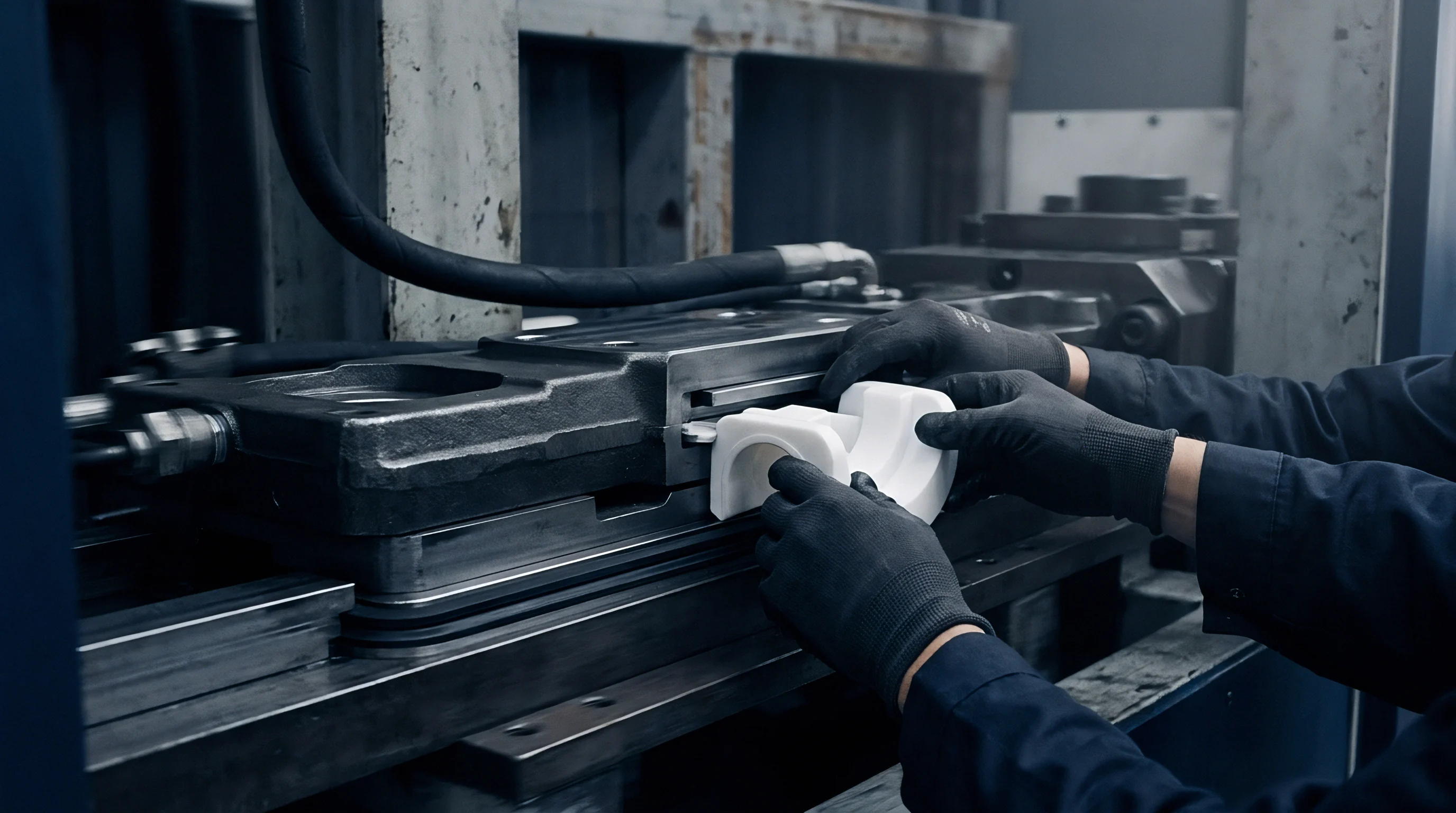
Proper physical notice requires deep-etched stainless steel plaques, mechanically riveted straight into the tool steel base. Positioning them takes some thought around routine tool maintenance, press clearance, and operator access.
The marking system has to survive a harsh mechanical environment while staying obvious to a non-technical bankruptcy trustee. The identification plate needs specific legal phrasing marking the asset as third-party property held strictly under a bailment agreement. Stamping the owner’s legal entity name, corporate address, serial identification number, and explicit statement of bailment onto non-wearing surfaces of the die shoe or mould frame creates a paperless trail that holds up against immediate challenge.
Toolmakers place secondary stainless tags directly beneath the ejection box, where machine operators cannot easily reach them with a grinder. Put them there to prevent desperate plant operators from intentionally removing tags to hide asset ownership during insolvency disputes. Tagging in two spots gives external visibility for quick walk-throughs and protected internal placement if repossession goes to court.
Placing deep-etched stainless plaques on non-wearing mould frames establishes immediate visual proof of third-party ownership during receivership seizures.
Physical markers have to survive the tool’s entire operational life, through high-temperature bakeouts, ultrasonic cleaning, and abrasive flash removal. Laser engraving straight into the P20 or Tool Steel H13 mould base frame creates a permanent mark. If direct engraving isn’t feasible due to space or base hardening, toolmakers should recess a 316 stainless steel plaque into a pocket machined into the stationary top plate.
Recessing the plaque protects it from getting knocked off during transport and rigging.
A resilient tool identification setup relies on several physical elements to survive receivership seizures:
- Primary Ownership Plaque mounted on the non-operator side of the top clamping plate, clearly stating bailment status and legal title holder.
- Secondary Embedded Marker located inside the ejector housing cavity, laser-etched directly into the steel frame for forensic identification.
- Machine-Readable RFID Transponder encapsulated in high-temperature PEEK housing, embedded flush within the mold plate for rapid inventory scans.
- Direct Steel Engraving detailing the tool serial number, cavity count, original tooling owner name, and federal tax identification number.
Documenting these markers is the first line of defense if retrieval goes to court. Before releasing a tool to the supplier’s plant, file complete photographic records in the asset master dossier ~ showing the fully assembled tool, close-ups of the riveted plaques, and exact location coordinates on the assembly drawing.
A tool marking system works if an unannounced receiver walking the shop floor can tell the steel belongs to someone else without checking paperwork.
Perfection
Physical tags establish notice on the shop floor, but defeating secured lenders takes statutory perfection. Under Uniform Commercial Code Article 9, a third-party owner who leaves tooling with a contract manufacturer risks losing priority to the plant’s floor-plan lenders or blanket-lien creditors. Lenders usually hold a perfected security interest covering all present and after-acquired equipment, inventory, and fixtures at the facility.
Without specific legal filings, a court will treat customer-owned tooling as part of the plant’s general equipment pool.
Filing a UCC-1 Financing Statement secures legal standing before financial trouble starts. Filings must be submitted in the jurisdiction where the contract manufacturer is organized, not just where the plant sits. Misidentifying the debtor’s exact legal corporate name invalidates the filing under strict UCC search rules.
A single typo or missing corporate suffix turns a perfected interest into an unperfected claim, leaving the tool exposed to the plant’s primary lender.
Lien filings leave no room for slop. The collateral description in the UCC-1 statement must explicitly identify the tool as third-party bailment property rather than sold equipment. The language needs to state clearly that the arrangement is a true bailment, where title stays with the buyer continuously and possession is granted solely to produce parts.
Filing a protective UCC-1 under Article 9-505 reserves all legal rights without admitting that the bailment is a security interest. If a bankruptcy court later recharacterizes the bailment as a financed sale or lease, the protective filing automatically preserves the tool owner’s perfected security interest back to the original filing date, stopping senior creditors from absorbing the asset.
A protective UCC-1 filing executed prior to tool delivery preserves priority even if a bankruptcy court reclassifies a bailment contract as a financed equipment transaction under Article 9.
Securing tooling assets before physical delivery requires completing a clear sequence of legal and administrative steps:
- Conduct Corporate Entity Search to determine the contract manufacturer’s exact registered name, charter number, and state of incorporation.
- Perform Comprehensive Lien Search across state and county registries to identify all existing secured creditors holding blanket liens on the host plant’s equipment.
- Execute Master Bailment Agreement containing explicit title retention, access rights, and restrictions against third-party encumbrances.
- File UCC-1 Financing Statement in the debtor’s state of incorporation, referencing the specific tool serial numbers, drawing references, and true bailment status.
- Issue Formal Written Notice to all pre-existing blanket lienholders, detailing the third-party ownership of the specified tooling assets before placing them on the host plant floor.
Issuing formal written notice to senior secured lenders adds essential protection. A UCC filing gives constructive notice, but sending a formal letter with asset lists and serial numbers straight to institutions holding blanket liens eliminates claims of good-faith reliance on physical possession. The letter puts the lender on notice that the plant does not own the tools, preventing them from advancing credit against that machinery.
Perfection filings require periodic maintenance to avoid lapses. UCC-1 filings expire five years from the filing date unless the owner files a UCC-3 continuation statement within the six-month window before expiration. Buyers managing long-lifecycle tooling programs need audit tracking to catch continuation deadlines before critical priority windows close.
The standard agreement includes the following protective terms: “The parties agree that all tooling, dies, moulds, jigs, fixtures, and associated technical drawings provided by Buyer to Supplier constitute a true bailment of personal property. Title to said tooling remains exclusively with Buyer at all times, and Supplier acquires zero ownership interest, equity, or property rights therein. Supplier shall not permit any lien, encumbrance, or security interest to attach to said tooling, and Buyer retains the unconditional right to repossess the tooling immediately upon written demand without judicial process.”

Bailment
A solid contract structure separates true tooling bailment from conditional sales, financing arrangements, or part-price amortization schedules. When a contract manufacturer pays for a tool upfront and amortizes the cost across part orders, legal title stays blurry until the final unit ships or the balance clears. If the plant suddenly goes under, unpaid amortization balances trigger immediate moulder’s lien claims, trapping the tool indefinitely.
Clean bailment requires strict financial separation between tooling procurement costs and part pricing. Paying for tool construction directly through milestone payments against progress invoices establishes clear title ownership right from the start of the build. The master bailment agreement must define the manufacturer strictly as a bailee who receives physical possession solely to run specified moulding or stamping jobs.
Buyers verify title documentation before transferring any multi-cavity injection mould to a contract press room. In one dispute, a supplier’s ledger miscategorized a $180,000 progress payment as a commercial loan advance rather than an explicit tooling purchase, allowing the plant’s receiver to freeze the tool for seven months during restructuring negotiations. Accounting records have to match physical bailment documents to prevent court trustees from misinterpreting the transaction.
Is the Tooling Ownership Notice Legally Enforceable under Distress?
Whether ownership notices hold up in court depends heavily on contract clarity and consistent execution. If a customer lets a host plant list production tooling as collateral on its balance sheet, or fails to enforce restrictions against moving tools, courts often toss out bailment claims. Enforcing contract terms day-to-day builds the evidentiary record needed to survive judicial review in bankruptcy.
Bailment contracts must explicitly forbid the host plant from altering, moving, or modifying tooling without prior written consent. Unauthorized tool modifications or off-site transfers to subcontractors compromise title integrity and expose assets to third-party artisan liens. Regular on-site physical audits verify tool condition, plaque integrity, and press assignment, reinforcing the factual reality of the bailment.
Unpaid tooling amortization balances create immediate statutory lien rights for host plants, converting ownership disputes into secured debt negotiations.
To audit physical tool inventory and bailment status at a host facility, technicians should follow this procedure:
- Check host plant gate entry records to confirm the tool base’s exact location and press assignment.
- Inspect outer frame plates to verify deep-etched stainless steel bailment plaques remain securely attached and unaltered.
- Cross-reference physical serial numbers against off-site UCC-1 filing schedules and master asset registries.
- Examine tool maintenance logs to verify no unauthorized modifications or third-party engineering changes occurred.
- Confirm host plant internal inventory records list the asset under third-party customer ownership rather than internal fixed assets.
- Obtain signed written confirmation of bailment status from the plant operations director during the audit pass.
How a host plant treats tooling on its internal balance sheet carries serious weight in bankruptcy court. If the internal ledger classifies customer tooling as capital assets, bankruptcy trustees will claim ownership. The master bailment agreement must obligate the plant to record third-party tooling in off-balance-sheet customer asset tracking systems, providing clean accounting records when insolvency hits.
Buyers insert landlord waiver provisions directly into the master bailment agreement. Commercial leases routinely give landlords blanket liens over all personal property on the premises if the tenant defaults. A signed landlord waiver explicitly releases landlord claims against specified third-party tooling, stopping property owners from holding tools hostage for unpaid plant rent.
A tooling agreement that lets the moulder retain title until part volume milestones are met guarantees that an early insolvency leaves the tool owner exposed as an unsecured creditor.
Stoppage
Financial distress shows up in operational red flags long before formal insolvency or a plant shutdown. Vendors miss payments, maintenance schedules slip, resin shipments stall, and key technical people resign. Spotting these early signals lets an owner take proactive steps to pull or protect tooling before court orders or landlord locks shut down physical access.
When a plant fails financially, statutory liens pose an immediate risk to customer tooling. Unlike consensual liens created by contract, statutory moulder’s, artisan’s, and mechanic’s liens arise automatically under state law. These statutes give contract manufacturers possessory rights over customer tooling if there are unpaid invoices for tool builds, engineering changes, or part production.