Standardizing Interlaboratory Oxidative Induction Variations Driven by Nonhomogeneous Postconsumer Polymer Contaminants
Standardizing oxidative induction in postconsumer polyolefins demands composite plaque preparation and aluminum pans to eliminate specimen variance.


Specimen
A differential scanning calorimeter cell accepts between two and ten milligrams of polymer, concentrating analytical sensitivity on a minute fraction of the incoming delivery. Virgin polyethylene and polypropylene resins carry uniform distributions of primary hindered phenols and secondary phosphites introduced during continuous liquid-phase compounding. Postconsumer polyolefins present an entirely different physical reality.
Granules sorted from municipal recycling streams represent a mechanical consolidation of divergent blow-molding containers, injection-molded crates, and extrusion film. Individual pellets inside a single twenty-five-kilogram bag originate from containers produced with dissimilar additive formulations, divergent melt flow rates, and disparate weathering histories. Placing an intact pellet directly into a sample pan generates a local measurement that reflects the degradation state of that single source container rather than the composite batch.
Five milligrams represents the standard specimen. When an operator cuts a five-milligram slice from a recycled high-density polyethylene pellet, that slice captures localized antioxidant concentrations. The core of a pellet often holds unconsumed primary stabilizer, while the exterior skin displays oxidative depletion from previous thermal extrusion passes.
Testing un-granulated pellet fragments under ASTM D3895 or ISO 11357-6 yields erratic results. One granule tests at thirty-four minutes, while the neighboring granule from the same bag fails at two minutes.
A test run at two hundred degrees Celsius under fifty milliliters per minute oxygen yields an induction time of 8.2 minutes on raw granules compared to 24.6 minutes on an homogenized plaque prepared from the identical sample bag.
Thermal Gradients across Postconsumer Pellets
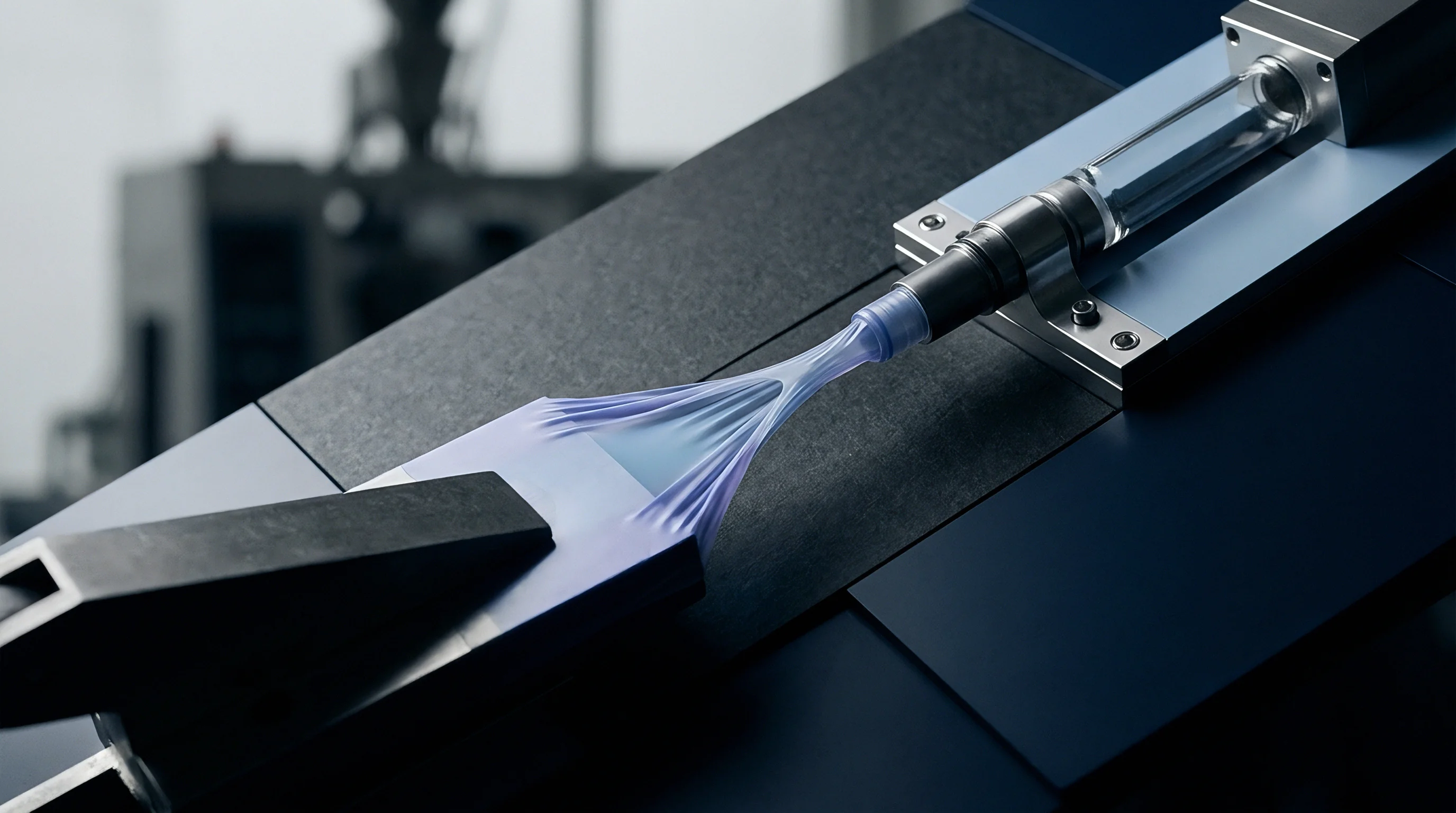
Pelletized recycled polyolefins combine domestic detergent bottles, blow-molded industrial drums, and agricultural film gathered from varied recovery centers. These components exhibit divergent crystalline melting peaks and pigment loadings. Carbon black agglomerates, calcium carbonate fillers, and residual titanium dioxide disperse unevenly throughout the polymer melt during single-screw recycling extrusion.
Incomplete mixing creates localized domains where thermal conductivity varies across a single pellet. When the calorimeter reaches the isothermal target temperature, typically 200 °C for polyethylene or 210 °C for polypropylene, uneven heat transfer through the pellet specimen delays thermal equilibrium.
Granule cross-sections reveal antioxidant starvation. The outer surfaces suffer rapid oxidation, producing a premature baseline deflection that mimics the onset of global matrix degradation. Laboratories interpreting this initial exotherm record an artificially suppressed induction duration.
Cryogenic grinding of a large representative pellet sample resolves this intra-pellet variance by distributing additive-rich domains and degraded fractions into a uniform powder matrix.

Preparation Routines for Homogenized Analysis
Cryogenic micro-milling reduces five hundred grams of blended production pellets into an homogeneous feed. The technician samples twenty scoops from different depths of the bulk bag, compiles a composite five-hundred-gram lot, and feeds the polymer into an impact mill chilled with liquid nitrogen. Chilling the polymer below its glass transition temperature prevents shear-induced thermal degradation and prevents additive loss during mechanical comminution.
The resulting powder passes through a five-hundred-micrometer sieve.
Compression molding converts this milled powder into a thin plaque. A laboratory press operating at 170 °C under a nitrogen blanket consolidates the powder into a 0.2-millimeter sheet within two minutes. Water-cooled platens quench the mold at thirty degrees Celsius per minute to fix amorphous morphology.
Punching five-milligram analytical disks from this plaque creates test specimens with uniform thickness, flat contact surfaces, and homogenous stabilizer distribution. The geometric uniformity guarantees reproducible heat transfer between the cell sensor and the polymer melt.
| Pellet Lot Origin | Base Polymer Grade | Single Pellet OIT Range (min) | Homogenized Plaque OIT (min) | Coefficient of Variation Across Five Runs (%) |
|---|---|---|---|---|
| Postconsumer Bottle Bale HDPE | Blow Molding (0.35 MFR at 190 °C, 2.16 kg) | 4.1 to 38.6 | 22.4 | 4.8 |
| Postconsumer Rigids Mix HDPE/PP | Injection Molding (4.2 MFR at 230 °C, 2.16 kg) | 1.8 to 21.3 | 11.2 | 6.2 |
| Agricultural Film Pellets LLDPE | Blown Film (0.85 MFR at 190 °C, 2.16 kg) | 6.4 to 44.0 | 28.1 | 3.9 |
| Automotive Battery Case PP | Copolymer (12.0 MFR at 230 °C, 2.16 kg) | 0.5 to 14.8 | 8.6 | 7.5 |
ASTM D3895 Section 9.1 specifies test disks cut directly from pelleted resin, but inserting an addendum mandating composite cryo-milling to two hundred fifty microns before compression molding shifts the buyer’s contractual acceptance threshold from un-reproducible single-granule spikes to a verifiable lot mean.

Metal
Unintended inorganic inclusions enter recycled fractions during collection, sorting, and municipal shredding. Postconsumer streams derived from mixed commercial waste or electronic scrap carry fine wire fragments, shredder blade shavings, and zinc stearate slip agents. These active transition metal species remain embedded within finished pellets when melt filtration screens exceed one hundred fifty microns.
In virgin resin production, metal residuals remain tightly controlled below single-digit parts per million, consisting primarily of spent coordination complexes that are deactivated by post-polymerization wash cycles. Postconsumer polyolefins hold uncontrolled metal contaminants that actively interact with oxidizing polymer chains.
Copper residues trigger premature auto-oxidation. Transition elements with variable valence states accelerate the homolytic cleavage of polymer hydroperoxides into reactive alkoxy and peroxy radicals. When a molten polyolefin sample contacts active metal particles inside a differential scanning calorimeter cell, hydroperoxide decomposition begins well before the primary hindered phenol stabilizer package is consumed through conventional hydrogen-transfer mechanisms.
The thermal exotherm rises abruptly, giving the false analytical impression that the resin contains zero functional antioxidant protection.
Transition metal residues accelerate free radical propagation along polyolefin backbones before primary phenolic scavengers can intercept peroxy radicals.

Are Copper Residues Shifting Isothermal Baselines?
Electrical wiring shreds and brass valve fragments introduce fine conductive particulate that evades magnetic separators. Copper ions act as heterogeneous oxidation promoters inside molten polyethylene. At 200 °C, copper surfaces induce rapid catalytic decomposition of secondary alkyl hydroperoxides.
The activation energy required for oxygen uptake drops substantially in the localized volume surrounding a copper inclusion.
Calorimetric testing of copper-contaminated pellets produces split exotherm peaks. The recording instrument registers a low-intensity, broad exothermic departure five to ten minutes after oxygen introduction, followed by a steeper secondary slope when the bulk polymer undergoes uninhibited auto-oxidation. Laboratories running automated software detection algorithms register the initial shallow slope as the true induction threshold, logging artificially short thermal stability figures.
Manual curve evaluation often dismisses the initial departure as baseline drift, logging the secondary slope and recording an induction duration that exceeds the real physical longevity of the compound.

Redox Acceleration in Molten Polyolefins
Hydroperoxide molecules formed during previous service lifetimes undergo cleavage in the presence of polyvalent cations. Ferrous and ferric ions originating from machinery wear alternate oxidation states to sustain continuous radical generation. The physical reaction sequence progresses through four stages:
- Hydroperoxide Coordination occurs when polymer peroxides bind to transition metal sites.
- Monomolecular Cleavage generates free hydroxyl and alkoxy radicals that attack adjacent polymer backbones.
- Secondary Radical Propagation abstracts tertiary hydrogens from polypropylene or branching sites on polyethylene chains.
- Stabilizer Quenching rapidly depletes phosphite process scavengers that react preferentially with coordinated peroxides rather than molecular oxygen.
Ferrous ions enter during granulator blade wear. This metallic interference invalidates thermal comparisons between pristine virgin compounds and postconsumer mixtures unless metal-deactivator additives are present. Adding one thousand parts per million of an oxalyl bis(benzylidenehydrazide) chelating agent ties up active copper and iron coordination sites, restoring baseline stability.
Testing identical recycled pellets with and without chelating pre-treatments reveals whether an observed low induction duration stems from chemical stabilizer exhaustion or metal-induced catalytic acceleration.
Ignoring transition promoter contamination during incoming differential scanning calorimetry sends premature oxidative embrittlement into outdoor service environments where field cracking generates catastrophic warranty replacement liabilities.


Pan
Calorimetric cell hardware exerts direct kinetic control over gas-liquid equilibria throughout the isothermal hold. The geometry of the specimen holder, the thermal conductivity of the constituent alloy, and the venting area above the polymer melt govern oxygen mass transfer. Laboratories qualifying postconsumer polyolefins under ASTM D3895 and ISO 11357-6 deploy dissimilar pan configurations without documenting container specifications on testing certificates.
A facility evaluating pellets in an open, high-purity aluminum pan achieves completely different induction times than an external laboratory employing an aluminum container with a pierced lid.
Open pans permit unrestricted gas diffusion. As the polymer specimen melts under inert purge, surface tension causes the droplet to wet the metal base and establish an equilibrium contact angle. Postconsumer polymers contaminated with low-molecular-weight waxes, process oils, or residual surfactants spread across the pan floor unevenly, creating non-uniform melt thickness.
Specimen creeping alters the heat flow path. When the polymer creeps up the container wall, the exposed surface area increases, accelerating oxygen absorption and decreasing the measured induction duration.
Pan thermal conductivity and venting geometry govern volatile additive evaporation rates during the pre-oxidation nitrogen ramp.
Enclosure Geometry and Volatile Evaporation
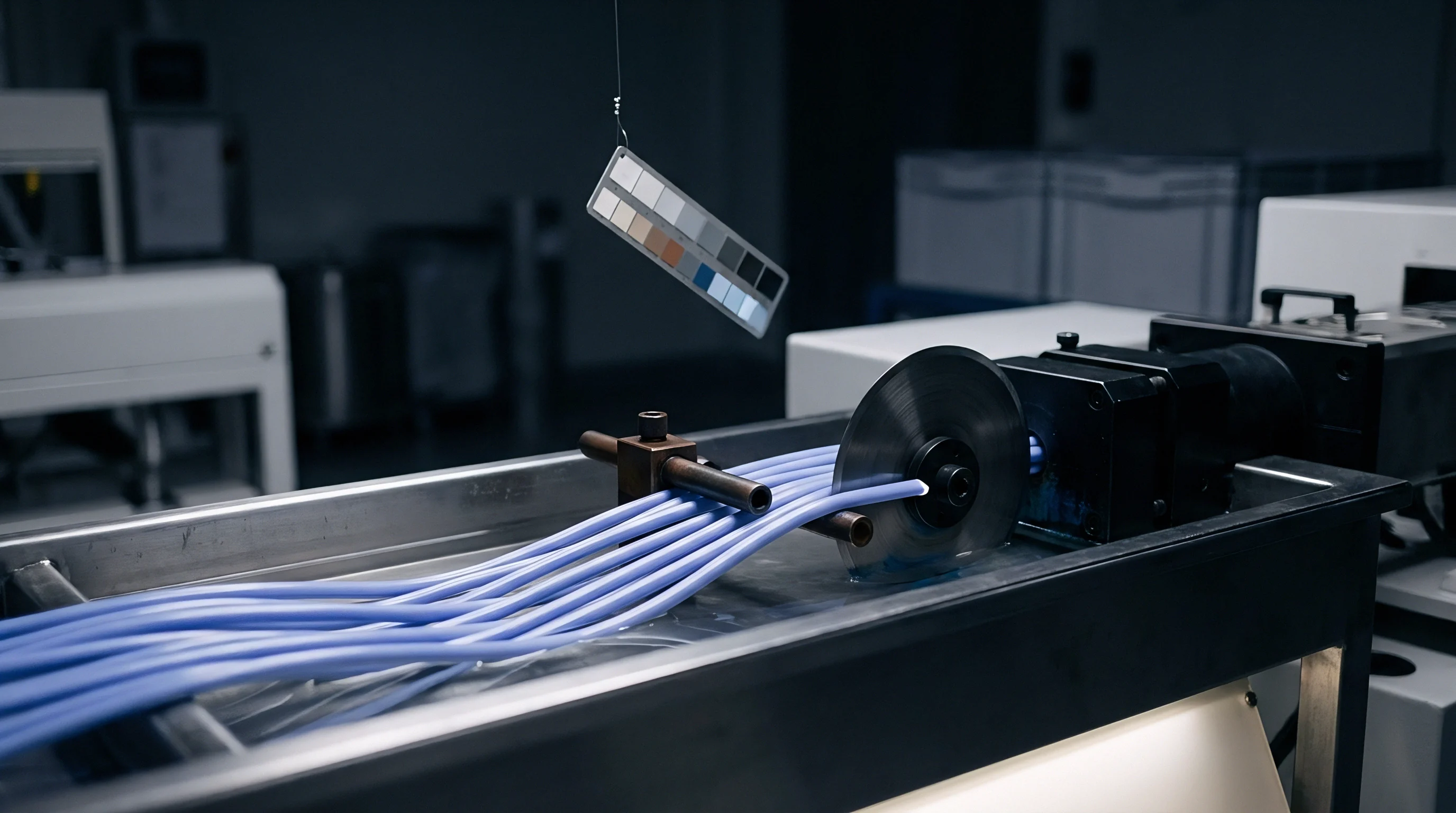
Standard aluminum containers manufactured for thermal analysis feature flat bottoms and shallow sidewalls. When analyzing volatile-free virgin polymer, an open pan provides clean baseline stability. Postconsumer compounds contain residual volatile degradation products, moisture, and low-boiling light ends generated during previous reprocessing passes.
Heating an unsealed pan to 200 °C under nitrogen gas flow sweeps these volatile components into the cell exhaust. The loss of volatile organic mass registers as a slow, continuous endothermic baseline drift that interferes with the onset calculation when oxygen purges the cell.
Crimping an aluminum lid containing a laser-drilled fifty-micrometer pinhole suppresses volatile mass loss while retaining analytical sensitivity. The pinhole restricts the escape of volatile oligomers and maintains an internal vapor pressure that curbs specimen creeping. The restricted aperture limits oxygen ingress.
The diffusion rate of pure oxygen gas through a micro-pinhole into the stationary headspace of the pan becomes the rate-determining step for polymer oxidation, obscuring differences between high-antioxidant lots and marginal postconsumer fractions. Selecting the correct pan requires balancing gas replenishment against mass loss:
- Open Aluminum Pans maximize oxygen contact with the molten pool, providing the most accurate kinetic measurement for pure polyolefins devoid of creeping surfactants.
- Pinhole-Vented Enclosures prevent thermal splashing and creeping when analyzing highly degraded postconsumer fractions that contain waxes or volatile moisture remnants.
- Open Copper Pans amplify pro-oxidant surface interactions, evaluating the base polymer’s inherent susceptibility to catalytic degradation under ASTM D3895 cable compound criteria.
- Hermetic Gold Pans isolate corrosive halogenated flame retardants present in mixed postconsumer electronics scrap, protecting analytical sensors from acidic vapor attack.
Purge Dynamics and Gas Velocity
Mass flow controllers regulate the transition from inert gas to pure reactant at fifty milliliters per minute. Purge gas lines must maintain minimum five-nines chemical purity, corresponding to 99.999% purity. Trace moisture or oxygen impurities exceeding five parts per million inside the inert nitrogen stream cause premature stabilizer depletion during the preliminary heating ramp from ambient to 200 °C. The polymer begins oxidising before the instrument valves switch to the reactive oxygen stream, compressing the measured induction span.
High purge rates cool the cell. If the purge gas velocity exceeds seventy milliliters per minute, local turbulence cools the pan rim and induces an immediate downward baseline step during the gas valve switchover. A sudden flow change alters the thermal equilibrium between the sample cell and the reference sensor.
The resulting baseline distortion obscures the initial departure angle of the oxidation exotherm, leading technicians to misplace the baseline tangent intersection.
| Pan Metallurgy and Type | Purge Gas Purity | Postconsumer HDPE OIT (min) | Baseline Drift (mW/min) | Exotherm Peak Temperature (°C) |
|---|---|---|---|---|
| Open Aluminum (Standard) | 99.999% Nitrogen to Oxygen | 18.4 | 0.03 | 218.4 |
| Crimped Aluminum with 50 μm Pinhole | 99.999% Nitrogen to Oxygen | 31.2 | 0.01 | 224.6 |
| Open High-Purity Copper | 99.999% Nitrogen to Oxygen | 1.2 | 0.12 | 204.1 |
| Open Aluminum with Contaminated Purge | 99.95% Nitrogen (20 ppm O2) | 9.6 | 0.08 | 214.2 |
Compounders defend the ninety-minute differential across test houses by asserting that their factory laboratory strictly follows the virgin resin heating profile in standard unsealed containers without accounting for ambient humidity or lid crimping geometry.
Scatter
Round-robin testing across commercial analytical facilities frequently produces irreconcilable data sheets for identical production lots. When three certified contract laboratories evaluate pellets from the same postconsumer high-density polyethylene delivery, reported values often return as 12, 28, and 41 minutes. The interlaboratory spread reaches sixty percent.
These disparities do not stem from operator incompetence or instrument failure. They originate from divergent baseline construction practices, disparate temperature calibrations, and the inherent physical heterogeneity of recycled polyolefin compounds.
A published repeatability value of 1.8 minutes and reproducibility of 5.4 minutes in ISO 11357-6 rests on five virgin polyolefin samples tested in round-robin across eleven European laboratories in 2008. If the resin contains un-stabilized flakes or ten parts per million ferric contamination, those bounds expand threefold. Reproducibility standard deviations exceed ten minutes.
Standard laboratory practice prices single-run oxidative induction testing at 95 EUR per sample based on twenty-minute hold times in a single cell. Should the isothermal dwell extend past ninety minutes due to high stabilizer loading, instrument run costs rise toward 160 EUR per test.
This analytical divergence resembles the fire-assay disputes that divided copper smelters and assay offices in Swansea during the eighteen-eighties, where unrecognized arsenic traces in Cornish ores distorted crucible scorification before electrolytic refining methods took hold. Analytical chemistry in thermal testing consistently reflects the physical cleanliness of the extraction chain.
Where Do Interlaboratory Discrepancies Originate?
Calibration routines for temperature and heat flow diverge significantly between commercial testing facilities. Calorimeters require two-point temperature calibration using high-purity indium and tin melting standards under inert purge gas. Indium exhibits a sharp melting point at 156.6 °C, while tin melts at 231.9 °C. Some facilities verify calibration exclusively at the lower indium point, neglecting the non-linear response of thermocouple sensors as temperatures approach the 200 °C or 210 °C isothermal testing plateaus.
An instrument operating with a two-degree-Celsius positive thermal offset halves the measured induction duration. Polyolefin oxidation follows Arrhenius reaction kinetics, where reaction rates double for every ten-degree rise in test temperature. A nominal 200 °C program executing at an actual cell temperature of 202.5 °C cuts a true twenty-minute reading down to approximately sixteen minutes.
When combined with local differences in furnace chamber clean-out protocols, interlaboratory consistency disintegrates.

Calorimeter Baseline Drift and Drift Correction
Tangent line selection at the onset of oxidation generates subjective numerical bias. ISO 11357-6 defines the induction point as the intersection of the baseline established under oxygen flow and the steepest tangent drawn to the exothermic reaction slope. If the baseline exhibits continuous slope due to sample evaporation or sensor thermal drift, the technician must choose between an horizontal extrapolation or an angled baseline parallel to the initial steady-state slope.
Shifting the baseline tangent by a fraction of a milliwatt moves the calculated intersection point by several minutes on broad, low-energy exotherms typical of degraded postconsumer resins.
The global fraction of postconsumer HDPE holding transition metal levels below five parts per million is estimated at forty-two percent, though the desk cannot fully defend this figure given the regional variability of municipal sorting infrastructure. Under this uncertainty, the buyer specifies mandatory chelating additives or conducts wet-digestion spectroscopic screening before approving bulk railcar shipments. Interlaboratory testing programs on recycled stocks experience recurring analytical anomalies:
- Baseline Slope Inversion happens when endothermic desorption of residual water overlaps the exothermic oxygen switchover, preventing automated intersection calculation.
- Premature Multi-Step Onsets emerge from trace low-density polyethylene cross-contamination within high-density fractions, triggering tiered oxidation responses at differing crystalline boundaries.
- Sensor Surface Deposition occurs when volatilized flame retardants condense onto thermopiles, suppressing heat transfer coefficients across sequential runs.
- Purge Gas Valve Delay develops when aging manifold solenoids leak residual nitrogen into the oxygen purge, extending induction durations by postponing full oxidative saturation.
Nitrogen flushes out residual oxygen. Whether high-pressure testing at lower temperatures can suppress volatile antioxidant loss while remaining sensitive to heterogeneous postconsumer metal inclusions remains unsettled across international standards committees.


Clause
Procurement contracts for postconsumer polymers require unambiguous technical language to survive commercial disputes. Buying recycled pellets involves financial risk when technical specifications dictate a minimum Oxidative Induction Time without prescribing sample preparation routines, referee testing houses, and baseline evaluation limits. A Certificate of Analysis reflecting an arbitrary thirty-minute single-granule test from a compounder provides zero warranty that the delivered fifty-ton railcar will withstand mold filling, compounding passes, or outdoor photo-oxidation.
A purchase contract specifying DIN EN 15343 lot homogenization terms prevents disputed rejections caused by localized antioxidant starvation in postconsumer pellets. Demurrage charges accumulate during referee disputes. Take a 40-tonne lot of natural postconsumer HDPE blow-molding pellets priced at 1,180 EUR per tonne delivered to an extrusion plant.
If the purchase contract requires a minimum Oxidative Induction Time of twenty minutes at 200 °C under ASTM D3895, testing five raw pellets at random yields readings of 4.2, 18.5, 7.1, 26.3, and 5.0 minutes. Three of the five pellets fail the threshold. Rejection of the railcar triggers 140 EUR per day in demurrage and delays processing by twelve days while the supplier disputes the measurement.
A composite plaque prepared from a five-hundred-gram sample yields an uniform 19.4 minutes across duplicate runs, settling the lot within acceptable commercial operating tolerance and avoiding 1,680 EUR in detention charges.

Arbitration Parameters in Resin Specifications
Technical purchase schedules define the boundary between acceptable raw material and nonconforming deliveries. Specifying an exact numerical threshold such as twenty minutes at 200 °C is commercially incomplete without defining sample mass, pan metallurgy, and specimen preparation routes. Contracts must dictate whether testing occurs on as-received pellets or on cryo-milled compression-molded plaques.
Sourcing specifications that cite ASTM D3895 without explicit preparation amendments leave buyers vulnerable to supplier claims that any individual pellet reading fulfills contractual warranties.
Off-spec shipments carry price discounts. When an incoming delivery generates a composite induction time below the contractual minimum, buyers execute contractual remedies including price renegotiation, additive dosing offsets, or lot rejection. A buyer equipped with verified plaque data negotiates a price concession corresponding to the exact cost of compounding a liquid antioxidant masterbatch during extrusion.
If the baseline compound tests at eight minutes instead of the specified twenty minutes, re-stabilizing the melt demands three kilograms of a fifty-percent active hindered phenol and phosphite blend per metric ton, adding 18 EUR per ton in direct additive costs plus processing machine time.

Balancing Testing Cost and Demurrage Exposure
A railcar holding twenty metric tons of pelleted resin in shipping containers generates steep logistical penalties when analytical disputes stall unloading docks. Conventional ambient-pressure testing demands up to two hours per sample when high stabilizer packages are present. High-Pressure Oxidative Induction Time, designated HP-OIT under ASTM D5885, runs at 150 °C under 3.5 MPa of pure oxygen.
Lowering the temperature suppresses volatile additive evaporation, while elevated oxygen pressure accelerates matrix diffusion, generating reproducible oxidation onsets on complex postconsumer mixtures.
| Testing Method | Thermal Window | Lab Cycle Time | Turnaround Cost per Sample (EUR) | Contractual Dispute Risk |
|---|---|---|---|---|
| Standard OIT (ASTM D3895) on Raw Pellets | 200 °C, Ambient P | 45 to 120 min | 85 to 110 | Extreme (Subject to Pellet Heterogeneity) |
| Standard OIT on Homogenized Plaque | 200 °C, Ambient P | 120 to 180 min | 140 to 175 | Low (Reflects Lot Average Stabilizer) |
| High-Pressure OIT (ASTM D5885) on Plaque | 150 °C, 3.5 MPa O2 | 90 to 150 min | 210 to 260 | Minimal (Suppresses Volatilization Errors) |
| Oxidation Induction Temperature (ISO 11357-6 Dynamic) | Dynamic Ramp to 300 °C | 30 to 50 min | 90 to 120 | Moderate (Less Sensitive to Hindered Phenols) |
Stabilizers exhaust during storage. Acceptance testing on postconsumer polyolefins succeeds when the buyer tests the homogenate rather than the granule and hedges the thermal induction window against secondary stabilizer depletion.