Optimizing High Load Melt Flow Testing Procedures for Bimodal Polyethylene Quality Control
High load melt index testing under 21.6 kg mass exposes high molecular weight chain variance in bimodal polyethylene to secure extrusion quality control.
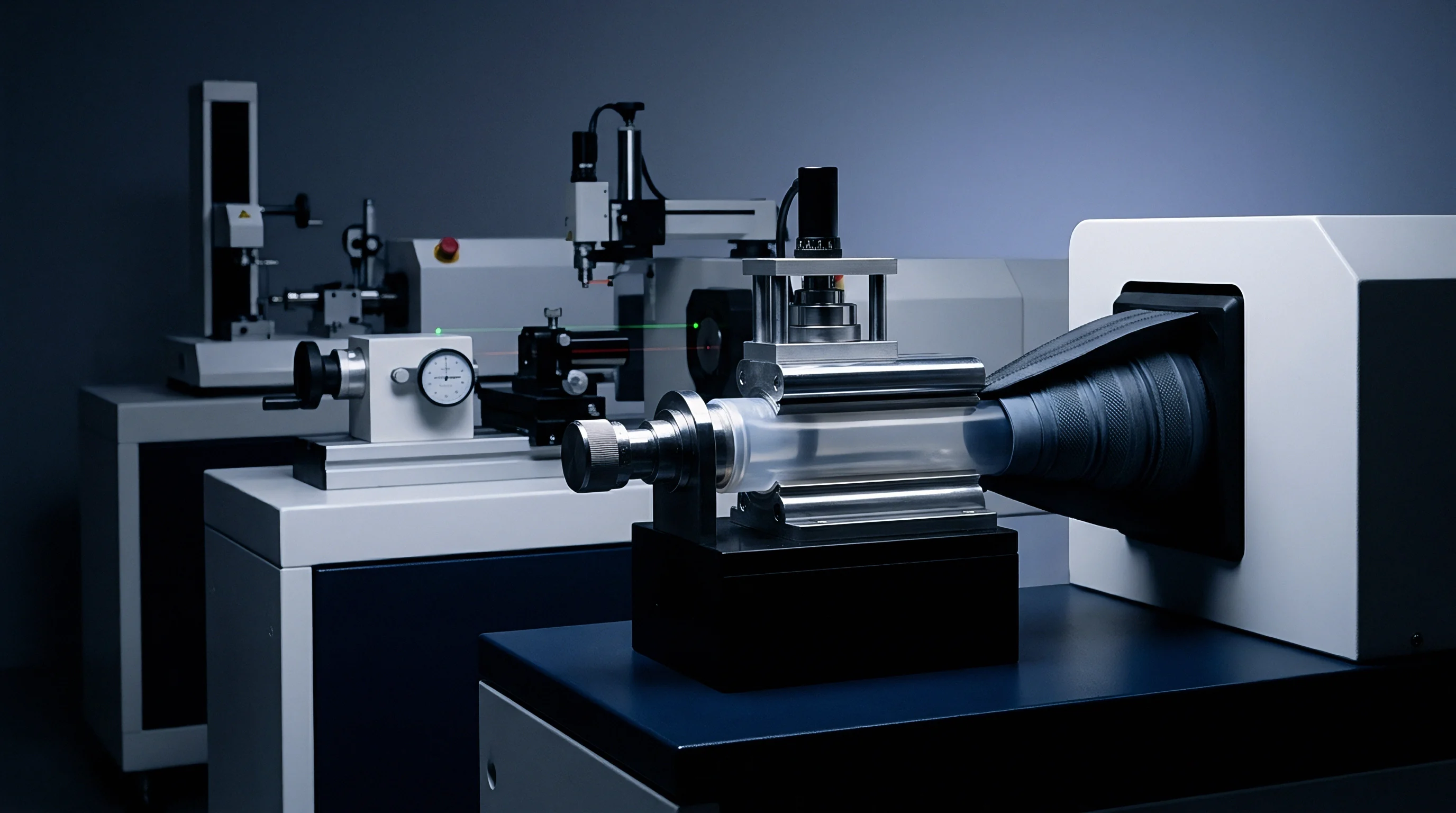

Load
Standard plastometer tests operating at 190 °C with a 2.16 kg mass fail to generate sufficient shear stress to move high molecular weight bimodal polyethylene fractions through a standard capillary die. Bimodal high-density polyethylene resins synthesized via dual-reactor cascade processes possess a distinct molecular weight distribution. The low-molecular-weight fraction provides melt processability, while the high-molecular-weight fraction imparts environmental stress crack resistance, toughness, and long-term hydrostatic strength.
Under standard low-mass test conditions, the high-molecular-weight chains form an entangled physical network that yields virtually zero volumetric displacement. Testing at low mass produces melt flow values often dropping below 0.05 g/10 min, where instrument noise and thermal drift obscure true batch variance.
High masses force flow. Applying a 21.6 kg mass at 190 °C per ASTM D1238 Condition 190/21.6 or ISO 1133 Condition G increases barrel pressure by an order of magnitude. This elevated stress field forces non-Newtonian shear thinning across the high-molecular-weight chains.
As the entangled matrix disentangles under high shear rates, the measured high load melt index rises into a precise working window between 5.0 g/10 min and 25.0 g/10 min. Polymer chains entangle tightly. Measuring displacement under heavy mass reveals structural shifts in the long-chain tail that remain invisible under standard loads.
Bimodal polyethylene resins with a high load melt index below 8.0 dg/min at 190 °C under 21.6 kg exhibit enhanced environmental stress crack resistance exceeding 1,000 hours under ASTM D1693 Condition B.
Shear rates drop rapidly. The transition from linear to non-linear viscoelastic response defines how bimodal grades behave during full-scale extrusion. Evaluating melt resistance at multiple load tiers establishes the exact onset of shear thinning for incoming quality control.
| Resin Architecture | Standard Mass (2.16 kg) MFR (g/10 min) | Intermediate Mass (5.0 kg) MFR (g/10 min) | High Mass (21.6 kg) HLMI (g/10 min) | Apparent Shear Rate (s⁻¹) |
|---|---|---|---|---|
| Bimodal Pipe Grade (PE100) | 0.03 to 0.08 | 0.20 to 0.45 | 8.5 to 12.0 | 15.2 to 22.4 |
| Bimodal Blow Molding | 0.05 to 0.12 | 0.35 to 0.70 | 14.0 to 20.0 | 25.8 to 36.9 |
| Unimodal Film Grade | 0.80 to 1.20 | 2.80 to 4.10 | 28.0 to 38.0 | 51.6 to 70.0 |
| Unimodal Injection Grade | 7.00 to 12.00 | 22.0 to 35.0 | 180.0 to 260.0 | 331.0 to 478.0 |
Relying on low-mass melt flow values for bimodal resin acceptance allows broad structural shifts in high-molecular-weight fractions to pass unnoticed into production, causing catastrophic environmental stress cracking in downstream pressure pipes under field hydrostatic testing.

Viscosity
Rheological characterization of dual-reactor high-density resins relies on the Flow Rate Ratio to track the proportion between low and high molecular weight species. Calculating this dimensionless parameter requires dividing the high load melt index measured at 21.6 kg by the standard melt index measured at 2.16 kg or 5.0 kg. A widening ratio indicates an expanded molecular weight distribution or an increased mass fraction of ultra-high molecular weight tie molecules produced in the second reactor vessel.
Narrow ratios signal reactor imbalance, where the high-molecular-weight component fails to reach target polymerization levels.
High viscosity limits flow. Non-linear relaxation times induce elastic energy storage inside the barrel during high-mass extrusion. When forced through a standard die orifice measuring 2.095 mm in diameter, the polymer melt experiences severe extensional deformation.
Bimodal resin architectures resist displacement. If the shear rate exceeds the critical threshold for melt fracture, visual surface irregularities appear on the extruded strand. These surface defects alter mass cut accuracy during manual test procedures.
Evaluating the ratio of high-mass to low-mass flow rates provides early warning of compounding irregularities before material enters production tools. Shift engineers use these rheological ratios to verify reactor stability without running lengthy gel permeation chromatography tests.
- Reactor Split Drift shifting the mass ratio between low and high molecular weight reactors alters high load mass flow by more than twenty percent while leaving standard load values within nominal tolerances.
- Melt Elasticity Surges causing severe strand swell upon exiting the capillary die, which artificially delays piston drop speeds in automated optical testing systems.
- Tie Molecule Depletion reducing slow crack growth resistance without altering low-load melt flow rates, leading to early field failures under sustained mechanical stress.
- Sharkskin Surface Distortion corrupting automatic strand cutting mechanisms by generating non-uniform strand cross-sections during rapid displacement.
A widening flow rate ratio signals an expanding high molecular weight tail long before tensile yield testing detects the shift.
Capillary wall friction varies. Friction along the tungsten carbide die channel fluctuates when processing heavily stabilized bimodal compounds containing hydrophobic fluoropolymer processing aids. Fluoropolymer additives migrate to the die surface, reducing wall shear stress during high load testing and skewing observed flow figures upward.
Whether wall slip inside tungsten carbide capillaries invalidates high shear flow rate ratios for ultra-high molecular weight fractions remains unresolved among rheological standardization committees.

Apparatus
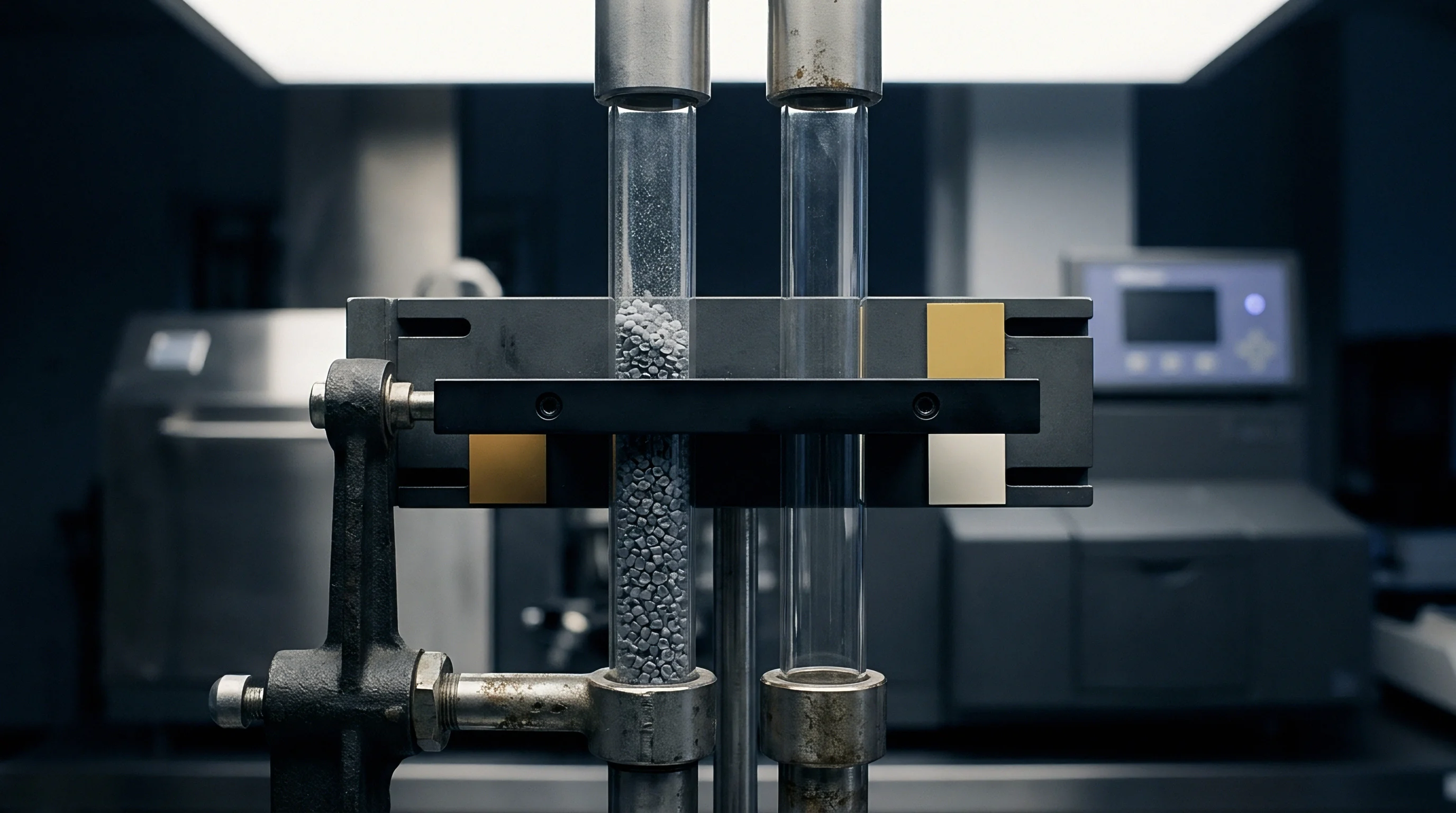
Precise dimensional tolerances within the barrel and capillary die govern measurement reproducibility when testing heavy bimodal polyolefins. Standard plastometers feature a hardened steel barrel bore measuring 9.550 mm with a tolerance of 0.007 mm. High mass testing using 21.6 kg weights imposes immense mechanical stress on the piston foot, causing accelerated wall abrasion if the assembly tilts off-axis.
Piston feet require an exact clearance fit of 0.075 mm against the barrel wall to prevent molten polymer from back-flowing around the piston cap under maximum mechanical loads.
Thermal Stability across Long Barrel Lengths
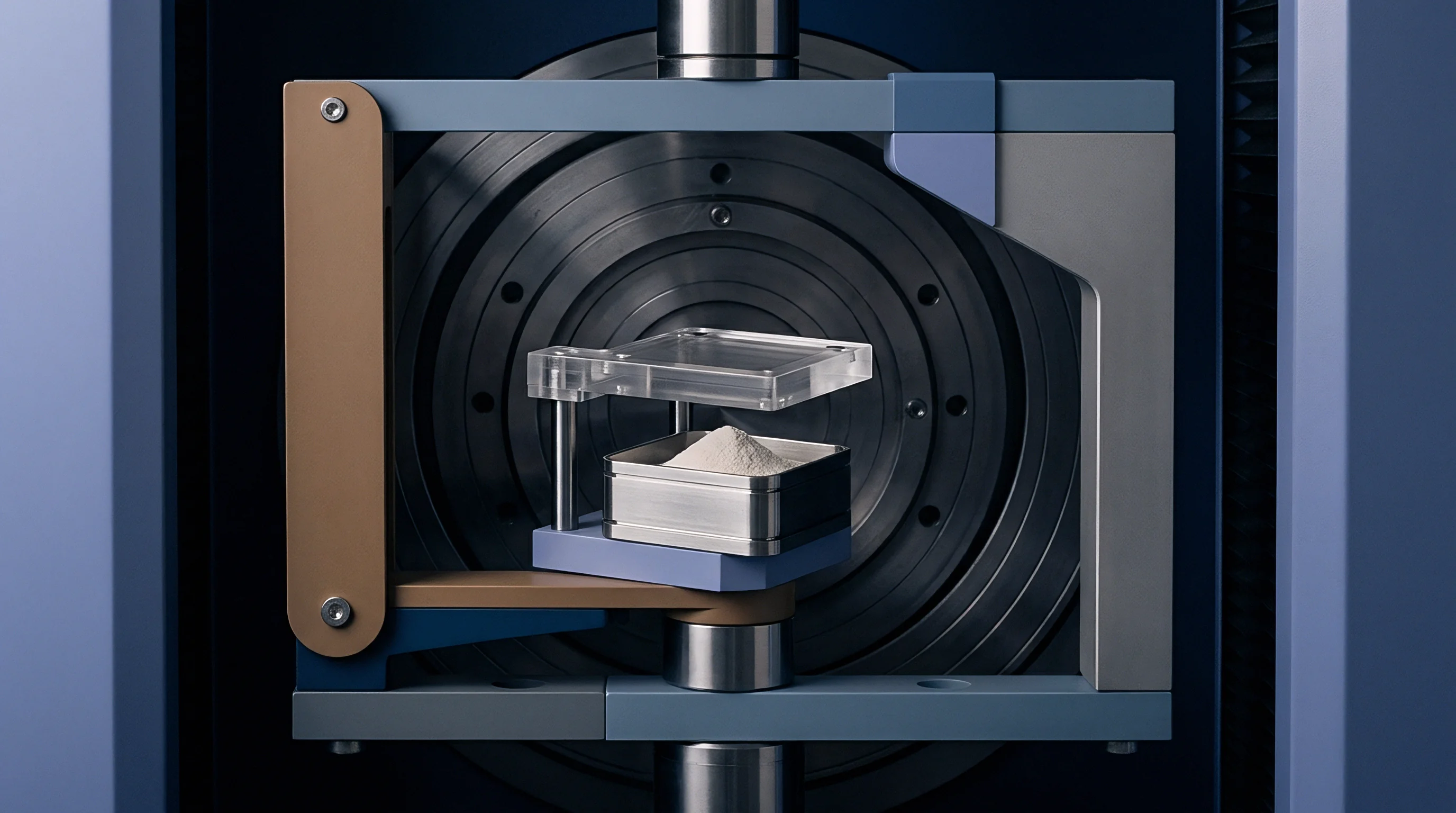
Maintaining temperature stability along the vertical axis of the heating cylinder poses a primary challenge in high load testing. Barrel heaters must hold temperature within 0.2 °C of the setpoint across the lower 75 mm testing zone. Bimodal polyethylenes exhibit high thermal sensitivity.
Localized temperature dips increase melt viscosity rapidly, creating artificially low flow readings. Automatic displacement encoders track piston travel across small increments, requiring stable thermal equilibrium prior to mass release.
How Does Thermal Preheating Alter Shear History?
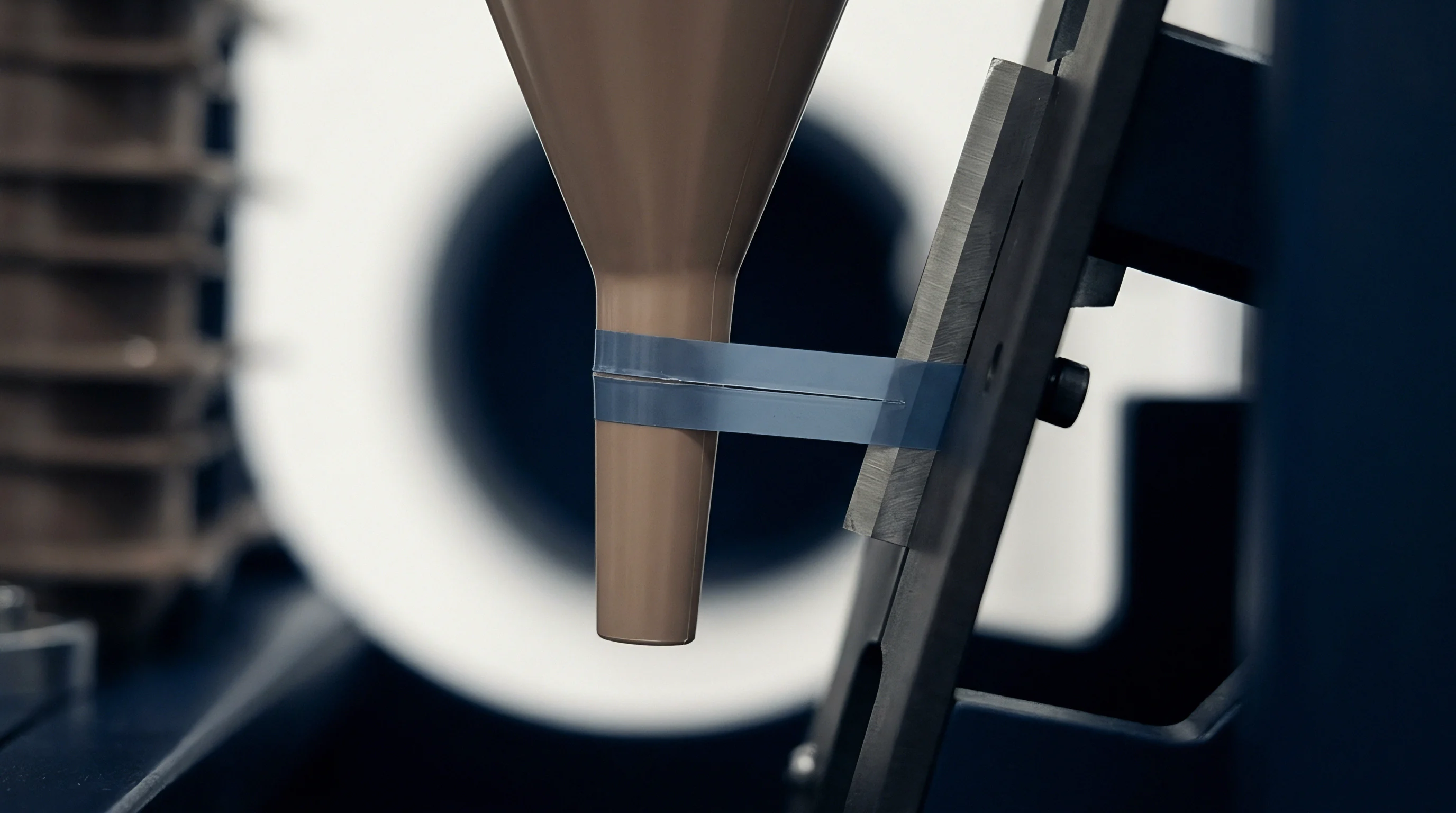
Preheating duration directly alters the physical state of the polymer charge inside the barrel. Standard protocols specify a six-minute preheat cycle at 190 °C under zero or minimal packing load. Extending preheat duration beyond eight minutes induces thermal degradation and antioxidant depletion in unstabilized resin samples.
Insufficient preheat duration leaves unmelted crystalline domains intact, creating artificial flow resistance during the 21.6 kg test stroke.
Die entrance geometry dominates. Standard dies feature an internal diameter of 2.095 mm and a length of 8.000 mm. For ultra-high viscosity bimodal grades with high load indices below 2.0 g/10 min, operators select half-length dies measuring 4.000 mm in length with a 1.000 mm bore.
Half-length dies reduce entrance pressure drops and lower total extrusion resistance, allowing precise piston displacement measurements without exceeding transducer limits.
- Purge the heated barrel with clean cotton patches and inspect the bore for degraded polymer residue.
- Insert the clean capillary die into the bottom of the barrel and verify firm seating against the retaining nut.
- Charge the barrel with four to five grams of bimodal polyethylene pellets using a funnel within forty seconds.
- Tamp the pellet bed firmly using a hand rod to eliminate entrapped air pockets between granules.
- Position the weighted piston assembly into the top bore and initiate the standardized preheat timer for six minutes.
- Release the 21.6 kg load smoothly onto the piston head when the preheat timer reaches zero.
- Capture piston displacement data automatically via optical encoder across the specified standard timing zone.
- Purge remaining resin from the cylinder immediately after test completion while the apparatus remains hot.
ISO 1133-2 mandates continuous die temperature control within 0.2 °C along the barrel wall to prevent viscosity drift during high load extrusions.
Clean the barrel completely. Residual oxidized polymer clinging to the internal bore creates friction against the piston foot and contaminates subsequent test charges. Scraping the barrel wall with brass brushes while at elevated temperature prevents carbonaceous buildup that degrades test precision.
| Test Parameter | ISO 1133-1 (Procedure B) | ISO 1133-2 (Procedure B) | ASTM D1238 (Procedure B) | ASTM D1238 (Procedure C) |
|---|---|---|---|---|
| Temperature Tolerance | ±0.5 °C | ±0.2 °C | ±0.2 °C | ±0.2 °C |
| Preheat Duration | 300 ± 10 s | 300 ± 5 s | 400 ± 30 s | 400 ± 30 s |
| Displacement Sensor Resolution | 0.1 mm | 0.02 mm | 0.025 mm | 0.025 mm |
| Die Length Tolerance | 8.000 ± 0.025 mm | 8.000 ± 0.010 mm | 8.000 ± 0.025 mm | 4.000 ± 0.025 mm (Half-Die) |
| Test Mass Options | 2.16 kg to 21.6 kg | 2.16 kg to 21.6 kg | 2.16 kg to 21.6 kg | 21.6 kg (Default) |
ISO 1133-2 Clause 5.2 mandates optical encoder displacement resolution within 0.02 mm, which eliminates operator cut-timing errors during ultra-fast high-load piston travel.

Sampling
Pellet preparation techniques directly govern mass flow repeatability by eliminating trapped moisture and volatile additive off-gassing. Bimodal polyethylene granules exiting underwater pelletizers often retain microscopic surface moisture inside core voids. When introduced into a test barrel at 190 °C, entrapped water flashes into steam, creating gas bubbles within the molten polymer column.
Bubbles reduce effective melt density, forcing rapid piston drops that record artificially high melt index figures.
Moisture accelerates thermal degradation. Vacuum drying virgin pellets at 60 °C for two hours prior to testing removes volatile surface moisture without inducing thermal oxidation or additive loss. Pellet geometry variations between spherical underwater cuts and cylindrical strand cuts alter barrel packing density.
Inconsistent hand tamping during barrel loading allows air pockets to persist, causing step-function errors in optical encoder tracking curves.
Pellet voiding and entrapped moisture create false flow rate spikes by reducing the effective polymer volume in the barrel.
Pellet uniformity dictates consistency. Quality control technicians harvest representative cross-lot samples using multi-zone thief samplers from bulk railcars or octabins. Blending five discrete sample points across a single shipment prevents localized hopper segregation from skewing incoming quality verification reports.
- Volatile Moisture Content exceeding 200 ppm causes steam voiding in the barrel, driving melt flow test variability above fifteen percent.
- Pellet Size Disparity where granule weights vary by more than thirty percent prevents uniform packing density within the 9.550 mm barrel bore.
- Antioxidant Package Depletion occurring during improper thermal drying leads to chain scission and artificial melt index inflation during the preheat cycle.
- Regrind Contamination introducing lower molecular weight unimodal fractions that distort the true high load flow rate ratio of virgin bimodal lots.
Resin suppliers frequently attribute wide melt index scatter to moisture uptake during containerized transit rather than admitting reactor conversion drift across production campaigns.
Specification
Commercial contracts for bimodal high-density polyethylene require narrow melt index acceptance bands to prevent line stoppage and tooling damage. Extrusion processing windows for thick-walled pipe and high-performance blow molding depend strictly on consistent high load flow properties. A five percent shift in high load melt index alters melt strength, causing parison sag in blow molding or wall thickness variations in pipe die extrusions.
Purchasing specifications that rely solely on standard 2.16 kg melt flow values allow broad structural variations in the high-molecular-weight fraction to pass incoming quality audits.
Tight tolerances protect extrusion. Material incoming inspection protocols must enforce a dual-point specification combining high load melt index (21.6 kg) with medium load melt index (5.0 kg). Defining an acceptable Flow Rate Ratio window alongside absolute flow limits ensures that incoming lots match both processability and long-term mechanical performance targets.
Feedstock variance changes pressure. Processing off-spec bimodal resin forces continuous manual adjustments to die gap clearances, extruder screw speeds, and temperature profiles. Operational downtime and scrap rates escalate rapidly when melt flow drift exceeds contract tolerance bands.
| HLMI Variance from Nominal | Extruder Backpressure Shift | Melt Temperature Rise | Wall Thickness Uniformity | Estimated Scrap Rate Impact |
|---|---|---|---|---|
| Nominal (10.0 ± 0.5 g/10 min) | Baseline (220 bar) | Baseline (205 °C) | Within ISO 4427 Class A | 0.5% (Standard Start-up) |
| High Drift (+1.5 g/10 min) | -12% Drop | -4 °C Drop | Parison Sag / Thin Crown | 3.8% (Wall Slump Rejects) |
| Low Drift (-1.5 g/10 min) | +18% Spike | +9 °C Surge | Melt Fracture / Rough Bore | 7.2% (Over-Pressure Purges) |
| Out of Spec (>2.5 g/10 min Drift) | +35% Spike (Trip Limit) | +16 °C Surge | Severe Dimensional Failure | 14.5% (Line Shutdown) |
A contract band pinned strictly to low-load melt rates invites off-spec high-molecular-weight resin that destroys extrusion line throughput.