Ethylene Propylene Rubber Viscosity Matching in High Flow Copolymers
Viscosity matching of EPR inclusions to high-flow PP matrices via intrinsic viscosity ratios prevents phase coalescence and tiger stripping under high shear.

Droplet
Dispersed rubber inclusions within an impact copolymer polypropylene matrix govern mechanical energy dissipation during high-rate impact. High melt flow rate matrix resins, operating between 30 and 100 grams per ten minutes at 230 °C under a 2.16 kilogram load, exhibit reduced viscosity during melt processing. Matching the dynamic viscosity of the ethylene propylene rubber phase to this low-viscosity homopolymer matrix dictates domain break-up, determining whether mechanical shear generates fine dispersion or coarse phase separation.
In high flow copolymers, the matrix zero-shear viscosity drops lower than in standard 12 MFR injection molding grades. If the rubber phase retains a high molecular weight, the viscosity ratio between rubber and matrix exceeds 3.0 at standard processing shear rates, preventing hydrodynamic shear forces from elongating and breaking rubber domains within compounding twin-screw extruders or injection molding barrels. Because capillary stress must deform these soft inclusions, a viscosity ratio above 2.0 leaves rubber domains larger than three micrometers, limiting cold-temperature impact resistance and creating stress concentration points under load.
Viscosity Ratio Dynamics in Matrix Shear
Interfacial tension between the polypropylene homopolymer and ethylene propylene rubber drives thermodynamic phase separation during melt cooling. The capillary number ~ the ratio of viscous shear forces to interfacial tension ~ must exceed a critical threshold to induce domain breakup. Because high matrix fluidity reduces the viscous stress imparted onto the rubber phase at a given shear rate, achieving target rubber domains between 0.3 and 1.0 micrometers requires lowering rubber phase viscosity until the viscosity ratio approaches 1.0 at processing shear rates between 1,000 and 10,000 reciprocal seconds.
| Matrix MFR (g/10 min) | Rubber Intrinsic Viscosity (dL/g) | Viscosity Ratio at 1,000 s⁻¹ | Mean Rubber Inclusion Size (µm) | Notched Izod at -30 °C (kJ/m²) |
|---|---|---|---|---|
| 35 | 1.8 | 2.4 | 2.1 | 5.2 |
| 60 | 1.4 | 1.6 | 1.1 | 7.8 |
| 70 | 1.1 | 1.1 | 0.6 | 10.5 |
| 100 | 0.9 | 0.9 | 0.4 | 8.9 |
| 100 | 1.6 | 2.8 | 2.8 | 4.1 |
Capillary Deformations and Size Distributions
Shear stress within extruder mixing elements breaks down soft elastomeric domains when viscous forces overcome surface energy. High viscosity ratios cause rubber inclusions to rotate in the shear field as rigid spheres rather than stretching into unstable liquid filaments that would otherwise rupture into sub-micron particles through Rayleigh-Taylor instabilities. Broad molecular weight distributions in the rubber phase widen this particle size spread, introducing giant domains that initiate micro-cracks under drop-weight impact testing.
Rubber domain breakup reaches peak efficiency when matrix shear stress balances interfacial tension across the melt phase boundary.
Matching rubber phase flow resistance directly to matrix flow resistance yields uniform impact dissipation without creating melt flow marks.
Reactor
Sequential polymerization processes synthesize impact copolymers by producing rigid polypropylene homopolymer first, followed by elastomeric ethylene propylene copolymer. Modern multi-stage gas-phase and loop reactor systems control matrix melt flow rate through precise hydrogen dosing during the homopolymer stage, where high hydrogen concentrations slash molecular weight and drive melt flow rates past 70 grams per ten minutes. Because this phase separation dictates mechanical performance, dosing hydrogen into the second-stage rubber reactor reduces rubber molecular weight to match the fluid matrix.

Sequential Gas Phase Synthesis Constraints
Titanium-based Ziegler-Natta catalysts produce broad molecular weight distributions in both matrix and elastomeric fractions. Second-stage polymerization operates at lower temperatures to manage rubber solubility and prevent sticky polymer buildup on reactor walls. High hydrogen levels in the rubber stage terminate growing polymer chains rapidly to yield low intrinsic viscosity ethylene propylene rubber, though excessive hydrogen reduces catalyst productivity and disrupts uniform ethylene incorporation along the backbone.
While decalin solution viscometry measures the resulting molecular mass, metallocene catalyst systems offer tighter molecular weight control, reaching precise intrinsic viscosity targets in the elastomeric phase without sacrificing ethylene distribution balance.

Intrinsic Viscosity Matching Calculations
Formulation targets rely on measuring decalin solution flow times at elevated temperatures under ISO 1628-3, which establishes the procedure for determining the intrinsic viscosity of the xylene-soluble amorphous fraction. A high-flow matrix with an intrinsic viscosity of 0.85 deciliters per gram requires an elastomeric xylene-soluble fraction between 0.95 and 1.15 deciliters per gram to maintain structural impact performance.
Consider a reactor setup targeting a 70 MFR impact copolymer for automotive interior panels. The matrix homopolymer yields an intrinsic viscosity of 0.90 deciliters per gram. Polymerizing a rubber phase with an intrinsic viscosity of 1.70 deciliters per gram creates a viscosity ratio of 1.89, leaving large rubber domains that average 1.8 micrometers and yield a notched Izod impact value at -30 °C of 5.5 kilojoules per square meter.
Dosing additional hydrogen into the second reactor to lower rubber intrinsic viscosity to 1.05 deciliters per gram shifts the viscosity ratio down to 1.16, reducing rubber inclusion size to 0.5 micrometers and raising notched Izod impact at -30 °C to 11.2 kilojoules per square meter at an identical 18 percent total rubber weight fraction.
- Hydrogen feeds to the secondary gas-phase reactor drop rubber molecular weight to match matrix flow rates.
- Triethylaluminum co-catalyst ratios dictate ethylene sequence distribution along the rubber polymer backbone.
- Gas composition chromatography verifies monomer ratios every ten minutes to prevent blocky ethylene crystallization.
- Degassing steps remove residual hydrocarbon monomers prior to pellet extrusion compounding operations.
Purchasing contracts that omit intrinsic viscosity limits for xylene soluble fractions allow suppliers to shift rubber molecular weight distributions without triggering basic melt flow rejection thresholds.
Widening the rubber phase molecular weight distribution prevents reactor sticky transfer lines during summer ambient cooling spikes.

Silo
Incoming verification for high-flow impact copolymer shipments requires separating matrix quality control from rubber phase characterization. Measuring overall pellet melt flow rate via ISO 1133 at 230 °C and 2.16 kilograms captures composite flow behavior but conceals underlying viscosity mismatches; a resin displaying a compliant melt flow rate of 60 grams per ten minutes can contain an excessively fluid matrix combined with an overly viscous rubber phase. Because Ziegler catalysts yield broad molecular distributions, incoming lot release checks isolate the xylene-soluble content and measure its intrinsic viscosity independently.
Incoming Lot Fractionation Protocols
Standard gravimetric solvent extraction isolates amorphous rubber content from the crystalline polypropylene homopolymer matrix. Under ISO 16152, pellets dissolve in boiling xylene before cooling to 25 °C to precipitate the crystalline matrix, after which gravimetric drying of the soluble phase yields total rubber content by weight percentage. Dilute solution viscometry performed on the isolated rubber phase using decalin at 135 °C measures rubber intrinsic viscosity, exposing shifts in hydrogen transfer efficiency across production campaigns.
- Xylene Soluble Isolation ~ Gravimetric extraction per ISO 16152 isolates the amorphous ethylene propylene fraction from five blended pellet samples.
- Capillary Viscometry Testing ~ Dilute solution viscometry in decalin at 135 °C establishes intrinsic viscosity for matrix and rubber components.
- FTIR Ethylene Determination ~ Infrared absorption peaks at 720 cm⁻¹ and 1155 cm⁻¹ calculate total rubber ethylene content to within zero point five weight percent.
- Differential Scanning Calorimetry ~ Thermal analysis from minus 80 °C to 200 °C identifies elastomeric glass transition temperature shifts indicating phase blending quality.
Analytical Screening Sequences
Spectroscopic verification quantifies the monomer ratio inside the isolated rubber phase, while xylene-insoluble fractions define matrix stiffness. Fourier-transform infrared spectroscopy following ASTM D3900 measures the ratio of ethylene to propylene units within the xylene-soluble fraction. Rubber phases containing over 55 weight percent ethylene develop semi-crystalline ethylene blocks that aggregate into coarse domains, negating the mechanical benefit of viscosity matching.
Differential scanning calorimetry per ISO 11357 verifies that the rubber glass transition temperature remains below -45 °C, ensuring low-temperature energy absorption capability.
An intrinsic viscosity spread exceeding zero point fifteen deciliters per gram across incoming railcars indicates inconsistent hydrogen chain transfer control during second stage rubber polymerization.
Inserting ISO 16152 section 8 compliance into purchase terms shifts financial liability for batch contamination to the resin producer prior to silo discharge.


Swell
High injection speeds in thin-wall molding tools generate wall shear rates exceeding ten thousand reciprocal seconds. Under these flow conditions, low-viscosity polypropylene matrix streams exhibit pronounced shear thinning, dropping matrix viscosity below 50 Pascal-seconds. If the ethylene propylene rubber phase possesses a broad molecular weight distribution or long-chain branching, its elasticity resists rapid deformation, leading to melt elasticity imbalances between phases.
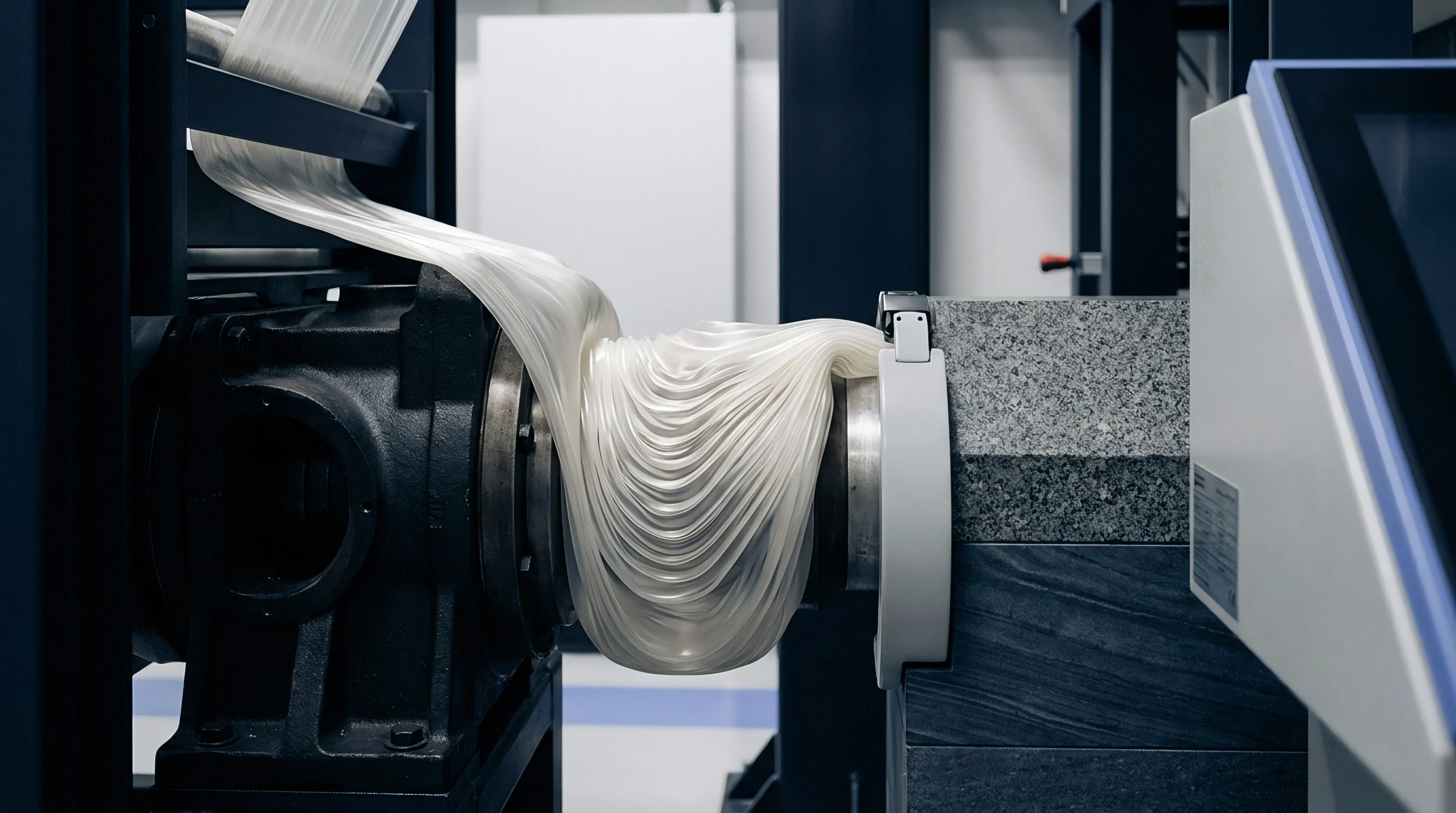
How Does Shear Thinning Shift Domain Elasticity?
Non-Newtonian fluid behavior causes a rapid viscosity drop in the homopolymer matrix while broad molecular weight rubber phases retain elastic memory. This elasticity differential causes rubber domains to elongate into continuous threads along mold cavity walls, where wall slip drives periodic gloss variation. Near the gate, high normal stresses force elongated rubber domains to coalesce into macroscopic bands; when the melt front decelerates, elastic recovery of the rubber phase forces phase inversion, yielding alternating bands of glossy homopolymer and matte rubber-rich zones on part surfaces.
| Defect Mode | Visual Manifestation | Primary Rheological Cause | Corrective Material Adjustment |
|---|---|---|---|
| Tiger Stripping | Alternating matte and glossy surface bands perpendicular to flow direction | Elasticity mismatch and dynamic viscosity ratio λ > 2.0 at cavity shear rates | Lower rubber intrinsic viscosity and narrow rubber molecular weight distribution |
| Gate Blush | Hazy clouding directly adjacent to part injection gates | High rubber phase normal stress difference inducing phase separation under gate shear | Reduce rubber molecular weight and lower matrix zero-shear viscosity |
| Stress Whitening | White discoloration upon flexural impact or mechanical creasing | Excessive rubber inclusion size (> 2.0 µm) driving matrix micro-voiding | Match intrinsic viscosity ratio to λ = 1.0 to drop inclusion size below 0.8 µm |
| Flow Marks | Wavy parabolic surface lines along the fill end of long parts | Unstable melt front skinning caused by high rubber phase melt elasticity | Increase rubber stage hydrogen dosing to drop elastomeric chain entanglement density |
Surface Tiger Stripping Dynamics
Unstable melt flow at the advancing front creates periodic phase separation along part surfaces. As polymer melt flows through thin mold channels, high wall shear rates stretch rubber inclusions into high-aspect-ratio ribbons. If the rubber phase viscosity fails to drop at high shear, these ribbons break away from the flow skin to create surface micro-roughness.
Parts molded from resins with mismatched viscosity exhibit uneven light scattering, producing visible tiger stripes that cause decorative aesthetic rejection in unpainted automotive trim.
Tiger stripes on high-flow molded surfaces mark physical boundaries where matrix fluid acceleration unseats elongated rubber domains.
Whether non-linear viscoelastic strain hardening models can predict surface mark onset across complex gating geometry remains an open empirical question for compound designers.

Pellet
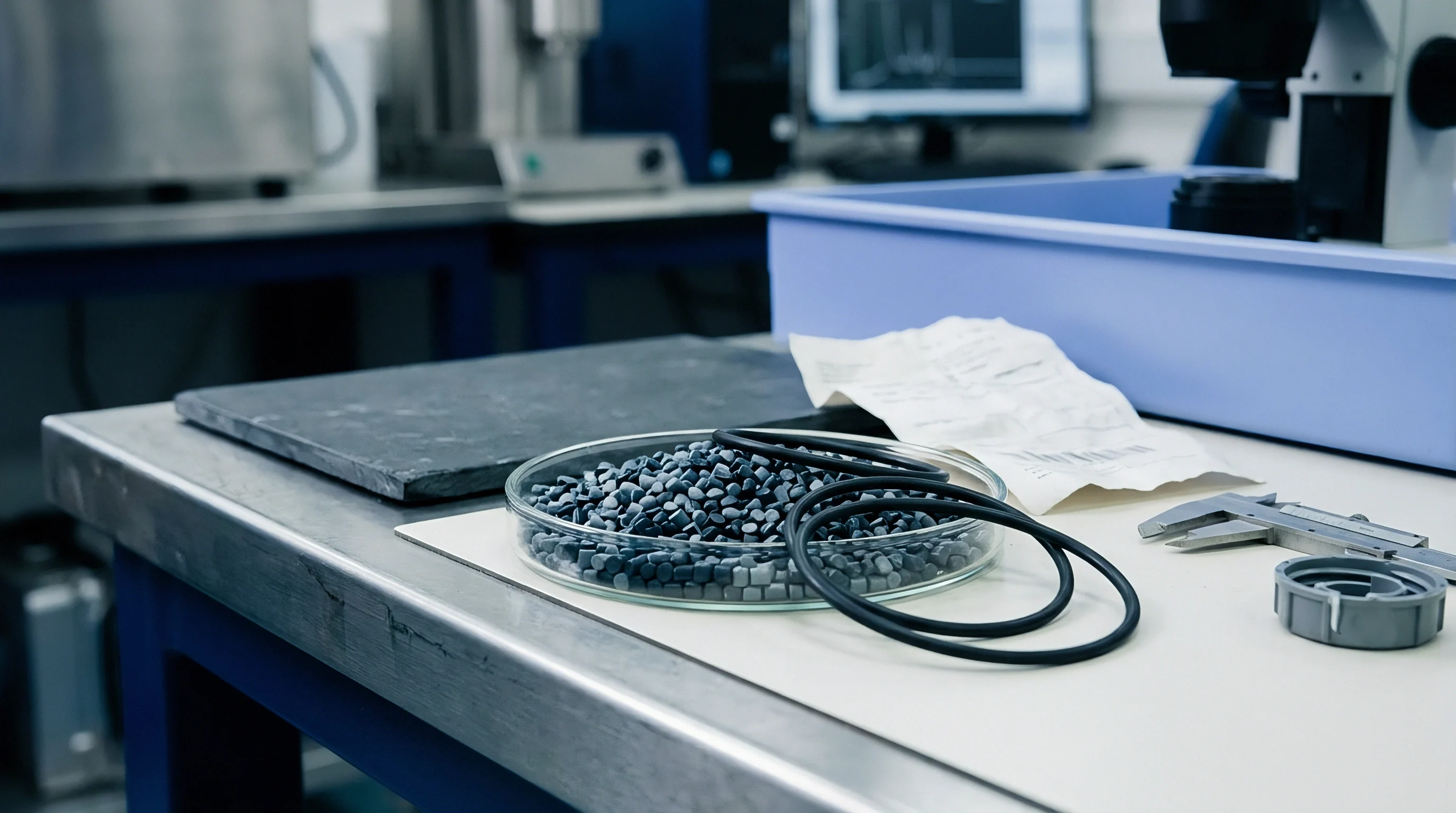
Commercial pricing models for impact copolymers reflect both raw monomer feedstock costs and secondary-stage reactor throughput penalties. Producing low intrinsic viscosity rubber phases in gas-phase reactors reduces catalyst residence efficiency, as high hydrogen concentrations slow polymerization kinetics and cut total plant output by three to eight percent. Producers offset this capacity loss by adding price surcharges to high-flow impact grades with melt flow rates above 60 grams per ten minutes.
Compounding versus Reactor Grade Economics
Downstream compounders weigh capital expenditure for twin-screw extrusion equipment against producer premiums for high-flow reactor grades. Purchasing standard 12 MFR homopolymer polypropylene and compounding it with low-viscosity metallocene ethylene-octene plastomers provides precise control over rubber phase viscosity matching. Post-reactor compounding eliminates reactor throughput constraints but incurs secondary extrusion costs ranging from 110 to 160 dollars per metric tonne, whereas direct reactor grade procurement avoids secondary heat histories, preserving antioxidant additive packages and lowering thermal degradation risks.

Landed Cost Arithmetic for Thin Wall Tooling
Unit part cost calculations balance resin purchase pricing against mold cycle time reductions. Substituting a 30 MFR impact copolymer with a viscosity-matched 70 MFR grade allows reducing injection pack times by 1.2 seconds and lowering barrel temperatures by 15 °C. On a high-volume packaging line running four-cavity container molds, this cycle time reduction increases hourly part output by 14 percent.
- Base Copolymer Price Spread ~ High flow reactor impact grades command an eighty to one hundred twenty dollar per tonne surcharge over standard MFR commodity resins.
- Plastomer Let Down Expenses ~ Twin-screw compounding of homopolymer PP with ethylene octene plastomers adds compounding energy and labor fees to feedstock costs.
- Cycle Time Financial Recovery ~ Reducing wall thickness by zero point three millimeters cuts injection cooling duration, lowering machine hourly overhead allocation per part.
- Scrap Rate Penalty Escalation ~ Surface tiger stripping defects elevate mold rejection rates above three percent, eroding margin performance on thin-wall container runs.
A molding trial using a 70 MFR resin with an unmatched rubber phase (intrinsic viscosity of 1.7 dL/g) incurs a 4.2 percent scrap rate from visible tiger stripping. Switching to a viscosity-matched grade (intrinsic viscosity of 1.05 dL/g) priced at an additional 40 dollars per tonne drops the scrap rate to 0.3 percent. On a 100-tonne production run, scrap reduction saves 11,700 dollars, offsetting the 4,000 dollar resin upcharge while increasing net part yield.
Specifying high flow copolymers without locked intrinsic viscosity ratios leads to unpredictable part cracking under impact, driving warranty claims that far exceed resin savings.