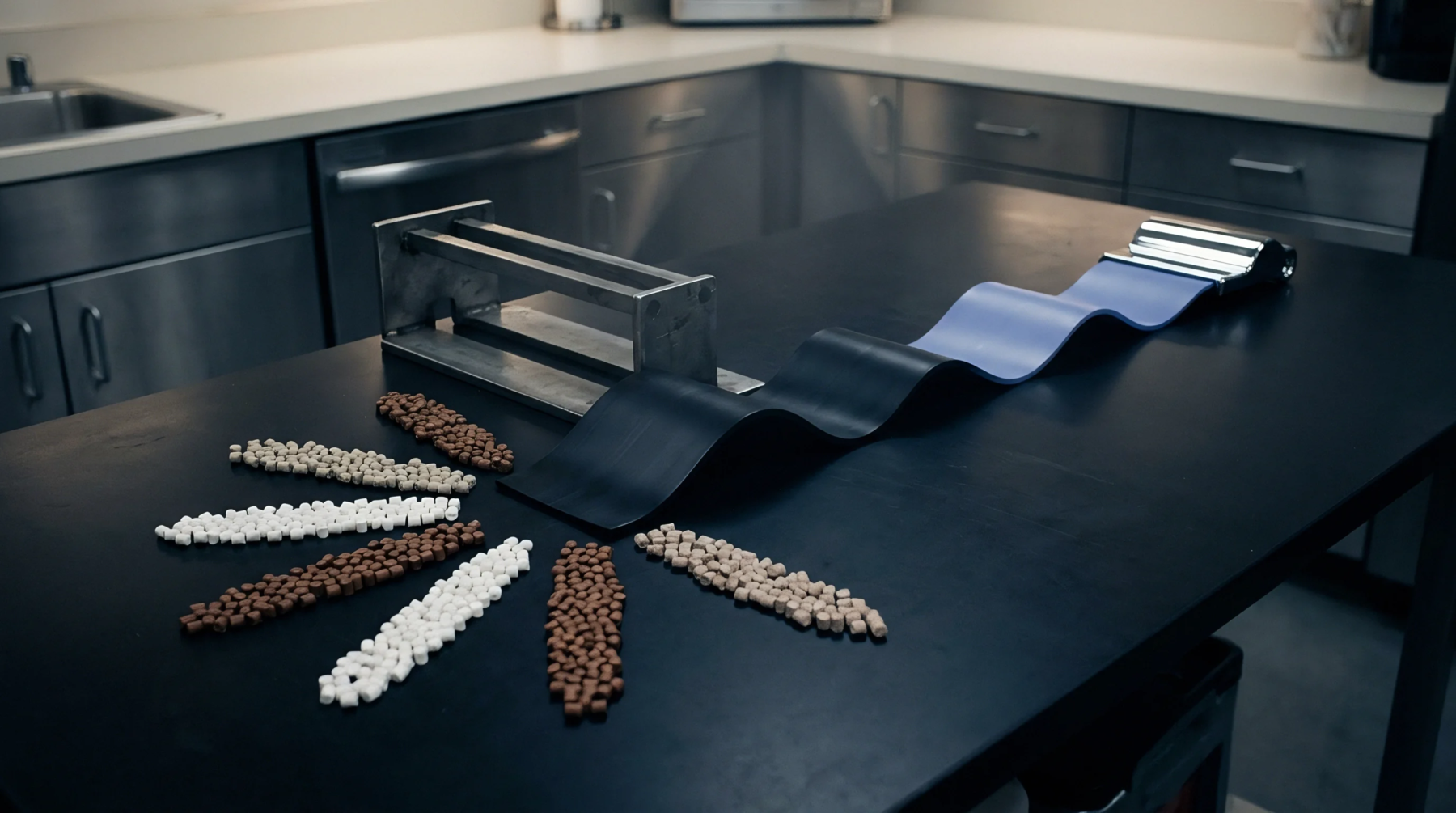
Meaning
Polymer grades designed for high-speed processing exhibit very low resistance to flow when in a molten state. The development of high flow copolymers involves tailoring the molecular weight distribution to reduce viscosity without sacrificing too much impact strength. These materials allow for the production of thin-walled parts that would be difficult to fill with standard resins.
Melt Rheology
Viscosity drops as the shear rate increases during the injection phase of the moulding cycle. Because high flow copolymers have shorter average chain lengths, they move through narrow gates and thin cavities with minimal pressure loss. This characteristic enables the use of lower melt temperatures, which can lead to faster cooling and shorter cycle times.
Processors find that the ability to fill complex geometries at lower pressures reduces the mechanical stress on the polymer chains and the moulding machine itself.
Moulding Advantage
Energy consumption decreases when the injection moulding machine can operate at lower hydraulic or electric pressures. Using high flow copolymers allows processors to utilize smaller machines for parts that usually require higher clamping forces. This flexibility improves the overall efficiency of the moulding floor and reduces wear on the tooling.
Part Quality
Internal stresses are lower in components moulded from materials that fill the cavity easily. While some properties might be lower than those of fractional melt resins, high flow copolymers provide excellent surface finish and dimensional accuracy. The reduction in injection pressure helps prevent the warping of large, flat sections.