Coulometric Moisture Determination Protocols for Recycled Polycarbonate Pellets
Coulometric Karl Fischer titration with thermal desorption oven isolates true water from volatiles to verify recycled polycarbonate below 0.020% moisture.
Hydrolysis
Polycarbonate degrades rapidly when melted in the presence of trace water. At barrel temperatures between 280 °C and 320 °C, moisture concentrations above 0.020 percent by weight drive cleavage of the carbonate ester linkages. The condensation polymer breaks down into lower molecular weight chains, terminating in phenolic hydroxyl groups and generating carbon dioxide gas.
A melt flow rate intended to register at 10 g/10 min under 300 °C and 1.2 kg load jumps to 22 g/10 min after processing wet pellets. This chain scission ruins the mechanical integrity of the finished molding.
Post-consumer and post-industrial recycled polycarbonate pellets present an unpredictable moisture baseline compared to virgin grades. Reground material accumulates hygroscopic contaminants, degraded fractions, and volatile organic compounds from secondary thermal cycles. Traditional loss-on-drying gravimetric balances fail because they weigh total mass loss rather than water alone.
Volatilisable additives, fire-retardant breakdown by-products, and low-boiling oligomers vaporize inside the heating chamber, recording false moisture readings that skew dryer settings.
Injection molders running polycarbonate above 200 parts per million residual moisture experience a fifty percent drop in notched Izod impact performance.
Coulometric Karl Fischer titration coupled to an external thermal desorption oven separates moisture vaporization from chemical detection. The oven heats the sealed sample, liberating moisture into a dry carrier gas stream that carries the vapor into an analytical cell. The titration relies on the quantitative reaction between water, sulfur dioxide, iodine, and an organic base dissolved in methanol or an alcohol-free solvent mixture.
Iodine is generated electrochemically at the generator electrode with exact stoichiometric equivalence: one mole of iodine reacts with one mole of water.
Melt Rheology and Chain Cleavage
Water attacks the polymer backbone through nucleophilic substitution at the carbonyl carbon. The reaction lowers the number-average molecular weight, cutting impact strength and elongation at break. Standard polycarbonate requires drying down to 0.015 percent or 150 parts per million prior to plastication.
When running post-consumer reclaim, residual moisture combines with thermal history to accelerate embrittlement, causing parts to crack along weld lines under normal ejection forces.
- Hydrolytic splay defects streak across the mold surface as localized gas bubbles erupt from the nozzle.
- Molecular weight collapse lowers the glass transition temperature and weakens ductile-to-brittle transition thresholds under cold impact.
- Viscosity drop creates flashing at parting lines and disrupts barrel pressure control during cushion holding phases.
Accurate determination of real moisture prevents ending drying cycles prematurely. Technicians often shorten desiccant drying cycles when gravimetric instruments report compliant numbers, but the pellets retain bound water deep in their core, leading to brittle shipments and damaged tool cavities.
Processing under-dried recycled polycarbonate risks complete part embrittlement and catastrophic stress-cracking in field service.
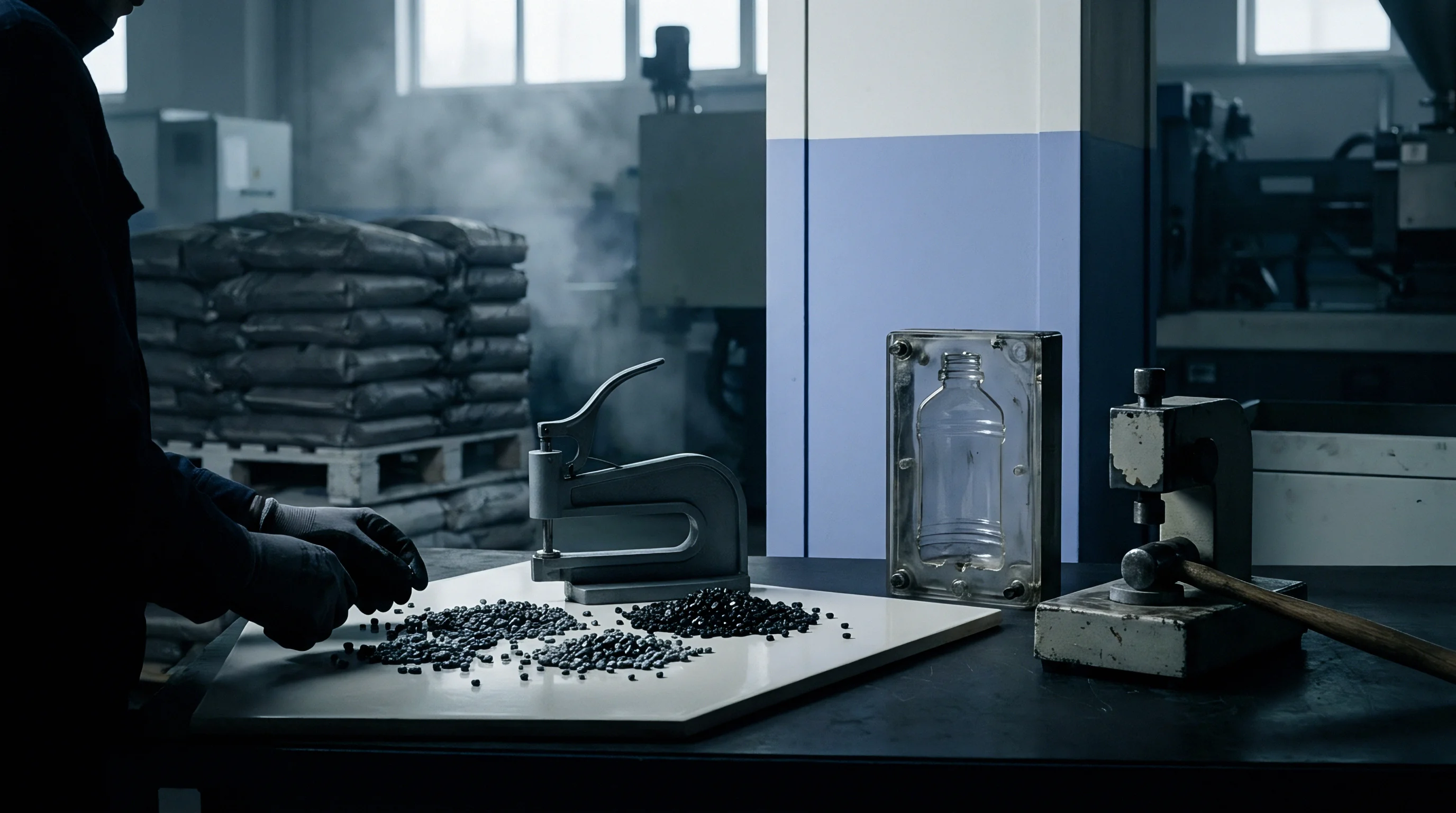
Oven
Sample heating conditions dictate how selectively moisture is extracted. Setting the desorption oven temperature too low leaves bound capillary water trapped inside the pellet core, while setting it too high decomposes the polycarbonate matrix ~ releasing Bisphenol-A, cyclic oligomers, and synthetic additives into the gas transfer line. Virgin polycarbonate tolerates 180 °C to 200 °C without breakdown, whereas recycled resin contains heat-damaged fragments that off-gas at lower temperatures.
Carrier gas purity dictates the operational drift of the analytical bench. Industrial-grade nitrogen or compressed air containing trace ambient humidity will saturate the titration cell before sample insertion. The supply must pass through molecular sieve drying columns to keep background drift below 5 micrograms of water per minute.
Flow rates govern transfer velocity: an optimal 40 to 60 milliliters per minute moves vapor smoothly without chilling the oven manifold.
| Pellet Stream | Oven Temperature | Carrier Gas Flow | Heating Duration | Target Moisture Range |
|---|---|---|---|---|
| Virgin Optical Grade | 200 °C | 50 mL/min N2 | 12 min | 50 to 120 ppm |
| Post-Industrial Regrind | 180 °C | 45 mL/min N2 | 15 min | 120 to 220 ppm |
| Post-Consumer Reclaim | 170 °C | 40 mL/min N2 | 18 min | 180 to 350 ppm |
| Mineral-Filled Compound | 165 °C | 40 mL/min N2 | 20 min | 200 to 450 ppm |

Gas Flow and Heat Transfer Dynamics
Sample vial geometry governs thermal conductivity. Glass vials require uniform wall thickness to deliver steady heat through the resin bed. Crimping the vial with a PTFE-faced butyl septum preserves dry internal headspace until the automated needle pierces the seal.
Running non-crimped sample boats through horizontal tube furnaces allows ambient air to enter during loading, introducing substantial error.
Transfer lines between the oven and titration cell require continuous heating. Maintaining PTFE or stainless steel tubing at 110 °C to 130 °C prevents steam from condensing on interior surfaces. Cold spots act as moisture sinks that delay signal response, broadening titration peaks and causing artificial tailing.
If water condenses in cold zones, subsequent runs show erratic spikes as passing carrier gas drags residual moisture into fresh reagent.
Pellet dimensions directly influence extraction kinetics. Standard cylindrical pellets measuring 3 millimeters in diameter release water along a predictable diffusion gradient. Mechanically shredded pellets have irregular aspect ratios and crushed cellular voids: fines heat almost instantly, while thick chunks release core moisture slowly, stretching the integration curve past twenty minutes.
Whether secondary plasticizers in post-consumer streams lower the safe desorption temperature threshold remains an open question across testing laboratories.
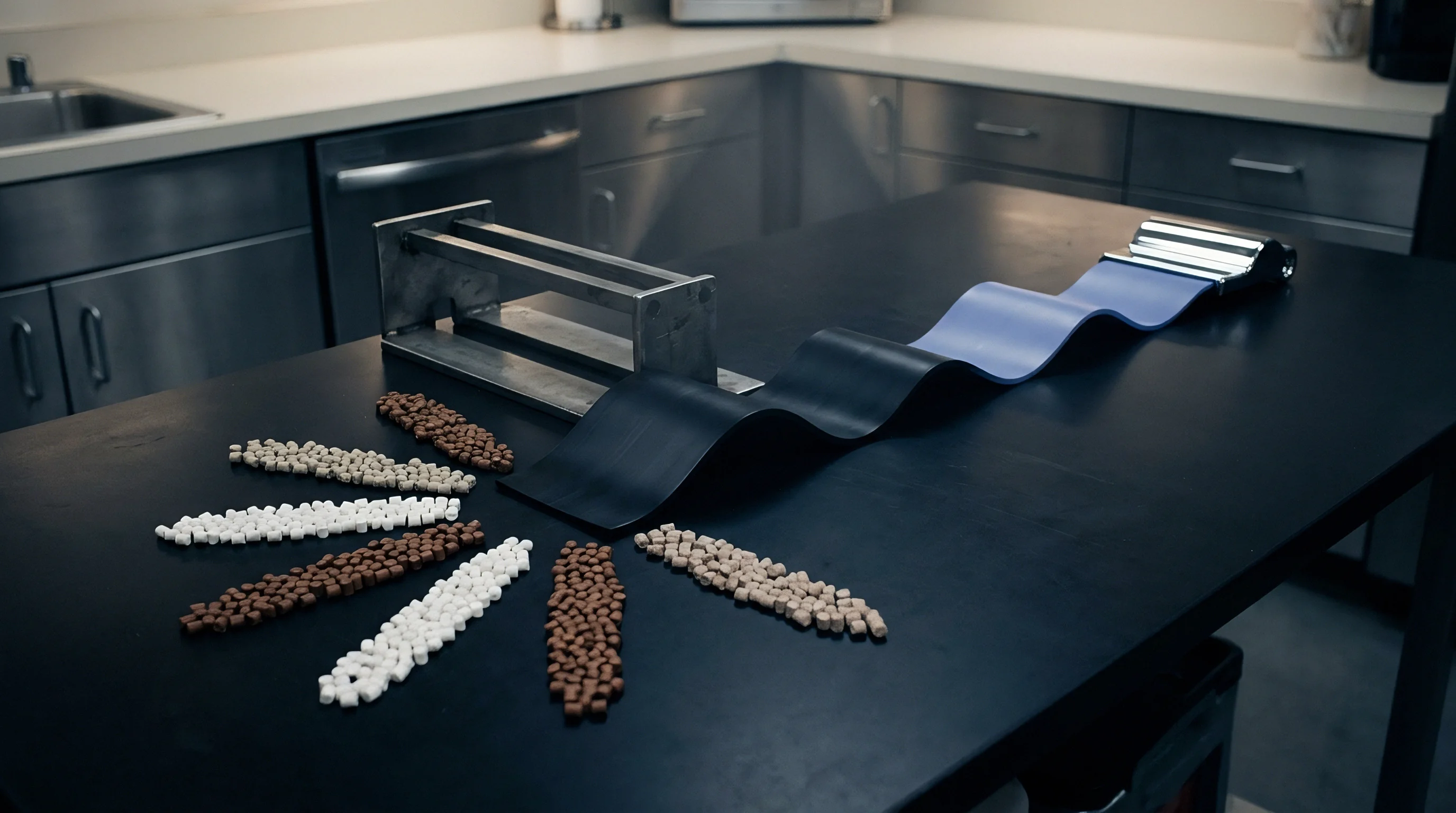
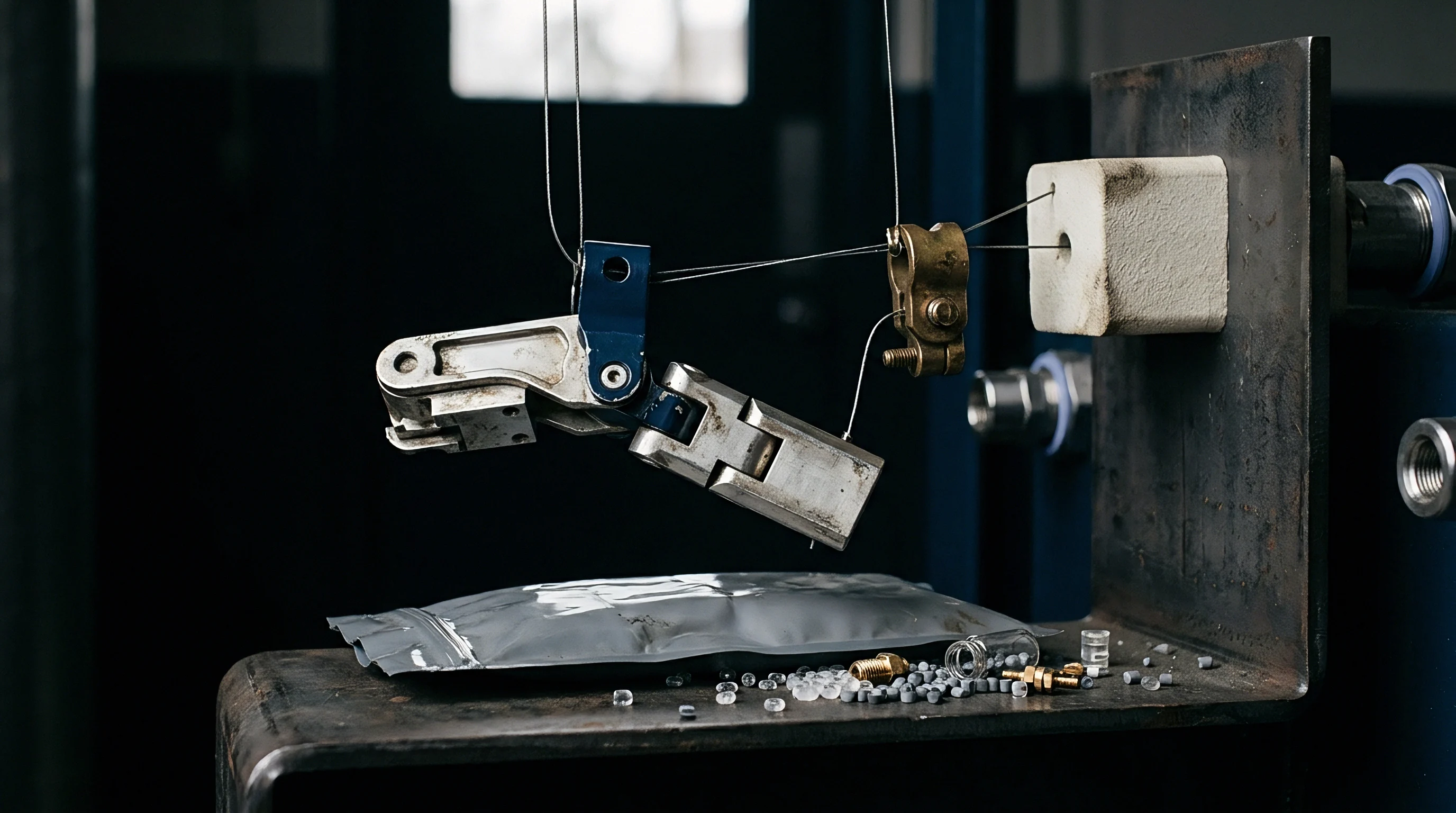
Reagent
Coulometric titration cells operate with either a fritted diaphragm or a diaphragm-free generator electrode. The fritted design separates the anode and cathode compartments using a porous ceramic barrier. This keeps reduced species formed at the cathode from migrating back to the anode and oxidizing, which would trigger false-positive water counts.
However, frits clog quickly when exposed to volatile contaminants common in recycled polymers.
Where Do Recycled Additives Distort Endpoint Signals?
Post-consumer polycarbonate often comes from electronic housings, automotive bezels, and construction glazing. These feedstocks carry legacy additives that volatilize in the thermal oven and pass into the titration vessel. Phosphate ester flame retardants, brominated compounds, hindered phenol antioxidants, and residual acrylic impact modifiers alter reagent pH and consume iodine independently of water.
Standard ISO 15512 Method B2 governs oven-based coulometric determination to prevent volatile interference in technical plastics.
Alkyl halides and mercaptans from cross-contamination react directly with iodine inside the electrolyte. Carboxylic acids generated during prior thermal degradation shift the reaction medium toward an acidic pH, slowing titration speed and causing severe drift instability. Reagents formulated for aldehydes and ketones contain modified alcohols to prevent side-reactions like acetal formation, which generates stoichiometric water and skews results.
- Ceramic frit contamination occurs when sublimated oligomers deposit inside the porous barrier, increasing electrical resistance across the generator circuit.
- Electrode passivation develops as hydrophobic wax residues coat the platinum indicator pins, damping sensitivity to the triiodide endpoint.
- Solvent exhaustion follows repeated acidic vapor transfer, reducing buffer capacity and stalling the Bunsen reaction mechanism.
Diaphragm-free generator electrodes eliminate the porous ceramic junction entirely. Hydrogen gas generated at the cathode escapes directly through the cell exhaust without reacting with oxidized species, provided stirring remains constant and vigorous enough to form a vortex that draws bubbles away from the sensor. For recycled engineering resins, diaphragm-free assemblies cut cleaning downtime and eliminate the solvent flushes required to clear clogged frits.
Additive-related drift shifts are sometimes considered uniform across production lots, balancing out during processing.

Assay
Executing an accurate measurement demands rigorous balance calibration and strict sample handling. Determining moisture at parts-per-million levels turns small procedural lapses into major errors. Polycarbonate pellets cool rapidly after sampling, absorbing atmospheric moisture within seconds if left on an open bench.
Samples must be sealed immediately in dry glass containers with zero headspace.
Sample mass must be matched to the expected moisture level of the material. A specimen yielding less than 100 micrograms of water strains the resolution limits of the generator electrode, while excess moisture depletes reagent capacity and causes long titration delays. For recycled polycarbonate with an anticipated 0.020 percent moisture, a 1.0 to 2.0 gram sample delivers 200 to 400 micrograms of water to the cell ~ falling comfortably within the linear range of modern coulometers.
| Expected Moisture | Sample Mass | Extracted Water | Blank Drift (15 min) | Measurement Error |
|---|---|---|---|---|
| 0.010 % (100 ppm) | 0.50 g | 50 µg | 45 µg (3 µg/min) | ± 12.0 % |
| 0.010 % (100 ppm) | 2.00 g | 200 µg | 45 µg (3 µg/min) | ± 3.2 % |
| 0.025 % (250 ppm) | 1.00 g | 250 µg | 45 µg (3 µg/min) | ± 2.5 % |
| 0.050 % (500 ppm) | 0.50 g | 250 µg | 45 µg (3 µg/min) | ± 2.4 % |
| 0.050 % (500 ppm) | 1.50 g | 750 µg | 45 µg (3 µg/min) | ± 0.9 % |
| Calculations assume steady background baseline drift of 3.0 micrograms per minute and a standard extraction period of 15 minutes. | ||||
Determining the analytical blank provides the baseline correction factor. Ambient moisture enters sample vials during the few seconds they sit open on the balance. Running three empty, pre-crimped vials through a full heating cycle establishes the mean system blank, which the instrument subtracts from total water detected during subsequent runs.
- Stabilize the carrier gas line and oven temperature until the cell baseline drift reads below 5 micrograms per minute.
- Punch three empty septum vials into the desorption carousel to register an accurate blank average.
- Verify instrument response using a certified water standard containing 1000 micrograms of water or pure sodium tartrate dihydrate.
- Weigh 1.50 grams of intact polycarbonate pellets into an oven vial on a balance calibrated to 0.1 milligrams.
- Crimp the vial immediately using a manual or pneumatic decapper with an intact aluminum-backed PTFE septum.
- Transfer the sealed vial into the desorption oven heating zone and engage the carrier gas needle mechanism.
- Titrate to the electrochemical endpoint until cell drift returns to the pre-injection baseline drift value.
- Confirm recovery limits between 95 and 105 percent against the certified reference material run at the batch start.
Weighing pellets with finger contact transfers sufficient epidermal grease and humidity to invalidate a 150 parts per million test result.
Cross-contamination from prior tests shows up as persistent drift elevation. When the instrument baseline fails to recover within twenty minutes, cleaning the indicator electrode pins with concentrated nitric acid strips away bound polymeric films. Rinsing thoroughly with anhydrous methanol restores electrochemical response.
Reagents should be discarded whenever titration times lengthen by fifty percent compared to fresh electrolyte.
ASTM D6869 mandates that deviations in titration drift rate exceeding two micrograms per minute void the qualification of engineering plastic shipments.
Penalty
Receiving inspection for recycled polycarbonate carries direct financial risk. When incoming material arrives above agreed moisture ceilings, plants incur drying overhead, mold downtime, and higher scrap rates. Standard desiccant dryers require four to six hours at 120 °C to strip moisture from post-consumer pellets down to the 0.020 percent processing threshold.
A 20-tonne truckload delivered at 0.060 percent moisture demands additional energy and ties up drying silos, delaying production restarts.
Molding parts from wet material creates hidden mechanical defects. Internal bubbles act as stress concentrators that shear under load, causing automotive lighting brackets and power tool enclosures to crack along internal weld lines during packaging or installation. Molders absorb the cost of part rejections, sorted assemblies, and cleaning carbonized deposits from tool cavities.
A reliable moisture test distinguishes surface condensates from trapped internal water within fifteen minutes of container unloading.
Commercial contracts specify coulometric Karl Fischer testing to enforce rejection thresholds. Purchase orders stating moisture limits based on ambiguous loss-on-drying standards leave buyers vulnerable to supplier pushback. Recyclers often point to mass-loss data that lumps additives and volatiles into moisture calculations, disguising under-dried pellets as compliant.
Establishing test protocols under ISO 15512 Method B2 provides unassailable data for issuing debit notes or rejecting containers at the dock.
Thorough incoming pellet verification protects tool life and ensures structural part reliability.