Quantifying Printing Ink Residues in Food Contact Decontaminated Polymers
Quantifying printing ink residues in post-consumer polymers demands gas chromatography mass spectrometry to verify specific migration limits below ten parts per billion.


Pellet
Post-consumer polyolefin streams collected from flexible packaging and printed containers carry surface inks, underlying primers, overprint varnishes, and residual solvents into recycling extruders. Mechanical sorting removes gross fractions, but printing ink formulations remain embedded within the re-processed mass. Solvent-based flexographic and gravure inks utilize binder resins like nitrocellulose or polyvinyl butyral alongside pigments, plasticizers, photoinitiators, and fluidizing agents.
When consumer packaging enters grinding circuits, shredding action reduces direct-printed high-density polyethylene and polypropylene into flake fractions where ink films remain attached to polymer substrates.

Contaminant Loading in Post Consumer Streams
Mechanical recycling steps wash flake surfaces with hot aqueous solutions containing alkaline cleaning agents, removing superficial dirt and water-soluble binders. Cross-contamination occurs during wash cycles. Organic photoinitiators like benzophenone, 2-isopropylthioxanthone, and 4-methylbenzophenone possess low water solubility and high partition coefficients toward polyolefins.
These lipophilic chemicals migrate from printed surface layers deeper into the unprinted polymer matrix during heated washing and convective drying. Melt filtration traps non-melting pigment agglomerates and un-shredded foil fragments, but dissolved photoinitiators, acrylic monomers, and high-boiling ink solvents pass freely through screen packs during melt re-extrusion.
Tenax exposure at sixty degrees Celsius for ten days releases photoinitiators above ten micrograms per kilogram of food simulant.

Super Clean Extrusion Decontamination Targets
High-vacuum stripping systems operating inside super-clean recycling processes subject molten polymer streams to elevated temperatures ranging from two hundred ten to two hundred sixty degrees Celsius. Vacuum pressures below five millibars draw volatile solvents and low molecular weight ink degradation products out of the polymer melt. Decontamination yields vary by batch.
While light solvents like ethyl acetate and ethanol evaporate readily under reduced pressure, bulky photoinitiators and curing agents exhibit lower volatility and high diffusion resistance inside viscous polyolefin melts. Residual levels remaining after melt processing decide whether recycled resins comply with food contact migration caps established under European Union and United States regulatory frameworks.
Commercial reprocessors frequently assert that secondary extrusion temperatures driven above two hundred forty degrees Celsius automatically vaporize every light acrylate monomer present in the feed stream.


Extraction
Laboratory quantification of residual ink chemistries inside re-processed polymers begins with isolating organic analytes from the solid polyolefin matrix. Direct injection of solid polymers into analytical instruments damages inlet systems and chromatographic columns. Granulated material undergoes liquid extraction or thermal desorption to release volatile and semi-volatile ink components into a fluid phase suitable for mass spectrometry.

Solvent Dissolution versus Total Dissolution Techniques
Complete polymer dissolution yields total substance content by completely destroying the crystalline matrix. Polyolefins like high-density polyethylene dissolve in hot xylene or toluene at one hundred thirty degrees Celsius, followed by cooling or anti-solvent precipitation with methanol to separate dissolved ink residues from the precipitated polymer backbone. Micro-extraction techniques utilize swelling solvents like dichloromethane or tetrahydrofuran at fifty degrees Celsius for six hours, expanding polymer amorphous zones without dissolving the polyolefin chains.
Thermal desorption releases volatile organics. Sample preparation alters analytical outcomes. Solvent choice controls extraction recovery efficiency based on polarity matching between target photoinitiators and extraction media.
- Chop polymer pellets into uniform granules measuring between one and two millimeters to standardize diffusion distances.
- Weigh precisely two grams of granulate into a twenty-milliliter glass headspace vial and seal with a PTFE-lined septa cap.
- Add ten milliliters of dichloromethane to dissolve the polymer matrix or perform swelling extraction at sixty degrees Celsius for six hours.
- Spike the extract with deuterated internal standards including benzophenone-d10 to track analytical recovery across extraction steps.
- Inject one microliter of the filtered solution into a gas chromatograph coupled with a triple quadrupole mass spectrometer.

Thermal Desorption Parameters for Direct Analysis
Direct thermal desorption eliminates solvent handling steps and avoids extract concentration losses. Solid polymer samples placed inside desorption tubes experience rapid heating from forty to three hundred degrees Celsius under a carrier gas stream of high-purity helium. Volatile organic compounds and semi-volatile photoinitiators vaporize directly out of the heated sample matrix, concentrating inside a cryogenically cooled trap before thermal injection into a chromatographic column.
Calibration relies on matrix-matched standards or certified spiked reference polymers. Gas chromatography separates light volatiles. Mass balance dictates the limit.
| Solvent System | Temperature Range (C) | Target Analytes | Polymer Matrix Swelling | Recovery Range (%) |
|---|---|---|---|---|
| Dichloromethane | 40 to 50 | Volatile solvents, Acrylate monomers | Moderate swelling in HDPE/PP | 82 to 94 |
| Toluene / Xylene | 120 to 140 | Photoinitiators, High-boiling solvents | Complete polymer dissolution | 91 to 102 |
| Tetrahydrofuran | 50 to 65 | Polymeric binders, Plasticizers | High swelling in LDPE | 78 to 89 |
| Isopropanol / Hexane | 60 to 70 | Light aliphatic residues | Low matrix expansion | 64 to 78 |
| Recovery ranges established using spiked matrix samples exposed to extraction conditions for six hours prior to GC-MS analysis. | ||||
When total extraction values approach specific migration limits, direct liquid food simulant exposures reveal whether molecular binding inside the resin prevents volatile release.


Screening
Chromatographic profiling identifies unknown chemical species resulting from printing ink decomposition during thermal decontamination cycles. Gas chromatography coupled to mass spectrometry targets volatile organic compounds and light photoinitiators. Liquid chromatography coupled to tandem mass spectrometry isolates non-volatile, high molecular weight ink additives, oligomeric acrylate fragments, and polymeric photoinitiators that fail to vaporize in gas chromatographic inlets.
Quantifying unknown peaks demands calibration against internal standards using toluene equivalents or deuterated chemical analogs.
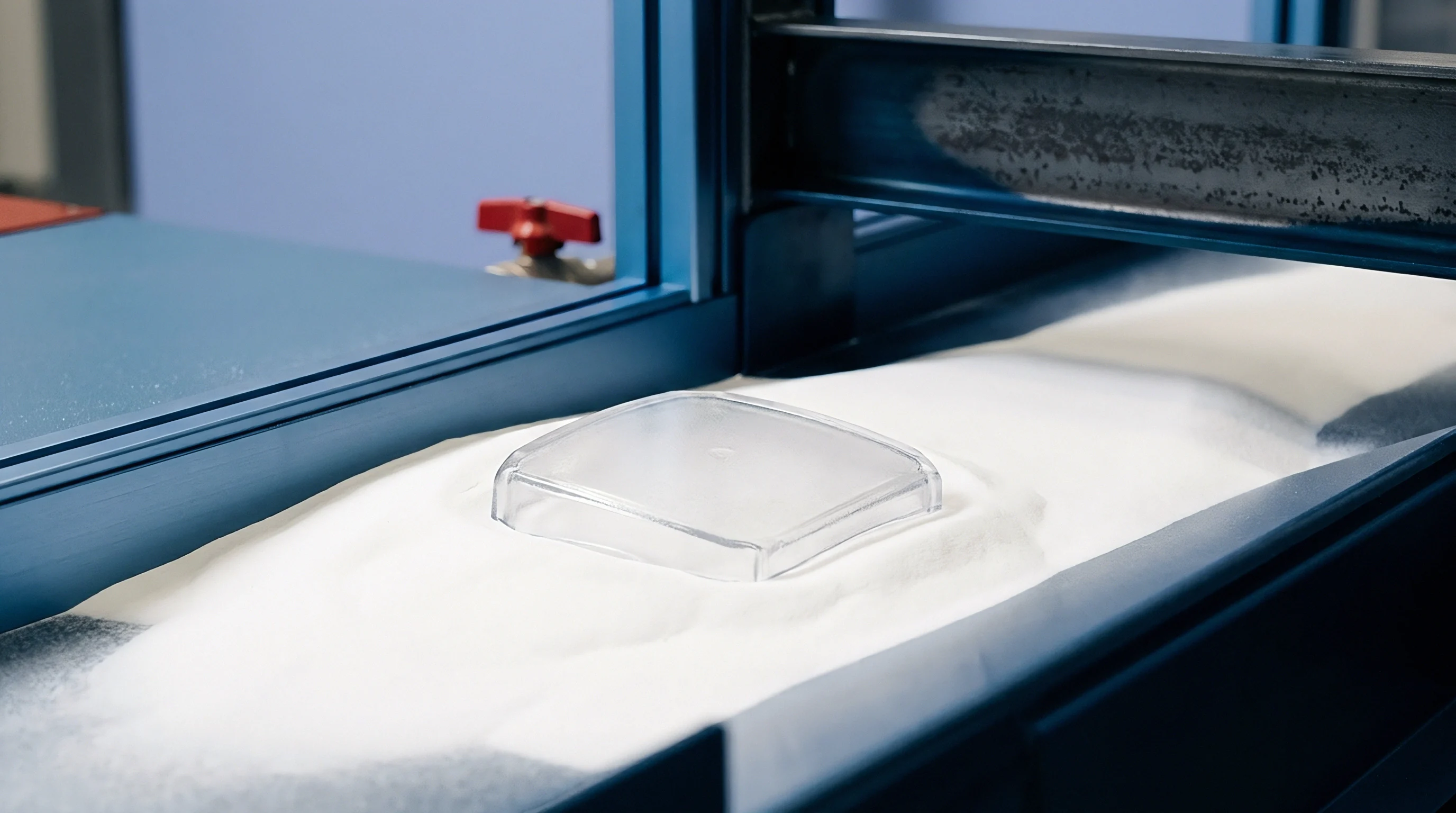
How Do Printing Ink Photoinitiators Penetrate Post-Consumer Resin Walls?
Ultraviolet light cures printing inks by generating free radicals from photoinitiator molecules like 2-isopropylthioxanthone or 4-methylbenzophenone, initiating rapid polymerization of acrylate oligomers. Incomplete UV curing leaves residual unreacted photoinitiators and cleavage fragments within the ink layer. During post-consumer bale storage and heat-assisted mechanical cleaning, these small, un-crosslinked molecules diffuse into the amorphous regions of flexible polyolefin films.
Printed packaging collections often reflect regional waste management infrastructure, where municipal optical sorting machinery prioritizes high-density polyethylene bottles while pushing multi-layer printed flexible films into mixed energy-recovery streams. This commercial sorting hierarchy dictates the initial contamination baseline before any chemical decontamination occurs. Gas chromatography mass spectrometry quantification of 2-isopropylthioxanthone rests on a 50-gram composite pellet sample tested under EN 13130 guidelines with a 5 parts per billion detection limit, which changes if polymer crystallite structure impedes solvent swelling during extraction.
Annex I of Regulation EU 10 2011 caps specific migration of benzophenone at six hundred micrograms per kilogram of food.

Identifying Non Intentionally Added Substances
Thermal stress during re-extrusion cleaves binder resins and photoinitiators into non-intentionally added substances. Nitrocellulose ink binders decompose at elevated processing temperatures, yielding organic nitrites, nitrates, and volatile carboxylic acids. Acrylate monomers undergo thermal dimerisation and degradation, forming complex oxygenated species.
Analytical chemists screen for non-intentionally added substances by evaluating total ion chromatograms across gas chromatography mass spectrometry profiles, matching fragmentation patterns against reference libraries like NIST or Wiley. High-resolution mass spectrometry provides exact mass determinations, allowing calculation of elemental compositions for non-targeted contaminants.
- Matrix baseline elevation masks low molecular weight photoinitiator fragments present below twenty parts per billion during chromatographic separation.
- Thermal degradation during injection creates false positive signal spikes by decomposing nitrocellulose binders into organic acids inside the GC inlet.
- Incomplete chromatographic resolution groups isomeric ink additives into single integrated peaks, artificially exaggerating specific chemical concentrations.
- Mass spectra library mismatch misidentifies non-targeted printing ink oligomers due to missing reference spectra for proprietary ink formulations.
Analytical laboratories continue to debate whether unknown chromatographic peaks below ten parts per billion require chemical structure elucidation or simple cumulative evaluation against overall migration caps.

Sorption
Determining chemical safety requires measuring substance transfer from decontaminated polymers into contact media. Migration testing exposes polymer test specimens to standardized food simulants under controlled temperature and time profiles defined by regulatory frameworks. Specific migration limits govern toxicological thresholds for known ink ingredients, while overall migration limits cap total non-volatile substance transfer from the polymer matrix into food contact surfaces.

Simulant Selection and Diffusion Dynamics
Food contact compliance testing relies on standardized simulants mimicking real food matrices. Simulant A represents hydrophilic foods, Simulant B evaluates acidic environments, and Simulant D2 or Simulant E targets lipophilic interactions where organic ink residues transfer most readily. Polyolefin diffusion coefficients dictate how rapidly residual photoinitiators move from internal bulk regions to polymer surfaces.
Benzophenone diffusion coefficients measured in recycled high-density polyethylene assume 100 percent amorphous phase partitioning at 40 degrees Celsius over a 10-day test window, a figure that drops by thirty percent if polymer crystallinity exceeds fifty-five percent. Solvents swelling polyolefin matrixes increase diffusion rates. Benzophenone penetrates thin polymer matrixes.
High vacuum venting during melt decontamination removes short chain solvents more efficiently than bulky photoinitiator molecules.

Temperature Dependency of Volatile Migration
Accelerated migration testing employs elevated temperatures to simulate extended room temperature shelf life or hot-fill conditions. Testing at ten days at sixty degrees Celsius accelerates volatile diffusion, projecting long-term compliance for food storage applications. Industry estimates suggest that non-intentionally added substances derived from printing ink degradation account for fifteen to forty percent of total chromatographic peak area in post-consumer polyolefins, but because background matrix interference varies across recycling lots, a buyer conducts lot-by-lot screening rather than relying on supplier guarantees.
Inadequate vacuum venting leaves residual solvents. Migration limits protect food contact safety.
- Aqueous food contact applies Ten Percent Ethanol Simulant A for short duration ambient contact applications like fresh produce trays.
- Acidic food contact utilizes Three Percent Acetic Acid Simulant B to evaluate metal complex pigment degradation and amine leaching.
- Fatty food contact mandates Polyoxymethylene Tenax Simulant E or Vegetable Oil Simulant D2 for elevated temperature testing above forty degrees Celsius.
- Dry food contact employs modified polyphenylene oxide at designated temperature windows to simulate volatile transfer from recycled walls.
| Chemical Substance | CAS Registry Number | Specific Migration Limit (mg/kg) | Analytical LOQ (mg/kg) | Primary Simulant Risk |
|---|---|---|---|---|
| Benzophenone | 119-61-9 | 0.60 | 0.010 | Simulant D2 / Simulant E |
| 4-Methylbenzophenone | 134-84-9 | 0.60 (Sum) | 0.005 | Simulant D2 / Simulant E |
| 2-Isopropylthioxanthone (ITX) | 5495-84-1 | 0.01 (Non-listed default) | 0.002 | Simulant D2 / Simulant E |
| Ethyl acetate | 141-78-6 | 60.0 (Overall migration) | 0.050 | Simulant A / Simulant B |
| Primary Aromatic Amines (Sum) | Various | 0.010 / 0.002 | 0.001 | Simulant B (Acidic) |
Relying on generic migration screening without measuring actual photoinitiator diffusion into fatty food simulants leaves importers liable for complete product withdrawals when municipal compliance laboratories perform enforcement testing.


Certification
Placing post-consumer decontaminated polymers into food contact applications requires establishing a continuous chain of documentary compliance. Declarations of conformity link analytical test results to physical resin shipments. Article 16 of Regulation EC 1935/2004 demands that declarations demonstrate material safety throughout the manufacturing and conversion supply chain.

Audit Chains for Recycled Polyolefin Batches
A compliant declaration file relies on full batch traceability from raw waste input through super-clean decontamination processing to final converter delivery. Reprocessors track raw material origin, challenge test validation results, and operational processing parameters including melt temperature and vacuum dwell duration. Batch records document cleaning efficacy.
Third party testing validates decontamination performance. Recycled content mandates drive market demand.
Analytical test reports generated on flake samples fail to represent chemical migration behavior in re-extruded final articles.

Scope Gap Analysis in Supplier Declarations
Compliance failures often stem from scope mismatches between laboratory testing scope and commercial resin usage parameters. Supplier declarations frequently quote overall migration compliance based on aqueous simulant testing while omitting lipophilic simulant data required for fatty food contact. Importers verify that supporting analytical reports evaluated the specific food types, contact times, and surface-to-volume ratios present in the final application.
- Challenge test verification demonstrates that decontamination technology achieves minimum required contaminant removal efficiency across surrogate markers.
- Specific migration limit documentation details measured concentrations of all restricted substances listed under Commission Regulation EU 10 2011 Annex I.
- Non-intentionally added substance risk evaluation establishes toxicological safety for non-listed volatile and semi-volatile ink breakdown products.
- Traceability lot coding links delivered resin batches directly to raw material input streams and specific decontamination processing runs.
| Compliance Element | Required Documentation | Common Audit Failure Mode | Regulatory Reference |
|---|---|---|---|
| Input Stream Purity | Sorting specification & bale audit logs | Inclusion of non-food post-consumer waste | Regulation EC 2023/2006 (GMP) |
| Cleaning Efficacy | Challenge test efficiency report | Surrogate challenge chemicals omit photoinitiators | EFSA Panel Guidelines |
| Specific Migration | Simulant test report (GC-MS / LC-MS) | Testing uses incorrect simulant or temperature | Regulation EU 10/2011 Annex III |
| NIAS Assessment | Toxicological screening evaluation | Unidentified peaks ignored above 10 ppb threshold | Article 19, Regulation EU 10/2011 |
Article 10 of Regulation EU 10 2011 mandates that declarations of conformity explicitly state the specific migration limits of restricted substances and detail the ratio of food contact surface area to volume used in calculations, converting generic purity claims into enforceable legal commitments.

Dossier
Legal responsibility for compliance rests with the economic operator who places the finished food contact article on the market. Importers and brand owners compile comprehensive compliance dossiers to defend product safety during market surveillance audits and port inspections. A thorough technical file bridges chemical analytical data with customs entry declarations and landed cost calculations.

Customs Entry Verification Requirements
Customs authorities and market surveillance inspectors request compliance documentation prior to clearance or during post-market enforcement audits. When importing recycled polyolefin pellets or converted food packaging, the legal importer presents a valid declaration of conformity backed by accredited laboratory test reports. Test reports generated more than two years prior or derived from un-accredited factory laboratories trigger automatic documentation rejections and shipment holds at entry ports.
Financial Repercussions of Non Compliant Lots
Managing non-compliant polymer batches requires clear commercial decision protocols built into supply contracts. Assume a 20-tonne shipment of post-consumer decontaminated high-density polyethylene flake priced at 1,800 EUR per tonne, destined for direct food contact rigid container extrusion. If batch screening reveals residual isopropylthioxanthone at 45 parts per billion when the analytical quantification threshold for compliance sits at 10 parts per billion, the importer faces two commercial options.
Option A involves returning the shipment to the reprocessor at a freight penalty of 120 EUR per tonne plus a 3,500 EUR custom clearance hold fee, generating a total direct loss of 5,900 EUR. Option B blends the non-compliant lot with virgin polymer at a 1:4 ratio to dilute residual isopropylthioxanthone below 9 parts per billion, incurring a virgin polymer cost premium of 450 EUR per tonne over the recycled resin baseline, amounting to 9,000 EUR across the lot while consuming regulatory margin.
Establishing clear batch sampling requirements and contractual rejection thresholds protects importers from bearing the cost of off-spec reprocessed resins. Supply contracts stipulate that analytical verification occurs prior to vessel loading at the origin port, shifting testing costs and compliance risk back to the reprocessor. Integrating automated gas chromatography screening at resin receiving docks prevents contaminated lots from entering conversion extruders, preserving factory efficiency and protecting market access.