Quantifying Non Intentionally Added Substance Migration Thresholds in Multi Layer Polymer Packaging Structures
NIAS quantification in multi-layer barrier laminates demands structural alert screening down to 0.15 micrograms per kilogram food contact threshold.


Floor
Under European Commission Regulation 10/2011, substance migration behind a functional barrier cannot exceed 0.010 milligrams per kilogram in food or food simulants. That absolute ceiling represents the analytical limit of detection codified in 2011, functioning as the default migration threshold for unlisted, non-intentionally added substances that show no mutagenic or genotoxic potential. Packaging converters and food brand owners treat this numerical boundary as a safe harbor.
Translating an instrumental cutoff into a toxicological defense exposes procurement supply chains to severe border liabilities when uncharacterized peaks emerge on high-resolution chromatograms.
Non-intentionally added substances, collectively termed NIAS, include chemical impurities in virgin polymers, side-reaction byproducts generated during resin extrusion, thermal degradation fragments from adhesive lamination, and breakdown products from printing inks. While authorized additives possess evaluated specific migration limits documented in positive lists, NIAS emerge unannounced across chromatographic baselines. Identifying every chemical entity migrating from an eight-layer barrier film challenges modern spectrometry libraries.
Unidentified peaks remain subject to toxicological qualification before an article legally enters commercial distribution.
A migrant lacking toxicological data defaults to the 0.00015 milligram per kilogram dietary concentration threshold when mutagenicity cannot be ruled out by structural analysis.
The interface between analytical detection boundaries and toxicological risk assessment creates two distinct compliance levels. Known degradation products with documented toxicological dossiers follow established migration limits. Unknown compounds, conversely, default to tiered thresholds governed by the Threshold of Toxicological Concern approach.
Simulant choice determines partition. When high-resolution screening flags an uncharacterized molecule at 0.002 milligrams per kilogram, the packaging complies with the nominal 0.010 milligram per kilogram functional barrier ceiling while potentially breaching safety limits for genotoxic contaminants.

Functional Barrier Limits and Toxicological Baselines
Article 13 of the European plastics regulation permits non-listed substances behind an impermeable layer only when their transfer into food remains below 10 micrograms per kilogram. This barrier provision excludes substances classified as mutagenic, carcinogenic, or toxic to reproduction under CLP Regulation 1272/2008. The legal wording strips converter protection the instant an unknown chromatographic peak displays a structural alert for genotoxicity.
In commercial practice, food contact testing laboratories quantify migrating mass against the 10 microgram cutoff, issuing declarations of compliance that overlook non-threshold toxicity assessments.
| Substance Category | Classification Basis | Migration Limit | Dietary Exposure Ceiling | Analytical Baseline Technique |
|---|---|---|---|---|
| Authorized Monomer or Additive | Annex I Positive List (EU 10/2011) | 0.05 to 60.0 mg/kg | Compound-specific TDI | Targeted LC-MS or GC-FID |
| Unlisted Migrant behind Barrier | Article 13(2) Functional Barrier | 0.010 mg/kg (10 ppb) | Not toxicologically verified | Non-targeted GC-MS screening |
| Cramer Class I Unknown | Simple chemical structure, low toxicity | 0.300 mg/kg (300 ppb) | 1800 ug/person/day | Untargeted GC-QTOF screening |
| Cramer Class II Unknown | Moderate structural complexity | 0.090 mg/kg (90 ppb) | 540 ug/person/day | LC-Orbitrap high-resolution MS |
| Cramer Class III Unknown | Complex or reactive functional groups | 0.015 mg/kg (15 ppb) | 90 ug/person/day | LC-ESI-HRMS with surrogate match |
| Suspected Genotoxic Migrant | In silico DNA-reactive structural alert | 0.00015 mg/kg (0.15 ppb) | 0.15 ug/person/day | Targeted triple quadrupole MRM |
Verification workflows demand that migration thresholds align with real packaging contact geometry. The standard European convention assigns six square decimeters of internal package surface area to one kilogram of packed foodstuff. A small-format multi-layer pouch packaging fifty grams of condiment shifts this ratio toward thirty square decimeters per kilogram.
Under condensed geometric ratios, an analytical peak measuring 2 micrograms per square decimeter yields a migration value of 0.060 milligrams per kilogram, violating the barrier limit six times over.

Thresholds of Toxicological Concern for Unknowns
Unidentified chromatographic peaks demand assignment against defined human exposure ceilings derived from chemical structures. The European Food Safety Authority endorses the Threshold of Toxicological Concern method to quantify safety margins for low-abundance migrants lacking empirical animal bioassays. When mass spectrometry fails to elucidate a complete chemical formula, toxicologists assign the migrant to Cramer Class III, enforcing a dietary exposure threshold of 90 micrograms per person per day.
Toxicity drives the ceiling.
Converting the Cramer Class III threshold into an actionable packaging specification yields a migration limit of 0.015 milligrams per kilogram based on default consumption of one kilogram of packaged food daily. Any unidentified peak detected between 0.010 and 0.015 milligrams per kilogram resides in regulatory purgatory. The packaging meets the functional barrier rule while challenging toxicological exposure principles.
A barrier layer provides zero functional protection when curing cycles remain incomplete before slitting and pouch conversion.

Film
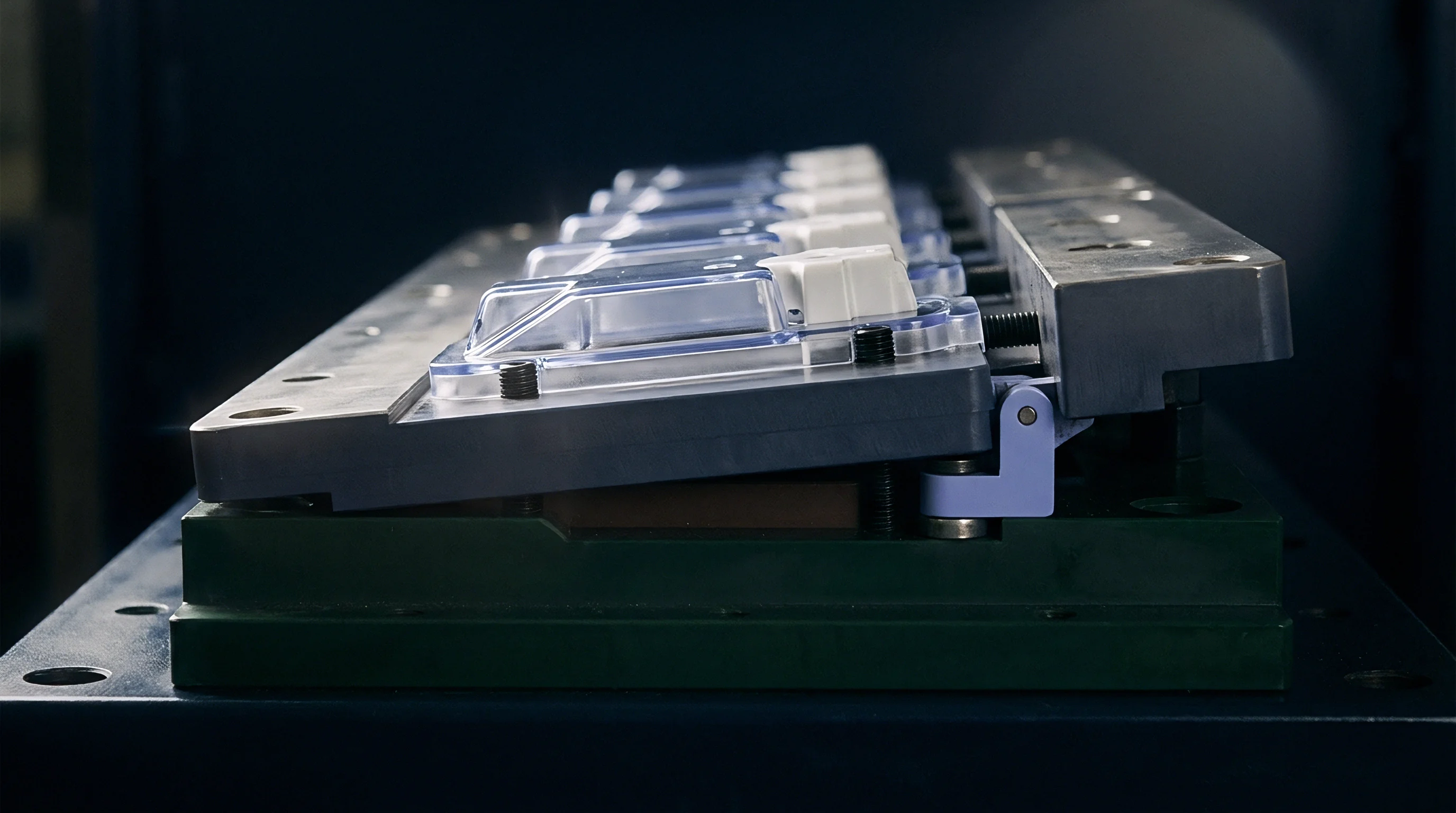
Coextruded and laminated web structures combine distinct polymer chemistries to isolate food from atmospheric degradation. Typical retort and modified-atmosphere packaging designs incorporate outer oriented polyethylene terephthalate or polypropylene films, middle aluminum or ethylene vinyl alcohol barrier strata, and inner polyolefin sealant films. Polyurethane adhesives bond these distinct substrates into cohesive flexible laminates.
Each constituent layer introduces specific precursor chemicals and thermal breakdown products into the finished packaging wall.
Secondary reaction chemistries occur continuously across multi-layer profiles. Residual monomers, catalyst residues, polymerization solvents, and polymer additives undergo unprompted thermal, hydrolytic, and oxidative transformations. The finished multi-layer laminate contains chemical entities absent from raw material declarations of conformity.
Traceability remains broken across converters.
Retained solvent in polyurethane adhesive laminates accelerates cyclic oligomer partition toward fat-rich contact media.
Aromatic polyurethane laminating systems generate the primary compliance hazard in flexible barrier structures. Formulated from diphenylmethane diisocyanate or toluene diisocyanate prepolymers cured against polyester or polyether polyols, these adhesives require complete cross-linking to prevent primary aromatic amine emergence. Solvents, moisture, and temperature fluctuations during roll lamination perturb stoichiometric balancing, yielding unreacted monomeric isocyanates that hydrolyze into carcinogenic amines when exposed to aqueous or acidic foodstuffs.

Polyurethane Adhesives and Primary Aromatic Amines
Solvent-borne and solvent-free lamination systems depend on aromatic diisocyanates that react with hydroxyl-terminated polyols to generate bonding layers. Solventless systems eliminate carrier drying. When converters process solventless polyurethane adhesives at high line speeds, inadequate web tension or ambient humidity drops delay cross-linking kinetics.
Unreacted monomeric diisocyanates remain free inside the adhesive core, migrating across the polyolefin inner sealant layer into food contact surfaces. Upon encountering moisture in the food simulant, unreacted isocyanate moieties hydrolyze instantaneously into corresponding primary aromatic amines.
- Aromatic isocyanate monomers migrate through polyolefin sealant webs before hydrolyzing into 4,4′-methylenedianiline or 2,4-toluenediamine under aqueous conditions.
- Cyclic polyurethane oligomers arise from stoichiometric side-reactions between diisocyanates and glycol extenders, forming unlisted macrocyclic esters that resist aqueous hydrolysis.
- Triethylamine catalysts vaporize during adhesive curing reactions, leaving tertiary amine salts that alter matrix acidity during acidic food pasteurization.
- Residual laminating solvents such as ethyl acetate, methyl ethyl ketone, and isopropanol retain within polymer laminae, plasticizing the sealant web and speeding migrant mobility.
Regulation 10/2011 mandates that primary aromatic amines show no detectable migration into food, imposing a detection limit of 0.002 milligrams per kilogram for individual hazardous amines listed under CLP entry 1272/2008, with a combined limit of 0.010 milligrams per kilogram for total primary aromatic amines. Aromatic amines exhibit mutagenic potential. Testing with food Simulant B (3 percent acetic acid) at 100 degrees Celsius accelerates hydrolysis, instantly unmasking curing failures that room-temperature storage hid.

Oligomers and Thermal Cleavage Byproducts
Cyclic condensation species form spontaneously during polymer synthesis, remaining trapped within polyamides and polyesters. Polyester adhesives hydrolyze under heat. During film lamination and subsequent sterilization processes, cyclic oligomers diffuse through inner sealant films.
Polyethylene terephthalate produces cyclic trimers, tetramers, and pentamers, dominated by the cyclic trimer of terephthalic acid and ethylene glycol. Aliphatic polyamide 6 generates cyclic monomer (caprolactam) alongside cyclic dimers, trimers, and tetramers that leach into high-temperature contact media.
Printing processes add another complex chemical layer. When printed film winds onto master reels under tension, the outer ink layer presses directly against the inner food-contact sealant surface. This physical set-off transfers photoinitiators, unreacted acrylate monomers, plasticizers, and defoamers onto the sealant face.
Subsequent packaging processes expose food to these set-off compounds regardless of the functional barrier’s integrity. The adhesive supplier stated that post-cure ambient storage for fourteen days drove all aromatic amines below detection limits, ignoring reel core compression where room air cannot penetrate.


Assay
Gas and liquid chromatography coupled to high-resolution mass spectrometers form the analytical backbone for untargeted screening. Evaluating multi-layer packaging demands comprehensive extraction screening paired with migration testing into approved food simulants. Standard migration tests use Simulant A (10 percent ethanol), Simulant B (3 percent acetic acid), Simulant D1 (50 percent ethanol for dairy), Simulant D2 (rectified olive oil or 95 percent ethanol for fatty foods), and Simulant E (modified polyphenylene oxide, Tenax, for dry foodstuffs).
Detection limits govern screening validity.
Extracting flexible films directly with organic solvents such as dichloromethane or methanol yields the complete potential migrant reservoir, providing an absolute ceiling for risk assessments. Direct solvent extraction frequently overestimates migration by dissolving the polymer matrix and mobilizing compounds that remain permanently immobilized under realistic commercial conditions. Migration tests executed in migration cells expose only the designated food-contact layer to the simulant, preserving structural layer mechanics.

Which Analytical Limits Bound Unknown Oligomer Detection?
High-resolution spectrometers running in full-scan mode achieve signal-to-noise ratios adequate to detect peaks at 0.005 milligrams per kilogram. Liquid chromatography coupled to quadrupole time-of-flight mass spectrometry (LC-QTOF-MS) handles polar, non-volatile migrants such as cyclic polyester oligomers, photoinitiators, and primary aromatic amines. Gas chromatography coupled to high-resolution time-of-flight mass spectrometry (GC-QTOF-MS) isolates volatile and semi-volatile migrants, including residual solvents, printing ink monomers, and antioxidant degradation products.
Testing costs scale per injection.
Untargeted screening detects hundreds of uncalibrated peaks across a single multi-layer extract. The absolute limit of quantification fluctuates across chemical species. In atmospheric pressure chemical ionization and electrospray ionization, compound response factors vary by three orders of magnitude.
A 10-ppb signal for an easily ionizable tertiary amine represents a fraction of the physical mass represented by an identical 10-ppb signal for a neutral cyclic polyester oligomer. Quantifying without authentic reference standards introduces major analytical errors.

Surrogate Standards and Semi-Quantitative Estimation
Mass spectrometers exhibit ionization efficiencies that fluctuate across four orders of magnitude depending on molecular structure and mobile phase composition. Because authentic chemical standards do not exist commercially for uncharacterized NIAS, analytical laboratories use surrogate internal standards to estimate migrant concentration. Choosing surrogates with structural properties close to the targeted chemical family minimizes response factor bias.
- Deuterated internal standards provide precise retention matching and ionization normalization for volatile target compounds analyzed via gas chromatography mass spectrometry.
- Structural similarity indexing groups detected unknowns into specific structural families, matching chromatographic peaks to authentic surrogate standards with identical functional groups.
- Electrospray ionization polarity matching dictates the pairing of basic nitrogenous migrants with positive-mode calibrants and acidic sulfonated migrants with negative-mode surrogates.
- Relative response factor bounds establish conservative concentration estimates by applying the fifth percentile response factor across an entire compound library to unassigned peaks.
Internal standards carry systematic error. Applying a single generic internal standard, such as deuterated benzophenone or caffeine, across an entire liquid chromatogram skews quantification. When a laboratory calculates concentration against a surrogate with high ionization efficiency, it systematically underestimates the true physical concentration of poorly ionizing unknown migrants.
Analytical laboratories debate whether semi-quantification based on single surrogates per chemical class introduces enough bias to misclassify low-abundance migrants under genotoxic thresholds.


Transport
Mass transfer through laminated polymers obeys non-steady-state diffusion governed by Fickian differential equations. A migrant located in an adhesive stratum or structural core layer moves through the polymer matrix driven by chemical potential gradients. Calculating migration levels over shelf life requires solving second-order partial differential equations incorporating diffusion coefficients, partition coefficients between adjacent polymer layers, and partition coefficients between the food contact layer and the contact foodstuff.
The Piringer approach provides a validated framework for estimating diffusion coefficients in plastic packaging. This deterministic model calculates upper-bound diffusion coefficients based on polymer-specific matrix parameters, temperature, and migrant molecular weight. Semi-crystalline polymers like high-density polyethylene and oriented polyamide restrict migrant motion relative to low-density polyolefins.
Diffusion drops inside crystalline domains.
Thicker sealant layers fail to impede low molecular weight migrants once storage times exceed six months.
Estimating transfer across an n-layer laminate requires continuous boundary matching at each internal interface. At the junction between layer one and layer two, the concentration jump equals the thermodynamic partition coefficient K1,2. If the partition coefficient favors the core layer, the core retains the migrant.
If the partition coefficient favors the sealant film, the migrant flushes rapidly into the food contact zone. Barrier layers delay migrant breakthrough.

Diffusion Coefficients and Barrier Lag Time
Molecular dispersion rates through semi-crystalline polymers depend on migrant radius, matrix free volume, and interfacial partitioning. The breakthrough time, or lag time theta, represents the duration required for a migrant originating behind a barrier layer to traverse the sealant film and enter the foodstuff. For a single protective layer of thickness L having diffusion coefficient D, the classic lag time formula establishes the temporal window of protection:
theta = L^2 / (6 D)
Ethylene vinyl alcohol containing 32 mole percent ethylene exhibits diffusion coefficients four orders of magnitude lower than low-density polyethylene at ambient packaging temperatures. An adhesive byproduct migrating through a 15-micrometer EVOH barrier requires decades to reach the food face, establishing a genuine functional barrier. When the barrier comprises only a 40-micrometer polyethylene sealant layer, the lag time for low molecular weight compounds collapses to days.
| Polymer Layer Material | Layer Thickness | Migrant Molecular Mass | Diffusion Coefficient (D) | Lag Time (Theta) |
|---|---|---|---|---|
| Low-Density Polyethylene (LDPE) | 50 um | 200 g/mol (Solvent residue) | 1.2 x 10^-9 cm^2/s | 58 minutes |
| Low-Density Polyethylene (LDPE) | 50 um | 500 g/mol (Adhesive oligomer) | 4.5 x 10^-11 cm^2/s | 26 hours |
| High-Density Polyethylene (HDPE) | 50 um | 500 g/mol (Adhesive oligomer) | 3.1 x 10^-12 cm^2/s | 15.6 days |
| Biaxially Oriented Polyamide (BOPA) | 15 um | 226 g/mol (Caprolactam dimer) | 8.0 x 10^-14 cm^2/s | 5.4 months |
| Ethylene Vinyl Alcohol (EVOH 32%) | 15 um | 200 g/mol (Aromatic isocyanate) | 2.5 x 10^-16 cm^2/s | 142 years |
| Polyethylene Terephthalate (PET) | 12 um | 576 g/mol (Cyclic PET trimer) | 1.1 x 10^-15 cm^2/s | 6.9 years |
| Values calculated using Piringer model parameterization Ap’ = 11.5 for LDPE, 14.5 for HDPE, and 2.0 for PET under dry ambient contact conditions. | ||||
Solvent retention creates off-flavors. When laminators process films with high residual solvent contents, retained solvents act as plasticizers inside the polyolefin matrix. Plasticization increases matrix free volume, driving diffusion coefficients up by factors of two to ten.
A plasticized sealant layer loses its calculated lag time, triggering premature migrant breakthrough during standard room-temperature warehouse storage.

Worked Calculation for Adhesive Cyclic Oligomer Migration
A three-ply flexible pouch consists of 12-micrometer polyethylene terephthalate, a 3-micrometer polyurethane bonding stratum, and a 40-micrometer linear low-density polyethylene contact web. The packaged volume is 250 milliliters of aqueous food simulant with a surface-to-volume ratio of 6 square decimeters per 0.25 kilograms of food, yielding an area-to-mass ratio of 24 square decimeters per kilogram. The packaging undergoes sterilization at 121 degrees Celsius for 30 minutes, followed by 180 days of ambient storage at 20 degrees Celsius.
The polyurethane adhesive contains a non-intentionally added cyclic polyurethane oligomer formed from diethylene glycol and isophorone diisocyanate with molecular weight 328 grams per mole. The initial concentration in the dry adhesive layer measures 150 milligrams per kilogram of adhesive. Given an adhesive coat weight of 3.0 grams per square meter, the total initial areal mass of the oligomer calculates to 0.450 milligrams per square meter, corresponding to 45 micrograms per square decimeter.
During retort processing at 121 degrees Celsius, the diffusion coefficient of the oligomer inside the polyethylene sealant layer accelerates to 2.8 x 10^-8 square centimeters per second. The lag time through the 40-micrometer (0.0040 cm) polyethylene sealant web during thermal processing calculates as:
theta_retort = (0.0040 cm)^2 / (6 2.8 x 10^-8 cm^2/s) = 95.2 seconds
The thirty-minute sterilization stage completely eliminates the transient diffusion lag phase. The migrant establishes a steady-state concentration profile across the sealant film during the first two minutes of autoclave processing. Fickian migration into the liquid simulant during the remaining 28 minutes at 121 degrees Celsius depends on the partition coefficient between polyethylene and the aqueous phase.
Assuming a partition coefficient K_polymer/food of 12 for this moderately polar oligomer, 35 percent of the adhesive oligomer mass transfers into the food simulant during retort processing alone.
Ambient shelf-life storage at 20 degrees Celsius proceeds under an estimated diffusion coefficient of 1.4 x 10^-11 square centimeters per second. With the transient barrier phase extinguished during retort, steady-state diffusion continues throughout the 180-day storage period. Solving the one-dimensional diffusion equation across the multi-layer composite yields a cumulative migration value of 18.2 micrograms per square decimeter into the food phase at shelf-life termination.
Multiplying this areal migration value by the real surface-to-volume ratio demonstrates the regulatory failure:
Migration = 18.2 ug/dm^2 24 dm^2/kg = 436.8 ug/kg = 0.437 mg/kg
Equilibrium values alter concentration profiles. The calculated migration of 0.437 milligrams per kilogram exceeds the functional barrier ceiling of 0.010 milligrams per kilogram by more than forty-fold, while exceeding the Cramer Class III threshold of 0.015 milligrams per kilogram by twenty-nine-fold. Unless the converter incorporates an impermeable aluminum foil or EVOH core layer between the adhesive and the food contact film, this structure violates Article 3 of Framework Regulation 1935/2004.
Calculated partition coefficients confirm that linear low-density polyethylene retains hydrophobic migrants within the polymer matrix until temperatures approach the vicat softening point.


Hazard
Toxicological triage transforms raw chromatographic peak areas into actionable safety decisions. When non-targeted analysis reveals migrants lacking positive-list authorizations, packaging manufacturers must establish safety margins using structural toxicological prediction tools. The European Food Safety Authority requires toxicological risk evaluations for all migrants detected above 0.010 milligrams per kilogram, and requires explicit mutagenicity rule-outs for substances detected below that threshold.
Chemical structures parsed from high-resolution fragmentation spectra enter in silico screening pipelines. Algorithms evaluate molecular connectivity models for mutagenic DNA reactivity, chromosomal damage, hepatotoxicity, and endocrine disruption endpoints. If an algorithm identifies a structural alert, the migrant cannot use default Cramer exposure classes.
It falls immediately under non-threshold risk models requiring specialized bioassays.

Cramer Class Allocation and in Silico Profiling
Structural evaluation software packages parse molecular connectivity tables to predict systemic toxicity categories. Cramer decision trees classify organic molecules into three primary groups based on chemical functionality, metabolic susceptibility, and oral toxicity benchmarks derived from historical mammalian feeding studies. Evaluating packaging migrants requires strict application of the revised Cramer tree.
- Identification of chemical structure proceeds through mass spectral library deconvolution and confirmation via high-resolution isotope pattern matching.
- Structural alert screening parses the validated molecular file against known DNA-reactive electrophilic centers using in silico rule engines.
- Exclusion of structural alerts routes non-genotoxic molecules into the Cramer decision logic, parsing functional groups into Class I, II, or III categories.
- Class assignment establishes the maximum permissible dietary intake, converting toxicological ceilings into finished package migration thresholds based on target fill volumes.
- Analytical limits of quantification undergo comparison against calculated toxicological thresholds to verify analytical test suitability.
Assigning a molecule to Cramer Class I permits dietary exposure up to 1800 micrograms per person per day, equivalent to a 0.300 milligram per kilogram migration threshold in food. Simple linear hydrocarbons, fatty acid esters, and monocyclic terpenes fall into Class I. Cramer Class II encompasses substances with intermediate toxicity benchmarks, providing an exposure ceiling of 540 micrograms per person per day (0.090 milligrams per kilogram). Molecules containing complex rings, non-heterocyclic polycyclic systems, or reactive beta-unsaturated ketones enter Cramer Class III, which suppresses acceptable exposure to 90 micrograms per person per day (0.015 milligrams per kilogram).

Genotoxicity Alerts and Non-Threshold Contaminants
Structural alerts identifying aromatic amines, epoxides, and alkyl halides require analytical verification down to 0.15 micrograms per kilogram. The Threshold of Toxicological Concern for confirmed or suspected genotoxic chemicals drops to 0.15 micrograms per person per day. Applying standard European packaging surface assumptions converts this exposure ceiling into a migration threshold of 0.00015 milligrams per kilogram, or 150 parts per trillion.
Typical high-resolution screening instruments running untargeted full scans cannot reach 150 parts per trillion in complex food matrices.
| Chemical Functional Group | Predictive Toxicity Engine | Structural Alert Status | Target Migration Limit | Analytical Feasibility |
|---|---|---|---|---|
| Linear Hydrocarbon Oligomers | Toxtree / Cramer Tree | Negative (Class I) | 0.300 mg/kg | Routine (GC-FID / GC-MS) |
| Hindered Phenol Degradants | Derek Nexus / Hepatotoxicity | Negative (Class II) | 0.090 mg/kg | Routine (LC-UV / LC-MS) |
| Cyclic Polyamide Oligomers | OECD QSAR Toolbox | Negative (Class III) | 0.015 mg/kg | Feasible (LC-MS/MS) |
| Aromatic Isocyanate Adducts | Derek Nexus / Mutagenicity | Positive (DNA reactive) | 0.00015 mg/kg | Challenging (LC-HRMS MRM) |
| Epoxidized Soybean Oil Cleavage | Toxtree / Alkylating Agent | Positive (Genotoxic) | 0.00015 mg/kg | Challenging (GC-MS/MS) |
| Acrylate Photoinitiator Byproducts | Ames In Silico Rule Engine | Positive (Chromosome break) | 0.00015 mg/kg | Specialized target assay required |
When analytical laboratories encounter structural alerts on low-level peaks that cannot be identified with definitive reference standards, they deploy in vitro biological testing. Bacterial reverse mutation assays, such as the miniaturized Ames microplate test, evaluate whole packaging extracts for mutagenic activity directly. If the Ames test demonstrates negative mutagenicity, toxicologists reclassify the migrant from the 0.00015 milligram per kilogram genotoxic ceiling to the 0.015 milligram per kilogram Cramer Class III limit.
Failing to clear genotoxic structural alerts results in product withdrawals, mandatory warehouse quarantine, and customs detention of subsequent production shipments.

Recourse
Border enforcement authorities seize flexible food packaging shipments when analytical screenings uncover uncharacterized migrants exceeding legal thresholds. The European Rapid Alert System for Food and Feed routinely publishes border rejections for laminated packaging originating outside the European single market. Violations center on primary aromatic amine migration from polyurethane adhesives, formaldehyde release from melamine resins, and unlisted photoinitiator migration from surface-printed barrier films.
Customs authorities inspect batch dossiers. When a national food control laboratory flags an unlisted chromatographic peak exceeding 0.010 milligrams per kilogram, the burden of proving chemical safety rests entirely on the economic operator placing the finished article on the market. If the supporting declaration of compliance lacks toxicological data or barrier verification files, the consignment faces rejection, mandatory return to origin, or physical destruction under customs supervision.
Supply specifications omitting batch-level chromatography certificates transfer border seizure expenses directly to the named importer of record under Article 17 of European Regulation 178/2002.
Importers bear finished pack liability. Upstream resin suppliers and raw film extruders supply declarations certifying compliance for their specific raw materials, but explicitly disclaim liability for chemical reactions occurring during lamination, printing, or thermal pouch conversion. The converting facility that combines authorized substrates creates non-intentionally added substances during processing.
Without comprehensive non-targeted screening files covering the laminated composite, downstream food brand owners remain defenseless during regulatory audits.

Declaration Gaps and Importer Liability
European supply chains operate under Regulation 1935/2004, which places legal responsibility for finished packaging compliance on the entity marketing the packaged good. Declarations of compliance delivered by Asian or North American packaging converters often state compliance with FDA 21 CFR regulations while omitting mandatory European testing parameters. An American declaration based on extraction testing under 21 CFR 177.1395 does not demonstrate compliance with European specific migration limits or NIAS risk assessment mandates under Regulation 10/2011.
Packaging buyers discover document failures after commercial delivery. Converter declarations frequently cite third-party test reports conducted on prototype films three years prior, while the commercial consignment uses different adhesive batches, faster line speeds, or lower corona treatment levels. A declaration unsupported by batch-specific chromatographic screening records fails compliance validation during official enforcement inquiries.

Contractual Specifications for Analytical Dossiers
Procurement agreements governing multi-layer films establish screening detection boundaries, simulant matrices, and non-target library matching standards. Technical specifications that merely mandate general compliance with food contact laws leave buyers exposed to substantial testing and replacement expenses when enforcement agencies intervene. Sophisticated procurement contracts incorporate exact analytical testing protocols into purchase order terms.
Supply agreements require converters to conduct non-targeted GC-MS and LC-HRMS screening on commercial validation runs, enforcing screening cutoffs down to 0.005 milligrams per kilogram. Contracts specify that any unknown peak emerging above 0.010 milligrams per kilogram requires chemical identification and toxicological evaluation at the converter’s sole expense. A contractual clause shifting all testing and destruction fees to the converter upon any unlisted peak exceeding 0.010 milligrams per kilogram eliminates ambiguous liability during border audits.