Chromatographic Separation Principles for Mineral Oil Hydrocarbons in Recycled Resins
Online LC-GC-FID with silver nitrate and epoxidation clean-up provides defensible quantification of MOSH and MOAH by removing interfering polymer oligomers.

Aliquot
Analytical quantification of mineral oil hydrocarbons in recycled polyolefins begins with solvent penetration into the solid polymer matrix. Recycled high-density polyethylene and polypropylene pellets hold saturated hydrocarbons, designated MOSH, and aromatic hydrocarbons, designated MOAH, across a molecular weight range extending from C10 to C50. The analytical boundary defined in the European monitoring recommendation 2019/331 sets distinct measurement fractions between C10 and C16, C16 and C20, C20 and C35, and C35 and C50.
Extracting these fractions without co-extracting high molecular weight polyolefin oligomers demands strict solvent selection and temperature boundaries. Hexane dissolution at elevated temperatures extracts the bulk polymer, which precipitates upon cooling and clogs sample introduction needles, transfer lines, and silica columns. Dissolution followed by cold precipitation leaves substantial amounts of low-molecular-weight polyolefin oligomeric saturated hydrocarbons, known as POSH, suspended in the supernatant.
Direct room-temperature extraction of ground polymer particles suppresses the dissolution of the crystalline polymer backbone while allowing mobile hydrocarbon migrants to diffuse into the extractant. Grinding recycled resin pellets to a particle diameter below 500 micrometers under cryogenic conditions preserves volatile hydrocarbons below C16 that vaporize during ambient mechanical milling. Shaking these cryo-milled resins in a mixture of n-hexane and absolute ethanol at a 1:1 volume ratio for two hours yields complete recovery of C10 to C35 mineral oil contaminants.
Ethanol acts as a swelling modifier for polar phases while hexane dissolves non-polar mineral hydrocarbons.
A four-hour extraction of unground recycled polypropylene pellets at twenty degrees Celsius recovers less than forty percent of the internal C20 to C35 mineral oil hydrocarbon mass.
The resulting extract contains native additives, fatty acid derivatives, slip agents such as erucamide, synthetic antioxidants like Irgafos 168 and Irganox 1010, along with their thermal degradation breakdown products. These species co-elute with the targeted hydrocarbon fractions unless isolated upstream of gas chromatographic separation. An analytical report declaring a total MOSH content below detection without identifying the extraction solvent volume, particle distribution, and extraction duration conceals whether the test measured surface contamination or bulk contamination.
Sourcing teams reviewing compliance declarations for food-contact resin flakes encounter this failure mode when suppliers rely on brief surface rinses to claim compliance against migration thresholds.

Particle Size Effects on Solute Diffusion
Diffusion rates of branched alkanes through solid polyolefin matrices dictate extraction kinetics. Fickian diffusion coefficients for C20 branched alkanes in high-density polyethylene average 1.2e-11 square centimeters per second at twenty-three degrees Celsius. Cryo-milling recycled pellets reduces the diffusion path length from two millimeters down to 250 micrometers.
This particle size reduction shortens the time required to reach ninety-five percent extractant equilibrium from 110 hours down to ninety minutes. Un-milled pellets submitted to an accredited testing laboratory yield an artificially suppressed total hydrocarbon value if the extraction run finishes after three hours.

Internal Standard Spiking Chemistry
Quantification of unresolved hydrocarbon humps requires baseline addition of internal standards prior to any physical extraction step. The standard DIN EN 16995 specifies a cocktail containing individual hydrocarbon markers that bracket the volatile and semi-volatile range. This mixture provides recovery monitoring and retention time indexing across both the MOSH and MOAH channels.
- Undecane elutes as the volatile MOSH front marker at carbon number C11.
- Bicyclohexyl marks the saturated naphthenic recovery window at retention marker C12.
- Pentylbenzene establishes the volatile MOAH tracking point corresponding to an elution index of C11.
- Cholestane anchors the high-boiling MOSH quantification endpoint at C27.
- Perfluorooctanoic acid methyl ester acts as an exclusion verification marker when verifying complete silica clean-up.
- Tri-tert-butylbenzene provides aromatic recovery verification around retention marker C14.
- Perylene confirms the high-boiling MOAH window endpoint at carbon index C35.
Evaporative concentration of the crude hexane extract introduces selective loss of hydrocarbons below C14. Standard laboratory practice restricts concentration steps to a gentle stream of nitrogen at temperatures below thirty-five degrees Celsius. Total evaporation to complete dryness results in twenty to sixty percent loss of C10 to C13 hydrocarbons, falsifying the volatile fraction tally.
A declaration showing zero detection for volatile MOAH requires immediate verification of the solvent blow-down protocol used by the originating laboratory.

Column
Separation of saturated fractions from aromatic fractions demands liquid chromatography using an unbonded normal-phase silica stationary phase. Saturated mineral oil hydrocarbons lack polarizable pi-electron systems, passing through bare silica without retention when eluted with non-polar solvents. Aromatic hydrocarbons interact with silanol groups via their conjugated aromatic rings, retaining on the silica stationary phase until displaced by an eluent with higher solvent strength.
Normal-phase columns packed with irregular or spherical silica particles ranging from three to five micrometers achieve baseline fractionation of MOSH from MOAH within six minutes under high-performance liquid chromatography regimes.
A standard liquid chromatography setup employs an analytical silica column measuring 250 millimeters in length with an internal diameter of 2.1 millimeters, packed with three-micrometer spherical silica particles carrying a pore size of sixty angstroms. Flow rates maintained at 300 microliters per minute deliver reproducible retention volumes. Pure n-hexane carries the unretained MOSH fraction through the column directly into the first gas chromatography transfer loop between 1.5 and 3.2 minutes.
Switching valves divert the mobile phase to a backflush solvent mixture containing dichloromethane and n-hexane at an 80:20 volume ratio between 3.3 and 5.5 minutes to desorb and elute the MOAH fraction. Incomplete separation at this stage contaminates the MOAH channel with saturated alkanes, producing false positives in the aromatic hydrocarbon tally.
| Parameter | Saturated Fraction (MOSH) | Aromatic Fraction (MOAH) | Auxiliary Flush Phase |
|---|---|---|---|
| Mobile Phase Composition | 100% n-Hexane (v/v) | 80:20 Dichloromethane:n-Hexane (v/v) | 100% Toluene (v/v) |
| Flow Rate (mL/min) | 0.30 | 0.35 | 0.50 |
| Elution Window (min) | 1.5 to 3.2 | 3.5 to 5.8 | 6.0 to 8.5 |
| Column Temperature (°C) | 35.0 | 35.0 | 40.0 |
| Backflush Activation | Disabled | Enabled at 3.3 min | Enabled at 6.0 min |
Moisture control within the normal-phase silica column governs retention time stability. Atmospheric moisture dissolving into dry n-hexane deactivates active silanol sites on the stationary phase. This deactivation reduces the retention volume of mono-aromatic hydrocarbons like alkylbenzenes, causing them to break through into the MOSH cut.
Dedicated online coupled systems pass the hexane mobile phase through a moisture-conditioning column or add fifty parts per million of isopropanol to stabilize silanol activity. Shifting retention windows that drift by more than four seconds across twenty injection cycles indicate uncontrolled water accumulation on the stationary phase.

Silica Gel Silver Nitrate Impregnation
Recycled post-consumer polypropylene contains significant concentrations of polyolefin oligomeric saturated hydrocarbons alongside mono-, di-, and tri-olefins formed during thermal degradation in extrusion recycling. Unfunctionalized silica fails to differentiate between non-polar aliphatic olefins and saturated mineral oil hydrocarbons. Impregnating chromatographic silica with silver nitrate at five to ten percent by weight introduces silver ions that form reversible coordination complexes with the pi-bonds of unsaturated polyolefin oligomers, known as POBH.
These olefin-metal complexes retard olefin mobility, allowing saturated mineral oil hydrocarbons to elute cleanly while retaining the unsaturated interferences on the pre-column.
Breakthrough of polyolefin oligomers into the analytical window inflates the apparent MOSH concentration by twenty to two hundred milligrams per kilogram in recycled polypropylene resins. Passing the aliquot through an offline silver nitrate silica glass SPE cartridge before normal-phase HPLC separation strips these olefinic fragments. The chemical integrity of the silver coating degrades when exposed to laboratory light or trace sulfur additives, reducing complexation capacity and bleeding silver species into the gas chromatograph transfer valve.
Silver nitrate impregnated silica phases strip unsaturated oligomers from recycled resin extracts but leave saturated synthetic branched alkanes untouched.
Laboratory reports that fail to document a silver nitrate clean-up step for recycled polyethylene or polypropylene extracts cannot substantiate reported MOSH figures. Saturated oligomers remain indistinguishable from mineral oil without further spectroscopic evaluation, but unsaturated fragments are systematically removable. A dossier submitted without clean-up verification records leaves the resin buyer vulnerable to material rejection at customs checkpoints operating European joint monitoring procedures.
Flame
Flame ionization detection coupled to capillary gas chromatography provides mass-proportional detection for hydrocarbon analysis. Unlike mass spectrometers, where ionization efficiency varies across molecular structures and functional groups, flame ionization converts organic carbon atoms into CHO-plus ions and free electrons with an invariant response factor per unit carbon mass. Saturated paraffinic chains, cyclic naphthenes, and polycyclic aromatic structures yield equivalent peak area responses per gram of carbon injected.
This universal response factor enables accurate quantification of complex, non-separated isomeric mixtures without demanding compound-specific reference standards for every individual peak in the unresolved complex mixture.
Gas chromatographic separation uses non-polar wall-coated open tubular columns, typically measuring ten to fifteen meters in length with an internal diameter of 0.25 to 0.32 millimeters and a thin stationary phase film of 0.10 to 0.15 micrometers of dimethylpolysiloxane. Short column lengths and thin stationary films allow high-boiling hydrocarbons up to C50 to elute at oven temperatures below 370 degrees Celsius. Eluting these heavy fractions protects the stationary phase from thermal bleed, which elevates the baseline and mimics a broad mineral oil hump.
Carrier gas linear velocities must remain stable throughout oven programming. Hydrogen serves as the optimal carrier gas, operating at a linear velocity of forty to fifty centimeters per second, maintaining resolution while shortening run times to prevent on-column thermal degradation.
| Hardware Component | Operating Parameter | Set Value | Tolerance Window |
|---|---|---|---|
| Primary Analytical Column | Dimensions & Phase | 10 m × 0.25 mm × 0.15 μm 100% PDMS | Length ± 0.5 m |
| Carrier Gas | Type & Flow Regime | Hydrogen, Constant Pressure | Velocity: 45 ± 2 cm/s |
| Oven Temperature Program | Initial / Ramp / Final | 50 °C (2 min) to 350 °C at 20 °C/min (5 min) | Rate ± 0.5 °C/min |
| On-Column Interface | Retention Gap Dimensions | 10 m × 0.53 mm deactivated silica | Deactivation: Silanized |
| Flame Ionization Detector | Temperature & Gas Flows | 370 °C; H2: 35 mL/min, Air: 350 mL/min | Temp ± 2 °C |
| Solvent Vapor Exit | Purge Cut Time | SVE Open during transfer, closes at 2.8 min | Timing ± 0.1 min |
Transferring large volumes of HPLC eluent into the gas chromatograph presents a severe physical hurdle. Typical liquid chromatographic fractions range from 300 to 600 microliters of solvent, whereas standard splitless GC injectors accommodate no more than two microliters of liquid without violent vapor expansion that blows back into carrier gas lines. The on-column interface coupled to an uncoated deactivated retention gap solves this volume problem through solvent evaporation techniques.
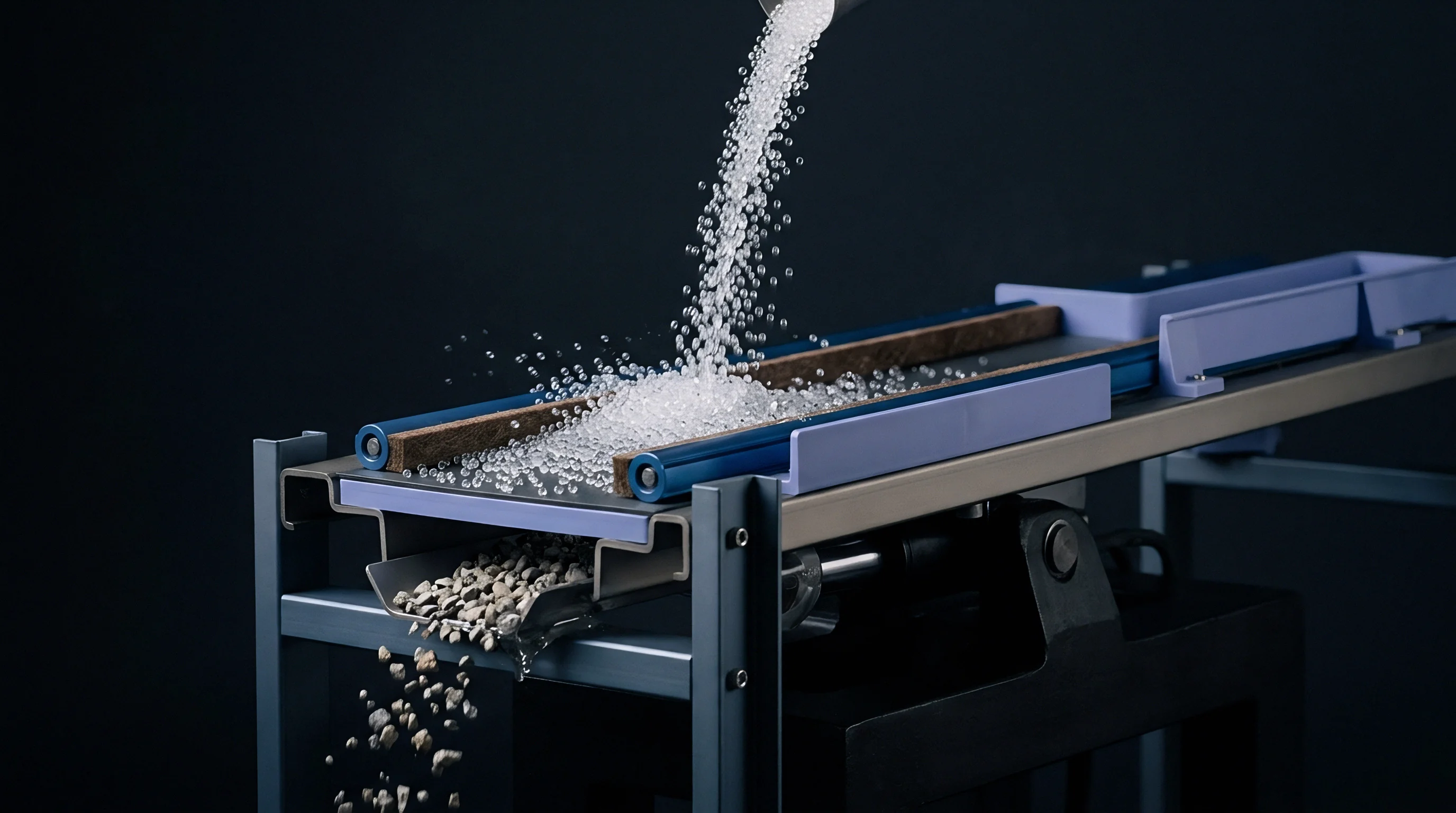
Retention Gap Techniques and Solvent Evaporation
Injecting hundreds of microliters requires a retention gap measuring ten meters in length with an inner diameter of 0.53 millimeters attached directly upstream of the ten-meter analytical column. As the liquid chromatographic fraction enters this wide-bore uncoated capillary, the solvent forms a continuous liquid film along the deactivated tubing walls. An automated solvent vapor exit valve located prior to the analytical column vents solvent vapors while keeping the boiling liquid front pinned within the retention gap.
Controlled carrier gas pressure balances the evaporation rate against the solvent inflow rate.
Once the solvent evaporates down to a thin residual film, volatile and semi-volatile analytes condense on the bare capillary walls via solvent trapping and phase soaking effects. The solvent vapor exit valve closes immediately before the final solvent slug evaporates, directing the concentrated hydrocarbon analytes onto the analytical separation column. Premature closure of the vapor exit introduces excessive solvent into the flame ionization detector, extinguishing the flame and contaminating the collector electrode.
Delayed closure vents volatile C10 to C14 hydrocarbons, distorting the lower fraction recovery rates.
Baseline Subtraction and Hump Integration Protocols
Quantification of mineral oil relies on integrating the unresolved complex mixture that forms a broad envelope above the instrumental baseline. Gas chromatography processing software must perform a blank subtraction using a complete procedural blank run executed with identical solvent batches and clean-up steps. The blank profile accounts for column bleed at high temperatures and trace hydrocarbons present in extraction reagents.
- System blank execution generates a baseline chromatogram using solvent injections without polymer extract to map the native instrumental profile.
- Retention time window assignment establishes integration bounds using the retention times of n-alkanes running from C10 to C50.
- Solvent peak exclusion identifies and cuts out the sharp peaks belonging to internal standards, residual extraction solvents, and lab contaminants like siloxanes.
- Sharp additive peak exclusion identifies known formulation additives, such as erucamide and processing aids, carving their discrete areas out of the total envelope.
- Hump integration draws a flat baseline from the beginning of the C10 window to the return-to-baseline point past C50, calculating total area minus subtracted peaks.
The operational dispute between packaging buyers and resin recyclers centers on how software integrates native polymer oligomer humps. Recycled high-density polyethylene produces an oligomeric series of sharp, regularly spaced doublets across the entire boiling range. Leaving these oligomer peaks inside the integrated area elevates the calculated MOSH fraction by 300 percent, transforming a compliant resin lot into a rejected customs liability.
Clause 7.2 of standard DIN EN 16995 instructs the analyst to subtract sharp, identifiable peaks that sit on top of the hump if they do not originate from mineral oil. However, when oligomers are so concentrated that their peaks broaden and coalesce into the envelope, manual separation fails. In these cases, the declaration must state whether the reported MOSH value represents the total unresolved hydrocarbon envelope or an oligomer-subtracted baseline correction.


Quandary
Liquid chromatography coupled to flame ionization detection fails to differentiate synthetic polyolefin oligomers from petrochemical mineral oil hydrocarbons. This physical limitation creates constant commercial conflict during the qualification of recycled plastics for food contact applications. Polyolefin oligomeric saturated hydrocarbons, or POSH, possess aliphatic, branched, and cyclic structures identical to the synthetic paraffins and isoparaffins found in technical mineral oils.
When a recycled polypropylene resin undergoes LC-GC-FID testing, the POSH mass co-elutes with the MOSH fraction, causing false alarms under European food-contact safety audits.
Article 3 of Framework Regulation (EC) 1935/2004 dictates that materials must not transfer constituents to food in quantities that endanger human health or bring about an unacceptable change in the composition of food. Saturated hydrocarbons from commercial mineral oils carry potential accumulation risks in human tissues, specifically within the liver and mesenteric lymph nodes. POSH oligomers below 1,000 Daltons share these migration pathways into fatty foods, yet toxicology databases differentiate between synthetic polyolefin fragments and crude petrochemical distillates.
An accredited laboratory report quantifying fifty milligrams per kilogram of MOSH in recycled polypropylene flakes leaves the buyer unable to determine whether the resin contains regulated post-consumer printing ink carriers or harmless native polymer oligomers.

Did Multi-Dimensional Mass Spectrometry Resolve Oligomer Interference?
Coupling comprehensive two-dimensional gas chromatography to time-of-flight mass spectrometry, known as GC×GC-TOF-MS, provides the structural resolution that one-dimensional FID lacks. A two-dimensional setup routes the effluent from a primary non-polar gas chromatography column through a cryogenic thermal modulator into a second column coated with a polar or mid-polar stationary phase. Saturated cyclic compounds, linear paraffins, and branched structures separate along the second dimension according to their internal polarity and polarizability, generating an organized, structured chromatogram.
Polyolefin oligomers form structured, periodic horizontal bands in the two-dimensional separation space, corresponding to regular oligomeric series generated during polymerization and thermal degradation. In polypropylene, these series repeat at intervals of forty-two mass units, corresponding to the C3H6 monomer. In contrast, petrochemical MOSH forms an unstructured, chaotic distribution of isomers that covers the entire chromatographic retention space without discrete periodicity.
Mass spectral deconvolution of GC×GC peaks permits selective mass filtering using m/z ratios of 57, 71, and 85 for aliphatic fragments alongside characteristic fragmentation patterns for cyclic naphthenes.
Two-dimensional gas chromatography isolates regular polyolefin oligomer patterns from the random isomer dispersion characteristic of petrochemical contamination.
Despite its resolving power, GC×GC-TOF-MS cannot function as a direct replacement for flame ionization quantification. Mass spectrometers exhibit variable response factors across different hydrocarbon isomer classes, meaning that quantification against a single internal standard introduces measurement errors up to forty percent. The industry uses GC×GC-TOF-MS as a confirmatory forensic tool rather than an everyday batch release gatekeeper.
The technique identifies whether an integrated hump originates from mineral oil, printing ink distillates, or pure polymer breakdown, but the commercial declaration still quotes the LC-GC-FID hump value.
Thermal desorption gas chromatography combined with pyrolysis screening represents an alternative path to determine whether volatile fragments originate from low-molecular-weight additives or the bulk polymer. Pyrolysis at 500 degrees Celsius breaks down the high-density polyethylene chain into characteristic triplets consisting of alpha,omega-dienes, n-alkanes, and alpha-olefins. When testing non-pyrolyzed resins at thermal desorption temperatures of 150 degrees Celsius, true mineral oil contaminants evaporate cleanly without polymer degradation, isolating external contamination from structural resin components.
This boundary marks the operational separation between additive testing and polymer characterization.


Verdict
Translating chromatographic data into a legally defensible Declaration of Conformity requires systematic auditing of laboratory integration methods, limits of quantification, and batch sampling integrity. A Declaration of Conformity stating that a recycled resin batch meets European food-contact standards means nothing if the underlying test report executed an un-validated LC-GC-FID run that omitted silver nitrate clean-up or misidentified polyolefin oligomers. Quality managers must audit the raw chromatograms behind the test certificate rather than relying on the executive summary table on page one.
European food safety consensus guidelines established through European Commission monitoring recommendations set strict operational thresholds for mineral oil hydrocarbons. For post-consumer recycled plastics intended for dry, aqueous, or fatty food contact, analytical limits of quantification dictate practical market access. Laboratories must demonstrate a limit of quantification of 0.5 milligrams per kilogram per fraction for MOSH and MOAH in packaging materials.
In the aromatic hydrocarbon channel, the presence of alkylated three- to seven-ring polycyclic aromatic hydrocarbons introduces mutagenic and carcinogenic risks, forcing buyers to demand a non-detectable MOAH profile down to 0.1 milligrams per kilogram for fractions spanning C16 to C35.

Conformity File Verification Criteria
Auditing a raw analytical test report for recycled polyolefin resin requires verification against strict testing criteria before signing a material supply agreement:
- Verify that the testing laboratory carries ISO/IEC 17025 accreditation with specific analytical scope covering DIN EN 16995 or equivalent LC-GC-FID methods.
- Check the raw chromatograms to ensure that internal standards reach the target baseline recovery range between eighty and one hundred twenty percent.
- Confirm that epoxidation clean-up was executed on the MOAH extract using meta-chloroperbenzoic acid to eliminate biogenic and natural olefin interferences like squalene.
- Examine whether the baseline integration line returns to the pre-C10 level without downward baseline step errors at the end of the run.
- Review the oligomer subtraction method to ensure that subtracted peaks are marked and documented in the instrument integration log.
A supplier who submits an overall migration report citing twenty-four hours at forty degrees Celsius in ten percent ethanol has verified nothing regarding mineral oil compliance. Mineral oil hydrocarbons are non-polar lipophilic species. Their migration must be evaluated using food simulant D2, which uses vegetable oil, or alternative volatile fatty simulants like ninety-five percent ethanol or poly(2,6-diphenyl-p-phenylene oxide), known commercially as Tenax, at worst-case contact times and temperatures such as ten days at sixty degrees Celsius.
A worked economic assessment proves the stakes of these chromatographic details. Take a 200-tonne purchase order of post-consumer recycled polypropylene flakes offered at a discounted market price of 1,200 euros per tonne, compared to virgin resin at 1,550 euros per tonne. The gross raw material savings calculates to 70,000 euros.
The resin is converted into 10,000,000 thin-wall food containers intended for packaging dry infant cereal under a long-term supply agreement. If an enforcement authority pulls an automated retail sample and detects 2.4 milligrams per kilogram of MOAH in the C16 to C35 range using verified LC-GC-FID with silver nitrate and epoxidation clean-up, the article violates the zero-tolerance stance of the European Commission Standing Committee on Plants, Animals, Food and Feed.
The resulting commercial impact cascades through the supply chain. The converter absorbs product recall logistics across five retail markets, costing an average of 180,000 euros. Incineration and waste processing fees for the returned stock add 25,000 euros.
Regulatory penalty assessments for placing an unsafe material on the market add another 50,000 euros. Upstream supplier indemnification provisions fail if the buyer accepted a general technical datasheet without obtaining an accredited batch-specific Declaration of Conformity that explicitly lists the C16 to C35 MOAH fraction. The initial material savings of 70,000 euros dissolves against a net commercial loss exceeding 255,000 euros.
The standard supply agreement clause stating that the material complies with all relevant food contact legislation offers no commercial protection when tested against real migration data. The contract text must state that every resin batch delivered under the purchase agreement carries an ISO/IEC 17025 accredited test report showing MOAH levels below 0.1 milligrams per kilogram in the C16 to C35 range, determined by online LC-GC-FID following silver nitrate extraction clean-up and meta-chloroperbenzoic acid epoxidation.