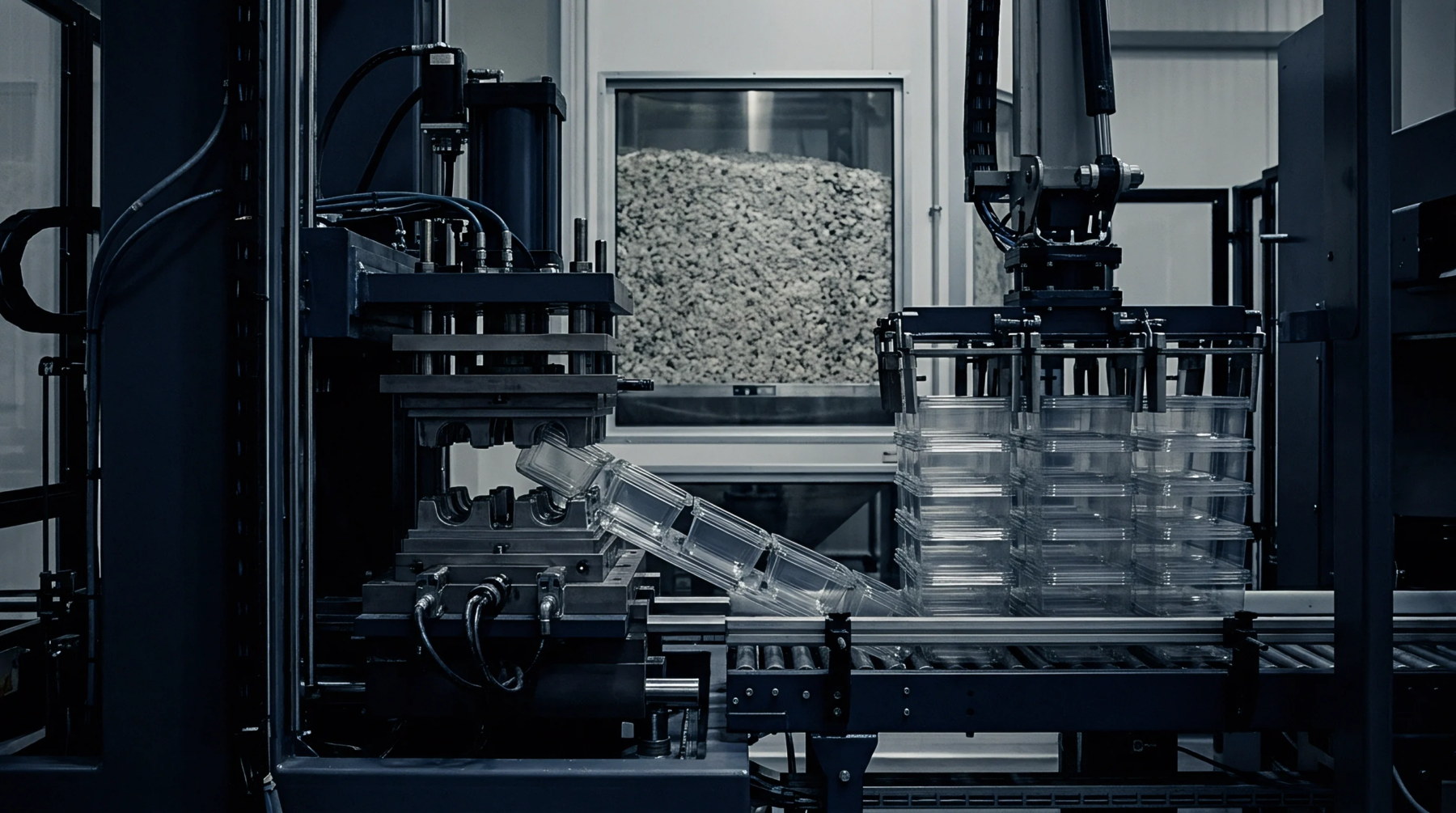
Thermoforming against Injection for Volumes below Fifty Thousand Units
Thermoforming delivers lower total landed cost below fifteen thousand units by saving upfront tooling capital, beyond which injection piece price efficiency dominates.
Concave tool surfaces positioned on the stationary side of an injection moulding machine define the outer geometry and surface finish of a plastic part during the solidification phase. In the context of a two plate tool, the female mold is the cavity that receives the molten resin, shaping the side of the component that is usually visible to the end user. This part of the tool is typically deep and requires high quality steel to withstand the abrasive forces of the melt flow.
Because it forms the exterior of the part, the surface quality of the cavity is often polished to a mirror finish or textured to provide a specific aesthetic.
The appearance of the final product is a direct result of how well the resin replicates the texture of the cavity. A female mold may be treated with specialized coatings to improve wear resistance or to facilitate the release of the part after cooling. If the cavity surface is damaged or worn, the defect will appear on every part produced, leading to high scrap rates and costly repairs.
Tool makers often prioritize the cooling layout in this section to ensure that the exterior of the part cools evenly and does not develop sink marks. An uneven temperature across the cavity surface can lead to localized variations in gloss or texture. This is especially true for materials with high shrinkage, where the outer skin must be supported by internal pressure until it is rigid enough to hold its shape.
Parts tend to shrink away from the cavity walls as they cool, which usually makes removal from the stationary side easier than removal from the core. However, a female mold must still incorporate sufficient draft angles to prevent the part from dragging or scuffing as the tool opens. If the draft is too shallow, the vacuum created between the plastic and the steel can cause the part to stick, leading to cycle interruptions.
In deep draw parts, the force required to pull the part out of the cavity can be significant. Tool designers sometimes include air poppets or specialized venting in the female side to break this vacuum and ensure a clean release. The goal is to keep the part on the moving side of the machine so that the ejector system can push it out in a controlled manner.
Efficient heat removal is achieved by drilling water channels close to the cavity surface to manage the thermal load of the incoming melt. In a female mold, these channels must be strategically placed to avoid interference with the guide pins or gate locations while providing uniform cooling to the entire surface. If one area of the cavity remains hotter than another, the part may warp toward the hot side as it continues to shrink after ejection.
Using high conductivity alloys in specific areas can help pull heat away from thick sections that the water lines cannot reach. The total cycle time is often dictated by how quickly the female side can reduce the temperature of the part surface to a point where it is no longer tacky. Proper thermal management prevents the outer skin from sticking to the tool and ensures the part meets dimensional specifications.
Thermoforming delivers lower total landed cost below fifteen thousand units by saving upfront tooling capital, beyond which injection piece price efficiency dominates.
Expertise is a utility, not a secret. sentiention™ publishes its working knowledge as open reference: intelligence layer covering the materials it sources, the markets it enters, and the reference that serves both.