Polyolefin Flake Degradation Mechanisms and Melt Testing Methods
Polyolefin flake degradation alters melt viscosity and stability, requiring multi-weight flow indexing and oxidative induction testing to set lot pricing.


Shear

Free Radical Kinetics and Polymer Backbone Cleavage
Mechanical stress inside an extruder barrel strips electrons from polymer chains when thermal energy and intense velocity gradients coincide. Thermal processing of post-consumer and post-industrial polyolefin flakes initiates homolytic cleavage of carbon-carbon bonds along the backbone. This alkyl radical generation triggers an auto-oxidation cascade whenever dissolved oxygen or air trapped between un-compacted flakes exists in the feed zone.
Alkyl radicals react instantly with oxygen to form peroxyl radicals, which subsequently abstract hydrogen atoms from adjacent polymer chains. This process creates hydroperoxides while generating fresh carbon radicals to sustain the cycle.
The rate of degradation scales directly with melt temperature and residence time. Hydroperoxides decompose thermally into alkoxy and hydroxyl radicals, driving further chain scission and crosslinking depending on the specific polyolefin structure. Thermal history accumulated over previous service lives lowers the activation energy required to initiate fresh free radicals during re-extrusion.

Morphological Divergence between Polypropylene and Polyethylene
Polypropylene flake degradation proceeds primarily through beta-scission of tertiary carbon radicals. The tertiary hydrogen atom on every second carbon atom in the polypropylene backbone exhibits high susceptibility to radical abstraction. Beta-cleavage reduces molecular weight, broadens or shifts the molecular weight distribution toward lower mass species, and sharply increases the melt flow rate.
A polypropylene lot subjected to repeated melt cycles displays progressive loss of tensile strength, reduced elongation at break, and severe embrittlement.
Polyethylene flakes follow a split reaction pathway dependent on density, branching, and local oxygen concentration. High-density polyethylene and linear low-density polyethylene experience simultaneous chain scission and radical recombination. Under low-oxygen, high-shear conditions inside the extrusion barrel, secondary alkyl radicals in polyethylene combine to form long-chain branches and crosslinked networks.
This structural change lowers the high-shear melt flow rate and increases low-shear viscosity, creating gels that plug melt filtration screens. In oxygen-rich conditions, chain scission dominates, dropping viscosity and causing melt strength to collapse during blown film or blow molding operations.
Uncontrolled radical kinetics in contaminated flake lots generate volatile decomposition products that introduce pinholes and odor into final extruded profiles. Residual catalyst remnants, including titanium and aluminum compounds from legacy polymerization catalysts, accelerate hydroperoxide breakdown even after primary antioxidants are added. The balance between radical generation and scavenger consumption governs whether a recycled flake batch can withstand re-compounding without catastrophic mechanical decay.
Which specific combination of oxygen pressure and barrel residence time shifts polyethylene from net scission to net crosslinking remains a persistent variable across different screw profiles.

Rheology

Molecular Weight Distribution and Flow Rate Ratio
Single-point melt flow rate measurements mask structural changes inside degraded polymer melts. A single melt index value captured at a single load cannot differentiate between a virgin resin with a narrow molecular weight distribution and a heavily degraded recycled flake lot with a bimodal distribution. Determining melt integrity requires measuring the flow rate ratio, defined as the melt flow rate under a heavy load divided by the melt flow rate under a standard low load.
ISO 1133 and ASTM D1238 codify these multi-weight procedures for polyethylene using 2.16 kg and 21.6 kg test loads at 190 degrees Celsius.
Degradation alters the broadness of the molecular weight distribution curve. Polypropylene chain scission compresses the high molecular weight tail, shifting the average molecular weight lower while narrowing the distribution index. This shift reduces the shear thinning capability of the melt, demanding higher injection pressures at high shear rates inside the mold cavity.
Conversely, polyethylene crosslinking builds a pronounced high molecular weight tail, elevating the flow rate ratio while increasing low-shear melt viscosity.
A high flow rate ratio in recycled polyethylene signals long-chain branching that increases melt elasticity while reducing high-shear processability.
Melt Elasticity and Die Swell Anomalies
Viscoelastic response during extrusion provides early warning of thermal degradation before mechanical failure appears in molded components. Die swell occurs when oriented polymer chains recoil upon exiting the extrusion die orifice. Intact high molecular weight polyolefin chains exhibit significant elastic memory, resulting in predictable die swell ratios between 1.3 and 1.8 depending on die geometry and shear rate.
| Polymer Type | Test Standard | Temperature (°C) | Primary Load (kg) | High Load (kg) | Flow Ratio Designation |
|---|---|---|---|---|---|
| Polypropylene (PP Flake) | ISO 1133-1 Procedure B | 230 | 2.16 | 5.00 or 10.00 | FRR 10 / 2.16 |
| High-Density Polyethylene (HDPE) | ASTM D1238 Condition 190/2.16 | 190 | 2.16 | 21.60 | HLMI / MFR (21.6 / 2.16) |
| Low-Density Polyethylene (LDPE) | ISO 1133-1 Procedure A | 190 | 2.16 | 10.00 | FRR 10 / 2.16 |
| Linear Low-Density PE (LLDPE) | ASTM D1238 Condition 190/2.16 | 190 | 2.16 | 21.60 | HLMI / MFR (21.6 / 2.16) |
Chain scission in polypropylene reduces relaxation time, causing die swell to drop rapidly as degradation advances. Parisons extruded from degraded polypropylene flake sag under their own weight due to loss of zero-shear melt viscosity and low melt strength. In polyethylene, crosslinking expands the relaxation time spectrum, creating erratic, asymmetric die swell and severe melt fracture at lower critical shear stresses.
Oscillatory shear rheometry captures these structural shifts by tracking the storage modulus and loss modulus across a frequency sweep from 0.01 to 100 radians per second. A crossover point shifting to lower frequencies and lower moduli confirms crosslinking, whereas a shift to higher frequencies confirms net chain scission.
A broad molecular weight distribution lowers the shear rate at which pseudoplastic behavior begins.
Bench

Standardized Extrusion Plastometry Protocols
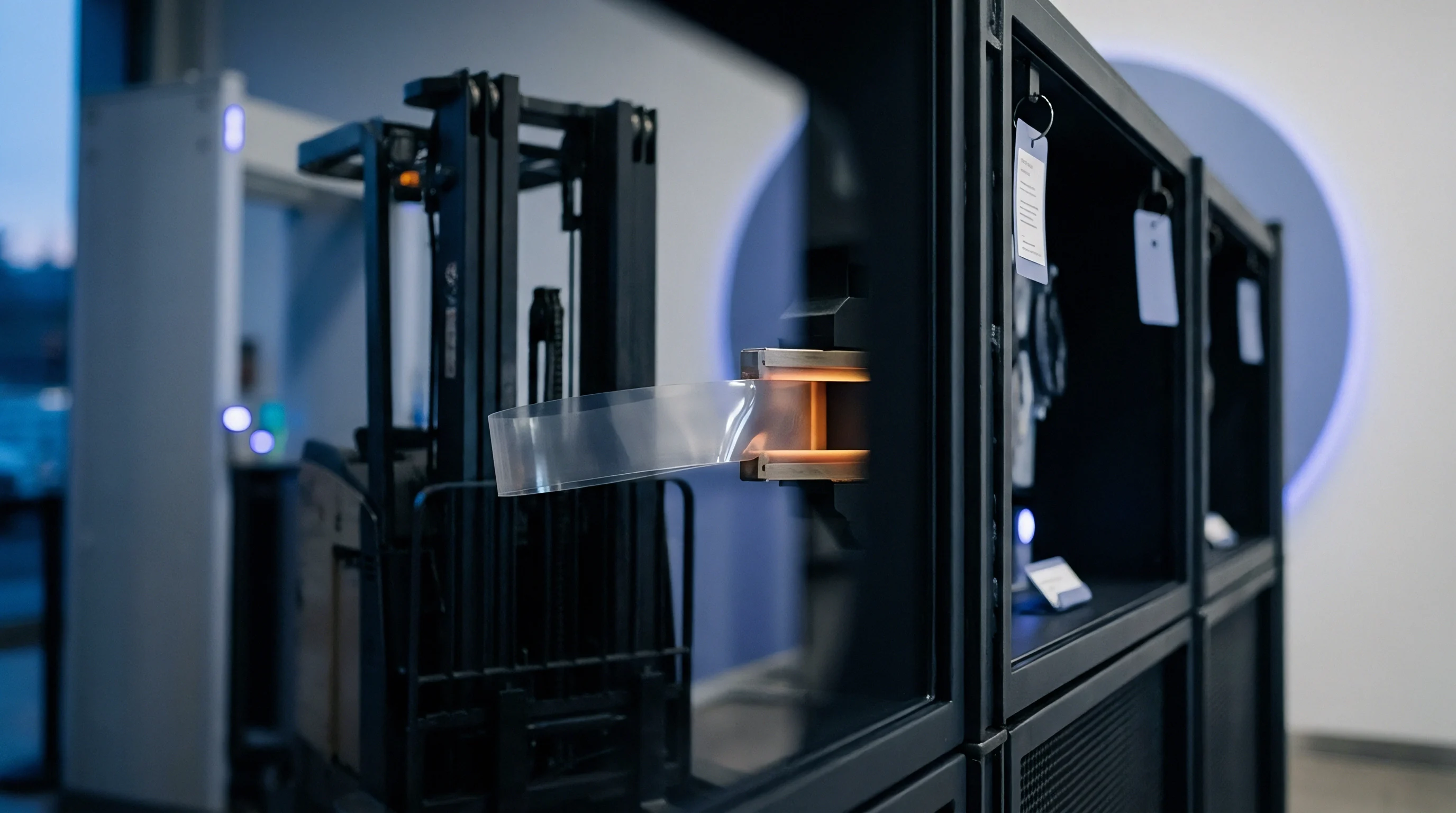
Laboratory assessment of polyolefin flake quality relies on precise thermal and physical protocols to isolate material degradation from environmental variables. Flake samples require drying and homogeneous sampling before charging the barrel of an extrusion plastometer. Non-uniform flake size leads to erratic packing inside the bore, introducing air pockets that cause false flow rate spikes.
ASTM D1238 and ISO 1133-1 define the barrel diameter as 9.550 millimeters with a die orifice diameter of 2.095 millimeters.
Temperature stability along the barrel wall must remain within plus or minus 0.2 degrees Celsius of the specified setpoint. A one-degree elevation in melt temperature accelerates local shear rate and alters measured flow rates by three to five percent depending on the activation energy of the specific resin grade. The technician cuts extruded strand segments at precise time intervals using automatic timers to achieve repeatability within two percent coefficient of variation.
Is Multi-Weight Flow Testing Superior to Single-Point Rheology?
Single-point melt index testing fails to expose cross-contamination and non-linear degradation profiles in recycled polyolefins. Multi-weight extrusion plastometry applies consecutive loads, such as 2.16 kg, 5 kg, and 21.6 kg, to the same sample charge inside the barrel. This approach generates a three-point shear stress versus shear rate plot in minutes, giving compounders actionable data without requiring an expensive rotational rheometer.
High-load melt index values highlight gel formation and high mass fractions that standard low-load tests miss completely.
Isothermal Differential Scanning Calorimetry and Antioxidant Depletion
Oxidative Induction Time testing measures the reserve of active primary and secondary antioxidants remaining within recycled flake stock. ISO 11357-6 and ASTM D3895 specify heating a flake sample in an aluminum crucible under nitrogen purge to an isothermal temperature, typically 200 degrees Celsius for polypropylene or 190 degrees Celsius for polyethylene. Once thermal equilibrium is reached, the purge gas switches instantaneously to pure oxygen at a flow rate of 50 milliliters per minute.
An Oxidative Induction Time below ten minutes at 200 degrees Celsius indicates severe antioxidant depletion, leaving the polymer unprotected during subsequent extrusion runs.
The time elapsed between oxygen exposure and the onset of exothermic oxidation defines the Oxidative Induction Time value. Virgin polyolefin compounds stabilized for long-term outdoor service display values exceeding 60 minutes. Recycled post-consumer flakes frequently land between 2 and 15 minutes.
This drastic drop warns the compounding engineer that immediate antioxidant re-fortification is required during processing to prevent rapid backbone breakdown.
- Purge the differential scanning calorimeter sample chamber with high-purity nitrogen gas for five minutes at a flow rate of 50 milliliters per minute.
- Heat the encapsulated polyolefin flake specimen at a controlled ramp rate of 20 degrees Celsius per minute to the target isothermal test temperature.
- Hold the specimen at the isothermal test temperature under nitrogen purge for five minutes to achieve complete thermal stabilization.
- Switch the purge gas valve instantly from nitrogen to pure oxygen gas maintaining identical flow rate parameters.
- Record the exothermic heat flow curve continuously until the oxidation inflection point registers a sharp upward slope.
- Calculate the time interval from oxygen introduction to the tangent intersection point of the exothermic oxidation curve to determine the Oxidative Induction Time in minutes.
Skipping isothermal verification before running high-temperature melt processing leads to unexpected thermal degradation inside the barrel, generating severe off-spec material batches that fail field stress-crack requirements.

Impurity
Cross-Polymer Contamination and Particulate Inclusions
Recycled polyolefin streams rarely contain a single pure polymer phase. Cross-contamination between polypropylene and polyethylene occurs routinely in wash-and-float recycling plants due to overlapping density distributions. A polypropylene flake lot containing three percent polyethylene develops a immiscible two-phase morphology upon melt blending.
Droplets of the minor polyethylene phase act as stress concentration sites within the polypropylene matrix, destroying notched Izod impact resistance.
Polyvinyl chloride contamination represents a destructive threat to processing hardware and polymer stability. At polyolefin processing temperatures between 190 and 230 degrees Celsius, trace polyvinyl chloride flakes undergo thermal dehydrochlorination, releasing corrosive hydrogen chloride gas. Hydrochloric acid strips primary phenolic antioxidants, attacks barrel metals, and catalyzes radical formation in the polyolefin phase.
Non-melting particulate inclusions, including PET, cellulose, aluminum foil, and silica sand, plug melt filters and create micro-voids in finished part walls.
| Contaminant / Defect | Test Method Standard | Analytical Technique | Detection Threshold | Failure Mode Impact |
|---|---|---|---|---|
| Polyvinyl Chloride (PVC) | ASTM E1252 / Beilstein | FTIR Spectroscopy / Micro-XRF | 50 ppm (0.005%) | Corrosion, AO neutralization, black specs |
| PET Inclusions | ISO 11357-3 DSC | Differential Scanning Calorimetry | 0.10 weight percent | Melt filter plugging, stress risers |
| Cross-Polymer (PE in PP) | ISO 11357-3 DSC | Enthalpy Melting Peak Integration | 0.50 weight percent | Impact strength collapse, delamination |
| Moisture / Volatiles | ASTM D6980 / Karl Fischer | Loss on Drying / Coulometric Titration | 100 ppm (0.01%) | Splay, surface foaming, hydrolytic voids |
| Heavy Metals / Catalysts | ISO 17025 ICP-OES | Inductively Coupled Plasma | 1 ppm | Accelerated auto-oxidation loop |
Volatile Organic Compounds and Thermal Deaeration
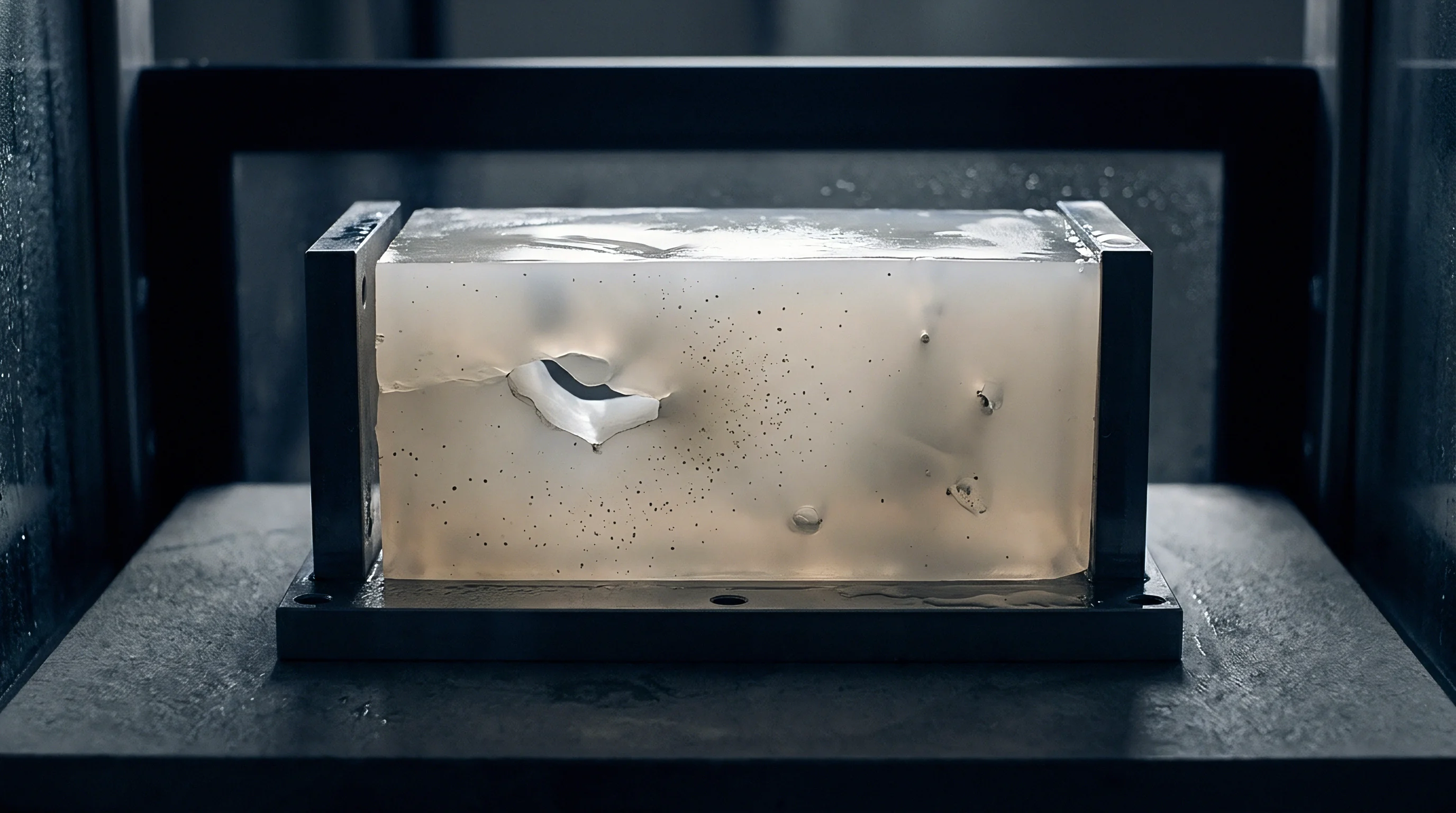
Residual absorbed compounds within post-consumer polyolefin flakes volatilize inside the extrusion barrel, generating gas pockets that ruin part aesthetics and structural density. Fatty acids, printing ink solvents, fragrance molecules, and degradation byproducts like acrolein vaporize under heat and shear. If unvented, these trapped gases create internal voids and severe splay marks on injection-molded surfaces.
- Hydrolytic degradation markers display as ester or amide carbonyl absorption bands between 1710 and 1740 inverse centimeters during Fourier-transform infrared spectroscopy analysis of washed flake samples.
- Vinyl group accumulation indicates secondary chain cleavage mechanisms occurring at terminal alkene locations along the polymer backbone.
- Carbonyl index elevation quantifies the total extent of photo-oxidation exposure suffered by the plastic material during its prior outdoor exposure cycle.
- Particulate char counts quantify thermal breakdown of printing inks and paper labels that survived the flotation wash process step.
The supplier claimed the lot met all purity guidelines because the bulk wash process passed standard gravimetric float tests.


Stabilization

Primary and Secondary Antioxidant Re-Fortification
Restoring thermal stability to degraded polyolefin flake requires a balanced, multi-component additive system. Primary antioxidants, specifically sterically hindered phenols, act as free radical scavengers by donating hydrogen atoms to peroxy and alkoxy radicals. This intervention halts the self-propagating auto-oxidation cycle.
Secondary antioxidants, typically organophosphites or thioethers, act as hydroperoxide decomposers. They convert reactive hydroperoxide species into inert alcohols, preventing their breakdown into aggressive free radicals.
Combining a hindered phenol with an organophosphite in a one-to-two ratio produces a synergistic stabilizing effect during melt processing.
A typical re-fortification package adds 0.1 to 0.3 weight percent of a high molecular weight hindered phenol alongside 0.2 to 0.5 weight percent of a hydrolytically stable organophosphite during re-compounding. Hindered amine light stabilizers are incorporated simultaneously if the downstream application requires weatherability. Without secondary phosphites, primary antioxidants consume rapidly during the first pass through the compounding extruder, leaving the resin unprotected during final part conversion.
Peroxide Modification and Controlled Rheology
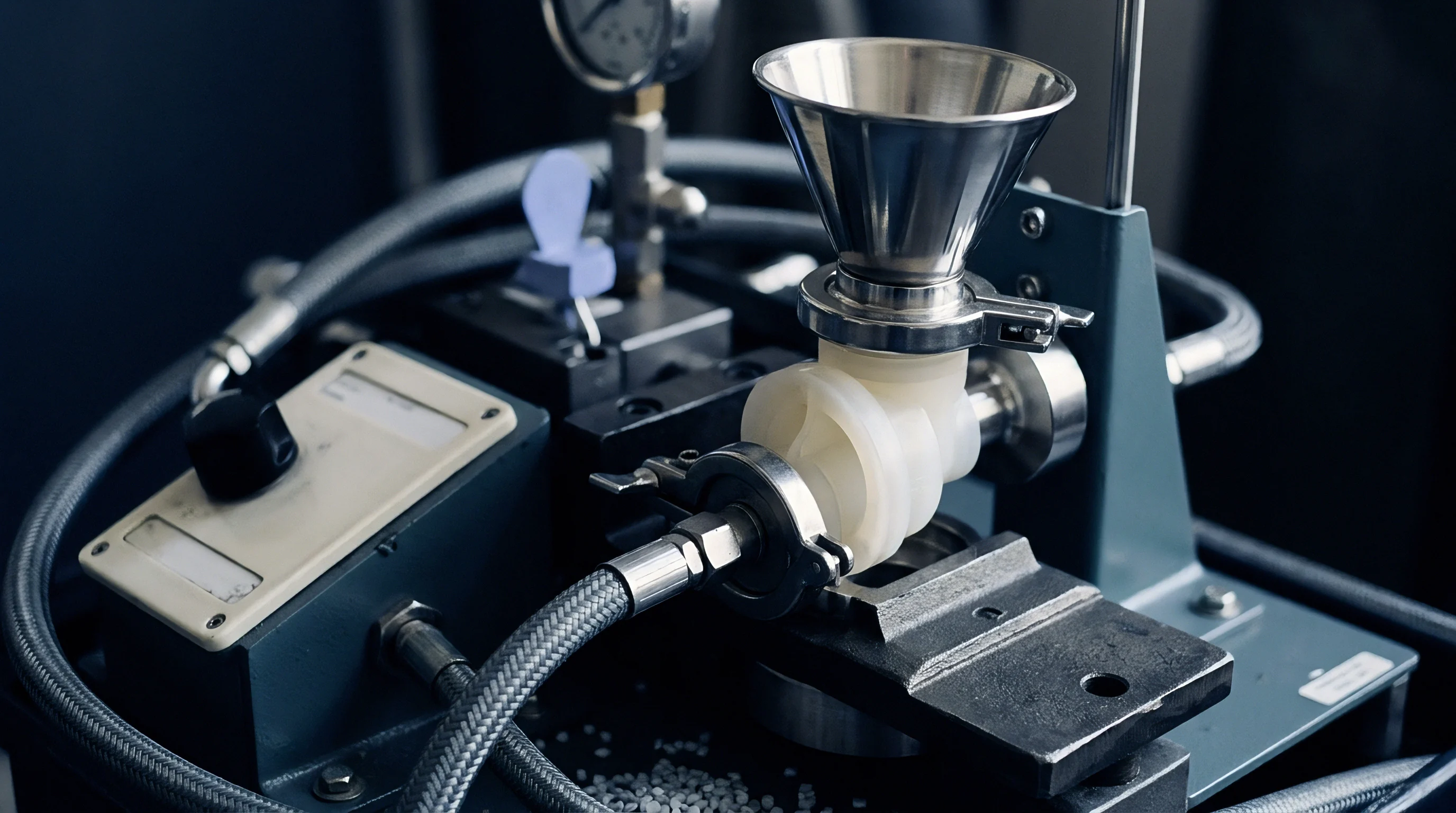
Broad melt flow rate distributions in post-consumer polypropylene flake lots present processing challenges for thin-wall injection molding. Compounders use organic peroxides, such as 2,5-dimethyl-2,5-di(tert-butylperoxy)hexane, to perform controlled rheology processing. Added at micro-dose levels ranging from 100 to 1000 parts per million, peroxides decompose thermally inside the barrel, generating radicals that selectively cleave the longest polymer chains.
- Assess incoming flake melt flow rate baseline and establish the target final melt flow index needed for downstream conversion equipment.
- Select an organic peroxide masterbatch with a half-life matching the barrel residence time profile at the chosen melt processing temperature.
- Dose primary and secondary antioxidant additives downstream of the peroxide reaction zone to avoid premature peroxide scavenging.
- Verify melt flow index stability and molecular weight distribution using high-load melt index ratios across the production run.
The contract standard specifies that the compounder shall supply a certificate of analysis confirming a minimum Oxidative Induction Time of thirty minutes measured at 200 degrees Celsius under ISO 11357-6 for every delivered lot.

Specification
Contractual Acceptance Windows and Landed Cost Arithmetic
Procuring recycled polyolefin flake requires tight specifications to prevent off-spec shipments from disrupting compounding operations. The buyer establishes acceptable variance windows around target melt flow rate, density, moisture content, and contamination limits. A loose specification allows wide lot-to-lot property drift, forcing compounding machine operators to constantly adjust barrel temperatures, injection pressures, and cycle times.
Evaluating feedstock quotes based on raw price per metric ton ignores the substantial costs associated with processing low-grade materials. Off-spec flake with variable melt index increases scrap rates, causes mold flash, accelerates tool wear, and requires higher dosages of costly stabilizer additives. The true landed cost must account for yield losses during melt filtration, energy consumption during devolatilization, and additive re-fortification expense.
| Quality Parameter | Contractual Specification | Measured Lot Value | Commercial Action / Price Adjustment |
|---|---|---|---|
| Melt Flow Rate Drift (PP) | 12.0 ± 1.5 g/10 min (230°C/2.16kg) | 16.5 g/10 min | 5% price discount per g/10 min deviation above tolerance band |
| Oxidative Induction Time | ≥ 15.0 minutes at 200°C | 6.5 minutes | Re-fortification penalty fee applied: $45 per metric ton |
| Moisture Content | ≤ 0.05 weight percent | 0.18 weight percent | Drying energy chargeback plus 1.5% weight deduction |
| PVC Contamination | ≤ 50 ppm | 180 ppm | Immediate lot rejection; supplier pays return freight |
| Non-Melting Solids | ≤ 0.02 weight percent | 0.08 weight percent | Filter screen pack replacement surcharge: $25 per ton |

Worked Lot Penalty and Value Adjustment Calculation
Consider a purchase order for a 22-metric-ton shipping container of post-consumer polypropylene flake, priced at a baseline contract rate of $1,100 per metric ton delivered. The purchase agreement specifies an MFR of 10.0 plus or minus 1.0 g/10 min at 230 degrees Celsius under 2.16 kg load, an OIT minimum of 12.0 minutes at 200 degrees Celsius, and a maximum moisture content of 0.05 percent. Upon arrival at the compounding facility, quality control sampling and lab testing yield an average MFR of 14.2 g/10 min, an OIT of 4.5 minutes, and a moisture content of 0.12 percent.
The MFR deviation of 3.2 g/10 min beyond the upper tolerance limit of 11.0 g/10 min incurs a contractual penalty of 4 percent per unit of excess drift, totaling an 12.8 percent price reduction on the base material value. The deficient OIT value requires the compounder to add an extra 0.20 weight percent of secondary phosphite stabilizer during compounding, adding an unbudgeted additive cost of $38.00 per metric ton. The excess moisture content triggers a standard 1.0 percent weight deduction to account for water weight, along with a flat $15.00 per ton pre-drying energy chargeback.
Calculating the total commercial adjustment yields a price discount of $140.80 per ton for MFR drift, an additive surcharge deduction of $38.00 per ton, a moisture weight credit of $11.00 per ton, and a drying fee of $15.00 per ton. The original delivered cost of $24,200 for the 22-ton shipment drops to an adjusted invoice value of $19,694.40. If the PVC content test had exceeded 50 ppm instead of registering zero, the buyer would have exercised the total rejection clause, returning the container at the supplier’s expense to avoid catastrophic extrusion equipment corrosion.