Isothermal versus Stepped Temperature Vaporization Coulometry in Polyester Analysis
Stepped thermal vaporization coulometry separates surface and internal moisture from degradation water in polyesters to eliminate false high moisture readings.
Vial
Water trapped within polyethylene terephthalate pellets triggers rapid chain scission during injection molding when molten temperatures exceed two hundred and sixty degrees Celsius. Standard moisture determination in insoluble polyesters relies on thermal vaporization Karl Fischer coulometry. Direct titration inside the reagent vessel fails because solid polyester matrixes do not dissolve in methanol or carbon-carbonate solvent mixtures at ambient temperatures.
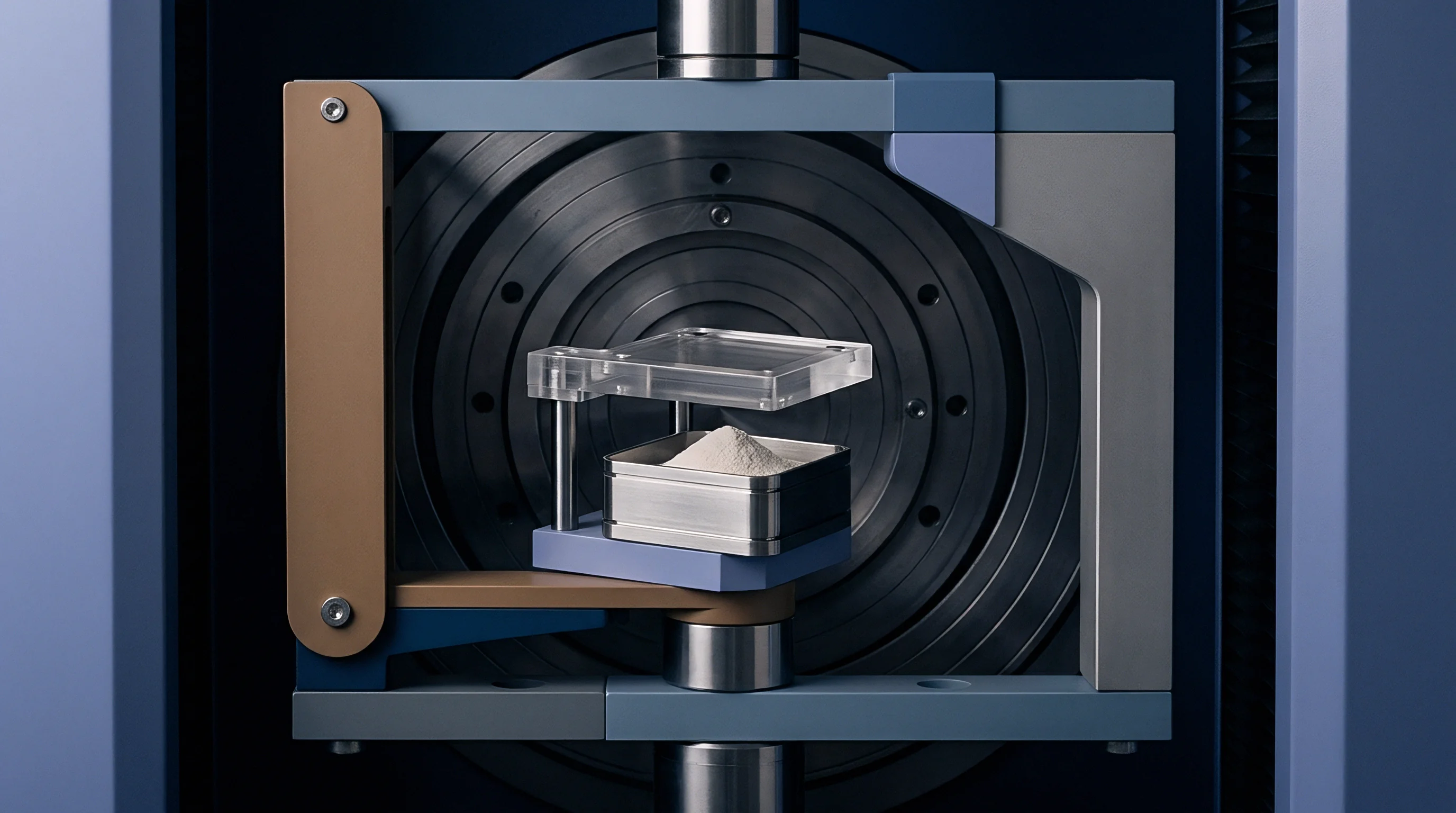
Placing a solid sample into a heated extraction vial releases volatile moisture into a dry carrier gas stream, which delivers the water vapor to a coulometric cell for electrochemical quantification.
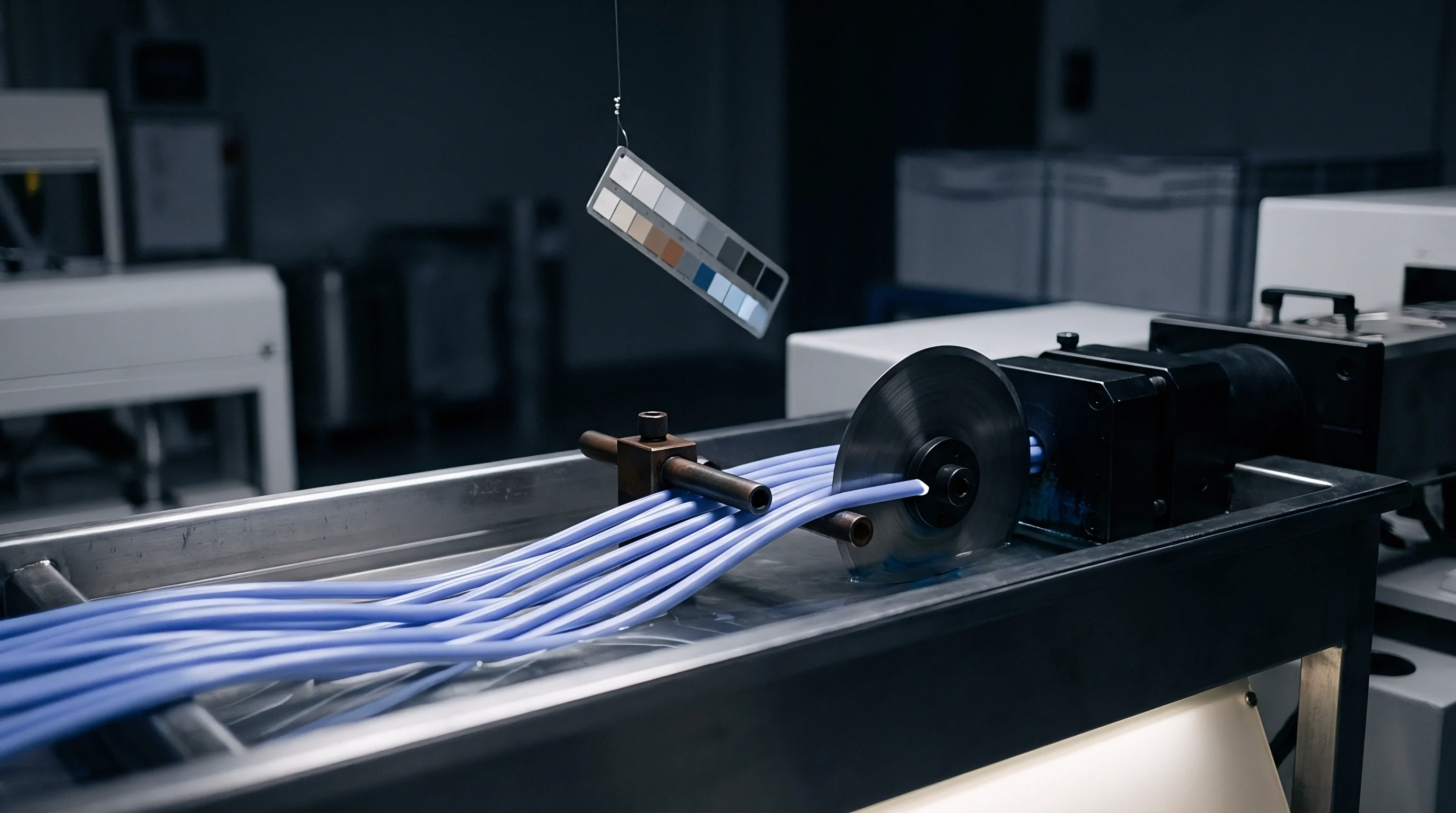
Polyester resins exhibit two primary water sorption states within the solid pellet. Hydrophobic ester backbones limit bulk water solubility, yet polar ester carbonyl groups hold adsorbed surface moisture and absorbed internal matrix water. Surface moisture desorbs rapidly at lower temperatures, whereas matrix moisture requires diffusion through the solid polymer before reaching the pellet surface.
Precise quantification determines whether a resin lot meets the processing limit of fifty parts per million for polyethylene terephthalate or two hundred parts per million for polybutylene terephthalate.
Polyethylene terephthalate pellets held at one hundred and seventy degrees Celsius release surface moisture within three minutes while core water diffuses out over twelve minutes.
Moisture Binding States in Polyethylene Terephthalate
Pellets stored under ambient conditions absorb surface humidity while retaining structural water deeper inside the amorphous regions of the polymer matrix. Surface water occupies low-energy binding sites on the pellet wall, migrating into the gas phase almost immediately upon exposure to heat. Matrix water remains bound within the free volume of the amorphous polymer chains.
Molecular diffusion rates govern the movement of matrix water toward the pellet boundaries. Heating the polymer above its glass transition temperature increases chain mobility, accelerating matrix water migration into the dry carrier gas flow.
Moisture breaks polyester chains. Hydrolysis ruins melt strength. Excess water during melt extrusion causes catastrophic intrinsic viscosity loss, reducing mechanical impact resistance and structural clarity in blow-molded preforms.
Testing methods must differentiate between water that desorbs under standard drying conditions and water produced by elevated temperature degradation. Isothermal testing applies a single fixed temperature to evaporate water, whereas stepped temperature vaporization ramps through incremental thermal plateaus to separate volatile fractions based on desorption kinetics.
Maintaining low baseline drift and using dry carrier gas prevents environmental ambient moisture from inflating true pellet water values.
Desorption
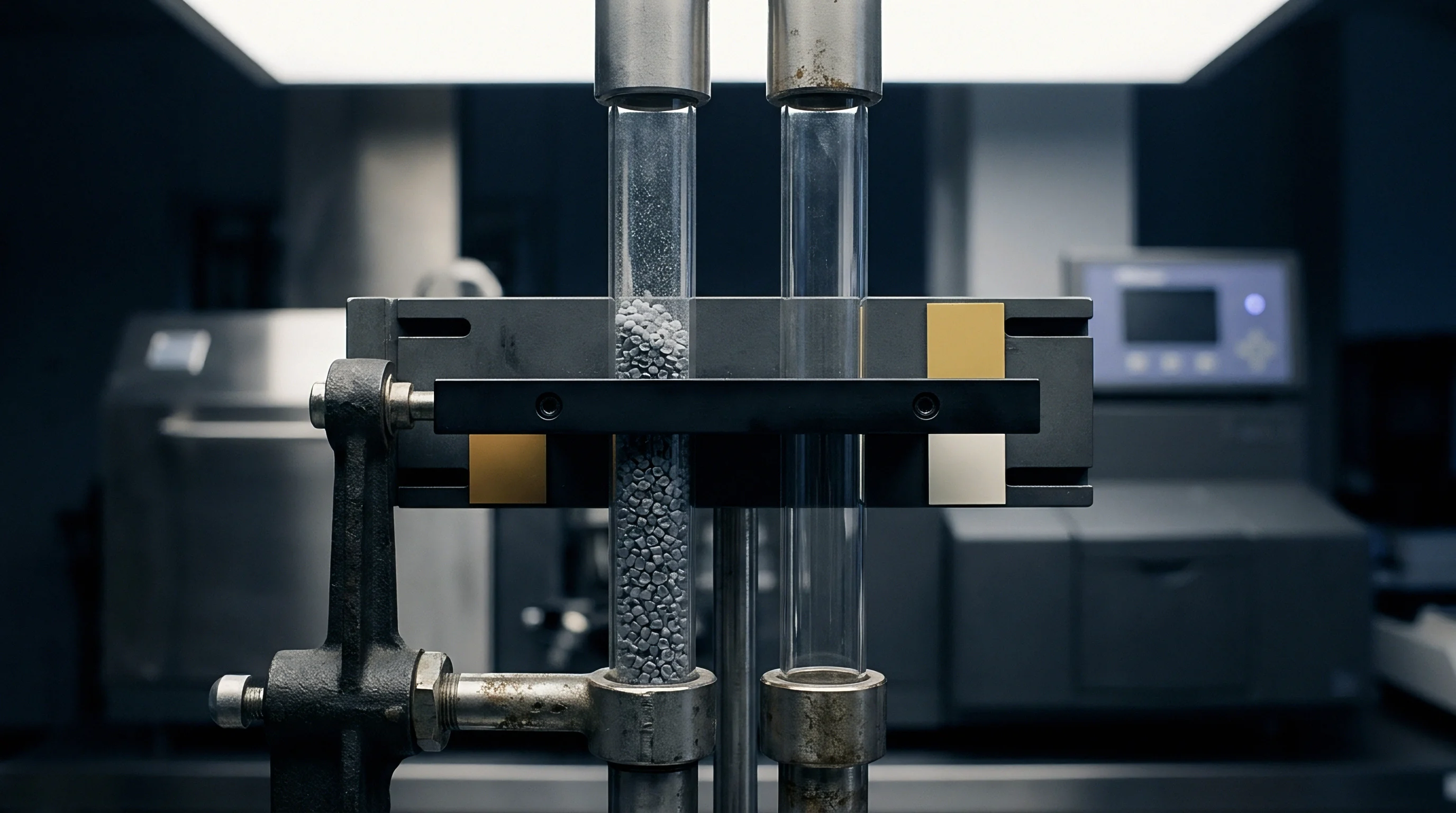
Isothermal heating maintains a fixed oven cavity temperature between one hundred and sixty and two hundred degrees Celsius throughout the titration run. Solid samples experience a rapid thermal jump upon insertion into the preheated heating zone. Surface moisture and core matrix water desorb simultaneously into the nitrogen carrier stream.
The coulometric cell titrates the evolving water mass continuously until the electrochemical generation rate drops back to the background baseline drift rate.
Isothermal Heating Profile Mechanics
A constant thermal input forces rapid moisture release from surface and core sites simultaneously into the carrier gas stream. The single-temperature approach maximizes laboratory sample throughput by completing titrations within eight to twelve minutes per vial. Thermal selection remains bounded by the melting point and degradation onset of the polymer.
Heating polyethylene terephthalate at one hundred and eighty degrees Celsius evaporates water efficiently while remaining safely below the temperature threshold where thermal cleavage begins.
Isothermal vaporization works well for routine quality control of virgin resin with known thermal stability. Carrier gas purity is vital. Nitrogen carrying under two parts per million water content sweeps the sample chamber at a constant flow rate of one hundred to one hundred and fifty milliliters per minute.
If the temperature is selected too low, matrix diffusion proceeds slowly, creating prolonged tailing on the titration curve that inflates analysis time. If the setpoint is too high, side reactions occur, generating artificial water that skews results high.
Stepped Temperature Profile Execution
Incrementing the sample cavity in discreet thermal intervals creates distinct extraction windows for separate volatile fractions. A representative stepped profile applies an initial holding stage at one hundred and ten degrees Celsius for five minutes to drive off adsorbed surface water and volatile processing additives. The oven temperature then ramps at twenty degrees per minute to a second plateau of one hundred and eighty degrees Celsius, holding until matrix water desorbs completely.
A third elevated step to two hundred and thirty degrees Celsius isolates high-temperature degradation volatiles.
| Polyester Grade | Test Profile Type | Extraction Setpoints | Analysis Time | Moisture Recovery Accuracy |
|---|---|---|---|---|
| Virgin Bottle PET | Isothermal | 170 C Constant | 10 Minutes | 98.5 Percent Matrix Water |
| Virgin Bottle PET | Stepped Ramp | 100 C / 170 C / 220 C | 22 Minutes | 99.2 Percent Separated Water |
| Recycled PET Flake | Isothermal | 180 C Constant | 12 Minutes | 114.0 Percent Overreported |
| Recycled PET Flake | Stepped Ramp | 100 C / 160 C / 210 C | 25 Minutes | 98.8 Percent True Water |
| PBT Compound | Isothermal | 160 C Constant | 8 Minutes | 97.8 Percent Matrix Water |
| PBT Compound | Stepped Ramp | 90 C / 160 C / 200 C | 18 Minutes | 99.1 Percent Separated Water |
Stepped vaporization differentiates between physical moisture and chemical water generated through thermal decomposition. Recycled polyester flakes often contain organic contaminants, residual washing surfactants, and lower molecular weight oligomers. Isothermal heating blends all volatile signals into a single coulometric peak, making it impossible to identify parasitic chemical reactions.
Stepped thermal desorption separates these signals cleanly across the temperature domain.
Carrier gas flow rates set too high sweep unevaporated moisture past the titration cell before complete coulometric absorption occurs.
- Oven Overheating drives thermal cleavage of ester bonds, generating secondary water that skews total coulometric counts upward.
- Insufficient Hold Times leave core structural moisture unevaporated inside larger pellets, underreporting true internal moisture content.
- Excessive Carrier Flow transports volatile moisture past the titration cell before complete absorption in the anolyte solution occurs.
- Inadequate Vial Sealing introduces ambient humidity into the heating chamber during sample transfer, producing irreproducible baseline spikes.
Resin suppliers frequently assert that elevated Karl Fischer titration counts stem entirely from sample handling exposure rather than internal condensation water within the pellet matrix.

Artifacts
Thermal decomposition of the polyester backbone during extended heating cycles generates secondary gaseous species alongside entrained moisture. Polyesters contain terminal carboxyl and hydroxyl groups capable of undergoing solid-state esterification at temperatures above one hundred and eighty degrees Celsius. This polycondensation reaction forms a new ester linkage while releasing one molecule of water for every reaction event.
In isothermal testing at elevated temperatures, this reaction-generated water mixes directly with absorbed physical moisture, yielding artificially elevated water concentration numbers.
What Temperature Threshold Triggers Polyester Matrix Decarboxylation?
Ester linkages undergo thermal cleavage above two hundred and twenty degrees Celsius, releasing non-aqueous degradation compounds into the titration cell. Thermal degradation generates carbon dioxide, acetaldehyde in polyethylene terephthalate, and tetrahydrofuran in polybutylene terephthalate. Acetaldehyde interferes with Karl Fischer chemical reagents by reacting with methanol to form acetals, consuming iodine parasitically or producing excess water through side reactions.
Overheating creates water artifacts. Decarboxylation generates parasitic water.
| Temperature Window | Target Volatile Species | Source Mechanism | Titration Cell Impact |
|---|---|---|---|
| 80 C to 120 C | Adsorbed Surface Water | Environmental Exposure | Quantitative Iodine Consumption |
| 150 C to 190 C | Bound Matrix Moisture | Internal Diffusion | Quantitative Iodine Consumption |
| 195 C to 220 C | Esterification Water | Solid-State Polycondensation | False Positive Moisture Inflation |
| Above 225 C | Acetaldehyde and CO2 | Polymer Chain Decarboxylation | Reagent Depletion and Tailing |
Selecting sulfur dioxide-free anolyte formulations or specialized aldehyde-approved reagents prevents organic interference side reactions. Reagent depletion skews baseline drift. Standard Karl Fischer reagents containing methanol promote acetal formation when acetaldehyde concentrations rise inside the cell.
Proprietary reagents replaced with ethanol or long-chain alcohol bases neutralize aldehyde reactivity, preserving stoichiometric iodine consumption for true water molecules.
Compliance with ISO 15512 Method B2 prevents false moisture inflation by isolating degradation water from absorbed environmental humidity.
Interfering Degradation Volatiles
Acetaldehyde, oligomeric vapors, and low molecular weight esters swept into the Karl Fischer cell alter reagent stoichiometry. Oligomers condense inside the cold transfer tubing leading from the thermal oven to the titration vessel. This condensation causes physical blockages, reducing carrier gas flow and causing memory effects where residual moisture bleeds into subsequent analytical runs.
Heating the carrier transport line to one hundred and ten degrees Celsius prevents oligomer condensation and maintains constant transport velocity.
- Baseline Drift Log recording carrier gas moisture contribution before and after each sample vaporization run.
- Thermal Desorption Curve displaying moisture evolution rate as a function of temperature step and ramp time.
- Carrier Gas Purity Certificate confirming moisture concentration remains under two parts per million at the oven inlet.
- Titration Cell Voltage Chart confirming anode reagent responsiveness and absence of side-reaction contamination.
Misinterpreting polyester decarboxylation water as absorbed moisture leads to excessive oven temperature settings, ruined baseline stability, and rejected resin lots that meet processing standards.

Bench
Precision moisture measurement relies on carrier gas moisture levels remaining strictly under two parts per million. Analytical instruments set up inside testing laboratories must operate with dry nitrogen or argon supply lines routed through dual-stage molecular sieve drying towers. Ambient room humidity leaking into carrier gas transport lines generates excessive baseline drift, obscuring small coulometric current peaks from trace moisture samples.
Carrier Gas Flow and Purification Parameters
High purity nitrogen dry gas passing through molecular sieve columns prevents ambient moisture contamination of the titration vessel. Flow rates must remain stabilized at one hundred and twenty milliliters per minute using electronic mass flow controllers. Flow fluctuations alter gas residence time inside the sample vial, shifting the thermal desorption kinetics and changing the gas pressure over the coulometric cell anode frit.
- Weigh two grams of polyester pellets into a clean headspace vial inside a dry nitrogen purge box.
- Crimp the aluminum cap with a PTFE-coated silicone septum to isolate the sample from room air.
- Load the sealed vial into the vaporization oven and establish carrier gas flow at one hundred milliliters per minute.
- Initiate the thermal ramp program from one hundred to two hundred and twenty degrees Celsius while tracking cell current.
- Integration stops when the drift rate returns to the baseline carrier gas background value.
Nitrogen carries sample headspace vapor. Anode reactions consume iodine continuously. Coulometric detection measures the electrical current required to generate iodine electrochemically at the anode according to Faraday’s law.
One mole of water reacts with one mole of iodine, corresponding to 10.71 coulombs of electricity per milligram of water. Because coulometry measures absolute electrical charge, calibration relies on fundamental physical constants rather than chemical liquid standards.
Verification of instrument accuracy uses sodium tartrate dihydrate standards containing exactly 15.66 percent water by mass. Heating sodium tartrate dihydrate to one hundred and fifty degrees Celsius releases stoichiometric crystal water without organic side reactions. Regular checks with solid tartrate standards verify oven heating accuracy and carrier gas transport efficiency.
Direct micro-liter water injections into the titration cell verify electrolyte responsiveness but bypass the heating oven, failing to audit sample vial gas transport line efficiency.
Adopting ISO 15512 Method B2 in supply contracts replaces single-temperature testing with stepped vaporization profiles, binding both buyer and seller to standardized desorption ramps.
Ledger
Resin specifications for bottle-grade polyethylene terephthalate mandate strict water content limits below fifty parts per million. Inaccurate moisture measurements impose severe financial costs on melt processing operations. Inaccurate testing increases scrap rates.
Processing dry pellets protects intrinsic viscosity. When a testing lab reports false elevated moisture content due to thermal degradation water artifacts, processing plants run hopper dryers longer and at higher temperatures than necessary, wasting electrical power and degrading resin color.
False elevated moisture figures force unnecessary drying hours that degrade resin intrinsic viscosity and inflate utility costs.
Procurement Verification and Drying Energy Calculations
Assume a twenty-five tonne shipment of bottle-grade polyethylene terephthalate pellets delivered at a true physical moisture content of forty parts per million. If an uncalibrated isothermal Karl Fischer test performed at two hundred and ten degrees Celsius reports an apparent moisture content of one hundred and ten parts per million due to polycondensation water release, plant operators extend dryer residence time from four hours to eight hours at one hundred and seventy degrees Celsius. Operating a five hundred kilogram per hour dehumidifying hopper dryer consumes 0.06 kilowatt-hours per kilogram of processed resin.
Doubling the drying residence time adds three hundred kilowatt-hours of energy consumption per tonne of polymer, adding forty-five dollars per tonne in utility costs under standard industrial power tariffs. Across the entire twenty-five tonne container, false moisture readings generate eleven hundred and twenty-five dollars in direct electrical waste while cutting extruder production capacity in half.
Accepting wet resin due to false low moisture measurements causes far greater financial loss. If an isothermal test conducted at too low a temperature underestimates core matrix moisture, resin entering the extruder barrel at one hundred and fifty parts per million moisture undergoes severe hydrolytic cleavage. Polymer intrinsic viscosity drops from 0.80 deciliters per gram down to 0.68 deciliters per gram within the melt zone.
The resulting blow-molded bottles fail top-load stress tests, causing container wall collapse on filling lines and forcing the rejection of entire production shifts costing tens of thousands of dollars.
Contractual Quality Specifications
Raw material purchase agreements must explicitly define the analytical test method, sample mass, gas flow rate, and heating profile used to certify incoming pellet moisture. Citing generic Karl Fischer testing leaves room for procedural disputes between buyer and seller. Procurement contracts specifying ISO 15512 Method B2 with a stepped temperature profile of one hundred degrees Celsius surface hold and one hundred and seventy-five degrees Celsius matrix hold establish unambiguous technical parameters.
Specifying stepped vaporization coulometry protects resin buyers against sample degradation artifacts while providing resin compounders with repeatable, objective proof of pellet dryness.
Detailed coulometric thermal profiling provides the technical evidence needed to settle moisture disputes, refine hopper dryer settings, and preserve polyester mechanical integrity throughout melt processing.