Differential Scanning Calorimetry Protocol for Recycled Polyethylene Polypropylene Blends
Second-heat differential scanning calorimetry enthalpy integration at 10 K/min isolates recycled PE and PP fractions against reference crystalline values.

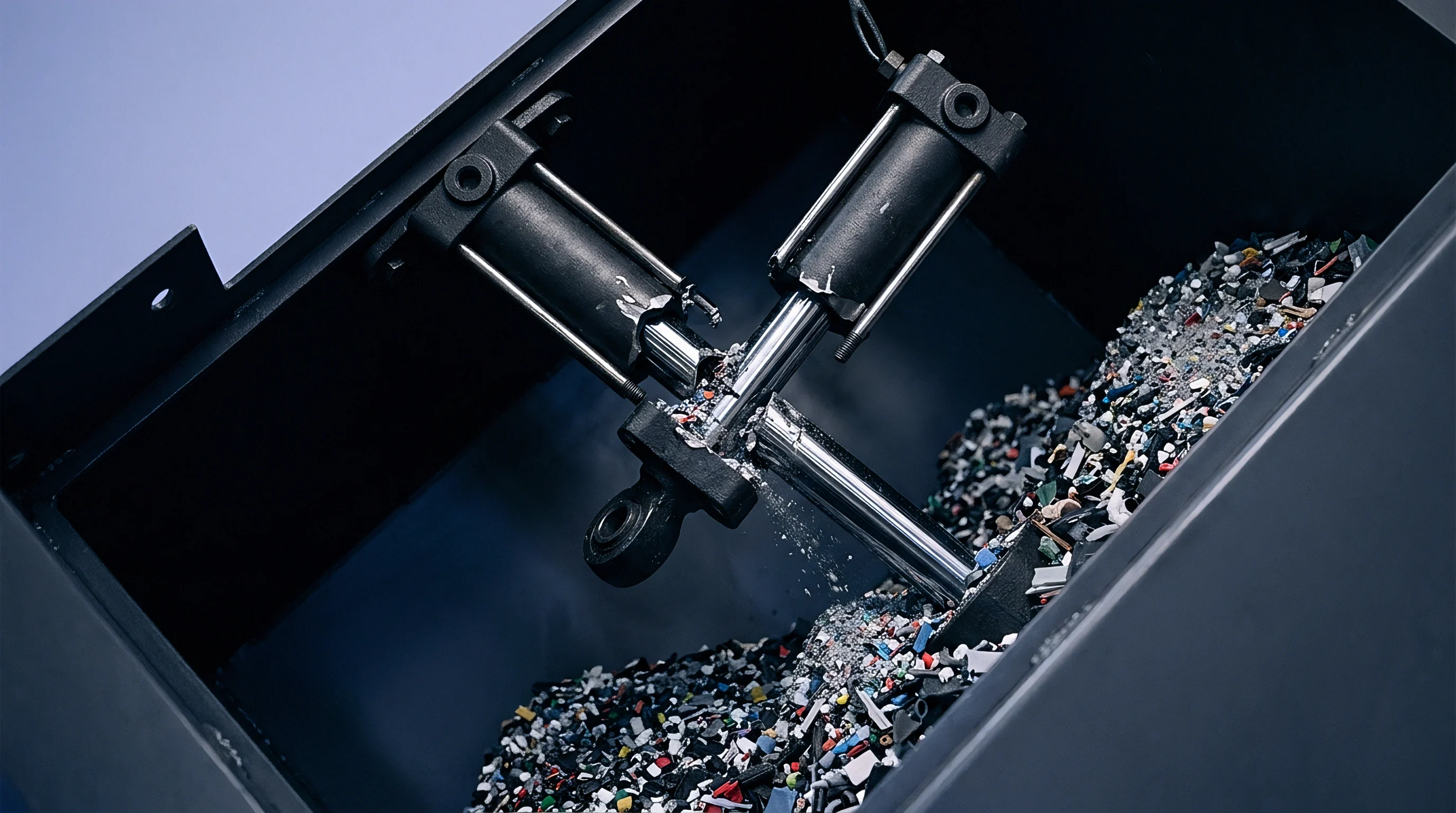
Pan
Precision measurement of recycled polyolefin blends begins at the contact boundary between the polymer specimen and the thermal sensor. Pellets sliced from post-consumer recyclate carry microscopic voids, surface contamination, and uneven shear histories from the granulator. Analysts slice thin discs between 0.3 mm and 0.5 mm in thickness perpendicular to the pellet extrusion axis using a fresh surgical blade.
Razor blades distort pellet crystal structures. Slicing with dull tooling induces local plastic deformation and premature cold crystallization along the cut edges. Specimen thickness alters heat transfer.
A specimen mass between 5.0 mg and 8.0 mg limits thermal lag across the polyolefin disc to less than 0.4 °C at a 10 °C/min scan rate.
Specimen mass dictates the balance between signal resolution and thermal gradient distortion inside the cell. When an incoming lot contains post-consumer fractions of unknown origin, technicians often overload pans to amplify weak melting transitions from trace polypropylene contaminants. Masses above 12.0 mg generate steep temperature gradients between the crucible base and the upper surface of the polymer melt.
High sample mass broadens the apparent melting peak and artificially depresses the recorded onset temperature. A sample mass calibrated between 5.0 mg and 8.0 mg maintains thermal equilibrium across the disc while generating sufficient heat flow amplitude for trace detection down to 0.5 weight percent.
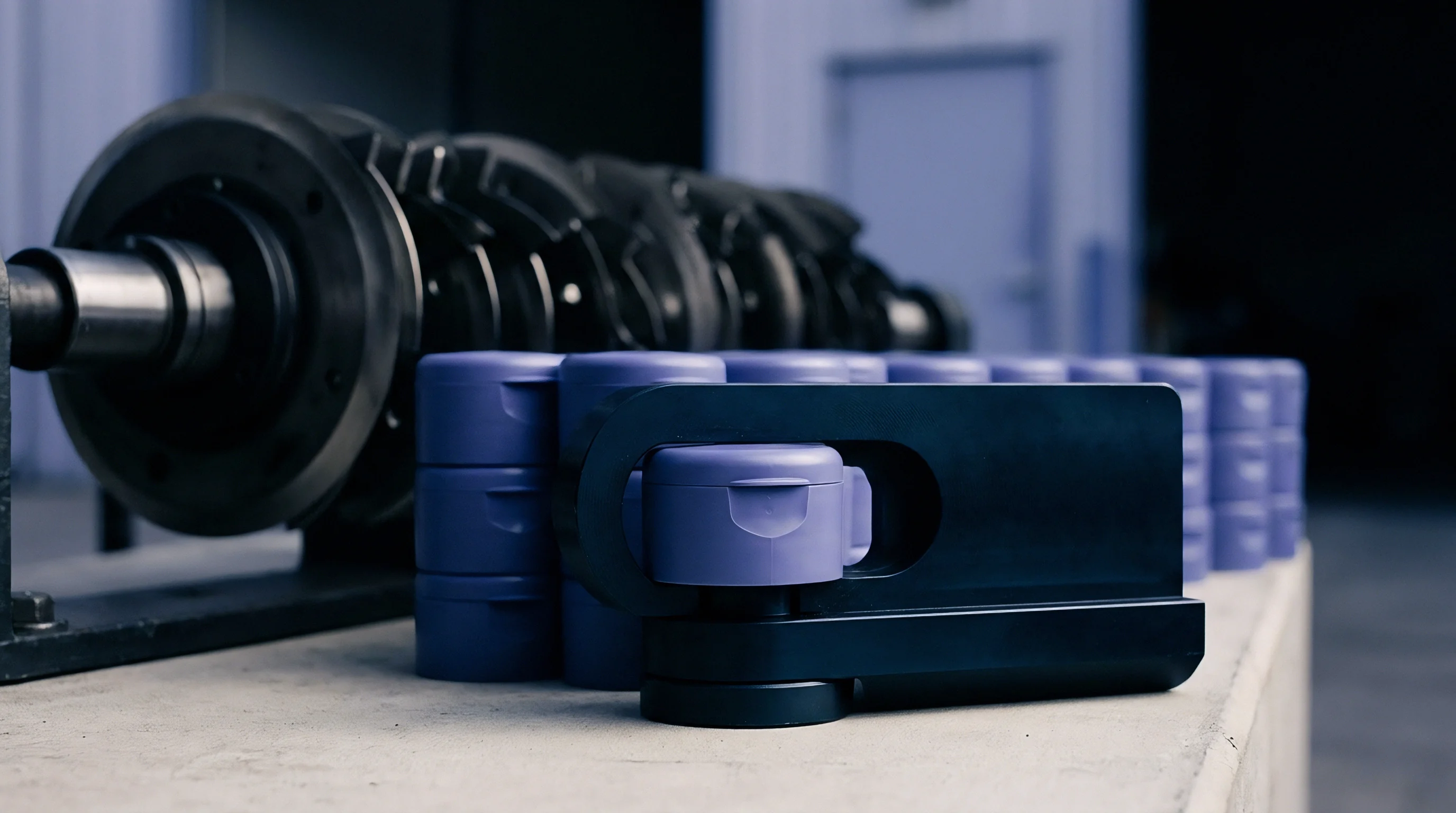
Specimen Geometry and Heat Flow Dynamics
Direct mechanical contact governs the conductance path from the thermoelectric disk to the polymer bulk. Recycled pellets rarely feature planar faces, so technicians press the sliced wafer flat against the base of a standard 40-microliter aluminium pan. High-pressure encapsulation presses crimp the lid down to eliminate internal headspace without perforating the metal.
Moisture vaporises inside sealed aluminium pans. Post-consumer materials frequently absorb moisture, wash-line surfactants, or volatile organic residues during their lifecycle. An unvented pan containing wet recyclate builds internal vapour pressure during the ramp to 200 °C, altering sensor baseline curvature and generating spurious endothermic signals that mimic low-density polyethylene melting peaks.
- Mechanical Wafer Slicing isolates a planar disc from the pellet core using a clean microtome blade to avoid structural deformation.
- Analytical Microbalance Taring records specimen mass to an accuracy of plus or minus 0.01 mg before pan insertion.
- Planar Base Seating presses the sample flat against the pan floor to minimise interfacial thermal resistance.
- Atmospheric Encapsulation Crimping seals the aluminium lid with a uniform downward stroke to prevent mass loss without crushing the rim.
- Vent Hole Piercing introduces a laser-drilled pinhole in the pan lid when processing post-consumer flake lots containing suspected wash residues.

Crucible Selection and Atmosphere Control
Instrument sensors require pristine purge conditions to prevent oxidative crosslinking during high-temperature scans. Dry nitrogen sweeps the furnace clean. A steady 50 mL/min purge of instrument-grade nitrogen containing less than 3 ppm oxygen shields the hydrocarbon chains against thermo-oxidative breakdown at 200 °C. Oxygen ingress into the measurement cavity causes immediate exothermic oxidation of recycled polypropylene, masking the true endothermic melting peak and degrading cell baseline linearity.
Calibration runs use pure indium and tin references encapsulated in the identical pan geometry used for the recyclate specimens.
The reprocessor asserts that peak broadening reflects raw feed heterogeneity and denies any responsibility for thermal transfer resistance inside the test chamber.
Cycle
Direct inspection of raw pellets without thermal pre-treatment yields misleading crystalline signatures. Moulding plants quench injection articles within seconds, freezing high-pressure chain alignment into the solid phase, while blow-moulding converters cool bottle walls slowly under ambient plant air. Thermal history distorts raw pellet melting.
The first heating ramp registers the thermal and mechanical memory imprinted by the prior converter, the pelletizer water bath, and post-consumer storage conditions. Accurate quantification of recycled polyethylene and polypropylene mass fractions depends on wiping this mechanical history clean through a programmed three-stage temperature profile.
Thermal Memory and Isothermal Erasure
Complete crystalline erasure demands an isothermal hold above the equilibrium melting point of the highest-melting component. Polypropylene homopolymer crystalline lamellae survive temperatures up to 168 °C, with persistent crystal nuclei lingering in the molten phase until the bulk reaches 200 °C. The standard protocol heats the specimen from -20 °C to 200 °C at 10 °C/min, followed by an isothermal dwell of five minutes at 200 °C under continuous nitrogen purge. Holding the melt at 200 °C dissolves residual crystalline order without triggering chain scission in unstabilized recycled polyolefins.
Exceeding 220 °C on post-consumer fractions accelerates molecular weight decay and releases volatile degradation products that foul the sensor.
| Cycle Segment | Starting Temp (°C) | Final Temp (°C) | Ramp Rate (°C/min) | Isothermal Hold (min) | Targeted Mechanism |
|---|---|---|---|---|---|
| First Heating | -20 | 200 | 10 | 0 | Thermal memory evaluation and volatile desorption |
| Isothermal Melt | 200 | 200 | 0 | 5 | Lamellar erasure and chain relaxation |
| Controlled Cooling | 200 | -20 | 10 | 3 | Standardized crystal nucleation and phase separation |
| Second Heating | -20 | 200 | 10 | 0 | Equilibrium enthalpy quantification and mass fraction assay |
Fast scanning rates shift peak temperatures. Running temperature ramps at 20 °C/min compresses run times on incoming dock inspections, yet this speed elevates the apparent melting peak of polypropylene by up to 3.5 °C due to instrument response time. Slower heating at 5 °C/min separates trace overlapping shoulders, though it diminishes peak height and drops the signal-to-noise ratio for contaminants present at fractions below 1.0 weight percent.
A uniform ramp rate of 10 °C/min balances peak resolution against baseline stability across both heating runs.
Why Do Cooling Rates Mask Regrind History?
Controlled crystallization during the downward ramp dictates the phase morphology measured during the subsequent test. High cooling rates force polyethylene and polypropylene chains to crystallize under severe non-equilibrium conditions, trapping polyolefin chains at the inter-spherulitic boundaries. Slower cooling isolates the crystalline phases.
When the cell cools at a uniform 10 °C/min, polypropylene nucleates between 115 °C and 125 °C, forming mature spherulites before high-density polyethylene begins solidifying between 114 °C and 118 °C. High cooling rates compress these distinct crystallization exotherms into a single broad peak, concealing the presence of low fractions of linear low-density polyethylene.
Second heating reveals true resin identity. After cooling to -20 °C and holding for three minutes to establish baseline stability, the cell heats to 200 °C at 10 °C/min. This second endotherm yields reproducible melting peaks: linear low-density polyethylene registers between 120 °C and 125 °C, high-density polyethylene peaks sharply between 130 °C and 135 °C, and polypropylene appears cleanly between 160 °C and 165 °C. Quenched samples suppress crystallization.
A controlled cooling pass wipes away the moulder’s mechanical imprint and leaves the pure resin architecture exposed.


Enthalpy
Quantitative determination of post-consumer blend ratios converts integrated endothermic peak areas into component masses using theoretical crystalline constants. The heat absorbed during melting corresponds to the mass fraction of each semi-crystalline phase multiplied by its specific enthalpy of fusion. Pure crystals melt at higher temperatures.
In clean post-consumer streams, the polyethylene fraction encompasses low-density, linear low-density, and high-density variants, while the polypropylene fraction contains isotactic homopolymers and random copolymers. Calculating accurate blend percentages requires establishing rigid baseline boundaries and assigning validated reference values for the pure crystalline states.

Baseline Construction and Mathematical Integration
Baseline selection represents the greatest procedural source of variance in recyclate quantification. Baseline curvature distorts enthalpy integration. Two primary baseline modes dominate current laboratory operations: linear baselines connecting the flat pre-melting and post-melting heat capacity curves, and sigmoidal tangential baselines that track the changing heat capacity of the specimen as it transitions from solid to liquid melt.
Linear baselines underestimate broad tailing areas in branched polyethylene fractions, whereas arbitrary user-drawn curved baselines introduce subjective errors between consecutive test runs.
- Pre-Transition Anchor Definition fixes the integration onset point on the linear heat capacity slope at 60 °C for low-density polyethylene fractions.
- Post-Transition Anchor Definition fixes the return point where heat flow returns to the liquid baseline above 175 °C for polypropylene homopolymers.
- Intermediate Valley Partitioning projects a vertical drop line from the minimum heat flow point between 140 °C and 148 °C to bisect the combined thermogram into discrete polyethylene and polypropylene zones.
- Sigmoidal Heat Capacity Correction offsets the baseline step-change caused by the divergence between solid and liquid polymer specific heat capacities.
Standard specifications set the 100 percent crystalline enthalpy reference value for linear polyethylene at 293 J/g and isotactic polypropylene at 207 J/g.
Theoretical reference values define the denominator of the mass calculation. A value of 293 J/g represents the theoretical heat of fusion for an infinite 100 percent crystalline polyethylene crystal based on classical thermodynamic literature. For isotactic polypropylene in its standard alpha crystalline modification, 207 J/g serves as the universal crystalline reference enthalpy.
Beta-form polypropylene crystals exhibit a lower heat of fusion of 168 J/g, but post-consumer compounding streams rarely stabilize this metastable crystal form unless specialized nucleators were introduced in the virgin processing pass.
| Calculation Condition | PP Reference Enthalpy (J/g) | PE Reference Enthalpy (J/g) | Baseline Mode | Calculated PP Content (wt%) | Calculated PE Content (wt%) |
|---|---|---|---|---|---|
| Standard Commercial Default | 207 | 293 | Linear Segmented | 6.42 | 93.58 |
| Sigmoidal Tangential Baseline | 207 | 293 | Sigmoidal | 7.18 | 92.82 |
| Modified Beta-Nucleated PP | 168 | 293 | Linear Segmented | 7.81 | 92.19 |
| Copolymer Branching Shift | 207 | 285 | Linear Segmented | 6.25 | 93.75 |
| Evaluated on a 40-tonne commercial lot of post-consumer high-density blow-moulding regrind with a total organic polymer fraction of 98.2 percent. | |||||

Worked Mass Fraction Formulation
Translating raw enthalpies into commercial mass ratios requires correcting for non-melting inorganic residues like masterbatch carrier minerals, chalk, and talc. Ash content measurements via ISO 3451-1 must precede calorimetric calculations. Mineral fillers skew mass fraction calculations.
Assume an incoming 40-tonne railcar of natural recycled high-density polyethylene pellets carries a purchase specification limiting polypropylene ingress to 5.0 weight percent. Calcination testing determines an inorganic ash content of 1.8 weight percent, leaving an active organic polymer fraction of 98.2 weight percent.
Calorimetric integration of the second heating curve yields a polyethylene melting peak area of 148.5 J/g between 75 °C and 138 °C, and a secondary polypropylene peak area of 11.2 J/g between 145 °C and 170 °C. The apparent crystalline mass of each fraction calculates directly: polyethylene crystalline fraction equals 148.5 divided by 293, yielding 0.5068; polypropylene crystalline fraction equals 11.2 divided by 207, yielding 0.0541. Normalizing these values across the true bulk polymer mass requires estimating the average bulk crystallinity of the respective phases. High-density polyethylene typically crystallizes to 65 percent bulk crystallinity, while recycled polypropylene crystallizes to approximately 48 percent bulk crystallinity under a 10 °C/min cooling rate.
Dividing the crystalline fractions by these solid-state conversions yields a true polyethylene component mass of 0.7797 and a polypropylene component mass of 0.1127. Converting to relative organic percentages reveals a blend containing 87.4 percent polyethylene and 12.6 percent polypropylene. Adjusting for the 1.8 percent mineral filler brings the absolute polypropylene content of the delivered pellet lot to 12.4 weight percent.
Melt flow rates conceal blend ratios. The Certificate of Analysis for this lot stated 4.2 percent polypropylene based on melt flow indices, yet the thermodynamic second-heat enthalpy proves the contamination level exceeds the contractual threshold by 7.4 percentage points.
The accepted reference enthalpy of 293 J/g for polyethylene rests on high-molecular-weight linear homopolymer crystallographic data published by Wunderlich in 1980. Post-consumer packaging fractions contain significant volumes of ethylene-hexene and ethylene-butene copolymers whose branch points disrupt crystalline packing and lower the average thermodynamic heat of fusion toward 285 J/g. Applying the lower 285 J/g constant reduces the calculated polyethylene mass by 2.7 percent, which artificially inflates the reported polypropylene contamination figure across the shipment.
When arbitrating border-line lots, the desk relies on parallel infrared spectroscopy ratios to verify the branch density before penalizing a supplier on enthalpy calculations alone.
Under ISO 11357-3 clause 8.4, arbitration mandates a horizontal linear baseline between fixed temperature points, nullifying compounder claims based on subjective curvilinear bounds.
Overlap
Commercial recycled resin streams contain complex mixtures of polyolefin types rather than pristine binary pairs of homopolymers. Flexible post-consumer waste introduces branched low-density polyethylene and linear low-density grades into rigid high-density fractions. Rigid packaging scrap frequently contains impact copolymers with copolymerized rubber phases.
These complex formulations produce multi-modal endothermic peaks where melting tails overlap across broad temperature zones, obscuring the boundaries between distinct polymer families.
What Melting Enthalpy Governs Copolymer Fractions?
Random polypropylene copolymers and impact grades defy simple single-enthalpy quantification models. Random copolymers contain 2 to 6 weight percent ethylene inserted randomly along the polypropylene backbone. These comonomer insertions shorten the continuous isotactic sequence length, lowering the crystalline melting temperature from 165 °C down to a broad range spanning 138 °C to 152 °C. Low melting fractions reveal film contamination.
The lower melting tail of a random polypropylene copolymer merges seamlessly with the high-temperature melting shoulder of high-density polyethylene.
The thermodynamic heat of fusion for random copolymers drops from 207 J/g down to values between 150 J/g and 180 J/g, depending on ethylene insertion ratios. Applying the homopolymer constant of 207 J/g to a post-consumer stream rich in random copolymer packaging underestimates the true polypropylene volume fraction by up to 25 percent. In post-consumer rigid packaging fractions, sorting houses cannot defend whether an observed 145 °C endotherm belongs to a medium-density polyethylene fraction or a modified random polypropylene copolymer.
Buyers arbitrate this uncertainty by demanding cross-fractionation chromatography or temperature rising elution fractionation before releasing production tools for critical parts.
Deconvolution algorithms separate convoluted melting profiles by fitting mathematical Gaussian and Lorentzian curves to overlapping polyolefin shoulders.
Non-equilibrium cooling in mixed polymers mirrors the solid-state behavior observed in multi-element alloy casting. In binary brasses and aluminum solid solutions, non-equilibrium solidification rejects solute atoms to the grain boundaries, forming segregated inter-dendritic phases that alter bulk mechanical yield behavior. Similarly, when a molten mixture of recycled polyethylene and polypropylene cools, low-molecular-weight chains and heavily branched segments migrate to the inter-spherulitic boundaries.
This segregation generates a broad, diffuse melting endotherm between 110 °C and 130 °C that conceals minor resin components under the dominant polymer peak.
Elastomer Phases and Solid State Additives
Impact-modified polypropylene copolyers contain dispersed ethylene-propylene rubber domains that escape conventional melting peak integration. Rubber domains elude thermal melting peaks. Ethylene-propylene random rubber contains low crystallinity, generating an extremely weak, broad glass transition near -50 °C rather than an endothermic melting peak in the 120 °C to 170 °C region.
A recycled polypropylene lot carrying 15 weight percent elastomer impact modifier exhibits the melting enthalpy of pure polypropylene homopolymer, leading an unwary laboratory to report a non-existent 100 percent homopolymer composition.
- Ethylene-Propylene Rubber Concealment bypasses melting endotherm detection due to low crystalline sequence lengths inside the elastomeric domains.
- Linear Low-Density Tail Masking submerges the low-temperature melting shoulder of hexene copolymers within the dominant high-density polyethylene peak.
- Beta-Phase Crystal Splitting creates an artificial secondary peak at 150 °C in polypropylene, mimicking the thermal signature of low-melting foreign copolymers.
- Crosslinked Gel Distortion pins polymer chains in post-consumer film fractions, restricting crystal growth and reducing the measured enthalpy of fusion.
- Compatibilizer Boundary Blurring broadens interphase crystal structures when block copolymers bridge the immiscible polyethylene and polypropylene melt domains.
Solid-state masterbatch additives alter thermal transitions without contributing to the polyolefin volume. Calcium carbonate, talc, titanium dioxide, and carbon black alter heat capacities and act as heterogeneous nucleating agents. Acid scavengers leave non-melting mineral residues.
Talc particles initiate premature crystallization in polypropylene, shifting the cooling exotherm upward by up to 12 °C and driving lamellar thickening. This lamellar growth elevates the second-heating melting peak toward 168 °C, simulating high-purity virgin resin while concealing chain degradation in the recycled matrix.
The exact degree to which grafted compatibilizers alter boundary layer crystallization in mixed post-consumer flakes remains an unsettled analytical question across commercial sorting houses.


Dispute
Commercial acceptance of recycled polyolefin shipments hinges on the precision of incoming thermal verification protocols. Polypropylene contamination in recycled polyethylene blow-moulding resins triggers severe stress cracking in finished containers. High-density polyethylene bottles holding liquid laundry detergents or agrochemicals experience catastrophic environmental stress crack failure when polypropylene levels exceed 2.0 weight percent.
The immiscible polypropylene phases form sharp, stress-concentrating inclusions within the polyethylene matrix, creating crack initiation sites under environmental surfactant exposure.

Contamination Boundaries in Purchase Contracts
Procurement teams protect processing tooling and product durability by embedding specific thermal limits into purchasing terms. Incompatible phases drop container impact strength. Sourcing agreements that define acceptable contamination using melt flow rates or density ranges leave buyers exposed to off-grade shipments.
Reprocessors blend low-molecular-weight polyethylene waxes into high-viscosity polypropylene lots to simulate the target melt index of pure polyethylene, masking gross blend contamination behind a single flow figure. Thermal analysis separates the individual phase transitions, making second-heat melting enthalpy the only legally defensible gate for raw material acceptance.
A contract clause specifying maximum 2.0 percent allowable polypropylene by second-heat differential scanning calorimetry enthalpy gives incoming quality teams immediate authority to reject off-spec railcars.
Automated sorting equipment in post-consumer materials recovery facilities relies on near-infrared optical sensors to split rigid containers. Dark pigments and carbon black masterbatches blind these optical sensors, allowing significant volumes of black polypropylene automotive battery cases and crates to cross over into black high-density polyethylene pipe compounds. Silo blending never fixes chemical mismatch.
A compounding facility cannot homogenize immiscible polyolefin phases through screw shear alone; processing incompatible blends without reactive compatibilization permanently compromises tensile elongation and low-temperature notched impact resistance.

Yield Losses from Polypropylene Ingress
Financial exposure from unverified polymer shipments accumulates rapidly along high-speed converting lines. In thin-wall injection moulding of food tubs, a 4.0 percent intrusion of high-density polyethylene into a recycled polypropylene copolymer grade causes severe part warpage and non-uniform gate freeze-off. Moulding tools running on 4.5-second cycle times jam during robotic part extraction when differential shrinkage rates deform the tub sidewalls.
A single off-spec 24-tonne pellet lot halts a 500-tonne automated packaging line, generating downtime costs that outstrip the total resin invoice value within two shifts.
Unscreened polypropylene contamination in blow-moulding regrind splits bottle pinch-offs under warehouse stack loads and drops warranty claims onto the converter.