Determining Polyolefin Melt Flow Changes under Shear
Polyolefin melt flow shifts under shear stem from chain scission or crosslinking, requiring high-shear capillary rheometry to prevent tool fill failure.

Capillary
Polyolefin melt characterization relying exclusively on standard melt flow rate measurements misrepresents polymer behavior inside injection molds and extrusion dies. standard melt indexers test molten resin under minimal gravity-driven stress, yielding a single data point at low shear rates between 1 and 10 reciprocal seconds. Commercial processing equipment subjects polymer melts to shear rates spanning 1,000 to 100,000 reciprocal seconds within gates, runner channels, and barrier screws. Linear polyolefins like high-density polyethylene and isotactic polypropylene display intense non-Newtonian shear-thinning behavior under these processing conditions.
The entanglement network of high molecular weight polymer chains disentangles rapidly as shear stress scales, causing high-shear melt viscosity to drop by two orders of magnitude compared to low-shear indexer values.
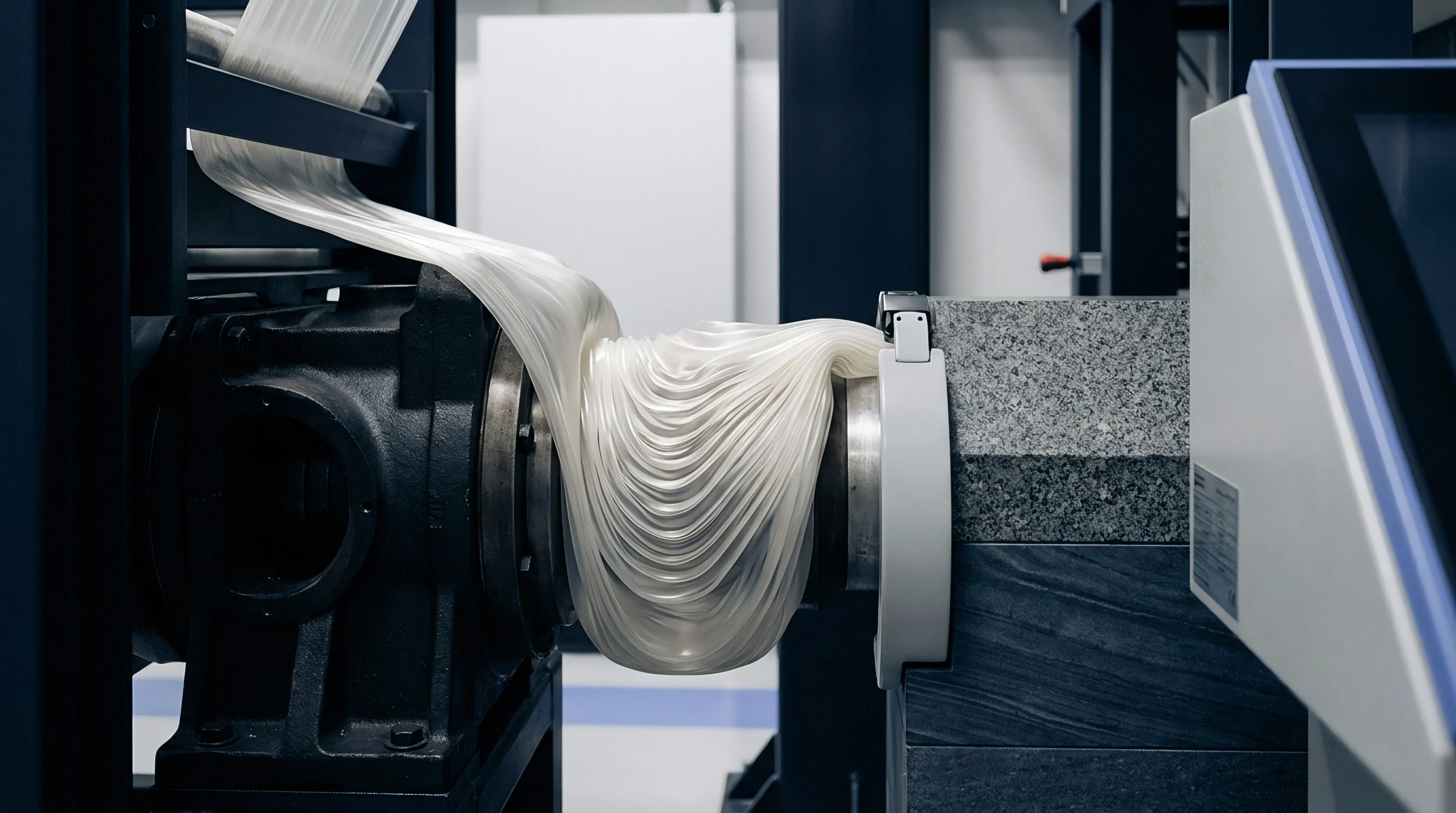
Quantifying polyolefin response across commercial processing windows demands high-pressure extrusion rheometry across controlled velocity ranges. Standard testing per ISO 11443 and ASTM D3835 forces molten polymer through a precision tungsten carbide die at measured piston velocities. Piston pressure transducers capture the entrance pressure loss alongside the true wall shear stress.
Applying the Bagley correction accounts for excess pressure drop at the die entry cone, while the Rabinowitsch correction adjusts apparent shear rates to true non-Newtonian wall shear rates. Without these mathematical corrections, calculated apparent melt viscosities overstate resistance to flow by 15 to 35 percent depending on die entrance geometry and polymer molecular weight distribution.
Molecular weight distribution dictates the slope of the shear-thinning curve. Polyolefins with broad molecular weight distributions or long-chain branching shear-thin at lower onset shear rates than narrow-distribution metallocene grades. A broad-distribution resin with a low melt flow index of 0.8 grams per 10 minutes often flows far easier through a high-shear mold gate than a narrow-distribution metallocene grade carrying a higher nominal melt index of 2.0 grams per 10 minutes.
Sourcing specifications that rely solely on standard single-point indexer tests fail to detect these high-shear flow inversions, leading to incorrect pressure drop predictions and unexpected molding injection pressure limits.
| Polyolefin Grade Family | MFR 2.16kg (g/10min) | Viscosity at 10 s-1 (Pa.s) | Viscosity at 1,000 s-1 (Pa.s) | Viscosity at 10,000 s-1 (Pa.s) |
|---|---|---|---|---|
| PP Homopolymer Broad MWD | 12.0 | 420 | 68 | 14 |
| PP Homopolymer Narrow MWD | 12.0 | 310 | 82 | 21 |
| HDPE Bimodal Pipe Grade | 0.25 | 3400 | 185 | 28 |
| LLDPE Metallocene Film Grade | 1.0 | 1850 | 240 | 42 |
Evaluating temperature sensitivity alongside shear sensitivity separates material flow changes caused purely by mechanical shear thinning from those driven by thermal softened viscosity shifts. Arrhenius activation energy calculations quantify how temperature adjustments alter melt viscosity at fixed shear rates. Polypropylene displays an activation energy near 40 kilojoules per mole, making its melt viscosity less responsive to temperature tweaks than linear low-density polyethylene, which exhibits activation energies near 30 kilojoules per mole.
Adjusting barrel temperature profiles on a processing line fails to resolve flow restrictions when shear rate is the primary driver of viscosity reduction.
Miscalculating shear-thinning slopes during mold design causes gate land overheating, uneven cavity filling balance, and excessive internal stress accumulation in molded structural components.

Scission
Mechanical force applied to a molten polyolefin inside tight screw clearances generates localized energy levels exceeding carbon-carbon covalent bond energies. High mechanical shear fields cleave long polymer backbones directly, generating free radicals along the polymer chain. Thermal oxidation accelerates this process when residual oxygen sits in hopper throats or feed zones.
Polypropylene and polyethylene react down entirely different chemical paths when subjected to high-shear mechanical degradation inside extrusion equipment.
Polypropylene undergoes tertiary carbon radical cleavage, causing chain scission as the dominant degradation mechanism. Each scission event divides a long polymer chain into shorter fragments, permanently shifting the molecular weight distribution toward lower molecular weight averages. This structural degradation causes the melt flow rate to climb rapidly upon re-processing.
Polyethylene degradation proceeds primarily through secondary radical crosslinking and vinyl end-group reactions, building long-chain branches or ultra-high molecular weight gel fractions. Polyethylene melt flow rate typically drops under moderate mechanical shear, though extreme high-shear degradation with oxygen present eventually breaks the polyethylene backbone and drives the melt flow rate back upward.
- Peroxide-Assisted Visbreaking Controlled radical generation during compounding breaks tertiary polypropylene bonds intentionally to produce narrow molecular weight distribution controlled-rheology grades.
- Mechanical Shear Rupture High shear rates in narrow flight gaps tear ultra-high molecular weight entanglements apart, generating macro-radicals without added chemical initiators.
- Oxidative Chain Degradation Unprotected polymer melts exposed to shear under high temperature consume primary alkyl radical scavengers, initiating auto-catalytic chain scission loops.
- Crosslinking Gel Formation Secondary carbon radicals in high-density polyethylene recombine into insoluble three-dimensional polymer networks that clog melt filters and produce surface gels.
Polypropylene homopolymer exhibits a 35 percent increase in melt flow rate after three extrusion passes through a high-shear mixing element at 240 degrees Celsius under ISO 1133 condition M.
Antioxidant additive packages shield polymer backbones against shear-induced oxidative degradation during melt processing. Primary sterically hindered phenolic antioxidants scavenge peroxy radicals, while secondary phosphite processing stabilizers decompose hydroperoxides into non-radical species. High shear rates deplete these additive packages at accelerated rates.
Once processing machinery consumes the active secondary phosphite stabilizer, radical propagation proceeds unchecked, resulting in severe molecular weight shifts during subsequent conversion steps.
Polyolefin melt flow rate increases exponentially once primary antioxidant loading drops below critical stabilization thresholds during melt processing.

Bench
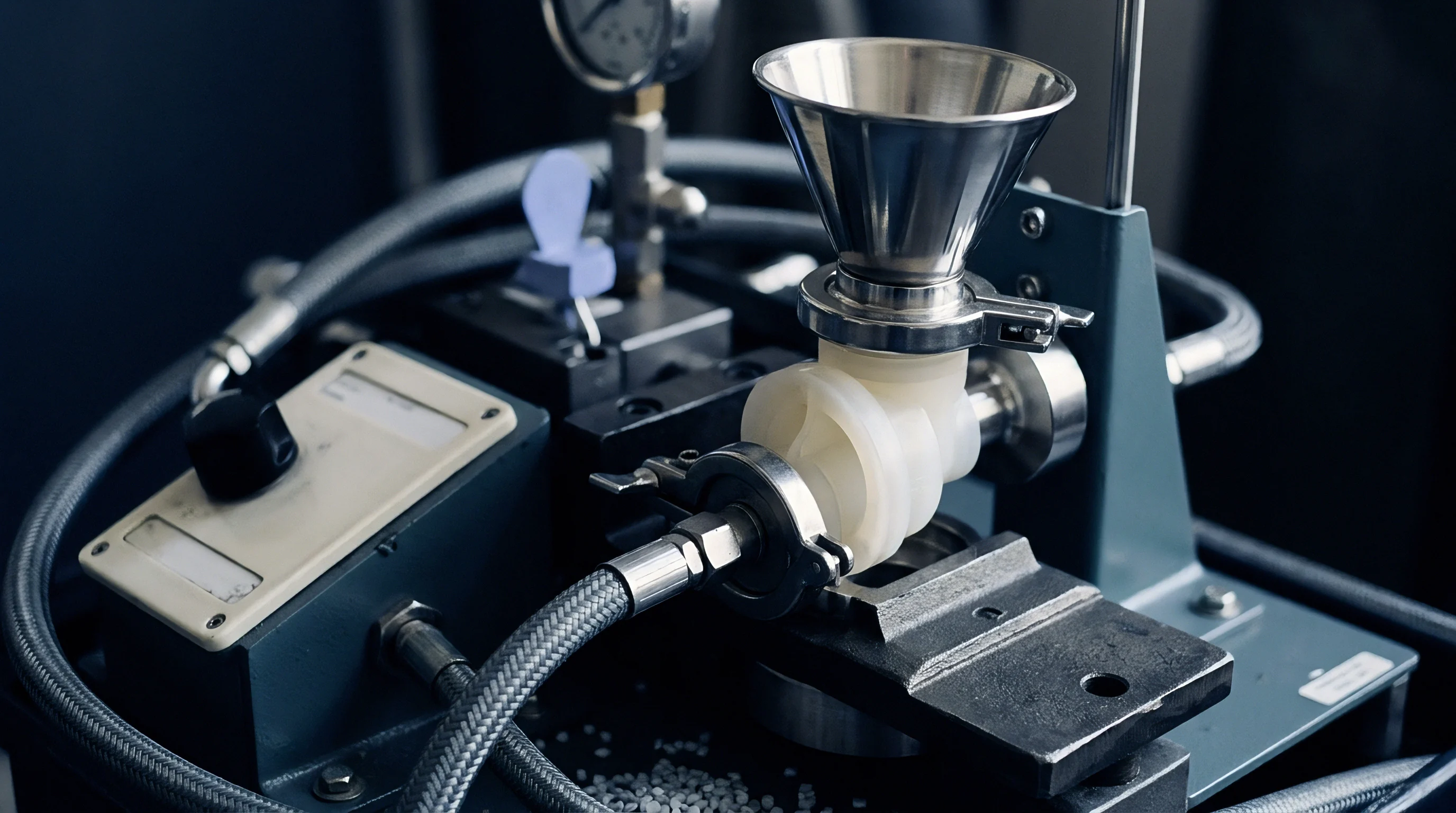
Analytical verification of shear-degraded polyolefins requires laboratory protocols capable of separating simple lot-to-lot moisture or thermal variation from true molecular backbone damage. Standard extrusion plastometers operating under ISO 1133-1 or ASTM D1238 measure the mass of molten resin forced through a specified die orifice at fixed temperature and dead-weight load. Method A relies on manual weight cut-offs timed with a stopwatch, while Method B utilizes piston displacement transducers to calculate volumetric flow rate directly.
Standard single-weight tests fail to reveal molecular weight distribution broadening or structural branching shifts caused by aggressive shear exposure.
Can High Shear Exposure Permanently Alter Polyolefin Melt Flow Index?
High shear exposure breaks covalent bonds along the polymer backbone, permanently altering the underlying molecular weight and shifting the true melt flow rate higher. This physical damage cannot be reversed by thermal annealing or slow cooling cycles. Testing incoming resin lots under multi-load melt flow rate conditions exposes these structural shifts clearly.
High-density polyethylene test protocols apply sequential loads of 2.16 kg, 5.0 kg, and 21.6 kg to calculate the Flow Rate Ratio. A narrowing Flow Rate Ratio signals a loss of high molecular weight polymer chains destroyed by excessive mechanical shear inside compounding extruders.
- Precondition incoming pellet samples in a vacuum oven at 80 degrees Celsius for two hours to eliminate surface volatiles and moisture prior to loading.
- Clean the extrusion plastometer barrel and piston thoroughly with brass wool at operating temperature to prevent cross-contamination from previous polymer test runs.
- Pack exactly 4 to 8 grams of resin pellets into the heated barrel within one minute to minimize thermal degradation during the mandatory six-minute preheat cycle.
- Execute a dual-load test sequence applying 2.16 kg followed immediately by 21.6 kg weight applications to capture both low-shear and mid-shear melt response.
- Calculate the Flow Rate Ratio by dividing the 21.6 kg volumetric melt flow rate by the 2.16 kg volumetric melt flow rate.
- Compare the calculated ratio against the master virgin resin lot certificate of analysis to quantify molecular weight distribution shifts.
Acceptance under ASTM D1238 condition 190/2.16 fails to expose high-shear viscosity drops caused by molecular weight degradation during compounding.
High-shear capillary testing provides absolute shear stress against shear rate data across commercial processing velocity profiles. Parallel plate rotational rheometers operating in dynamic frequency sweep mode complement capillary data by measuring storage modulus, loss modulus, and complex viscosity. The crossover modulus, where storage modulus equals loss modulus, shifts to lower frequencies when long-chain branching builds up and moves to higher frequencies when chain scission dominates.
Tracking crossover modulus position yields definitive structural evidence of shear-induced resin alteration.
Suppliers routinely attribute high melt flow test variations to minor laboratory barrel temperature fluctuations rather than admitting excessive shear history during compounding passes.

Appraisal
Quantifying shear history impacts on resin value demands systematic appraisal of virgin resin mixed with post-industrial or post-consumer regrind streams. Screw flights, non-return valves, and runner systems subject regrind material to multiple thermal-mechanical stress cycles. Each processing pass reduces the average molecular weight of polypropylene while altering its melt elasticity.
Evaluating resin blends using incremental regrind ratios establishes the precise threshold where physical property loss overrides pellet cost savings.
Assessing a 40-tonne batch of injection-grade polypropylene homopolymer demonstrates the financial and physical trade-offs involved in regrind integration. Assume virgin resin cost stands at 1,250 USD per tonne with a baseline melt flow rate of 12.0 g/10min. Internal regrind generated from thick-wall sprues exhibits a melt flow rate of 22.0 g/10min due to intense shear exposure inside tiny sub-gates.
Blending 20 percent of this shear-degraded regrind into the virgin stream increases the net mixture melt flow rate to 14.2 g/10min, altering cavity fill times, shrinking part weight by 1.8 percent, and lowering notched Izod impact resistance below automotive specification limits.
| Extrusion Pass | PP Homopolymer MFR (g/10min) | PP Izod Impact 23C (kJ/m2) | HDPE MFR 2.16kg (g/10min) | HDPE Tensile Stress at Yield (MPa) |
|---|---|---|---|---|
| Pass 0 (Virgin Pellet) | 12.1 | 3.8 | 0.75 | 26.5 |
| Pass 1 (First Mold Cycle) | 13.5 | 3.5 | 0.71 | 26.4 |
| Pass 2 (100% Regrind 1) | 16.8 | 2.9 | 0.64 | 26.1 |
| Pass 3 (100% Regrind 2) | 21.4 | 2.2 | 0.52 | 25.2 |
| Pass 4 (100% Regrind 3) | 29.0 | 1.6 | 0.38 | 23.8 |
Melt flow shifts during processing indicate core polymer backbone degradation before visible surface defects appear on molded parts.
Stabilizer depletion tracking protects converting operations against sudden property collapse during regrind integration. Oxidation Induction Time testing per ISO 11357-6 subjects samples to an oxygen atmosphere inside a differential scanning calorimeter at 200 degrees Celsius, measuring the elapsed time before exothermic oxidation begins. Virgin stabilized polyolefins display Oxidation Induction Times exceeding 30 minutes.
High shear processing depletes active stabilizers, dropping Oxidation Induction Times below 5 minutes in third-generation regrind and rendering the polymer highly vulnerable to thermal degradation during final part conversion.
- Maximum Melt Flow Shift Limits Standard supply specifications set an absolute maximum allowable melt flow rate increase of 15 percent over virgin baseline figures for qualified reprocessed lots.
- Oxidation Induction Time Floors Compound contracts specify a minimum residual Oxidation Induction Time of 10 minutes at 200 degrees Celsius to confirm active stabilization reserves.
- Gel Count Thresholds Optical gel inspection criteria cap high-shear crosslinked polyethylene gel particles greater than 200 microns at less than 10 counts per square meter of blown film.
- Capillary Viscosity Bands High-shear contract clauses mandate apparent melt viscosity retention within plus or minus 8 percent of prime reference lots at 1,000 reciprocal seconds.
Purchase orders referencing ASTM D4101 mandate that reprocessed polypropylene compounds match virgin lot melt flow rate tolerances without exceeding a 10 percent reduction in notched Izod impact strength.

Yield
Shear-induced melt flow changes alter the economic yield of plastic converting operations through part scrap rates, cycle time extensions, and unexpected tool maintenance costs. When polyolefin resin degrades under localized shear, its lowered melt viscosity causes unexpected mold flash across core-side parting lines. Molders compensate by lowering clamp tonnage or dropping barrel temperatures, which increases injection pack times and lengthens overall cycle times.
Extended cycle times directly reduce hourly part yield across capital-intensive molding cells.
Variable shear thinning creates unstable filling patterns in thin-wall multi-cavity injection molds. Degraded resin with elevated melt flow rate rushes into high-shear gates, filling central cavities long before peripheral cavities receive polymer melt. This fill imbalance causes part weight variation exceeding acceptable statistical process control boundaries.
Over-packed center cavities display severe molding stress and warp upon ejection, while outer cavities exhibit sink marks and boundary wall hesitation lines.
Uncontrolled melt flow shifts alter cavity fill velocity, generating dimensional variation that turns acceptable pellet savings into negative scrap economics.
Calculating the true landed cost per good part exposes the economic penalty of processing shear-degraded resin lots. Raw material savings achieved by purchasing off-spec or high-regrind polyolefin lots vanish when part scrap rates climb past 3 percent. Elevated shear sensitivity accelerates tool wear through localized gate jetting and cavity surface pitting caused by volatilized additive breakdown products.
Repairing prematurely eroded runner gates and polished cavity textures adds substantial unbudgeted expense to long-term tool maintenance accounts.
How much shear degradation can high-speed thin-wall packaging tools sustain before gate blush and core flash force a total shutdown of automated part-handling cells?