Resolving Microphase Separation Kinetic Instabilities in Reactor Toughened Polyolefin Blends under Shear
Stabilizing reactor polyolefin blends under shear requires matching matrix and rubber intrinsic viscosities to halt phase separation.

Shear
Pushing polymer melt through narrow tool gates at high speed subjects reactor toughened polyolefins to severe velocity gradients. In these heterophasic formulations, the ethylene-propylene rubber phase is synthesized directly inside an isotactic polypropylene homopolymer or random copolymer matrix. During melt conversion at shear rates exceeding 10,000 reciprocal seconds, hydrodynamic forces overcome the interfacial tension between the semi-crystalline matrix and the amorphous rubber domains.
Spherical rubber droplets stretch out into elongated fibrils along primary flow lines. If the local relaxation time of the elastomer phase exceeds its residence time in the high-shear zone, the stretched droplets lock into deformed states, initiating microphase separation instabilities.
Capillary rheometry under controlled thermal conditions shows that domain elongation hinges on the viscosity ratio between the rubber phase and the polypropylene matrix. If the zero-shear viscosity of the dispersed rubber matches the matrix viscosity, droplets remain stable under moderate shear fields. But the two phases thin differently under strain.
Polypropylene melts thin rapidly as strain rates rise, whereas high-intrinsic-viscosity ethylene-propylene rubbers resist deformation far longer. The resulting viscosity mismatch at processing shear rates focuses mechanical energy right at the phase boundary, triggering interfacial slip and micro-droplet coalescence.
Velocity Gradients and Interfacial Deformations
Extrusion die gaps and injection runner systems generate steep velocity profiles between the frozen skin and the central flow stream. Near the cold wall, shear stress reaches its maximum value just as the local melt cools below its equilibrium transition temperature, hitting the rubber domains with strong rotational and extensional forces simultaneously. Continuous deformation destabilizes droplet interfaces, merging small domains into continuous rubber filaments.
Once out of the high-stress region, these filaments undergo Rayleigh-Plateau instabilities and break into irregular strings of secondary droplets, shifting the local rubber volume fraction.
Capillary rheometry at 230 °C under a shear rate of 5000 s⁻¹ indicates matrix melt viscosity drops below 45 Pa·s while rubber domain elongational viscosity exceeds 210 Pa·s.
This morphological drift across the wall thickness introduces severe anisotropy. The skin layer, packed with flow-aligned rubber strings, loses scratch resistance and develops tiger striping ~ alternating bands of smooth and rough surface texture caused by periodic flow instabilities. Optical scattering varies sharply across these bands because subsurface rubber domain sizes are no longer uniform.
Meanwhile, the core region retains spherical, un-coalesced droplets where low central shear rates allow viscoelastic relaxation. Standard quality control checks that rely solely on bulk melt flow rate miss this spatial phase distribution variance entirely.

Deformation Modes in High Cavitation Injection
Running high-cavitation tooling on fast cycle times amplifies shear-induced kinetic instabilities. High injection speeds push peak shear rates inside hot runner nozzles above 50,000 reciprocal seconds, and thermal dissipation from intense shear heating can raise local melt temperatures by 15 to 25 °C in milliseconds. That sudden temperature rise alters the crystallization kinetics of the matrix during subsequent cooling.
The disrupted thermal history prevents uniform phase locking, giving rubber droplets a wider window to coalesce before the matrix solidifies.
Molding technicians often raise mold temperatures to eliminate flow lines. Warmer tool walls decrease the skin cooling rate, giving distorted rubber domains additional time to undergo secondary phase separation before freezing. While surface appearance improves superficially, multi-axial impact resistance drops significantly.
The extended cooling time permits rubber domain coarsening into oversized inclusions that act as stress concentration sites during drop-impact events. Inadequate thermal and shear management during processing effectively turns a high-impact grade into a brittle structure, driving field failure rates upward.

Matrix
Continuous isotactic polypropylene phases produced in multi-stage polymerization reactors determine the thermal backbone of impact copolymers. Industrial synthesis employs sequential gas-phase or bulk-loop reactors running high-activity Ziegler-Natta or metallocene catalyst systems. The primary reactor polymerizes the semi-crystalline matrix to a controlled molecular weight distribution and stereospecificity.
The polymer powder passes into secondary and tertiary reactors without intermediate pelletization, where ethylene and propylene co-monomers polymerize within the porous polypropylene granules. This in-situ blend avoids the thermal degradation associated with secondary twin-screw compounding.
The molecular weight distribution of the polypropylene matrix dictates both melt strength and processing window. Broad distribution matrices contain low-molecular-weight fractions that promote shear thinning at lower strain rates, alongside high-molecular-weight chains that provide melt strength. When the matrix contains an excessive fraction of low-molecular-weight chains, the matrix melt viscosity drops too low under shear.
The dispersed rubber phase then experiences un-damped hydrodynamic forces, leading to severe phase migration toward the core of the flow path.
Sequential Reactor Architecture and Molecular Weights
Controlling the intrinsic viscosity ratio between the secondary rubber phase and the primary matrix phase remains the governing mechanism for morphological stability. Intrinsic viscosity ratios ranging from 1.2 to 1.8 maintain stable rubber domain dispersion under moderate shear rates. Ratios exceeding 2.2 force the rubber phase to behave as rigid elastic inclusions during melt processing.
These rigid inclusions do not deform uniformly with the surrounding fluid, causing localized flow disruptions and promoting macro-phase separation along runner walls.
The composition of the rubber phase further governs phase stability under thermal stress. Reactor formulations incorporate ethylene-propylene rubber fractions containing 40 to 65 percent ethylene by weight. Increasing ethylene content promotes the formation of semi-crystalline ethylene-rich sequences within the elastomer phase, altering the interfacial energy between the matrix and the rubber domain.
High-ethylene domains resist deformation under shear, but exhibit lower optical clarity and reduced low-temperature impact absorption compared to amorphous rubber structures.
| Grade Architecture | Matrix MFR (2.16 kg, 230 °C) | EPR Rubber Content (wt%) | EPR Intrinsic Viscosity (dL/g) | Rubber Domain Diameter (µm) | Critical Shear Rate (s⁻¹) |
|---|---|---|---|---|---|
| High-Flow Automotive Injection Grade | 100 g/10 min | 22 % | 1.45 dL/g | 0.35 µm | 18,000 s⁻¹ |
| Standard Impact Copolymer Grade | 35 g/10 min | 18 % | 1.85 dL/g | 0.55 µm | 12,000 s⁻¹ |
| Super-High-Impact Ductile Grade | 12 g/10 min | 32 % | 2.40 dL/g | 1.20 µm | 4,500 s⁻¹ |
| Low-Gloss Extrusion Profile Grade | 2.5 g/10 min | 28 % | 2.90 dL/g | 1.80 µm | 1,200 s⁻¹ |
Reactor control systems must balance hydrogen feed ratios to manage matrix melt flow rate without depressing rubber molecular weight. Hydrogen acts as a chain transfer agent during polymerization: higher hydrogen concentrations in the first reactor elevate the matrix melt flow rate, improving processing speed. If hydrogen carries over into the rubber polymerization reactor, the rubber molecular weight collapses.
Low-molecular-weight rubber domains fail to absorb mechanical energy during impact events, rendering the final part brittle despite maintaining a high nominal rubber content.
Phase separation along the skin layer weakens interfacial adhesion and causes premature delamination under multiaxial impact.
The structural characteristics of reactor toughened polyolefins translate directly into distinct processing failure modes under operational tooling conditions.
- Interfacial Delamination occurs when extreme shear stress pulls the dispersed elastomeric phase away from the crystalline matrix, opening micro-voids along flow lines.
- Tiger Striping Markings emerge as alternating high-gloss and matte surface bands caused by dynamic domain coalescence as melt clears the gate.
- EPR Phase Migration describes the transport of soft rubber domains toward the center of thick-walled molded parts, leaving surface skins rubber-depleted.
- Visbreaking Degradation results from controlled peroxide cracking of broad molecular weight resins, which scissions high-molecular-weight matrix chains while destroying rubber phase elasticity.
Surface defects are frequently blamed on improper tool cooling or injection speed drift, though the root cause often lies in lot-to-lot variations in the intrinsic viscosity ratio.

Dispersal
Elastomeric ethylene-propylene domains suspended within the rigid polyolefin structure undergo structural stretching during high-speed mold filling. The kinetic stability of this dispersion depends on the steady-state equilibrium between droplet breakup and droplet coalescence. Under laminar shear flow, capillary numbers govern droplet deformation.
When the local capillary number exceeds the critical capillary number, large rubber droplets draw out into thread-like structures. These threads remain stable only while high shear rates persist. As the melt front slows near cavity terminations, shear stress declines rapidly, permitting the elongated threads to reform into larger spherical domains to minimize interfacial free energy.
Why Does Shear Rate Induce Phase Inversion?
High rubber concentrations accelerate domain collision frequencies inside narrow runner cross-sections. When the elastomeric rubber content exceeds 25 percent by weight, neighboring rubber droplets collide frequently under shear-induced translational motion. If the film of polypropylene matrix between two colliding droplets drains before the droplets flow past each other, coalescence occurs.
Rapid coalescence increases the mean domain size from sub-micron dimensions to several micrometers within fractions of a second. Oversized rubber inclusions reduce yield strength and degrade surface finish aesthetics.
- Sample incoming resin pellets from top, middle, and bottom sections of the bulk railcar or octabin shipment.
- Perform dynamic frequency sweeps using a parallel-plate rotational rheometer at 230 °C across a frequency range from 0.1 to 100 rad/s to establish phase angle behavior.
- Conduct capillary rheometry testing at 230 °C across shear rates spanning 100 to 20,000 s⁻¹ to construct true wall shear viscosity curves.
- Subject melt extrudates from capillary testing to high-temperature gel permeation chromatography coupled with infrared detection to determine co-monomer distribution across molecular weight fractions.
- Etch injection molded cross-sections with xylene at 60 °C for 15 minutes to extract the amorphous rubber phase, followed by scanning electron microscopy to measure final domain size distribution.
Stabilizing high-rubber formulations requires active control over matrix viscoelasticity. Adding organo-nucleating agents alters the matrix crystallization rate, reducing the time window available for rubber domain coalescence during cooling. Hyper-nucleation raises the crystallization temperature of isotactic polypropylene from 115 °C to over 130 °C. This rapid solidification fixes the dispersed phase morphology immediately upon entry into the mold cavity, preventing shear-deformed structures from undergoing post-shear relaxation and domain coarsening.
Increasing ethylene content in the elastomer phase raises domain viscosity at processing temperatures, resisting shear-induced coalescence during high-speed injection.
Peroxide-induced visbreaking alters rubber dispersion kinetics through selective chain scission. Processors introduce dialkyl peroxides during compounding to narrow molecular weight distribution and raise melt flow rate. Peroxides attack both matrix and rubber phases simultaneously.
Matrix scission reduces melt viscosity, lowering processing pressures. Concurrently, peroxide radicals cross-link high-ethylene segments of the rubber phase, raising domain viscosity. The resulting viscosity divergence destabilizes the interface, producing high scrap rates on high-speed thin-wall molding lines.
Running high injection velocities while keeping domain sizes below 0.5 micrometers requires matching processing shear rates directly to the relaxation spectrum of the rubber phase.
Dossier
Material certificate validation for high-impact copolymer lots demands laboratory testing beyond standard single-point melt flow rates. Standard melt flow rate tests per ISO 1133-1 under a 2.16 kg load measure bulk mass flow at low shear rates below 10 s⁻¹. This single metric provides zero information regarding high-shear viscosity, matrix molecular weight distribution, or rubber phase intrinsic viscosity.
A lot exhibiting an acceptable nominal melt flow rate of 30 g/10 min can exhibit severe flow-mark defects under actual injection molding conditions operating at 15,000 s⁻¹ shear rates.
| Test Parameter | Standard Reference Method | Specified Test Conditions | Acceptance Criteria | Failure Indication |
|---|---|---|---|---|
| High-Shear Melt Viscosity | ASTM D3835 | Capillary Die, 230 °C, 10,000 s⁻¹ | 42.0 ± 3.5 Pa·s | Tiger striping, gate blush |
| Rubber Intrinsic Viscosity | ISO 1628-3 | Decalin solvent at 135 °C (Xylene Soluble) | 1.65 ± 0.10 dL/g | Brittle impact performance |
| Xylene Soluble Fraction | ISO 16152 | Extraction at 25 °C, gravimetric finish | 22.0 ± 1.5 wt% | Core rubber depletion |
| Matrix Crystallization Temp | ISO 11357-3 | Differential Scanning Calorimetry, 10 K/min | ≥ 128.0 °C | Extended cooling, domain growth |
| Notched Izod Impact Strength | ISO 180/1A | Specimen Type 1, -30 °C notch test | ≥ 9.5 kJ/m² | Interfacial adhesion failure |
Verification protocols must isolate the xylene-soluble rubber fraction to quantify its structural parameters independently. The xylene-soluble test per ISO 16152 dissolves the amorphous rubber content in boiling xylene, cooling the solution to 25 °C to precipitate the crystalline matrix. Measuring the intrinsic viscosity of the isolated soluble portion using decalin solvent at 135 °C per ISO 1628-3 establishes the actual molecular weight of the rubber phase.
Maintaining this intrinsic viscosity value within a tight tolerance band ensures predictable mechanical performance under dynamic shear.
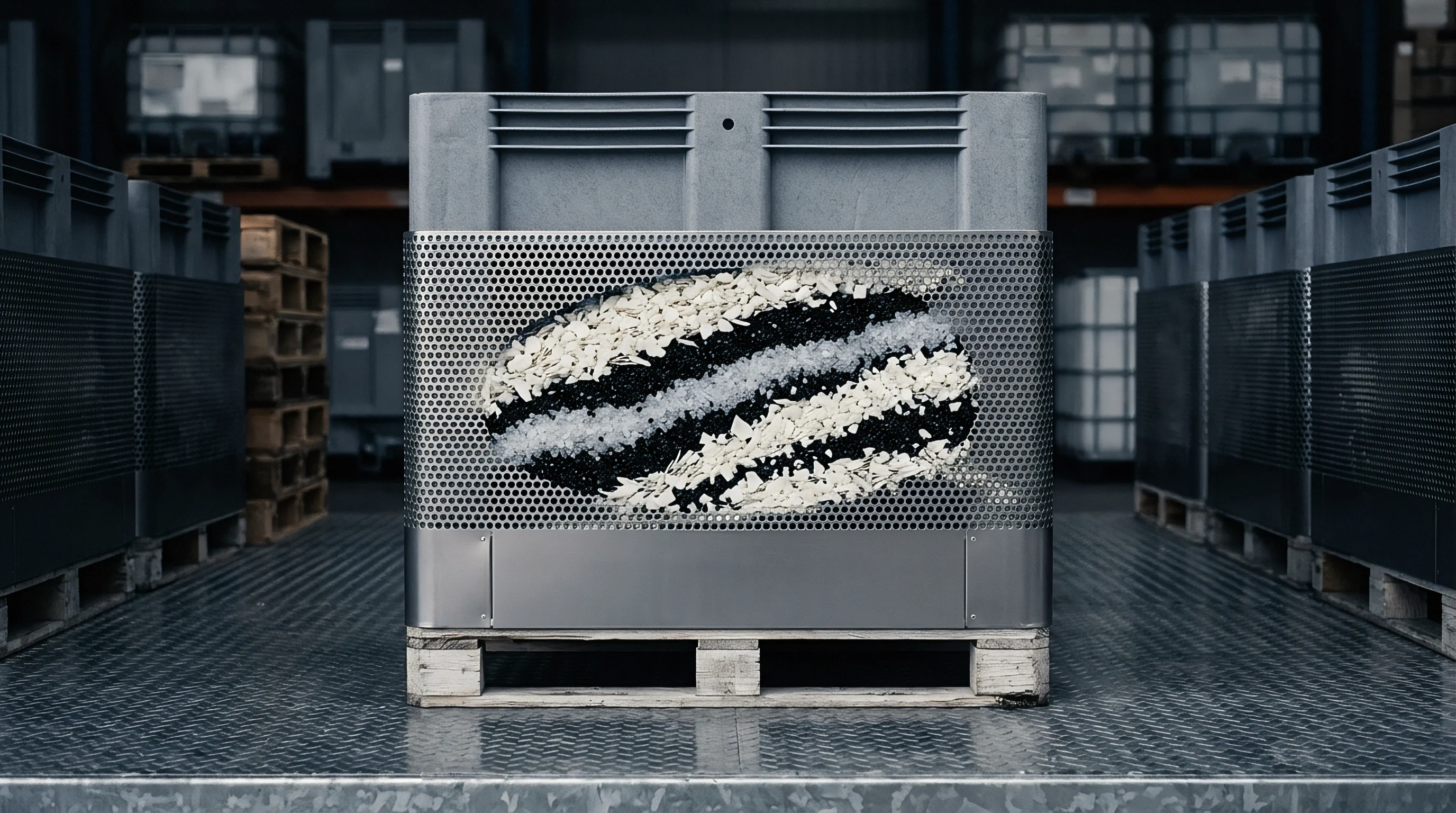
Multi Tier Rheological Acceptance Testing
Dynamic mechanical thermal analysis provides crucial insights into phase separation behavior under oscillation. Temperature sweeps performed per ISO 6721-7 from -60 °C to 160 °C reveal the glass transition temperatures of both phases. The rubber phase glass transition appears as a sharp loss factor peak between -45 °C and -55 °C. Shifted transition peaks signal partial miscibility or co-monomer leakage between matrix and elastomer phases.
Lots displaying elevated rubber glass transition temperatures exhibit poor impact retention at sub-zero operating temperatures.
Specifying a maximum allowable change of 0.15 in the intrinsic viscosity ratio per ISO 1628-3 prevents shear-induced rubber stringing across high-cavitation tooling.
Procurement specifications for critical structural parts require explicit qualification clauses to enforce material consistency across supply batches.
- Capillary Viscosity Limits specify minimum and maximum viscosity values at 230 °C under a shear rate of 10,000 s⁻¹ using an L/D ratio of 30:1.
- Xylene Soluble Tolerance Bands restrict variation in total elastomer content to within plus or minus 1.5 weight percent of nominal target.
- Intrinsic Viscosity Ratio Controls constrain the ratio of xylene-soluble intrinsic viscosity to xylene-insoluble intrinsic viscosity within a 1.35 to 1.65 range.
- Nucleation Efficiency Certification mandates a minimum peak matrix crystallization temperature of 128 °C determined via differential scanning calorimetry.
Writing ASTM D3835 capillary shear stability compliance requirements directly into purchase orders empowers quality management teams to reject off-spec resin lots before unloading bulk railcars into plant silos.

Yield
Landed component margins erode rapidly when phase destabilization forces scrap rates above target scrap allowances. High-volume automotive trim, thin-wall packaging, and structural appliance housings operate on narrow financial buffers. A scrap rate increase from 1.5 percent to 6.0 percent caused by surface flow marks destroys profit margins across automated production cells.
Off-spec resin purchases lead to secondary costs including lost tool availability, excessive purge resin consumption, and customer sorting penalties.
Substitutions of lower-cost commodity impact copolymers for engineered reactor grades often look attractive on raw material landed cost sheets. Standard commodity grades priced at a 150 EUR per tonne discount frequently lack tight control over intrinsic viscosity ratios. Processing these lower-cost resins through high-speed tools generates tiger striping, requiring operators to extend cycle times by 4 to 8 seconds to cool the tool sufficiently to obscure visual defects.
The resulting 15 percent drop in hourly part output far outweighs the initial raw material purchasing savings.
Commercial Specifications and Rejection Thresholds
Resin pricing formulas linked strictly to base polypropylene monomer indexes fail to account for the technical value of stabilized reactor architectures. High-tier reactor toughened polyolefins incorporate proprietary multi-stage catalyst technology and specialized co-monomer distribution controls, commanding a price premium of 180 to 320 EUR per tonne over general-purpose grades. Buyers who negotiate resin contracts based solely on melt flow rate invite supplier lot substitutions that compromise high-shear performance in favor of nominal throughput compliance.
Tooling wear increases substantially when processing phase-separated materials requiring elevated injection pressures. Hydraulic pressure spikes needed to force high-viscosity rubber inclusions through gate orifices strain injection unit clamp assemblies and accelerate core pin wear. Mold maintenance cycles drop from 250,000 shots down to 100,000 shots when processing unstable lots under aggressive molding parameters.
Calculating total cost per part requires incorporating tool maintenance overhead alongside raw material costs and cycle time metrics.
Managing global supply chains requires writing non-negotiable technical limits into supply agreements. Commercial contracts must tie final payment clearance to incoming lot verification testing performed by independent accredited laboratories. Establishing clean lot rejection thresholds based on high-shear viscosity compliance shields component manufacturers from absorbing financial losses caused by supplier polymerization drifts.
How far compounders can push reactor matrix MFR targets using advanced Ziegler-Natta catalyst structures before interfacial shear stress permanently destabilizes high-molecular-weight rubber domain dispersion remains an operational ceiling for thin-wall tooling.