Spherulitic Boundary Formation in Unfilled Polyamide Solidification
Rapid mold wall cooling restricts polyamide spherulite growth, suppressing boundary impurity segregation and holding DIN 16742 TG4 dimensional tolerances.

Kinetics
The transition of polyamide 6 and polyamide 66 from an isotropic melt into a semi-crystalline solid relies on thermal supercooling. Once the melt drops below its thermodynamic melting point, chain segments begin forming primary nuclei. The final size of the resulting spherulites depends on both the rate of primary nucleation and the speed at which crystalline lamellae grow outward, with melt temperature governing initial chain disentanglement.
Melt Supercooling and Nucleation Density
Unfilled polyamide melts retain thermal memory when held close to their crystalline melting point. Processing polyamide 6 at 240°C leaves residual ordered chain clusters that serve as heterogeneous nucleation sites during cooling. Raising the melt temperature to 270°C breaks down these residual structures, shifting crystallization toward homogeneous nucleation at higher supercooling.
Cooling faster than 100°C per second increases supercooling substantially. This depresses the critical radius needed for stable nuclei to form, causing an exponential surge in nucleation sites throughout the melt. With so many competing growth centers emerging at once, early impingement restricts individual spherulite diameters to under 10 µm.
By contrast, slow cooling at 10°C per minute generates lower nucleation density, allowing spherulites to expand beyond 60 µm in diameter before contact occurs.
Radial Growth Velocity across Temperature Windows
Spherulite boundaries expand outward via radial chain folding until neighboring growth fronts meet. Growth velocity peaks within a temperature window bounded by the glass transition and thermodynamic melting temperatures; for polyamide 6, maximum linear growth velocity occurs near 160°C at approximately 3.5 µm per second.
At higher crystallization temperatures, thermal agitation interferes with stable chain folding and slows growth. Near the glass transition, rapid increases in melt viscosity limit chain transport to the growing crystal front. This competition between thermodynamic driving force and molecular transport kinetics produces a characteristic bell-shaped growth curve.
| Polymer Grade | Crystallization Temp (°C) | Nucleation Density (mm⁻³) | Radial Growth Rate (µm/s) | Peak Spherulite Diameter (µm) |
|---|---|---|---|---|
| Unfilled PA6 (Viscosity No. 140 ml/g) | 140 | 4.2 x 10⁸ | 1.8 | 8 to 12 |
| Unfilled PA6 (Viscosity No. 140 ml/g) | 180 | 1.1 x 10⁶ | 3.2 | 45 to 65 |
| Unfilled PA66 (Viscosity No. 150 ml/g) | 200 | 8.5 x 10⁵ | 4.1 | 50 to 75 |
| Unfilled PA66 (Viscosity No. 150 ml/g) | 220 | 6.0 x 10⁴ | 1.2 | 90 to 130 |
Colliding spherulitic fronts form either planar or hyperbolic boundaries based on the relative nucleation timing of neighboring sites. When two spherulites originate simultaneously, their expanding circular boundaries meet along a flat impingement plane. If nucleation is non-simultaneous, the contact surface curves around the later-forming spherulite, generating hyperbola-shaped contact zones.
The structural density of these regions depends on whether lamellar chains can interpenetrate across the interface before thermal motion freezes, leaving final boundary energy tied to both nucleation timing skew and local thermal gradients during impingement.
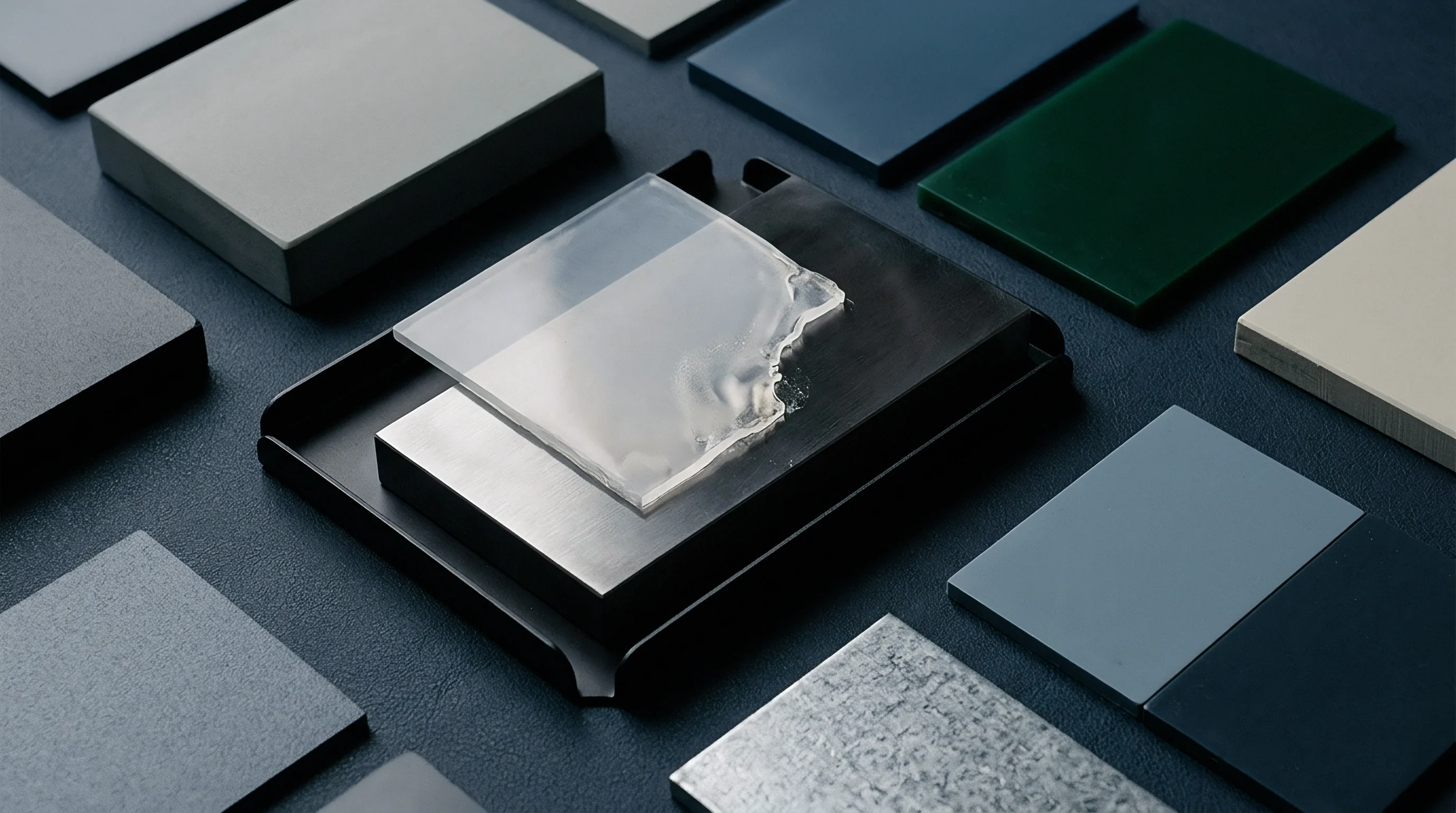
Fringe
Interfacial zones develop where expanding crystalline domains collide as the polymer solidifies. As these fronts converge, growing lamellae sweep non-crystallizable constituents into the remaining interstitial liquid, concentrating low molecular weight species along the impingement planes.

Molecular Weight Segregation at Impingement Interfaces
Short chain fragments and unreacted monomers migrate away from growing lamellae into planar contact zones. In unfilled polyamide 6, residual caprolactam monomer and low molecular weight oligomers move more freely than long polymer chains, so the advancing crystal lattice rejects them into the shrinking liquid film between approaching spherulites.
This segregation leaves an amorphous, weak boundary layer rich in chain ends and short-chain species. Inside this zone, the local glass transition temperature drops by up to 15°C relative to the bulk matrix. Slow quenching thickens these boundaries, while lower inter-lamellar tie-molecule density across the interface impairs mechanical stress transfer between neighboring spherulites.
A coarse spherulitic structure with thick inter-spherulitic boundary zones reduces impact toughness while increasing elastic modulus.
Under mechanical loading, these impingement zones act as stress concentration sites. Applied tensile or impact forces tend to initiate micro-cracks along the weak amorphous boundary planes rather than through the crystalline cores of the spherulites. Micro-voids caused by late-stage volumetric crystallization shrinkage also gather within these regions, further reducing fatigue resistance.
Does Spherulitic Impurity Segregation Limit Impact Strength?
Accumulated low molecular weight species at the boundaries lower the overall count of inter-lamellar tie molecules. In Izod or Charpy notched impact testing per ISO 179, unfilled polyamide 6 specimens with mean spherulite diameters of 60 µm exhibit impact energies of 4.5 kJ/m². Processing that yields spherulite diameters of 12 µm achieves Charpy impact values of 11.2 kJ/m².
This decline in toughness tracks directly with defect concentration along the boundary planes. Larger spherulites present less total boundary surface area per unit volume, forcing rejected impurities into thicker, highly concentrated interfacial layers. Finer spherulitic structures distribute those same impurities across a vastly larger internal surface area, keeping local concentrations below critical failure thresholds.
- Brittle Intergranular Cleavage propagation along planar spherulite boundaries under high-strain loading conditions without significant plastic deformation.
- Environmental Stress Cracking acceleration driven by chemical attack targeting amorphous, low-density inter-spherulitic boundaries.
- Micro-Void Nucleation arising from localized volumetric shrinkage strain uncompensated by packing pressure during late-stage boundary solidification.
- Anisotropic Shrinkage Warpage driven by localized alignment of lamellae along impingement boundaries relative to main flow directions.
Ignoring boundary integrity during processing risks brittle mechanical failure during assembly or field service, invalidating engineering stress calculations based on isotropic material assumptions and causing premature part cracking under nominal operational loads.


Chill
Thermal extraction through tool cavity walls controls the physical gradient running from the part surface to its core. Heat transfer rates vary by orders of magnitude between the frozen outer skin and the insulated interior of the moulding.
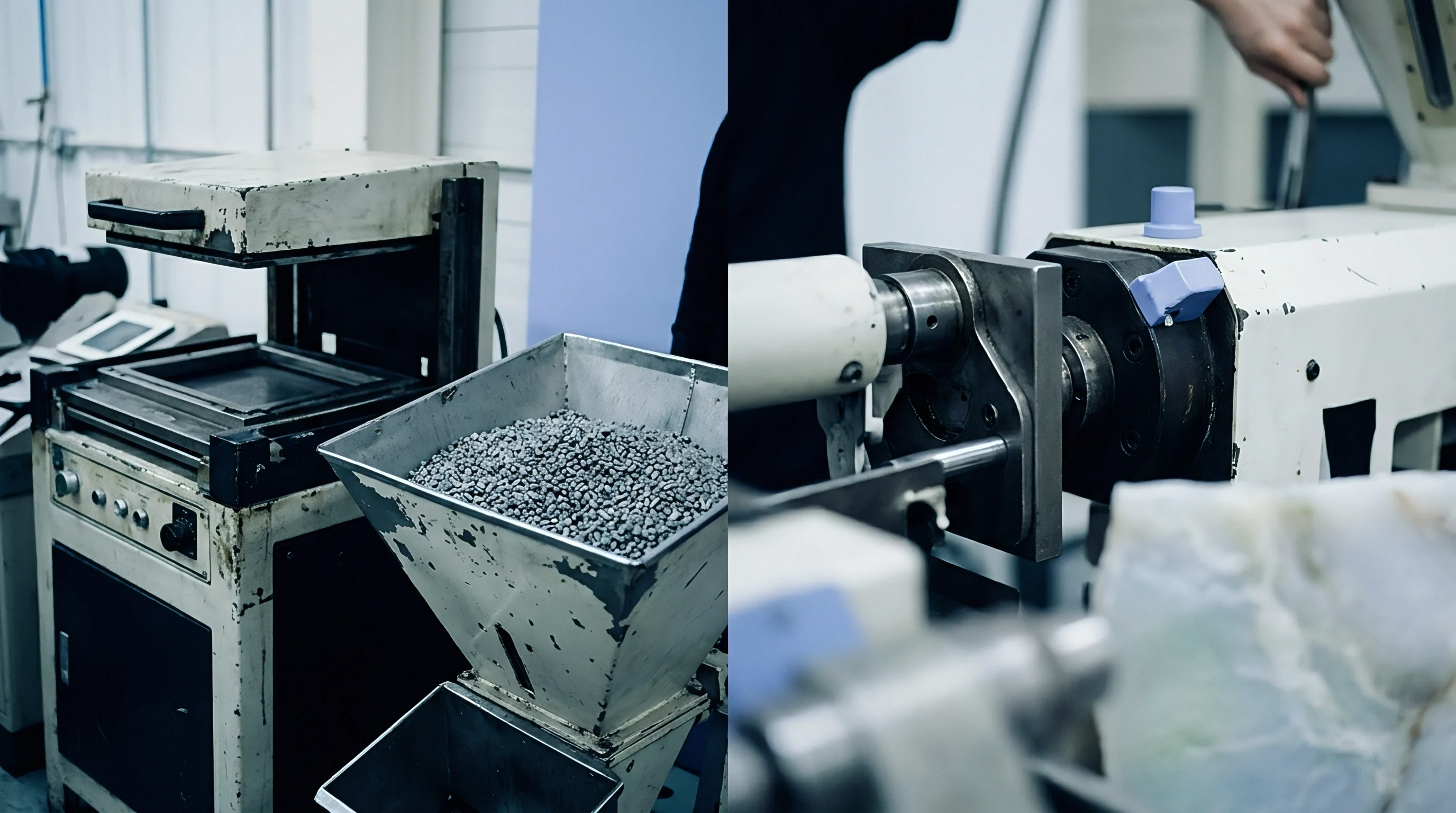
Transverse Skin-Core Structural Gradients
Injection-molded polyamide walls develop distinct morphological zones based on local heat transfer rates. The surface layer, contacting tool steel maintained at 40°C, quenches at rates exceeding 200°C per second. Solidification occurs too fast for organized spherulitic growth, yielding a predominantly amorphous or pseudo-gamma phase skin layer between 20 and 50 µm thick.
Directly beneath this surface skin sits an intermediate shear zone. High shear stresses during cavity filling align polymer chains parallel to the flow direction, inducing shish-kebab or oriented fibrillar crystallization. Radial growth proceeds perpendicular to the flow axis, producing fine micro-spherulites with average diameters under 8 µm.
In wall sections thicker than 2.5 mm, the center core cools slowly at rates below 5°C per second due to the low thermal conductivity of unfilled polyamide (0.25 W/m·K). This thermal insulation gives chain segments ample time to disentangle and organize into coarse alpha-phase spherulites exceeding 50 µm in diameter, featuring thick impingement boundaries.
Mold Temperature Circuit Design Requirements
Cooling fluid flow velocity inside tool steel channels maintains turbulent heat transfer parameters. Achieving a Reynolds number above 10,000 inside 10 mm diameter cooling channels prevents stagnant thermal boundary layers from developing on channel surfaces.
A 3.0 mm wall section in polyamide 6 cooled with 40°C mold surfaces forms a skin-core crystallinity gradient spanning 18 percent surface crystallinity to 42 percent core crystallinity.
| Zone Depth (mm) | Local Cooling Rate (°C/s) | Dominant Crystalline Phase | Mean Spherulite Size (µm) | Density (g/cm³) |
|---|---|---|---|---|
| 0.00 to 0.05 (Skin) | 200 | Amorphous / Pseudo-gamma | 1.125 | |
| 0.05 to 0.40 (Intermediate) | 50 to 200 | Mixed Gamma / Alpha | 5 to 12 | 1.136 |
| 0.40 to 1.50 (Core) | Stable Alpha Phase | 45 to 70 | 1.148 |
Process setters frequently encounter tooling limitations where cavity cooling circuits cannot extract core thermal energy efficiently. Increasing mold water temperature from 40°C to 90°C improves surface gloss, but causes a 40 percent increase in core spherulite growth and a drastic reduction in impact strength.
- Cooling Channel Layout Schematics documenting circuit diameters, pitch-to-depth ratios, and targeted Reynolds numbers for core and cavity plates.
- Thermal Imaging Logs recording real-time steel surface temperatures across all cavity surfaces prior to injection cycle start.
- Melt Temperature Calibration Records verifying actual nozzle melt stream thermal profile against machine setpoints.

Tolerance
Dimensional precision in semi-crystalline injection mouldings depends on volumetric contraction during phase change. Dense alpha-phase crystalline structures pack at 1.16 g/cm³, whereas the amorphous polyamide melt sits at 0.95 g/cm³; uneven thermal gradients across the part translate into unbalanced internal stress.
DIN 16742 Mold Shrinkage Variance in Unfilled Polymers
Calculated mold shrink factors dictate tool cavity sizing for precision polyamide components. Unfilled polyamide 6 exhibits isotropic mold shrinkage between 1.2 percent and 2.2 percent depending on processing parameters. Fast cooling limits crystallization, yielding lower mold shrink (1.2 to 1.5 percent) upon initial ejection.
Slower cooling promotes extensive spherulite growth, driving mold shrink toward 2.2 percent.
DIN 16742 categorizes tolerance capabilities based on polymer stability and process control. Unfilled polyamides operating under standard production conditions fall under Tolerance Group TG6. Achieving tighter TG4 dimensions requires precise control over core cooling rates to maintain uniform spherulitic growth throughout the component volume.
Standard ISO 294-4 test procedures for shrinkage determination specify 48-hour conditioning at 23°C and 50 percent relative humidity before final dimensional measurement.

Post-Moulding Crystallization and Dimensional Creep
Secondary crystal growth continues at room temperature over forty-eight hours following part ejection. Parts ejected with high amorphous content experience post-crystallization as absorbed atmospheric moisture lowers the polymer glass transition temperature below ambient conditions. Water molecules act as plasticizers, enhancing chain mobility and allowing unstable pseudo-gamma phases to convert into dense alpha-phase spherulites.
This post-moulding phase transformation causes post-shrinkage ranging from 0.3 percent to 0.8 percent, accompanying continuous dimensional drift. Slower cooling increases total crystalline fraction. The following protocol defines the qualification sequence for stabilizing dimensions in precision polyamide components:
- Measure mold cavity surface temperature using calibrated contact pyrometers at six distributed points across core and cavity inserts.
- Record peak cavity pressure traces during the holding phase to verify melt compression until gate freeze-off occurs.
- Eject test specimens directly into sealed moisture-barrier bags to prevent premature ambient humidity absorption prior to baseline measurement.
- Perform post-demolding dimensional inspection at 1-hour, 24-hour, and 48-hour intervals to isolate post-crystallization shrink from thermal contraction.
- Condition test specimens at 23°C and 50 percent relative humidity per ISO 291 until moisture equilibrium reaches constant weight.
Per DIN 16742 Clause 5.2, dimensional compliance sign-offs for unfilled polyamides are invalid unless measurements take place after specified conditioning periods, placing the financial liability for post-crystallization warpage entirely on the moulder if parts were audited immediately press-side.


Yield
Economic performance in precision moulding depends on balancing press cycle duration against component structural integrity. Reducing cooling time cuts hourly manufacturing expenses but risks generating coarse core spherulites and structural instability.
Cycle Time Optimization versus Morphological Integrity
Press duration drives hourly machine costs while thermal extraction limits physical spherulite boundaries. Consider a 100-tonne press running a 4-cavity gear tool in unfilled polyamide 6 with a 3.0 mm wall section. Machine operating costs average $75.00 per hour.
Cooling time accounts for the largest fraction of total cycle duration. Standard cooling calculations dictate a 16-second cooling phase to achieve structural rigidity for ejection, yielding a 26-second total cycle time. Shortening cooling time to 10 seconds reduces total cycle time to 20 seconds, increasing production output by 30 percent.
However, premature ejection at elevated core temperatures (120°C) retards heat extraction from the core. The core cools slowly in ambient air, prompting low nucleation density, large spherulite growth, and thick, fragile impingement boundaries. Izod impact resistance drops by 55 percent, leading to high field scrap rates.
Amortization Mechanics of Variothermal Tooling Circuits
Rapid heating and cooling circuits add front-end capital expense to mold fabrication budgets. Variothermal tooling employs dynamic temperature control: high mold wall temperatures (120°C) during injection ensure complete surface filling and smooth finish, followed by aggressive forced cooling (30°C water) before part ejection.
This dynamic cycling controls spherulite size by imposing high supercooling rapidly after cavity filling, eliminating coarse core boundary formation while keeping cycle times manageable. The front-end cost of variothermal heating and cooling units, combined with complex tool steel machining, increases initial tooling investment significantly.
Variothermal thermal conditioning increases capital tool cost by 35 percent but eliminates secondary annealing steps while guaranteeing fine micro-spherulitic morphology.
| Processing Parameter / Cost Element | Standard Mold (Constant 60°C) | Variothermal Mold (30°C to 120°C Cycle) |
|---|---|---|
| Initial Tooling Capital Cost ($) | $45,000 | $62,000 |
| Cooling Phase Duration (s) | 18.0 | 12.0 |
| Total Cycle Time (s) | 28.0 | 22.0 |
| Hourly Press Rate ($/hr) | $75.00 | $85.00 (Includes steam/oil unit) |
| Part Production Rate (parts/hr, 4-cavity) | 514 | 654 |
| Direct Press Cost Per Part ($) | $0.146 | $0.130 |
| Mean Core Spherulite Diameter (µm) | 42 | 11 |
| Field Scrap / Defect Rate (%) | 3.8% | 0.2% |
| Amortization Break-Even Production Volume | Baseline | 185,000 units |
Calculating the break-even volume for variothermal tooling requires evaluating the landed cost per acceptable part. The reduction in cycle time saves $0.016 per part in press time, while scrap reduction adds another $0.022 per part in material and processing savings. Combined operational savings total $0.038 per part.
Dividing the $17,000 tooling cost delta by the per-unit savings identifies a payback milestone at 447,368 parts. Moulding unreinforced polyamide parts with wall sections exceeding 2.5 mm requires tool thermal management capable of keeping core cooling rates above 20°C per second to prevent boundary failure under impact.