Meaning
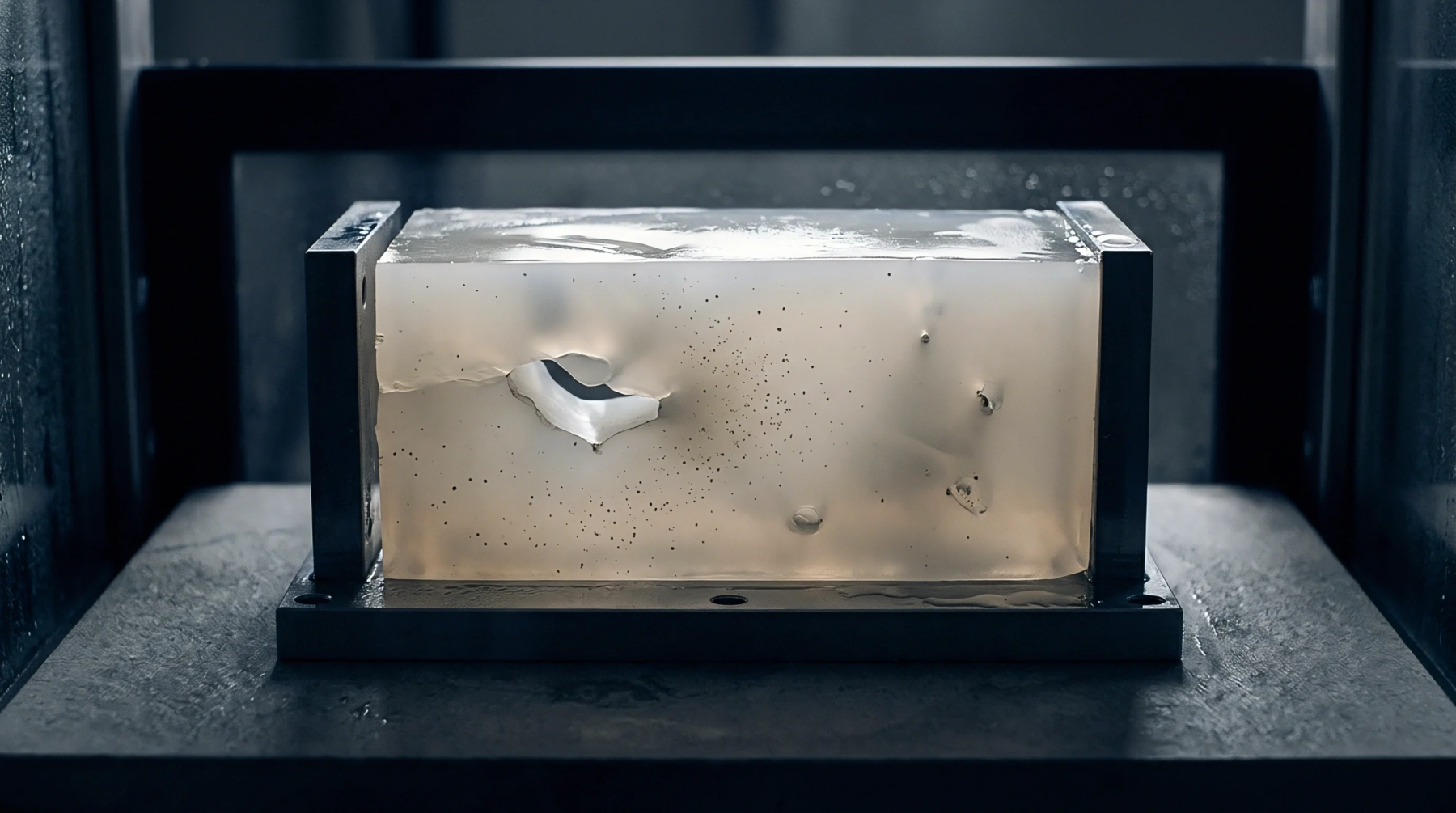
Geometric interface formed when two or more advancing melt fronts meet during the filling of an injection mould. This impingement boundary creates what is commonly known as a weld line or meld line, where the polymer chains from separate flow paths must interdiffuse to create a structural bond. The strength of this interface is a primary factor in the mechanical integrity of parts with holes, multiple gates, or complex internal geometry.
Molecular Diffusion
Bond strength at the meeting point depends on the temperature and pressure maintained as the fronts converge.
Visual Appearance
Surface quality is often compromised by the presence of a visible line where the flows joined. In the region of the impingement boundary, the orientation of polymer molecules and any fillers like glass fibres becomes parallel to the interface rather than crossing it. This lack of cross-boundary reinforcement creates a V-notch on the surface that catches the light and acts as a stress concentrator.
Flow Management
Gate placement strategy aims to move these interfaces to non-structural or hidden areas of the part. By adjusting the wall thickness or gate locations, a designer can force the impingement boundary into a region of lower stress or higher thickness. Increasing the injection speed can also help by ensuring the melt fronts are still hot enough to fuse properly upon contact, though this must be balanced against the risk of gas entrapment or jetting.