Integrating Extensional Rheometry Data into Heavy Gauge Thermoforming Process Window Maps
Integrating extensional rheometry into process window maps establishes exact strain hardening limits to prevent sheet sag and catastrophic corner thinning.
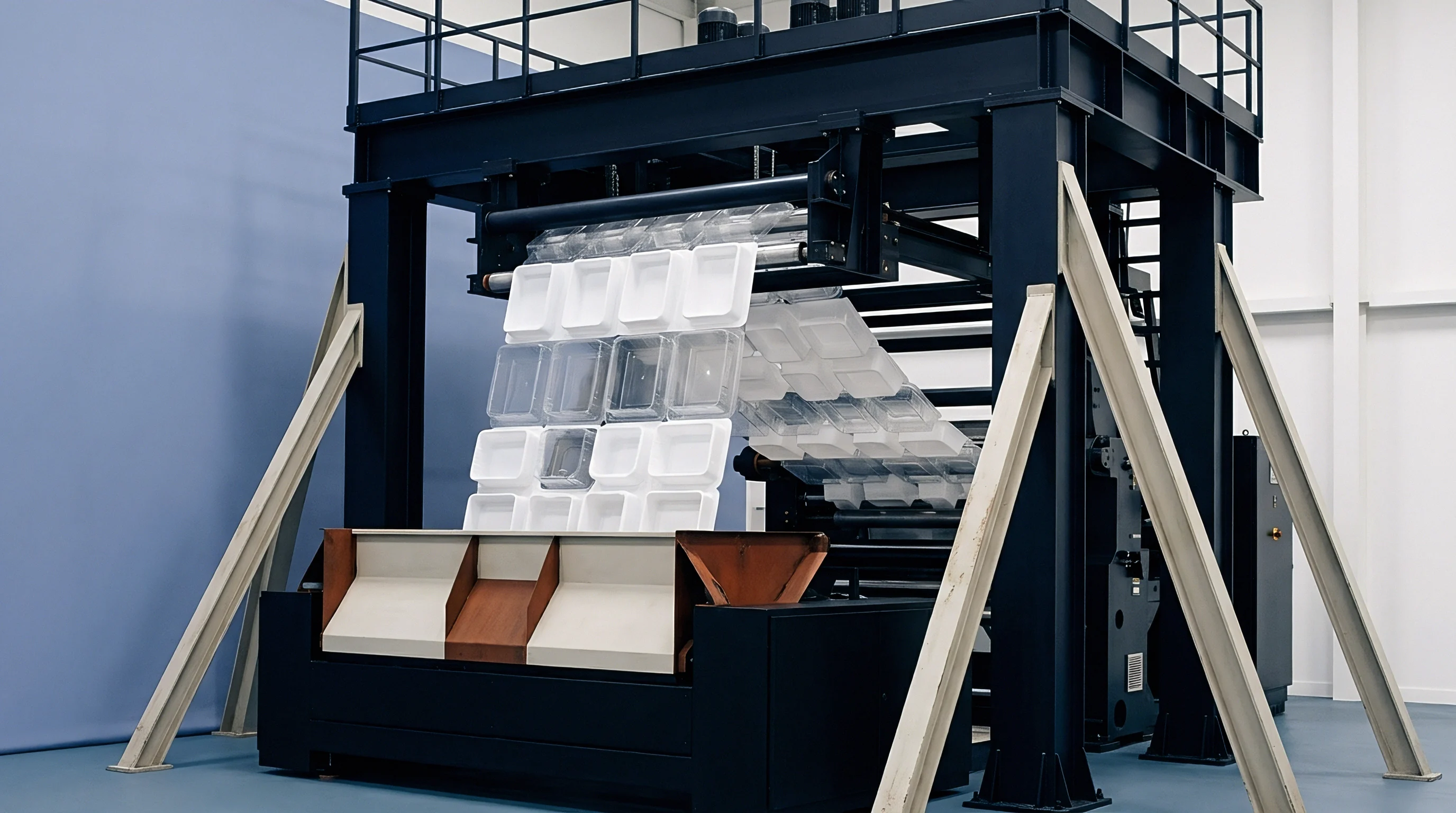

Melt
Heavy gauge thermoforming begins as conductive and radiative heat soak into a thick thermoplastic sheet until core viscoelasticity yields to gravity. Core temperature lag governs processing on sheet gauges between 3.0 mm and 12.0 mm. Infrared quartz heater banks drive energy into the sheet surfaces while the core remains twenty to thirty degrees colder during fast heat cycles.
Standard melt flow index values indicate nothing about how that thermal gradient behaves under gravity. Melt flow index measures shear flow through a capillary under fixed deadweight, whereas sheet sag in a clamp station represents unconstrained biaxial and planar extensional deformation at low strain rates.
Polymer chains untangle differently under tension than in shear. High density polyethylene droops rapidly inside the oven once sheet core temperatures pass 155 degrees Celsius, and that sudden sag creates severe heating non-uniformities. Edge zones stay close to cold clamp frames while the drooping center sags toward the bottom heaters.
Pyrometers reading only surface skin miss the cooler elastic core. Extensional rheometry tracks transient extensional viscosity against time and strain rate, marking where resistance to stretching collapses.
A 6.0 mm high density polyethylene sheet displaying a shear viscosity of 4200 Pascal-seconds at 0.1 inverse seconds can experience catastrophic sag acceleration when extensional viscosity drops below 12000 Pascal-seconds at equivalent deformation rates.
Standard oscillatory shear rheometry plots storage and loss moduli, but fails to predict localized web thinning during initial sheet inflation. Heated sheet sags under an initial extensional strain rate typically between 0.001 and 0.01 inverse seconds, where linear viscoelastic envelopes dictate behavior. Resins without long-chain branching respond linearly ~ transient extensional viscosity equals three times zero-shear viscosity, matching the classic Trouton ratio.
Resins with branched architectures show strain hardening, driving extensional viscosity orders of magnitude above that baseline.
Running high molecular weight grades without strain hardening carries severe penalties. Operators drop cycle temperatures to contain sag, but cooler sheet requires aggressive vacuum draw and excessive plug force to conform to female cavities. Corner radii chill prematurely against cold aluminium tool walls, concentrating thick section on the clamp flange while drawn corners starve for mass.
Parts formed inside these compromised thermal bands retain frozen-in stresses that warp under heat deflection testing.
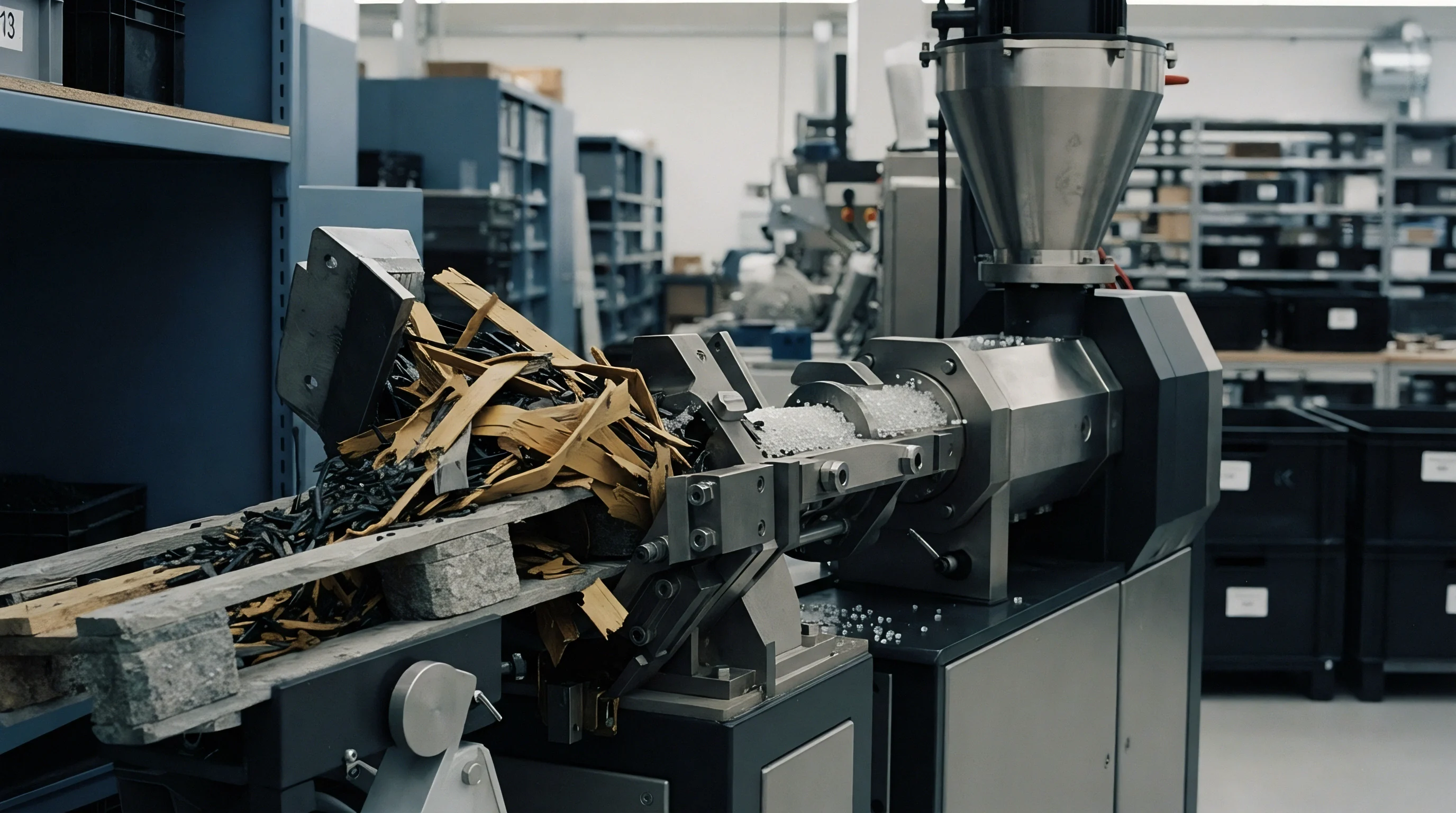

Strain
Tensile deformation across a clamped polymer sheet operates through distinct regimes, measured using dual counter-rotating drums or linear drive clamps. Test specimens cut from extruded sheet undergo uniform stretching at constant Hencky strain rates from 0.01 to 10 inverse seconds. The transient extensional viscosity curve tracks the linear viscoelastic envelope up to critical Hencky strains between 0.8 and 1.5, where branched architectures trigger an upward departure in viscosity ~ strain hardening.
Linear polymers lack this self-reinforcing response. High impact polystyrene and linear low-density grades stretch with nearly constant or thinning extensional viscosity. If a region of the sheet becomes marginally hotter or thinner, stress concentrates instantly in that cross-section.
Without strain hardening to arrest the deformation, localized necking accelerates, thinning the hot zone while adjacent, stiffer material remains unworked.
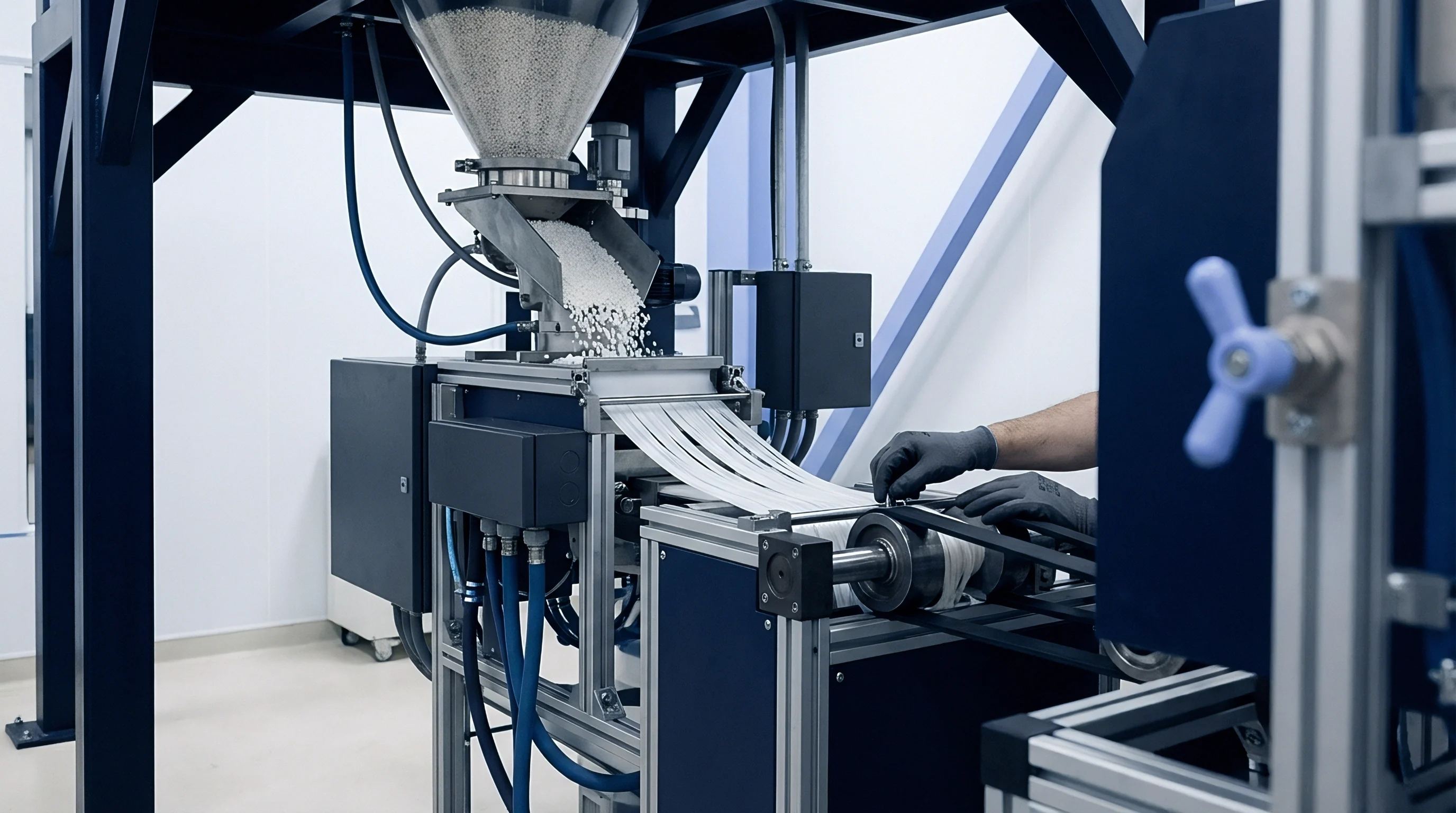
Transient Viscosity Departures across Common Sheet Resins
Because resin formulation dictates extensional behavior, tool designers assess polymer candidates through transient extensional viscosity curves at typical forming temperatures. The hardening parameter measures the ratio between peak transient extensional viscosity and the underlying linear viscoelastic growth curve at fixed times.
- High Density Polyethylene With Long Chain Branching shows pronounced strain hardening with hardening ratios above 4.2 at Hencky strain rates of 1.0 inverse seconds, arresting local necking during deep female draws.
- Standard Impact Modified Acrylonitrile Butadiene Styrene displays mild extensional thickening followed by abrupt chain disentanglement, tolerating maximum draw ratios around 1.8 to 1 before severe corner thinning develops.
- Linear High Impact Polystyrene shows pure Troutonian behavior across standard forming windows, requiring aggressive plug assist geometries and syntactic foam tooling to distribute material mechanically.
- High Melt Strength Polypropylene incorporates branched structures via post-reactor electron beam modification, boosting sag resistance during oven dwell by maintaining extensional viscosity above 50000 Pascal-seconds at 0.01 inverse seconds.
Extrusion conditions impart substantial anisotropy to heavy gauge sheet. Calender roll speed differentials and die draw ratios align polymer chains along the extrusion axis. Test bars cut parallel to extrusion exhibit higher initial moduli and earlier strain hardening onsets than specimens milled perpendicular to it.
Forming a deep rectangular tub exposes this orientation discrepancy directly: tool cavities aligned with the extrusion axis face differential draw resistance, yielding non-symmetric wall profiles across identical corners.
These transverse wall imbalances are sometimes attributed to thermal drift across thermoformer oven banks rather than sheet anisotropy.
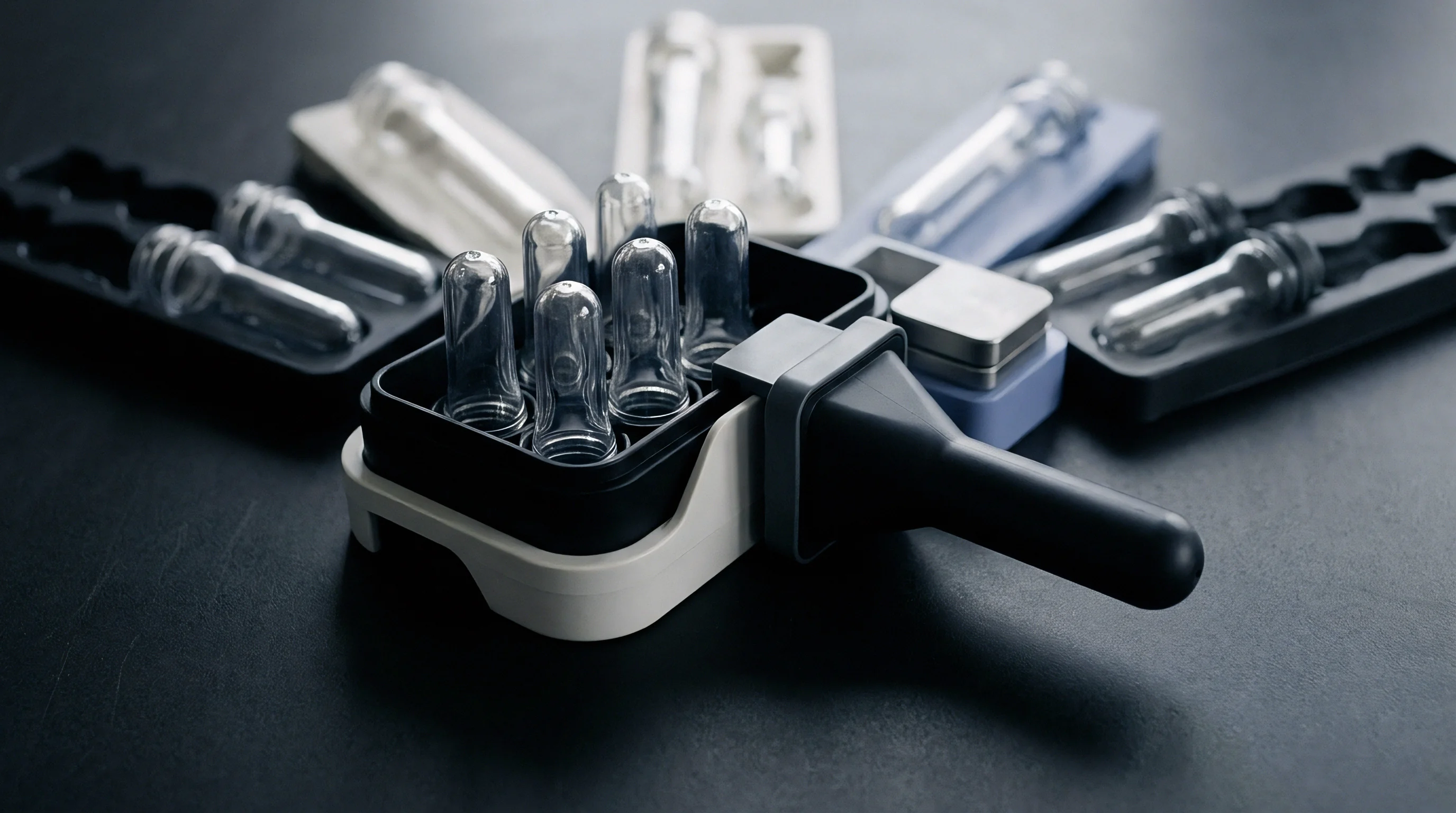

Envelope
A heavy gauge thermoforming process map translates rheological data into machine parameters, pairing sheet core temperature on the horizontal axis against Hencky strain rate on the vertical axis. The bounded zone defines the operating window where sheet avoids three structural failure modes: thermal degradation, excessive gravitational sag, and localized necking rupture. Integrating extensional rheometry establishes these upper and lower boundaries with mathematical repeatability.

Is Planar Extension Predictive across Deep Draw Tooling?
True forming actions rarely represent pure uniaxial stretching, as clamped perimeter constraints force large sheets into combined biaxial and planar extensional deformations. Uniaxial extensional data from drum-based rheometers overestimates strain hardening intensity compared to equibiaxial extension by twenty to thirty-five percent. Even so, uniaxial data pinpoints the exact temperature where chain mobility permits strain hardening without brittle rupture.
Converted through damping functions in Wagner or Kaye-Bernstein-Kearsley-Zapas constitutive equations, uniaxial curves predict multiaxial draw mechanics accurately enough to size tool corner radii and establish pre-blow pressures.
| Polymer Base Grade | Reference Core Window (C) | Zero Shear Viscosity (Pa-s) | Peak Trouton Ratio | Extensional Strain Hardening Exponent | Critical Hencky Strain Limit |
|---|---|---|---|---|---|
| High Density Polyethylene Pipe Grade | 158 to 172 | 14200 | 4.8 | 0.62 | 2.4 |
| Blow Moulding Grade High Density Polyethylene | 152 to 166 | 9800 | 3.9 | 0.48 | 2.1 |
| High Melt Strength Polypropylene | 165 to 182 | 18500 | 5.2 | 0.71 | 2.6 |
| Acrylonitrile Butadiene Styrene Medium Impact | 145 to 168 | 8300 | 1.8 | 0.18 | 1.5 |
| Extrusion Grade Polycarbonate | 185 to 205 | 6100 | 1.2 | 0.05 | 1.2 |
The extensional strain hardening exponent in the table directly limits allowable tool depth. Materials with exponents under 0.20 cannot withstand draw ratios beyond 1.5 without mechanical intervention. In contrast, high melt strength polypropylene with an exponent of 0.71 sustains draw ratios of 2.8 while maintaining wall thickness within twenty percent of nominal across steep vertical sidewalls.
A minimum extensional hardening exponent of 0.45 prevents premature localized wall collapse during unassisted pneumatic draws exceeding a 2.0 depth-to-width ratio.
Translating these rheological values to the press platen requires monitoring heater bank dwell time. Individual zones across ceramic or quartz platens are set to create inverted thermal profiles: center zones run at lower power to counter gravitational droop, while clamping perimeters receive higher heat flux. Extensional rheometry maps quantify the allowable temperature delta across the sheet.
When center zones cross the critical sag boundary, press cycles suffer uncontrollable gauge variation.
Sheet integrity holds only when deformation rates stay ahead of thermal relaxation.

Plug
Deep-draw heavy gauge tooling relies on plug assist mechanisms to push material into deep female cavities before vacuum application, making plug kinematics interact directly with sheet extensional rheology. A plug driving into a heated sheet imposes localized Hencky strain rates between 0.5 and 5.0 inverse seconds. If the sheet exhibits high strain hardening at that rate, the contact zone under the plug face hardens instantly to resist thinning, allowing the advancing plug to drag adjacent, unworked stock deeper into the cavity.
Linear materials without strain hardening react oppositely. The plug tip shears into the sheet and stretches only the localized contact perimeter, leaving the base of the tub excessively thick while lower corner transitions thin out to razor margins.
Can Machine Velocity Compensate for Deficient Strain Hardening?
Technicians frequently increase plug penetration speed when confronting severe wall thinning on cheap, non-hardening sheet lots. Higher plug velocity shifts the strain rate upward on the extensional viscosity curve, which for certain polymers enters an extensional thickening regime that improves material distribution along vertical ribs. Polycarbonate and linear polystyrene do not respond well to this adjustment; at higher strain rates, these amorphous polymers undergo brittle cavitation or rapid strain softening, triggering rupture at sharp tool features rather than uniform stretch.
| Tooling Feature | Low Hardening Resin Interaction | High Hardening Resin Interaction | Plug Material Selection | Kinematic Velocity Setpoint |
|---|---|---|---|---|
| Spherical Plug Tip | Localized thinning around apex contact zone | Even radial expansion across entire cavity face | Syntactic Foam Grade B | 180 to 250 mm per second |
| Stepped Plug Geometry | Severe step marks and chill lines on show surface | Progressive material transfer down sidewall ribs | Aluminium with PTFE Coating | 120 to 180 mm per second |
| Articulated Plug Assist | Corner blow-outs from unarrested localized necking | Predictable mass transfer into complex female corners | Engineered Polyetherimide | 80 to 140 mm per second |
| Kinematic data established for 4.5 mm nominal sheet gauge at standard forming temperatures. | ||||
Tool designers balance plug timing against pre-stretch bubble inflation. Pre-stretching the heated sheet with air pressure introduces a uniform biaxial strain field, inflating the bubble until its apex reaches a height tracked by photoelectric sensors. Using a resin with erratic extensional viscosity destabilizes bubble geometry: if extensional viscosity falls below the stability threshold, the bubble expands off-center, rubbing against clamping rails or popping before plug entry.
Tool builders must verify whether the final component can tolerate visual chill lines left by aggressive syntactic foam plug contact when compensating for weak strain hardening.

Settlement
Tool qualification and production sign-off link physical parts directly to piece-price economics. Heavy gauge thermoforming tools cost far less than injection tooling, running between 15000 and 80000 USD for cast or billet aluminium single-cavity units. Yet sheet feedstock represents over fifty percent of manufacturing piece cost on thick components.
Running sheet that requires twenty percent extra nominal gauge just to survive corner thinning destroys the business case. Integrating extensional rheometry into resin procurement contracts eliminates this scrap risk.
Shall Inconsistent Biaxial Hardening Penalize Extrusion Resin Lot Acceptance?
Incoming inspection protocols relying strictly on ASTM D1238 Melt Flow Index tests allow defective resin lots onto the production line. Two resin lots displaying an identical Melt Flow Index of 0.8 grams per ten minutes at 190 degrees Celsius under 2.16 kilograms can exhibit completely divergent extensional behavior. Lot A carries a broad molecular weight distribution with long-chain branching, yielding strong strain hardening.
Lot B relies on a narrow molecular weight distribution with zero strain hardening, causing it to sag past heater limits, drag across lower oven elements, and tear during plug descent.
Procurement specifications must establish precise acceptance thresholds based on verifiable physical metrics rather than bulk flow indicators.
- Minimum Extensional Hardening Factor Verification requires third-party testing via Sentmanat Extensional Rheometer fixtures at 160 degrees Celsius, rejecting lots where the hardening factor falls below 2.5 at a Hencky strain rate of 1.0 inverse seconds.
- Permissible Anisotropy Ratios Between Machine And Transverse Sheet Axes cannot exceed 1.25 for peak transient extensional viscosity to prevent asymmetrical draw into rectangular female tools.
- Maximum Gravitational Sag Distance Over Defined Oven Dwells fixes allowable vertical droop to fifty millimeters across a 1200 mm clamp span at 165 degrees Celsius surface temperature.
- Linear Viscoelastic Modulus Boundaries establish storage modulus compliance targets via dynamic mechanical analysis before production sheet rolls are released to press bays.
Part drawings carrying DIN 16742 tolerance grades demand tight wall thickness control. Holding a tolerance band of plus or minus 0.40 mm on a nominal 3.50 mm vacuum-formed part requires repeatable sheet draw. Tooling amortisation relies on predictable cycle times.
When a resin’s lack of strain hardening forces operators to slow press speeds, extend cooling dwells, and tolerate high defect rates, the financial model collapses. Production cost sheets reflect machine hour rates between 120 and 220 USD per hour, where uncontrolled sag and thinning rejections compound tool capital charges across the product lifecycle.
Purchasing agreements incorporating ISO 20965 and ISO 6721-10 extensional rheometry standards hold sheet extruders legally liable for press downtime caused by off-specification molecular architectures.